# Bài viết Liên quan Consulting

Trung tâm Tin tức HTX cung cấp những bài viết mới nhất và phân tích chuyên sâu về "Consulting", bao gồm xu hướng thị trường, cập nhật dự án, phát triển công nghệ và chính sách quản lý trong ngành tiền kỹ thuật số.

Silicon Valley's Most Sought-After New Role Has Emerged

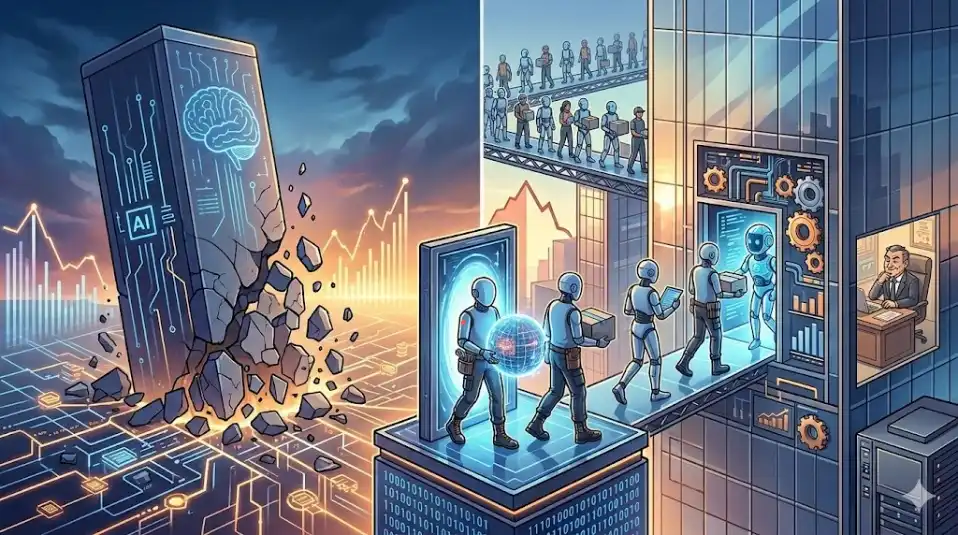
Silicon Valley's New Most Wanted Job: The Rise of the Forward Deployment Engineer The AI industry is witnessing a significant shift. The focus has moved from developing cutting-edge models to deploying them effectively within enterprises. This has made the "Forward Deployment Engineer" (FDE) a critical and highly sought-after role at major firms like OpenAI, Anthropic, and Google. For the past three years, the industry prioritized model scientists. However, companies are now facing a harsh reality: purchasing powerful AI tools does not guarantee productivity gains or organizational change. The biggest hurdle is not the technology itself, but integrating it into complex legacy systems, workflows, and corporate cultures. This includes challenges like data silos, compliance requirements, and internal resistance. The FDE role, pioneered by Palantir Technologies, addresses this "last-mile" problem. FDEs are deployed on-site with clients for extended periods. Their job is to deeply understand the client's specific organizational structure, processes, and pain points, then tailor and implement the AI solution accordingly. They combine skills in technology, project management, and organizational change. A clear signal of this trend emerged in May 2026 when three AI giants made major moves. Anthropic launched a $1.5B joint venture for enterprise deployment. OpenAI formed an independent deployment subsidiary, DeployCo, with over $4B in commitments and acquired a deployment consultancy. Google Cloud's CEO publicly announced a large-scale recruitment drive for FDEs. This shift represents a fundamental change in the software business model: from selling tools to selling guaranteed outcomes. FDEs are the agents of this change, responsible for delivering a working system within the production environment, not just a demo. Real-world cases, such as challenges at Goldman Sachs (compliance barriers) and Target (internal cultural resistance), illustrate that the primary obstacles to AI adoption are organizational, not technical. An FDE's value lies in navigating these human and procedural complexities to facilitate a successful "AI migration." In essence, as core AI technology becomes more accessible and affordable, the true premium is shifting to the human expertise required to understand organizations and drive change—making the FDE role pivotal for the next phase of the AI revolution.

marsbit06/19 09:04

Silicon Valley's Most Sought-After New Role Has Emerged

marsbit06/19 09:04

API Stories Can't Support Valuations, AI Giants Start Offering Consulting Services

The AI industry is shifting from simply selling APIs to providing intensive, on-site consulting services, as major players like OpenAI and Anthropic seek new revenue streams to justify high valuations. OpenAI has established "Deploy Co," raising over $40 billion from investors led by TPG at a $140 billion valuation. The deal has an unusual structure, guaranteeing investors a minimum 17.5% return with a profit cap, resembling debt more than equity. OpenAI also acquired the AI consulting firm Tomoro to gain over 150 "Frontline Deployment Engineers" (FDEs). Similarly, Anthropic formed a $15 billion joint venture with Blackstone, Hellman & Friedman, and Goldman Sachs with the same goal: embedding engineers within client companies. A key driver is Anthropic's rapid market share growth, now holding 40% of the enterprise LLM API market compared to OpenAI's 27%, which has put pressure on OpenAI to accelerate its enterprise strategy. Notably, major consulting firms Bain & Company, McKinsey & Company, and Capgemini are among the investors in OpenAI's venture, a move seen as either seeking deeper insight into AI or funding their potential future disintermediation. This pivot is creating a major shift in tech employment. Demand for FDEs—who integrate AI into client workflows on-site—has surged over 800% in the past year, with salaries reaching $350,000-$550,000. Meanwhile, demand for traditional software engineers has declined significantly. The trend marks a strategic inflection point: core AI models are becoming commoditized, while the complex, labor-intensive work of deployment is becoming the new high-value, capitalized service layer. The $55 billion in combined funding represents a bet that hands-on consulting, not just API access, is the future of enterprise AI monetization.

marsbit06/02 11:51

API Stories Can't Support Valuations, AI Giants Start Offering Consulting Services

marsbit06/02 11:51

The Largest IPO in History Is Approaching, Surpassing SpaceX, 28 Years of AI Self-Iteration, Countdown to Intelligence Explosion

"Anthropic Nears Trillion-Dollar IPO, Fueled by Explosive Growth and 2028 'Intelligence Explosion' Warning Anthropic is considering a deal valuing the AI company near $1 trillion, potentially leading to one of the largest IPOs ever and surpassing SpaceX. Its revenue has skyrocketed, with Annual Recurring Revenue (ARR) reaching $45 billion in May 2026—a 500% increase in just five months. This vertical growth curve is attributed to its key products, Claude Code and Cowork, dominating AI coding and enterprise collaboration. Beyond commercial success, co-founder Jack Clark issued a pivotal warning in an interview: there is a greater than 50% chance that by the end of 2028, AI systems will achieve recursive self-improvement—the ability to autonomously build a 'better version' of themselves, initiating an 'intelligence explosion.' This prophecy underpins the company's astronomical valuation, as the market prices in the potential for transformative and disruptive AI. Further signaling its ambition, Anthropic formed a $1.5 billion joint venture with Goldman Sachs and Blackstone, aiming to disrupt traditional consulting firms like McKinsey by deploying Claude AI for complex strategic work. This move tests AI's capacity to replace high-level cognitive labor, a precursor to its predicted autonomous evolution. The narrative presents a dual future: unprecedented economic opportunity alongside significant risks like economic restructuring and security threats. Anthropic's meteoric rise and Clark's 2028 prediction frame the coming years as a countdown to a potential technological singularity."

marsbit05/11 07:08

The Largest IPO in History Is Approaching, Surpassing SpaceX, 28 Years of AI Self-Iteration, Countdown to Intelligence Explosion

marsbit05/11 07:08

a16z: The Best Technology Doesn't Always Win in the Enterprise Market

a16z: Why the "Best" Tech Doesn't Always Win in Enterprise Markets In the current blockchain application cycle, founders are learning a crucial lesson: enterprises don't buy the "best" technology; they buy the upgrade path with the least disruption. For decades, new enterprise tech has offered promises of order-of-magnitude improvements—faster settlement, lower costs, cleaner architecture—but adoption rarely matches technical superiority. The gap isn't performance but product-market fit. Enterprises prioritize minimizing downside risk over maximizing gains. Decision-makers in large institutions face asymmetric penalties: missing an opportunity is rarely punished, but a visible failure can damage careers and attract regulatory scrutiny. Thus, decisions are driven by "what is least likely to fail" rather than "what might be achieved." Enterprise decisions are made by a coalition of stakeholders—legal, compliance, risk, finance, security—each with veto power and different concerns. The "customer" is rarely a single buyer but a group focused on avoiding errors. Successful founders identify these decision-makers early and tailor their pitch to address specific institutional constraints. Third-party consultants and system integrators often act as gatekeepers, repackaging new technology into familiar frameworks to reduce perceived risk. Ignoring this layer is a strategic mistake. A common error is using a one-size-fits-all sales pitch or advocating for a "rip-and-replace" approach. Enterprises prefer incremental integration that complements existing systems, as seen in Uniswap's collaboration with BlackRock on tokenized funds, which extended traditional fund structures onto the chain without overhauling operations. Enterprises hedge their bets by running multiple pilots. Winning requires becoming the "right hedge"—not just through technical superiority but by demonstrating professionalism, predictability, and credibility within institutional constraints. Ideological purity around decentralization often fails to resonate with risk-averse enterprises. Success comes from adapting to the enterprise's operational realities, not demanding they adopt a full vision immediately. The most successful technologies are those that integrate seamlessly into existing workflows, reducing uncertainty and enabling gradual, scalable adoption.

marsbit03/11 09:43

a16z: The Best Technology Doesn't Always Win in the Enterprise Market

marsbit03/11 09:43

活动图片