Standard Chartered To Launch Crypto Prime Brokerage Through VC Unit – Report

bitcoinistXuất bản vào 2026-01-13Cập nhật gần nhất vào 2026-01-13

Tóm tắt

Standard Chartered is reportedly planning to launch a cryptocurrency prime brokerage through its venture capital unit SC Ventures, according to a Bloomberg report. The initiative, still in early stages, would expand the bank’s digital asset offerings and operate under the previously announced Project37C joint venture, which focuses on custody, tokenization, and market access. This move aligns with the bank’s growing involvement in crypto, including backing custodians, offering Bitcoin and Ethereum trading, and partnering with platforms like OKX and Coinbase. Launching the brokerage through its VC arm may help Standard Chartered navigate strict global banking capital requirements for crypto, which impose high risk charges on direct holdings. Global regulators are currently reviewing these rules, with the US leading calls for amendments ahead of their planned 2026 implementation.

Banking giant Standard Chartered is reportedly planning to launch a prime brokerage for cryptocurrency trading amid a global push by banks to establish digital asset ventures and compete in the sector.

Standard Chartered Plans Crypto Expansion

On Monday, Bloomberg reported that London-based Standard Chartered is allegedly preparing to expand its crypto efforts with the launch of a prime brokerage for digital assets trading.

According to sources familiar with the matter, discussions are in the early stages, and an official timeline for the launch has not been defined. However, they revealed that the major global bank plans to launch the new crypto business within its venture capital (VC) unit SV Ventures.

Notably, Standard Chartered’s VC unit recently announced that it is developing Project37C, a joint venture related to digital assets, but did not specifically call the platform a crypto prime brokerage. The joint venture is set to offer custody, tokenization, and market access, and “complement the broader Standard Chartered digital asset ecosystem.”

At the time, Harald Eltvedt, Operating Member and Head of Venture Building at SV Ventures, affirmed that “as we see institutional engagement with digital assets accelerating, there is similarly a growing need for platforms that combine innovation with a high standard.”

As the report noted, the banking giant has been one of the most active global financial institutions in the digital assets sector. Notably, it has backed multiple crypto ventures, including custodians and institutional trading platforms.

In July, the institution became the first global systemically important bank to offer spot Bitcoin and Ethereum trading for institutional clients. In Q4 2025, Standard Chartered announced its partnership with crypto exchange OKX in the European Economic Area (EEA) and its collaboration with DCS Card Center as the banking partner for a credit card that enables users to make stablecoin transactions.

Last month, Standard Chartered expanded its partnership with Coinbase to develop a suite of crypto prime services for institutional clients, including trading, staking, custody, and lending.

Global Banking Rules’ Challenge

Bloomberg highlighted that Standard Chartered could benefit from launching the new business through SC Ventures, as it may help circumvent some strict capital requirements for digital assets in corporate and investment banks.

It’s worth noting that the Basel Committee on Banking Supervision (BCBS) released its standard for the “prudential treatment of banks’ exposures to cryptoassets” in 2022, including tokenized traditional assets, stablecoins, and unbacked digital assets.

Under Basel III rules, banks that hold cryptocurrencies face a risk charge far higher than with any other risk assets. The institutions are required to comply with a 1,250% risk charge for exposure to permissionless crypto assets such as Bitcoin and Ether. Meanwhile, some VC investments under the latest Basel capital package only face a 400% charge.

As reported by Bitcoinist, global regulators are in talks to review and potentially overhaul rules for banks’ crypto holdings, set to come into force in 2026. Senior executives stated that banks have largely interpreted the standards as a signal to avoid crypto “since they imposed a heavy capital burden on such holdings.”

However, the recent global shift toward the crypto industry has sparked debates at the BCBS regarding the suitability of these rules under the current environment, with major jurisdictions, including the US and UK, not committing to implementing them on time.

The US has been reportedly leading calls to amend these standards, arguing that the rules are “incompatible with the industry’s evolution,” particularly in the stablecoin sector. Moreover, some countries seem to agree with the US’s reasoning and favor reviewing the standards before they are widely implemented.
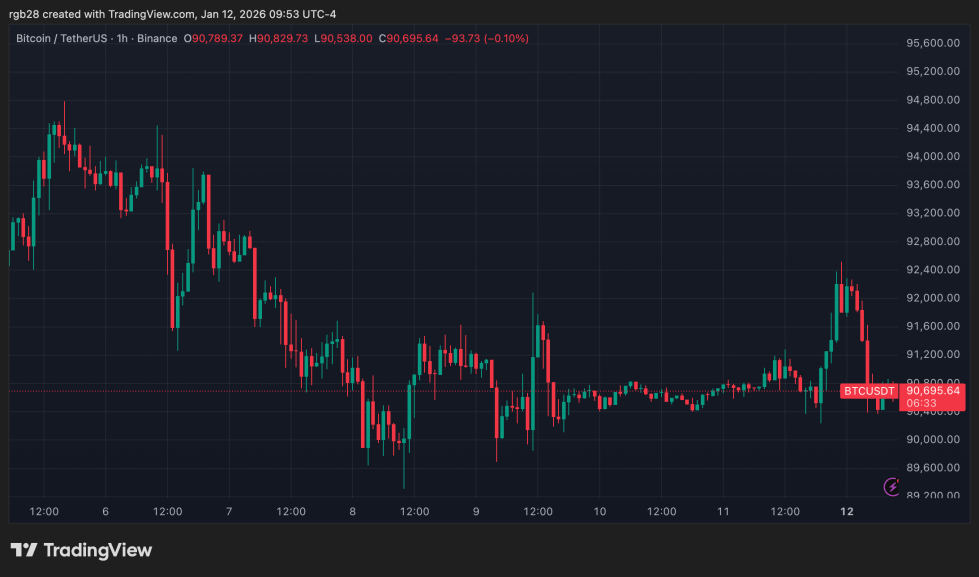
Bitcoin (BTC) trades at $90,695 in the one-week chart. Source: BTCUSDT on TradingView


Câu hỏi Liên quan

QWhat is Standard Chartered reportedly planning to launch in the crypto space?

AStandard Chartered is reportedly planning to launch a prime brokerage for cryptocurrency trading through its venture capital unit, SC Ventures.

QThrough which specific unit does Standard Chartered plan to launch its new crypto business?

AThe bank plans to launch the new crypto business within its venture capital (VC) unit, SC Ventures.

QWhat is the name of the joint venture Standard Chartered's VC unit is developing, and what services will it offer?

AThe joint venture is called Project37C, and it is set to offer custody, tokenization, and market access for digital assets.

QWhat is a key regulatory challenge for banks holding cryptocurrencies under the Basel III rules?

AUnder Basel III rules, banks face a punitive 1,250% risk charge for exposure to unbacked crypto assets like Bitcoin and Ether, which is a major capital burden.

QWhy might launching the crypto business through its VC unit be beneficial for Standard Chartered from a regulatory perspective?

ALaunching through the VC unit may help the bank circumvent the strict capital requirements for digital assets that apply to corporate and investment banks, as some VC investments face a lower 400% charge.

Nội dung Liên quan

Người sáng lập Booking.com Jeff Hoffman: Web3 và AI định hình lại thị trường du lịch xã hội nghìn tỷ USD như thế nào

Bài viết phỏng vấn Jeff Hoffman, nhà đồng sáng lập Booking.com, về tiềm năng của Web3 và AI trong việc định hình lại ngành du lịch xã hội trị giá nghìn tỷ đô la. Jeff chia sẻ hành trình từ đồng sáng lập Priceline, tiền thân của Booking Holdings, đến việc nhận ra cơ hội tái tạo quyền sở hữu và hệ thống khuyến khích thông qua Web3. Ông nhấn mạnh Web3 sẽ phá vỡ mô hình đại lý truyền thống bằng cách thúc đẩy kết nối trực tiếp, minh bạch và thanh toán nhanh hơn. Ba xu hướng toàn cầu làm nền tảng cho lợi thế này là nhu cầu phần thưởng linh hoạt, thanh toán kỹ thuật số phổ biến và sự tin tưởng vào cộng đồng. Điều này thúc đẩy Jeff tham gia Staynex, một nền tảng kết hợp đặt chỗ, thanh toán, AI và phần thưởng trong một hệ sinh thái thống nhất để giải quyết tình trạng phân mảnh của ngành. Ông đánh giá cao đội ngũ Staynex vì tập trung vào tính thực tiễn và khả năng thực thi. Trong tương lai, Jeff dự đoán blockchain và AI sẽ biến du lịch từ giao dịch đơn lẻ thành mối quan hệ liên tục, với phần thưởng minh bạch và trải nghiệm cá nhân hóa. Các nền tảng du lịch xã hội Web3+AI sẽ dịch chuyển trung tâm giá trị, trở thành cơ sở hạ tầng mới, trong khi các đại lý truyền thống sẽ phải thích nghi.

marsbit7 phút trước

Người sáng lập Booking.com Jeff Hoffman: Web3 và AI định hình lại thị trường du lịch xã hội nghìn tỷ USD như thế nào

marsbit7 phút trước

KOL trong không gian tiền điện tử cung cấp cộng đồng trả phí và bán khóa học có vi phạm pháp luật không?

Tác giả: Luật sư Thiều Thi Uy Bài viết phân tích các rủi ro pháp lý đối với KOL (người có ảnh hưởng) trong không gian tiền điện tử khi họ vận hành các nhóm trả phí hoặc bán khóa học về đầu tư. **Rủi ro chính:** Dù không có quy định cấp phép rõ ràng cho tiền điện tử, cơ quan thực thi pháp luật vẫn có thể dựa vào tinh thần chính sách để xử lý. Hoạt động có thể bị coi là "cung cấp tư vấn đầu tư" nếu nội dung mang tính chất hướng dẫn giao dịch. **Các mức độ rủi ro:** 1. **Nội dung thuần túy:** Phân tích lịch sử, kiến thức cơ bản, ít rủi ro nhất. 2. **Bán hướng dẫn:** Phân tích hàng ngày, giải thích thị trường, nhận định điểm vào lệnh tiềm năng ("vị trí này đáng chú ý") – rủi ro bắt đầu tích lũy. 3. **Hướng dẫn mạnh:** Đưa ra điểm mua/bán cụ thể, rủi ro hình sự cao nhất. **Hậu quả pháp lý:** * **Dân sự:** Người dùng có thể kiện đòi bồi thường nếu thua lỗ. * **Hình sự:** Có nguy cơ bị truy tố vì tội **lừa đảo** hoặc **lừa đảo tập thể** nếu người dùng báo cáo thua lỗ. **Cảnh báo:** Việc ghi chú "chỉ để tham khảo, không phải lời khuyên đầu tư" trong hợp đồng KHÔNG tự động loại bỏ rủi ro hình sự. Cơ quan điều tra sẽ xem xét bản chất thực tế của hoạt động. **Kết luận:** Rủi ro phụ thuộc vào tính chất nội dung, mối liên hệ giữa lời khuyên và hành động giao dịch của người dùng, và mô hình kinh doanh. Nếu đang hoạt động, nên đánh giá lại cẩn thận các rủi ro cụ thể.

marsbit32 phút trước

KOL trong không gian tiền điện tử cung cấp cộng đồng trả phí và bán khóa học có vi phạm pháp luật không?

marsbit32 phút trước

Giao dịch

Giao ngay
Hợp đồng Tương lai
活动图片