Kalshi's Pre-Market Stock Price Surges, Is It Still Time to Buy?

Odaily星球日报Xuất bản vào 2026-01-29Cập nhật gần nhất vào 2026-01-29

Tóm tắt

Kalshi, a leading US-regulated prediction market platform, has seen its pre-IPO stock price surge by 21.7% in the past 30 days, significantly outperforming major cryptocurrencies like BTC and ETH. The prediction market sector is experiencing explosive growth, with total trading volume exceeding $50 billion in 2025. Kalshi reported a record $23.8 billion in annual trading volume for 2025, a 12x year-over-year increase, and is projected to reach a monthly trading volume of $9.1 billion in January 2026. Backed by major investors like Paradigm and Sequoia, Kalshi's valuation has soared to $11 billion. Pre-IPO share prices for Kalshi vary across platforms, ranging from $307 on Nasdaq Private Market to $450 on crypto-native platforms, reflecting high market interest. The article analyzes whether investing in Kalshi's pre-IPO market is still worthwhile given its rapid growth and dominant market position.

Original|Odaily Planet Daily(@OdailyChina)

Author|Wenser(@wenser 2010)

The scale, trading volume, and other data of the prediction markets continue to grow rapidly. The pre-IPO markets of leading platforms like Kalshi and Polymarket have also attracted significant market attention and liquidity. According to data from the PreStocks platform, Kalshi's pre-market stock price has surged 21.7% in the past 30 days, far exceeding the gains of mainstream cryptocurrencies like BTC and ETH over the past month.

Before the IPO cake is served, the Pre-IPO sector might be the battleground suitable for more people to participate in early. This article by Odaily Planet Daily will analyze whether the pre-market for prediction market stocks is worth a heavy bet, from the perspectives of the industry sector, platform data, and capital valuation.

Behind the "Prediction Markets Still Have 100x Upside" Judgment: Total Trading Volume Exceeds $50 Billion in 2025

Last August, 1confirmation founder Nick Tomaino boldly claimed that "prediction market trading volume will grow 100 times".

At that time, the "twin titans of prediction markets," Polymarket and Kalshi, had not yet secured funding above the $1 billion mark, their valuations were far from the $10 billion scale, and the overall prediction market trading volume in July was less than $2 billion, nearly halved from the historical high of over $4 billion in October 2024. The judgment of 100x growth space seemed like nonsense.

But soon, in October 2025, Polymarket announced a $2 billion investment from ICE Group, the parent company of the NYSE, skyrocketing its valuation to $9 billion, and later sought a new round of funding at a valuation of $12-15 billion; Kalshi, meanwhile, completed 2 rounds of financing between October and December, with the latest round reaching $1 billion, surging its valuation to $11 billion, led by Paradigm, with participation from Sequoia, a16z, Meritech Capital, IVP, ARK Invest, Anthos Capital, CapitalG, and Y Combinator.

Behind the capital's fervent pursuit is the rapid and vigorous development of the prediction markets.

According to data from our previously published article "2025 Prediction Market Review: Total Trading Volume Exceeds $50 Billion, Dual Giants Command Over 97.5% Market Share":

  1. In September 2025, the combined trading volume of Kalshi and Polymarket reached $1.44 billion;
  2. In October 2025, prediction market trading volume reached $8.7 billion, with Kalshi leading and Polymarket following;
  3. In November 2025, the combined trading volume of Kalshi and Polymarket approached $10 billion, with Kalshi's trading volume reaching $5.8 billion, a 32% increase month-over-month; Polymarket's trading volume reached $3.74 billion, a 23.8% increase month-over-month.
  4. In December 2025, analyst Patrick Scott stated that prediction market trading volume exceeded $13 billion in November 2025, more than three times the trading volume during the peak of the 2024 election.

Thus, in just a few months, the overall monthly trading volume of prediction markets increased about 6-fold. Viewed this way, 100x growth is not out of reach.

After all, 100 times $2 billion is only $200 billion. Compared to the prediction market's total trading volume of over $50 billion in 2025, it only requires a 4x growth. Behind such a迅猛的 (rapid) growth rate is the狂飙突进 (galloping advance) of Kalshi, this US-compliant prediction market platform.

Kalshi Poised to Become the "Leading Stock in Prediction Markets": 2025 Trading Volume Nearly $24 Billion, January Volume Could Reach $9 Billion

The emphasis on Kalshi's "compliant status in the US market" is because, based on its various licenses and compliance preparations, the door to an IPO is easier for Kalshi to open. Furthermore, as a pioneer prediction market platform founded in 2018 (Odaily Planet Daily Note: The platform officially launched in July 2021, slightly later than Polymarket), Kalshi's business growth in recent years has been extremely impressive.

Kalshi's 2025 Report Card: Annual Trading Volume $23.8 Billion, Number of Trades Reached 97 Million

KalshiData previously stated that all metrics of Kalshi achieved record growth in 2025.

  • In terms of notional trading volume, the annual amount reached $23.8 billion, a year-on-year increase of 1108%, approximately 12.1 times. December set a monthly historical high of $6.38 billion, the 4th week of December set a weekly historical high of $1.7 billion, and December 21st set a daily historical high of $381.7 million.
  • In terms of the number of trades, the annual total reached 97 million, a year-on-year increase of 1680%, approximately 17.8 times. December saw 27.67 million trades, the 4th week of December saw 7.6 million trades, and December 21st saw 1.5 million trades, all setting historical highs.

And as time entered 2026, the growth of Kalshi's business data can be described as恐怖 (terrifying/astounding).

Kalshi's Business Surge: January 2026 Notional Trading Volume Expected to Exceed $9 Billion

On December 16, 2025, Kalshi CEO Tarek Mansour stated that with the launch of the Combo feature, the platform's single-day trading volume hit a historical high of $340 million;

On January 12, 2026, the single-day trading volume of prediction markets grew to approximately $702 million, setting a new historical high; among which, Kalshi accounted for approximately $465 million, about two-thirds of the total, while Polymarket and Opinion collectively contributed about $100 million in trading volume.

On January 26, KalshiData stated that as of January 23, Kalshi's monthly notional trading volume was approximately $6.7 billion, with a daily average trading volume of approximately $293 million. If the current pace is maintained, Kalshi's notional trading volume for January is expected to reach approximately $9.1 billion.

It is worth mentioning that last October, the overall prediction market trading volume was $8.7 billion, with Kalshi's market share around 45%-55%; now, the monthly trading volume of just the Kalshi platform exceeds the overall market size at that time. This reflects both the红利期 (dividend period) of the prediction market整体处于时代风口 (being in the trend of the times), and also shows the可怕 (astounding) business growth rate of Kalshi.
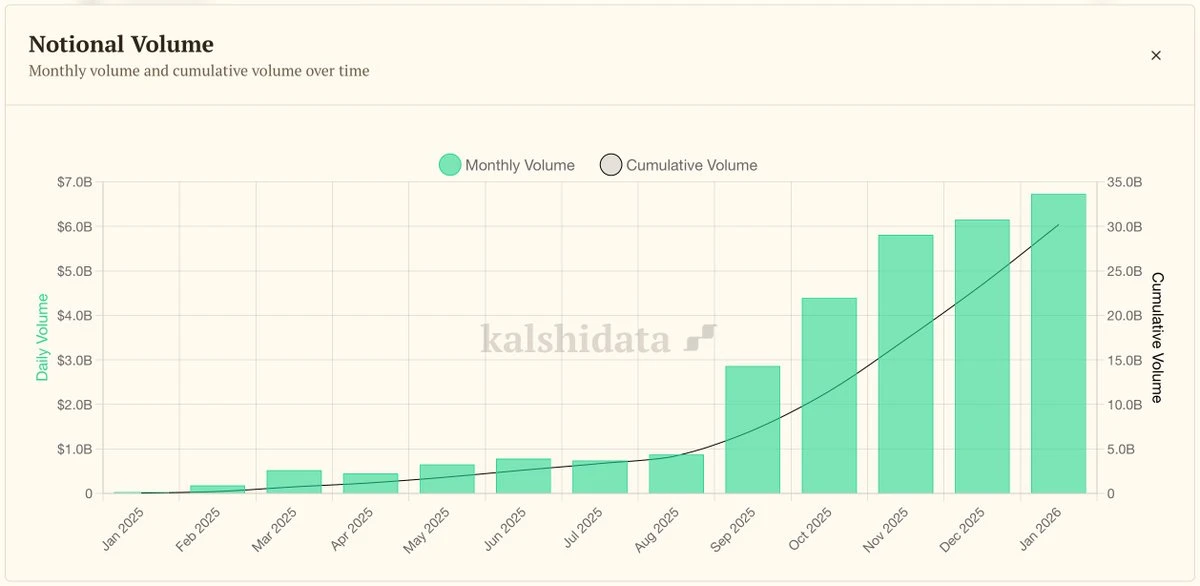
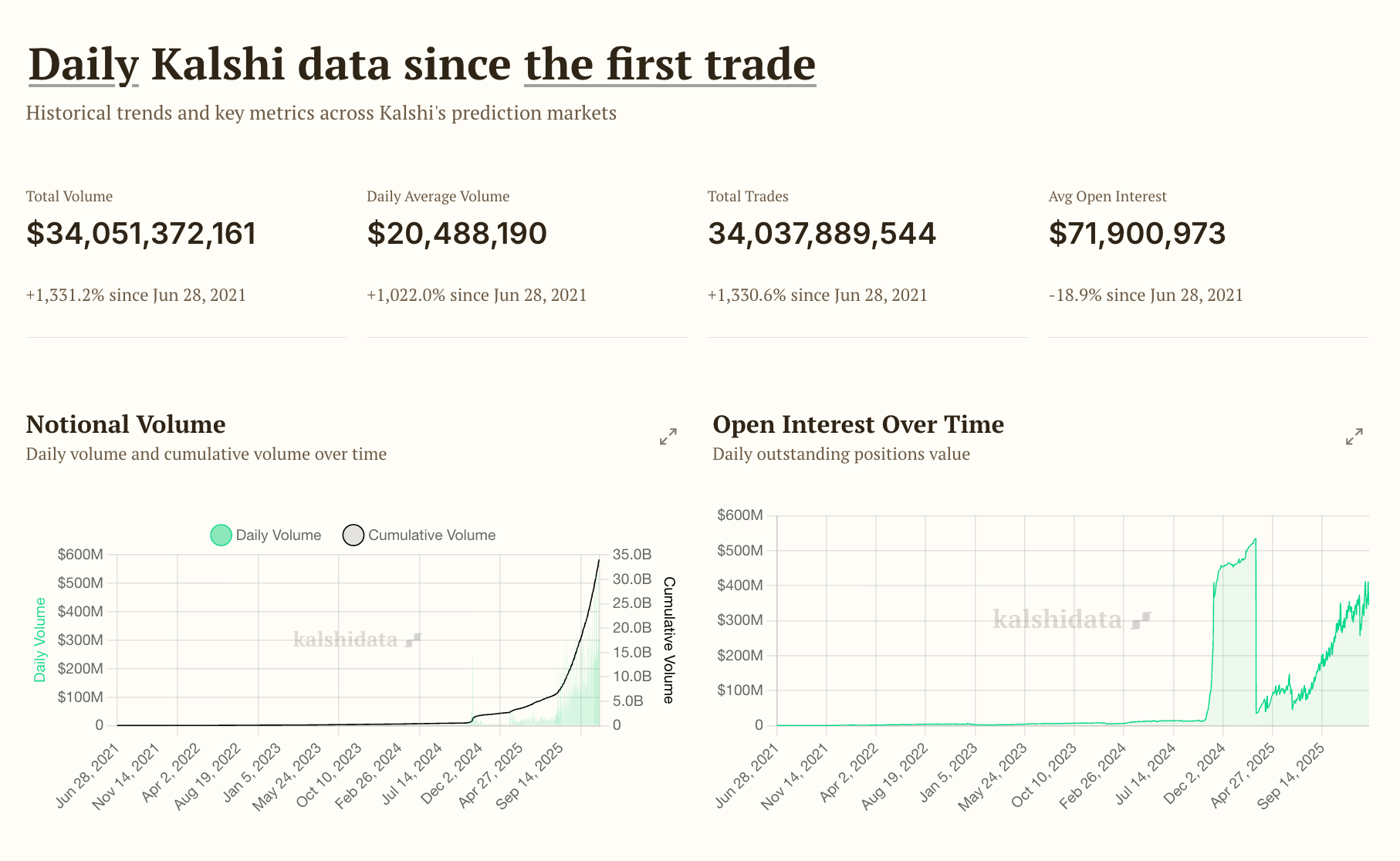
According to data from the KalshiData website, as of January 29, Kalshi's historical total trading volume exceeded $34.05 billion, with a daily average trading volume exceeding $20.48 million; looking at its notional trading volume K-line chart, it has grown almost exponentially since September 2025.
Capital Market Pricing Range: Kalshi Single Share Price is $300-$450

Finally, as the current number one prediction market platform, although Kalshi's specific IPO time and number of shares to be issued are not yet determined,结合 (combined with) its previous financing news and external statements, an IPO is a certainty. Currently, there are many divergences in the pre-market stock pricing between traditional financial markets and cryptocurrency markets:

The pre-market in traditional financial markets prices Kalshi's stock relatively lower——

  • On Nasdaq Private Market, Kalshi's single share is priced around $307;
  • On Hiive, Kalshi's single share is priced around $357.

The pre-market in cryptocurrency markets prices Kalshi's stock relatively higher——

  • On PreStocks, Kalshi's implied market capitalization is approximately $14 billion, with a single share price of approximately $407;
  • On Jarsy, Kalshi's market valuation is $11 billion, with a单独定价 (single price) of $450.

In the next article, Odaily Planet Daily will analyze in detail the price range worth buying for Kalshi's stock pre-market, dissecting the investment opportunities in prediction market stocks from the perspective of the pre-market.

Nội dung Liên quan

Điều Gì Đang Xảy Ra Với Altcoin XDC Và Tại Sao Nó Vừa Vượt Mặt Bitcoin?

Chuyên gia tiền điện tử X Finance Bull đã chỉ ra rằng đồng altcoin XDC gần đây đã vượt qua Bitcoin để trở thành đồng coin được truy cập nhiều nhất trên CoinMarketCap trong bảy ngày qua. Ông lý giải rằng sự chú ý này không ngẫu nhiên, mà do mạng lưới XDC được xây dựng để giải quyết khoảng cách tài trợ thương mại trị giá 2,5 nghìn tỷ USD, thay thế các quy trình giấy tờ thủ công bằng công nghệ blockchain. Mạng XDC được thiết kế cho thương mại thể chế, với các tính năng như tốc độ 2.000 giao dịch/giây, xác nhận trong 2 giây, phí gần như bằng không, các masternode đã xác minh KYC và tuân thủ tiêu chuẩn ISO 20022. Đội ngũ phát triển có André Casterman, cựu chuyên gia với hơn 20 năm tại SWIFT. Các yếu tố tích cực khác bao gồm việc BitGo cung cấp dịch vụ lưu ký, nền tảng Liqi xử lý hơn 100 triệu USD khối lượng tài chính thương mại hàng ngày, và việc được SEC và CFTC phân loại là hàng hóa kỹ thuật số. Đợt nâng cấp "Cancun" vào tháng 1 đã giúp XDC tương thích với các tiêu chuẩn mới nhất của Ethereum. Với vốn hóa thị trường khoảng 635 triệu USD và giá giao dịch quanh mức 0,03 USD, chuyên gia này cho rằng XDC vẫn bị định giá thấp so với tiềm năng trong thị trường tài trợ thương mại đầy triển vọng.

bitcoinist34 phút trước

Điều Gì Đang Xảy Ra Với Altcoin XDC Và Tại Sao Nó Vừa Vượt Mặt Bitcoin?

bitcoinist34 phút trước

Nhịp Độ Thị Trường BTC: Tuần 20

Bitcoin đã có một tuần tăng điểm ổn định, từ vùng cao 77K USD lên sát 82K USD, với lực mua tiếp tục hấp thụ các đợt điều chỉnh. Cấu trúc thị trường cho thấy nhiều tín hiệu tích cực: Khối lượng giao dịch giao ngay (Spot Volume) và dòng tiền (Spot CVD) tăng mạnh, phản ánh sự tham gia và niềm tin của nhà đầu tư. Hoạt động trên chuỗi (on-chain) như số địa chỉ hoạt động, khối lượng chuyển và phí mạng lưới đều tăng, cho thấy mức độ sử dụng mạng lưới cao hơn. Tuy nhiên, động lượng giá (Price Momentum) đã giảm nhiệt, báo hiệu sự cân bằng hơn giữa áp lực mua và bán. Trong thị trường tương lai, dù lòng tham rủi ro và số hợp đồng mở (Open Interest) tăng, nhưng thanh toán funding cho vị thế mua (Long-Side Funding) giảm cho thấy sự quan tâm đến vị thế bán đang gia tăng. Thị trường quyền chọn cũng phản ánh kỳ vọng trung lập đến hơi tích cực nhưng với mức độ bất ổn định (volatility) được định giá cao. Nhìn chung, cấu trúc thị trường Bitcoin tiếp tục được cải thiện nhờ hoạt động on-chain mạnh mẽ, vị thế nắm giữ ổn định và tỷ lệ lợi nhuận lành mạnh. Dù có những yếu tố tích cực, dòng vốn vào chậm và tâm lý thận trọng cho thấy thị trường vẫn nhạy cảm với các thay đổi trong cảm nhận rủi ro.

insights.glassnode1 giờ trước

Nhịp Độ Thị Trường BTC: Tuần 20

insights.glassnode1 giờ trước

Saylor Tuyên Bố Mô Hình Tín Dụng Bitcoin Của MicroStrategy Không Phải Là Mô Hình Lừa Đảo Ponzi

Michael Saylor đã bảo vệ mô hình tín dụng được hỗ trợ bằng Bitcoin của MicroStrategy trước những chỉ trích cho rằng cấu trúc cổ tức STRC của công ty giống một mô hình Ponzi. Ông nhấn mạnh rằng doanh nghiệp này được xây dựng dựa trên việc kiếm tiền từ lợi nhuận vốn của Bitcoin chứ không phụ thuộc vào việc phát hành vốn cổ phần vĩnh viễn. Saylor giải thích rằng công ty phát hành tín dụng (STRC), sử dụng số tiền thu được để mua Bitcoin và kỳ vọng tài sản này sẽ tăng giá trị vượt trội so với chi phí cổ tức về lâu dài. Ông so sánh mô hình này với một công ty phát triển bất động sản. Ông cũng làm rõ quan điểm nổi tiếng "không bao giờ bán Bitcoin" của mình, nói rằng ý chính xác là MicroStrategy không có ý định trở thành "người bán ròng" Bitcoin. Ngay cả khi bán một phần Bitcoin để trả cổ tức, việc phát hành tín dụng mới sẽ cho phép công ty mua nhiều Bitcoin hơn số đã bán, từ đó tiếp tục tích lũy tài sản một cách ròng. Saylor bác bỏ ý kiến của những người chỉ trích như Peter Schiff, cho rằng họ xuất phát từ việc không công nhận Bitcoin là tài sản hợp pháp. Ông mô tả STRC là một dạng "tín dụng kỹ thuật số" được thế chấp quá mức, được thiết kế để giảm bớt biến động và tạo ra lợi nhuận xác định cho các nhà đầu tư tin tưởng vào Bitcoin với tư cách là một kho lưu trữ giá trị kỹ thuật số.

bitcoinist1 giờ trước

Saylor Tuyên Bố Mô Hình Tín Dụng Bitcoin Của MicroStrategy Không Phải Là Mô Hình Lừa Đảo Ponzi

bitcoinist1 giờ trước

Phân Tích Báo Cáo Tài Chính Q1 Của Circle: Khi Lợi Nhuận Lãi Suất Rút Lui, USDC Chuẩn Bị Một Ván Cờ Lớn

Circle đã công bố báo cáo tài chính quý 1 năm 2026. Tổng doanh thu và thu nhập từ dự trữ đạt 6,94 tỷ USD, thấp hơn kỳ vọng thị trường, chủ yếu do tỷ suất lợi nhuận từ tài sản dự trữ giảm. Tuy nhiên, thu nhập khác (không bao gồm thu nhập từ dự trữ) lên mức kỷ lục 42 triệu USD, cho thấy nguồn thu đang đa dạng hóa. Lợi nhuận ròng đạt 55 triệu USD, giảm 15% so với cùng kỳ, trong khi chi phí hoạt động tăng mạnh. Biên lợi nhuận RLDC cốt lõi tiếp tục cải thiện lên 41%. Về hoạt động, lượng USDC lưu hành cuối quý đạt 77 tỷ USD, tăng 28%, nhưng khối lượng giao dịch trên chuỗi tăng tới 263%, lên 21,5 nghìn tỷ USD, cho thấy mức độ sử dụng thực tế cao. Circle cũng công bố mạng lưới thanh toán Arc Network đã hoàn thành đợt bán trước token ARC trị giá 222 triệu USD, và ra mắt Agent Stack để phục vụ nền kinh tế AI Agent. Bối cảnh lãi suất giảm đang thúc đẩy Circle chuyển trọng tâm từ phụ thuộc vào thu nhập lãi sang mở rộng đa dạng hóa dịch vụ, với tham vọng biến USDC thành mạng lưới thanh toán cơ bản cho kỷ nguyên internet và kinh tế kỹ thuật số.

marsbit2 giờ trước

Phân Tích Báo Cáo Tài Chính Q1 Của Circle: Khi Lợi Nhuận Lãi Suất Rút Lui, USDC Chuẩn Bị Một Ván Cờ Lớn

marsbit2 giờ trước

Giải Mã Báo Cáo Tài Chính Q1 Của Circle: Sau Khi Lợi Nhuận Từ Lãi Suất Suy Giảm, USDC Đang Chuẩn Bị Cho Một Ván Cờ Lớn

Circle đã công bố báo cáo tài chính quý I/2026 với doanh thu và thu nhập dự trữ tổng cộng là 6,94 tỷ USD, thấp hơn kỳ vọng thị trường, chủ yếu do lãi suất dự trữ giảm sau khi Fed hạ lãi suất. Tuy nhiên, thu nhập khác (không từ dự trữ) đạt mức cao kỷ lục 42 triệu USD, cho thấy sự đa dạng hóa nguồn thu. Biên lợi nhuận RLDC tăng lên 41%, phản ánh kiểm soát chi phí hiệu quả hơn. Lưu thông USDC tăng 28% lên 77 tỷ USD, nhưng khối lượng giao dịch trên chuỗi tăng mạnh 263% lên 21,5 nghìn tỷ USD, chứng tỏ USDC đang được sử dụng tích cực trong thanh toán và DeFi. Circle đang mở rộng mạnh mẽ sang các lĩnh vực phi lãi suất. Mạng thanh toán Arc Network đã huy động được 222 triệu USD từ đợt bán trước token ARC. Các dịch vụ mới như Circle Payments Network (CPN), Managed Payments và bộ công cụ Agent Stack cho AI đang được triển khai, nhằm biến USDC từ một tài sản dự trữ thành hạ tầng tài chính lập trình được cho nền kinh tế internet và AI. Đây là chiến lược dài hạn của Circle trong bối cảnh lợi nhuận từ lãi suất đang thu hẹp.

Odaily星球日报2 giờ trước

Giải Mã Báo Cáo Tài Chính Q1 Của Circle: Sau Khi Lợi Nhuận Từ Lãi Suất Suy Giảm, USDC Đang Chuẩn Bị Cho Một Ván Cờ Lớn

Odaily星球日报2 giờ trước

Giao dịch

Giao ngay
Hợp đồng Tương lai
活动图片