GitHub Empire on the Brink of Collapse: Source Code Leak, 18-Year Veteran Leaves, Microsoft Loses 1.5 Billion Developers

marsbitXuất bản vào 2026-05-22Cập nhật gần nhất vào 2026-05-22

Tóm tắt

GitHub is facing an unprecedented crisis, marked by a massive exodus of developers and severe operational failures. The tipping point came when Mitchell Hashimoto, creator of Ghostty and an 18-year GitHub user, publicly severed ties, citing persistent platform outages that made serious work impossible. This departure highlights a broader pattern of user frustration. The platform's instability has drawn complaints from major corporate clients like Citibank and Intel, forcing Microsoft to issue substantial service credits. A critical incident last month saw an accidentally triggered, unreleased feature cause widespread repository rollbacks, erasing recent code changes and pushing enterprises to migrate. Security has catastrophically breached. In May 2026, hackers infiltrated over 3,800 of GitHub's internal repositories via a poisoned VS Code extension installed by a developer, leading to the attempted sale of core source code for $50,000. This follows the discovery of a critical zero-day vulnerability in March that threatened access to millions of repositories. Internally, GitHub's autonomy has collapsed. After the resignation of CEO Thomas Dohmke in mid-2025, Microsoft eliminated the CEO role, folding GitHub into its CoreAI division under the unpopular leadership of Jay Parikh. This triggered a talent drain, with key executives and engineers leaving. A disruptive migration of GitHub's infrastructure to Azure servers, pushed by CTO Vladimir Fedorov, is blamed for the recurri...

GitHub is experiencing an unprecedented major collapse.

Recently, the global open-source tech community witnessed a shocking rift.

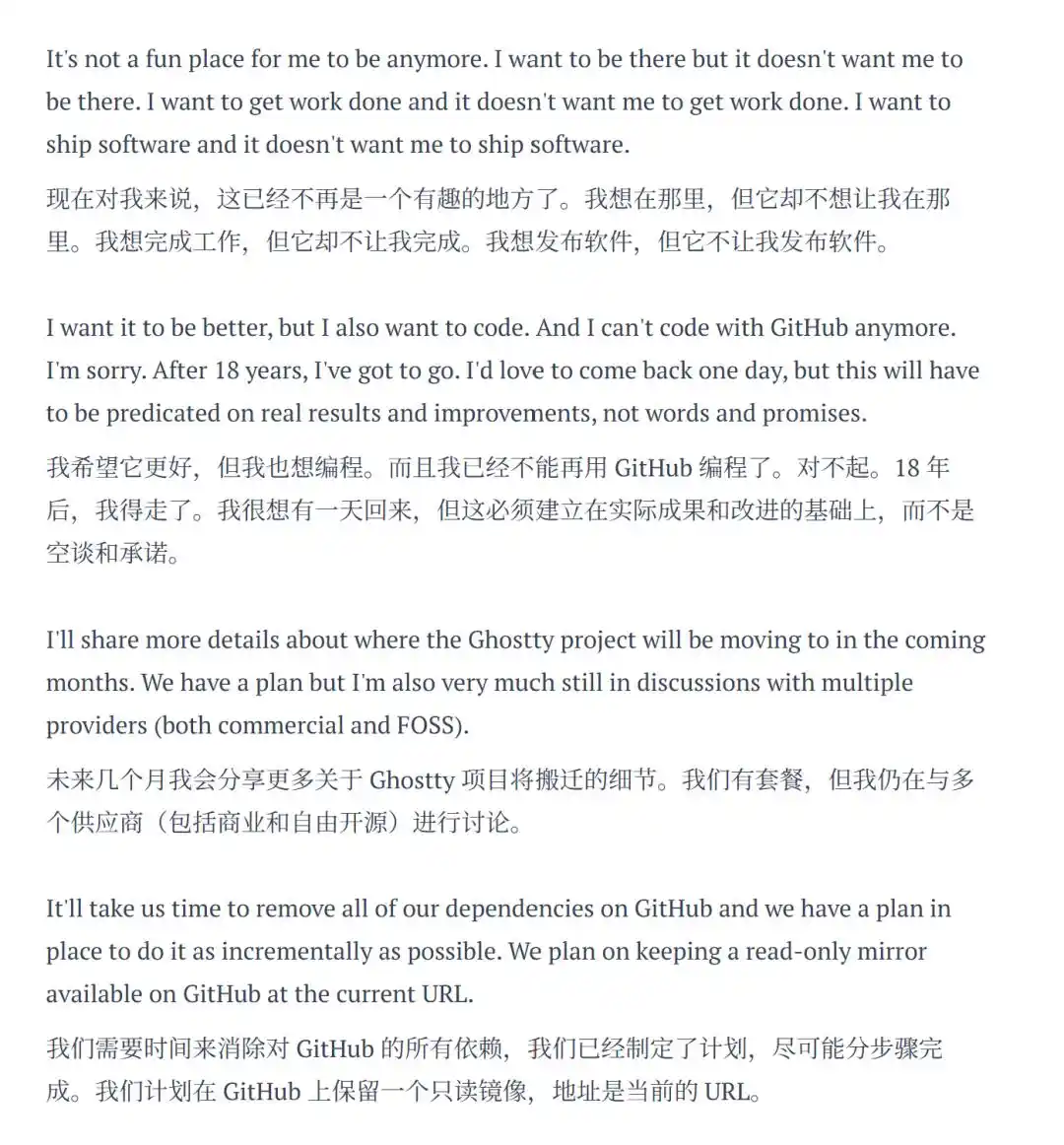
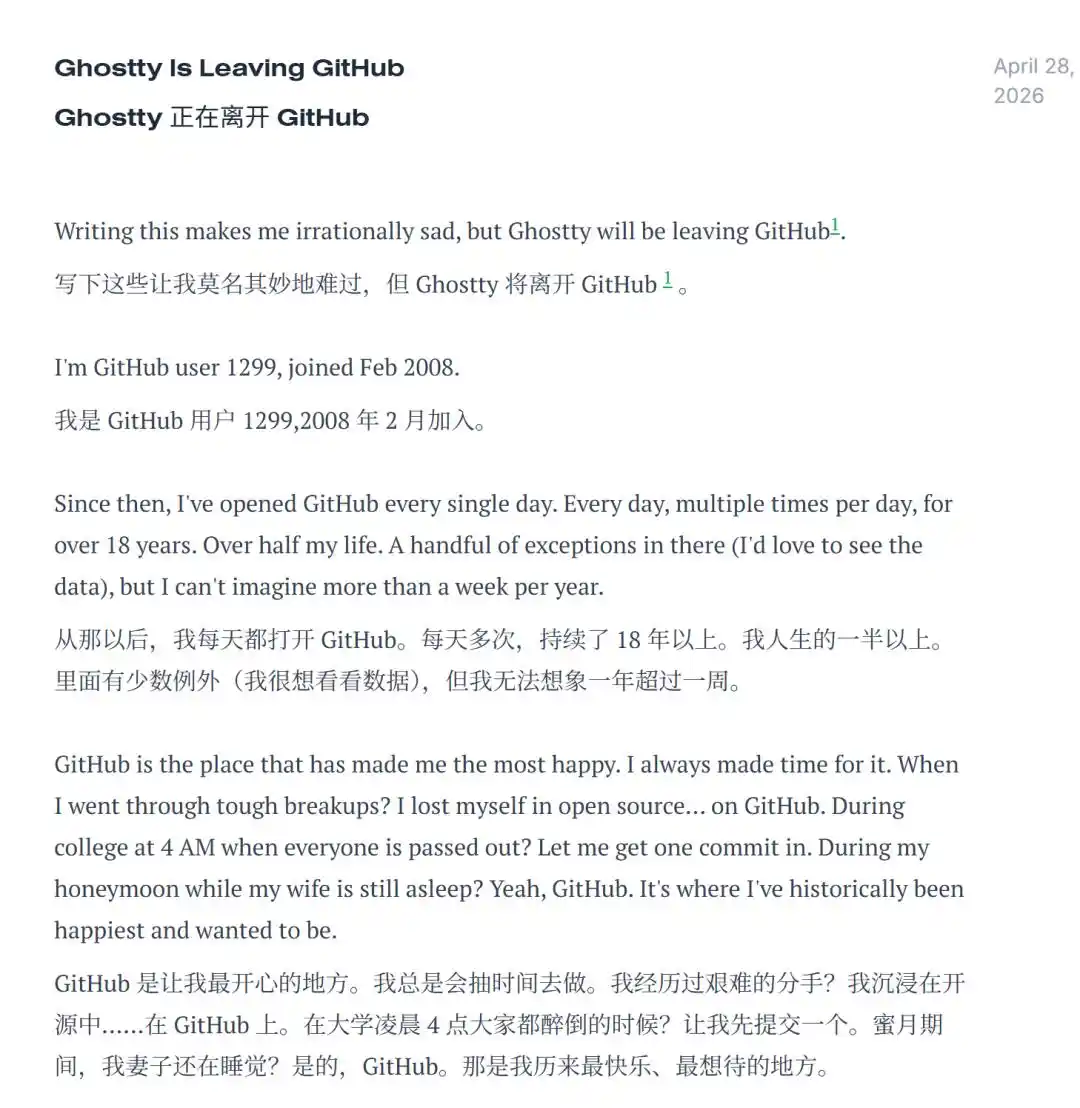
Mitchell Hashimoto, an 18-year veteran fan of GitHub and the famous developer of the Ghostty terminal, posted a sensational 'farewell letter' that went viral—every word bleeding with pain.

GitHub fails me every day.

I wish it were better, but I want to program more. I can no longer program using GitHub. I'm sorry, after 18 years, I have to go.

If a platform locks you out for hours every day, it is no longer suitable for serious work.

Subsequently, Ghostty packed up all its assets and decisively left.

His departure is just the tip of the iceberg in an avalanche.
GitHub's Life or Death

In recent months, giants like Citibank and Intel have expressed dissatisfaction to Microsoft over GitHub's ongoing failures. Even OpenAI has begun exploring self-built solutions.

To appease customers, Microsoft had to issue a large number of Credits to enterprise users as compensation for losses, leading directly to a bleeding of profits.

The most severe incident occurred last month: a mistakenly triggered, unreleased feature on GitHub caused numerous repositories to 'roll back,' with recent code modifications disappearing directly. Many enterprises have been forced to migrate.

Nearly eight years ago, when Microsoft acquired GitHub for $7.5 billion, global programmers were filled with concern.

As expected, after a brief golden period, this 'programmer's sanctuary'—hosting over 1.5 billion developers and 10 billion code repositories worldwide—now stands at a critical juncture of life or death in an extremely brutal manner.

3800+ Repositories 'Wiped Out' by Hackers

Even more serious, a recent security storm has completely stripped GitHub bare.

On May 21, 2026, a message instantly exploded on the hacker forum BreachForums: a hacker group openly offered GitHub's core source code for sale at a mere $50,000!
They arrogantly wrote:

Everything of the main platform is here. I would be happy to send samples to interested buyers for verification. This is not blackmail; we are too lazy to extort GitHub. If one person buys, we will completely destroy the data. If no buyer is found, we will soon make it public for free.
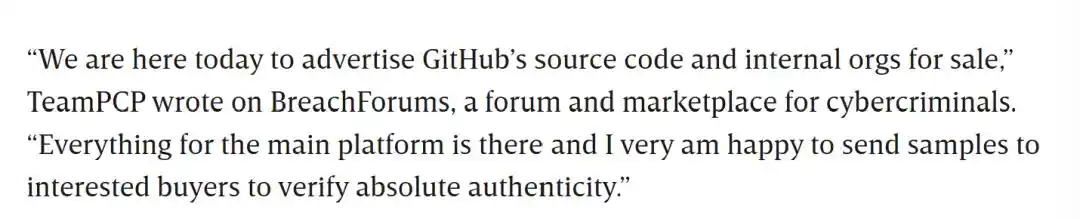
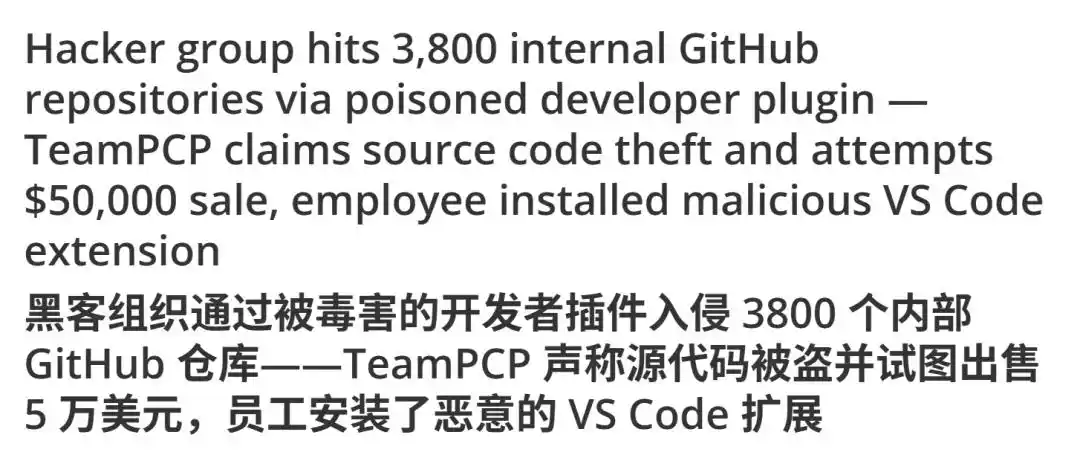
Subsequently, GitHub officially reluctantly confirmed: over 3,800 internal code repositories were indeed compromised.

The origin of this disaster is absurdly unbelievable: a GitHub internal developer installed a malicious, poisoned VS Code extension plugin on their work device. After credentials were leaked, over 3,800 repositories were breached.

VS Code and GitHub, both belonging to Microsoft, should have been a 'family ecosystem combination.' However, VS Code plugins lack high-intensity review mechanisms, making them the perfect entry point for hackers.

Because VS Code frequently prompts developers to install various plugins, these 'Trojan horses' can freely access local files, system terminals, etc.

When the GitHub engineer downloaded the malicious plugin, their long-term valid personal access token was instantly intercepted by the hackers!

For a platform built on 'code security and hosting,' having its source code publicly offered for sale is undoubtedly a resounding slap in the face.

This is just the tip of the iceberg.

In March of this year, security agencies discovered a 0-day-level critical vulnerability in GitHub's internal Git infrastructure.

If exploited, attackers could directly and unlimitedly access millions of public and private code repositories across the entire network, with consequences a hundred times more terrifying than this incident!

Management Shake-up: No More CEO, Reduced to a Microsoft Vassal

Behind the frequent security and technical incidents is GitHub's internal 'leaderless state' for nearly a year.

Last summer, the beloved former CEO Thomas Dohmke suddenly resigned. Microsoft then made a decision that shocked all employees: completely abolish the GitHub CEO position.

GitHub CEO Thomas Dohmke
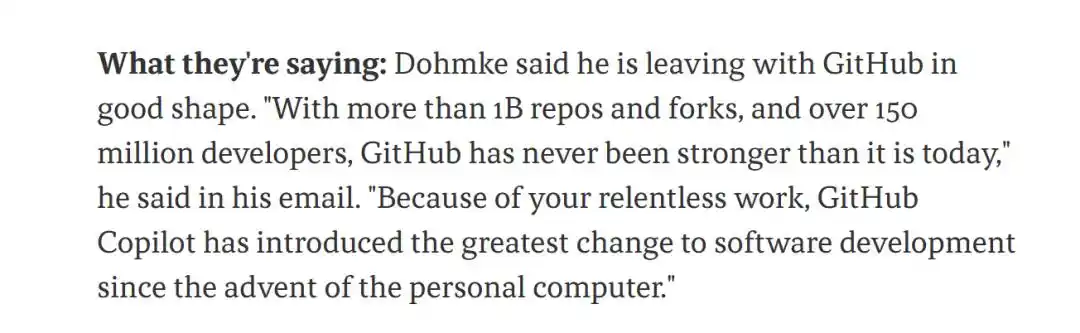
Dohmke thanked everyone: 'GitHub has never been stronger, with over 1 billion repositories and branches, and over 1.5 billion developers. It is thanks to your relentless efforts that GitHub Copilot has brought the biggest transformation in software development since the advent of the PC.'

For seven years, GitHub proudly maintained its status as an 'independent subsidiary.' But last summer, it was merged into the newly formed CoreAI team.

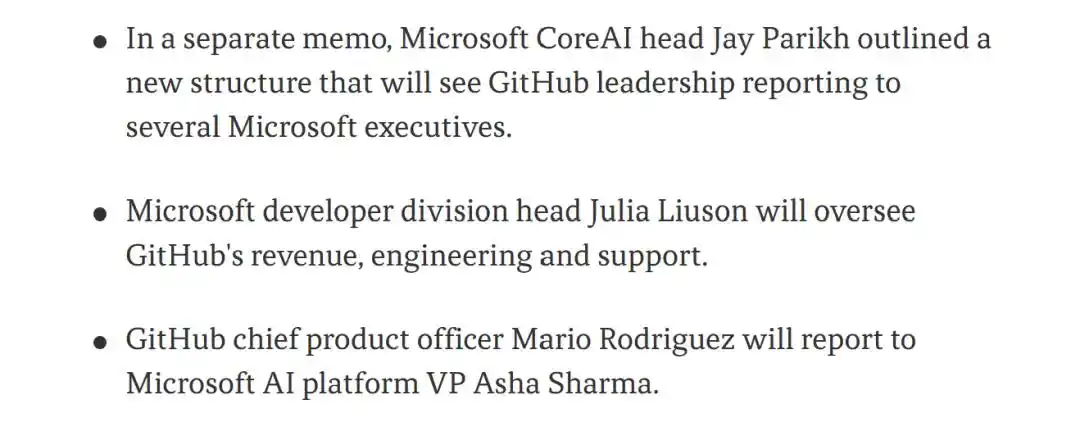
This drastic change directly pushed GitHub executives into an awkward position: they lost their direct line of communication with Microsoft's top leadership and were forced to report to Parikh, the head of the CoreAI team and former Meta executive.

However, Parikh is extremely unpopular internally. It was he who insisted on erasing the GitHub CEO position.

'There's basically no GitHub here anymore; it's now completely a department of Microsoft,' one senior employee angrily stated. 'Management and technical talent are fleeing madly.'

This was followed by a loss of top talent: former CEO Dohmke founded the next-generation developer platform Entire, poaching 11 people; 34-year veteran Julia Liuson resigned; Senior Vice President of Product Engineering Jared Palmer transferred to the Xbox team; the Chief Revenue Officer resigned.
Current CTO Vladimir Fedorov aggressively promoted the project to migrate GitHub to Azure servers. This complex MySQL cluster relocation directly caused the chain of outages over the past year.

Thus, GitHub's R&D, finance, and marketing have been comprehensively strangled and devoured. Internally, there is division and discord, with the loss of technical backbone.

GitHub's once-proud 'pure developer culture' is being gnawed away by Microsoft's bureaucratic and powerful system!

Moat Breached: Cursor and Claude Code's Dimensional Reduction Strike

The external outages and internal turmoil have torn open huge cracks for predators.

Once, Copilot was almost synonymous with AI-assisted programming.

However, in 2024, Cursor emerged out of nowhere. While GitHub Copilot was still stuck in the 'you write a line, I guess the next line' code completion stage, Cursor could already understand the entire project context and generate entire modules with one click.

In 2025, Claude Code launched a dimensional reduction strike—it could not only write code but also automate complex debugging, testing, and multi-file collaborative modifications.

Microsoft was thrown into unprecedented panic internally. According to leaks, Jay Parikh warned with an ashen face in a meeting: GitHub is facing a 'death threat.'

Parikh's core fear is: once developers get used to completing all development in Cursor, they will no longer upload their code to GitHub.

To this end, Microsoft seriously evaluated acquiring Cursor but hesitated for a moment. In the blink of an eye, Cursor was snapped up by SpaceX.

What's even more amusing is that Claude Code is so incredibly good that tens of thousands of engineers in Microsoft's Windows and Office departments have all become die-hard fans of CC. Microsoft executives were completely broken!

Rajesh Jha issued a strict order to all staff, forcibly revoking all CC licenses by the end of June and forcing engineers to revert to using GitHub Copilot CLI.

Financial Avalanche: The 'Subsidy Black Hole' of Making More Money, Losing More Money

Moreover, GitHub's commercial operations are also deeply mired, even starting to backfire on Microsoft.

On the surface, GitHub's data still looks impressive. By the end of 2025, Copilot paid users surpassed 4.7 million, and GitHub's annual recurring revenue crossed the $3 billion threshold.
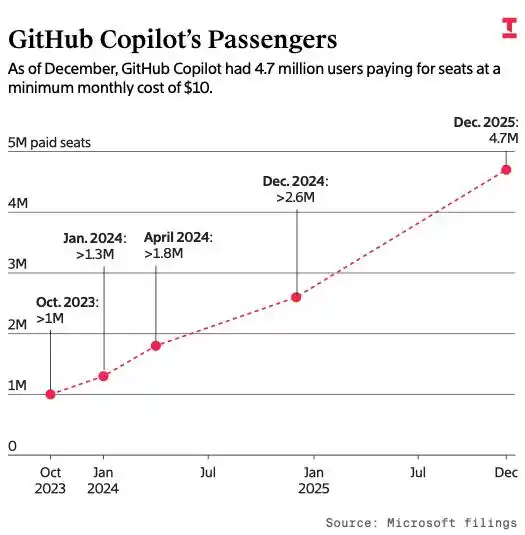
But behind the pretty numbers, it's all Microsoft's blood.

With the AI explosion, GitHub traffic surged 14 times. However, AI features for code hosting and open-source projects remain completely free.

Meanwhile, the inference costs for running AI models remain high. The computing power consumed by heavy users far exceeds the $10 monthly subscription fee—the more they sell, the more they lose.
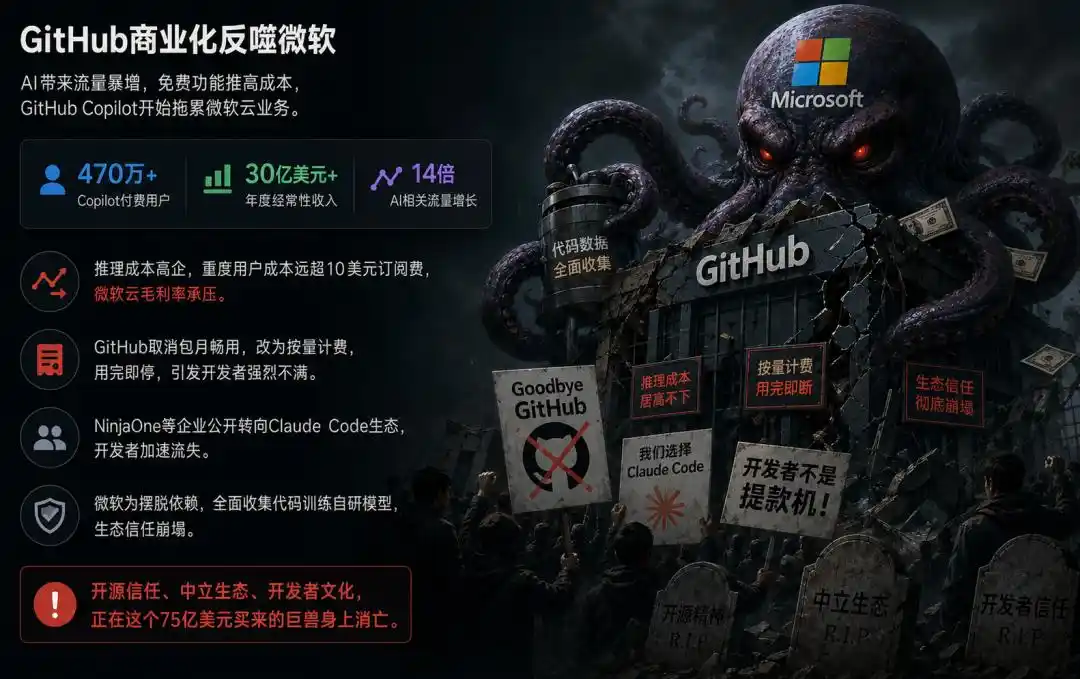
During Microsoft's earnings call in April this year, the CFO rarely admitted: the significant increase in GitHub Copilot usage directly lowered the gross margin of the entire core cloud business.

Under pressure from Wall Street, GitHub announced last month: abolish the unlimited monthly usage model and fully transition to 'pay-as-you-go.' Once credits are depleted, AI services are immediately cut off.

This move, perceived as greedy, completely infuriated developers!

The global IT services giant NinjaOne immediately publicly stated: they are comprehensively guiding engineers to abandon GitHub and turn to the Claude Code ecosystem.

Will GitHub Die?

This year, Microsoft's stock price has fallen by over 10%, performing the worst among the 'Magnificent Seven' tech stocks.

Its developer ecosystem cornerstone, GitHub, is pushing everything toward the abyss.

To break free from dependence on OpenAI and Anthropic, CoreAI has ordered the comprehensive collection of all code to train Microsoft's own native large model.

This practice of recklessly depleting the ecosystem for its own benefit has completely chilled developers worldwide.

The trust of the open-source community, the neutral ecological environment, and the free, pure developer culture are rapidly vanishing from this $7.5 billion behemoth.

Now, the most fatal question facing Satya Nadella is: In the era of AI agents, do global developers still need a central code repository platform like GitHub?

If Microsoft cannot provide a convincing answer, it will lose the soul it has cultivated around its ecosystem for decades—

'Developers, developers, developers!'

References:

https://www.theverge.com/tech/935250/microsoft-github-struggles-notepadhttps://mitchellh.com/writing/ghostty-leaving-githubhttps://www.wired.com/story/teampcp-software-supply-chain-attack-spree-github/?utm_source=chatgpt.com

This article comes from the WeChat public account "Xinzhiyuan," author: ASI Revelation.

Tiền kỹ thuật số thịnh hành

Câu hỏi Liên quan

QWho is Mitchell Hashimoto and what significant action did he take regarding GitHub?

AMitchell Hashimoto is the developer of the Ghostty terminal and a long-time GitHub user. He recently announced his departure from the platform, citing frequent outages that prevented serious work, and moved the Ghostty project assets away from GitHub.

QWhat major security incident involving GitHub's source code is detailed in the article?

AA hacker group breached and stole the source code for over 3,800 of GitHub's internal repositories. The breach originated from a GitHub engineer installing a malicious VS Code extension, which compromised their credentials, allowing the hackers to access and later attempt to sell the code.

QHow has Microsoft's internal restructuring impacted GitHub's leadership?

AMicrosoft disbanded GitHub's independent subsidiary status and merged it into the CoreAI team. The CEO position was eliminated, and GitHub's leadership now reports to the CoreAI head, Jay Parikh, leading to a loss of autonomy, internal dissatisfaction, and a significant exodus of senior talent.

QWhat competitive threats to GitHub Copilot are mentioned, and what was Microsoft's internal reaction?

AThe article cites Cursor and Claude Code as major competitive threats, offering more advanced AI-assisted programming features. Microsoft was internally alarmed, with executives describing it as an 'existential threat.' Notably, many Microsoft engineers preferred using Claude Code, prompting management to forcibly revoke its licenses within the company.

QWhat financial and operational challenges is GitHub facing according to the article?

AGitHub is struggling with profitability despite high revenue. The massive computational costs of running free AI features like Copilot exceed subscription income, negatively impacting Microsoft's cloud margins. In response, GitHub shifted from a flat-rate subscription to a pay-as-you-go model, which angered many developers and prompted some companies to consider alternatives.

Nội dung Liên quan

Ví liên kết đội ngũ ONDO chuyển 26 triệu token vào Coinbase – Đợt bán tháo sắp tới?

Một địa chỉ được cho là liên kết với đội ngũ Ondo đã chuyển 26,05 triệu token ONDO (trị giá khoảng 9,79 triệu USD) vào sàn Coinbase. Theo dữ liệu từ Arkham, ba tuần trước, địa chỉ này đã nhận 150 triệu token từ một ví đa chữ ký, và hai tuần sau đó chuyển đi 26,39 triệu token. Hoạt động này phù hợp với mô hình trước đây, khi token được chuyển thường bị bán ra, làm dấy lên lo ngại về áp lực bán trong ngắn hạn. Thị trường ONDO có phản ứng nhẹ với động thái này, giảm từ mức cao cục bộ 0,38 USD xuống 0,36 USD, trước khi giao dịch quanh 0,37 USD. Chỉ số RSI gần 64 và khối lượng mua ròng tích cựp trong 4 ngày liên tiếp cho thấy nhu cầu mua vẫn mạnh, hỗ trợ cấu trúc tăng giá. Tuy nhiên, khối lượng giao dịch giảm 46% và dữ liệu từ CryptoQuant cho thấy hoạt động của "cá voi" tập trung vào bán ra, với Spot Taker CVD âm, báo hiệu sự thống trị của phe bán. Tóm lại, trong khi nhu cầu mua spot đang hỗ trợ giá, nguy cơ bán ra tiếp tục từ các cá voi và đội ngũ có thể khiến ONDO đối mặt với đợt điều chỉnh về vùng hỗ trợ 20 ngày EMA quanh 0,33 USD. Ngược lại, nếu áp lực mua duy trì, ONDO có thể thử thách ngưỡng kháng cự 0,40 USD.

ambcrypto41 phút trước

Ví liên kết đội ngũ ONDO chuyển 26 triệu token vào Coinbase – Đợt bán tháo sắp tới?

ambcrypto41 phút trước

Tại WAIC, lần đầu tiên tôi cảm thấy AI không cần phải quá thông minh

Tác giả chia sẻ trải nghiệm tại WAIC khi vô tình phát hiện một không gian âm nhạc trị liệu AI do đội ngũ từ Nhạc viện Thượng Hải phát triển. Trong khi toàn bộ hội nghị tập trung vào trình diễn các mô hình lớn, robot, thiết bị đầu cuối AI và các cuộc chạy đua về hiệu suất, công cụ, thì không gian yên tĩnh này sử dụng AI để tạo ra âm nhạc phù hợp với sóng não và trạng thái cảm xúc của người dùng, giúp họ thư giãn trong 20 phút. Bài viết nêu lên sự tương phản: AI ngày càng mạnh mẽ, hướng tới nâng cao hiệu suất và tích hợp vào mọi thiết bị, nhưng đồng thời cũng đặt ra câu hỏi về mục đích cuối cùng. Liệu cuộc cách mạng hiệu suất có thực sự mang lại hạnh phúc, hay lại khiến con người bị cuốn vào vòng xoáy công việc và thông tin nhanh hơn? Tác giả nhận thấy một xu hướng đang manh nha: các sản phẩm AI hướng đến chăm sóc sức khỏe tinh thần, trị liệu, đồng hành và thấu hiểu cảm xúc. Đây có thể là nền tảng hạ tầng "cảm xúc" mà AI cần xây dựng trong tương lai, bổ sung cho hạ tầng thông tin và kết nối. Kết luận cho rằng giai đoạn phát triển đầu tiên của AI tập trung vào trí thông minh (Intelligence), nhưng khi năng lực mô hình dần trở thành hạ tầng, thách thức thực sự sẽ là khả năng thấu hiểu con người, cảnh cụ thể và các vấn đề cụ thể. Giá trị của AI không chỉ nằm ở sức mạnh, mà còn ở cách nó hòa nhập vào cuộc sống để mang lại sự bình yên và kết nối có ý nghĩa hơn.

marsbit44 phút trước

Tại WAIC, lần đầu tiên tôi cảm thấy AI không cần phải quá thông minh

marsbit44 phút trước

Các đề xuất phí giao thức mới của Uniswap có thúc đẩy 'đốt UNI đáng kể' không?

Uniswap đã chính thức đưa ra ba đề xuất quản trị để kích hoạt phí giao thức trên nhiều blockchain và các phiên bản DEX khác nhau. Đề xuất đầu tiên nhắm vào phiên bản V2 và V3 trên mạng Robinhood, trong khi đề xuất thứ hai tìm cách áp dụng phí cho V4 trên Ethereum, Base, Arbitrum và một số mạng khác. Giám đốc điều hành Hayden Adams kỳ vọng các phí mới này sẽ được chuyển trực tiếp vào cơ chế đốt UNI hiện có, tạo ra tác động "đáng kể" đến việc giảm nguồn cung token UNI. Tuy nhiên, đề xuất gặp phải phản ứng trái chiều, đặc biệt từ các nhà cung cấp thanh khoản (LP) như Gamma Strategies, vì họ lo ngại việc giảm phí thu nhập sẽ ảnh hưởng đến lợi nhuận của họ và khiến V4 kém cạnh tranh hơn. Theo số liệu, kể từ năm 2018, các LP đã kiếm được hơn 5 tỷ USD phí tích lũy, trong khi giao thức chỉ thu về 25 triệu USD doanh thu. Nếu được thông qua, đề xuất có thể thúc đẩy tỷ lệ đốt UNI mạnh mẽ hơn. Tính đến nay, đã có 107,49 triệu UNI bị đốt, với tốc độ đốt tăng gấp ba lần trong tuần qua. Về giá cả, UNI đã tăng 41% trong tháng 7, phần lớn nhờ kỳ vọng vào sự phát triển trên Robinhood. Động thái giá tiếp theo có thể phụ thuộc vào đà tăng trưởng trên Robinhood và tác động thực tế từ việc đốt token nếu các đề xuất phí được thực thi.

ambcrypto2 giờ trước

Các đề xuất phí giao thức mới của Uniswap có thúc đẩy 'đốt UNI đáng kể' không?

ambcrypto2 giờ trước

Giao dịch

Giao ngay

Bài viết Nổi bật

Làm thế nào để Mua OP

Chào mừng bạn đến với HTX.com! Chúng tôi đã làm cho mua Optimism (OP) trở nên đơn giản và thuận tiện. Làm theo hướng dẫn từng bước của chúng tôi để bắt đầu hành trình tiền kỹ thuật số của bạn.Bước 1: Tạo Tài khoản HTX của BạnSử dụng email hoặc số điện thoại của bạn để đăng ký tài khoản miễn phí trên HTX. Trải nghiệm hành trình đăng ký không rắc rối và mở khóa tất cả tính năng. Nhận Tài khoản của tôiBước 2: Truy cập Mua Crypto và Chọn Phương thức Thanh toán của BạnThẻ Tín dụng/Ghi nợ: Sử dụng Visa hoặc Mastercard của bạn để mua Optimism (OP) ngay lập tức.Số dư: Sử dụng tiền từ số dư tài khoản HTX của bạn để giao dịch liền mạch.Bên thứ ba: Chúng tôi đã thêm những phương thức thanh toán phổ biến như Google Pay và Apple Pay để nâng cao sự tiện lợi.P2P: Giao dịch trực tiếp với người dùng khác trên HTX.Thị trường mua bán phi tập trung (OTC): Chúng tôi cung cấp những dịch vụ được thiết kế riêng và tỷ giá hối đoái cạnh tranh cho nhà giao dịch.Bước 3: Lưu trữ Optimism (OP) của BạnSau khi mua Optimism (OP), lưu trữ trong tài khoản HTX của bạn. Ngoài ra, bạn có thể gửi đi nơi khác qua chuyển khoản blockchain hoặc sử dụng để giao dịch những tiền kỹ thuật số khác.Bước 4: Giao dịch Optimism (OP)Giao dịch Optimism (OP) dễ dàng trên thị trường giao ngay của HTX. Chỉ cần truy cập vào tài khoản của bạn, chọn cặp giao dịch, thực hiện giao dịch và theo dõi trong thời gian thực. Chúng tôi cung cấp trải nghiệm thân thiện với người dùng cho cả người mới bắt đầu và người giao dịch dày dạn kinh nghiệm.

Tổng lượt xem 525Xuất bản vào 2024.12.12Cập nhật vào 2026.06.02

Làm thế nào để Mua OP

Thảo luận

Chào mừng đến với Cộng đồng HTX. Tại đây, bạn có thể được thông báo về những phát triển nền tảng mới nhất và có quyền truy cập vào thông tin chuyên sâu về thị trường. Ý kiến ​​của người dùng về giá của OP (OP) được trình bày dưới đây.

活动图片