Bloomberg's Review: 11 Key Trades to Understand the Global Financial Markets in 2025

marsbitXuất bản vào 2025-12-29Cập nhật gần nhất vào 2025-12-29

Tóm tắt

Bloomberg's 2025 financial market review highlights 11 key trades that defined a year of high-stakes bets and sharp reversals. Cryptocurrency saw a fleeting boom in Trump-affiliated meme coins and assets, which ultimately crashed, demonstrating that political hype couldn't override crypto's volatile cycles. Michael Burry’s bearish bets on AI giants Nvidia and Palantir exposed underlying skepticism in tech valuations. European defense stocks surged due to geopolitical shifts and increased military spending, while the "debasement trade" drove gold to record highs, though its effectiveness was mixed. South Korea’s equity market rallied over 70%, fueled by pro-market policies and foreign investment, yet domestic retail investors remained skeptical. A notable showdown between short-seller Jim Chanos and bitcoin bull Michael Saylor ended with Strategy's premium collapsing. Japan’s government bonds, long a "widow maker" trade, finally paid off for shorts as yields soared. Credit markets saw intense inter-creditor conflicts, with firms like Pimco profiting from tactical moves. Mortgage giants Fannie Mae and Freddie Meme surged on privatization plans. A popular Turkish carry trade imploded overnight due to political turmoil, and recurring credit crises hinted at deeper systemic risks, prompting warnings of more "cockroaches" in the market.

Editor's Note: After reviewing the ups and downs of the crypto industry in 2025, let's broaden our perspective: the pulse of the global financial markets often mirrors and is inextricably linked to the logic of the crypto space. This article focuses on 11 major trades of the year, from cross-market trends to policy-driven asset fluctuations. The market rules and risk revelations hidden within are also worth referencing for crypto practitioners, helping to see the full picture of the annual financial landscape together.

This was another year filled with "high-conviction bets" and "rapid reversals".

From bond trading desks in Tokyo and credit committees in New York to forex traders in Istanbul, the markets delivered both windfalls and wild volatility. Gold prices hit record highs, the stock of a steady mortgage giant swung wildly like a 'Meme stock' (stocks driven by social media hype), and a textbook arbitrage trade collapsed in an instant.

Investors placed big bets around political changes, bloated balance sheets, and fragile market narratives, driving significant stock market rallies and crowded yield trades, while crypto strategies often relied on leverage and expectations, lacking other solid support. After Donald Trump returned to the White House, global financial markets first slumped heavily, then recovered; European defense stocks were ignited; speculators stirred up wave after wave of market mania. Some positions yielded astonishing returns, but when market momentum reversed, funding dried up, or leverage backfired, others suffered heavy losses.

As the year-end approaches, Bloomberg focuses on the most notable bets of 2025—including successes, failures, and the positions that defined the era. These trades leave investors grappling with a series of 'old problems' as they prepare for 2026: unstable companies, excessive valuations, and those 'once-effective, eventually-failed' trend-following trades.

Cryptocurrency: The Short-Lived Rally of Trump-Linked Assets

For the cryptocurrency sector, "buying up all assets linked to the Trump brand" seemed like a highly attractive momentum bet. During the presidential campaign and after taking office, Trump went "all-in" on digital assets (as reported by Bloomberg Terminal), pushing for comprehensive reforms and placing industry allies in key agencies. His family also joined in, endorsing various tokens and crypto companies, which traders saw as "political booster fuel."

This "Trump crypto asset matrix" quickly took shape: hours before the inauguration, Trump launched a Meme coin promoted on social media; First Lady Melania Trump subsequently launched her own personal token; later in the year, Trump-family-linked World Liberty Financial made its WLFI token available for trading, allowing retail investors to buy. A series of "Trump-related" trades emerged—Eric Trump co-founded American Bitcoin, a publicly traded cryptocurrency miner that went public via a merger in September.
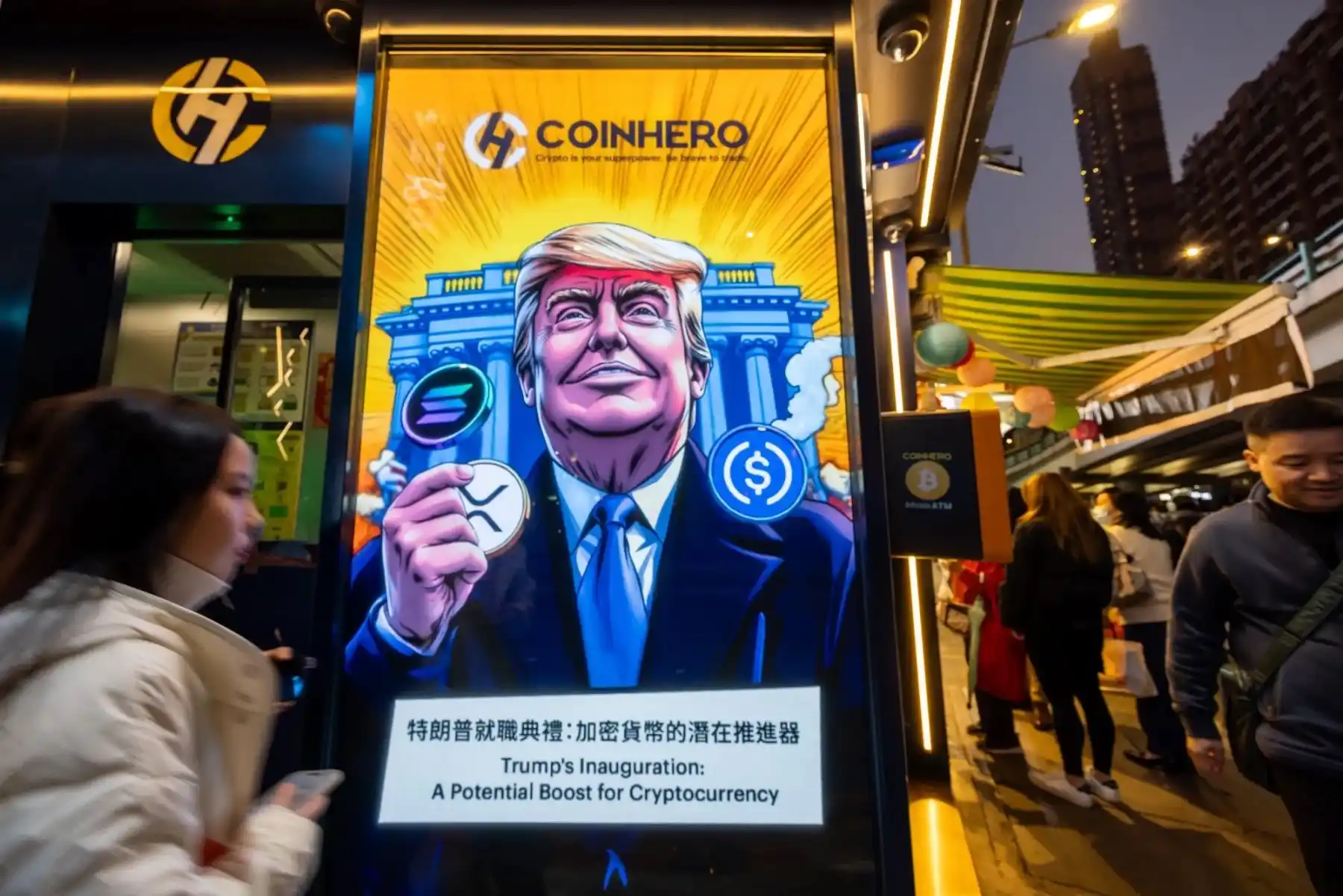
Each asset launch triggered a wave of buying, but each rally was short-lived. As of December 23, Trump's Meme coin performed dismally, down over 80% from its January high; according to crypto data platform CoinGecko, Melania's Meme coin fell nearly 99%; American Bitcoin's stock price fell about 80% from its September peak.

Politics provided the thrust for these trades, but the laws of speculation ultimately pulled them back to earth. Even with "supporters" in the White House, these assets couldn't escape the core cycle of cryptocurrency: price rise → leverage influx → liquidity drain. Bitcoin, a bellwether for the industry, is likely to post an annual loss after falling from its October peak. For Trump-linked assets, politics can bring short-term heat but cannot provide long-term protection.

—Olga Kharif (Reporter)

AI Trade: The Next 'Big Short'?

This trade was exposed in a routine disclosure filing, but its impact was anything but routine. On November 3, Scion Asset Management disclosed holdings of protective put options on Nvidia and Palantir Technologies—two companies at the core of the market-driving 'AI stocks' rally of the past three years. Although Scion is not a large hedge fund, its manager, Michael Burry, drew intense scrutiny to the filing: Burry gained fame for 'foreseeing the 2008 subprime crisis' in the book and film "The Big Short," becoming a recognized market 'prophet.'

The strike prices of the options were staggering: Nvidia's strike price was 47% below the closing price at the time of disclosure, and Palantir's was 76% lower. But the mystery remains: limited disclosure requirements make it impossible to know if these put options (contracts giving the holder the right to sell a stock at a set price before a certain date) were part of a more complex trade; and the filing only reflects Scion's holdings as of September 30, leaving open the possibility Burry reduced or closed the positions later.

However, market skepticism about the 'high valuations and high spending of AI giants' had been piling up like 'dry kindling.' Burry's disclosure was like a match thrown onto that kindling.

Burry's Bearish Bets on Nvidia and Palantir

The investor famous for "The Big Short" disclosed put option holdings in a 13F filing:
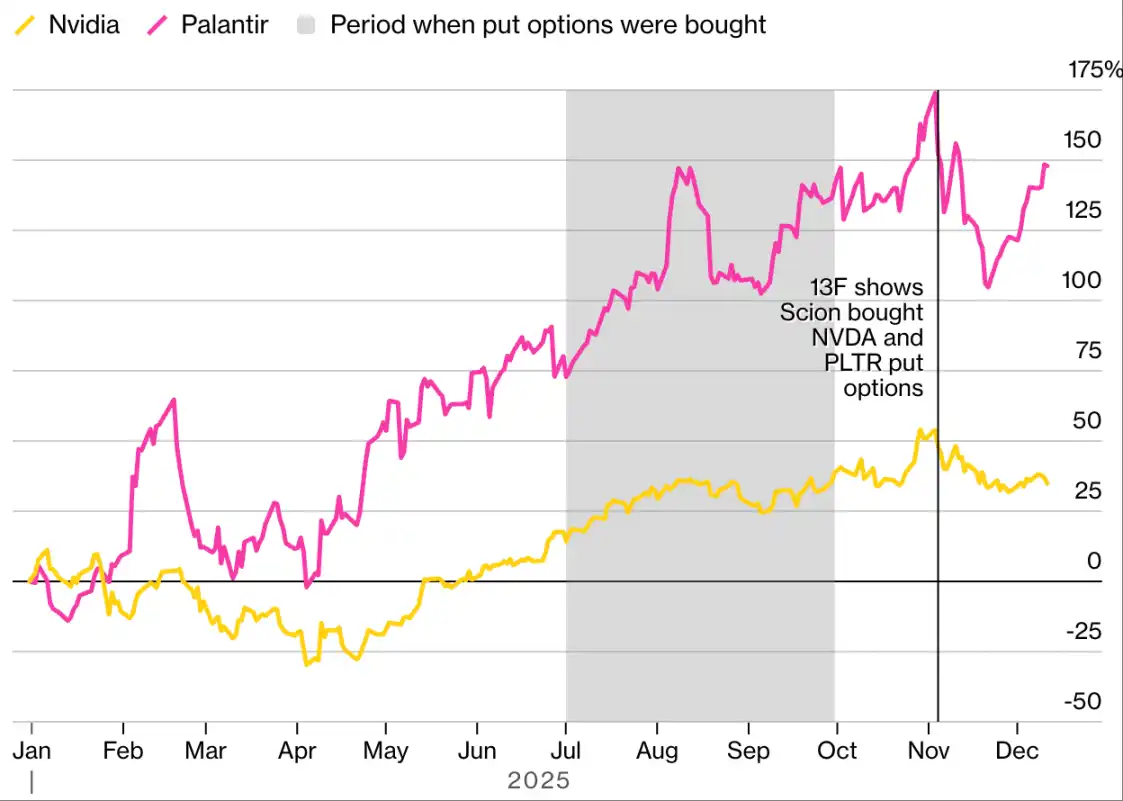
Following the news, Nvidia, the world's most valuable stock, plummeted, Palantir also fell, and the Nasdaq index saw a slight pullback, though these assets subsequently recovered their losses.

It's impossible to know exactly how much Burry profited, but he left a clue on social platform X: stating he bought Palantir puts for $1.84, and those options surged 101% in less than three weeks. This disclosure exposed the underlying doubts in a market dominated by 'a few AI stocks, massive passive inflows, and low volatility.' Whether this trade ultimately proves 'prescient' or 'premature,' it confirms a pattern: once market conviction wavers, even the strongest market narrative can reverse quickly.

—Michael P. Regan (Reporter)

Defense Stocks: An Outbreak in the New World Order

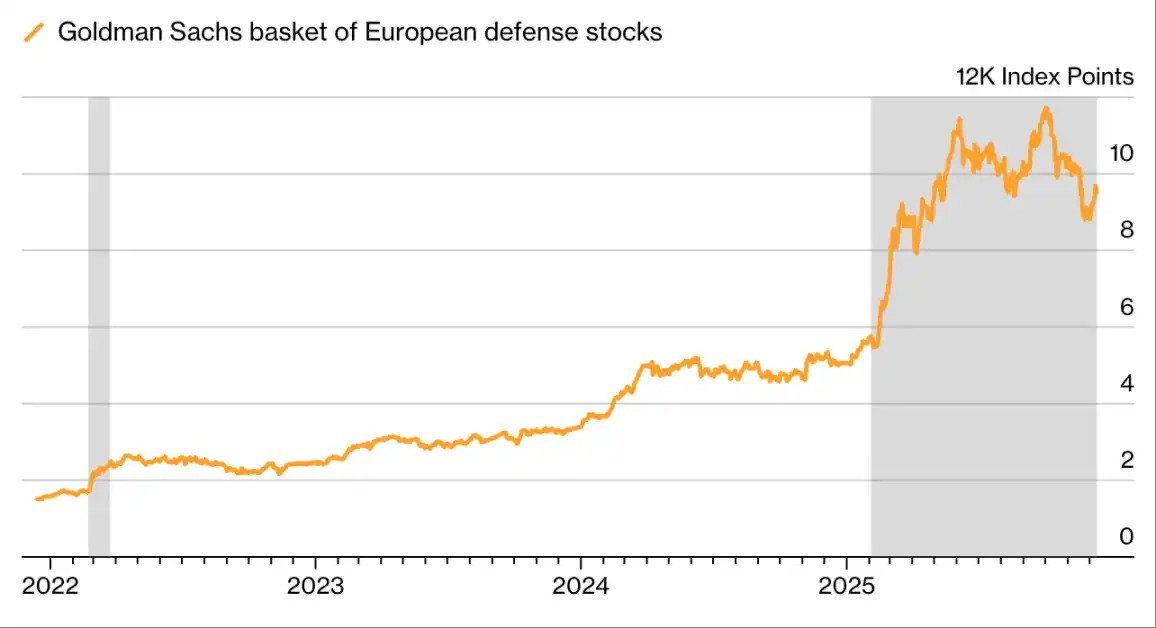
Shifts in the geopolitical landscape triggered an explosion in 'European defense stocks,' a sector once considered 'toxic' by asset managers. Trump's plans to reduce funding support for Ukraine's military prompted European governments to embark on a 'defense spending spree,' sending shares of regional defense companies soaring: as of December 23, Germany's Rheinmetall AG was up about 150% year-to-date, and Italy's Leonardo SpA gained over 90% in the same period.

Previously, many fund managers avoided the defense industry due to its 'controversial' nature under 'Environmental, Social, and Governance' (ESG) investing principles; now, they are changing their stance, with some funds even redefining their investment scope.

European Defense Stocks Surged in 2025

The region's military stocks rose more than during the initial phase of the Russia-Ukraine conflict:
"It wasn't until early this year that we reintroduced defense assets into our ESG funds," said Pierre Alexis Dumont, Chief Investment Officer at Sycomore Asset Management. "The market paradigm has shifted, and when paradigms shift, we have both a responsibility and values to defend—so we now focus on assets related to 'defensive weapons.'"

Stocks with any connection to defense were frantically bought up, from goggle manufacturers and chemical producers to a printing company. As of December 23, the Bloomberg European Defense Index was up over 70% for the year. The frenzy spread to credit markets: even companies 'indirectly related' to defense attracted a crowd of potential lenders; banks even launched 'European defense bonds'—modeled on green bonds but dedicated to entities like weapons manufacturers. This change marks a repositioning of 'defense' from a 'reputational liability' to a 'public good,' and confirms a truth: when geopolitics shift, capital moves faster than ideology.

—Isolde MacDonogh (Reporter)

Devaluation Trade: Fact or Fiction?

The heavy debt burdens of major economies like the US, France, and Japan, coupled with a 'lack of political will to address the debt,' led some investors in 2025 to flock to 'anti-devaluation assets' like gold and cryptocurrencies, while cooling on government bonds and the US dollar. This strategy was labeled the bearish 'devaluation trade,' inspired by history: rulers like Emperor Nero of ancient Rome dealt with fiscal pressure by 'debasing their currency.'

In October, this narrative peaked: worries about the US fiscal outlook, combined with the 'longest government shutdown in history,' led investors to seek havens beyond the dollar. That month, gold and bitcoin simultaneously hit record highs—a rare synchronized moment for these two assets often seen as competitors.

Gold Record

The 'devaluation trade' helped the precious metal hit new highs:
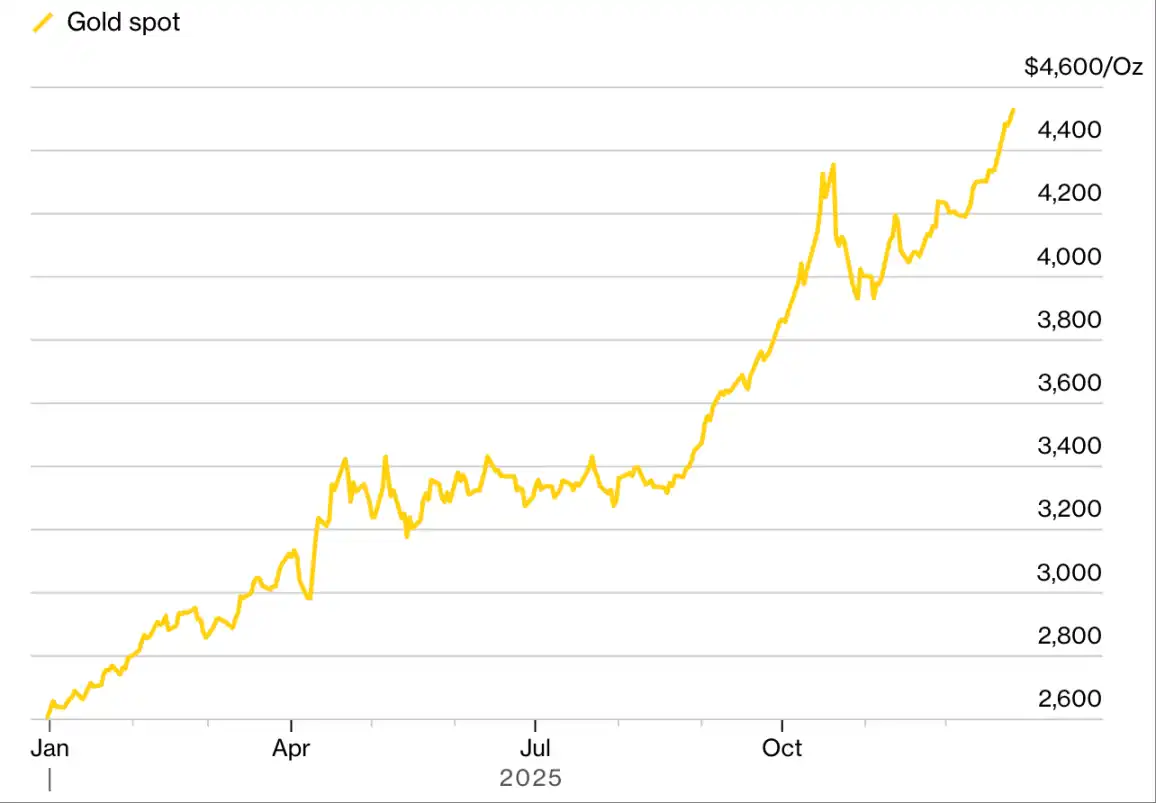
As a 'story,' 'devaluation' offered a clear explanation for a chaotic macro environment; but as a 'trading strategy,' its actual effectiveness was far more complex. Subsequently, cryptocurrencies broadly pulled back, with bitcoin falling sharply; the dollar stabilized; US Treasuries, far from collapsing, were on track for their best year since 2020—a reminder that fears of 'fiscal deterioration' can coexist with demand for safe assets, especially during periods of slowing growth and peak policy rates.

Other asset price movements were mixed: the volatility in metals like copper, aluminum, and even silver was half driven by 'fears of currency devaluation' and half by Trump's tariff policies and macro forces, blurring the line between 'inflation hedge' and 'traditional supply shock.' Meanwhile, gold continued its strong run, repeatedly刷新ing历史新高. In this arena, the 'devaluation trade' still worked—but it was no longer a 'wholesale rejection of fiat currency,' more a precise bet on 'rates, policy, and safe-haven demand.'

—Richard Henderson (Reporter)

Korean Stocks: A 'K-Pop' Style Surge

When it comes to plot twists and excitement, the performance of the South Korean stock market this year was enough to make K-dramas 'step aside.' Driven by President Lee Jae-myung's policies to 'boost the capital markets,' the benchmark Kospi index had gained over 70% in 2025 as of December 22, moving towards Lee's stated '5000 point target' and easily ranking among the top performers of major global indices.

It's not common for political leaders to publicly set a 'stock index level' as a target, and Lee Jae-myung's initial 'Kospi 5000' plan didn't get much attention. Now, more Wall Street banks, including JPMorgan Chase and Citigroup, believe this target could be achieved in 2026—partly thanks to the global AI boom, with Korean stocks seeing increased demand as 'core Asian AI trading targets.'

Korean Stock Market Rebounds

The benchmark index soared:
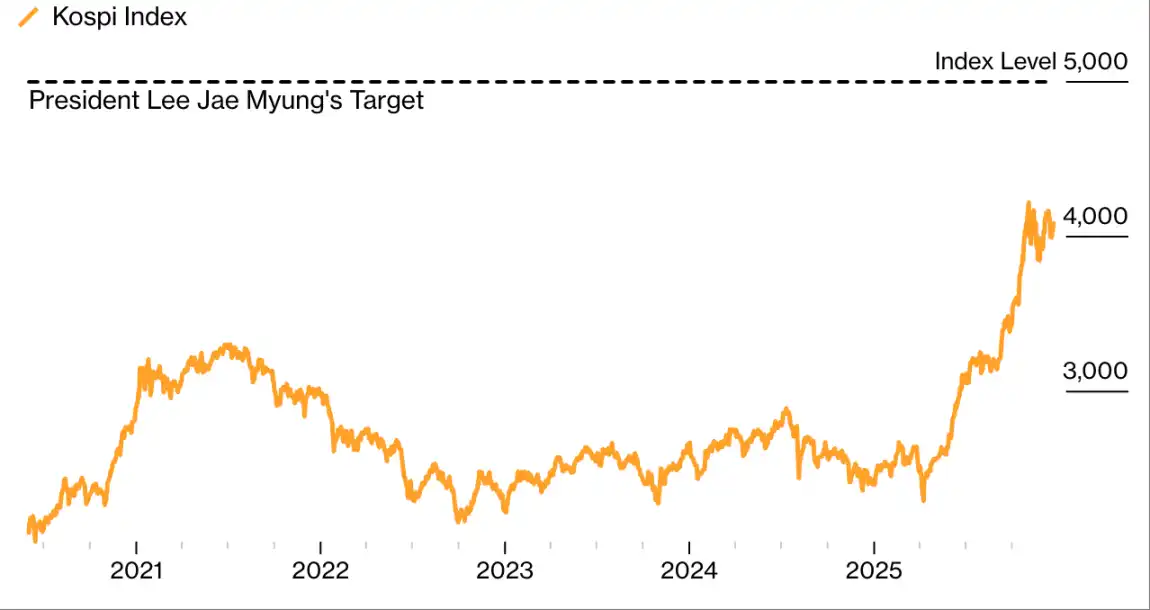
In this 'world-leading' rally, there was a notable 'absentee': South Korean retail investors. Although Lee often emphasizes to voters that 'he was a retail investor before entering politics,' his reform agenda hasn't yet convinced domestic investors that 'stocks are worth holding long-term.' Even as foreign funds poured into Korean stocks, local retail investors were 'net sellers': they invested a record $33 billion into US stocks and chased riskier investments like cryptocurrencies and overseas leveraged ETFs.

This phenomenon had a side effect: pressure on the Korean Won. Capital outflows weakened the won, a reminder that even a 'blockbuster stock rally' can掩盖lingering domestic investor doubts.

—Youkyung Lee (Reporter)

Bitcoin Duel: Chanos vs. Saylor

Every story has two sides, and the arbitrage battle between short-seller Jim Chanos and 'bitcoin hoarder' Michael Saylor's MicroStrategy was not just about two highly charismatic figures, but also evolved into a 'referendum on capitalism in the crypto age.'

Early in 2025, as bitcoin prices soared, MicroStrategy's stock surged in tandem, and Chanos saw an opportunity: MicroStrategy's stock price was trading at an excessive premium relative to its 'bitcoin holdings,' which the legendary investor deemed 'unsustainable.' Therefore, he decided to 'short MicroStrategy and go long bitcoin,' publicly announcing this strategy in May (when the premium was still high).

Chanos and Saylor then engaged in a public war of words. In June, Saylor said in a Bloomberg Television interview: "I don't think Chanos understands our business model at all"; Chanos fired back on platform X, calling Saylor's explanation 'complete and utter financial nonsense.'

In July, MicroStrategy's stock hit a record, up 57% year-to-date; but as the number of 'digital asset treasury companies' proliferated and crypto token prices retreated from highs, MicroStrategy and its 'imitators' saw their shares fall, and MicroStrategy's premium to bitcoin shrunk—Chanos's bet began to pay off.

MicroStrategy Underperforms Bitcoin This Year

As MicroStrategy's premium vanished, Chanos's short trade paid off:
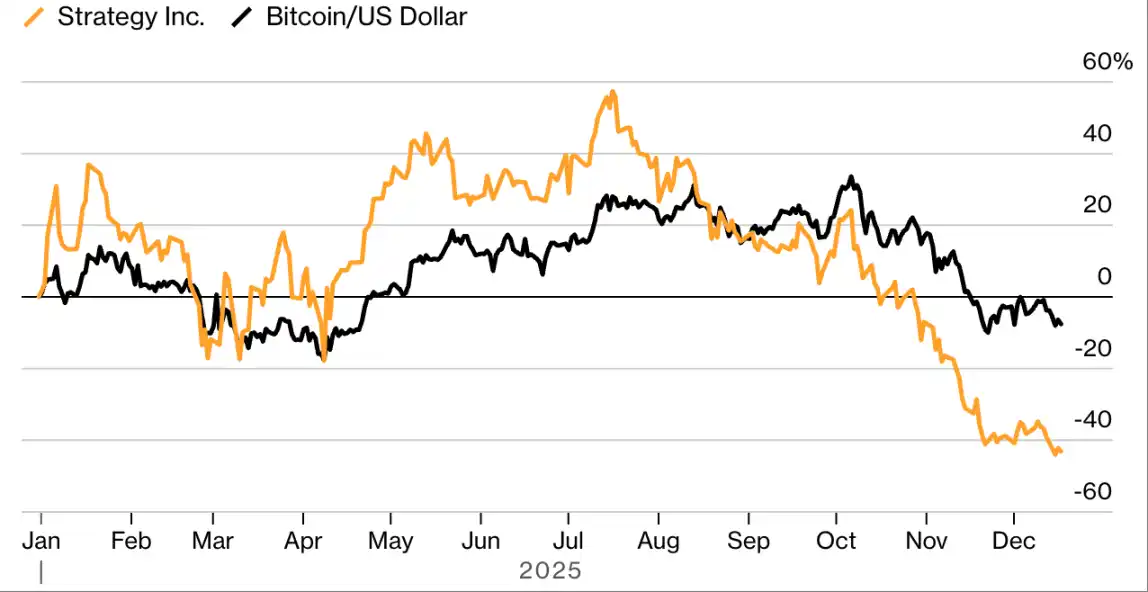
From the time Chanos publicly announced his 'short on MicroStrategy' until he declared he 'closed the position' on November 7, MicroStrategy's stock fell 42%. Beyond the profit and loss itself, this case revealed the 'recurring cycle of boom and bust' in cryptocurrency: balance sheets膨胀on 'confidence,' and confidence relies on 'rising prices' and 'financial engineering.' This model works until 'belief wavers'—at which point the 'premium' is no longer an advantage but a problem.

—Monique Mulima (Reporter)

Japanese Government Bonds: From 'Widowmaker' to 'Rainmaker'

For decades, one bet has repeatedly tripped up macro investors—the 'widowmaker' trade of shorting Japanese Government Bonds (JGBs). The logic seemed simple: Japan carries a massive public debt, so interest rates 'must rise eventually' to attract enough buyers; investors accordingly 'borrowed and sold bonds,' hoping to profit when 'rates rose and bond prices fell.' However, for years, the Bank of Japan's easy monetary policy kept borrowing costs low, costing short-sellers dearly—until 2025, when the situation finally reversed.

This year, the 'widowmaker' turned into a 'rainmaker': yields on benchmark Japanese government bonds surged across the board, making the $7.4 trillion JGB market a 'short-seller's paradise.' The triggers were varied: BOJ interest rate hikes, and Prime Minister Takaichi Sanae's 'largest post-pandemic spending plan.' The benchmark 10-year JGB yield broke above 2%, a multi-decade high; the 30-year bond yield rose over 1 percentage point, setting a new record. As of December 23, the Bloomberg Japan Treasury Return Index was down over 6% for the year, becoming the worst-performing major bond market globally.

Japanese Bond Market Plunges This Year

The Bloomberg Japan Treasury Index was the worst-performing major bond index globally:
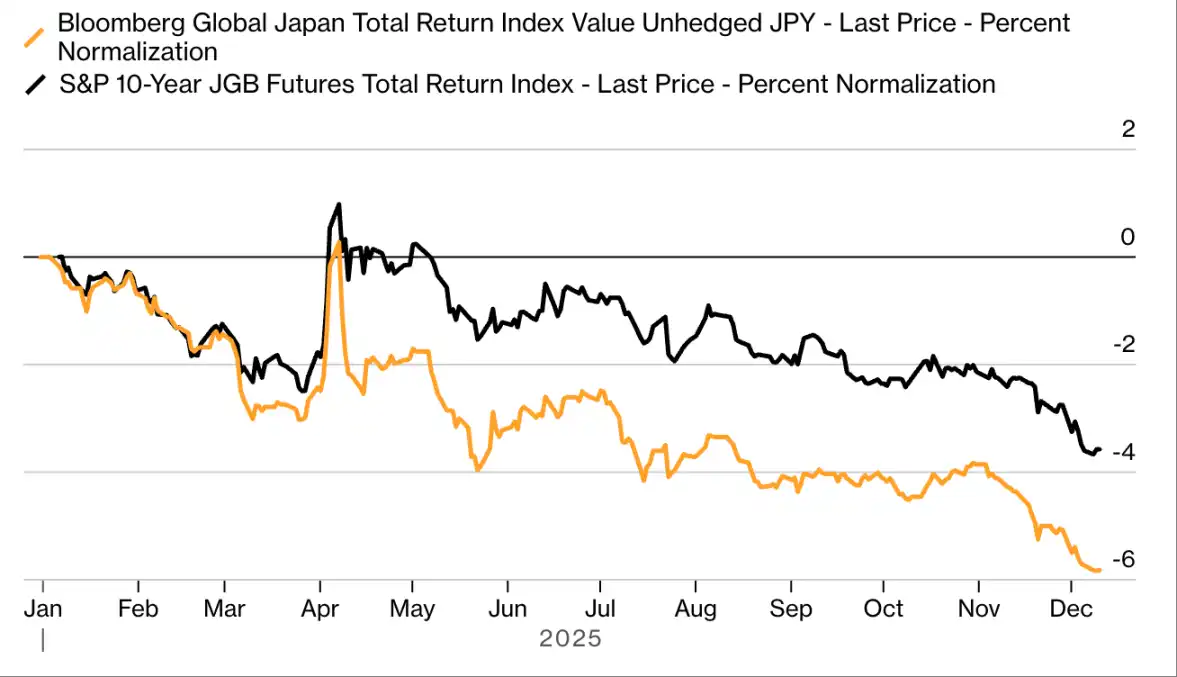
Fund managers at Schroders, Jupiter Asset Management, RBC BlueBay Asset Management, among others, publicly discussed 'shorting JGBs in some form' this year; investors and strategists believe there is still room for this trade as benchmark policy rates rise. Additionally, the BOJ is reducing its bond purchases, further pushing yields higher; and with the Japanese government's debt-to-GDP ratio 'leading by a wide margin' among developed nations, bearish sentiment towards JGBs 'could persist.'

—Cormac Mullen (Reporter)

Credit 'In-Fighting': The Rewards of 'Hardball Tactics'

The richest credit returns in 2025 didn't come from 'betting on corporate recovery,' but from 'pushing back against fellow investors.' This model, called 'creditor-on-creditor violence,' paid off handsomely for firms like Pimco and King Street Capital Management—which orchestrated a precise 'play' around Envision Healthcare, a healthcare company owned by KKR.

Post-pandemic, hospital staffing provider Envision was struggling and desperately needed loans from new investors. But issuing new debt required 'pledging already-pledged assets': a majority of creditors联合opposed this plan, but Pimco, King Street, and Partners Group 'defected' in support—their support allowed a proposal to pass that released collateral (equity in Envision's valuable outpatient surgery business, Amsurg) from old creditors to secure the new debt.

These institutions then became 'holders of bonds secured by Amsurg' and ultimately converted the bonds into Amsurg equity. This year, Amsurg was sold to healthcare group Ascension Health for $4 billion. It's estimated these institutions that 'betrayed their peers' achieved returns of around 90%—confirming the profit potential of 'credit in-fighting.'

This case reveals the rules of today's credit market: loose documentation terms, dispersed creditors, 'cooperation' is not necessary; 'being right' is often not enough, 'avoiding being outmaneuvered by peers' is the bigger risk.

—Eliza Ronalds-Hannon (Reporter)

Fannie Mae and Freddie Mac: Revenge of the 'Toxic Twins'

Since the financial crisis, mortgage giants Fannie Mae and Freddie Mac have been under US government conservatorship, and 'when and how they might be released' has long been a focus of market speculation. Hedge fund manager Bill Ackman and other 'proponents' held long-term positions, hoping a 'privatization plan' would bring huge profits, but as the situation remained unchanged, the companies' stocks languished for years in the pink sheets (over-the-counter market).

Trump's re-election changed this: optimistic market expectations that the 'new administration would push for their release' instantly surrounded Fannie and Freddie stocks with 'Meme-stock-like enthusiasm.' In 2025, the heat intensified further: from the start of the year to their September peak, the companies' shares skyrocketed 367% (with an intraday gain of 388%), becoming one of the year's brightest winners.

Fannie and Freddie Shares Soar on Privatization Hopes

Growing belief that the companies will be released from government control.
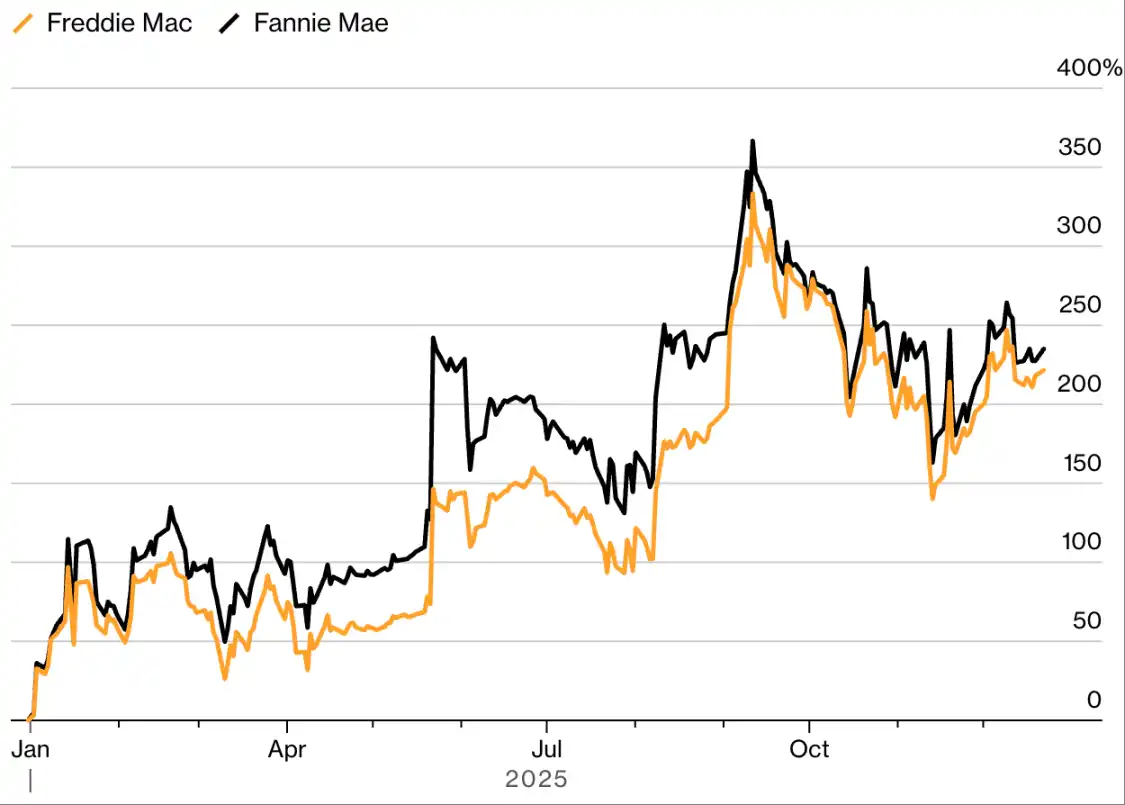
In August, news that the 'government was considering an IPO for the companies' pushed the frenzy to its peak—the market anticipated an IPO valuation potentially exceeding $500 billion, planning to raise about $30 billion by selling a 5%-15% stake. Although skepticism about the specific timing and whether the IPO would actually happen caused stock price volatility from the September peak, most investors remained confident in this prospect.

In November, Ackman published a proposal submitted to the White House, suggesting pushing for Fannie and Freddie to be relisted on the New York Stock Exchange, while writing down the US Treasury's preferred equity stakes in both enterprises and exercising government options to acquire nearly 80% of the common stock. Even Michael Burry joined this camp: he announced a bullish stance on both companies in early December, stating in a 6000-word blog post that these two enterprises, which once needed a government rescue to avoid bankruptcy, might no longer be the 'toxic twins.'

—Felice Maranz (Reporter)

Turkish Carry Trade: A Complete Collapse

After a stellar performance in 2024, the Turkish carry trade became a 'consensus pick' for emerging market investors. With local bond yields above 40% and the central bank承诺maintaining a stable dollar-pegged exchange rate, traders piled in—borrowing cheaply overseas to buy high-yielding Turkish assets. This trade attracted billions from firms like Deutsche Bank, Millennium Partners, and Gramercy Capital, some of whose personnel were actually in Turkey on March 19th, the day the trade collapsed completely within minutes.

The trigger happened that morning: Turkish police raided the home of a popular opposition mayor in Istanbul and detained him. This event sparked protests and疯狂selling of the Turkish lira, which the central bank was powerless to stop. Kit Juckes, FX strategist at Société Générale in Paris, said at the time: "Everyone was caught off guard, no one will dare return to this market anytime soon."
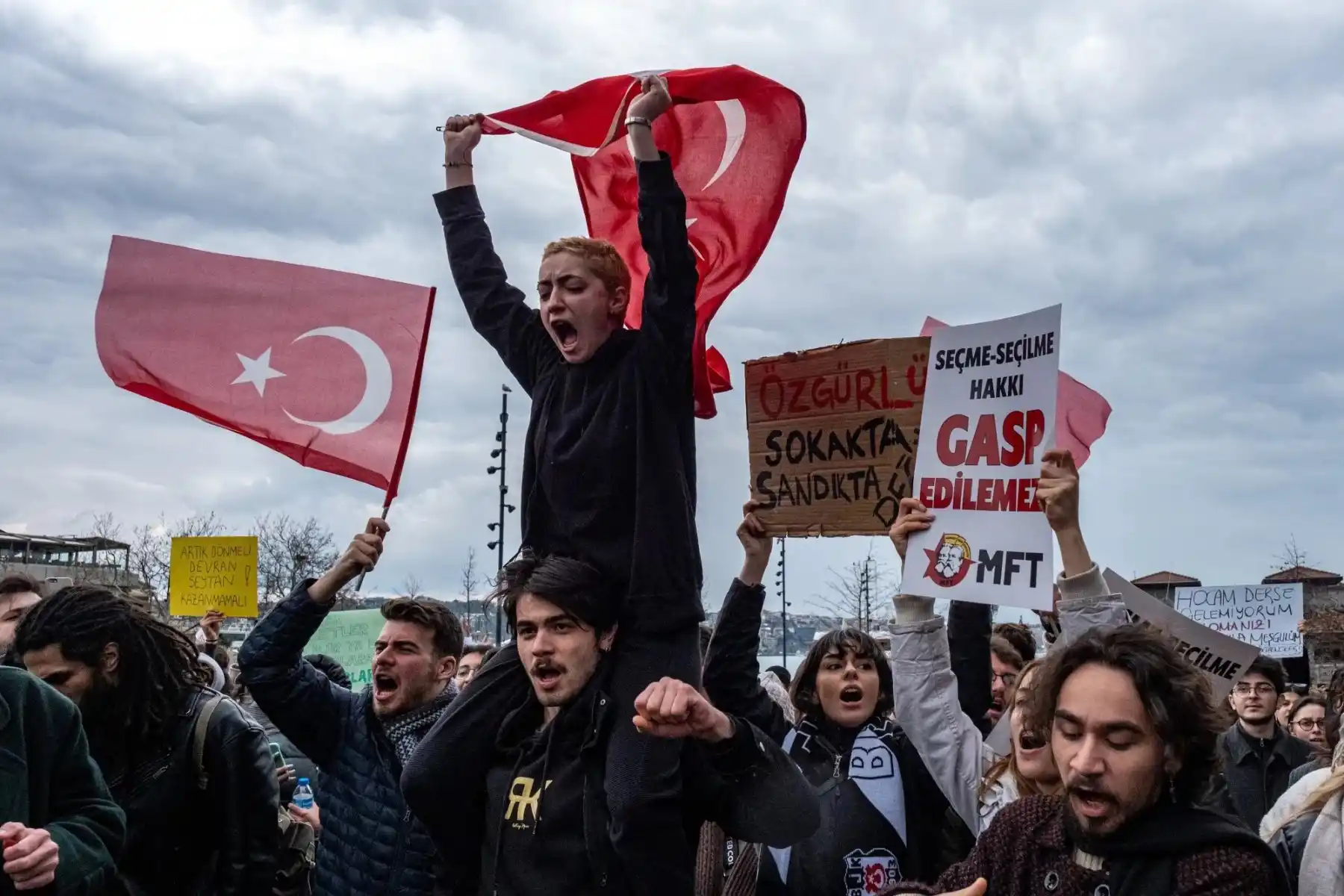
By the close that day, estimated capital outflows from lira-denominated assets were around $10 billion, and the market never truly recovered afterwards. As of December 23, the lira had depreciated about 17% against the dollar for the year, becoming one of the world's worst-performing currencies. This event also served as a warning to investors: high interest rates might offer returns to risk-takers, but they cannot withstand sudden political shocks.

—Kerim Karakaya (Reporter)

Bond Market: The 'Cockroach Alert' Sounds

The credit markets in 2025 weren't thrown into turmoil by one 'earth-shattering collapse,' but were unsettled by a series of 'small-scale crises'—exposing some disturbing hidden vulnerabilities. Companies once seen as 'routine borrowers'相继ran into trouble, and lending institutions suffered heavy losses as a result.

Saks Global paid interest only once before restructuring $2.2 billion in bonds, and the restructured bonds now trade below 60 cents on the dollar; New Fortress Energy's newly issued exchange bonds lost over 50% of their value within a year; Tricolor and First Brands filed for bankruptcy within weeks, wiping out billions in creditor value. In some cases, complex fraud was the root cause of the collapse; in others, the companies' initially optimistic performance expectations simply failed to materialize. But in all cases, investors were left with a question: why were massive credit bets placed on these companies with little evidence of their ability to repay debt?
Years of low default rates and easy monetary policy had eroded standards across the credit market—from lender protection covenants to basic underwriting processes. Lenders to First Brands and Tricolor didn't even discover违规行为like 'double-pledging assets' and 'commingling collateral for multiple loans.'

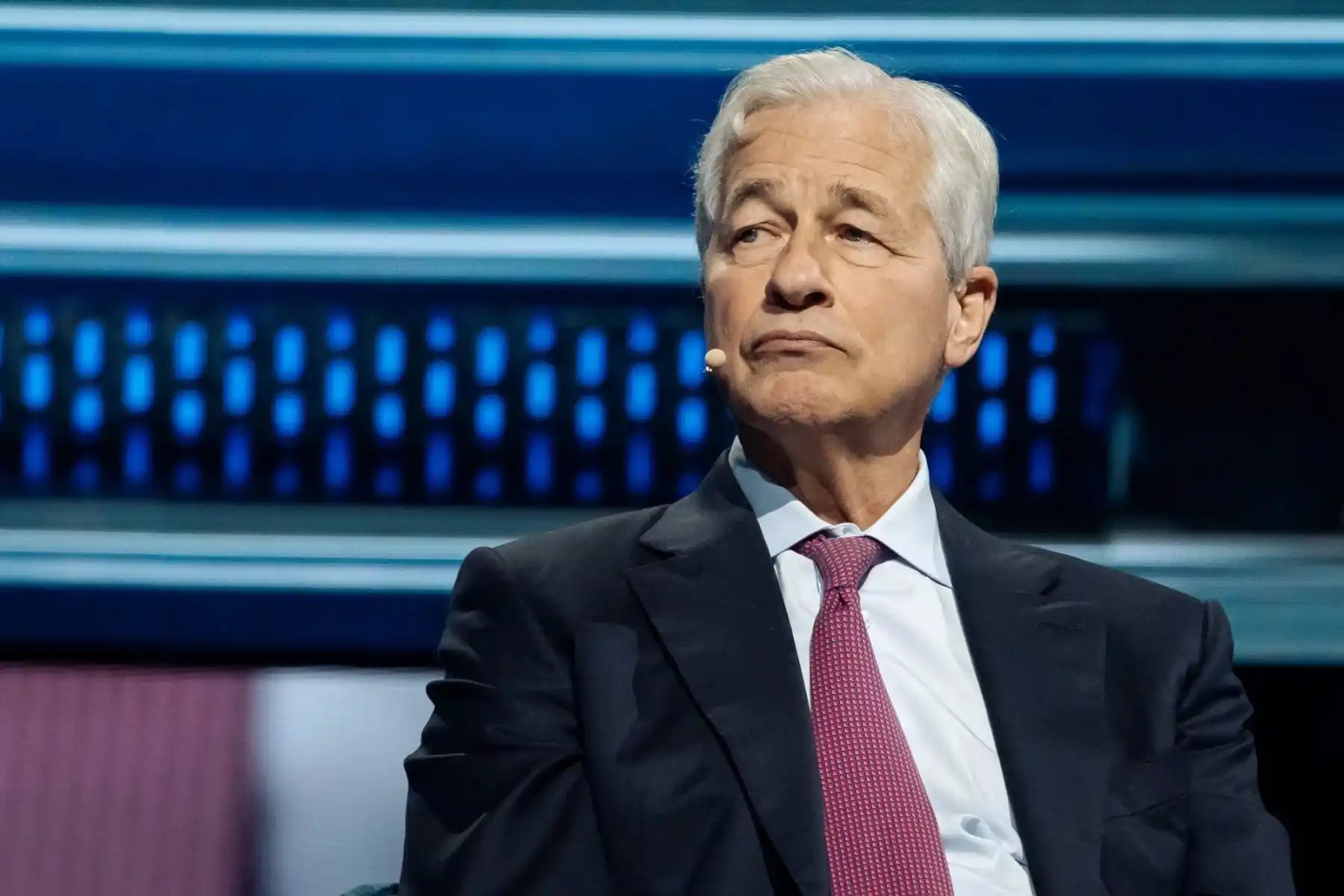
JPMorgan Chase was among these lenders. The bank's CEO, Jamie Dimon, warned the market in October with a vivid analogy to be wary of further risks: "When you see one cockroach, there are likely many more hiding in the dark." And this 'cockroach risk' might become one of the core themes for the 2026 market.

—Eliza Ronalds-Hannon (Reporter)

Tiền kỹ thuật số thịnh hành

Câu hỏi Liên quan

QWhat was the overall performance and key characteristics of the global financial markets in 2025, as described in the Bloomberg article?

AThe year 2025 was characterized by 'high-conviction bets' and 'rapid reversals.' Markets experienced both windfall gains and severe volatility. Key trends included a surge in European defense stocks, a historic rally in gold, meme-stock-like swings in mortgage giants, and the sudden collapse of a textbook arbitrage trade. Investors made large bets on political shifts, expanding balance sheets, and fragile market narratives, driving significant gains in some areas but also leading to dramatic failures when momentum reversed, leverage backfired, or funding dried up.

QAccording to the article, what was the fate of cryptocurrency assets linked to Donald Trump and his family in 2025?

ACryptocurrency assets linked to Donald Trump and his family, including a meme coin he promoted, a token from Melania Trump, and the WLFI token from World Liberty Financial, experienced short-lived surges followed by dramatic collapses. By December 23rd, Trump's meme coin was down over 80% from its January peak, Melania's meme coin had fallen nearly 99%, and American Bitcoin (a miner associated with Eric Trump) saw its stock price drop about 80% from its September peak. The article concludes that while politics provided a short-term boost, it could not offer long-term protection against the core crypto cycle of price increases, leverage influx, and liquidity drying up.

QWhat significant trade did Michael Burry of 'The Big Short' fame make in 2025, and what was its market impact?

AMichael Burry's Scion Asset Management disclosed protective put options on AI darlings Nvidia and Palantir Technologies. The strike prices were significantly lower than the current market prices at the time of disclosure (47% lower for Nvidia and 76% lower for Palantir). This disclosure, which acted like a 'match to dry tinder' for existing concerns over high AI stock valuations, caused an immediate sell-off in these stocks and a slight pullback in the Nasdaq, though the assets later recovered. The trade exposed the underlying doubts in a market dominated by a few AI stocks and passive fund inflows.

QWhy did European defense stocks perform exceptionally well in 2025, and what was a notable shift in investor attitude towards them?

AEuropean defense stocks, once considered 'toxic' by many asset managers due to ESG (Environmental, Social, and Governance) principles, surged due to a shift in the geopolitical landscape. The primary catalyst was Donald Trump's plan to reduce funding for Ukraine's military, which prompted European governments to embark on a 'spending spree' on their own defense. This led to massive gains, with the Bloomberg Europe Defense Index rising over 70% for the year. A notable shift was the reclassification of defense from a 'reputational liability' to a 'public good,' with some funds even redefining their ESG mandates to include defense assets, specifically 'defensive weapons.'

QWhat was the outcome and significance of the arbitrage trade involving Jim Chanos shorting Michael Saylor's MicroStrategy while going long Bitcoin?

AJim Chanos executed a pairs trade, shorting MicroStrategy (MSTR) stock while going long Bitcoin, betting that the large premium of MSTR's stock price over the value of its Bitcoin holdings was unsustainable. After a public feud with Michael Saylor, Chanos's bet paid off as the premium evaporated. From when he publicized the trade in May to when he closed it in November, MicroStrategy's stock price fell 42%. This case highlighted the cyclical boom-and-bust nature of crypto, where balance sheets inflated on confidence reliant on rising prices and financial engineering, until that belief is shaken and the premium becomes a liability rather than an advantage.

Nội dung Liên quan

Đề xuất HIP-4 của Hyperliquid tiếp sức cho HYPE staking khi niềm tin dài hạn gia tăng

Hyperliquid đã đề xuất nâng cấp HIP-4 nhằm mở rộng giao thức vượt ra ngoài thị trường hợp đồng tương lai vĩnh viễn để trở thành một lớp cơ sở hạ tầng cho các ứng dụng trên chuỗi. Theo đề xuất, các nhà triển khai phải stake 500,000 token HYPE để tạo thị trường mới, với các biện pháp kiểm soát nhằm đảm bảo chất lượng. Sự tự tin của nhà đầu tư đang tăng lên, được phản ánh qua việc lượng HYPE được stake đã đạt khoảng 438.7 triệu token, chiếm 43.9% tổng nguồn cung. Một trader lớn cũng chọn stake số HYPE trị giá 15.5 triệu USD thay vì chốt lời. Điều này cho thấy sự tin tưởng dài hạn vào mạng lưới. Cấu trúc thị trường cũng cho thấy động lực tích cực, với lãi suất tài trợ cân bằng và thanh lý hạn chế, cho thấy cách tiếp cận đầu tư có đo lường. Tổng giá trị bị khóa (TVL) và doanh thu giao thức đang tăng, củng cố triển vọng tăng trưởng cơ bản. Tóm lại, việc mở rộng cơ sở hạ tầng, sự tham gia stake mạnh mẽ và cấu trúc thị trường lành mạnh đang củng cố vị thế của Hyperliquid như một nền tảng cho tài chính kỹ thuật số trong tương lai, phụ thuộc vào việc áp dụng của người dùng và triển khai thành công các bản nâng cấp sắp tới.

ambcrypto26 phút trước

Đề xuất HIP-4 của Hyperliquid tiếp sức cho HYPE staking khi niềm tin dài hạn gia tăng

ambcrypto26 phút trước

7 tháng sau sự sụp đổ của Huiwang, thị trường nền tảng ký quỹ Đông Nam Á đại phẫu thuật

Sau 7 tháng sụp đổ của Huiwang, một nền tảng bảo đảm thanh toán được mệnh danh là "Alipay Đông Nam Á", thị trường bảo đảm trong khu vực đang trải qua một cuộc đại tái cấu trúc. Sự sụp đổ của tập đoàn Thái Tử ở Campuchia và việc tịch thu 12.7 vạn Bitcoin (trị giá khoảng 150 tỷ USD) của Mỹ đã chặt đứt nguồn cung thanh khoản, khiến Huiwang phá sản, 90 vạn người dùng mất trắng. Tuy nhiên, khoảng trống quyền lực nhanh chóng bị lấp đầy bởi các nền tảng bảo đảm mới nổi, thường hoạt động trong bóng tối và gắn liền với các hoạt động bất hợp pháp. Các cái tên nổi bật bao gồm: * **Tân Tệ (XinBi/Newpay):** Thu hút lượng lớn người dùng từ Huiwang, tổng doanh thu đã vượt quá 1.6 tỷ USDT. * **Lĩnh Hàng/Tiger Bảo đảm:** Chuyên cung cấp dịch vụ bảo đảm cho các giao dịch liên quan đến buôn bán người và lao động cưỡng bức. * **Kim Bối/Kim Bác:** Ban đầu liên kết với tập đoàn Thái Tử và các sòng bạc, chuyên phục vụ ngành cờ bạc trực tuyến. * **Đạt Lợi/Thiên Thành:** Kế thừa nhiều nhóm giao dịch công khai từ Huiwang, có mức tăng trưởng người dùng đáng kể. * **Phúc Lợi Lai:** Gắn liền với tập đoàn tội phạm gia đình họ Lưu ở miền Bắc Myanmar, chủ yếu phục vụ các khu công viên lừa đảo. Báo cáo từ Elliptic cho thấy thị trường bảo đảm Huiwang đã xử lý hơn 31 tỷ USD, trở thành thị trường bất hợp pháp trực tuyến lớn nhất từ trước đến nay. Các nền tảng bảo đảm này, thường được ngụy trang dưới vỏ bọc dịch vụ tài chính, trên thực tế đã trở thành trung gian quan trọng cho mạng lưới tội phạm bao gồm lừa đảo, rửa tiền, cờ bạc và buôn bán người tại Đông Nam Á. Danh hiệu "Alipay Đông Nam Á" chỉ là cái cớ, che đậy cho một hệ sinh thái tài chính ngầm đầy rủi ro và nguy hiểm.

Odaily星球日报35 phút trước

7 tháng sau sự sụp đổ của Huiwang, thị trường nền tảng ký quỹ Đông Nam Á đại phẫu thuật

Odaily星球日报35 phút trước

Ngày Tươi Sáng Khó Trở Lại, Các Quỹ VC Crypto Đang Trải Qua Điều Gì?

Đầu tư mạo hiểm chuyên sâu vào tiền mã hóa đang trải qua một sự chuyển đổi lớn. Các quỹ chuyên biệt hàng đầu như Paradigm (vừa huy động 1,2 tỷ USD) và Framework Ventures (huy động 400 triệu USD) đang mở rộng danh mục đầu tư sang các lĩnh vực khác như AI, robot, hàng không vũ trụ, thậm chí xóa bỏ các tham chiếu về "tiền mã hóa" khỏi thông điệp của mình. Quý I/2026 chỉ có 8 quỹ VC thuần túy về tiền mã hóa mới được thành lập, mức thấp nhất kể từ năm 2020. Theo lý thuyết chu kỳ công nghệ của Carlota Perez, tiền mã hóa đang chuyển từ giai đoạn "xây dựng" sang "phổ cập". Các gã khổng lồ truyền thống như Stripe, BlackRock, VISA đã hiểu và tích hợp công nghệ blockchain vào hoạt động cốt lõi của họ, làm xói mòn lợi thế thông tin độc quyền trước đây của các quỹ chuyên sâu. Ngành VC đang phân cực thành hình dạng "tạ tạ": một bên là các nền tảng đầu tư tổng hợp khổng lồ (a16z, Sequoia) có thể bao trùm toàn bộ lĩnh vực; bên kia là các quỹ nhỏ, chuyên sâu dựa vào hiểu biết sâu để đầu tư mạo hiểm vào các dự án tiên phong. Các quỹ quy mô trung bình thuần túy về tiền mã hóa đang bị mắc kẹt trong "vùng chết", vì không đủ lớn để cạnh tranh ở các vòng tăng trưởng, cũng không thể chỉ dựa vào các khoản đầu tư hạt giống nhỏ để đạt mức thoái vốn cần thiết (thường gấp 3 lần quỹ). Áp lực từ các nhà đầu tư (LP) cũng thúc đẩy sự thay đổi. Với lợi nhuận thực tế (DPI) thấp từ các quỹ năm 2021 và làn sóng AI hút 70% vốn đầu tư mạo hiểm, các nhà quản lý quỹ buộc phải đa dạng hóa để đáp ứng kỳ vọng của LP. Đối với các startup tiền mã hóa, điều này có nghĩa là việc gọi vốn sẽ khó khăn hơn. Họ phải cạnh tranh với vô số dự án AI để thu hút sự chú ý của các quỹ tổng hợp. Hơn nữa, các quỹ tổng hợp ít có khả năng đầu tư vào cơ sở hạ tầng công cộng hoặc nghiên cứu cơ bản (như MEV, công cụ cross-chain) – vốn rất quan trọng cho sự phát triển của hệ sinh thái nhưng khó có lợi nhuận thương mại trực tiếp. Tóm lại, "nhà đầu tư tiền mã hóa" như một danh mục riêng biệt đang trở nên lỗi thời. Tiền mã hóa đang trở thành cơ sở hạ tầng tài chính cơ bản. Các quỹ chuyên sâu cỡ trung đang thu hẹp hoặc biến mất. Tương lai sẽ là sự phân công: các quỹ tổng hợp lớn nắm giữ các khoản đầu tư tăng trưởng vào cơ sở hạ tầng tài chính dựa trên blockchain, trong khi các quỹ nhỏ, chuyên biệt tiếp tục ươm mầm cho các thí nghiệm tiên phong và ngách mới như mã hóa tài sản (tokenization), chứng khoán trên chuỗi.

Foresight News55 phút trước

Ngày Tươi Sáng Khó Trở Lại, Các Quỹ VC Crypto Đang Trải Qua Điều Gì?

Foresight News55 phút trước

Khi Sự Đồng Thuận Diễn Ra Ngày Càng Nhanh, Các Nhà Đầu Tư Trẻ Đang Đánh Cược Vào Điều Gì?

Khi sự đồng thuận thị trường ngày càng nhanh, các nhà đầu tư trẻ đang tập trung vào đâu? Đầu tư công nghệ hiện nay đang trải qua sự chuyển dịch rõ rệt, với bốn xu hướng chính được các nhà đầu tư trẻ hàng đầu quan tâm. **Xu hướng 1: AI rời màn hình, bước vào thế giới vật lý.** Trọng tâm đầu tư đang chuyển từ mô hình lớn và ứng dụng sinh dữ liệu sang robot, thiết bị AI, xe tự lái và hệ thống công nghiệp. Thách thức lớn không còn là khả năng của mô hình, mà là năng lực triển khai, độ tin cậy và hiệu quả chi phí khi tích hợp vào môi trường vật lý. Ngành giao hàng tự động (ví dụ: Bạch Tê Ngưu với hơn 2000 xe) là minh chứng cho xu hướng này. **Xu hướng 2: Lợi nhuận từ mô hình lớn chưa hết, cạnh tranh chuyển sang "Bánh xe thông minh".** Thay vì chỉ tìm kiếm kiến trúc kế tiếp, các nhà đầu tư tập trung vào các công ty có thể nhúng khả năng AI hiện có vào quy trình làm việc thực tế, tạo ra vòng lặp phản hồi "bánh xe thông minh": dữ liệu người dùng -> cải thiện mô hình -> trải nghiệm tốt hơn -> nhiều người dùng hơn. Sự thành công của Zhipu AI và Kling AI của Kuaishou cho thấy giá trị của việc xây dựng hệ thống tự củng cố này. **Xu hướng 3: Nghẽn dữ liệu thúc đẩy công nghệ nền tảng mới, mô hình cơ bản khoa học trở thành hướng đi không đồng thuận.** Khi dữ liệu chất lượng cao từ internet trở nên khan hiếm, việc đào tạo AI cần các nguồn kiến thức mới. Các phương pháp như học tăng cường, tự đối kháng và đặc biệt là **Mô hình Cơ bản Khoa học** (Scientific Foundation Models) hứa hẹn sử dụng dữ liệu và quy luật từ các lĩnh vực chuyên sâu (sinh học, vật liệu) để mở rộng biên giới của AI, mặc dù đây vẫn là một lĩnh vực đầy thách thức. **Xu hướng 4: Càng tiến vào vùng nước sâu của công nghệ cứng, càng cần vốn kiên nhẫn.** Trong các lĩnh vực như hàng không vũ trụ thương mại, máy tính lượng tử và năng lượng tiên tiến, chu kỳ xác minh dài hơn và con đường thương mại hóa không rõ ràng. Các nhà đầu tư cần xây dựng phán đoán sớm, tập trung vào năng lực nghiên cứu cốt lõi, khả năng kỹ thuật và sự kiên cường của đội ngũ, thay vì kỳ vọng lợi nhuận ngắn hạn. Sự quan tâm đến robot không gian, điện toán không gian và vật liệu năng lượng không gian phản ánh tầm nhìn dài hạn này. Tóm lại, các nhà đầu tư trẻ ngày nay không chỉ theo đuổi các khái niệm nóng, mà đang chuyển sang phân tích sâu sắc con đường tích hợp công nghệ vào ngành công nghiệp, tìm kiếm các hệ thống tạo ra vòng lặp phản hồi bền vững và sẵn sàng đồng hành cùng các dự án công nghệ cứng trong hành trình dài hạn.

marsbit1 giờ trước

Khi Sự Đồng Thuận Diễn Ra Ngày Càng Nhanh, Các Nhà Đầu Tư Trẻ Đang Đánh Cược Vào Điều Gì?

marsbit1 giờ trước

Giao dịch

Giao ngay

Bài viết Nổi bật

AGENT S là gì

Agent S: Tương Lai của Tương Tác Tự Động trong Web3 Giới thiệu Trong bối cảnh không ngừng phát triển của Web3 và tiền điện tử, các đổi mới đang liên tục định nghĩa lại cách mà cá nhân tương tác với các nền tảng kỹ thuật số. Một dự án tiên phong như vậy, Agent S, hứa hẹn sẽ cách mạng hóa tương tác giữa con người và máy tính thông qua khung tác nhân mở của nó. Bằng cách mở đường cho các tương tác tự động, Agent S nhằm đơn giản hóa các nhiệm vụ phức tạp, cung cấp các ứng dụng chuyển đổi trong trí tuệ nhân tạo (AI). Cuộc khám phá chi tiết này sẽ đi sâu vào những phức tạp của dự án, các tính năng độc đáo của nó và những tác động đối với lĩnh vực tiền điện tử. Agent S là gì? Agent S đứng vững như một khung tác nhân mở đột phá, được thiết kế đặc biệt để giải quyết ba thách thức cơ bản trong việc tự động hóa các nhiệm vụ máy tính: Thu thập Kiến thức Cụ thể theo Miền: Khung này học một cách thông minh từ nhiều nguồn kiến thức bên ngoài và kinh nghiệm nội bộ. Cách tiếp cận kép này giúp nó xây dựng một kho lưu trữ phong phú về kiến thức cụ thể theo miền, nâng cao hiệu suất của nó trong việc thực hiện nhiệm vụ. Lập Kế Hoạch Qua Các Tầm Nhìn Nhiệm Vụ Dài Hạn: Agent S sử dụng lập kế hoạch phân cấp tăng cường kinh nghiệm, một cách tiếp cận chiến lược giúp phân chia và thực hiện các nhiệm vụ phức tạp một cách hiệu quả. Tính năng này nâng cao đáng kể khả năng quản lý nhiều nhiệm vụ con một cách hiệu quả và hiệu suất. Xử Lý Các Giao Diện Động, Không Đều: Dự án giới thiệu Giao Diện Tác Nhân-Máy Tính (ACI), một giải pháp đổi mới giúp nâng cao tương tác giữa các tác nhân và người dùng. Sử dụng các Mô Hình Ngôn Ngữ Lớn Đa Phương Thức (MLLMs), Agent S có thể điều hướng và thao tác các giao diện người dùng đồ họa đa dạng một cách liền mạch. Thông qua những tính năng tiên phong này, Agent S cung cấp một khung vững chắc giải quyết các phức tạp liên quan đến việc tự động hóa tương tác giữa con người với máy móc, mở ra nhiều ứng dụng trong AI và hơn thế nữa. Ai là Người Tạo ra Agent S? Mặc dù khái niệm về Agent S là hoàn toàn đổi mới, thông tin cụ thể về người sáng lập vẫn còn mơ hồ. Người sáng lập hiện vẫn chưa được biết đến, điều này làm nổi bật giai đoạn sơ khai của dự án hoặc sự lựa chọn chiến lược để giữ kín các thành viên sáng lập. Bất chấp sự ẩn danh, sự chú ý vẫn tập trung vào khả năng và tiềm năng của khung này. Ai là Các Nhà Đầu Tư của Agent S? Vì Agent S còn tương đối mới trong hệ sinh thái mã hóa, thông tin chi tiết về các nhà đầu tư và những người tài trợ tài chính của nó không được ghi chép rõ ràng. Sự thiếu vắng thông tin công khai về các nền tảng đầu tư hoặc tổ chức hỗ trợ dự án dấy lên câu hỏi về cấu trúc tài trợ và lộ trình phát triển của nó. Hiểu biết về sự hỗ trợ là rất quan trọng để đánh giá tính bền vững và tác động tiềm năng của dự án. Agent S Hoạt Động Như Thế Nào? Tại cốt lõi của Agent S là công nghệ tiên tiến cho phép nó hoạt động hiệu quả trong nhiều bối cảnh khác nhau. Mô hình hoạt động của nó được xây dựng xung quanh một số tính năng chính: Tương Tác Giống Như Con Người: Khung này cung cấp lập kế hoạch AI tiên tiến, cố gắng làm cho các tương tác với máy tính trở nên trực quan hơn. Bằng cách bắt chước hành vi của con người trong việc thực hiện nhiệm vụ, nó hứa hẹn nâng cao trải nghiệm người dùng. Ký Ức Tường Thuật: Được sử dụng để tận dụng các trải nghiệm cấp cao, Agent S sử dụng ký ức tường thuật để theo dõi lịch sử nhiệm vụ, từ đó nâng cao quy trình ra quyết định của nó. Ký Ức Tình Huống: Tính năng này cung cấp cho người dùng hướng dẫn từng bước, cho phép khung này cung cấp hỗ trợ theo ngữ cảnh khi các nhiệm vụ diễn ra. Hỗ Trợ OpenACI: Với khả năng chạy cục bộ, Agent S cho phép người dùng duy trì quyền kiểm soát đối với các tương tác và quy trình làm việc của họ, phù hợp với tinh thần phi tập trung của Web3. Tích Hợp Dễ Dàng với Các API Bên Ngoài: Tính linh hoạt và khả năng tương thích với nhiều nền tảng AI khác nhau đảm bảo rằng Agent S có thể hòa nhập liền mạch vào các hệ sinh thái công nghệ hiện có, làm cho nó trở thành lựa chọn hấp dẫn cho các nhà phát triển và tổ chức. Những chức năng này cùng nhau góp phần vào vị trí độc đáo của Agent S trong không gian tiền điện tử, khi nó tự động hóa các nhiệm vụ phức tạp, nhiều bước với sự can thiệp tối thiểu của con người. Khi dự án phát triển, các ứng dụng tiềm năng của nó trong Web3 có thể định nghĩa lại cách mà các tương tác kỹ thuật số diễn ra. Thời Gian Phát Triển của Agent S Sự phát triển và các cột mốc của Agent S có thể được tóm tắt trong một dòng thời gian nêu bật các sự kiện quan trọng của nó: 27 tháng 9, 2024: Khái niệm về Agent S được ra mắt trong một bài nghiên cứu toàn diện mang tên “Một Khung Tác Nhân Mở Sử Dụng Máy Tính Như Một Con Người,” trình bày nền tảng cho dự án. 10 tháng 10, 2024: Bài nghiên cứu được công bố công khai trên arXiv, cung cấp một cái nhìn sâu sắc về khung và đánh giá hiệu suất của nó dựa trên tiêu chuẩn OSWorld. 12 tháng 10, 2024: Một video trình bày được phát hành, cung cấp cái nhìn trực quan về khả năng và tính năng của Agent S, thu hút thêm sự quan tâm từ người dùng và nhà đầu tư tiềm năng. Những dấu mốc trong dòng thời gian không chỉ minh họa sự tiến bộ của Agent S mà còn chỉ ra cam kết của nó đối với sự minh bạch và sự tham gia của cộng đồng. Những Điểm Chính Về Agent S Khi khung Agent S tiếp tục phát triển, một số thuộc tính chính nổi bật, nhấn mạnh tính đổi mới và tiềm năng của nó: Khung Đổi Mới: Được thiết kế để cung cấp cách sử dụng máy tính trực quan giống như tương tác của con người, Agent S mang đến một cách tiếp cận mới cho việc tự động hóa nhiệm vụ. Tương Tác Tự Động: Khả năng tương tác tự động với máy tính thông qua GUI đánh dấu một bước tiến tới các giải pháp tính toán thông minh và hiệu quả hơn. Tự Động Hóa Nhiệm Vụ Phức Tạp: Với phương pháp mạnh mẽ của nó, nó có thể tự động hóa các nhiệm vụ phức tạp, nhiều bước, làm cho các quy trình nhanh hơn và ít sai sót hơn. Cải Tiến Liên Tục: Các cơ chế học tập cho phép Agent S cải thiện từ các trải nghiệm trước đó, liên tục nâng cao hiệu suất và hiệu quả của nó. Tính Linh Hoạt: Khả năng thích ứng của nó trên các môi trường hoạt động khác nhau như OSWorld và WindowsAgentArena đảm bảo rằng nó có thể phục vụ một loạt các ứng dụng rộng rãi. Khi Agent S định vị mình trong bối cảnh Web3 và tiền điện tử, tiềm năng của nó để nâng cao khả năng tương tác và tự động hóa quy trình đánh dấu một bước tiến quan trọng trong công nghệ AI. Thông qua khung đổi mới của mình, Agent S minh họa cho tương lai của các tương tác kỹ thuật số, hứa hẹn một trải nghiệm liền mạch và hiệu quả hơn cho người dùng trên nhiều ngành công nghiệp khác nhau. Kết luận Agent S đại diện cho một bước nhảy vọt táo bạo trong sự kết hợp giữa AI và Web3, với khả năng định nghĩa lại cách chúng ta tương tác với công nghệ. Mặc dù vẫn còn ở giai đoạn đầu, những khả năng cho ứng dụng của nó là rộng lớn và hấp dẫn. Thông qua khung toàn diện của mình giải quyết các thách thức quan trọng, Agent S nhằm đưa các tương tác tự động lên hàng đầu trong trải nghiệm kỹ thuật số. Khi chúng ta tiến sâu hơn vào các lĩnh vực tiền điện tử và phi tập trung, các dự án như Agent S chắc chắn sẽ đóng một vai trò quan trọng trong việc định hình tương lai của công nghệ và sự hợp tác giữa con người với máy tính.

Tổng lượt xem 961Xuất bản vào 2025.01.14Cập nhật vào 2025.01.14

AGENT S là gì

Làm thế nào để Mua S

Chào mừng bạn đến với HTX.com! Chúng tôi đã làm cho mua Sonic (S) trở nên đơn giản và thuận tiện. Làm theo hướng dẫn từng bước của chúng tôi để bắt đầu hành trình tiền kỹ thuật số của bạn.Bước 1: Tạo Tài khoản HTX của BạnSử dụng email hoặc số điện thoại của bạn để đăng ký tài khoản miễn phí trên HTX. Trải nghiệm hành trình đăng ký không rắc rối và mở khóa tất cả tính năng. Nhận Tài khoản của tôiBước 2: Truy cập Mua Crypto và Chọn Phương thức Thanh toán của BạnThẻ Tín dụng/Ghi nợ: Sử dụng Visa hoặc Mastercard của bạn để mua Sonic (S) ngay lập tức.Số dư: Sử dụng tiền từ số dư tài khoản HTX của bạn để giao dịch liền mạch.Bên thứ ba: Chúng tôi đã thêm những phương thức thanh toán phổ biến như Google Pay và Apple Pay để nâng cao sự tiện lợi.P2P: Giao dịch trực tiếp với người dùng khác trên HTX.Thị trường mua bán phi tập trung (OTC): Chúng tôi cung cấp những dịch vụ được thiết kế riêng và tỷ giá hối đoái cạnh tranh cho nhà giao dịch.Bước 3: Lưu trữ Sonic (S) của BạnSau khi mua Sonic (S), lưu trữ trong tài khoản HTX của bạn. Ngoài ra, bạn có thể gửi đi nơi khác qua chuyển khoản blockchain hoặc sử dụng để giao dịch những tiền kỹ thuật số khác.Bước 4: Giao dịch Sonic (S)Giao dịch Sonic (S) dễ dàng trên thị trường giao ngay của HTX. Chỉ cần truy cập vào tài khoản của bạn, chọn cặp giao dịch, thực hiện giao dịch và theo dõi trong thời gian thực. Chúng tôi cung cấp trải nghiệm thân thiện với người dùng cho cả người mới bắt đầu và người giao dịch dày dạn kinh nghiệm.

Tổng lượt xem 1.9kXuất bản vào 2025.01.15Cập nhật vào 2026.06.02

Làm thế nào để Mua S

Thảo luận

Chào mừng đến với Cộng đồng HTX. Tại đây, bạn có thể được thông báo về những phát triển nền tảng mới nhất và có quyền truy cập vào thông tin chuyên sâu về thị trường. Ý kiến ​​của người dùng về giá của S (S) được trình bày dưới đây.

活动图片