Before You Jump on Any ICO Bandwagon, Read This First

深潮Xuất bản vào 2025-12-16Cập nhật gần nhất vào 2025-12-16

Tóm tắt

Before participating in any ICO, it's crucial to understand that most projects fail, and only a few achieve success. The recent hype around ICOs, driven by projects like MegaETH and Plasma, often leads to impulsive investments without proper due diligence. Here are key points to consider: 1. **Product Fundamentals**: Evaluate if the product solves a real problem and has genuine innovation. Avoid projects based on future promises or testnet data without a working product. 2. **Team Experience**: The team's track record matters. Experienced teams can adapt to market changes, while weak teams may disappear when hype fades. 3. **Investors and Valuation**: Check if reputable VCs are involved and assess the valuation. Avoid projects where insiders have low valuations, leaving retail investors at risk. 4. **Authentic Data**: Look beyond surface metrics like TVL or user numbers. Ensure data is genuine and not inflated by incentives or fake activity. 5. **Marketing and Narrative**: Strong projects control their narrative and attract organic attention. Poor projects rely on buzzwords without substance. 6. **Tokenomics**: Understand token unlock schedules, vesting, and fully diluted valuation (FDV). Avoid structures that favor insiders and shift risk to retail. 7. **Market Conditions**: Market cycles significantly impact valuation and returns. The same project may perform differently in a bull vs. bear market. ICO investments are not free money. Avoid FOMO-driven decisions and p...

Written by: Ola Ξlixir

Compiled by: AididiaoJP, Foresight News

ICOs are the hottest topic on crypto Twitter right now, and everyone is talking about them.

Everyone thinks they've found the next MegaETH or Plasma.

But most people are overlooking one key point:

Only a small fraction of these ICOs will actually make money; that's how the crypto market has always been.

One project pioneers a model, and it succeeds.

Then ten teams copy it, thinking they can replicate that success, but it's hard to duplicate, and eight or nine out of ten will fail.

Right now, every team wants to do an ICO, just because MegaETH and Plasma are hot.

They figure, instead of giving you an airdrop, why not have you pay to "get in."

However, those two projects succeeded because they were well-planned before execution.

So, before you invest in any ICO, consider the following points.

1. The Product is Fundamental

Ignore the flashy PowerPoints and the hype posts from KOLs.

Just ask a simple question:

Does this product actually solve a real problem today? Does it have genuine innovation? Why do they need to issue a token?

If the product only exists in a "future story" or requires a bunch of assumptions to work, that's dangerous.

Good ICOs usually have something actually running, not just empty promises or testnet data.

If they can't explain what the product does in one sentence, that's your first red flag.

2. The Team Matters

The quality of a project depends on the strength of the team behind it.

Look at the team's track record:

Have they built products before, in crypto or elsewhere?

Experience is a plus; it shows they've been down this road.

An anonymous team isn't necessarily a bad thing,

but they must deliver exceptional results to earn trust.

When the market shifts, strong teams adapt;

weak teams vanish as soon as the hype dies down. This is an "attention economy."

3. Investors and Valuation

Who invested in this project? Top-tier VCs or third-rate funds?
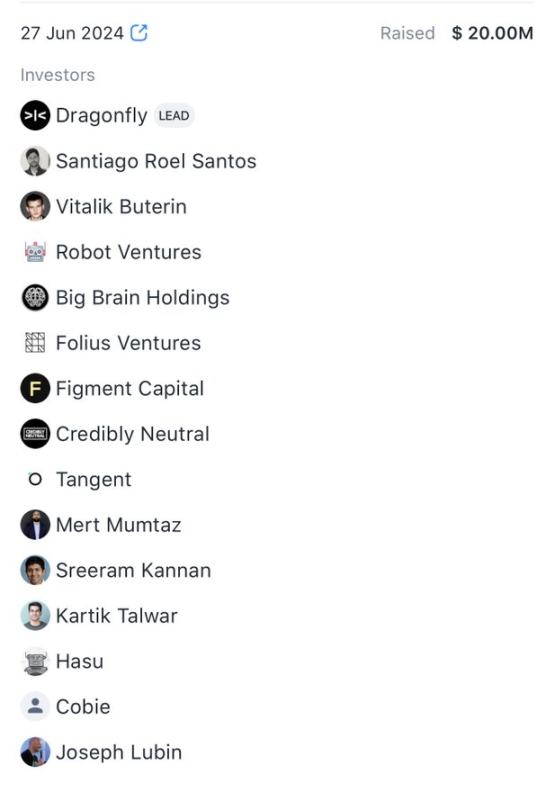
How much did they raise? What's the valuation? This is more important than many think.

If insiders and early investors got in at extremely low valuations, you're likely their "exit liquidity."

A good ICO's valuation makes sense even without hype;

a bad ICO relies on buzz and vanity metrics to justify its price.

4. Look at Real Data, Not Surface Numbers

Do they have real revenue? What are the active user numbers and Total Value Locked (TVL)?

Most importantly, the quality of this data—any data can be faked.

Testnet data is meaningless if it's easy to manipulate.

A dashboard full of fake activity won't magically turn into real usage—Monad is a prime example.

See if user demand is organic: are people willing to use the product without incentives,

or are they just there for a potential airdrop?

5. Marketing and Narrative Power

Marketing is more important than many realize.

MegaETH's marketing was executed masterfully.

The team controlled everything, perfectly steering the narrative.

Everyone was actively discussing MegaETH.

In the Web3 world, attention is everything.

If an ICO gets no attention before launch, don't expect miracles afterward—again, think Monad.

Good projects know how to tell their story clearly from the start.

Bad projects hide behind buzzwords: "We're building Web3's next ChatGPT + Nvidia + prediction market..." Nice story.

6. Offering Terms and Valuation

Read the terms carefully:

  • Token unlock rules

  • Vesting schedule

  • Circulating supply

  • Fully Diluted Valuation (FDV) at listing

Understanding the full tokenomics is crucial. If you can't, use AI tools to help analyze it.

If the ICO structure heavily favors insiders and dumps all the risk on retail, stay away.

A fair launch doesn't mean cheap; it means the interests of the project and participants are aligned.

7. Market Conditions are Key

This is the most easily overlooked point.

In a real bull market, a decent project can hit a $500M to $1B FDV on narrative alone.

Right now, even the hottest projects often cap out at $100M to $300M valuations.

This directly impacts your risk-reward calculation.

The same project can have wildly different outcomes in different markets.

Timing isn't everything, but it's never irrelevant.

Final Thoughts

ICOs are not free money; they never were.

The current trend will create some winners and leave a long list of lessons.

Don't buy just because everyone else is, or because a KOL you like is shilling it.

Don't assume every promoted project will be the next MegaETH.

The worst projects will just exploit your FOMO and hype-chasing mentality, with zero substance.

Câu hỏi Liên quan

QWhat is the main reason many ICOs fail to replicate the success of projects like MegaETH or Plasma?

AMost ICOs fail because they are merely copying a successful model without proper planning, execution, or innovation, unlike the original projects which were well-planned from the start.

QAccording to the article, what should be the primary focus when evaluating an ICO?

AThe primary focus should be on the product itself—whether it solves a real problem, has actual innovation, and has a working product rather than just promises or testnet data.

QWhy is the team behind an ICO important, as mentioned in the article?

AThe team's experience and track record are crucial because a strong team can adapt to market changes, while a weak one may disappear when hype fades. Anonymous teams need to deliver exceptional results to gain trust.

QWhat does the article suggest about ICO valuations and investor alignment?

AThe article warns that if insiders and early investors get in at very low valuations, retail investors might become 'exit liquidity.' A good ICO should have a logical valuation and fair terms that align interests between the project and participants.

QHow does market timing affect the outcome of an ICO, based on the article?

AMarket timing is critical—the same project can have vastly different results in a bull market versus the current environment. Valuations and risk-reward ratios are heavily influenced by the overall market conditions.

Nội dung Liên quan

Polymarket Bị Kẹt: Bài Kiểm Tra Thực Sự Sau Khi Vượt Qua Giai Đoạn Lưu Lượng Tăng Đột Biến

Polymarket, nền tảng dự đoán thị trường hàng đầu, đang đối mặt với thách thức lớn khi trải nghiệm giao dịch xuống cấp do hạ tầng không theo kịp đà tăng trưởng. Phó chủ tịch kỹ thuật Josh Stevens thừa nhận vấn đề và công bố kế hoạch cải tổ toàn diện, bao gồm: giảm độ trễ dữ liệu, sửa lỗi hủy lệnh, xây dựng lại hệ thống order book (CLOB), nâng cao hiệu suất website, và quan trọng nhất là di chuyển chain (chain migration). Nguyên nhân sâu xa nằm ở việc Polymarket không còn là ứng dụng dự đoán đơn thuần mà đã phát triển thành một nền tảng giao dịch tần suất cao. Polygon, từng là lựa chọn chi phí thấp hoàn hảo, giờ đây trở thành rào cản kỹ thuật. Động thái này ngay lập tức thu hút sự quan tâm của các blockchain khác như Solana, Sui, Algorand... trong khi Polygon nỗ lực giữ chân ứng dụng quan trọng này - nguồn đóng góp phí giao dịch đáng kể cho hệ sinh thái của họ. Bài kiểm tra thực sự của Polymarket không chỉ là chọn chain mới, mà là xây dựng một hệ thống giao dịch đủ mạnh và ổn định để giữ chân người dùng trong giai đoạn tăng trưởng mới, nơi độ tin cậy quan trọng hơn bao giờ hết.

Odaily星球日报12 giờ trước

Polymarket Bị Kẹt: Bài Kiểm Tra Thực Sự Sau Khi Vượt Qua Giai Đoạn Lưu Lượng Tăng Đột Biến

Odaily星球日报12 giờ trước

Điều chỉnh kỳ vọng giảm cho chu kỳ tăng giá tiếp theo của BTC

Tác giả Alex Xu, một nhà đầu tư Bitcoin lâu năm, đã chia sẻ quyết định giảm dần tỷ trọng BTC trong danh mục đầu tư của mình, từ vị thế lớn nhất xuống còn khoảng 30%, và giải thích lý do cho việc điều chỉnh kỳ vọng về đỉnh giá trong chu kỳ bull market tiếp theo. Các lý do chính bao gồm: 1. **Năng lượng tăng trưởng tiềm năng giảm:** Các chu kỳ trước được thúc đẩy bởi việc mở rộng đối tượng đầu tư theo cấp số nhân (từ cá nhân đến tổ chức). Chu kỳ tới cần sự chấp nhận từ các quỹ đầu tư quốc gia hoặc ngân hàng trung ương, điều này khó xảy ra trong 2-3 năm tới. 2. **Chi phí cơ hội cá nhân:** Tìm thấy nhiều cơ hội đầu tư hấp dẫn khác (cổ phiếu công ty) với mức giá hợp lý. 3. **Tác động tiêu cực từ sự thu hẹp của ngành crypto:** Nhiều mô hình Web3 (SocialFi, GameFi...) không thành công, dẫn đến sự thu hẹp của toàn ngành và làm chậm tốc độ tăng trưởng số người nắm giữ BTC. 4. **Áp lực từ nhà mua lớn nhất (MicroStrategy):** Chi phí huy động vốn của MicroStrategy tiếp tục tăng cao (lãi suất 11.5%), có thể làm giảm tốc độ mua vào và gây áp lực bán. 5. **Sự cạnh tranh từ Vàng được token hóa:** Sản phẩm vàng token hóa (tokenized gold) đã thu hẹp khoảng cách về tính dễ chia nhỏ, dễ mang theo và dễ xác minh so với BTC. 6. **Vấn đề ngân sách bảo mật:** Phần thưởng khối giảm sau mỗi lần halving làm trầm trọng thêm vấn đề ngân sách cho bảo mật mạng lưới. Tác giả vẫn giữ một phần BTC đáng kể và sẵn sàng mua lại nếu các lý kiến trên được giải quyết hoặc xuất hiện các yếu tố tích cực mới, với điều kiện giá cả phù hợp.

marsbit12 giờ trước

Điều chỉnh kỳ vọng giảm cho chu kỳ tăng giá tiếp theo của BTC

marsbit12 giờ trước

Giao dịch

Giao ngay
Hợp đồng Tương lai
活动图片