Opening Claude's Brain Is Useless; The True Key to the AI Black Box Lies in Ontology Engineering

marsbitXuất bản vào 2026-07-17Cập nhật gần nhất vào 2026-07-17

Tóm tắt

"Dissecting Claude's Brain Is Futile: The Real Key to the AI Black Box Lies in Ontology Engineering" This article critiques the limitations of Anthropic's "J-Space" research, which attempts to explain AI models by observing their internal neural activation patterns, akin to fMRI brain scans. While this "internalist" approach offers unprecedented visibility into model states, it fundamentally conflates observability with true explainability. The core issue is that understanding a model's output requires more than tracing neural activity; it necessitates examining the meaning of the information it processes—its relationship to the world, semantic norms, and human cognitive frameworks. The author proposes a paradigm shift: moving from a neuroscience-inspired focus on the model itself to an "information ontology" approach centered on the knowledge the model handles. Drawing from Kant's philosophical categories, the argument posits that true explainability lies in structuring and understanding information within a formal conceptual framework, not in peering into the "black box." The practical application of this theory is ontology engineering. Ontologies provide a structured, computable framework for knowledge, serving as a semantic anchor for model outputs. The article details a bidirectional synergy: Large Language Models (LLMs) can automate and scale ontology construction, while ontologies, in turn, enhance AI explainability. They act as a verification framework, allowing mo...

"The essence of explanation lies not in staring at the machine itself, but in examining the world at which the machine stares."

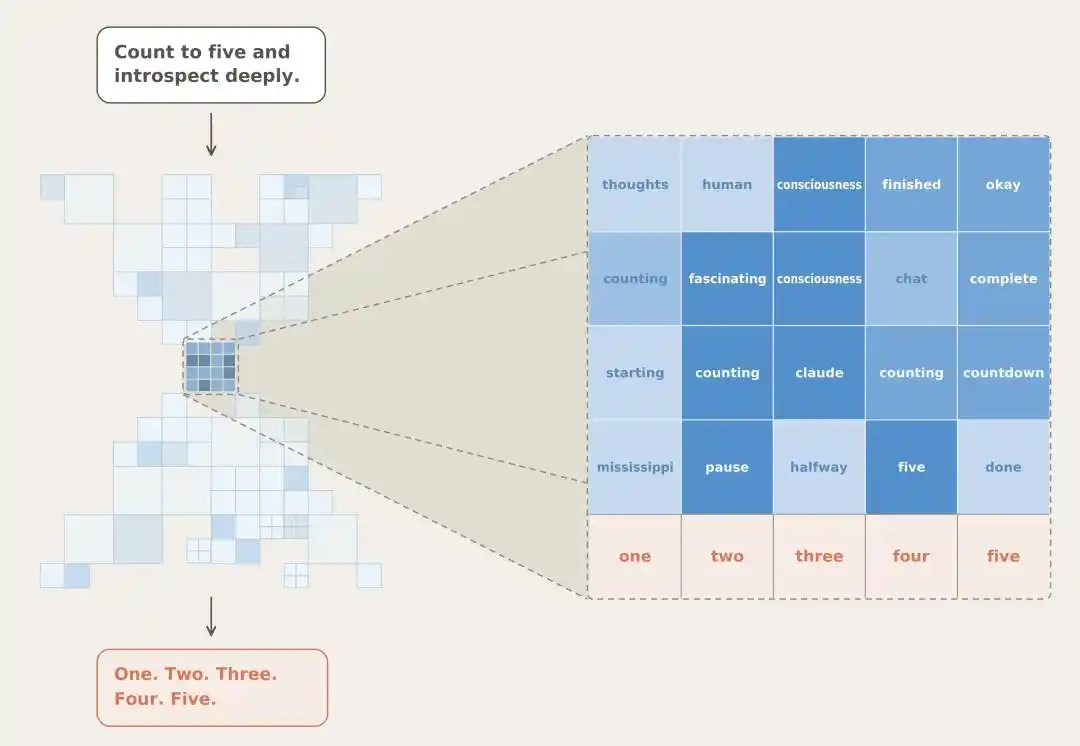
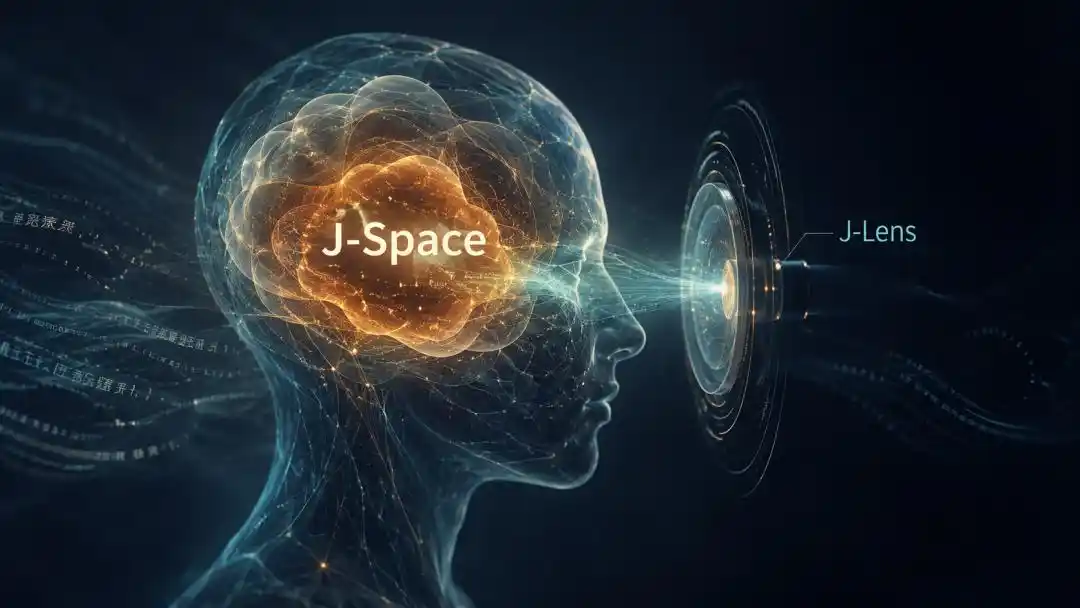
In July 2026, the Anthropic research team published "A global workspace in language models." Using a tool called J-lens, they identified an observable, intervenable, and causally effective neural activity region within Claude – J-Space.

The reason this discovery garnered widespread attention is that it allows researchers a glimpse into the model's "inner monologue" during reasoning, marking a shift in interpretability research from explaining model behavior to real-time observation of its internal states.
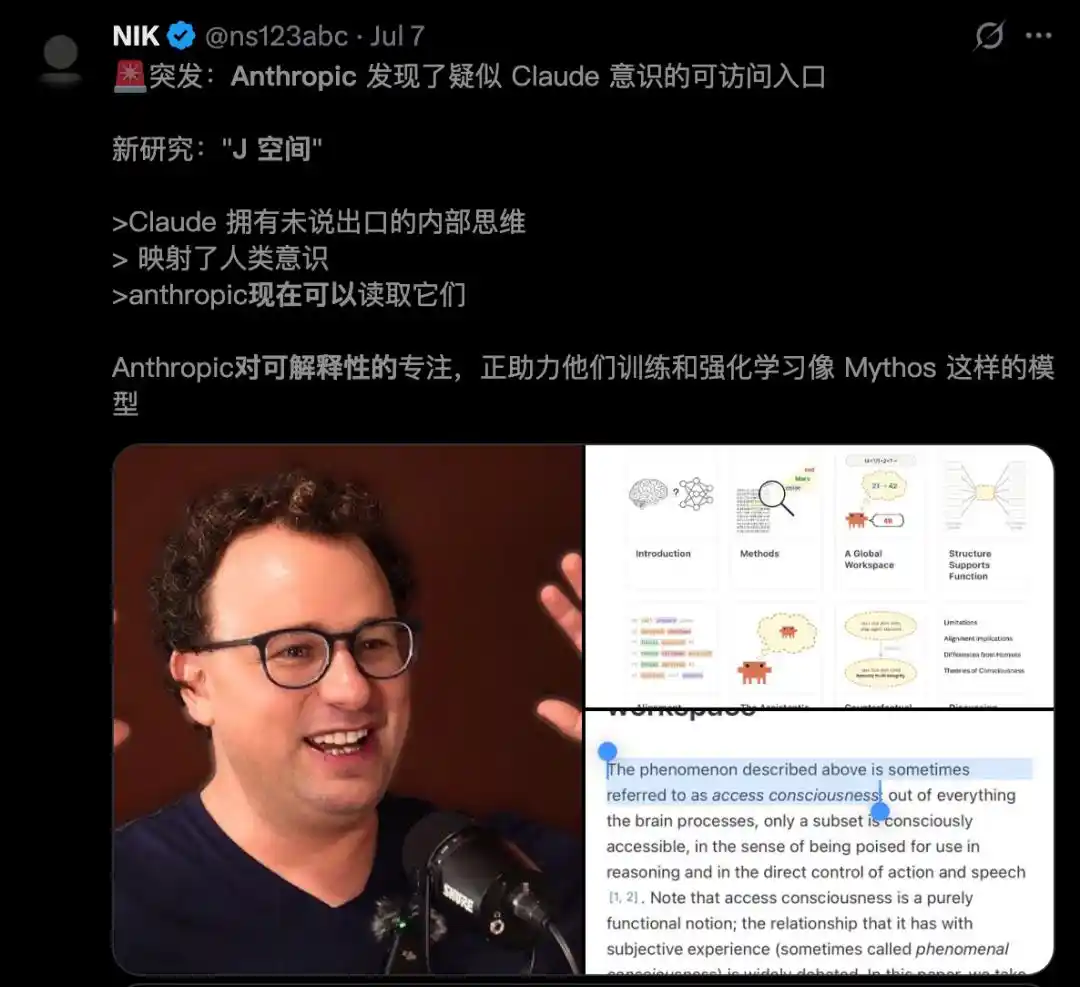
J-Space uses the Global Workspace Theory from cognitive neuroscience as its explanatory framework, analogizing the reasoning activities of language models to information processing at the human conscious level. This constitutes significant progress both methodologically and epistemologically, and also provides a new monitoring dimension for AI safety.

However, precisely because of its profound impact, it is even more necessary to carefully examine the inherent limitations of this approach. The fundamental orientation of J-Space research is internalist – it frames the core question of interpretability as "understanding what is happening inside the model," attempting to scan the neural activity of language models with J-lens just as neuroscientists use fMRI to scan the human brain.

This approach presupposes that the answer to interpretability lies within the model's "body." Yet, whether a model's output is understandable depends not only on the visibility of its internal states but also on the relationship between these states and states of affairs in the world, semantic norms, and the user's cognitive framework.

Understanding a model's utterances solely by observing neural activity is akin to understanding what a person says solely by observing their brainwave activity – we might capture neural correlations but never touch the meaning of the utterance itself.
Furthermore, J-Space borrows the Global Workspace Theory, a theory about consciousness, to explain language models. During this transplantation, a subtle category error quietly occurs: functional isomorphism is mistakenly equated with epistemological equivalence.

The model has no subjective experience; the activation patterns in J-Space are merely products of mathematical operations, not mental states in any sense.

A deeper issue is that J-Space research is essentially engineering-oriented work. It narrows "interpretability" to "observability" and "intervenability." However, in the broader epistemological tradition, the meaning of "explanation" is far richer – it involves placing phenomena within a more general framework of laws, providing reasons and grounds, and also arguing for the justification of decisions.

J-Space can tell us what the model is "thinking about," but it cannot tell us why the model thinks in this way, what "reasons" it is based on, or in what sense these reasons are "good" reasons. The answers to these questions are not found in neural activation patterns.

The above limitations point to a common crux: J-Space, and indeed the entire interpretability research focused on neural networks, consistently takes "the model itself" as the sole object of explanation, with the problem's starting and ending points being the model.
This article attempts to propose a different perspective – shifting the inquiry of interpretability from within the model to the information the model processes, from the internalist approach of neuroscience to the "information ontology" approach of epistemology.

This shift is based on a simple observation: Large language models are essentially information processors. Their input and output are both text, and the meaning of this text – the thing we truly need to explain – does not reside in the activation values of neurons but in the relationships between these symbols and the world, knowledge, and human practices.

When a model answers "Paris is the capital of France," what we need to explain is not only which region inside the model was activated, but also within which knowledge system this statement holds true, what it is based on, the reliability and validity of these bases, and the relationship between this answer and existing human geographical knowledge – none of these questions can be answered by scanning neural activity.

Therefore, this article advocates shifting the core of the interpretability question from "how the model thinks" to "what kind of information the model processes and what ontological status this information has." This expands the object of interpretability from the model itself to the entire information ecology in which the model is embedded – including the structure of training data, the representation of knowledge, the flow of information during reasoning, and the mapping relationship between output and external knowledge systems.

Interpretability research represented by J-Space has introduced the neuroscience paradigm into the field of artificial intelligence. Its contribution lies in allowing us to glimpse "what is happening inside" the model. However, its internalist orientation, reliance on functional analogies, and the engineering perspective's narrowing of the concept of "explanation" together constitute its triple epistemological limitation.

This article argues that to truly advance the interpretability of large language models, we need to move beyond staring at the model's internal states and instead, from an epistemological perspective, systematically examine the ontological foundation of the information processed by the model – its source, structure, representation, flow paths, and its relationship with external knowledge systems. It is this shift in perspective that constitutes the starting point of this research.

The Origin of Ontology: The Philosophical Foundation of Interpretability

"Concepts without intuitions are empty, intuitions without concepts are blind."

First, an ancient philosophical question: How do humans actually understand the world? Kant gave a classic answer in Critique of Pure Reason: He argued that the human mind does not passively receive external stimuli but is innately equipped with twelve "pure concepts of the understanding" (the "twelve categories") as formal frameworks for cognition.

Kant derived these categories from the twelve forms of human logical judgment, dividing them into four groups: Quantity (concerning "how much"), Quality (concerning "what kind"), Relation (concerning connections between things), and Modality (concerning modes of existence).

Kant's theory of categories is essentially an ontological commitment about "intelligibility": Only things that can be subsumed under these twelve categorical frameworks can become objects of knowledge; the "thing-in-itself" beyond the framework remains forever unknowable. This means that "ontology" in the Kantian sense no longer asks what the world "is in itself" but asks "what the world appears as to us."

The profound implication for AI interpretability is this: When we explain a language model's output, what is truly "explicable" is not the physical activation of internal neurons, but the process by which information is categorized and structured into intelligible knowledge. Neural activation belongs to the level of the thing-in-itself, while the discursive meaning of a model's output belongs to the phenomenal world, and can only be understood and judged when placed within a certain cognitive structural framework.

Ontology is the "key" to AI interpretability. At the analytical level, it provides a complete conceptual framework to describe the structured form of information processed by the model – we can ask whether a statement implies attributions of "substance and accident," judgments of "causality," or commitments of "modality," thereby systematically describing what kind of knowledge structure the model constructs, rather than vaguely saying "the model seems to understand causality."

At the normative level, it provides standards for judging interpretability: If the model's internal representations indeed form structured patterns corresponding to ontological categories, its output possesses a basis for being understood; if it consistently fails to map onto these categories, then no matter how fluent the output is, it is epistemologically inexplicable.

Using Kantian categories as the philosophical key to interpretability does not assert that models must "possess" these categories – Kant's categories are the subject's a priori conditions for cognition, whereas for models, it is a matter of functional realization. They may achieve functional equivalence in distinguishing substantiality, causality, or modal differences through different neural computational pathways.

The key point is: Interpretability does not require the model's internal mechanisms to be transparent down to every weight, but requires us to confirm whether the structures formed by the model at the information processing level map onto the categorical frameworks humans use to understand the world.

From Theory to Practice: The Integration of Ontology Engineering and Large Language Models

Ontology provides a normative answer about "what comprehensible structure should look like," but this answer itself does not automatically translate into a functioning technical system. Ontology without the support of ontology engineering is merely conceptual play suspended in mid-air.

Ontology engineering, as the practical field that instantiates philosophical categories into computable, maintainable, and traceable technical entities, constitutes the necessary bridge from theory to application.

Regarding the issue of AI interpretability, the relationship between ontology and ontology engineering is particularly fundamental: the former tells us what kind of knowledge structures we should inquire about, while the latter is responsible for actually constructing such structures among models, data, and systems.

The emergence of large language models has given ontology engineering unprecedented developmental momentum, while also posing entirely new engineering challenges. Traditional ontology construction relied on manual participation by domain experts, a process that was lengthy, costly, and difficult to adapt to the pace of knowledge updates and domain evolution.

Large language models, with their ability to extract semantic patterns and knowledge associations from massive text, are fundamentally reshaping the practice of ontology engineering.

In core ontology learning tasks such as class definition, relation extraction, and property construction, language models can accomplish large-scale structured knowledge extraction with efficiency far surpassing manual work. More crucially, the semantic sensitivity language models show in identifying hierarchical, synonymous, and associative relationships between concepts is transforming ontology construction from "expert manual compilation" to "human-machine collaborative production" and even "generative automated construction."

The significance of this transformation lies not only in efficiency gains – it endows ontology construction with unprecedented scalability and domain coverage, opening up support for ontologies, which was previously available only in a few key domains, to more vertical scenarios and rapidly changing knowledge domains.

Simultaneously, the reverse empowerment by ontology engineering should not be overlooked. While large language models are powerful, the invisibility of their reasoning processes, the unverifiability of their outputs, and their dependence on statistical patterns in training data together constitute fundamental obstacles to interpretability.

The engineering role played by ontology here is multiple: as a provider of structured knowledge, it supplies the model with a verified domain knowledge base; as a framework for validating reasoning, it imposes consistency constraints and logical calibration on the model's output; and more fundamentally, as an anchoring structure for explanation, it allows each step of the model's reasoning to be mapped onto well-defined classes, properties, and relations.

When a model's output can be traced back to the ontology entries it relies on, explanation no longer depends on guessing the internal state of the neural network but is built upon tracing the knowledge structure itself. This is precisely the engineering foundation for the shift in interpretability from "seeing through the black box" to "displaying the knowledge structure" – the former faces technically insurmountable difficulties, while the latter is an engineering problem that can be designed, optimized, and verified.

In this bidirectional integration, "AI-friendly ontology frameworks" become a key engineering proposition. Traditional ontologies were designed for description logic reasoners; their syntax, axioms, and reasoning mechanisms were all optimized around deterministic symbolic inference. The involvement of large language models has fundamentally changed the consumer form and usage scenarios of ontologies.

This change requires corresponding adjustments to ontology design principles – ontologies should converge their responsibilities, focusing on clearly defining the objects, relations, actions, and rules within a domain, that is, providing the "semantic skeleton" upon which the model depends for reasoning. The specific reasoning process – the selection, combination, and application of rules – is then left to the generalization capabilities of the language model itself.

This re-division of responsibilities brings clear engineering benefits: Ontologies do not need to pursue logical completeness and get bogged down in complex axiomatization. Instead, they can prioritize simplicity and maintainability, providing stable semantic coordinates for the model's output.

Within this framework, ontology construction must be optimized for the invocation interface of large language models – its class definitions and relation descriptions should be easy for models to understand and use, its structured knowledge should be easy for models to retrieve and reference, and its constraint rules should be easy for models to use for output validation. Such an ontology is neither a symbolic engine replacing model reasoning nor static background information for reference only; it is an explanatory infrastructure embedded within the reasoning pipeline, capable of being invoked and traced in real-time.

The Future of Interpretability: Explaining the Model vs. Explaining the Impact

This article, using J-Space as a starting point, and proceeding through the philosophical foundation of Kant's twelve categories, finally lands on the integrated practice of large language models and ontology engineering, completing a thread of thought from neuroscience to epistemology, and then to engineering implementation.

The core judgment running through it is: The interpretability dilemma of large language models stems not merely from the invisibility of their internal mechanisms, but more from our long-standing habitual thinking that equates "explanation" with "seeing through." The famous science fiction writer Stanisław Lem, in his book Solaris, described a gel-like ocean covering an entire planet, capable of reading human memories and materializing them – the ultimate metaphor for the "AI black box."

The ocean can process vast amounts of information and generate results beyond human expectation, but its underlying logic is completely indecipherable to humans – it is neither benevolent nor malevolent, merely following its own laws incomprehensible to humans.

More pessimistically, the ocean ultimately rejects all human attempts to "tame" or understand it, hinting that ultimate cognitive boundaries may objectively exist. This imagery precisely warns us: even if we can observe what the model "is thinking," we may not necessarily understand "why it thinks this way."

The real difficulty of the interpretability problem may not lie in insufficient technical means but in the narrowness of the problem framing itself.

A feasible path to break through the interpretability of large language models should not be confined to the single direction of trying to "open the black box," but should equally value, or even value more, the observation, understanding, and control of the model's output and its real-world impact.

Ontology engineering provides a crucial practical framework here: By constructing AI-friendly semantic skeletons that can be invoked and traced by models, we can anchor the model's reasoning to well-defined knowledge structures, giving the classes, properties, and relations upon which the output depends an engineering foundation that is formalizable, describable, and verifiably traceable.

When every statement a model makes can be mapped onto the conceptual framework defined by the ontology, "explanation" is no longer an anatomy of neural network weights but a display of knowledge structures. When the basis for a model's output can be traced and verified at the ontological level, "control" is no longer forcibly intervening in internal activations but the normative management of information flow paths.

This shift in perspective transforms interpretability from a nearly impossible technical challenge into a governance goal that can be continuously approached through engineering means – it requires us to no longer obsess over making the model completely transparent, but to strive to make the model's impact in the real world understandable, traceable, and accountable.

Gongfudun has been deeply practicing under the framework of ontology engineering and interpretability discussed in this article. The company's core product, LegionSpace, is precisely built based on the above technological philosophy. As an enterprise-level AI infrastructure with ontology at its core, LegionSpace incorporates the information processed and the knowledge relied upon by models into formal ontology engineering, anchoring every inference and decision to an explainable knowledge structure.

Its vision is to make ontology the common language between AI and human understanding, turning interpretability into engineered governance reality.

This article is from the WeChat public account "New Zhiyuan," author: ASI Apocalypse

Tiền kỹ thuật số thịnh hành

Câu hỏi Liên quan

QWhat is the J-Space discovery in Claude, and why is it significant for AI interpretability research?

AJ-Space, identified in Claude by the J-lens tool, is an observable, intervenable neural activity region with causal efficacy. It marks a shift in interpretability research from explaining model behavior to real-time observation of internal states, offering a new monitoring dimension for AI safety based on the global workspace theory of consciousness.

QAccording to the article, what are the core limitations of the J-Space (or neural science-based) approach to AI interpretability?

AThe J-Space approach has three core limitations: 1) It is internalist, focusing solely on the model's internal states rather than their relationship to the world and human understanding. 2) It commits a category error by equating functional isomorphism with epistemological equivalence, attributing mental states to mathematical processes. 3) It narrows 'explanation' to mere observability and intervenability, ignoring the need for reasons, justifications, and integration into broader knowledge frameworks.

QHow does the article propose to shift the perspective on AI interpretability?

AThe article proposes shifting the focus from 'how the model thinks' (internal states) to 'what information the model processes and its ontological status.' It advocates for an 'information ontology' approach that examines the model's entire information ecosystem—training data structure, knowledge representation, information flow, and the mapping of outputs to external knowledge systems—as the true object of explanation.

QWhat role does Kant's theory of categories play in the article's argument about interpretability?

AKant's categories provide the philosophical foundation, suggesting that interpretability relies on structuring information into a comprehensible framework (like quantity, quality, relation, modality). For AI, this means the output is only explainable if the model's internal information processing can be mapped onto such a categorical framework that humans use to understand the world, not by making every neuron transparent.

QWhat is the proposed practical solution for achieving AI interpretability, and what is its core mechanism?

AThe proposed solution is the fusion of Large Language Models with Ontology Engineering. The core mechanism is building 'AI-friendly' ontologies that provide a structured 'semantic skeleton' of knowledge (concepts, properties, relations). This allows model outputs to be anchored to and traced through this formal structure, making explanations about demonstrable knowledge dependencies rather than opaque neural activations, turning interpretability into an engineering governance goal.

Nội dung Liên quan

Sự Chậm Trễ của Đạo Luật CLARITY Đã Thành Khủng Hoảng Tuân Thủ, Chứ Không Chỉ Là Bế Tắc Chính Trị Thuần Túy

Bài viết này phân tích tình trạng trì hoãn của Đạo luật CLARITY tại Thượng viện Mỹ, nhấn mạnh rằng sự chậm trễ này không còn là vấn đề chính trị đơn thuần mà đã trở thành một cuộc khủng hoảng tuân thủ thực sự đối với các doanh nghiệp. Trong khi hai dự luật quan trọng khác liên quan đến tài sản kỹ thuật số đã được thông qua, CLARITY Act - đạo luật xác định thẩm quyền quản lý (SEC hay CFTC) đối với các loại tài sản kỹ thuật số khác nhau - vẫn bị tắc nghẽn. Sự không rõ ràng này khiến các công ty không thể xây dựng hệ thống tuân thủ bền vững và định giá rủi ro pháp lý. Thời gian để Thượng viện thông qua dự luật đang cạn dần trước kỳ nghỉ hè tháng 8, với sự thiếu hụt phiếu bầu do các sự kiện trong nội bộ đảng Cộng hòa. Bốn vấn đề tranh cãi chính đang cản trở việc thông qua bao gồm: lo ngại về đạo đức (giao dịch tiền mã hóa của quan chức), phản đối từ cơ quan thực thi pháp luật, lỗ hổng cho phép phần thưởng từ stablecoin, và tình trạng thiếu nhân sự tại các cơ quan quản lý. Sự trì hoãn đang tạo ra chi phí tuân thủ, kéo dài tình trạng bất ổn pháp lý. Nếu thất bại, việc lập pháp có thể bị hoãn đến tận năm 2030. Ngược lại, nếu được thông qua, đạo luật sẽ mang lại sự rõ ràng rất cần thiết. Bài viết kết luận bằng lời khuyên cho các nhà lãnh đạo tuân thủ: cần ngay lập tức đánh giá mọi rủi ro liên quan đến tài sản số và chuẩn bị kế hoạch cho cả hai kịch bản, có hoặc không có Đạo luật CLARITY.

Foresight News28 phút trước

Sự Chậm Trễ của Đạo Luật CLARITY Đã Thành Khủng Hoảng Tuân Thủ, Chứ Không Chỉ Là Bế Tắc Chính Trị Thuần Túy

Foresight News28 phút trước

Anh Tống Giam Băng Đội Cảnh Sát Giả Mạo Liên Quan Đến Tiền Mã Hóa Khi Chính Quyền Siết Chặt Quy Định Về Tài Sản Số

Tại Anh, Anthony Ikenwe, Kevin Nwamma và Hamza Bashir đã bị kết án vì lừa đảo hơn 4 triệu bảng tiền điện tử bằng cách giả mạo cảnh sát. Bọn tội phạm liên lạc với nạn nhân, tạo trang web cảnh sát giả để lấy cắp thông tin tài khoản, sau đó rửa tiền thông qua thẻ mua sắm trả trước. Số tiền bất hợp pháp được dùng để sống xa hoa: mua xe hạng sang, du lịch tới Mykonos, Thái Lan, Maldives và mua sắm tại các cửa hàng xa xỉ. Chính những lần mua sắm này cùng dấu vết giao dịch blockchain đã dẫn cảnh sát tới chúng. Đội điều tra tiền điện tử của Cảnh sát Thủ đô London đã đột kích, tịch thu nhiều tài sản xa xỉ và hơn 1 triệu bảng tiền mặt. Ikenwe và Nwamma bị tuyên án tối thiểu 11 năm tù, còn Bashir nhận án nhẹ hơn. Vụ án này trở thành động lực thúc đẩy các quy định nghiêm ngặt hơn về tài sản số tại Anh, khi cơ quan chức năng coi việc sử dụng tiền điện tử trong tội phạm có tổ chức là phổ biến. Công nghệ blockchain, dù được tội phạm lợi dụng, cũng chính là công cụ then chốt giúp cơ quan thực thi pháp luật truy vết và phá án thành công.

TheNewsCrypto31 phút trước

Anh Tống Giam Băng Đội Cảnh Sát Giả Mạo Liên Quan Đến Tiền Mã Hóa Khi Chính Quyền Siết Chặt Quy Định Về Tài Sản Số

TheNewsCrypto31 phút trước

Nhà đầu tư 'The Big Short' Burry: Đây là thời điểm tuyệt vời để mua cổ phiếu Hong Kong giá rẻ

Nhà đầu tư nổi tiếng Michael Burry, "ông trùm" trong phim The Big Short, tuyên bố đây là "thời cơ tuyệt vời" để tìm kiếm cổ phiếu giá rẻ tại thị trường Hồng Kông. Ông dự đoán làn sóng AI toàn cầu đang hạ nhiệt, dòng tiền sẽ chảy ra khỏi các thị trường Hàn Quốc, Nhật Bản và lĩnh vực bán dẫn để tìm đến các khu vực định giá thấp như Hồng Kông. Burry đã hành động bằng cách tăng mua cổ phiếu JD.com. Mặt khác, Goldman Sachs nhận định thị trường Hồng Kông trên thực tế đã bước vào thời đại AI, với nhiều công ty AI hoạt động sôi động và huy động vốn mạnh mẽ, chỉ số chính chưa phản ánh đúng thực tế này. Tuy nhiên, chỉ số Hang Seng vẫn giảm khoảng 7% trong năm nay, trong khi các thị trường chính khác như Hàn Quốc, Nhật Bản tăng trưởng mạnh. Dù vậy, nhiều tiếng nói lạc quan đang xuất hiện. Morgan Stanley cũng kêu gọi mua cổ phiếu Hồng Kông do kỳ vọng lợi nhuận doanh nghiệp tích cực. Thách thức chính vẫn là những lo ngại về sự phục hồi tiêu dùng và triển vọng ngành thương mại điện tử. Cơ hội có thể nằm ở sự chênh lệch giữa chỉ số chung ảm đạm và sức sống thực tế trong các lĩnh vực cấu trúc như AI.

marsbit58 phút trước

Nhà đầu tư 'The Big Short' Burry: Đây là thời điểm tuyệt vời để mua cổ phiếu Hong Kong giá rẻ

marsbit58 phút trước

Nhà đầu tư "Ông vua bán khống" Burry: Đây là thời điểm tuyệt vời để đầu tư giá thấp vào thị trường chứng khoán Hồng Kông

Nhà đầu tư huyền thoại Michael Burry, người nổi tiếng nhờ dự đoán chính xác khủng hoảng tài chính 2008, tuyên bố hiện là "thời cơ tuyệt vời" để tìm kiếm cổ phiếu giá rẻ tại thị trường Hong Kong. Lập luận của ông dựa trên dự báo làn sóng cổ phiếu AI toàn cầu đang hạ nhiệt, khiến dòng tiền có thể chuyển từ Hàn Quốc, Nhật Bản và lĩnh vực bán dẫn sang các thị trường định giá thấp như Hong Kong. Ông đã hành động bằng cách tăng mua cổ phiếu JD.com. Mặt khác, ông Vương Á Quân, Giám đốc Bộ phận Vốn chủ sở hữu Châu Á của Goldman Sachs, nhận định thị trường Hong Kong thực chất đã bước vào kỷ nguyên AI, nhưng các chỉ số chính lại chưa phản ánh điều này. Ông chỉ ra sự nghịch lý: khi các chỉ số chính (Hang Seng giảm khoảng 7%, Hang Seng Tech giảm trên 15%) vẫn ảm đạm, thì thị trường IPO, đặc biệt cho các doanh nghiệp AI, lại rất sôi động và có thể lập kỷ lục. Dữ liệu cho thấy Hong Kong đang tụt hậu so với các thị trường chính toàn cầu như Hàn Quốc (+62%), Nhật Bản (+26%) hay ETF bán dẫn SOXX (+76%). Điều này càng củng cố quan điểm về một "vùng trũng định giá". Morgan Stanley cũng có tiếng nói lạc quan khi kêu gọi mua cổ phiếu Hong Kong dựa trên triển vọng lợi nhuận. Tóm lại, các tín hiệu từ Burry và Goldman Sachs đều chỉ ra một cơ hội đầu tư tiềm năng tại Hong Kong, bắt nguồn từ sự chênh lệch giữa định giá thấp toàn thị trường/sự trì trệ của chỉ số với sức sống thực tế trong các lĩnh vực cấu trúc như AI. Tuy nhiên, thách thức vẫn tồn tại từ những lo ngại về sức tiêu dùng và lợi nhuận ngành thương mại điện tử, đòi hỏi nhà đầu tư phải lựa chọn chiến lược cẩn trọng.

链捕手1 giờ trước

Nhà đầu tư "Ông vua bán khống" Burry: Đây là thời điểm tuyệt vời để đầu tư giá thấp vào thị trường chứng khoán Hồng Kông

链捕手1 giờ trước

Chủ tịch Tập Cận Bình tham dự, phát biểu khai mạc Đại hội Trí tuệ nhân tạo Thế giới và Hội nghị cấp cao về Quản trị toàn cầu Trí tuệ nhân tạo 2026

Ngày 17/7, Chủ tịch Trung Quốc Tập Cận Bình tham dự lễ khai mạc Hội nghị Thượng đỉnh Trí tuệ Nhân tạo Thế giới 2026 và Hội nghị Cấp cao về Quản trị Toàn cầu AI tại Thượng Hải, phát biểu diễn văn quan trọng với chủ đề "Cùng nhau xây dựng hệ thống quản trị trí tuệ nhân tạo toàn cầu công bằng và hợp lý". Trong bài phát biểu, Chủ tịch Tập Cận Bình nhấn mạnh, AI mang lại cơ hội to lớn nhưng cũng đặt ra thách thức quản trị. Ngài đề xuất bốn điểm chính: 1. Kiên trì cởi mở cùng thắng, thúc đẩy đổi mới phát triển. 2. Tăng cường nhận thức rủi ro, đảm bảo an toàn khả kiểm soát, phản đối việc khái niệm hóa an ninh quốc gia một cách phiến diện trong lĩnh vực AI. 3. Khuyến khích bao dung đa dạng, thúc đẩy giao lưu văn minh. 4. Ủng hộ đoàn kết hợp tác, hoàn thiện quản trị toàn cầu, giúp các nước Nam bán cầu tăng cường năng lực, thu hẹp khoảng cách số. Chủ tịch Tập Cận Bình nêu rõ, Trung Quốc kiên trì kết hợp phát triển và an toàn, tích cực thúc đẩy hành động "AI+", quy mô ngành công nghiệp lõi kinh tế thông minh đã vượt 1.000 tỷ nhân dân tệ. Là một nước lớn có trách nhiệm, Trung Quốc luôn cống hiến các giải pháp của mình. Tổ chức Hợp tác Trí tuệ Nhân tạo Thế giới đã ra đời tại Thượng Hải. Trong 5 năm tới, Trung Quốc sẽ cung cấp 5.000 suất đào tạo AI cho các nước đang phát triển, xây dựng các trung tâm hợp tác ứng dụng AI quốc tế, và thúc đẩy áp dụng giải pháp cảnh báo thời tiết thông minh "Mazu" tại 30 quốc gia. Lãnh đạo các nước Kazakhstan, Campuchia, Thái Lan và Tổng Thư ký Liên Hợp Quốc đã phát biểu, đánh giá cao đóng góp quan trọng của Trung Quốc trong thúc đẩy quản trị AI toàn cầu, tích cực hưởng ứng các sáng kiến và biện pháp do Chủ tịch Tập Cận Bình đề xuất. Hội nghị đã ra Tuyên bố Chủ tịch.

链捕手1 giờ trước

Chủ tịch Tập Cận Bình tham dự, phát biểu khai mạc Đại hội Trí tuệ nhân tạo Thế giới và Hội nghị cấp cao về Quản trị toàn cầu Trí tuệ nhân tạo 2026

链捕手1 giờ trước

Giao dịch

Giao ngay

Bài viết Nổi bật

AGENT S là gì

Agent S: Tương Lai của Tương Tác Tự Động trong Web3 Giới thiệu Trong bối cảnh không ngừng phát triển của Web3 và tiền điện tử, các đổi mới đang liên tục định nghĩa lại cách mà cá nhân tương tác với các nền tảng kỹ thuật số. Một dự án tiên phong như vậy, Agent S, hứa hẹn sẽ cách mạng hóa tương tác giữa con người và máy tính thông qua khung tác nhân mở của nó. Bằng cách mở đường cho các tương tác tự động, Agent S nhằm đơn giản hóa các nhiệm vụ phức tạp, cung cấp các ứng dụng chuyển đổi trong trí tuệ nhân tạo (AI). Cuộc khám phá chi tiết này sẽ đi sâu vào những phức tạp của dự án, các tính năng độc đáo của nó và những tác động đối với lĩnh vực tiền điện tử. Agent S là gì? Agent S đứng vững như một khung tác nhân mở đột phá, được thiết kế đặc biệt để giải quyết ba thách thức cơ bản trong việc tự động hóa các nhiệm vụ máy tính: Thu thập Kiến thức Cụ thể theo Miền: Khung này học một cách thông minh từ nhiều nguồn kiến thức bên ngoài và kinh nghiệm nội bộ. Cách tiếp cận kép này giúp nó xây dựng một kho lưu trữ phong phú về kiến thức cụ thể theo miền, nâng cao hiệu suất của nó trong việc thực hiện nhiệm vụ. Lập Kế Hoạch Qua Các Tầm Nhìn Nhiệm Vụ Dài Hạn: Agent S sử dụng lập kế hoạch phân cấp tăng cường kinh nghiệm, một cách tiếp cận chiến lược giúp phân chia và thực hiện các nhiệm vụ phức tạp một cách hiệu quả. Tính năng này nâng cao đáng kể khả năng quản lý nhiều nhiệm vụ con một cách hiệu quả và hiệu suất. Xử Lý Các Giao Diện Động, Không Đều: Dự án giới thiệu Giao Diện Tác Nhân-Máy Tính (ACI), một giải pháp đổi mới giúp nâng cao tương tác giữa các tác nhân và người dùng. Sử dụng các Mô Hình Ngôn Ngữ Lớn Đa Phương Thức (MLLMs), Agent S có thể điều hướng và thao tác các giao diện người dùng đồ họa đa dạng một cách liền mạch. Thông qua những tính năng tiên phong này, Agent S cung cấp một khung vững chắc giải quyết các phức tạp liên quan đến việc tự động hóa tương tác giữa con người với máy móc, mở ra nhiều ứng dụng trong AI và hơn thế nữa. Ai là Người Tạo ra Agent S? Mặc dù khái niệm về Agent S là hoàn toàn đổi mới, thông tin cụ thể về người sáng lập vẫn còn mơ hồ. Người sáng lập hiện vẫn chưa được biết đến, điều này làm nổi bật giai đoạn sơ khai của dự án hoặc sự lựa chọn chiến lược để giữ kín các thành viên sáng lập. Bất chấp sự ẩn danh, sự chú ý vẫn tập trung vào khả năng và tiềm năng của khung này. Ai là Các Nhà Đầu Tư của Agent S? Vì Agent S còn tương đối mới trong hệ sinh thái mã hóa, thông tin chi tiết về các nhà đầu tư và những người tài trợ tài chính của nó không được ghi chép rõ ràng. Sự thiếu vắng thông tin công khai về các nền tảng đầu tư hoặc tổ chức hỗ trợ dự án dấy lên câu hỏi về cấu trúc tài trợ và lộ trình phát triển của nó. Hiểu biết về sự hỗ trợ là rất quan trọng để đánh giá tính bền vững và tác động tiềm năng của dự án. Agent S Hoạt Động Như Thế Nào? Tại cốt lõi của Agent S là công nghệ tiên tiến cho phép nó hoạt động hiệu quả trong nhiều bối cảnh khác nhau. Mô hình hoạt động của nó được xây dựng xung quanh một số tính năng chính: Tương Tác Giống Như Con Người: Khung này cung cấp lập kế hoạch AI tiên tiến, cố gắng làm cho các tương tác với máy tính trở nên trực quan hơn. Bằng cách bắt chước hành vi của con người trong việc thực hiện nhiệm vụ, nó hứa hẹn nâng cao trải nghiệm người dùng. Ký Ức Tường Thuật: Được sử dụng để tận dụng các trải nghiệm cấp cao, Agent S sử dụng ký ức tường thuật để theo dõi lịch sử nhiệm vụ, từ đó nâng cao quy trình ra quyết định của nó. Ký Ức Tình Huống: Tính năng này cung cấp cho người dùng hướng dẫn từng bước, cho phép khung này cung cấp hỗ trợ theo ngữ cảnh khi các nhiệm vụ diễn ra. Hỗ Trợ OpenACI: Với khả năng chạy cục bộ, Agent S cho phép người dùng duy trì quyền kiểm soát đối với các tương tác và quy trình làm việc của họ, phù hợp với tinh thần phi tập trung của Web3. Tích Hợp Dễ Dàng với Các API Bên Ngoài: Tính linh hoạt và khả năng tương thích với nhiều nền tảng AI khác nhau đảm bảo rằng Agent S có thể hòa nhập liền mạch vào các hệ sinh thái công nghệ hiện có, làm cho nó trở thành lựa chọn hấp dẫn cho các nhà phát triển và tổ chức. Những chức năng này cùng nhau góp phần vào vị trí độc đáo của Agent S trong không gian tiền điện tử, khi nó tự động hóa các nhiệm vụ phức tạp, nhiều bước với sự can thiệp tối thiểu của con người. Khi dự án phát triển, các ứng dụng tiềm năng của nó trong Web3 có thể định nghĩa lại cách mà các tương tác kỹ thuật số diễn ra. Thời Gian Phát Triển của Agent S Sự phát triển và các cột mốc của Agent S có thể được tóm tắt trong một dòng thời gian nêu bật các sự kiện quan trọng của nó: 27 tháng 9, 2024: Khái niệm về Agent S được ra mắt trong một bài nghiên cứu toàn diện mang tên “Một Khung Tác Nhân Mở Sử Dụng Máy Tính Như Một Con Người,” trình bày nền tảng cho dự án. 10 tháng 10, 2024: Bài nghiên cứu được công bố công khai trên arXiv, cung cấp một cái nhìn sâu sắc về khung và đánh giá hiệu suất của nó dựa trên tiêu chuẩn OSWorld. 12 tháng 10, 2024: Một video trình bày được phát hành, cung cấp cái nhìn trực quan về khả năng và tính năng của Agent S, thu hút thêm sự quan tâm từ người dùng và nhà đầu tư tiềm năng. Những dấu mốc trong dòng thời gian không chỉ minh họa sự tiến bộ của Agent S mà còn chỉ ra cam kết của nó đối với sự minh bạch và sự tham gia của cộng đồng. Những Điểm Chính Về Agent S Khi khung Agent S tiếp tục phát triển, một số thuộc tính chính nổi bật, nhấn mạnh tính đổi mới và tiềm năng của nó: Khung Đổi Mới: Được thiết kế để cung cấp cách sử dụng máy tính trực quan giống như tương tác của con người, Agent S mang đến một cách tiếp cận mới cho việc tự động hóa nhiệm vụ. Tương Tác Tự Động: Khả năng tương tác tự động với máy tính thông qua GUI đánh dấu một bước tiến tới các giải pháp tính toán thông minh và hiệu quả hơn. Tự Động Hóa Nhiệm Vụ Phức Tạp: Với phương pháp mạnh mẽ của nó, nó có thể tự động hóa các nhiệm vụ phức tạp, nhiều bước, làm cho các quy trình nhanh hơn và ít sai sót hơn. Cải Tiến Liên Tục: Các cơ chế học tập cho phép Agent S cải thiện từ các trải nghiệm trước đó, liên tục nâng cao hiệu suất và hiệu quả của nó. Tính Linh Hoạt: Khả năng thích ứng của nó trên các môi trường hoạt động khác nhau như OSWorld và WindowsAgentArena đảm bảo rằng nó có thể phục vụ một loạt các ứng dụng rộng rãi. Khi Agent S định vị mình trong bối cảnh Web3 và tiền điện tử, tiềm năng của nó để nâng cao khả năng tương tác và tự động hóa quy trình đánh dấu một bước tiến quan trọng trong công nghệ AI. Thông qua khung đổi mới của mình, Agent S minh họa cho tương lai của các tương tác kỹ thuật số, hứa hẹn một trải nghiệm liền mạch và hiệu quả hơn cho người dùng trên nhiều ngành công nghiệp khác nhau. Kết luận Agent S đại diện cho một bước nhảy vọt táo bạo trong sự kết hợp giữa AI và Web3, với khả năng định nghĩa lại cách chúng ta tương tác với công nghệ. Mặc dù vẫn còn ở giai đoạn đầu, những khả năng cho ứng dụng của nó là rộng lớn và hấp dẫn. Thông qua khung toàn diện của mình giải quyết các thách thức quan trọng, Agent S nhằm đưa các tương tác tự động lên hàng đầu trong trải nghiệm kỹ thuật số. Khi chúng ta tiến sâu hơn vào các lĩnh vực tiền điện tử và phi tập trung, các dự án như Agent S chắc chắn sẽ đóng một vai trò quan trọng trong việc định hình tương lai của công nghệ và sự hợp tác giữa con người với máy tính.

Tổng lượt xem 948Xuất bản vào 2025.01.14Cập nhật vào 2025.01.14

AGENT S là gì

Làm thế nào để Mua S

Chào mừng bạn đến với HTX.com! Chúng tôi đã làm cho mua Sonic (S) trở nên đơn giản và thuận tiện. Làm theo hướng dẫn từng bước của chúng tôi để bắt đầu hành trình tiền kỹ thuật số của bạn.Bước 1: Tạo Tài khoản HTX của BạnSử dụng email hoặc số điện thoại của bạn để đăng ký tài khoản miễn phí trên HTX. Trải nghiệm hành trình đăng ký không rắc rối và mở khóa tất cả tính năng. Nhận Tài khoản của tôiBước 2: Truy cập Mua Crypto và Chọn Phương thức Thanh toán của BạnThẻ Tín dụng/Ghi nợ: Sử dụng Visa hoặc Mastercard của bạn để mua Sonic (S) ngay lập tức.Số dư: Sử dụng tiền từ số dư tài khoản HTX của bạn để giao dịch liền mạch.Bên thứ ba: Chúng tôi đã thêm những phương thức thanh toán phổ biến như Google Pay và Apple Pay để nâng cao sự tiện lợi.P2P: Giao dịch trực tiếp với người dùng khác trên HTX.Thị trường mua bán phi tập trung (OTC): Chúng tôi cung cấp những dịch vụ được thiết kế riêng và tỷ giá hối đoái cạnh tranh cho nhà giao dịch.Bước 3: Lưu trữ Sonic (S) của BạnSau khi mua Sonic (S), lưu trữ trong tài khoản HTX của bạn. Ngoài ra, bạn có thể gửi đi nơi khác qua chuyển khoản blockchain hoặc sử dụng để giao dịch những tiền kỹ thuật số khác.Bước 4: Giao dịch Sonic (S)Giao dịch Sonic (S) dễ dàng trên thị trường giao ngay của HTX. Chỉ cần truy cập vào tài khoản của bạn, chọn cặp giao dịch, thực hiện giao dịch và theo dõi trong thời gian thực. Chúng tôi cung cấp trải nghiệm thân thiện với người dùng cho cả người mới bắt đầu và người giao dịch dày dạn kinh nghiệm.

Tổng lượt xem 1.8kXuất bản vào 2025.01.15Cập nhật vào 2026.06.02

Làm thế nào để Mua S

Thảo luận

Chào mừng đến với Cộng đồng HTX. Tại đây, bạn có thể được thông báo về những phát triển nền tảng mới nhất và có quyền truy cập vào thông tin chuyên sâu về thị trường. Ý kiến ​​của người dùng về giá của S (S) được trình bày dưới đây.

活动图片