2022 saw the continued rise of disruptive blockchain-centric concepts such as decentralized finance, GameFi, nonfungible tokens and Web3. Notably, some of the related projects that thrived in 2022 were headed by women, which is a good indicator of progress in an otherwise male-dominated sector.
⠀
The increased involvement of women in the cryptocurrency field signals growing inclusivity and maturation of the sector, which encourages diversity and the embrace of ideas that resonate more with underrepresented subsets of the population.
⠀
That said, a group of eminent women reached unprecedented levels of accomplishment in the blockchain and cryptocurrency industries in 2022 due to their ambition, innovation, leadership skills and dedication.
⠀
Cointelegraph had the chance to speak with Nodira Sadikova, a venture capitalist and mergers and acquisitions adviser in Web3. She affirmed this positive development while noting that there was a new category of women under 30 who were making an impact in the industry.
⠀
“We can see the rising rate of bright and talented women under 30, such as Nastya Moroz (crypto trading and investment courses exclusively for women), Daria Lomova (art adviser and curator of digital art exhibitions), Stella Friaisse (crypto podcaster and event organizer) and many more,” Sadikova said, adding:
⠀
“This army of extremely bold personalities changed the market and generated new trends and opportunities for women who did not have the courage to step into the crypto industry.”
⠀
The following is an outline of the women who made waves in the crypto industry in 2022.
⠀
Elizabeth Stark
⠀
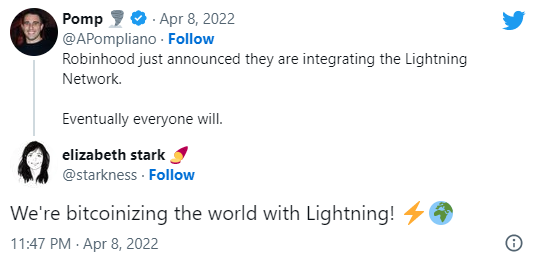
Elizabeth Stark is a co-founder and the CEO of Lightning Labs and is one of the earliest supporters of blockchain scaling solutions. Her firm, Lightning Labs, specializes in the development of Lightning Network (LN) products that enable users to transact Bitcoin more efficiently. The Lightning Network is a layer-2 scaling solution that allows users to transact BTC quickly and at a lower cost than transacting on the primary chain.
⠀
Her firm offers a series of auxiliary services mostly related to the Lightning Network that include high-volume micropayment services. It achieves this by leveraging a bidirectional micropayment channeling process that allows transactions to be processed at a faster rate, which helps to reduce transaction fees.
⠀
⠀
Apart from being a blockchain company head, Stark is also a fellow at Coin Center, a leading nonprofit that engages in cryptocurrency policy issues. She additionally serves as an adviser at Chia, a blockchain company that operates a unique crypto-mining protocol whose mechanism is based on the proof of time and space concepts. The algorithmic consensus system allows users to store random numbers on their digital storage space, for example on their hard disk drives or solid-state drives.
⠀
Users with considerable storage space have higher chances of getting a reward. The concept is revolutionary in that it’s not performance-oriented or compute-intensive and just relies on numerical queries being sent out. Consequently, the network’s energy consumption rate is hundreds of times lower than typical proof-of-work systems like the Bitcoin network.
⠀
Before becoming a crypto entrepreneur, Stark was a lecturer at the Stanford and Yale universities, where she taught students about peer-to-peer networks.
⠀
Notably, the Lightning Network infrastructure developed by her enterprise was adapted for a wide array of uses in 2022, which include transcontinental support for Bitcoin-to-fiat transactions.
⠀
Kathleen Breitman
⠀
Kathleen Breitman is the co-founder and CEO of Dynamic Ledger Solutions and is a Cornell University graduate.
⠀
Dynamic Ledger Solutions is the developer behind the Tezos proof-of-stake blockchain protocol. Tezos was designed to address many of the shortcomings afflicting Bitcoin and other early cryptocurrency networks, such as limited scaling capabilities and high gas fees. Its native token, is currently among the top 50 most popular cryptocurrencies in the world, with a market cap of over $700 million.
⠀
Prior to her crypto involvement, Breitman worked as a senior strategy associate at R3, a leading financial services firm. She also held top positions in some notable companies, such as Bridgewater Associates, Accenture and The Wall Street Journal.
⠀

⠀
2022 was a challenging year for her company, Tezos, due to the crypto market implosion that saw many cryptocurrencies nosedive due to negative investor sentiment. However, Breitman and her team are credited for making a series of insightful, strategic decisions that are set to position the company for success over the long term.
⠀
One of them was the listing of XTZ on Coinbase Japan in December 2022, which is expected to increase XTZ’s usage in the burgeoning Asian market.
⠀
Meltem Demirors
⠀
Meltem Demirors is the chief strategy officer at CoinShares, a leading digital asset investment firm that manages over $4 billion in investor assets. The CoinShares Group strives to lower the barriers of entry for investors looking to invest in digital assets.
⠀
Demirors oversees the firm’s day-to-day operations at its New York office. She is also a CoinShares board director, a position that allows her to lead the company’s venture strategy. Before joining CoinShares, Demirors held the vice president position at Digital Currency Group, a crypto venture capital firm whose subsidiaries include Foundry, Grayscale Investments and Luno.
⠀

⠀
She is acknowledged for contributing to her company’s growth over the years as its chief strategy officer. Her firm’s exchange-traded products’ assets under management (AUM) grew to $4.13 billion in 2022 as of 31 March 2022 from $2.67 billion AUM reached in June 2021.
⠀
Neha Narula
⠀
Neha Narula is the director of the Digital Currency Initiative, an MIT Media Lab research community focused on blockchain technology. While completing a computer science Ph.D. at the Massachusetts Institute of Technology, she built some scalable blockchain solutions and databases that earned her recognition in the field.
⠀
⠀
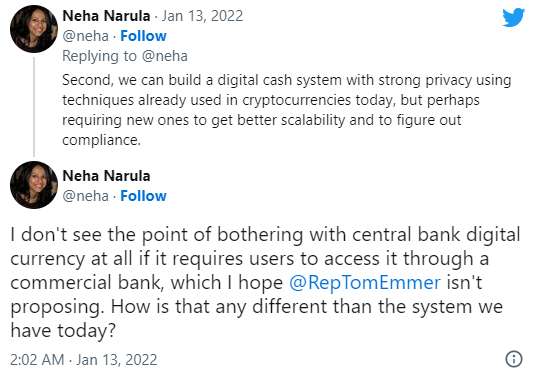
Due to her blockchain-centric endeavors and her involvement in championing the adoption of blockchain and innovative crypto payment systems, she has amassed tens of thousands of followers over the years and become a respected speaker in matters pertaining to decentralized technologies.
⠀
Narula’s articulate communication skills, especially when it comes to explaining complex crypto and blockchain concepts, have enabled her to speak to key audiences, including United States policymakers.
⠀

Click “Collect” below the illustration at the top of the page or follow this link.
⠀
She has in the past been called upon to help U.S. senators understand how digital currencies work and why they should look into central bank digital currencies (CBDCs). She is currently working with numerous financial institutions to create digital currencies and evaluate their impact and practicality for everyday use. Among them is the Federal Reserve Bank of Boston.
⠀
Perianne Boring
⠀
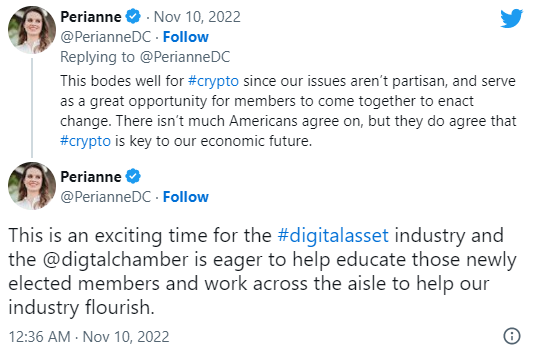
Perianne Boring has a bachelor’s degree in business administration from the University of Florida. She founded the Chamber of Digital Commerce, which is the world’s largest trade association that caters specifically to the blockchain industry. The chamber’s mission is to promote the adoption of blockchain-based technologies and digital currencies. The organization works to create an environment that fosters the growth of the industry, investment and innovation.
⠀
⠀
Boring regularly appears on financial media platforms to discuss digital currency and blockchain topics. Prior to her involvement in the cryptocurrency industry, she served as a television anchor for Prime Interest, an international finance program that reached over 600 million viewers.
⠀
In 2022, she was vocal on cryptocurrency and blockchain adoption and spoke against a series of discriminatory policies, including the recent crypto mining embargo imposed by the state of New York.
⠀
Amber Baldet
⠀
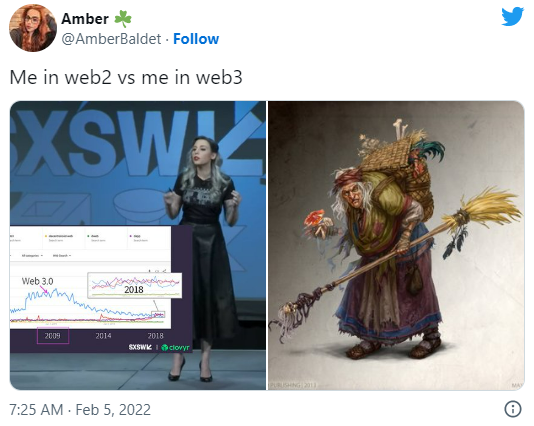
Amber Baldet is a co-founder and the CEO of Clovyr, a blockchain firm dedicated to developing versatile tools that can be used to enhance the usability of decentralized applications.
⠀
Baldet is also a board member of the Zcash Foundation, a charity organization that develops privacy-focused blockchain infrastructure. The foundation primarily caters to users of the Zcash crypto network.
⠀
⠀
Before starting her own blockchain enterprise, Baldet worked at JPMorgan where she oversaw the development of the company’s blockchain system dubbed Quorum. She left JP Morgan in 2018 to start Clovyr, which she co-founded with Patrick Nielson, who also worked on the Quorum project as a lead developer.
⠀
From strength to strength
⠀
The increased participation of women in the crypto industry is important, as it improves inclusivity and diversity in the sector. Furthermore, the huge potential of the blockchain and crypto markets presents unique opportunities that empower women.
⠀
In 2022, a clique of resolute women made their mark on the sector and led the charge in augmenting women’s position in the crypto sphere. The trend is likely to encourage more women to join the crypto movement and change the narrative that paints the industry as male-dominated.