$8 Trillion: The Second-Largest IPO in History Has Arrived

marsbitXuất bản vào 2026-07-11Cập nhật gần nhất vào 2026-07-11

Tóm tắt

SK Hynix Makes History with World's Second-Largest IPO. The global memory chip leader SK Hynix debuted on Nasdaq, raising $26.5 billion and achieving a market cap exceeding $1.2 trillion. This marks the largest U.S. IPO by a foreign company and the second-biggest globally. The company's journey is a remarkable turnaround. Founded in 1983, its predecessor, Hyundai Electronics, faced near-bankruptcy during industry downturns before being acquired by SK Group in 2011. A pivotal early bet on HBM (High Bandwidth Memory) technology, initially with AMD in 2013, ultimately paid off with the AI boom. SK Hynix now supplies HBM3 to NVIDIA and commands 58% of the global HBM market. Driven by soaring AI demand, SK Hynix reported staggering Q1 2026 profits with a 72% operating margin. Its surging stock made it South Korea's second trillion-dollar company. Profits are shared widely with employees through a new bonus system tied to 10% of annual operating profit. The article highlights an ongoing "super memory cycle" fueled by AI, with market forecasts predicting massive growth. This presents a historic opportunity for Chinese memory chip makers. ChangXin Memory Technology (CXMT) is set for a domestic IPO, potentially reaching a ~$420 billion valuation as China's top DRAM producer. Yangtze Memory is also preparing to go public. While these "domestic storage leaders" are gaining ground, the article notes they still face technology and margin gaps compared to established giants like Samsung...

Another historic moment.

Last night (Beijing time, July 10), the global memory leader SK hynix officially began trading on the Nasdaq, with its share price surging over 18% at one point during the session. It closed with a market capitalization of a staggering $1.22 trillion (approximately RMB 83 trillion).

Notably, SK hynix raised $26.5 billion in this offering. This not only set a new record for the largest U.S. IPO by a foreign company but also became the second-largest IPO in global history, surpassed only by SpaceX's listing last month.

This global listing sensation is the culmination of a remarkable comeback story spanning over forty years. Originally spun off from Hyundai Group in 1983, its predecessor, Hyundai Electronics, once teetered on the brink of bankruptcy before being taken over by SK Group. When it developed the first-generation HBM in 2013, few could have predicted this company would become the global memory powerhouse it is today.

Memory companies are undoubtedly raking in profits this year. Next up, it's time for a familiar name from China—ChangXin Technology—to take the stage.

From Near-Bankruptcy to the World's Second-Largest IPO

SK hynix's comeback journey is astonishing.

The story begins in 1983 when South Korea's Hyundai Group established Hyundai Electronics Co., Ltd., entering the semiconductor industry. After two years, it successfully mass-produced the 256K DRAM (Dynamic Random-Access Memory) and listed on the Korean Exchange in 1996. In 1999, Hyundai Electronics acquired LG Semiconductor, a deal that rapidly expanded its scale and even pushed its DRAM market share briefly past Samsung's. However, the debt legacy from LG Semiconductor planted a hidden danger.

The crisis soon erupted. Entering the 21st century, the global memory industry plunged into a deep downturn. DRAM prices collapsed continuously, and Hyundai Electronics, already burdened with massive debt, faced a broken capital chain, edging towards bankruptcy. In 2001, Hyundai Electronics was forced to spin off its memory business, which became the independent entity Hynix Semiconductor, placed under the trusteeship of a creditor bank consortium led by Korean state-owned banks.

For the next decade, Hynix Semiconductor languished in a prolonged trough, repeatedly facing rumors of bankruptcy and liquidation, with no one daring to touch this "hot potato." It wasn't until 2011 that Korea's SK Group decided to acquire Hynix Semiconductor—a controversial move at the time, with rating agency Standard & Poor's even issuing a negative outlook.

In 2012, Hynix Semiconductor was officially renamed SK hynix, embarking on its path to rebirth.

SK hynix set its sights on HBM (High Bandwidth Memory), a chip capable of high-speed data transfer. Back then, the industry widely considered the HBM market to be niche, with a long and uncertain return on R&D investment. SK hynix's pursuit of this path stemmed from its early judgment in 2009 that Through-Silicon Via (TSV) and wafer-level packaging technologies could overcome memory performance limitations, leading to in-depth research and development.
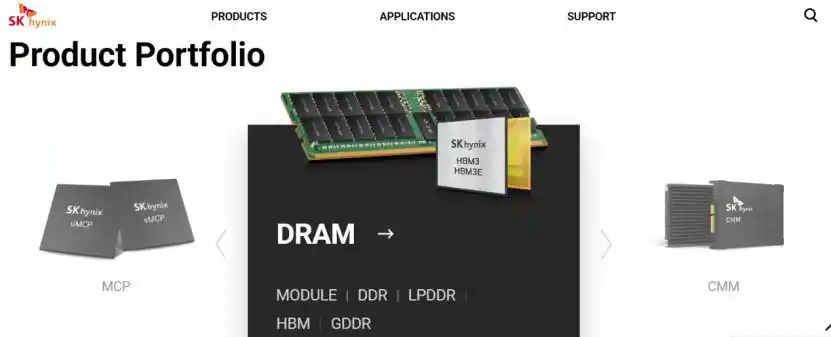
Based on these technologies, SK hynix partnered with AMD to launch the first-generation commercial HBM product in 2013, becoming an industry pioneer. Unfortunately, as the high-performance computing market was not yet mature enough for widespread HBM adoption, the market response did not explode as anticipated.

But SK hynix didn't stop; instead, it decided to double down on investment. During this process, SK hynix applied mass reflow molded underfill technology to HBM2E, shifting the market landscape. Subsequently, it developed its MR-MUF technology for HBM3 and HBM3E, integrating thin-chip stacking, thermal performance, and production efficiency.

The turning point came in 2022. With the debut of ChatGPT, the AI wave began sweeping the globe. NVIDIA became the biggest winner with its advanced GPU chips, while SK hynix became a key supplier of HBM3 for NVIDIA's H100 chips, completely reversing its fortunes.

Today, SK hynix holds a 58% market share, ranking first in the global HBM market.

In this U.S. IPO, SK hynix raised $26.5 billion through the issuance of American Depositary Shares (ADS), surpassing Saudi Aramco's 2019 U.S. IPO record of $25.6 billion. This propelled it directly to the position of the second-largest IPO in history and the largest-ever U.S. IPO by a foreign company. Thus, an epic IPO was born.

The Memory Windfall: Sharing the Wealth with All Employees

Why is SK hynix so hot?

The answer is that memory is experiencing a historic cycle. In April of this year, SK hynix released its Q1 2026 financial report. First-quarter revenue was KRW 52.5763 trillion, operating profit was KRW 37.6103 trillion, and net profit was KRW 40.3459 trillion. Its operating profit margin for the quarter was 72%, and its net profit margin was 77%.

This means SK hynix is even more profitable than NVIDIA, which reported a gross margin of 74.9% and an operating margin of 65.6% for the same period.

Discussing the performance, SK hynix stated, "Although the first quarter is typically a seasonally slow period, demand remained strong, driven by expanding investments in artificial intelligence (AI) infrastructure. The company continued its upward earnings trend by expanding sales of high-value-added products such as High Bandwidth Memory (HBM), high-capacity server DRAM modules, and enterprise SSDs (eSSD)."

Thanks to this, SK hynix's share price embarked on a massive rally. Data shows SK hynix's Korean shares have surged over 634% year-to-date. In May of this year, SK hynix's market capitalization first broke the $1 trillion mark, becoming the second Korean company after Samsung Electronics to achieve this milestone.

Although SK hynix's stock price has recently seen some correction, we can see that giants like NVIDIA, Google, and Amazon—whose combined market cap exceeds $10 trillion—are not only lining up to place orders but are also proactively proposing to invest in SK hynix's new production lines and funding the procurement of expensive manufacturing equipment.

This scene is truly extraordinary.

Those reaping the rewards aren't just SK hynix; tens of thousands of employees are too. In September last year, SK hynix abolished its previous bonus cap of "no more than 1000% of base salary" and implemented a new labor agreement: a fixed 10% of annual operating profit, with no upper limit, will be injected into a bonus pool, covering all non-outsourced employees under a "sunshine" distribution system.

Earlier this year, SK hynix announced its FY2025 performance bonus. The 33,000 employees received an average bonus of KRW 140 million, equivalent to over RMB 600,000. According to calculations by international consultancies like Macquarie, if current performance expectations hold, the average SK hynix employee's bonus income for 2026 is projected to reach a staggering KRW 670 million, approximately RMB 3.12 million.

Overnight, SK hynix employees became the "top tier" of the Korean workplace. There's even a dating anecdote circulating: Nowadays, when SK hynix employees go on blind dates, they pretend to work at Samsung Electronics; only when they meet someone with good character do they confess they actually work at SK hynix.

This scenario is the most straightforward manifestation of this unprecedented wealth creation wave.

ChangXin's Turn to Ring the Bell: China's Memory Industry Launches Its Breakthrough Battle

Currently, an unprecedented "super memory cycle" is arriving.

According to J.P. Morgan's forecast, the total global memory market size will reach $1.7 trillion by 2028. DRAM market revenue is expected to jump from $143 billion last year to $636 billion in 2026, reaching $1.237 trillion by 2028. NAND market revenue is projected to increase from $71 billion to $454.5 billion over the same period.

The underlying logic is clear—this is not a simple cyclical rebound but a structural demand shift driven by AI computing power. As AI training and inference scales continue to expand, the memory capacity per AI server is expected to be more than ten times that of traditional data center servers.

Amid this extreme supply-demand imbalance, news of memory shortages, order backlogs, and price hikes has been almost constant over the past year. A recent report from UBS Group also emphasized that as AI demand continues to grow and Long-Term Agreement (LTA) negotiations are still ongoing, the memory chip market cycle is strengthening further, with a structural supply shortage expected to persist at least until mid-2028.

For domestic Chinese memory manufacturers, this is a historic opportunity not to be missed.

Shifting our gaze from the U.S. stock market back to China, a much-anticipated IPO is also about to take the stage. According to the Shanghai Stock Exchange website, ChangXin Technology will officially begin its new share subscription on July 16. Some institutions boldly estimate that ChangXin Technology's market value could reach RMB 3 trillion.

Based in Hefei, ChangXin Technology was founded by Zhu Yiming, the founder of GigaDevice. It is China's largest integrated DRAM R&D, design, and manufacturing enterprise. In Q1 of this year, ChangXin Technology's global DRAM market share was approximately 7.7% to 8%, firmly ranking first in mainland China and fourth globally. U.S. semiconductor analysis firm SemiAnalysis predicts that ChangXin Technology有望有望 by the end of 2026, surpassing Micron to become the world's third-largest DRAM supplier.

Coincidentally, Yangtze Memory Technologies (YMTC) from Wuhan also announced the initiation of its IPO counseling filing. Public information shows that after its shareholding reform in September 2025, the parent company of YMTC, Changcun Group, was valued at approximately RMB 160 billion. The market widely expects that after its listing, YMTC's market value could reach RMB 500-800 billion, even potentially breaking the RMB 1 trillion mark.

The breakthrough of these "Two Heroes of Domestic Memory" is just a snapshot of the collective追赶 of Chinese memory enterprises. For example, Longsys, Dapu Storage, BIWIN Storage, Demingli, and Shannon芯创, dubbed Shenzhen's "Five Tigers of Storage," have seen their combined market capitalization reach the trillion-RMB level during this market trend.

However, catching up is never an overnight task. We must still正视正视 the gap with overseas giants. As ChangXin Technology坦言坦言 in its prospectus, "The company's process technology level and other aspects still have a certain gap compared to Samsung Electronics, SK hynix, and Micron Technology. The product structure is in a continuous optimization state, and the company's gross margin level remains lower than that of the top three international manufacturers."

The road ahead is long and challenging, but progress will be made with perseverance. This is destined to be a difficult journey, but one thing is certain: the moment of summiting will eventually arrive for these Chinese memory climbers.

This article is from WeChat Official Account "Touzijie" (ID: pedaily2012), author: Liu Bo.

Tiền kỹ thuật số thịnh hành

Câu hỏi Liên quan

QWhat is the significance of SK Hynix's Nasdaq IPO in terms of fundraising and its historical ranking?

ASK Hynix's Nasdaq IPO raised $26.5 billion, setting a record for the largest U.S. IPO by a foreign company and ranking as the second-largest IPO in global history, surpassed only by SpaceX's recent listing.

QWhat were the key factors behind SK Hynix's remarkable turnaround from near bankruptcy to a global memory leader?

ASK Hynix's turnaround was driven by its early and sustained focus on developing High Bandwidth Memory (HBM) technology, particularly through partnerships with AMD and later by becoming a key supplier of HBM3 for Nvidia's AI chips like the H100, capitalizing on the global AI boom.

QHow profitable has SK Hynix been recently, and how does its profitability compare to Nvidia's?

AIn its 2026 fiscal first quarter, SK Hynix reported an operating profit margin of 72% and a net profit margin of 77%. This surpasses Nvidia's profitability, which had a gross margin of 74.9% and an operating margin of 65.6% for a comparable period.

QWhich major Chinese memory companies are mentioned as being poised for significant IPOs following the current market cycle?

AThe article highlights Changxin Technology (CXMT) and Yangtze Memory Technologies (YMTC) as the leading Chinese memory companies preparing for major IPOs. Changxin Technology is scheduled for its domestic IPO, while Yangtze Memory has initiated IPO辅导备案 (IPO tutoring/filing).

QAccording to market analysts cited in the article, what is driving the current 'super memory cycle' and how long is it expected to last?

AThe 'super memory cycle' is primarily driven by structural demand from AI computing, which requires significantly more memory per server. Analysts like UBS predict this cycle of strong demand and potential supply tightness could last at least until mid-2028.

Nội dung Liên quan

Mỹ, Anh công bố lộ trình ổn định tiền tệ khi Đạo luật CLARITY bị đình trệ: 'Vì lợi ích chính trị của riêng họ!'

Hoa Kỳ và Vương quốc Anh đã tái khẳng định cam kết giảm thiểu rào cản pháp lý cho tài sản số và hiện đại hóa thị trường vốn thông qua một tuyên bố chung. Trọng tâm là lộ trình 10 điểm về stablecoin và tài sản mã hóa, với mục tiêu thúc đẩy đổi mới sáng tạo, đặc biệt trong thanh toán xuyên biên giới. Hai nước cam kết không áp đặt các yêu cầu dự trữ quá nặng nề, phản ánh sự điều chỉnh gần đây của Anh sau phản ứng từ ngành công nghiệp. Tuy nhiên, tiến trình lập pháp tại hai quốc gia có sự khác biệt. Vương quốc Anh đặt mục tiêu ban hành khung pháp lý toàn diện cho tiền mã hóa, bao gồm stablecoin, vào năm 2027, cùng các biện pháp như hoãn thuế lợi tức vốn cho cho vay tiền mã hóa. Trong khi đó, tại Hoa Kỳ, dự luật cấu trúc thị trường quan trọng - Đạo luật CLARITY - đang bị đình trệ, với tỷ lệ thông qua giảm xuống mức thấp kỷ lục khoảng 32%. Sự bế tắc này được cho là do bất đồng chính trị giữa các đảng, khiến Mỹ có nguy cơ tụt hậu trong việc thiết lập các quy tắc rõ ràng cho lĩnh vực tiền mã hóa và stablecoin.

ambcrypto10 phút trước

Mỹ, Anh công bố lộ trình ổn định tiền tệ khi Đạo luật CLARITY bị đình trệ: 'Vì lợi ích chính trị của riêng họ!'

ambcrypto10 phút trước

Người làm việc tại Meta, nghỉ ốm/nghỉ thai sản quay đầu đã bị AI sa thải??

Meta đối mặt với vụ kiện tập thể đầu tiên về "phân biệt đối xử khi sa thải bằng AI" tại Mỹ. 26 nhân viên hiện tại và cũ tố cáo công ty đã sử dụng một hệ thống AI (bao gồm Metamate, Second Brain, hệ thống giám sát hoạt động nhân viên) để lựa chọn danh sách sa thải trong đợt cắt giảm 10% nhân sự vào tháng 4 và tháng 5/2026. Điểm chung của những người bị sa thải là họ đều đã nghỉ phép thai sản, phép chăm con, phép y tế hoặc xin hỗ trợ vì khuyết tật trong vòng 24 tháng trước đó. Hệ thống AI được cho là đã đánh giá họ dựa trên các chỉ số như hiệu suất, số lần commit code, mức độ sử dụng công cụ AI... mà không loại trừ thời gian nghỉ phép được pháp luật bảo vệ, dẫn đến việc những người vắng mặt vì lý do chính đáng bị coi là "năng suất thấp" và bị sa thải một cách không tương xứng. Một số trường hợp điển hình: một nhà khoa học nhận email sa thải lúc 4h sáng khi đang nghỉ phép trước sinh, một nhà thiết kế bị sa thải khi ở nhà chăm con mới vài tuần tuổi. Một kỹ sư (Doe 15) thậm chí bị quản lý đe dọa rằng nếu nghỉ phép y tế sẽ bị đưa vào danh sách sa thải, khiến anh này phải hủy bỏ điều trị nhưng cuối cùng vẫn là người duy nhất trong nhóm bị sa thải. Nguyên đơn yêu cầu tòa án ra lệnh cấm khẩn cấp, khôi phục công việc cho họ và có một cuộc kiểm toán độc lập với hệ thống AI. Meta bác bỏ các cáo buộc, khẳng định quyết định nhân sự do con người đưa ra. Vụ việc làm dấy lên lo ngại về đạo đức và tính minh bạch khi sử dụng AI trong quản lý nhân sự, đặc biệt là việc giám sát nhân viên quá mức và việc dùng dữ liệu này để đào tạo AI nội bộ.

marsbit32 phút trước

Người làm việc tại Meta, nghỉ ốm/nghỉ thai sản quay đầu đã bị AI sa thải??

marsbit32 phút trước

DeFi và TradFi Cuối Cùng Sẽ Hòa Hợp? a16z Bác Bỏ Dự Đoán Thịnh Hành Trên Thị Trường

**Tóm tắt: DeFi và TradFi sẽ không hoà hợp hoàn toàn, mà hình thành một cơ sở hạ tầng tài chính mới** Cộng đồng crypto thường hình dung về một tương lai nơi Tài chính Phi tập trung (DeFi) và Tài chính Truyền thống (TradFi) hòa hợp thành một hệ thống lai tối ưu. Tuy nhiên, bài viết từ a16z cho rằng viễn cảnh này phần lớn không chính xác. Thực tế, các tổ chức tài chính truyền thống sẽ chỉ áp dụng công nghệ blockchain khi nó giúp tối ưu hóa hoạt động kinh doanh hiện tại của họ — nhằm cắt giảm chi phí, tối ưu quy trình thanh toán, mở rộng kênh phân phối và củng cố quyền kiểm soát đối với khách hàng. Họ sẽ không "hợp nhất" với DeFi, mà **sàng lọc và tiếp thu các thành phần công nghệ của DeFi phù hợp với các ràng buộc hoạt động của mình**, loại bỏ những phần không thể tích hợp (như truy cập mở, ẩn danh, thực thi không cần tin cậy). Kết quả sẽ là một lĩnh vực mới nổi: **Cơ sở hạ tầng Tài chính có thể lập trình**, được xây dựng trên nền tảng blockchain nhưng được tối ưu hóa cho các nhu cầu và giới hạn của thể chế. Điều này tạo ra hai cơ hội song song và bổ trợ cho các nhà phát triển: 1. **Xây dựng cơ sở hạ tầng phục vụ thể chế:** Tập trung vào các giải pháp mà tổ chức có thể áp dụng ngay (ví dụ: thanh toán nguyên tử, tiền tệ có thể lập trình, tài sản thế chấp token hóa), tập trung vào việc giảm chi phí, rủi ro và phù hợp với quy trình kiểm soát, tuân thủ. 2. **Tiếp tục xây dựng hệ thống tài chính mở, nguyên bản của crypto:** Đây là nơi thử nghiệm các mô hình thị trường, cơ chế hợp tác và đổi mới cơ bản mà các thể chế hiện chưa chấp nhận. Hai con đường này không cạnh tranh mà có thể cùng phát triển. Các mạng lưới mở sẽ tiếp tục là nguồn đổi mới chính, tạo ra các mô-đun cơ bản sau đó có thể được thể chế tiếp thu và thích ứng. Sự "hợp nhất" thực sự trong tương lai có thể không phải là một hệ thống lai hoàn chỉnh, mà là cả hai bên ngày càng **sử dụng chung một lớp cơ sở hạ tầng thanh toán cơ bản** (các blockchain công khai). Bài viết kết luận rằng các nhà phát triển cần xác định rõ thị trường mục tiêu của mình: phục vụ thể chế hay xây dựng cho các mạng lưới mở, vì mỗi con đường có yêu cầu về sản phẩm, quy trình và khách hàng hoàn toàn khác biệt. Tương lai của cơ sở hạ tầng tài chính có thể bị chi phối bởi các hệ thống của thể chế, nhưng phần lớn sự đổi mới quan trọng sẽ tiếp tục nảy sinh từ các mạng lưới mở.

Foresight News1 giờ trước

DeFi và TradFi Cuối Cùng Sẽ Hòa Hợp? a16z Bác Bỏ Dự Đoán Thịnh Hành Trên Thị Trường

Foresight News1 giờ trước

Vấn đề tranh cãi của Đạo luật CLARITY về thị trường số – Liệu có cho phép ổn định tiền điện tử (stablecoin) tạo ra lợi nhuận từ lãi suất?

Ngày 20/3, Ủy ban Ngân hàng Thượng viện Mỹ đã đạt được thỏa hiệp lập pháp Tillis-Alsobrooks liên quan đến Đạo luật CLARITY, tập trung vào vấn đề gây tranh cãi: **liệu stablecoin có được phép tạo ra lợi nhuận từ lãi suất hay không?**. Đạo luật GENIUS trước đó đã cấm hoàn toàn việc các nhà phát hành stablecoin trả lãi cho người nắm giữ, nhằm mục tiêu bảo vệ hệ thống ngân hàng truyền thống. Tuy nhiên, thị trường crypto nhanh chóng chuyển hoạt động tạo lợi nhuận sang thị trường thứ cấp (ví dụ: sàn giao dịch, giao thức DeFi) thông qua các hình thức như phần thưởng quản trị hay thanh khoản. Thỏa hiệp mới trong Đạo luật CLARITY đề xuất cách tiếp cận phân loại: * **Cấm "lợi nhuận thụ động"**: Cấm trả lãi chỉ đơn thuần vì việc nắm giữ stablecoin. * **Cho phép "lợi nhuận từ hành vi/hoạt động"**: Miễn trừ cho phần thưởng gắn liền với các hoạt động thực tế trên mạng lưới crypto, như cung cấp thanh khoản cho AMM hoặc tham gia quản trị giao thức. * Để phân biệt, dự luật giới thiệu **"Bài kiểm tra tương đương kinh tế"**, yêu cầu phần thưởng không được tương đương về mặt kinh tế hoặc chức năng với lãi suất tiền gửi ngân hàng. Bài viết đặt ra câu hỏi về **khả năng thực thi** của cơ quan quản lý. Việc xác định ranh giới giữa "hoạt động thực tế" và "sự thụ động được ngụy trang" là rất khó khăn. "Bài kiểm tra tương đương kinh tế" đòi hỏi khả năng giám sát kỹ thuật sâu vào hợp đồng thông minh và cơ chế DeFi, vượt xa năng lực giám sát truyền thống hiện nay. Tóm lại, sự phát triển này đánh dấu bước chuyển từ "quản lý theo chủ thể" sang **"quản lý theo hệ sinh thái"**, phản ánh sự thích ứng cần thiết của cơ quan quản lý trước một ngành công nghiệp phi tập trung và năng động.

marsbit1 giờ trước

Vấn đề tranh cãi của Đạo luật CLARITY về thị trường số – Liệu có cho phép ổn định tiền điện tử (stablecoin) tạo ra lợi nhuận từ lãi suất?

marsbit1 giờ trước

Giao dịch

Giao ngay

Bài viết Nổi bật

Làm thế nào để Mua NIGHT

Chào mừng bạn đến với HTX.com! Chúng tôi đã làm cho mua Midnight (NIGHT) trở nên đơn giản và thuận tiện. Làm theo hướng dẫn từng bước của chúng tôi để bắt đầu hành trình tiền kỹ thuật số của bạn.Bước 1: Tạo Tài khoản HTX của BạnSử dụng email hoặc số điện thoại của bạn để đăng ký tài khoản miễn phí trên HTX. Trải nghiệm hành trình đăng ký không rắc rối và mở khóa tất cả tính năng. Nhận Tài khoản của tôiBước 2: Truy cập Mua Crypto và Chọn Phương thức Thanh toán của BạnThẻ Tín dụng/Ghi nợ: Sử dụng Visa hoặc Mastercard của bạn để mua Midnight (NIGHT) ngay lập tức.Số dư: Sử dụng tiền từ số dư tài khoản HTX của bạn để giao dịch liền mạch.Bên thứ ba: Chúng tôi đã thêm những phương thức thanh toán phổ biến như Google Pay và Apple Pay để nâng cao sự tiện lợi.P2P: Giao dịch trực tiếp với người dùng khác trên HTX.Thị trường mua bán phi tập trung (OTC): Chúng tôi cung cấp những dịch vụ được thiết kế riêng và tỷ giá hối đoái cạnh tranh cho nhà giao dịch.Bước 3: Lưu trữ Midnight (NIGHT) của BạnSau khi mua Midnight (NIGHT), lưu trữ trong tài khoản HTX của bạn. Ngoài ra, bạn có thể gửi đi nơi khác qua chuyển khoản blockchain hoặc sử dụng để giao dịch những tiền kỹ thuật số khác.Bước 4: Giao dịch Midnight (NIGHT)Giao dịch Midnight (NIGHT) dễ dàng trên thị trường giao ngay của HTX. Chỉ cần truy cập vào tài khoản của bạn, chọn cặp giao dịch, thực hiện giao dịch và theo dõi trong thời gian thực. Chúng tôi cung cấp trải nghiệm thân thiện với người dùng cho cả người mới bắt đầu và người giao dịch dày dạn kinh nghiệm.

Tổng lượt xem 456Xuất bản vào 2025.12.08Cập nhật vào 2026.06.02

Làm thế nào để Mua NIGHT

Thảo luận

Chào mừng đến với Cộng đồng HTX. Tại đây, bạn có thể được thông báo về những phát triển nền tảng mới nhất và có quyền truy cập vào thông tin chuyên sâu về thị trường. Ý kiến ​​của người dùng về giá của NIGHT (NIGHT) được trình bày dưới đây.

活动图片