Olympus DAO Myth Reappears? A "Sovereign On-Chain Central Bank" Written with 4000 Lines of Immutable Code

marsbitXuất bản vào 2026-08-24Cập nhật gần nhất vào 2026-08-24

Tóm tắt

A new project called The Standard Reserve has emerged, branding itself as a "sovereign on-chain central bank." It aims to replicate core central bank functions—currency issuance, money supply adjustment, and reserve accumulation—entirely through 4,000 lines of immutable code, with no human governance. Its core mechanism is a "reflexive monetary policy" based on a single signal: the net ETH flow into or out of the system's sole Uniswap v4 ETH/$STANDARD pool. Sustained net ETH inflows trigger an "expansion" phase, increasing $STANDARD issuance and using protocol fees to buy tokenized gold as a permanent hard reserve. Net outflows (or zero flow) trigger an immediate "contraction" phase, reducing issuance and using fees to buy back and burn $STANDARD. The system involves six key entities: the $STANDARD token (hard-capped at 1 billion), the central Uniswap pool, the Central Bank contract, Charter NFTs (acting as "banking licenses"), Branch units under each Charter (which earn a share of newly minted $STANDARD), and separate Vaults for expansion (buying gold) and contraction (buying back $STANDARD). To participate, users ideally acquire a Founding Charter NFT (initially 1,000 are free via allowlist/public mint). Each Charter comes with one Branch; more can be opened by burning $STANDARD for "expansion permits," increasing revenue share. Retiring a Branch lets users claim accumulated $STANDARD but imposes a dynamic exit fee (higher if many exit simultaneously), with half the fee ...

Crypto friends who see the symbol (3,3) know the power of Olympus DAO $OHM @OlympusDAO in 2021.

IDO price $4, peak at $1,415, a rise of over 300 times—and that's just the price increase, not counting the additional tokens from rebases. If you held, starting with $500 could truly have a chance to become $5 million.

Since then, any project waving the flag of being an OHM copycat could garner attention or support from a group of followers.

But those days are gone!

Back to the topic.

A very interesting new project recently appeared on-chain: The Standard Reserve. It doesn't call itself a stablecoin, nor a governance token, but directly proclaims itself as "The sovereign onchain central bank."

一、 What does it actually want to do?

Traditional central banks have three core functions:

— Issue currency

— Regulate money supply

— Accumulate reserve assets

The Standard Reserve implements these three things entirely with code, with no committee, no board, no human intervention. The whitepaper sums it up in one sentence:

“It answers to no board, committee, or government. Because it’s 4,000 lines of immutable code. The bank is code.”

The entire system is a closed monetary economy with only four core elements:

One currency: $STANDARD

One market: The ETH/$STANDARD pool on Uniswap v4 (with a custom hook)

One signal: The net ETH flow of this pool

One authority: The code itself

二、 Core Mechanism: Reflexive Monetary Policy

This is the most essential part of the entire project.

The system only looks at one signal

—— Net ETH Flow: Net inflow > 0 (someone continuously buys $STANDARD with ETH) → Expansion period increases the issuance rate of $STANDARD, then uses the fees mainly to purchase tokenized gold, held permanently as hard reserves

—— Net inflow ≤ 0 (someone continuously sells $STANDARD) → Contraction period immediately reduces issuance rate, uses the fees mainly to repurchase and burn $STANDARD

Moreover, the adjustment is asymmetric:

Rate cuts (contraction) take effect immediately

Rate hikes (expansion) must be gradually increased through sustained net inflow

Simply put: if a lot of capital flows in and the price rises consistently, the system issues more tokens + hoards gold; if capital flows out, the system issues fewer tokens + repurchases and burns. This is what it calls "reflexive monetary policy."

三、 Six Core Entities

1、$STANDARD

ERC-20, hard cap of 1 billion

—— The only currency, minted only upon withdrawal, continuously burned

2、The Pool

Uniswap v4 ETH/$STANDARD pool

—— The only market, all trading fees go to the bank, net flow is the policy signal

3、Central Bank

4000 lines of code

—— Reads net flow, decides issuance rate, allocates fees

4、Charter

Soulbound NFT (transfer may be opened later)

—— The banker's "business license," genesis only has 1000 free spots

5、Branch

"Storefronts" under a Charter

—— The units that actually earn issuance revenue, maximum of 10 per Charter

6、Vaults

Expansion Vault + Contraction Vault

—— Responsible for hoarding gold and repurchasing/burning respectively

补充: A Charter is a company, a Branch is its storefront. The company makes money through storefronts, expands by opening new storefronts (burns tokens), and pays dividends to the owner by closing storefronts. Closing the last storefront dissolves the company.

四、 How does one interact with the project?

1、 Acquire a Genesis Charter

1000 free Founding Charters (allowlist + public, 1 per wallet max) After that: Daily ETH Dutch auctions for new ones

2、 Open Branches to Earn

Each Charter comes with 1 Branch Can open up to 10 maximum Additional Branches require purchasing "Expansion Licenses" with $STANDARD (100% burned)

3、 Withdraw and Retire

Branch → Receive proportional accumulated $STANDARD But must pay a dynamic exit fee (higher fee with greater system exit pressure) Half of the exit fee is burned, half is distributed to remaining bankers Closing the last Branch burns the Charter

The design is interesting: to earn more, you must burn tokens to expand; to withdraw, you must permanently give up future profit share and possibly subsidize those who stay.

五、 Where does the money come from and go?

All protocol revenue (trading fees + Charter auction ETH) is pooled and then distributed:

70% → Current active vault Expansion period → Expansion Vault → Converted to tokenized gold, held permanently Contraction period → Contraction Vault → Rate-limited repurchase of $STANDARD and burn

15% → Protocol-owned liquidity (permanently added to the pool)

15% → Team

Repurchases during contraction also have rate-limiting protection:

Formula: spendtick=min⁡(0.10×V, 0.002×R) V is the Contraction Vault reserve, R is the V4 pool reserve. Meaning each hour, at most min(10% of vault balance, 0.2% of pool reserve) can be spent, preventing manipulation or one-time sell-offs.

六、 Summary

1、 Mechanism

The entire mechanism is quite intricate. Total token supply is 1 billion, initial 100 million plus the pool. The first 1000 Charters require allowlist. Acquire a Charter, get one built-in Branch. Holding a Branch allows you to share in the newly issued tokens. Want more Branches? Burn $STANDARD tokens. If you withdraw (retire), you can receive the accumulated platform tokens but must pay an exit fee. The exit fee is dynamic; the more people exit, the higher the fee. Upon exit, the corresponding Branch is destroyed. We can think of Charter as the parent NFT and Branch as the child NFT. The parent NFT is purchased with ETH (first 1000 are free), child NFTs are acquired by burning $STANDARD.

More child NFTs, more money shared.

2、 Expansion Vault and Contraction Vault

This is a point easily confused. First, money is collected uniformly, primarily from subsequent Charter auctions and $STANDARD transaction taxes (rate currently unknown).

After collection, based on the current epoch's state, it flows to either the Expansion Vault or the Contraction Vault.

If net ETH inflow > 0 (which essentially means the token price is rising, assuming ETH price is constant), then 70% of the collected money goes to the Expansion Vault to buy tokenized gold, held as permanent reserves.

If net ETH inflow ≤ 0, then 70% goes to the Contraction Vault to buy $STANDARD according to the formula and burn it continuously.

3、 How to get an Allowlist spot for Charter?

Getting a Genesis Charter is undoubtedly the most profitable way to participate.

1000 pieces, free mint, with allowlist and public spots. Three types of roles have a chance to get on the allowlist:

The most active on-chain participants / Educators in this field / Content creators / High-quality community contributors

4、 Risks

The Standard Reserve attempts to use pure code to create an on-chain central bank that regulates its own money supply, hoards its own gold, and repurchases and burns its own tokens during declines. It also gamifies the "banker" role into NFT + branch earnings, aligning participants' self-interested actions directly with the system's deflation and reserve accumulation.

The mechanism, narrative, and gameplay have some innovation. However, the project is completely anonymous, many key parameters (epoch length, base issuance rate, multiplier range, transaction fee rate, etc.) are still blank, and code security is unknown. DYOR.

@standard_rsv

Tiền kỹ thuật số thịnh hành

Câu hỏi Liên quan

QWhat is The Standard Reserve, and how does it describe itself?

AThe Standard Reserve describes itself as a 'sovereign on-chain central bank'. It aims to replicate the core functions of a traditional central bank—issuing currency, regulating money supply, and accumulating reserve assets—through 4,000 lines of immutable code, operating without a board, committee, or government intervention.

QWhat is the core mechanism of The Standard Reserve's monetary policy?

AThe core mechanism is a 'reflexive monetary policy' governed by the Net ETH Flow into its primary Uniswap v4 ETH/$STANDARD pool. If net ETH inflow is positive, the system enters an expansion phase, increasing $STANDARD issuance and using fees to buy tokenized gold as hard reserves. If net inflow is zero or negative, it enters a contraction phase, immediately reducing issuance and using fees to repurchase and burn $STANDARD.

QWhat are the six core entities within The Standard Reserve system?

AThe six core entities are: 1. $STANDARD (the currency, 1 billion hard cap), 2. The Pool (Uniswap v4 ETH/$STANDARD pool), 3. Central Bank (the 4,000 lines of code), 4. Charter (soulbound NFT, the 'license'), 5. Branch (revenue-generating units under a Charter), and 6. Vaults (Expansion Vault for buying gold, Contraction Vault for repurchasing/burning $STANDARD).

QHow does a participant (banker) generate income within The Standard Reserve?

AA participant must first acquire a Charter NFT. Each Charter comes with one Branch. Holding a Branch allows the participant to receive a share of newly issued $STANDARD tokens. To increase earnings, participants can purchase additional Branches (up to 10 per Charter) by burning $STANDARD tokens for 'Expansion Licenses'.

QWhat are the primary risks mentioned regarding The Standard Reserve?

AThe primary risks mentioned are that the project is completely anonymous, several key parameters (like epoch length, base issuance rate, transaction fee rate) are still undefined, and the security of its unaudited, immutable code is unknown.

Nội dung Liên quan

Hoa Kỳ nhắm đến lĩnh vực tiền mã hóa của Iran vì các khoản thanh toán dầu mỏ trị giá hơn 100 tỷ USD

Bộ Tài chính Hoa Kỳ đã mở rộng lệnh trừng phạt đối với Iran, bao gồm cả lĩnh vực tài sản số, viện dẫn việc sử dụng hơn 100 triệu USD thanh toán bằng tiền mã hóa được cho là để hỗ trợ bán dầu mỏ của Iran. Cơ quan Kiểm soát Tài sản Nước ngoài (OFAC) đã áp đặt các biện pháp trừng phạt theo ngành đối với tài sản số, công nghệ, vàng, hàng không và vận tải biển, đồng thời nhắm mục tiêu gần 60 tổ chức, cá nhân và tàu liên quan đến mạng lưới hạt nhân, tên lửa, mạng và dầu mỏ. Bộ Tài chính cho biết Iran ngày càng sử dụng tiền mã hóa như một "công cụ ưa thích để né tránh trừng phạt". Một nhà môi giới Ukraine có trụ sở tại UAE bị cáo buộc đã xử lý hơn 100 triệu USD thanh toán tiền mã hóa để hỗ trợ bán dầu cho Lực lượng Quds của Vệ binh Cách mạng Hồi giáo (IRGC). Quyết định mới này cho phép OFAC trừng phạt bất kỳ cá nhân hoặc công ty nước ngoài nào hoạt động trong lĩnh vực tiền mã hóa của Iran, đánh dấu sự mở rộng đáng kể từ các hành động trước đây chỉ nhắm vào các sàn giao dịch cụ thể. Động thái này diễn ra sau một loạt lệnh trừng phạt của Hoa Kỳ nhắm vào các sàn giao dịch tiền mã hóa liên quan đến Iran, bao gồm cả sàn lớn nhất Nobitex, và việc tịch thu gần 1 tỷ USD tiền mã hóa.

cryptonews.ru21 phút trước

Hoa Kỳ nhắm đến lĩnh vực tiền mã hóa của Iran vì các khoản thanh toán dầu mỏ trị giá hơn 100 tỷ USD

cryptonews.ru21 phút trước

Đối thoại với Zhang Chaoyang: AI phát triển như vũ bão, tại sao lại làm nội dung 'phản hiệu suất'

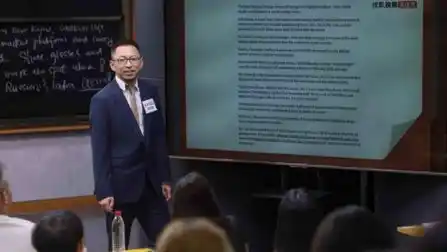
Đối thoại với Zhang Chaoyang: Khi AI phát triển như vũ bão, tại sao vẫn làm nội dung "phản hiệu suất"? Zhang Chaoyang, người sáng lập kiêm CEO của Sohu, nổi bật với phong cách riêng trong làng internet Trung Quốc. Ông duy trì lịch trình dày đặc: ngủ 4-5 tiếng/ngày, chạy bộ 5km, tổ chức diễn đàn công nghệ và đối thoại với các nhà khoa học đoạt giải Nobel. Ông chuyển trọng tâm từ mở rộng kinh doanh sang tái thiết nội tâm, tin rằng con người càng bận rộn càng khỏe mạnh. Nhân kỷ niệm 10 năm chương trình "Lớp tiếng Anh của Zhang Chaoyang", ông quyết định mở lớp học trực tiếp. Từ năm 2016, ông đã thực hiện hơn 2000 buổi phát sóng trực tiếp môn tiếng Anh, tổng thời lượng hơn 110.000 phút, thu hút hơn 52 triệu lượt xem. Động lực ban đầu là để "nói chuyện nhiều hơn", chống lại sự phiền muộn. 40% vì bản thân, 30% để mang tin tức nguyên bản đến khán giả, và 30% để quảng bá nền tảng phát sóng trực tiếp "Qianfan". Ông chuẩn bị bài giảng bằng cách đọc kỹ bài báo, viết bảng tay, từ chối dùng AI tạo nội dung. Đối với ông, việc đọc là để tìm kiếm sự đồng cảm và hỗ trợ tinh thần, không chỉ để lấy thông tin. Đây là sự kiên trì "phản hiệu suất" trong thời đại AI. Khi một nhà sáng tạo nội dung bày tỏ lo ngại AI viết bài tốt hơn mình, Zhang Chaoyang ví von: "Cà rốt ở chợ có bám bùn, không bóng bẩy nhưng ngon. Cà chua bón nhiều hóa chất thì không có vị." Ông thừa nhận AI nâng cao hiệu quả tiếp cận thông tin, nhưng nó chỉ cung cấp "thông tin", trong khi con người đưa ra "quan điểm" và cách tư duy. Ông nhấn mạnh: "Đừng nghĩ rằng AI đến thì Trái đất ngừng quay." AI hiện thay thế chủ yếu công việc có tính quy tắc, như lập trình. Nhưng với nội dung sáng tạo, nghệ thuật, xã hội nhân văn và tình cảm, AI chưa thể thay thế con người. Hollywood, giải Oscar hay Nobel Văn học vẫn dành cho tác phẩm của con người. Sohu cũng phát triển trợ lý AI "Summary Hero" và "Little Fox". Zhang Chaoyang xem mình là "nhà cung cấp dữ liệu huấn luyện cho mô hình lớn", khẳng định giá trị không thể thay thế của nội dung gốc. Ông khuyên giới trẻ nên thử sáng tạo nội dung cá nhân, với nguyên tắc cốt lõi là "chân thực". Nếu dùng AI hay người số, phải ghi rõ để không lãng phí thời gian người xem. Thực tiễn "phản hiệu suất" trong các lớp học trực tiếp của ông là câu trả lời cho thời đại AI: Đừng trông chờ AI lấp đầy khoảng trống nội tâm. Hãy đọc sách, nói chuyện trước ống kính, đổ mồ hôi trên đường chạy và kết nối với con người thật.

marsbit30 phút trước

Đối thoại với Zhang Chaoyang: AI phát triển như vũ bão, tại sao lại làm nội dung 'phản hiệu suất'

marsbit30 phút trước

Nhà phát triển Bitcoin Core cảnh báo rằng các khoản thanh toán bằng Bitcoin đang biến mất tại 'Bãi biển Bitcoin'

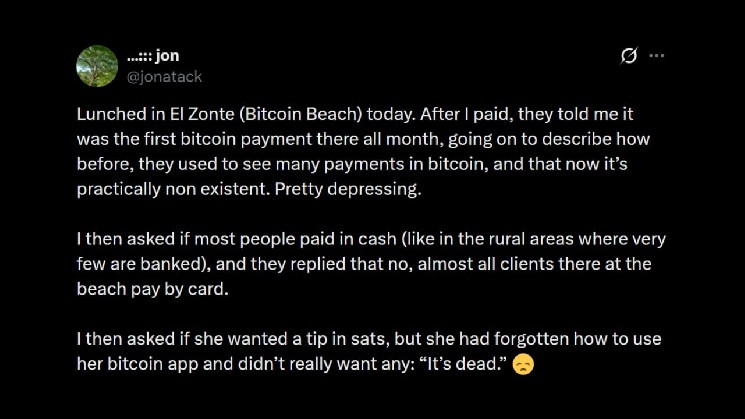
Nhà phát triển Bitcoin Core cảnh báo thanh toán bằng Bitcoin đang biến mất tại "Bãi biển Bitcoin" ở El Salvador, làm dấy lên lo ngại về mức độ áp dụng thực tế của đồng tiền này tại quốc gia đã hợp pháp hóa nó từ năm 2021. John Atack, một nhà phát triển Bitcoin Core sống ở El Salvador, chia sẻ trải nghiệm đáng thất vọng khi anh là khách hàng đầu tiên trong cả tháng thanh toán bằng Bitcoin tại một nhà hàng ở El Zonte (còn gọi là Bãi biển Bitcoin). Nhân viên cho biết thanh toán Bitcoin từng phổ biến nhưng giờ gần như không còn, và hầu hết khách hàng hiện dùng thẻ. Khi được đề nghị nhận tiền boa bằng satoshi, nhân viên thậm chí đã quên cách sử dụng ví Bitcoin và nhận xét: "Nó đã chết rồi." Mặc dù Atack thừa nhận đây chỉ là quan sát cá nhân, nhưng nó vẫn gây tranh cãi. Một số người phản bác, dẫn chứng việc họ vẫn thấy biển chấp nhận Bitcoin và có thể thanh toán được. Tuy nhiên, một phóng viên chuyên về Bitcoin thừa nhận tồn tại một vấn đề kinh tế cơ bản: động cơ tích trữ Bitcoin vì kỳ vọng giá tăng có thể mâu thuẫn với việc sử dụng nó như một phương tiện thanh toán hàng ngày cho nền kinh tế tuần hoàn. Cuối cùng, Atack kết luận bằng cách nhắc nhở rằng El Salvador vẫn là quốc gia tiên phong trong áp dụng tiền mã hóa và pháp luật tiến bộ, dù thực tế sử dụng có thể không như kỳ vọng ban đầu.

cryptonews.ru44 phút trước

Nhà phát triển Bitcoin Core cảnh báo rằng các khoản thanh toán bằng Bitcoin đang biến mất tại 'Bãi biển Bitcoin'

cryptonews.ru44 phút trước

Giao dịch

Giao ngay

Bài viết Nổi bật

Làm thế nào để Mua DAO

Chào mừng bạn đến với HTX.com! Chúng tôi đã làm cho mua DAO Maker (DAO) trở nên đơn giản và thuận tiện. Làm theo hướng dẫn từng bước của chúng tôi để bắt đầu hành trình tiền kỹ thuật số của bạn.Bước 1: Tạo Tài khoản HTX của BạnSử dụng email hoặc số điện thoại của bạn để đăng ký tài khoản miễn phí trên HTX. Trải nghiệm hành trình đăng ký không rắc rối và mở khóa tất cả tính năng. Nhận Tài khoản của tôiBước 2: Truy cập Mua Crypto và Chọn Phương thức Thanh toán của BạnThẻ Tín dụng/Ghi nợ: Sử dụng Visa hoặc Mastercard của bạn để mua DAO Maker (DAO) ngay lập tức.Số dư: Sử dụng tiền từ số dư tài khoản HTX của bạn để giao dịch liền mạch.Bên thứ ba: Chúng tôi đã thêm những phương thức thanh toán phổ biến như Google Pay và Apple Pay để nâng cao sự tiện lợi.P2P: Giao dịch trực tiếp với người dùng khác trên HTX.Thị trường mua bán phi tập trung (OTC): Chúng tôi cung cấp những dịch vụ được thiết kế riêng và tỷ giá hối đoái cạnh tranh cho nhà giao dịch.Bước 3: Lưu trữ DAO Maker (DAO) của BạnSau khi mua DAO Maker (DAO), lưu trữ trong tài khoản HTX của bạn. Ngoài ra, bạn có thể gửi đi nơi khác qua chuyển khoản blockchain hoặc sử dụng để giao dịch những tiền kỹ thuật số khác.Bước 4: Giao dịch DAO Maker (DAO)Giao dịch DAO Maker (DAO) dễ dàng trên thị trường giao ngay của HTX. Chỉ cần truy cập vào tài khoản của bạn, chọn cặp giao dịch, thực hiện giao dịch và theo dõi trong thời gian thực. Chúng tôi cung cấp trải nghiệm thân thiện với người dùng cho cả người mới bắt đầu và người giao dịch dày dạn kinh nghiệm.

Tổng lượt xem 524Xuất bản vào 2024.12.11Cập nhật vào 2026.06.02

Làm thế nào để Mua DAO

Thảo luận

Chào mừng đến với Cộng đồng HTX. Tại đây, bạn có thể được thông báo về những phát triển nền tảng mới nhất và có quyền truy cập vào thông tin chuyên sâu về thị trường. Ý kiến ​​của người dùng về giá của DAO (DAO) được trình bày dưới đây.

活动图片