What is a 'Secure Element'? How it Protects Hardware Wallets

cryptonews.ruXuất bản vào 2026-08-07Cập nhật gần nhất vào 2026-08-07

Tóm tắt

A "secure element" is a specialized, tamper-resistant hardware chip designed to protect sensitive information. In hardware wallets, it acts as a vault for private keys, keeping them isolated from the main processor and the internet. Its core function is to sign cryptocurrency transactions internally; the private key never leaves the chip's protected environment—only the final digital signature is output. This prevents malware on a connected computer from stealing the key. Secure elements also defend against physical attacks, using hardware-level countermeasures to detect and resist tampering, voltage manipulation, and side-channel attacks. They contain dedicated hardware random number generators (RNGs) to ensure strong, unpredictable private keys are generated during wallet setup. Importantly, many secure elements undergo rigorous independent security evaluations (like Common Criteria certification) to verify their resistance to sophisticated attacks. However, a secure element is not an absolute shield. It cannot protect against user errors like approving fraudulent transactions or mishandling seed phrases. Its primary role is to raise the cost and complexity of attacks to impractical levels for most threats. Therefore, it is one critical layer within a broader security strategy that includes secure backup practices and transaction verification. Today, secure elements are a standard and vital component in hardware wallets, forming a crucial barrier for securing digital ass...

Most people never see it, never interact with it, and rarely hear about it. Yet this specialized chip is responsible for protecting the private keys that give owners control over their digital assets. Without it, many modern hardware wallets would be much more vulnerable to physical theft and sophisticated attacks. Understanding what a secure element is and how it actually works helps explain why hardware wallets have become one of the most secure ways to store cryptocurrency.

Secure Elements Were Created to Protect Secrets

A secure element is a specialized computer chip designed for one primary purpose: protecting extremely confidential information.

Unlike the processor in a regular laptop or smartphone, a secure element is built specifically for storing secret information and performing cryptographic operations without revealing the protected data. Instead of trying to perform many different computational tasks, it focuses on isolating confidential data from everything else inside the device.
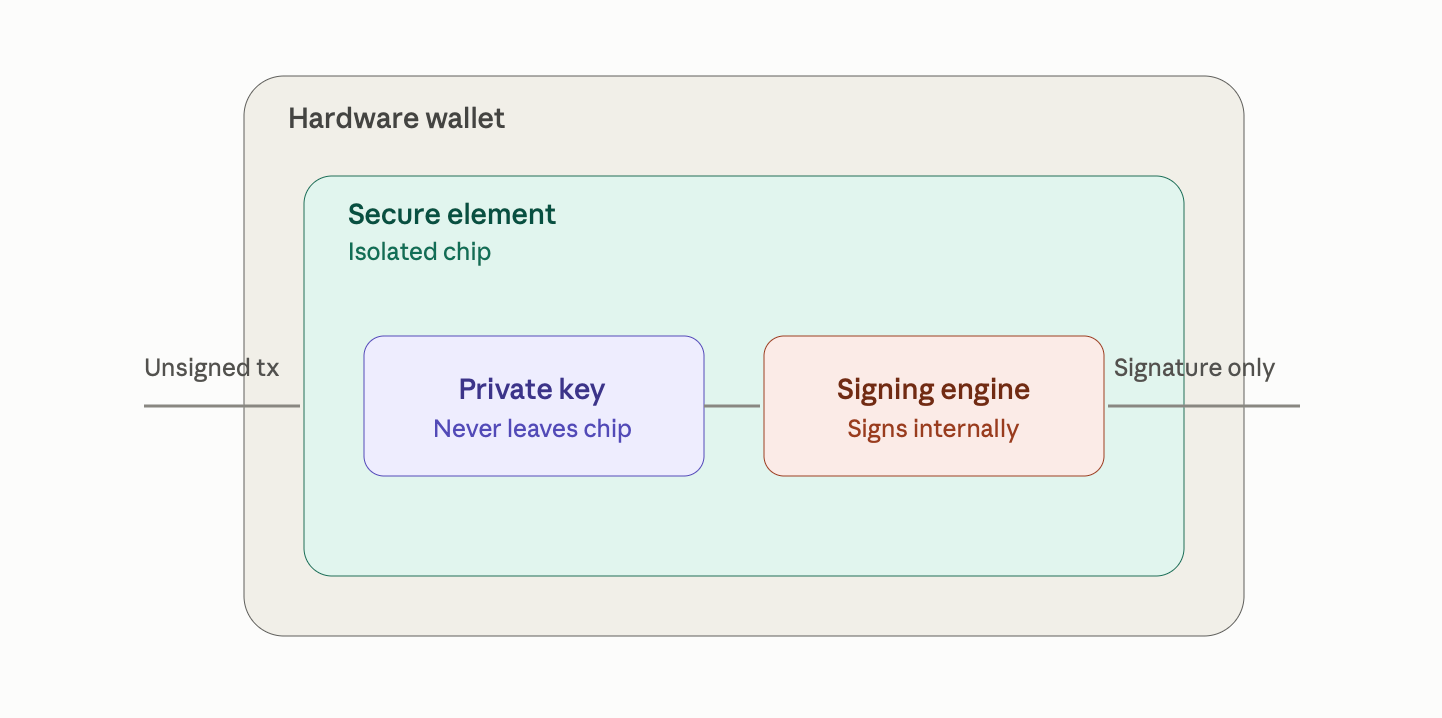
A simplified visualization of the secure element process in a hardware wallet. An unsigned transaction enters the chip, but the private key itself never leaves—it simply remains inside the secure element and performs the signing internally. Only the finished signature is output, so malware on the connected computer cannot simply intercept the key, even if it compromises other parts of the device.

This particular technology didn't originate with cryptocurrencies. Secure elements have been used for a long time in payment cards, SIM cards, electronic passports, and government identification systems. These industries faced the same problem many years ago: protecting digital credentials even if the device is physically taken.

Hardware wallets apply the same concept to cryptocurrencies.

Why Hardware Wallets Need It

Any cryptocurrency wallet depends on private keys.

A private key is essentially the secret that proves ownership of digital assets. Anyone with access to this key can authorize transactions and transfer funds. Protecting it is the most important task of any wallet.

Software wallets store keys on internet-connected devices, making them vulnerable if the computer or smartphone is infected with malware. Hardware wallets largely solve this problem by keeping the private key in a separate device isolated from the internet. The secure element enhances this protection by creating an additional layer of isolation within the hardware wallet itself.

Instead of allowing the wallet's main processor to directly access the private key, the secure element keeps the secret locked away within its own protected environment. Even other components inside the wallet cannot simply read the key at any time at will.

Storing Private Keys Inside the Secure Element

One of the most common misconceptions about hardware wallets concerns how transactions are signed.

When someone sends cryptocurrency, the wallet does not copy the private key to the computer before authorizing the transaction. Instead, the unsigned transaction is sent to the hardware wallet for verification.

After the owner confirms the transaction details on the wallet's trusted screen, the secure element internally performs the signing mathematical operation. Only the finished digital signature leaves the chip. The private key itself never leaves the chip. This separation significantly reduces the chance that malware running on the connected computer can steal the information needed to access the funds.

Built to Defend Against Physical Attacks

Isolating the private key is only part of the job. The secure element is also engineered to make stealing that information extremely difficult, even if someone gets hold of the hardware wallet itself.

Unlike a regular computer chip, a secure element includes protective features built directly into its silicon die. These protections are designed to detect or slow down attempts to tamper with the chip, probe its internal circuits, or manipulate its operation. If the chip detects unusual conditions, such as abnormal voltage, unexpected temperatures, or other signs of tampering, it may shut down, reset, or protect the information stored inside.

Another threat comes from attacks aimed at obtaining secret information by meticulously measuring the chip's behavior while performing computations. Researchers call such attacks 'side-channel attacks' because they analyze parameters like power consumption, timing characteristics, or electromagnetic signals, instead of attacking the software directly.

Secure elements are specifically designed to make applying these methods significantly more difficult by masking or randomizing the information attackers try to track.

Randomness Matters More Than Most People Think

Security begins long before the first transaction is signed.

During the initial setup of a hardware wallet, it must generate the seed phrase, upon which all the private keys used by the wallet will ultimately be based. This process depends on randomness. If the random numbers are weak or predictable, then the resulting keys can also become predictable. A recent vulnerability in the Coldcard hardware wallet shed much brighter light on this problem due to a firmware defect that completely bypassed hardware entropy.

To prevent such situations, secure elements contain hardware random number generators that extract entropy from physical processes inside the chip, rather than relying solely on software. Some wallet models also combine multiple sources of randomness, further reducing the likelihood that a single failure could weaken the security of the generated keys.

Independent Testing Adds Another Layer of Confidence

A secure element is not simply declared secure by its manufacturer.

Many chips used to protect confidential information undergo independent security evaluations as part of an international system known as Common Criteria. During this process, specialized testing laboratories attempt to bypass the chip's security using advanced methods before it can be certified.
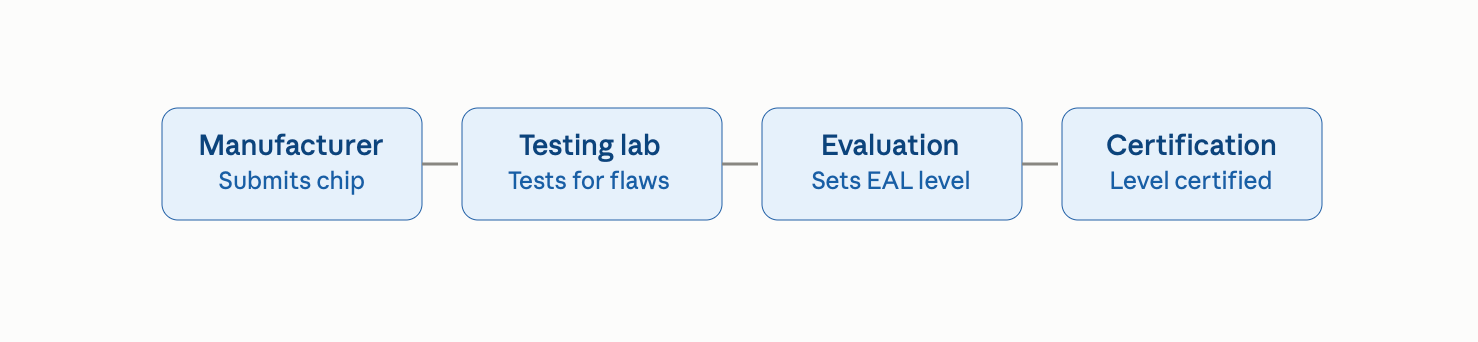
Secure element certification is not self-proclaimed—it undergoes an independent testing process before receiving an EAL rating. This flowchart shows a simplified process.

Many secure elements used in hardware wallets receive EAL 5+ or EAL 6+ security evaluation level certificates, indicating they have been tested for resistance to sophisticated attack methods within a defined scope. These certificates do not guarantee that the chip cannot be hacked. Instead, they show that independent experts have evaluated the claimed security features using rigorous testing standards.

The Secure Element Is Not a Magic Shield

Despite the high level of protection, secure elements cannot eliminate all possible risks.

If someone is tricked or even coerced into approving a fraudulent transaction, if a person voluntarily reveals their recovery phrase or stores backups in an insecure manner, the secure element cannot prevent these mistakes. Similarly, no commercial security technology can promise complete protection against highly specialized laboratory attacks conducted by well-funded adversaries with unlimited time and resources.

The secure element is designed to raise the cost and complexity of an attack so high that it becomes impractical for the vast majority of real-world criminals. It is just one layer in a broader security strategy, not a complete solution on its own.

Robust Security Depends on Multiple Layers

The greatest security of a hardware wallet comes from the combination of several protective measures, not reliance on any single feature.

Using a strong passphrase, carefully verifying transaction details on the device's screen, protecting recovery phrase backups, and employing additional security measures like a multi-signature scheme—all of this helps reduce risks. The secure element complements these measures by providing isolation for the wallet's most confidential information throughout its normal operation.

Why Secure Elements Remain Important

As the number of cryptocurrency owners grows and the value of digital assets increases, malicious actors continue to search for new ways to hack wallets. This has made secure elements an increasingly important part of modern hardware wallet design. Older hardware wallets from earlier models might not have used secure elements, but currently it has become the standard.

Their task is simple but critical. They generate confidential secret keys, protect them in a secure environment, and perform cryptographic operations without revealing the information that gives owners control over their funds. While no security technology is perfect, secure elements significantly raise the barrier for those attempting to steal private keys through physical or technical attacks.

For those choosing cold storage via a hardware wallet, understanding the role of the secure element provides a clearer picture of how modern self-custody works. The chip does not make users invulnerable, but it is one of the most crucial components for protecting digital assets, allowing people to control their cryptocurrency while keeping the most important keys secure behind specialized hardware protection mechanisms.

end-content

Tiền kỹ thuật số thịnh hành

Câu hỏi Liên quan

QWhat is the primary purpose of a Secure Element in the context of hardware wallets?

AThe primary purpose of a Secure Element is to protect highly confidential information, specifically by storing private keys and performing cryptographic operations within its isolated, secure environment. It prevents the private key from ever leaving the chip, thereby safeguarding it from physical theft and sophisticated attacks.

QHow does a Secure Element protect against software-based attacks, such as malware on a connected computer?

AIt protects by ensuring the private key never leaves the Secure Element chip. When a transaction needs to be signed, the unsigned transaction is sent to the hardware wallet. The Secure Element internally performs the signing operation and only the finished digital signature is sent out. Since the private key itself remains inside the chip, malware on the connected computer cannot intercept it.

QBesides software isolation, what other types of attacks are Secure Elements designed to resist?

ASecure Elements are specifically designed to resist physical attacks and side-channel attacks. They have tamper-resistant features built into their silicon to detect and respond to physical probing, abnormal voltage, or temperature changes. They are also engineered to mask or randomize data to counter side-channel attacks that analyze power consumption, timing, or electromagnetic emissions to deduce secrets.

QWhat role does a Secure Element play during the initial setup of a hardware wallet?

ADuring the initial setup, the Secure Element is crucial for generating the secure seed phrase. It uses a dedicated hardware random number generator to harvest entropy from physical processes within the chip, ensuring the initial randomness is strong and unpredictable. This prevents the resulting private keys from being weak or guessable due to poor random number generation.

QDoes having a certified Secure Element guarantee absolute security for a hardware wallet? Why or why not?

ANo, it does not guarantee absolute security. A Secure Element is not a 'magic shield.' It cannot protect against user errors like approving fraudulent transactions under duress, revealing the seed phrase, or insecure backup storage. Also, no commercial technology can promise immunity from highly sophisticated, well-funded laboratory attacks. The Secure Element's purpose is to raise the cost and complexity of an attack to impractical levels for most real-world threats, serving as one critical layer within a broader security strategy.

Nội dung Liên quan

ZachXBT tiết lộ danh tính nữ tội phạm lừa đảo tiền điện tử liên quan đến vụ trộm 5 triệu USD

ZachXBT, một nhà điều tra blockchain, đã tiết lộ danh tính Tiffany Milanovich, một đối tượng khủng bố trực tuyến ở Mỹ bị cáo buộc liên quan đến các vụ trộm tiền điện tử ít nhất 5 triệu USD. Milanovich và cộng sự (biệt danh "bled" và "harm") thực hiện các vụ lừa đảo giả mạo dịch vụ hỗ trợ của các sàn giao dịch tập trung hoặc ví phần cứng. Họ gọi điện cho nạn nhân, dụ dỗ họ tiết lộ thông tin truy cập, đồng thời sử dụng các trang web giả mạo để đánh cắp dữ liệu. Một vụ việc điển hình xảy ra vào tháng 6, nạn nhân mất 1,2 triệu USD Bitcoin và Ethereum từ ví Trezor sau khi bị giả mạo nhân viên BitcoinIRA. ZachXBT theo dõi thấy phần lớn tài sản bị đánh cắp vẫn chưa được di chuyển. Milanovich còn công khai chế giễu nạn nhân trên kênh Telegram của mình, khoe khoang các giao dịch mua xa xỉ và đánh bạc bằng tiền bất hợp pháp, thậm chí chỉnh sửa video để phóng đại quy mô trộm cắp. Điều tra cũng phát hiện Milanovich có liên hệ với John Daghita, một đối tượng bị cáo buộc đánh cắp hơn 46 triệu USD trước đó. Chính việc Daghita tiết lộ danh tính thật của Milanovich trong một cuộc tranh cãi đã giúp ZachXBT truy ra manh mối. Gần đây, ZachXBT còn cảnh báo về rủi ro bảo mật tiềm ẩn với ví phần cứng Ledger do các bản cập nhật thường xuyên có thể làm thay đổi giao diện và chức năng.

cryptonews.ru4 phút trước

ZachXBT tiết lộ danh tính nữ tội phạm lừa đảo tiền điện tử liên quan đến vụ trộm 5 triệu USD

cryptonews.ru4 phút trước

Sự sụt giảm của Bitcoin làm tài sản của Satoshi Nakamoto giảm 67 tỷ USD

Cập nhật: ngày 10 tháng 8 năm 2026. Do giá Bitcoin giảm 48% so với mức cao nhất lịch sử, tài sản ước tính của người sáng tạo Bitcoin Satoshi Nakamoto đã giảm khoảng 67 tỷ USD. Theo nền tảng phân tích Arkham, các ví được cho là thuộc về Nakamoto nắm giữ khoảng 1,096 triệu BTC. Ở mức giá kỷ lục 126.198 USD, tổng giá trị là 138 tỷ USD, nhưng đến tháng 8/2026, với giá khoảng 65.000 USD, giá trị này đã giảm xuống còn 71,19 tỷ USD. Tuy nhiên, tất cả đồng tiền vẫn chưa được di chuyển, nên đây là tổn thất trên lý thuyết. Hiện tại, Bitcoin đang giao dịch ở mức giá của tháng 9/2024. Mặc dù vậy, mức giảm trong chu kỳ thị trường giảm giá này (48%) vẫn thấp hơn so với các chu kỳ trước (có lúc gần 80%). Tình hình thị trường không mấy lạc quan: khối lượng giao dịch giao ngay và hệ số luân chuyển hàng ngày ở mức rất thấp, cho thấy sự quan tâm yếu từ các nhà đầu tư. Hoạt động tại các quỹ ETF Bitcoin giao ngay cũng đã giảm. Nhìn chung, tâm lý "giảm giá" đang chiếm ưu thế, mặc dù sự phục hồi vẫn có thể xảy ra trong dài hạn nếu nhu cầu tăng trở lại. Trong khi đó, công ty MicroStrategy tiếp tục giảm dự trữ BTC, bán 1.690 Bitcoin từ ngày 3 đến ngày 9 tháng 8 để mua lại cổ phiếu. Dự trữ bằng USD của công ty hiện là 4,65 tỷ USD, trong khi dự trữ Bitcoin giảm xuống còn 840.447 BTC.

cryptonews.ru9 phút trước

Sự sụt giảm của Bitcoin làm tài sản của Satoshi Nakamoto giảm 67 tỷ USD

cryptonews.ru9 phút trước

Mua USDT: Các ngân hàng bắt đầu yêu cầu các công ty giải trình về giao dịch tiền mã hóa

Mua USDT: Các ngân hàng bắt đầu yêu cầu doanh nghiệp giải trình về giao dịch tiền mã hóa Hoạt động mua Tether (USDT) ngày càng thu hút sự chú ý của các ngân hàng Nga trong hoạt động kinh tế đối ngoại. Gần đây, nhiều tổ chức tín dụng đã gửi yêu cầu đến khách hàng doanh nghiệp để làm rõ chi tiết các giao dịch tiền mã hóa của họ. Các ngân hàng không chỉ đặt câu hỏi theo quy định luật chống rửa tiền 115-FZ, mà còn yêu cầu giải thích ý nghĩa kinh tế của việc mua USDT và xác minh tình trạng của đối tác chuyển tiền mã hóa. Họ muốn xác nhận đối tác đó có trong danh sách sàn giao dịch tiền số của Ngân hàng Trung ương Nga hay không. Tuy nhiên, vấn đề là danh sách này hiện chưa tồn tại. Các chuyên gia nhận định đây là bước đi trước quy định, kết hợp giữa kiểm soát thông thường và việc ngân hàng chuẩn bị cho các quy tắc mới. Giao dịch tiền mã hóa vẫn bị xếp vào nhóm rủi ro cao. Các ngân hàng muốn sắp xếp cơ sở khách hàng và giảm rủi ro trước khi các yêu cầu mới được áp dụng đầy đủ. Luật sư khuyến cáo doanh nghiệp không nên bỏ qua những yêu cầu này, vì có thể dẫn đến hạn chế dịch vụ ngân hàng. Hiện tại, việc đối tác có trong danh sách chính thức chưa phải là điều kiện bắt buộc để thực hiện giao dịch, nhưng ngân hàng sẽ đánh giá dựa trên tổng thể thông tin. Bài viết cũng giải thích USDT là tài sản tiền mã hóa được neo theo đô la Mỹ, thường được mua để giảm biến động, chuyển tiền nhanh hoặc dùng trong thanh toán quốc tế. Các cách mua USDT phổ biến bao gồm qua sàn giao dịch tập trung, sàn giao dịch P2P và ví tiền mã hóa. Rủi ro chính đối với doanh nghiệp Nga hiện nay là kiểm soát ngân hàng theo luật 115-FZ và việc giải trình nguồn gốc, mục đích giao dịch.

cryptonews.ru9 phút trước

Mua USDT: Các ngân hàng bắt đầu yêu cầu các công ty giải trình về giao dịch tiền mã hóa

cryptonews.ru9 phút trước

Các ngân hàng địa phương cản trở thông qua luật "Minh bạch" do các khoản thưởng cho stablecoin

Mặc dù vấn đề phần thưởng bằng stablecoin trong "Đạo luật Minh bạch Thị trường Tài sản Kỹ thuật số" (CLARITY) tưởng chừng đã được giải quyết, nó lại nổi lên gần đây do vận động hành lang từ các ngân hàng địa phương. Các tổ chức nhỏ này lo ngại đạo luật sẽ ảnh hưởng tiêu cực đến khả năng thu hút tiền gửi và cho vay của họ. Sự vận động tích cực đã thuyết phục một số thượng nghị sĩ Cộng hòa, như Mike Rounds, phản đối dự luật. Brad Bolton, Giám đốc điều hành Ngân hàng Community Spirit, nhấn mạnh tầm quan trọng của việc các ngân hàng nhỏ lên tiếng về hậu quả thực tế. Trong khi phần thưởng nắm giữ stablecoin đã bị loại khỏi bản dự thảo hiện tại sau thỏa hiệp, phần thưởng sử dụng để khuyến khích thanh toán bằng stablecoin vẫn được cho phép. Hai thượng nghị sĩ Cộng hòa Josh Hawley và Jerry Moran tuyên bố sẽ chống lại đạo luật nếu vấn đề phần thưởng stablecoin không được chỉnh sửa. Vấn đề này, cùng với bất đồng về điều khoản đạo đức chưa được thống nhất với Nhà Trắng, làm giảm đáng kể cơ hội thông qua Đạo luật CLARITY, bất chấp kế hoạch bỏ phiếu vào tháng Chín của lãnh đạo đa số Thượng viện John Thune.

cryptonews.ru11 phút trước

Các ngân hàng địa phương cản trở thông qua luật "Minh bạch" do các khoản thưởng cho stablecoin

cryptonews.ru11 phút trước

Giao dịch

Giao ngay

Bài viết Nổi bật

Làm thế nào để Mua PEOPLE

Chào mừng bạn đến với HTX.com! Chúng tôi đã làm cho mua ConstitutionDAO (PEOPLE) trở nên đơn giản và thuận tiện. Làm theo hướng dẫn từng bước của chúng tôi để bắt đầu hành trình tiền kỹ thuật số của bạn.Bước 1: Tạo Tài khoản HTX của BạnSử dụng email hoặc số điện thoại của bạn để đăng ký tài khoản miễn phí trên HTX. Trải nghiệm hành trình đăng ký không rắc rối và mở khóa tất cả tính năng. Nhận Tài khoản của tôiBước 2: Truy cập Mua Crypto và Chọn Phương thức Thanh toán của BạnThẻ Tín dụng/Ghi nợ: Sử dụng Visa hoặc Mastercard của bạn để mua ConstitutionDAO (PEOPLE) ngay lập tức.Số dư: Sử dụng tiền từ số dư tài khoản HTX của bạn để giao dịch liền mạch.Bên thứ ba: Chúng tôi đã thêm những phương thức thanh toán phổ biến như Google Pay và Apple Pay để nâng cao sự tiện lợi.P2P: Giao dịch trực tiếp với người dùng khác trên HTX.Thị trường mua bán phi tập trung (OTC): Chúng tôi cung cấp những dịch vụ được thiết kế riêng và tỷ giá hối đoái cạnh tranh cho nhà giao dịch.Bước 3: Lưu trữ ConstitutionDAO (PEOPLE) của BạnSau khi mua ConstitutionDAO (PEOPLE), lưu trữ trong tài khoản HTX của bạn. Ngoài ra, bạn có thể gửi đi nơi khác qua chuyển khoản blockchain hoặc sử dụng để giao dịch những tiền kỹ thuật số khác.Bước 4: Giao dịch ConstitutionDAO (PEOPLE)Giao dịch ConstitutionDAO (PEOPLE) dễ dàng trên thị trường giao ngay của HTX. Chỉ cần truy cập vào tài khoản của bạn, chọn cặp giao dịch, thực hiện giao dịch và theo dõi trong thời gian thực. Chúng tôi cung cấp trải nghiệm thân thiện với người dùng cho cả người mới bắt đầu và người giao dịch dày dạn kinh nghiệm.

Tổng lượt xem 939Xuất bản vào 2024.12.12Cập nhật vào 2026.06.02

Làm thế nào để Mua PEOPLE

Thảo luận

Chào mừng đến với Cộng đồng HTX. Tại đây, bạn có thể được thông báo về những phát triển nền tảng mới nhất và có quyền truy cập vào thông tin chuyên sâu về thị trường. Ý kiến ​​của người dùng về giá của PEOPLE (PEOPLE) được trình bày dưới đây.

活动图片