Why P2P and Exchangers Are Becoming Obsolete, and What Will Replace Them

cryptonews.ruXuất bản vào 2026-07-28Cập nhật gần nhất vào 2026-07-28

Tóm tắt

Titled "Why P2P and Exchanges Are Becoming Obsolete, and What Will Replace Them," this article discusses the evolution of stablecoins, particularly USDT, from a trading tool to a global payment method. However, converting crypto back to fiat for daily expenses remains a challenge. The process of using P2P platforms or crypto exchanges has become increasingly risky and complex due to stricter banking anti-fraud measures, new legislation in Russia, and rampant fraud schemes like "triangles," where sellers can inadvertently receive stolen funds. The article highlights that while P2P was convenient, banks now scrutinize frequent peer-to-peer transfers, often freezing accounts. Exchanges also pose risks like unfavorable rates and unclear compliance. The market is therefore shifting towards integrated services that eliminate the manual conversion step. It cites OneSix as an example—a crypto wallet accessible via Telegram and web that embeds currency conversion directly into payment and withdrawal scenarios. Users can pay bills or send money as if using a bank app, with the crypto-to-fiat exchange happening seamlessly in the background. It also offers invoicing for freelancers and conducts AML checks, returning suspicious transactions instantly instead of freezing them. In conclusion, as crypto integrates into everyday finance, the demand for manual, risky exchange methods is declining. The future lies in unified platforms that combine storage, compliance, conversion, and payment...

Over the past few years, $USDT has transformed from a cryptocurrency trading tool into a universal means for international settlements. Freelancers and IT specialists receive payments in stablecoins, relocants use them for transfers between countries, and for many entrepreneurs, $USDT is the most convenient and fastest way to settle payments with foreign counterparties for deliveries of components from abroad.

Transfers in $USDT and other cryptocurrencies are fast, the coins are credited to wallets. However, users then face the problem of how to convert the cryptocurrency into fiat, as most routine payments in a person's life are conducted in fiat money. For example, rubles are needed to pay utility bills, send money to relatives, buy plane tickets, or order home delivery of groceries. Most often, the user has to go through the same chain: find an exchanger or a cryptocurrency buyer on a P2P platform, sell $USDT, wait for the rubles to arrive, and only then make the necessary payment.

However, over recent years, the process of exchanging cryptocurrency for rubles has become noticeably more complicated. Increased bank anti-fraud measures, crackdowns on money mules, a rise in fraudulent schemes, and the development of compliance procedures have made the cryptocurrency exchange process riskier than before. The situation will worsen in the coming year, as the State Duma has passed in the second and third readings a bill tightening the rules for handling digital currencies in Russia.

What's Wrong with P2P

For many users, P2P was the easiest way to exchange cryptocurrency for rubles at the market rate. The model seemed quite convenient: one user transfers rubles, the other sends cryptocurrency. The exchange acts as a guarantor of the transaction and holds the assets until the exchange is completed.

The problem lies in the fact that the bank does not see the cryptocurrency part of the deal. It only sees a transfer from an unknown individual. If there are many such operations, they can trigger internal monitoring systems.

The reason is the increase in cryptocurrency-related fraud and, as a consequence, changes in legislation, primarily in Federal Law No. 161-FZ "On the National Payment System," as well as requirements for combating money laundering (Law 115-FZ).
According to the Central Bank of Russia, the volume of operations without the voluntary consent of clients in 2025 exceeded 27 billion rubles, and a significant portion of the stolen funds passed through the accounts of individuals used as money mules.

Now banks analyze:

  • the number of incoming transfers;
  • the number of senders;
  • the speed of subsequent withdrawal of funds;
  • matches with known fraudulent patterns;
  • links to details from the Central Bank of Russia's database.

If a transaction seems atypical or raises questions, the bank may request additional explanations and documents.

The Main Risk: "Triangles"

One of the most common problems in the P2P market remains the fraudulent scheme known as the "triangle" or "triangulation." It works as follows: a fraudster simultaneously negotiates with a victim and a cryptocurrency seller. The seller is confident they are selling $USDT to an ordinary buyer. At the same time, the fraudster convinces a third person to transfer money to the seller's card under any pretext: a transfer to a "safe account," helping a relative, buying goods, or another common ruse.

After the seller receives the transfer, they send the cryptocurrency to the fraudster's wallet, considering the deal complete.

Problems arise later, often months after the transaction. When the victim realizes they have been part of a fraud scheme, they contact the bank and law enforcement. The only known details are the card to which the money was sent—that is, the cryptocurrency seller's card.

As a result, the person who themselves became part of the fraudulent scheme and never communicated with the victim may find that they become a subject of a criminal case, their accounts are frozen, and their data is included in the Central Bank of Russia's database of suspicious transactions.

Exchangers allow users to avoid direct contact with unfamiliar counterparties but do not eliminate the risk of being drawn into dubious schemes.

But risks remain here too:

  • users need to choose a reliable service;
  • rates can differ significantly from exchange rates;
  • delays are possible during transaction verification;
  • some exchangers operate without clear jurisdiction and compliance procedures.

The user does not know who is sending money to their card, has no guarantee that the exchanger is not using money mule cards for settlements. The main issue is that the user is still forced to manually solve the exchange problem every time.

This is precisely why the market has started moving towards services that combine cryptocurrency storage, conversion, and payment operations in one interface. This principle is the foundation of services trying to eliminate the very need to "go exchange cryptocurrency." One such example is OneSix.

How OneSix Solves This Problem

OneSix is a cryptocurrency wallet operating via a Telegram MiniApp and a web interface. Users have access to $USDT on the TRC-20, ERC-20, and BEP-20 networks, as well as BTC, ETH, BNB, TRX, and LTC.

The main feature of OneSix is that cryptocurrency exchange is built into the user scenario and ceases to be a separate operation. For the user, everything looks like paying for a product or service with cryptocurrency, although that is not the case: the process of exchanging cryptocurrency for fiat is simply "embedded" inside and invisible to the user.

For the user, the process looks much like paying through a regular banking app.

The withdrawal process works similarly. If it's necessary to send money to relatives or withdraw part of the income in fiat, the user can exchange $USDT within the wallet, for example, for rubles, and send the funds to a bank card without searching for exchangers and facing the risks associated with P2P platforms.

In addition, through OneSix, users can create invoices and payment links to receive cross-border transfers in digital assets. This can be convenient for freelancers, developers, and small companies working with foreign clients.

In OneSix, incoming transactions undergo verification. However, unlike other services, if assets do not comply with the service's AML policy requirements or carry a high risk, they are not credited to the balance and are immediately returned to the sender instead of being frozen.

P2P and exchangers were an important stage in the development of the crypto market, but today they no longer solve the user's main task: to safely and conveniently use digital assets in everyday life. The more cryptocurrency becomes part of real financial scenarios, the fewer people are willing to independently search for counterparties, verify the origin of funds, and understand the risks of each transaction. Therefore, the market is gradually moving from manual exchange to services where storage, verification, conversion, and payments are combined in one place.

end-content
Câu hỏi Liên quan

QAccording to the article, why are P2P platforms and exchanges becoming more problematic for converting cryptocurrency to fiat?

AThe process has become more risky and complex due to increased bank anti-fraud measures, the fight against money mules ('drops'), a rise in fraudulent schemes, stricter compliance procedures, and the adoption of new laws in Russia tightening rules on digital currencies.

QWhat is the major fraudulent risk associated with P2P exchanges described in the text?

AThe major risk is the 'triangle' fraud scheme, where a scammer simultaneously negotiates with a victim and a crypto seller. The victim is tricked into sending fiat to the seller's card, the seller then sends crypto to the scammer, and later the victim reports the fraud, making the seller a suspect.

QHow does the service OneSix, mentioned in the article, aim to solve the problem of cryptocurrency exchange?

AOneSix integrates the exchange of cryptocurrency into the user's payment flow, making it invisible. It combines crypto storage, conversion, and payment operations in one interface, allowing users to pay for goods or send money as if using a regular bank app, without manually finding an exchange counterparty.

QWhat are the key factors that banks in Russia now analyze regarding user transactions, as per the article?

ABanks analyze the number of incoming transfers, the number of senders, the speed of subsequent fund withdrawals, whether operations match known fraudulent patterns, and any connections to details in the Bank of Russia's database of suspicious operations.

QWhat is a key advantage of OneSix's transaction verification process compared to some other services?

AIf incoming assets do not meet the service's AML policy requirements or are high-risk, OneSix does not freeze them on the user's balance. Instead, the assets are immediately returned to the sender, reducing risk and potential inconvenience for the receiver.

Nội dung Liên quan

Giao cho đường cong, đừng chống lại chu kỳ: Tổng kết 10 năm đầu tư tiền mã hóa của bậc thầy phân tích vĩ mô Raoul Pal

Tác giả Raoul Pal, người có 13 năm kinh nghiệm trong lĩnh vực tiền mã hóa, chia sẻ những bài học từ sai lầm cá nhân: việc bán Bitcoin quá sớm vào năm 2017 đã khiến ông bỏ lỡ khoản lợi nhuận khổng lồ. Ông nhấn mạnh bài học then chốt là cần có tầm nhìn dài hạn, nắm giữ tài sản và tránh bị ảnh hưởng bởi cảm xúc hay giao dịch quá thường xuyên. Bài viết phân biệt hai vai trò chính: Bitcoin là "kho chứa giá trị" kỹ thuật số, tương tự vàng, với nguồn cung hạn chế để bảo vệ khỏi lạm phát tiền tệ. Trong khi đó, các nền tảng hợp đồng thông minh như Ethereum, Solana và Sui là "lớp định tuyến" cho nền kinh tế kỹ thuật số tương lai, nơi các giao dịch tự động giữa các tác nhân AI sẽ diễn ra. Quy mô tiềm năng của nền kinh tế được xây dựng trên các blockchain này (hỗ trợ tài sản, nợ, cổ phiếu toàn cầu) được cho là lớn hơn nhiều so với thị trường tích trữ giá trị mà Bitcoin nhắm đến. Dù thị trường hiện tại ảm đạm và chu kỳ giá dường như chậm lại, tác giả lập luận rằng các điều kiện vĩ mô cơ bản vẫn nguyên vẹn. Chu kỳ kinh doanh đang chuyển sang pha mở rộng, điều thường thúc đẩy các tài sản mạo hiểm như tiền mã hóa. Thay vì cố gắng tính thời điểm thị trường, chiến lược được khuyến nghị là tập trung vào dài hạn, nắm giữ cả hai loại tài sản (kho chứa giá trị và lớp định tuyến), và để sức mạnh của đường cong tăng trưởng làm công việc của nó.

marsbit18 phút trước

Giao cho đường cong, đừng chống lại chu kỳ: Tổng kết 10 năm đầu tư tiền mã hóa của bậc thầy phân tích vĩ mô Raoul Pal

marsbit18 phút trước

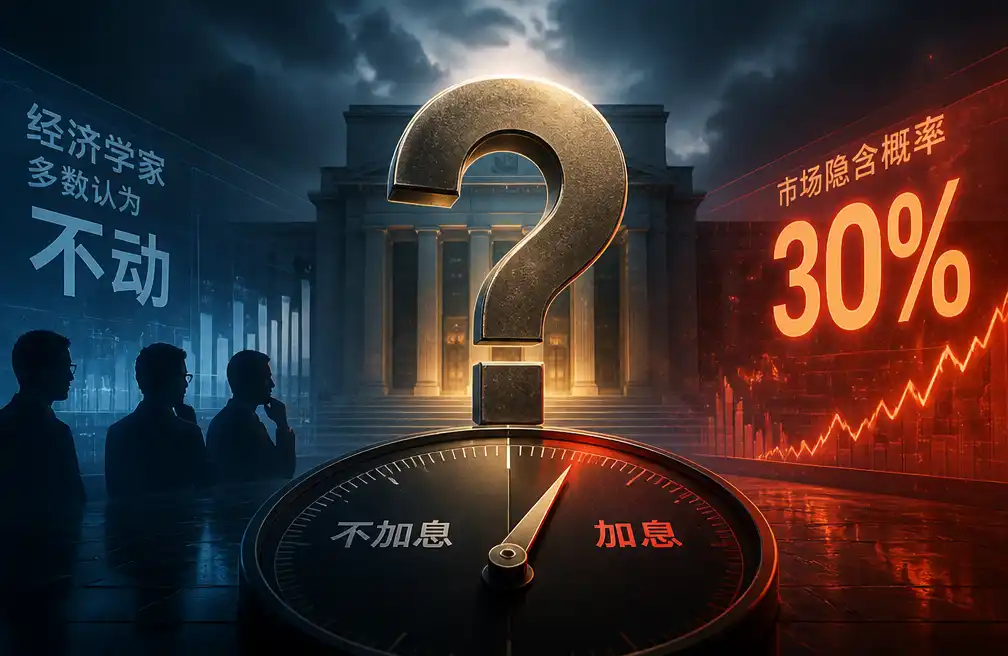
Tối nay có tăng lãi suất hay không: Chuyên gia kinh tế nói không, thị trường đưa ra xác suất 30%

Các hợp đồng tương lai quỹ liên bang đang định giá lại trước quyết định của FOMC tháng 7, cho thấy giới giao dịch đang trả giá cao hơn cho khả năng Fed bất ngờ tăng lãi suất hoặc đưa ra tín hiệu diều hâu mạnh hơn. Điều trái ngược là các nhà kinh tế dự đoán Fed sẽ giữ nguyên lãi suất trong khoảng 3,50%–3,75%. Thị trường, với xác suất khoảng 30% cho một lần tăng 25 điểm cơ bản, không hẳn dự đoán một hành động ngay lập tức mà đang mua bảo hiểm cho rủi ro đuôi diều hâu. Điều này có thể bao gồm việc Fed tăng lãi suất trực tiếp, hoặc không tăng nhưng gợi ý mạnh mẽ về khả năng tăng vào tháng 9. Sự khác biệt giữa các định chế như BofA và Citi nằm ở cách Fed nên phản ứng với cú sốc giá dầu từ tình hình Trung Đông. Phe diều hâu lo ngại về lạm phát thứ cấp và uy tín chống lạm phát của Fed, trong khi phe bồ câu coi đây chủ yếu là cú sốc cung tạm thời. Việc Chủ tịch mới Kevin Warsh lên nắm quyền đã khuếch đại sự bất định. Thị trường chưa có mẫu hình ổn định để đọc hiểu phong cách của ông, khiến mọi tín hiệu đều có trọng số lớn và buộc giới giao dịch phải phòng ngừa rủi ro sớm. Kịch bản cơ sở vẫn là Fed giữ nguyên lãi suất vào tháng 7. Tuy nhiên, trọng tâm sẽ nằm ở cách Chủ tịch Warsh định nghĩa cú sốc giá dầu trong cuộc họp báo. Nếu ông nhấn mạnh rủi ro lạm phát lan rộng và ưu tiên mục tiêu 2%, thị trường sẽ định giá lại cho khả tăng lãi suất vào tháng 9. Điều này sẽ tiếp tục hỗ trợ USD, gây áp lực lên JPY và có thể làm giảm hứng thú với các tài sản rủi ro như cổ phiếu định giá cao và tiền mã hóa.

marsbit31 phút trước

Tối nay có tăng lãi suất hay không: Chuyên gia kinh tế nói không, thị trường đưa ra xác suất 30%

marsbit31 phút trước

Vật liệu bị kiểm soát ngầm nhất trong ngành bán dẫn, tăng giá vài lần không ai để ý, vừa bị Trung Quốc cấm

Khí heli, nguyên tố phổ biến thứ hai trong vũ trụ, lại cực kỳ khan hiếm trên Trái Đất và không thể tổng hợp nhân tạo. Nó chỉ có thể được chiết xuất từ khí tự nhiên với hàm lượng cực thấp, và một khi thoát ra ngoài, nó sẽ bay vào không gian vĩnh viễn. Dù vậy, heli là nguyên liệu thô không thể thay thế trong quy trình sản xuất chip tiên tiến nhất hiện nay, với yêu cầu độ tinh khiết lên đến 99,9999%. Nó được sử dụng trong khắc plasma, kiểm tra rò rỉ, kiểm soát nhiệt độ bệ đỡ máy quang khắc và nhiều công đoạn quan trọng khác tại các nhà máy bán dẫn. Không có nó, nhiều hoạt động sản xuất chip sẽ dừng lại. Tuy nhiên, heli là vật liệu ít được chú ý nhất trong chuỗi cung ứng bán dẫn. Giá của nó đã tăng gấp đôi mà hầu như không được đưa tin. Ngày 10 tháng 7, Trung Quốc đã đột ngột cấm xuất khẩu khí heli, một động thái hầu như không gây tiếng vang trên truyền thông. Nhưng đằng sau đó là một cơn khủng hoảng thiếu hụt toàn cầu nghiêm trọng: trung tâm sản xuất heli lớn nhất thế giới ở Qatar bị tấn công bằng tên lửa vào tháng 3, phá hủy năng lực xuất khẩu và cần 3-5 năm để sửa chữa; khoảng 200 bình chứa heli lỏng bị mắc kẹt ở Trung Đông; giá heli toàn cầu tăng gấp đôi. Ba quốc gia kiểm soát 85% nguồn cung heli toàn cầu là Mỹ, Qatar và Nga. Qatar (chiếm 1/3) đã ngừng sản xuất, Mỹ đã bán kho dự trữ chiến lược liên bang, và Nga áp dụng chế độ cấp phép đặc biệt cho xuất khẩu từ tháng 4/2026. Ngành công nghiệp chip đang lo ngại về tình trạng thiếu hụt kéo dài, có thể buộc phải cắt giảm sản xuất, ưu tiên chip AI và HBM. Trung Quốc là nước phụ thuộc nhiều vào nhập khẩu heli (84,4%), chủ yếu từ Qatar và Nga. Động thái cấm xuất khẩu được coi là để đảm bảo nguồn cung trong nước. Điều đáng chú ý là dù thiếu tài nguyên, Trung Quốc đã phát triển công nghệ sản xuất heli nội địa bằng cách tận dụng khí thải từ các nhà máy LNG, đạt độ tinh khiết 6N9 vào năm 2025. Tuy sản lượng còn nhỏ (tự cung dưới 20%), nhưng đây là bước tiến quan trọng. Cuộc khủng hoảng heli toàn cầu được dự báo sẽ còn kéo dài, buộc các quốc gia phải xem xét lại tầm quan trọng chiến lược của nguồn tài nguyên dễ bay hơi này.

marsbit1 giờ trước

Vật liệu bị kiểm soát ngầm nhất trong ngành bán dẫn, tăng giá vài lần không ai để ý, vừa bị Trung Quốc cấm

marsbit1 giờ trước

Nhà đầu tư giai đoạn đầu của Unitree đặt cược vào một công ty Brain-Computer Interface

"Wabo Technology, một công ty khởi nghiệp về giao diện não-máy (BCI) có trụ sở tại Thành Đô, vừa hoàn thành vòng đầu tư thiên thần với sự tham gia của các quỹ Vertex Ventures (thuộc Temasek), Hongtai Fund, Chengdu Future Industry Fund và Huifengda Capital. Vertex Ventures, nhà đầu tư ban đầu vào Unitree, cũng nằm trong số những người ủng hộ. Được thành lập vào cuối năm 2025 bởi Zhang Xingzhi, một Tiến sĩ từ Đại học Thanh Hoa, Wabo Technology tập trung vào phát triển "mô hình ý định thần kinh của con người", một hệ thống giải mã và biểu diễn tín hiệu thần kinh. Cách tiếp cận này nhằm mục đích giúp AI hiểu được ý định thực sự của con người trước khi hành động, ví dụ như phân biệt giữa việc định uống nước hay đặt cốc xuống, thông qua việc kết hợp dữ liệu EEG, EMG, hành vi và ngữ cảnh. Công ty có kế hoạch thiết lập trụ sở song phương tại Thành Đô (tập trung vào phần cứng và sản xuất) và Thượng Hải (tập trung vào R&D và mô hình tiên tiến). Wabo cũng đang hợp tác với Đại học Thiên Tân trong các thử nghiệm BCI ngoài không gian, một lĩnh vực thu hút sự quan tâm của các nhà đầu tư vào lĩnh vực hàng không vũ trụ thương mại. Ngành công nghiệp BCI ở Trung Quốc đang chứng kiến sự bùng nổ đầu tư, với hơn 45 tỷ nhân dân tệ được huy động chỉ trong 5 tháng đầu năm 2026. Zhang Xingzhi dự đoán rằng ngành sẽ chứng kiến sự hợp nhất trong vòng ba năm tới, và chỉ những công ty có thể thiết lập vòng lặp khép kín hiệu quả giữa dữ liệu, mô hình và ứng dụng thực tế mới tồn tại được. Tầm nhìn dài hạn của Wabo là biến những hình ảnh khoa học viễn tưởng, như trong phim 'Avatar', thành hiện thực bằng cách cho phép ý định của con người điều khiển trực tiếp nhiều loại thiết bị và robot khác nhau."

marsbit1 giờ trước

Nhà đầu tư giai đoạn đầu của Unitree đặt cược vào một công ty Brain-Computer Interface

marsbit1 giờ trước

Giao dịch

Giao ngay
活动图片