Token Watch, Based on RootData, Launches Interactive Relationship Graph for Projects, Investors, and Key Figures

marsbitXuất bản vào 2026-07-27Cập nhật gần nhất vào 2026-07-27

Tóm tắt

Token Watch, operated by Token Post, has launched a new "Interactive Relationship Graph" feature. This tool visually maps the connections between cryptocurrency projects listed on the Korean Won market, their investors, and key individuals. The graph allows users to explore investment backgrounds, see which investors co-invest in other projects, and track the past and present affiliations of core team members. Key features include the ability to filter by project, investor, or person, and to view different relationship types: general investment, lead investment, current affiliation, and past affiliation. A focus mode lets users isolate connections within two degrees of a selected node for clearer analysis. The graph is designed to help users identify co-investors, frequent VC partnerships, investor overlap between competing projects, and recurring key figures across the ecosystem. The underlying data for investors and individuals is sourced from RootData, with some verification by the Token Post editorial team. The web-based tool is available in both Korean and English. Token Watch emphasizes that the information is for reference and analysis purposes only and does not constitute investment advice.

Author: Han Jae-ho

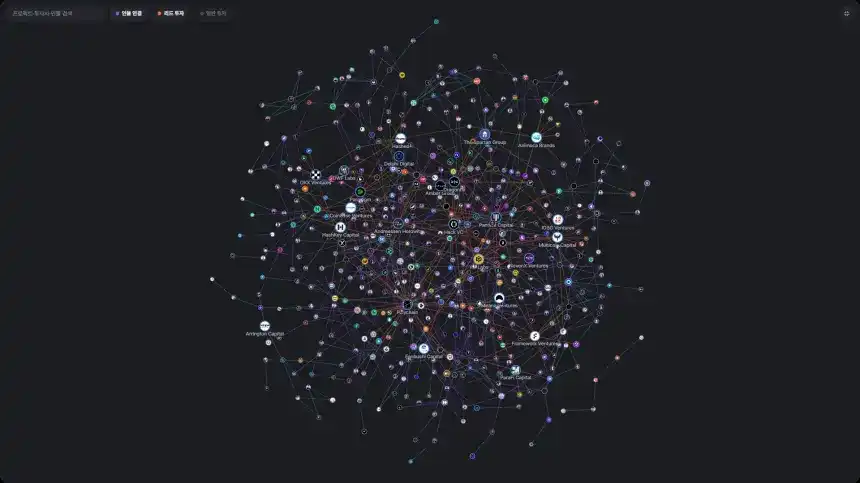
The cryptocurrency asset data platform "Token Watch," operated by Token Post, has unveiled an "Interactive Relationship Graph" feature that allows users to see the interconnected structure between projects, investors, and key figures at a glance.

This newly added relationship graph is a function that visually displays how investors and key individuals are connected, centering on cryptocurrency asset projects listed in the Korean won market. Users can not only check the investment background of a single project but also explore other projects participated in by the same investor and the past and present affiliations of individuals within the same screen.


Currently, the relationship graph shows the top 30 investors by portfolio and key figures confirmed across multiple projects. Users can directly search for projects, investors, or individuals, or filter by type to extract only the desired relationships.

The connecting lines are divided into ▲ General Investment ▲ Lead Investor ▲ Current Affiliation ▲ Past Affiliation. Through this classification, users can confirm not only which investors participated in a specific project but also who led the investment round, and the organizations with which key figures are currently or were previously associated.
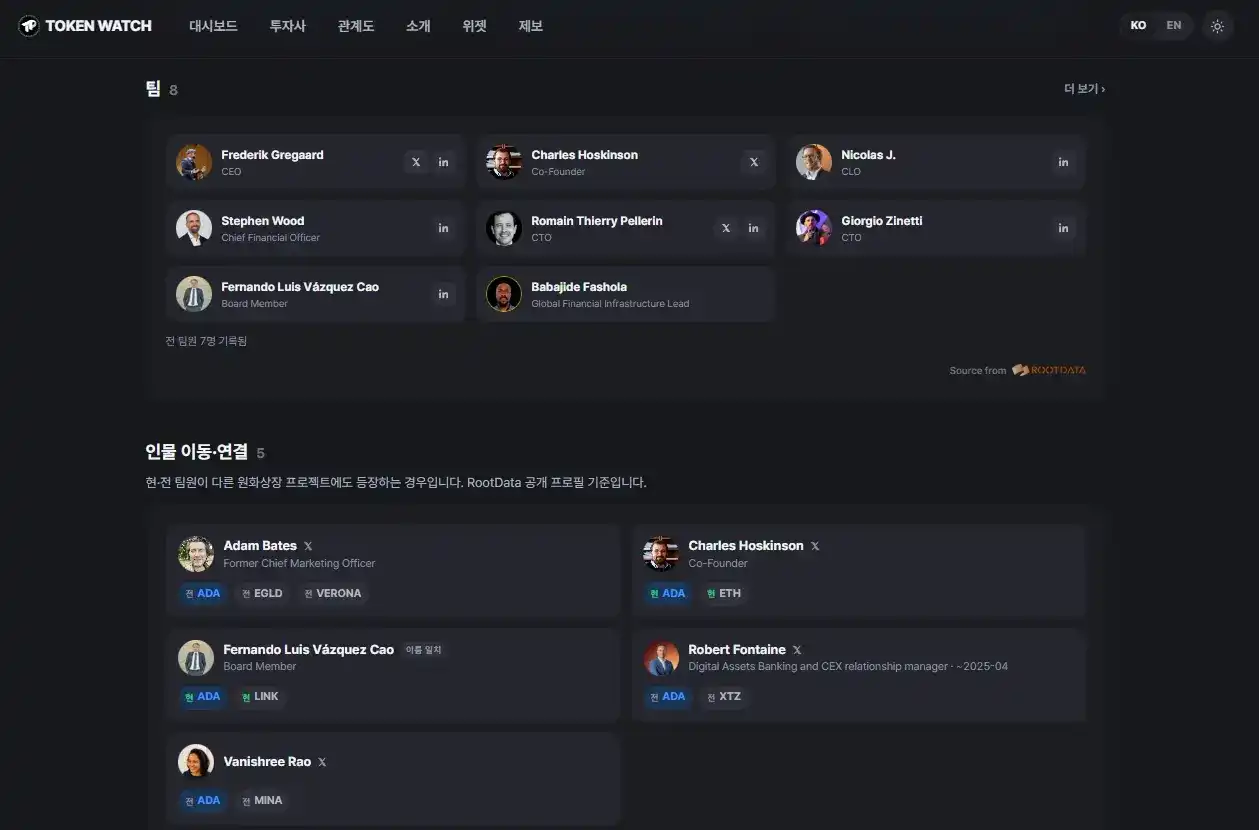
For example, selecting a specific project will display the investors in that project and related individuals. Conversely, with an investor as the center, users can view that investor's portfolio of Korean won-listed projects and co-investment relationships with other investors.

After clicking on a node, using the "View Centered on This Node" function allows users to keep only connections within two degrees of separation from the selected object. Even when the overall network appears complex, this enables quick focus on a specific project or investor, narrowing down to the core relationships. The feature also supports node dragging and screen zooming.

With this relationship graph, Token Watch moves beyond simple investor lists, allowing users to three-dimensionally explore the capital and human networks within the cryptocurrency asset market.


This feature can be used to grasp information that was difficult to confirm previously with just a project's published investor logos, such as:

  • Co-investors

  • Frequent VC co-investor combinations

  • Investor overlap between competing projects

  • Core individuals recurring across multiple projects

Particularly for investors, it can serve as a reference to verify the background of projects of interest; for journalists and researchers, it can be a tool for interviews and analysis to uncover hidden commonalities between projects; and for industry professionals and business developers, it can be used to examine connection paths between projects, investors, and key figures.
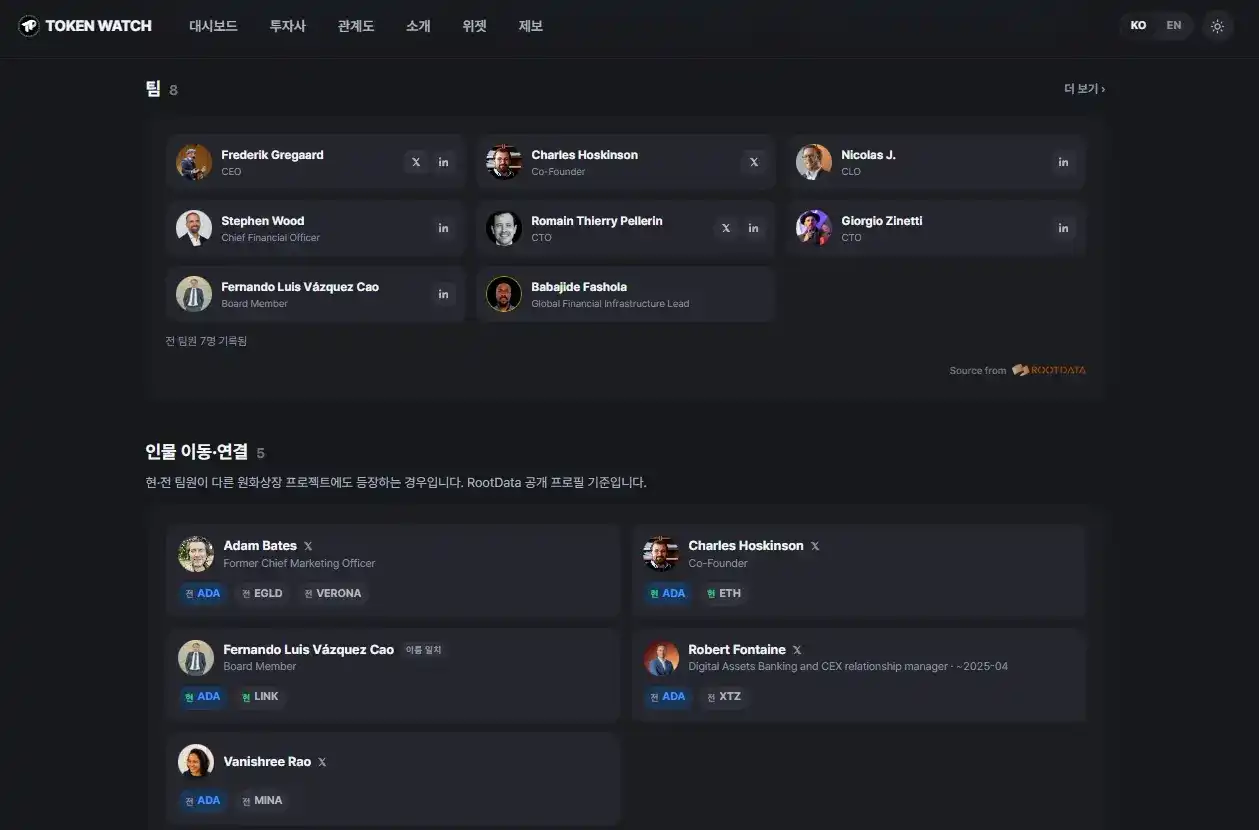
The investor and individual data used in the relationship graph is based on RootData, and some information (such as whether a project has responded) is based on records from the Token Post editorial department. Regarding individual relationships, to reduce erroneous connections of the same person, associations are made only when X account IDs match or two or more full names match.

The Token Watch relationship graph requires no additional installation and can be used directly on the web, supporting both Korean and English interfaces.

A representative from Token Post stated: "To understand a cryptocurrency asset project, one must not only look at price and listing information but also understand which capital and individuals are connected behind the project. We will continue to optimize the relationship graph so that dispersed investment and individual information can be explored intuitively."

Simultaneously, Token Watch states that the information displayed in the relationship graph may differ from the actual latest status due to variations in collection and verification timing. All data is for reference only and does not constitute investment advice.


This article is written based on market data and chart analysis and does not constitute investment advice for specific projects.

Tiền kỹ thuật số thịnh hành

Câu hỏi Liên quan

QWhat is the main function of the 'Interaction Relationship Map' feature launched by Token Watch?

AToken Watch launched an 'Interaction Relationship Map' feature that visually displays the interconnected structure between cryptocurrency projects, their investors, and key personnel. It allows users to see investment backgrounds, explore other projects funded by the same investor, and track the past and present affiliations of core individuals.

QWhat types of relationship lines are distinguished in the Token Watch Relationship Map?

AThe relationship lines in the map are categorized into four types: General Investment, Lead Investment, Current Affiliation, and Former Affiliation. This categorization helps users understand not only who invested in a project but also who led the investment round and the past/current organizational ties of key people.

QBased on which data provider is the investor and personnel information in the Relationship Map primarily built?

AThe investor and personnel data used in the Relationship Map is based on the data platform RootData. Additional information, such as whether a project has responded to inquiries, is based on records from the Token Post editorial team.

QWhat practical uses does the article list for the new Relationship Map feature?

AThe article lists several practical uses for the feature: identifying co-investors, spotting frequently co-investing VC combinations, observing investor overlap between competing projects, and recognizing key personnel who appear across multiple projects. It serves as a reference for investors, a research tool for journalists, and a way for professionals to explore connection paths.

QHow does the feature handle privacy and data accuracy according to the article?

ATo reduce incorrect links for individuals, connections are only made when X (formerly Twitter) accounts match or when two or more full names are identical. Token Watch also notes that the information may differ from the latest actual status due to collection and verification timing, and all data is for reference only, not constituting investment advice.

Nội dung Liên quan

Base Kích Hoạt "Xác Minh Người Thật", Airdrop Đã Được Đưa Lên Lịch Trình?

Blockchain có thể ghi lại hành vi của mỗi ví nhưng không thể chỉ dựa vào địa chỉ để xác định liệu mười ví đằng sau là mười người hay một người. Điều này trở thành vấn đề trong các đợt airdrop, nhận thưởng hoặc bỏ phiếu cộng đồng khi quy tắc "mỗi người một lần" thực tế chỉ được hợp đồng thông minh hiểu là "mỗi địa chỉ một lần". Vào ngày 28/7, Base Build đã công bố Base Verify Onchain, hiện chạy trên mạng testnet Base Sepolia. Đây là cơ chế kết nối điều kiện danh tính off-chain với quy tắc hợp đồng on-chain. Cơ chế hoạt động như sau: Hợp đồng thông minh định nghĩa trước các điều kiện (ví dụ: có tài khoản X được xác minh hoặc là thành viên Coinbase One). Người dùng ký một thông điệp SIWE. Dịch vụ off-chain của Base Verify kiểm tra xem người dùng có đáp ứng điều kiện từ nhà cung cấp đã chỉ định hay không. Nếu đạt, nó sẽ cấp một chứng thực EIP-712 có hiệu lực ngắn hạn, bao gồm một mã băm danh tính (identityHash). Hợp đồng sau đó kiểm tra chữ ký, thời hạn và quan trọng là xem identityHash này đã được sử dụng chưa. Cùng một danh tính đã xác minh sẽ tạo ra cùng một identityHash cho một hợp đồng cụ thể, ngăn chặn việc tham gia nhiều lần ngay cả khi đổi ví. Base Verify Onchain tập trung giải quyết việc thực thi đúng đắn các quy tắc "ai có thể tham gia" và "một danh tính được tham gia bao nhiêu lần" trong các tình huống như airdrop, phần thưởng hoặc bỏ phiếu. Nó không phải là hệ thống danh tính phổ quát hay KYC, mà chỉ xác nhận một danh tính đã xác minh đáp ứng các điều kiện cụ thể. Việc ra mắt công cụ này làm dấy lên suy đoán về airdrop token Base tiềm năng trong tương lai, vì nó cung cấp công cụ kỹ thuật để ngăn chặn gian lận. Tuy nhiên, Base trước đây đã xác nhận vẫn đang trong giai đoạn nghiên cứu sớm về token mạng và chưa có lịch trình cụ thể. Base Verify Onchain chủ yếu được xem là bổ sung cơ sở hạ tầng xác thực, chứ không phải tín hiệu bắt đầu đếm ngược cho airdrop.

marsbit12 phút trước

Base Kích Hoạt "Xác Minh Người Thật", Airdrop Đã Được Đưa Lên Lịch Trình?

marsbit12 phút trước

Bí mật từ người trong cuộc: Cách một nhân viên Nhà Trắng kiếm được 100.000 USD nhờ những lời nói của ông Trump

Nhân viên Gabriel Perez, người phụ trách máy nhắc chữ trong các bài phát biểu công khai của cựu Tổng thống Mỹ Donald Trump, đã không còn làm việc cho chính phủ liên bang sau cáo buộc sử dụng thông tin nội bộ để cá cược kiếm lời. Theo điều tra của ABC News, Perez sử dụng thông tin không công khai về nội dung và thời điểm phát biểu của Trump để đặt cược trên nền tảng dự báo Kalshi, thu lợi hơn 100.000 USD. Hành vi bất thường của Perez bị hệ thống giám sát của Kalshi phát hiện do chênh lệch rõ rệt so với hành vi người dùng thông thường. Thông tin sau đó được chuyển cho Ủy ban Giao dịch Hàng hóa Tương lai Mỹ (CFTC). Điều khoản của Kalshi nghiêm cấm giao dịch dựa trên thông tin đặc quyền từ công việc, tương tự giao dịch nội gián trên thị trường tài chính. Nhà Trắng xác nhận Perez đã rời vị trí nhưng không nêu rõ lý do. Vụ việc nổi bật này cho thấy thị trường dự đoán chính trị - kinh tế đang đối mặt với thách thức về giao dịch nội gián ở cấp cao. Đây là một phần trong làn sót giám sát của Quốc hội Mỹ nhắm vào các nền tảng như Kalshi, đặt ra câu hỏi về khả năng ngăn cách giữa nhân sự chính phủ và thị trường cá cược vào các quyết định của họ.

cryptonews.ru22 phút trước

Bí mật từ người trong cuộc: Cách một nhân viên Nhà Trắng kiếm được 100.000 USD nhờ những lời nói của ông Trump

cryptonews.ru22 phút trước

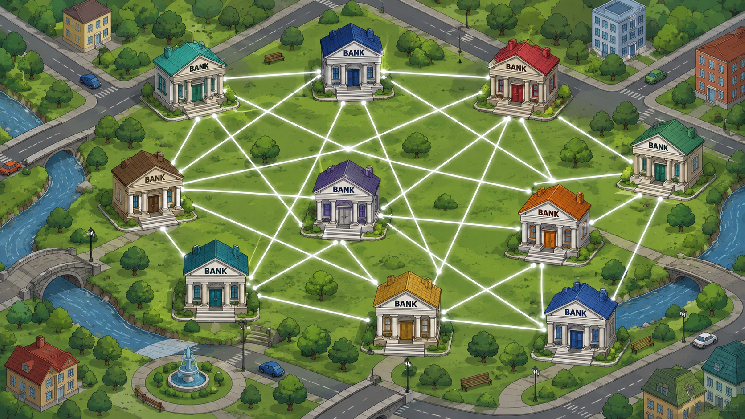
Mười ngân hàng châu Âu hợp nhất thành hiệp hội blockchain RL1

Mười định chế tài chính châu Âu đã thành lập Hiệp hội blockchain RL1 (Regulated Layer One) để phục vụ thị trường được quản lý và tài sản mã hóa. RL1, đăng ký tại Luxembourg, đã bắt đầu hoạt động với sự tham gia của các ngân hàng lớn như ABN AMRO, Crédit Mutuel, DekaBank và các tổ chức khác, trong đó mọi thành viên đều có quyền quyết định ngang nhau. Mạng lưới riêng tư này được xây dựng trên công nghệ của công ty fintech Đức SWIAT, đơn vị đã chuyển giao quyền sở hữu nền tảng và hiện là đối tác công nghệ. SWIAT báo cáo đã xử lý hơn 50 giao dịch trị giá trên 700 triệu euro trong ba năm qua. RL1 tập trung vào các mục tiêu như tiền kỹ thuật số, trái phiếu mã hóa, tài sản thế chấp, giao dịch repo và thanh toán trên blockchain, với mục đích giảm sự phân mảnh trong cơ sở hạ tầng sổ cái phân tán hiện nay. Dự án sẽ được dẫn dắt bởi cựu giám đốc điều hành SWIAT Henning Vollbehr. Hiệp hội đang đàm phán để mở rộng thành viên, có thể bao gồm cả NatWest. Phân tích AI trong bài viết chỉ ra khoảng cách giữa tham vọng và quy mô hoạt động hiện tại của nền tảng, đồng thời đặt câu hỏi về khả năng mở rộng và tích hợp hệ thống để xử lý khối lượng giao dịch lớn trong thị trường liên ngân hàng.

cryptonews.ru22 phút trước

Mười ngân hàng châu Âu hợp nhất thành hiệp hội blockchain RL1

cryptonews.ru22 phút trước

Memecoins đã lấy lại 29% khối lượng giao dịch giao ngay trên sàn giao dịch phi tập trung Solana, mức cao nhất kể từ tháng 8 năm 2025

Trong tuần từ 20 đến 26 tháng 7, hoạt động giao dịch memecoin trên Solana đã đạt mức cao nhất kể từ tháng 8 năm ngoái, chiếm 29% khối lượng giao dịch spot trên các sàn phi tập trung (DEX) của mạng. Sự hồi sinh này chủ yếu được thúc đẩy bởi sự bùng nổ của token $ANSEM (The Black Bull), tăng gần 18.000% trong ba ngày và đạt vốn hóa thị trường đỉnh khoảng 449 triệu USD vào đầu tháng 7, thu hút lại các nhà giao dịch. Tuy nhiên, dữ liệu cho thấy Solana không chỉ là mạng lưới cho memecoin. Cặp SOL-stablecoin chiếm 37% khối lượng giao dịch, trong khi giao dịch stablecoin chiếm thêm 22%. Đáng chú ý, tổng cung stablecoin trên Solana đã vượt 15 tỷ USD và duy trì ổn định ngay cả trong đợt suy thoái, với các công ty như Western Union và B2C2 sử dụng mạng lưới này cho thanh toán. Bên cạnh đó, Solana cũng dẫn đầu về số lượng tài sản thực được token hóa (RWA) với 2.582 tài sản, tổng giá trị hơn 3,5 tỷ USD. Trong khi khối lượng memecoin có tính chu kỳ và biến động, các lĩnh vực stablecoin và RWA đã cho thấy sự tăng trưởng ổn định, phản ánh sự phát triển đa dạng và trưởng thành của hệ sinh thái Solana.

cryptonews.ru52 phút trước

Memecoins đã lấy lại 29% khối lượng giao dịch giao ngay trên sàn giao dịch phi tập trung Solana, mức cao nhất kể từ tháng 8 năm 2025

cryptonews.ru52 phút trước

Giao dịch

Giao ngay

Bài viết Nổi bật

Làm thế nào để Mua DATA

Chào mừng bạn đến với HTX.com! Chúng tôi đã làm cho mua DATA Network (DATA) trở nên đơn giản và thuận tiện. Làm theo hướng dẫn từng bước của chúng tôi để bắt đầu hành trình tiền kỹ thuật số của bạn.Bước 1: Tạo Tài khoản HTX của BạnSử dụng email hoặc số điện thoại của bạn để đăng ký tài khoản miễn phí trên HTX. Trải nghiệm hành trình đăng ký không rắc rối và mở khóa tất cả tính năng. Nhận Tài khoản của tôiBước 2: Truy cập Mua Crypto và Chọn Phương thức Thanh toán của BạnThẻ Tín dụng/Ghi nợ: Sử dụng Visa hoặc Mastercard của bạn để mua DATA Network (DATA) ngay lập tức.Số dư: Sử dụng tiền từ số dư tài khoản HTX của bạn để giao dịch liền mạch.Bên thứ ba: Chúng tôi đã thêm những phương thức thanh toán phổ biến như Google Pay và Apple Pay để nâng cao sự tiện lợi.P2P: Giao dịch trực tiếp với người dùng khác trên HTX.Thị trường mua bán phi tập trung (OTC): Chúng tôi cung cấp những dịch vụ được thiết kế riêng và tỷ giá hối đoái cạnh tranh cho nhà giao dịch.Bước 3: Lưu trữ DATA Network (DATA) của BạnSau khi mua DATA Network (DATA), lưu trữ trong tài khoản HTX của bạn. Ngoài ra, bạn có thể gửi đi nơi khác qua chuyển khoản blockchain hoặc sử dụng để giao dịch những tiền kỹ thuật số khác.Bước 4: Giao dịch DATA Network (DATA)Giao dịch DATA Network (DATA) dễ dàng trên thị trường giao ngay của HTX. Chỉ cần truy cập vào tài khoản của bạn, chọn cặp giao dịch, thực hiện giao dịch và theo dõi trong thời gian thực. Chúng tôi cung cấp trải nghiệm thân thiện với người dùng cho cả người mới bắt đầu và người giao dịch dày dạn kinh nghiệm.

Tổng lượt xem 216Xuất bản vào 2026.07.01Cập nhật vào 2026.07.01

Làm thế nào để Mua DATA

Thảo luận

Chào mừng đến với Cộng đồng HTX. Tại đây, bạn có thể được thông báo về những phát triển nền tảng mới nhất và có quyền truy cập vào thông tin chuyên sâu về thị trường. Ý kiến ​​của người dùng về giá của DATA (DATA) được trình bày dưới đây.

活动图片