Video Edition Nano Banana Arrives: Built-in Gemini World Knowledge, Original Banana Generates Images in Just 4 Seconds

marsbitXuất bản vào 2026-07-01Cập nhật gần nhất vào 2026-07-01

Tóm tắt

Google has unveiled two new multimodal AI models: Gemini Omni Flash and Nano Banana 2 Lite. Gemini Omni Flash is a video generation and editing model that leverages Gemini's world knowledge. It allows for conversational video editing using natural language prompts, maintains scene consistency, and integrates text/graphics with video actions. Priced at $0.10 per second of output, its current limitations include a 10-second video cap. Nano Banana 2 Lite (gemini-3.1-flash-lite-image) is an optimized image generation model focused on speed and cost. It produces a 1K resolution image in about 4 seconds at a cost of roughly $0.034, making it significantly faster and cheaper than its predecessor. It retains strong text rendering capabilities. A key highlight is the combined workflow: users can rapidly generate images with Nano Banana 2 Lite and then seamlessly feed them into Gemini Omni Flash to create videos. Google demonstrated this with three application demos: "Anywhere" for creating travel videos from photos, "Space Lift" for generating interior design walkthroughs, and "Omni Product Studio" for automating e-commerce ad creation from product photos. The release underscores Google's strategic focus on advancing multimodal AI for practical, commercial applications in areas like marketing, design, and content creation, despite competitive pressures in other AI domains.

Although coding is still a mess, Google really has a knack for "multimodality".

The Gemini Omni Flash API is officially open, introducing the video edition Nano Banana.

Magical remakes of "Harry Potter" are no longer a dream. Just watch these four digital magic tricks performed by Gemini Omni:

It's insane. This level of consistency and text clarity makes green screens and special effects almost obsolete—just go live as Doctor Strange.

Meanwhile, the beloved "Banana" has welcomed a "lightspeed edition".

Nano Banana 2 Lite: The fastest, most cost-effective Gemini image model to date.

No exaggeration—it takes just 4 seconds to generate one image. A 1K resolution image costs about 20+ cents.
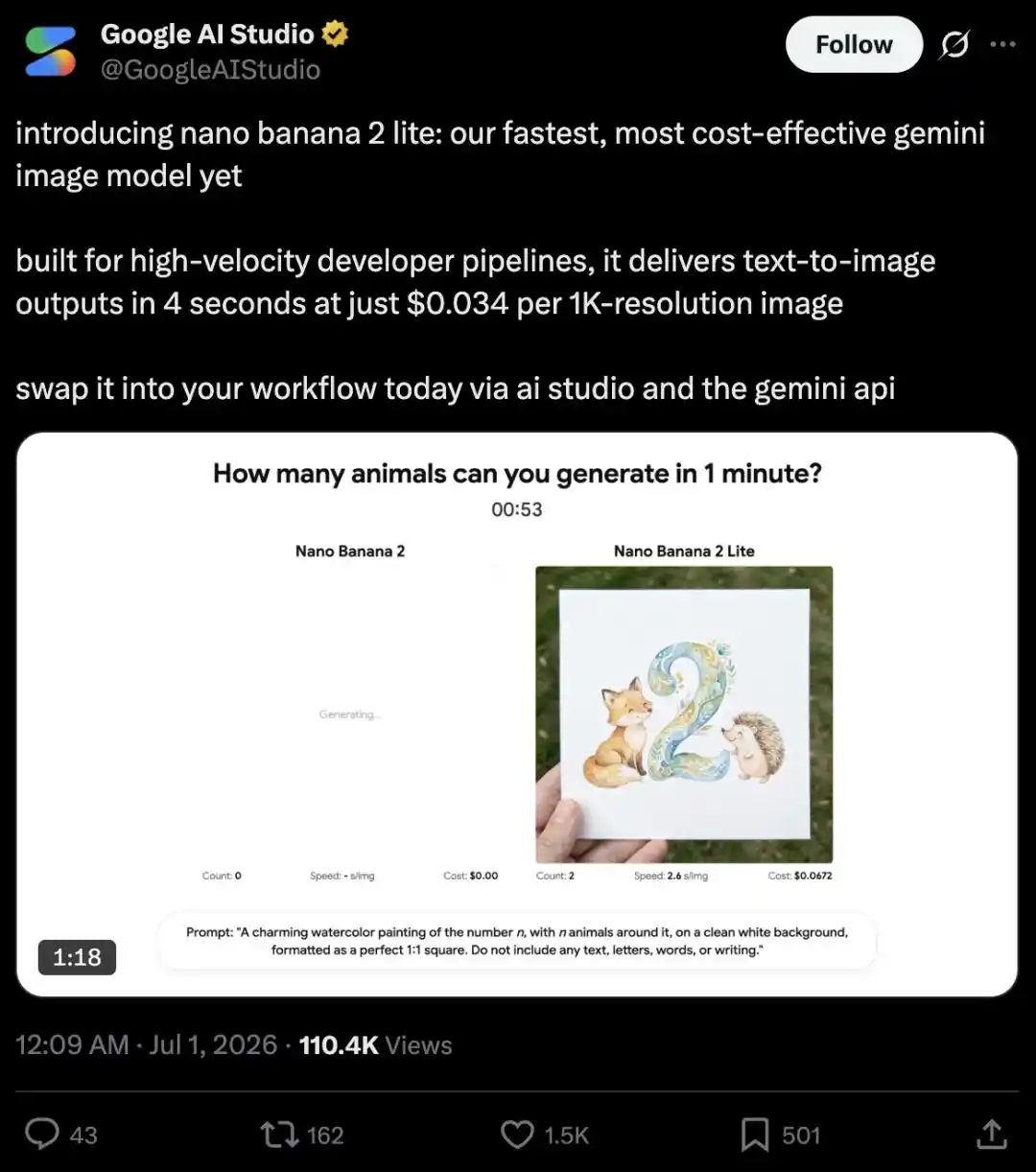
Compared side-by-side with Nano Banana 2, this speed is practically taking off.

Not to mention GPT Image 2, which takes 3 minutes for a single image generation...

No wonder Gemini 3.5 Pro hasn't been released yet—they probably spent all their time on their beloved multimodality, right, Hassabis!!

Gemini Omni Flash

First unveiled at Google I/O 2026, Gemini Omni Flash deeply integrates Gemini's multimodal reasoning capabilities with video generation and editing, garnering significant attention then.

Now, this model is officially available to developers via the Gemini API and Google AI Studio. It can easily generate and edit high-quality videos based on various inputs like text, images, and video.

Four key capabilities:

Conversational Video Editing: Modify and refine videos using natural language, just like editing a Lark document.

Multimodal Reference: Combine image, text, and video inputs to maintain scene control and consistency.

Real-World Knowledge: Leverage Gemini's knowledge in history, biology, narrative logic, etc., to construct videos, saving you from writing three pages of prompts to describe architectural styles.

Text and Action Synchronization: Connect text and graphics directly to video actions through simple prompts.
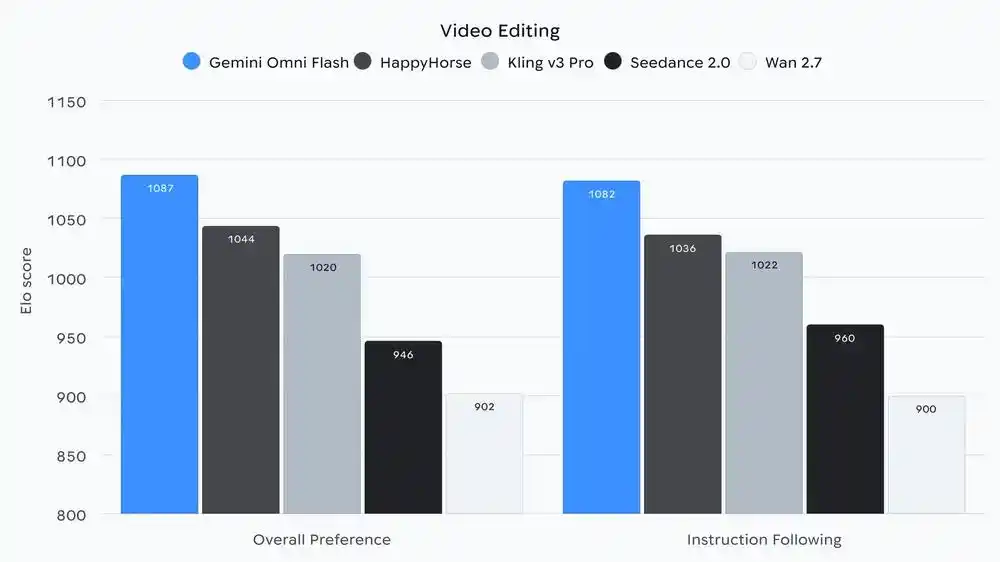
The pricing is also very competitive: $0.10 per second of video output, on par with Veo 3.1 Fast.

In terms of positioning, Omni Flash, also a lightweight video generation model, emphasizes Gemini's world knowledge and fully aligns with the Gemini ecosystem.

But Google is also quite candid, proactively listing a bunch of current limitations:

1. Currently only supports 10-second video generation; longer support will come later.

2. Does not yet support audio reference uploads or scene expansion.

3. The API supports video reference uploads up to 3 seconds, but the model currently cannot correctly process such inputs.

4. There are still limitations in character consistency during scene changes and camera movements.

Nano Banana 2 Lite

Nano Banana 2 Lite (also known as gemini-3.1-flash-lite-image) is designed specifically for high-speed processing.

Through targeted optimization, it aims at real-time application scenarios that are extremely sensitive to latency and require processing large volumes of images in a short time—such as bulk generation of e-commerce materials, rapid iteration of ad creatives, and automated content pipelines.

Two core selling points—

Lightspeed: Image generation latency is about 4 seconds, one-fifth of Nano Banana 2's (which is about 20 seconds).

Dirt Cheap: A 1K image costs about $0.034, half the price of Nano Banana 2 and one-quarter of Nano Banana Pro.

Speed and price are cut, but image generation and editing capabilities haven't noticeably shrunk. Nano Banana 2 Lite still maintains excellent text rendering effects, benchmarking on par with models like Grok.
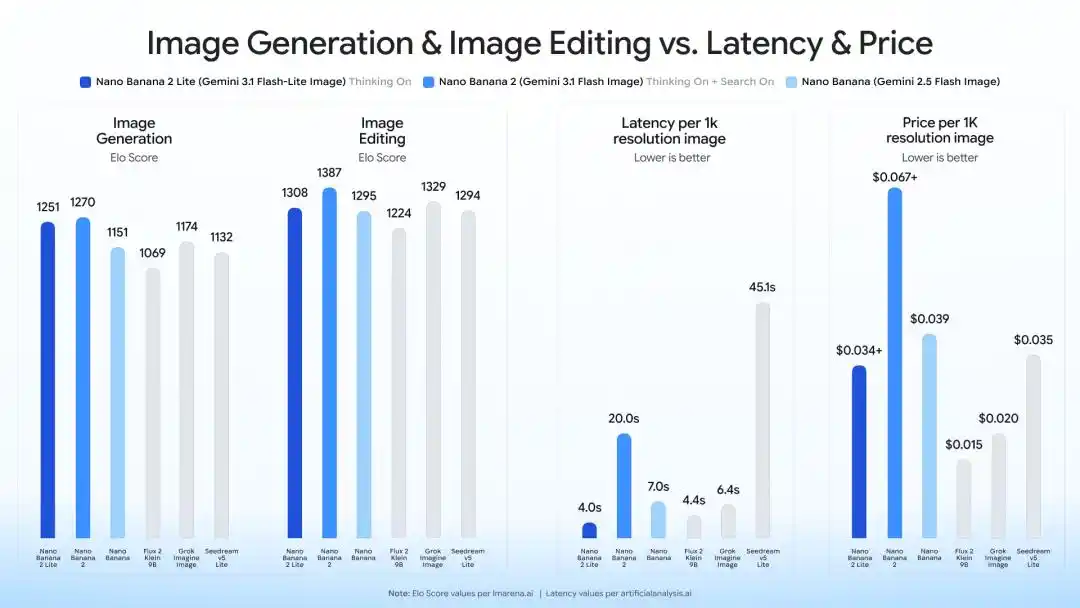
Therefore, Google's suggestion is: If you're still cheaping out with the first-gen Nano Banana, swap it now. The Lite version already comprehensively outperforms it in all key metrics.

Twin Blades United

Wait, hold on.

You might think this is just the parallel release of two models, but Google indicates there's more.

The real magic lies in chaining these models together.

As we all know, AIGC creation requires repeated iteration, and asset management can be quite troublesome.

Now, with these two models, you no longer need to repeatedly upload files—image generation and video creation are seamlessly connected.

Specifically, you can first use Nano Banana 2 Lite to generate images at high speed, then feed the generated images as reference material to Gemini Omni Flash to transform them into videos with one click.

To showcase this magical 1+1>2 workflow, Google even created 3 Demo APPs:

1、Anywhere

Take a selfie or upload a photo, and NB2 Lite instantly Photoshopped you into dozens of landmark scenes.

Then click on the image, and Omni Flash turns the static scene into a dynamic short video.

Cyber tourism, now also end-to-end.

2、Space Lift

This is a bit scary. Combined with the Genie world model in the future, it might threaten many traditional interior design SaaS companies.

Upload a photo of a room. NB2 Lite first generates various interior design styles. Find one you like, click the video button, and Omni can directly create a cinematic space walkthrough for you.

3、Omni product studio

A boon for cross-border e-commerce.

Take a white-background photo of a product. NB2 Lite generates various contextual product images. Omni Flash then turns the static images into e-commerce short videos.

From "product" to "advertising material", the entire chain runs automatically.

So, what's the use of multimodality anyway?

Google has surely been asked this countless times.

Especially in 2026, where Coding ability has become almost synonymous with model intelligence. Everyone is fiercely competing in Coding.

Obsessing over multimodality, for what?

Forget the whole AGI narrative for a moment. In the short term, Google's suite of multimodal models can indeed empower many of its products—Stitch is one, the built-in photo editing in Pixel is another, and the emergence of NotebookLM was quite impressive.

The two new models released this time reveal even more potential for multimodality to land in vertical scenarios. E-commerce, interior design, short videos... the demand in these businesses is real, and so is the money.

Plus, with the Android ecosystem supporting it, there's little worry about commercialization.

Google might not catch up in Coding for now, but at the multimodality poker table, Google might be the only player with a full deck.

But...

When is Gemni 3.5 Pro coming out already!!!
Reference:[1]https://blog.google/innovation-and-ai/models-and-research/gemini-models/gemini-omni-flash-nano-banana-2-lite/

This article comes from the WeChat public account "QbitAI", author: Following Cutting-Edge Tech

Tiền kỹ thuật số thịnh hành

Câu hỏi Liên quan

QWhat are the two new Gemini models announced, and what are their primary functions?

ATwo new models are announced: Gemini Omni Flash and Nano Banana 2 Lite. Gemini Omni Flash is a multimodal video generation and editing model that can create videos from text, image, and video inputs. Nano Banana 2 Lite is an ultra-fast and cost-effective image generation model.

QWhat are the key features and performance claims for the Nano Banana 2 Lite image model?

ANano Banana 2 Lite is claimed to be the fastest and most cost-effective Gemini image model. It generates a 1K resolution image in about 4 seconds at a cost of approximately $0.034 per image. It maintains strong text rendering capabilities while being significantly faster and cheaper than its predecessor.

QHow does Gemini Omni Flash leverage its 'world knowledge' capability, and what is one of its stated limitations?

AGemini Omni Flash can call upon Gemini's knowledge in areas like history, biology, and narrative logic to inform video generation, reducing the need for detailed user prompts. One stated limitation is that it currently only supports generating videos up to 10 seconds in length, with longer support planned for the future.

QAccording to the article, how can the two models be used together in a workflow? Provide one example.

AThe models can be used in a seamless 'image-to-video' workflow. For example, you can first use Nano Banana 2 Lite to quickly generate an image (like a product scene). Then, you can feed that generated image as a reference directly into Gemini Omni Flash to create a video based on it, eliminating the need to manually upload files between steps.

QWhat is the article's perspective on Google's focus on multimodal AI compared to coding capabilities?

AThe article suggests that while Google may be lagging in the 'Coding' race (often used as a proxy for model intelligence), it is a strong contender in multimodal AI. It argues that multimodal models have clear, immediate commercial applications in fields like e-commerce and content creation, and Google, with its ecosystem, is well-positioned to capitalize on this.

Nội dung Liên quan

Justin Sun tuyên chiến với altcoin: 'Nó đóng băng tài sản người dùng thông qua tính năng ẩn'

Justin Sun tuyên bố rằng stablecoin $USD1 của World Liberty Financial có chứa "tính năng backdoor" cho phép đóng băng hoặc tiêu hủy tài sản người dùng. Trong một tuyên bố trên X, ông cho biết đã ngăn thành công nỗ lực của công ty này đưa vụ việc ra trọng tài riêng và khẳng định vụ kiện sẽ tiếp tục được xét xử công khai tại tòa án liên bang California. Sun tiết lộ rằng trong quá trình tố tụng, ông phát hiện $USD1 có cơ chế ủy quyền tương tự, cho phép World Liberty kiểm soát tài sản người dùng bất cứ lúc nào. Ông cảnh báo người dùng $USD1 về rủi ro lớn này, đặc biệt trong mô hình stablecoin tập trung, và cáo buộc World Liberty đã sẵn sàng sử dụng quyền lực tương tự với chủ sở hữu token WLFI trước đây. Ông cũng đặt câu hỏi về tình hình tài chính của World Liberty, cho rằng khoản dự trữ khoảng 4 tỷ USD của $USD1 thuộc về người dùng và không thể dùng để thanh toán các khoản nợ tiềm tàng hàng trăm triệu USD của công ty. Sun tuyên bố không thấy bằng chứng nào cho thấy World Liberty có đủ vốn để đáp ứng các nghĩa vụ pháp lý, ngoài khoản dự trữ 1:1, và kêu gọi nhà đầu tư "cực kỳ thận trọng". Cho đến nay, World Liberty Financial chưa có phản hồi chính thức về các cáo buộc này. Tất cả tuyên bố của Sun vẫn chỉ là cáo buộc chưa được chứng minh.

cryptonews.ru37 phút trước

Justin Sun tuyên chiến với altcoin: 'Nó đóng băng tài sản người dùng thông qua tính năng ẩn'

cryptonews.ru37 phút trước

MiCA sắp áp dụng cho các hầm chứa DeFi, nhưng việc điều chỉnh sẽ khó khăn

MiCA, bộ khung quy định về tài sản tiền mã hóa của EU, ban đầu chưa bao gồm hoạt động cho vay tiền mã hóa. Ủy ban châu Âu hiện đang tham vấn về việc có đưa lĩnh vực này, bao gồm các dịch vụ tài chính phi tập trung (DeFi) và các khoản vay crypto, vào phạm vi quản lý hay không. Một thách thức lớn là việc phân loại và quản lý các "vault" (kho tiền) cho vay trên blockchain. Các vault này có chức năng kinh tế tương tự cho vay nhưng hoạt động thông qua hợp đồng thông minh và nhiều bên tham gia, chứ không phải một công ty đơn lẻ, khiến việc xác định "nhà cung cấp dịch vụ" chịu trách nhiệm trở nên phức tạp. Các chuyên gia pháp lý chỉ ra rằng luật EU hiện không có định nghĩa rõ ràng cho "vault". Việc quy định cần dựa trên chức năng thực tế chứ không phải tên gọi. Có ý kiến cảnh báo không nên gộp chung "cho vay DeFi" thành một danh mục quy định duy nhất, vì sẽ bao gồm cả những cấu trúc có chức năng và mức độ kiểm soát hoàn toàn khác biệt. Câu hỏi then chốt là ai sẽ là đối tượng bị điều chỉnh. Một đề xuất là dựa vào mức độ phi tập trung, nhưng điều này có thể bất lợi cho các giao thức mới. Giải pháp khác là tập trung vào cấu trúc vault và quyền kiểm soát thực tế của con người đối với nó. Nhiều ý kiến nhấn mạnh rằng nếu được quy định, cho vay DeFi cần một khung riêng biệt, phù hợp với đặc thù khác biệt so với tài chính truyền thống. Thách thức của Brussels không chỉ là có nên quy định hay không, mà là làm thế nào để xây dựng các quy tắc phân biệt được các hình thức cho vay onchain khác nhau và xác định rõ ràng các bên thực sực kiểm soát chúng. Kết quả tham vấn sẽ quyết định số phận pháp lý của các lending vault trong tương lai.

cointelegraph1 giờ trước

MiCA sắp áp dụng cho các hầm chứa DeFi, nhưng việc điều chỉnh sẽ khó khăn

cointelegraph1 giờ trước

Báo cáo Grayscale: Trong kỷ nguyên AI, quyền riêng tư tài chính – Tại sao Zcash không nên bị bỏ qua?

**Báo cáo Grayscale: Sự riêng tư tài chính trong thời đại AI, Tại sao Zcash không nên bị bỏ qua?** Grayscale Research nhận định chúng ta đang ở bên bờ của làn sóng thứ ba về mối quan tâm công chúng đến quyền riêng tư tài chính, được thúc đẩy bởi sự phổ biến của stablecoin, ứng dụng blockchain và các phương tiện giám sát tài chính mới do AI tạo ra. Trong bối cảnh đó, Zcash - một loại tiền kỹ thuật số phi tập trung với cơ chế bảo mật vững chắc - xuất hiện. Trong khi Bitcoin minh bạch nhưng thiếu tính riêng tư, Zcash cung cấp các giao dịch được che chắn (shielded transactions) sử dụng bằng chứng không tiết lộ thông tin (zero-knowledge proof) để ẩn người gửi, người nhận và số tiền, đồng thời vẫn cho phép tiết lộ có chọn lọc khi cần. Bài viết nêu bật sự phát triển của Zcash từ một dự án mang tính lý thuyết ban đầu trở thành một giao thức khả dụng nhờ các bản nâng cấp lớn như Sapling (2018) và Orchard/NU5 (2022), cải thiện đáng kể khả năng sử dụng. Cơ sở hạ tầng như ví Zodl và các đề xuất kỹ thuật như Tachyon (mở rộng quy mô) và Crosslink (tăng cường độ tin cậy) nhằm mục đích thúc đẩy việc áp dụng quy mô lớn. Về định giá, ZEC (token của Zcash) hiện chỉ chiếm khoảng 0,6% thị phần trong lĩnh vực tiền kỹ thuật số, cho thấy thị trường đánh giá thấp nhu cầu về quyền riêng tư. Tuy nhiên, dữ liệu trên chuỗi cho thấy nhu cầu thực tế: tính đến tháng 7/2026, ~90% tổng số giao dịch Zcash là các giao dịch được che chắn, với ~25% nguồn cung lưu thông nằm trong các nhóm che chắn. Bài viết kết luận rằng cơ hội cho các nhà đầu tư không nằm ở việc Zcash thay thế Bitcoin, mà ở việc giá trị của tiền kỹ thuật số riêng tư vẫn chưa được thị trường nhận thức đầy đủ. Tuy nhiên, các rủi ro như môi trường quy định, các vấn đề kế thừa từ thiết lập tin cậy ban đầu và rủi ro thực thi lộ trình công nghệ cần được xem xét.

marsbit3 giờ trước

Báo cáo Grayscale: Trong kỷ nguyên AI, quyền riêng tư tài chính – Tại sao Zcash không nên bị bỏ qua?

marsbit3 giờ trước

OriginX Mang Đến Seoul Các Nhà Lãnh Đạo Bitcoin Từ 22 Quốc Gia Và Hơn 70 Đối Tác Cho ORIGIN SEOUL 2026

OriginX, một công ty Bitcoin bản địa có trụ sở tại Seoul, sẽ tổ chức hội nghị ORIGIN SEOUL 2026 vào ngày 1 và 2 tháng 9 tại SKY31 Convention, Tòa tháp Lotte World. Sự kiện quy tụ các nhà lãnh đạo, doanh nhân và nhà phát triển Bitcoin từ 22 quốc gia, cùng hơn 70 đối tác bao gồm các công ty, tổ chức truyền thông và cộng đồng. Các nhà tài trợ và đối tác chính gồm Satori Coin, SmashFi, MoneyToday, LifPay và nhiều tổ chức toàn cầu khác. Chương trình nghị sự được chia thành hai phần chính: Ngày Công nghiệp (1/9) thảo luận về cấu trúc ngành Bitcoin đang thay đổi, như đầu tư thể chế, ETF, tài chính Bitcoin bản địa và hạ tầng khai thác. Ngày Cộng đồng (2/9) tập trung vào phân tích thị trường, tự lưu giữ tiền mã hóa, công việc xây dựng cộng đồng lâu dài và các bài thuyết trình từ các chuyên gia như James Check (Checkonchain) và Teruko Neriki. Hội nghị mở rộng với 14 sự kiện bên lề trên khắp Seoul từ ngày 29/8, bao gồm hội thảo, chuyến du thuyền trên sông Hán và sự kiện chạy bộ cộng đồng "Run for Hal". ORIGIN SEOUL còn kết nối với Bitcoin Asia tại Hồng Kông để tạo thành Bitcoin Asia Week. OriginX, đơn vị tổ chức, điều hành Bitcoin House ORIGIN - không gian làm việc chung về Bitcoin lớn nhất Hàn Quốc. Hội nghị này là đỉnh cao cho các hoạt động cộng đồng, giáo dục và kết nối toàn cầu mà họ xây dựng quanh năm.

TheNewsCrypto3 giờ trước

OriginX Mang Đến Seoul Các Nhà Lãnh Đạo Bitcoin Từ 22 Quốc Gia Và Hơn 70 Đối Tác Cho ORIGIN SEOUL 2026

TheNewsCrypto3 giờ trước

Giao dịch

Giao ngay

Bài viết Nổi bật

Làm thế nào để Mua 4

Chào mừng bạn đến với HTX.com! Chúng tôi đã làm cho mua 4 (4) trở nên đơn giản và thuận tiện. Làm theo hướng dẫn từng bước của chúng tôi để bắt đầu hành trình tiền kỹ thuật số của bạn.Bước 1: Tạo Tài khoản HTX của BạnSử dụng email hoặc số điện thoại của bạn để đăng ký tài khoản miễn phí trên HTX. Trải nghiệm hành trình đăng ký không rắc rối và mở khóa tất cả tính năng. Nhận Tài khoản của tôiBước 2: Truy cập Mua Crypto và Chọn Phương thức Thanh toán của BạnThẻ Tín dụng/Ghi nợ: Sử dụng Visa hoặc Mastercard của bạn để mua 4 (4) ngay lập tức.Số dư: Sử dụng tiền từ số dư tài khoản HTX của bạn để giao dịch liền mạch.Bên thứ ba: Chúng tôi đã thêm những phương thức thanh toán phổ biến như Google Pay và Apple Pay để nâng cao sự tiện lợi.P2P: Giao dịch trực tiếp với người dùng khác trên HTX.Thị trường mua bán phi tập trung (OTC): Chúng tôi cung cấp những dịch vụ được thiết kế riêng và tỷ giá hối đoái cạnh tranh cho nhà giao dịch.Bước 3: Lưu trữ 4 (4) của BạnSau khi mua 4 (4), lưu trữ trong tài khoản HTX của bạn. Ngoài ra, bạn có thể gửi đi nơi khác qua chuyển khoản blockchain hoặc sử dụng để giao dịch những tiền kỹ thuật số khác.Bước 4: Giao dịch 4 (4)Giao dịch 4 (4) dễ dàng trên thị trường giao ngay của HTX. Chỉ cần truy cập vào tài khoản của bạn, chọn cặp giao dịch, thực hiện giao dịch và theo dõi trong thời gian thực. Chúng tôi cung cấp trải nghiệm thân thiện với người dùng cho cả người mới bắt đầu và người giao dịch dày dạn kinh nghiệm.

Tổng lượt xem 801Xuất bản vào 2025.10.20Cập nhật vào 2026.06.02

Làm thế nào để Mua 4

Thảo luận

Chào mừng đến với Cộng đồng HTX. Tại đây, bạn có thể được thông báo về những phát triển nền tảng mới nhất và có quyền truy cập vào thông tin chuyên sâu về thị trường. Ý kiến ​​của người dùng về giá của 4 (4) được trình bày dưới đây.

活动图片