Dialogue with IOTA Foundation's Jens: From Kenya to the UK, TWIN Propels Global Trade into the '5-Minute' Era

marsbitXuất bản vào 2026-06-30Cập nhật gần nhất vào 2026-06-30

Tóm tắt

**Summary: IOTA's TWIN Project is Speeding Up Global Trade** Jens Munch Lund-Nielsen, Head of Global Trade & Supply Chain at the IOTA Foundation, discusses how the TWIN (Trade and Logistics Information Network) project is addressing long-standing inefficiencies in global trade. Traditionally, cross-border trade involves numerous parties, extensive paperwork, and delays spanning weeks. TWIN, built on IOTA's decentralized, scalable, and low-cost infrastructure, aims to replace this fragmented, paper-based system with a real-time, trusted, and interconnected digital collaboration layer. As a neutral digital public infrastructure, TWIN allows governments, businesses, and ports to exchange verifiable data and documents without ceding control to a single entity. This solves a core coordination problem that previous, proprietary platforms failed to address due to a lack of trust and neutrality. Key real-world implementations include: * **TLIP in East Africa:** Reduced document retrieval times for flower, coffee, and tea exports from 6-7 hours to ~30 minutes, cutting administrative work by 50-60%. * **UK Ecosystem of Trust Trials:** Provided border agencies with much earlier visibility (up to 20+ hours) of incoming chilled poultry shipments from Poland, enabling better resource planning. * Other pilots focus on supply chain traceability for fruits/vegetables, port efficiency, and critical mineral sourcing. TWIN ensures interoperability across jurisdictions by adopting globa...

Author: Deep Tide TechFlow

As early as 2015, institutions including the World Economic Forum (WEF) and Barclays predicted:

Blockchain holds immense transformative potential within the high-friction global trade system.

Previously, a cross-border trade transaction typically involved 30 stakeholders, 36 documents, and 240 paper copies circulating over weeks; now, flowers exported from Kenya to Europe can have their trade documents obtained in less than 5 minutes.

This is the efficiency being progressively achieved by the blockchain protocol project IOTA through TWIN, a global trade digital collaboration infrastructure.

Since its launch in May 2025, TWIN has made breakthrough progress across three continents: in Africa, processing over 184,000 invoices through TLIP; piloting within UK border infrastructure; and currently negotiating pilot projects with government and enterprise in Asia.

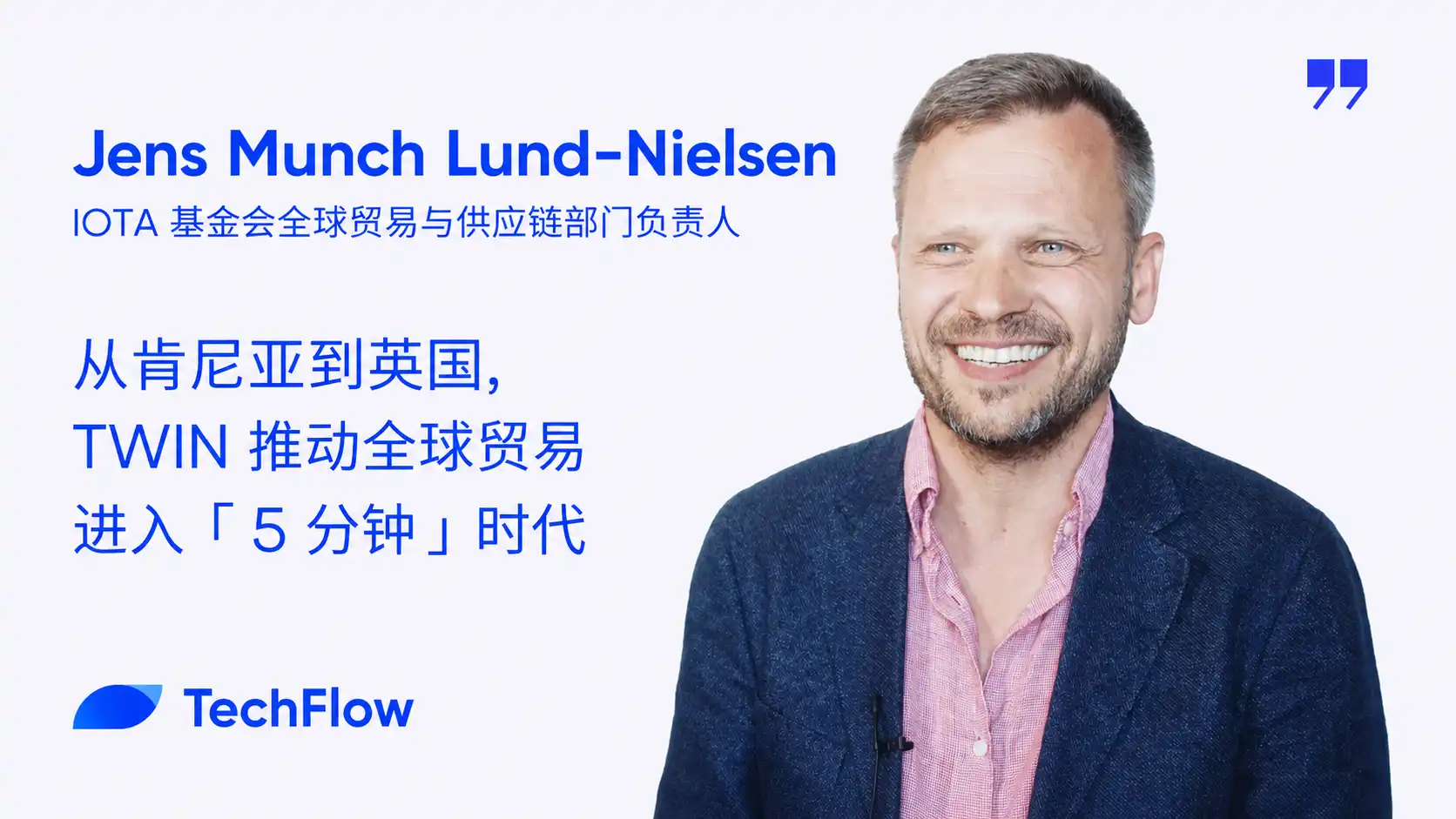
On the occasion of TWIN's first anniversary, we had an in-depth conversation with Jens Munch Lund-Nielsen, Head of Global Trade & Supply Chain at the IOTA Foundation.

Before joining the IOTA Foundation, Jens worked in the strategy office of Maersk, one of the world's largest shipping companies, focusing on digital trade and public-private partnerships. There, he witnessed firsthand how the global trade system truly operates: vast but inefficient, high-friction and fragmented, with no single party able to truly coordinate everyone.

This experience gave Jens a clearer realization: global trade needs an open, neutral, decentralized infrastructure that supports multiple participants—governments, enterprises, ports—to exchange trusted data in real-time within the same system. This also became the core reason Jens chose to join the IOTA Foundation:

To drive TWIN's development, to move global trade from paper-based, siloed processes towards truly real-time, trusted, and interconnected digital collaboration workflows.

In this content, let's follow Jens's insights to see what, in the eyes of this seasoned trade professional, the real answer has been for the over-decade-long stagnation of global trade digitalization.
From Paper to Chain: Building a Global Trade Digital Collaboration Infrastructure

Deep Tide TechFlow: Before delving into TWIN, could you first briefly introduce yourself, including your background in global trade, and what was the opportunity that led you to join the TWIN project?

Jens:

Hello everyone, I am Jens Munch Lund-Nielsen, currently serving as Head of Global Trade & Supply Chain at the IOTA Foundation.

My background is primarily focused on technology, trade facilitation, and digital trade, with a particular emphasis on building digital products and supporting their global rollout and implementation.

Before joining IOTA, I served as Head of Digital Trade within Maersk's strategy office, focusing on integrating trade facilitation, public-private partnerships, and digital solutions into global supply chains.

The opportunity to work on TWIN appealed to me because I saw it as a unique chance to address long-standing structural inefficiencies in global trade through trusted digital systems and interoperable technology.

Deep Tide TechFlow: For those unfamiliar with the project, how would you describe TWIN? What is its core essence?

Jens:

At its essence, TWIN is a neutral digital infrastructure for global trade.

Today's trade system operates on fragmented systems and paper-based processes because no single party can coordinate all participants.

TWIN changes this: it provides a common foundational layer where businesses, governments, and various organizations can exchange data, documents, and assets in real-time and securely.

TWIN is an open, interoperable network that connects existing systems, reinforces trust through verifiable data, and enables cross-jurisdictional compliance without relying on a centralized owner.

Built on IOTA, TWIN combines distributed ledger technology with decentralized identity systems, ensuring each participant always retains control over their own data while enabling global collaboration.

Simply put:

TWIN is the infrastructure that moves global trade from paper-based, siloed operations towards real-time, trusted, and interconnected digital collaboration workflows.

Deep Tide TechFlow: What specific problem in global trade is TWIN dedicated to solving? Why has this problem remained unsolved for so long?

Jens:

Fundamentally, TWIN addresses a core coordination problem in global trade: the lack of a common, trusted infrastructure that all participants can use to seamlessly exchange data.

Today, trade still heavily relies on paper documents and fragmented systems. Information is repeatedly entered, delayed, and often inconsistent as it moves between exporters, importers, banks, ports, and customs authorities. This creates inefficiencies, increases risks, and limits supply chain transparency.

This problem has persisted, not due to a lack of technology, but due to a lack of 'neutrality'.

Most previous attempts at trade digitalization have essentially involved building permissioned platforms, often driven by specific companies, regions, or interest groups. While these solutions may be technically viable, they face a structural issue:

Other participants are often reluctant to adopt infrastructure perceived as 'controlled by others.' Without widespread trust and adoption, these systems fail to achieve the network effect scale required for global trade.

TWIN takes a different path. It offers an open, neutral, decentralized infrastructure where no single party owns or controls the entire system. This allows all participants to share data while retaining their sovereignty and meeting their respective regulatory requirements.

Scalable, Low-Cost, Decentralized: IOTA Underpins the TWIN Architecture

Deep Tide TechFlow: Why was IOTA chosen as the underlying infrastructure for TWIN?

Jens:

IOTA was chosen as the underlying infrastructure for TWIN because it meets the core requirements of a global trade system: scalability, cost-efficiency, and neutrality.

Built on a DAG architecture, IOTA offers high scalability, capable of processing a massive volume of transactions and data exchanges in parallel, which is crucial for global trade where millions of events, documents, and updates occur continuously across supply chains.

It also provides extremely low transaction costs, which is vital in trade scenarios due to the high-frequency interactions involved. If every document update, verification, or data exchange incurred a significant fee, costs would quickly become prohibitive at scale.

Beyond the technology itself, IOTA brings over a decade of experience building real-world infrastructure and a solid track record of delivery through collaboration with governments, enterprises, and standardization bodies.

Furthermore, and importantly, IOTA is designed as an open, neutral infrastructure, not controlled by a single corporate entity. This aligns perfectly with the fundamental needs of global trade, where trust and sovereignty are key prerequisites for adoption by diverse stakeholders.

Deep Tide TechFlow: How should we understand the relationship between TWIN and IOTA? Is TWIN an application layer, an ecosystem, or something more macro?

Jens:

The most appropriate way to understand TWIN is as a digital public infrastructure for global trade—a shared data and coordination layer connecting governments, businesses, and existing platforms.

Simply put, TWIN enables parties to exchange verified, immutable data across borders in real-time without relinquishing control.

IOTA sits underneath as the underlying infrastructure layer. It provides the decentralized trust layer, ensuring data integrity, auditability, and interoperability at scale.

From African Flowers to European Poultry: TWIN's Real-World Trade Scenario Implementations

Deep Tide TechFlow: What are the most concrete, real-world application scenarios currently being explored or implemented through TWIN?

Jens:

TWIN is already deployed in multiple real-world trade scenarios, effectively demonstrating how shared digital infrastructure reduces friction, increases transparency, and enhances efficiency in global supply chains.

The Trade and Logistics Information Pipeline (TLIP) project connects East African exporters, logistics service providers, and government agencies to a shared data pipeline. In pilot projects covering flower, coffee, and tea exports, document retrieval time for inspection purposes reduced from 6-7 hours to about 30 minutes, administrative workload decreased by 50%-60%, and exporters saved approximately $400 monthly on document processing costs.

TWIN was also tested in the UK government's 'Ecosystem of Trust Trials', involving around 2000 consignments of chilled poultry meat shipped from Poland to the UK. Border agencies gained earlier visibility of arriving goods (port health officials received data up to 20+ hours earlier than standard processes), enabling more effective resource allocation.

The UK's 'Digital Trade Testbed' will also trial TWIN to support the exchange of digital international trade information between UK ports and key border agencies.

Other implementation scenarios include:

The RESULD (Responsible Supply Chain and Logistics Due Diligence) project integrates TWIN for tracing fruit and vegetable supply chains between Kenya, the Netherlands, and the UK;

The MISSION (Maritime Instantaneous Optimisation) project is trialing TWIN to improve port operational efficiency;

Salus leverages TWIN to bring traceability to critical mineral supply chains, turning shipping and trade documents into verifiable digital assets for financial institutions to use in risk assessment and issuing trade finance;

Furthermore, the ADAPT project, led by the African Continental Free Trade Area Secretariat in collaboration with the IOTA Foundation, the Tony Blair Institute for Global Change, and the World Economic Forum, is advancing the development of a digital trade backbone for Africa, drawing on IOTA's architecture and TWIN's experience.

Deep Tide TechFlow: What are the typical reactions from governments and enterprises when they first encounter TWIN? Which areas currently show the highest acceptance?

Jens:

Upon encountering TWIN, governments and enterprises generally recognize its significant value.

On the government side, departments most directly involved in trade, such as Trade Ministries and Customs authorities under Finance Ministries, clearly perceive TWIN's immense potential to improve internal clearance processes, strengthen border control, and obtain better access to trusted data to prevent unauthorized or non-compliant goods from entering.

Within the private sector, the highest participation currently comes from transport service providers and freight forwarders, as they already handle a large volume of border and documentation processes on behalf of producers and growers. The broader industry also shows a similar level of anticipation and interest in the value TWIN can create.

At the same time, a crucial point to emphasize is: TWIN's true value derives from the network itself. The more participants connected to TWIN, the greater the value created by the entire system for all involved.

Deep Tide TechFlow: Trade is highly fragmented across different jurisdictions. How does TWIN handle interoperability between different systems, standards, and regulatory environments?

Jens:

International interoperability is one of TWIN's most critical value drivers, operating on multiple levels, a significant part of which involves ensuring systems 'speak the same language'.

To this end, we adopt globally recognized standards, such as data models from the United Nations Centre for Trade Facilitation and Electronic Business (UN/CEFACT) and the World Customs Organization (WCO), further supported and refined through the International Chamber of Commerce's Digital Standards Initiative (ICC DSI).

In terms of identity, interoperability is primarily driven by national identity registries. Through TWIN ID, we can connect a company's national-level digital identity with international standards, such as the Legal Entity Identifier (LEI) issued by the Global Legal Entity Identifier Foundation (GLEIF), which is also a partner in this initiative.

From a technical perspective, we also observe increasing convergence around standards like Decentralized Identifiers (DIDs) and Verifiable Credentials as defined by the World Wide Web Consortium (W3C).

Finally, legal interoperability is equally important. The United Nations Commission on International Trade Law (UNCITRAL) Model Law on Electronic Transferable Records (MLETR) framework is driving the legal recognition of digital trade documents, though its adoption depends on government ratification in each country.

Our experience is that work can begin even in countries that have not yet ratified MLETR; in such cases, we also assist governments in advancing this process, especially given the growing importance of this framework for trade finance scenarios.

Bridging Digital Silos, Filling the $2.5 Trillion Trade Finance Gap

Deep Tide TechFlow: How do you see global trade evolving over the next 5 to 10 years? What role will decentralized infrastructure play in this transformation?

Jens:

The international trade industry is vast and has been undergoing digital transformation over the past 10 to 15 years, with governments and enterprises upgrading their systems around standardized data models and the use of REST APIs. The missing piece today is connecting these 'digital silos' in a way that respects data sovereignty, data integrity, and controlled data sharing.

We are currently advancing projects in over eight countries, working closely with governments, and continue to see strong interest in this area. Therefore, I am optimistic:

In the coming years, a trusted 'connective layer' linking these systems will truly materialize and scale. Its potential impact on global trade, finance, and international trade agreements could be profound, making it an area especially worthy of attention.

Deep Tide TechFlow: If TWIN achieves large-scale success, what do you imagine its 'end state' would look like? Compared to today, how would global trade operate differently?

Jens:

Simply put, as global trade moves towards fully digital collaboration, many outdated processes will be replaced. Key areas like discovering new business partners or accessing financing will look fundamentally different from today.

Currently, there is an estimated $2.5 trillion trade finance gap globally, preventing many businesses from accessing the capital they need to participate efficiently in global trade.

With digital infrastructure solutions like TWIN, trusted data and verifiable digitalized processes could help unlock access to capital at scale, potentially reshaping the entire industry landscape and improving conditions for traders worldwide.

Tiền kỹ thuật số thịnh hành

Câu hỏi Liên quan

QWhat is TWIN, and what core problem in global trade does it aim to solve?

ATWIN is a neutral, open digital infrastructure for global trade built on IOTA. Its core essence is to provide a common foundational layer where businesses, governments, and ports can exchange real-time, secure, and verifiable data and assets. It aims to solve the long-standing coordination problem in global trade: the reliance on fragmented systems and paper-based processes. This fragmentation arises because no single party can coordinate all participants. TWIN offers a decentralized solution, allowing seamless data exchange without a centralized controller, bridging the 'digital silos' and moving trade towards real-time, trusted, and interconnected digital collaboration.

QWhy was IOTA chosen as the underlying infrastructure for TWIN?

AIOTA was chosen for TWIN due to its scalability, cost-efficiency, and neutrality, which are critical for global trade. IOTA's Directed Acyclic Graph (DAG) architecture enables high scalability for handling massive volumes of concurrent transactions and data exchanges typical in supply chains. It offers extremely low transaction costs, essential for frequent trade interactions. Furthermore, IOTA's decade of experience in building real-world infrastructure and its status as an open, neutral protocol not controlled by any single entity aligns perfectly with the need for trust and sovereignty among diverse global trade stakeholders.

QCan you provide specific examples of real-world applications where TWIN is currently being deployed or tested?

AYes. TWIN is deployed in several real-world scenarios: 1) The Trade & Logistics Information Pipeline (TLIP) in East Africa connects exporters, logistics providers, and governments. In pilot projects for flowers, coffee, and tea, it reduced document retrieval time from 6-7 hours to ~30 minutes, cut administrative work by 50-60%, and saved exporters about $400 monthly. 2) It was tested in the UK's 'Ecosystem of Trust Trials' for chilled poultry shipments from Poland, giving border agencies visibility up to 20 hours earlier. 3) It's part of the UK's 'Digital Trade Testbed' for exchanging digital trade information between ports and border agencies. Other applications include the RESULD project for fruit/veg traceability, MISSION for port efficiency, Salus for critical mineral supply chain traceability and trade finance, and ADAPT for building a digital trade backbone in Africa.

QHow does TWIN handle interoperability between different jurisdictions, systems, and regulatory environments?

ATWIN ensures international interoperability on multiple levels. It adopts globally recognized data standards from bodies like UN/CEFACT and the World Customs Organization (WCO). For identity, it leverages national digital identity registries and aligns them with international standards like the Legal Entity Identifier (LEI) through its TWIN ID system. Technically, it converges around standards like W3C's Decentralized Identifiers (DIDs) and Verifiable Credentials. Legally, it supports frameworks like the UNCITRAL Model Law on Electronic Transferable Records (MLETR) to give digital trade documents legal recognition, while also assisting governments in adopting such laws where they are not yet in place.

QWhat potential impact could a successful, large-scale adoption of TWIN have on the future of global trade, particularly regarding trade finance?

ASuccessful large-scale adoption of TWIN could fundamentally transform global trade into a fully digitized, collaborative process. A key impact would be in addressing the global trade finance gap, estimated at $2.5 trillion. By providing trusted, verifiable data and digital processes, TWIN could unlock access to capital for businesses currently excluded. This would enable more efficient participation in global trade, reshape industry dynamics, and improve conditions for traders worldwide. Ultimately, the 'end state' would see outdated processes replaced, facilitating easier discovery of new business partners and revolutionizing access to financing.

Nội dung Liên quan

Số Địa Chỉ XRP Hoạt Động Tăng 72% Khi Đòn Bẩy Rút Khỏi Thị Trường Phái Sinh

XRP đã ghi nhận mức tăng 72% về số địa chỉ hoạt động hàng ngày trong hai tuần, diễn ra song song với việc giảm đòn bẩy suy đoán trên thị trường phái sinh. Sự kết hợp này cho thấy các tín hiệu trên chuỗi trở nên rõ ràng hơn, do hoạt động thị trường có thể ít phụ thuộc hơn vào các vị thế đòn bẩy và nhiều hơn vào hoạt động mạng thực tế. Việc gia tăng địa chỉ tích cực có thể phản ánh nhiều người dùng tương tác hơn với mạng lưới hoặc sự quan tâm trở lại. Điều này đặc biệt quan trọng với XRP, một tài sản thường bị ảnh hưởng bởi nhiều yếu tố. Thị trường với ít đòn bẩy hơn và hoạt động trên chuỗi mạnh hơn thường được coi là lành mạnh hơn. Tuy nhiên, số địa chỉ tăng không phải lúc nào cũng đồng nghĩa với nhu cầu mua tăng. Nó có thể bao gồm các giao dịch bảo trì ví, chuyển khoản sàn giao dịch hoặc hoạt động tự động. Do đó, việc đòn bẩy phái sinh giảm cùng lúc làm cho tín hiệu này đáng chú ý hơn. Nhìn chung, dữ liệu hiện tại là tích cực nhưng chưa thể khẳng định. Thị trường cần theo dõi xem liệu hoạt động địa chỉ có duy trì ở mức cao, khối lượng giao dịch có tăng theo và nhu cầu giao ngay có cải thiện mà không cần một làn sóng đòn bẩy mới hay không. Các phiên giao dịch sắp tới sẽ rất quan trọng để xác định xu hướng ngắn hạn của XRP.

bitcoinist39 phút trước

Số Địa Chỉ XRP Hoạt Động Tăng 72% Khi Đòn Bẩy Rút Khỏi Thị Trường Phái Sinh

bitcoinist39 phút trước

Mức độ hoạt động mạng gia tăng của Solana có thể thúc đẩy SOL vượt trên mức 82 USD như thế nào

Hoạt động trên mạng Solana đã tăng mạnh, với số ví hoạt động hàng ngày đạt mức cao kỷ lục 4,51 triệu. Sự gia tăng này được thúc đẩy bởi sự phát triển của cổ phiếu được mã hóa (tokenized equity), hoạt động xStocks và sự hồi phục trong lĩnh vực DeFi. Điều này cho thấy mạng lưới đang hỗ trợ giá nhờ vào việc sử dụng ngày càng tăng, chứ không chỉ do biến động giá. Tuy nhiên, sự phục hồi bền vững phụ thuộc vào việc người dùng mới có tiếp tục sử dụng nền tảng sau khi đợt tăng giá lắng xuống hay không. Việc mở rộng ứng dụng tài chính trong thế giới thực, như cổ phiếu được mã hóa, cùng với nguồn cung stablecoin cao và dòng vốn ổn định chảy vào hệ sinh thái (thể hiện qua TVL và khối lượng giao dịch DEX), đang củng cố tăng trưởng dài hạn cho Solana. Về mặt giá, SOL đã phục hồi, tăng 7.48% vào ngày 29/6, tiến gần đến việc chấm dứt chuỗi 9 tháng giảm giá liên tiếp. Tuy nhiên, vùng kháng cự quan trọng $78–$82 vẫn là thách thức lớn, từng khiến nhiều đợt tăng giá trước đó thất bại. Việc phá vỡ trên mức $82 có thể mở đường chinh phục mức $92, trong khi mức hỗ trợ then chốt cần giữ là $72 để duy trì cấu trúc thị trường tăng.

ambcrypto58 phút trước

Mức độ hoạt động mạng gia tăng của Solana có thể thúc đẩy SOL vượt trên mức 82 USD như thế nào

ambcrypto58 phút trước

SUI, ENA Và EIGEN Dẫn Đầu Làn Sóng Mở Khóa Token 73 Triệu USD Tuần Này

**TÓM TẮT** Tuần này, thị trường tiền mã hóa chứng kiến làn sóng mở khóa token trị giá 73 triệu USD, với các dự án SUI, EIGEN và ENA dẫn đầu. Cụ thể, SUI (13.72 triệu token, ~9.4 triệu USD) và EIGEN (36.82 triệu token, ~8.7 triệu USD) sẽ mở khóa vào ngày 1 tháng 7 năm 2026, trong khi ENA mở khóa ~3.12 triệu USD vào ngày 3 tháng 7 năm 2026. Điểm quan trọng cần lưu ý: Việc mở khóa không tự động dẫn đến bán tháo ngay lập tức, vì các nhà tạo lập thị trường thường phòng ngừa rủi ro từ trước cho các sự kiện cung cấp này. Đối với nhà giao dịch, thông tin này quan trọng vì nó ảnh hưởng đến cách định giá vốn, thanh khoản và sự tự tin trên toàn thị trường hiện nay. Các đợt mở khóa là sự kiện về nguồn cung mà trader không thể bỏ qua, đặc biệt với các tài sản có nhiều quan tâm đầu cơ như SUI, ENA và EIGEN. Chúng có thể định hình vị thế giao dịch ngắn hạn và thanh khoản xung quanh ngày phát hành. Tuy nhiên, cần hiểu đây là một tín hiệu thị trường, không phải sự đảm bảo cho biến động giá. Tác động thực tế thường lan tỏa sang các giao dịch liên quan và phụ thuộc nhiều vào bối cảnh thanh khoản tổng thể, dòng ETF và điều kiện vĩ mô. Điều cần theo dõi tiếp theo là liệu mô hình này có được xác nhận bởi các dòng tiền, số liệu on-chain, hoặc dữ liệu phái sinh tiếp theo hay không, để xác định đây là một chủ đề bền vững hay chỉ là một đợt biến động ngắn hạn.

bitcoinist1 giờ trước

SUI, ENA Và EIGEN Dẫn Đầu Làn Sóng Mở Khóa Token 73 Triệu USD Tuần Này

bitcoinist1 giờ trước

Upbit Niêm Yết Gensyn Khi Phong Trào Tiền Mã Hóa AI Nhận Được Sự Thúc Đẩy Từ Thị Trường Hàn Quốc

Upbit, sàn giao dịch tiền điện tử lớn của Hàn Quốc, đã thông báo hỗ trợ giao dịch cho token GEN của Gensyn, một dự án cung cấp tài nguyên GPU điện toán phi tập trung cho AI. Việc niêm yết này mang lại các cặp giao dịch GEN với Won Hàn Quốc, Bitcoin và USDT, mở ra cánh cửa tiếp cận thị trường bán lẻ crypto sôi động nhất thế giới. Bài viết nhấn mạnh rằng niêm yết trên Upbit có thể tạo ra sự chú ý và thanh khoản tức thời mạnh mẽ cho GEN, nhờ sự kết hợp giữa tính thanh khoản mới, sự quan tâm của nhà đầu tư bán lẻ và câu chuyện đầu cơ liên tục xoay quanh lĩnh vực AI trong crypto. Gensyn được định vị rõ ràng trong xu hướng này với đề xuất về một thị trường mở cho sức mạnh tính toán phục vụ AI. Tuy nhiên, tác giả cũng đưa ra lời cảnh báo: "hiệu ứng niêm yết" có thể cắt cả hai chiều, dẫn đến biến động giá mạnh và sự điều chỉnh sau đợt mua ban đầu. Giá trị lâu dài của GEN sẽ không phụ thuộc vào tin tức niêm yết mà vào hoạt động thực tế của mạng lưới, mức độ sử dụng, tính bền vững của cơ chế token và sức hấp dẫn liên tục của xu hướng AI. Dù vậy, việc được niêm yết trên một sàn lớn như Upbit chắc chắn là một chất xúc tác quan trọng, giúp dự án tiếp cận đối tượng rộng lớn hơn và khó bị các nhà giao dịch altcoin bỏ qua.

bitcoinist2 giờ trước

Upbit Niêm Yết Gensyn Khi Phong Trào Tiền Mã Hóa AI Nhận Được Sự Thúc Đẩy Từ Thị Trường Hàn Quốc

bitcoinist2 giờ trước

Giao dịch

Giao ngay

Bài viết Nổi bật

AGENT S là gì

Agent S: Tương Lai của Tương Tác Tự Động trong Web3 Giới thiệu Trong bối cảnh không ngừng phát triển của Web3 và tiền điện tử, các đổi mới đang liên tục định nghĩa lại cách mà cá nhân tương tác với các nền tảng kỹ thuật số. Một dự án tiên phong như vậy, Agent S, hứa hẹn sẽ cách mạng hóa tương tác giữa con người và máy tính thông qua khung tác nhân mở của nó. Bằng cách mở đường cho các tương tác tự động, Agent S nhằm đơn giản hóa các nhiệm vụ phức tạp, cung cấp các ứng dụng chuyển đổi trong trí tuệ nhân tạo (AI). Cuộc khám phá chi tiết này sẽ đi sâu vào những phức tạp của dự án, các tính năng độc đáo của nó và những tác động đối với lĩnh vực tiền điện tử. Agent S là gì? Agent S đứng vững như một khung tác nhân mở đột phá, được thiết kế đặc biệt để giải quyết ba thách thức cơ bản trong việc tự động hóa các nhiệm vụ máy tính: Thu thập Kiến thức Cụ thể theo Miền: Khung này học một cách thông minh từ nhiều nguồn kiến thức bên ngoài và kinh nghiệm nội bộ. Cách tiếp cận kép này giúp nó xây dựng một kho lưu trữ phong phú về kiến thức cụ thể theo miền, nâng cao hiệu suất của nó trong việc thực hiện nhiệm vụ. Lập Kế Hoạch Qua Các Tầm Nhìn Nhiệm Vụ Dài Hạn: Agent S sử dụng lập kế hoạch phân cấp tăng cường kinh nghiệm, một cách tiếp cận chiến lược giúp phân chia và thực hiện các nhiệm vụ phức tạp một cách hiệu quả. Tính năng này nâng cao đáng kể khả năng quản lý nhiều nhiệm vụ con một cách hiệu quả và hiệu suất. Xử Lý Các Giao Diện Động, Không Đều: Dự án giới thiệu Giao Diện Tác Nhân-Máy Tính (ACI), một giải pháp đổi mới giúp nâng cao tương tác giữa các tác nhân và người dùng. Sử dụng các Mô Hình Ngôn Ngữ Lớn Đa Phương Thức (MLLMs), Agent S có thể điều hướng và thao tác các giao diện người dùng đồ họa đa dạng một cách liền mạch. Thông qua những tính năng tiên phong này, Agent S cung cấp một khung vững chắc giải quyết các phức tạp liên quan đến việc tự động hóa tương tác giữa con người với máy móc, mở ra nhiều ứng dụng trong AI và hơn thế nữa. Ai là Người Tạo ra Agent S? Mặc dù khái niệm về Agent S là hoàn toàn đổi mới, thông tin cụ thể về người sáng lập vẫn còn mơ hồ. Người sáng lập hiện vẫn chưa được biết đến, điều này làm nổi bật giai đoạn sơ khai của dự án hoặc sự lựa chọn chiến lược để giữ kín các thành viên sáng lập. Bất chấp sự ẩn danh, sự chú ý vẫn tập trung vào khả năng và tiềm năng của khung này. Ai là Các Nhà Đầu Tư của Agent S? Vì Agent S còn tương đối mới trong hệ sinh thái mã hóa, thông tin chi tiết về các nhà đầu tư và những người tài trợ tài chính của nó không được ghi chép rõ ràng. Sự thiếu vắng thông tin công khai về các nền tảng đầu tư hoặc tổ chức hỗ trợ dự án dấy lên câu hỏi về cấu trúc tài trợ và lộ trình phát triển của nó. Hiểu biết về sự hỗ trợ là rất quan trọng để đánh giá tính bền vững và tác động tiềm năng của dự án. Agent S Hoạt Động Như Thế Nào? Tại cốt lõi của Agent S là công nghệ tiên tiến cho phép nó hoạt động hiệu quả trong nhiều bối cảnh khác nhau. Mô hình hoạt động của nó được xây dựng xung quanh một số tính năng chính: Tương Tác Giống Như Con Người: Khung này cung cấp lập kế hoạch AI tiên tiến, cố gắng làm cho các tương tác với máy tính trở nên trực quan hơn. Bằng cách bắt chước hành vi của con người trong việc thực hiện nhiệm vụ, nó hứa hẹn nâng cao trải nghiệm người dùng. Ký Ức Tường Thuật: Được sử dụng để tận dụng các trải nghiệm cấp cao, Agent S sử dụng ký ức tường thuật để theo dõi lịch sử nhiệm vụ, từ đó nâng cao quy trình ra quyết định của nó. Ký Ức Tình Huống: Tính năng này cung cấp cho người dùng hướng dẫn từng bước, cho phép khung này cung cấp hỗ trợ theo ngữ cảnh khi các nhiệm vụ diễn ra. Hỗ Trợ OpenACI: Với khả năng chạy cục bộ, Agent S cho phép người dùng duy trì quyền kiểm soát đối với các tương tác và quy trình làm việc của họ, phù hợp với tinh thần phi tập trung của Web3. Tích Hợp Dễ Dàng với Các API Bên Ngoài: Tính linh hoạt và khả năng tương thích với nhiều nền tảng AI khác nhau đảm bảo rằng Agent S có thể hòa nhập liền mạch vào các hệ sinh thái công nghệ hiện có, làm cho nó trở thành lựa chọn hấp dẫn cho các nhà phát triển và tổ chức. Những chức năng này cùng nhau góp phần vào vị trí độc đáo của Agent S trong không gian tiền điện tử, khi nó tự động hóa các nhiệm vụ phức tạp, nhiều bước với sự can thiệp tối thiểu của con người. Khi dự án phát triển, các ứng dụng tiềm năng của nó trong Web3 có thể định nghĩa lại cách mà các tương tác kỹ thuật số diễn ra. Thời Gian Phát Triển của Agent S Sự phát triển và các cột mốc của Agent S có thể được tóm tắt trong một dòng thời gian nêu bật các sự kiện quan trọng của nó: 27 tháng 9, 2024: Khái niệm về Agent S được ra mắt trong một bài nghiên cứu toàn diện mang tên “Một Khung Tác Nhân Mở Sử Dụng Máy Tính Như Một Con Người,” trình bày nền tảng cho dự án. 10 tháng 10, 2024: Bài nghiên cứu được công bố công khai trên arXiv, cung cấp một cái nhìn sâu sắc về khung và đánh giá hiệu suất của nó dựa trên tiêu chuẩn OSWorld. 12 tháng 10, 2024: Một video trình bày được phát hành, cung cấp cái nhìn trực quan về khả năng và tính năng của Agent S, thu hút thêm sự quan tâm từ người dùng và nhà đầu tư tiềm năng. Những dấu mốc trong dòng thời gian không chỉ minh họa sự tiến bộ của Agent S mà còn chỉ ra cam kết của nó đối với sự minh bạch và sự tham gia của cộng đồng. Những Điểm Chính Về Agent S Khi khung Agent S tiếp tục phát triển, một số thuộc tính chính nổi bật, nhấn mạnh tính đổi mới và tiềm năng của nó: Khung Đổi Mới: Được thiết kế để cung cấp cách sử dụng máy tính trực quan giống như tương tác của con người, Agent S mang đến một cách tiếp cận mới cho việc tự động hóa nhiệm vụ. Tương Tác Tự Động: Khả năng tương tác tự động với máy tính thông qua GUI đánh dấu một bước tiến tới các giải pháp tính toán thông minh và hiệu quả hơn. Tự Động Hóa Nhiệm Vụ Phức Tạp: Với phương pháp mạnh mẽ của nó, nó có thể tự động hóa các nhiệm vụ phức tạp, nhiều bước, làm cho các quy trình nhanh hơn và ít sai sót hơn. Cải Tiến Liên Tục: Các cơ chế học tập cho phép Agent S cải thiện từ các trải nghiệm trước đó, liên tục nâng cao hiệu suất và hiệu quả của nó. Tính Linh Hoạt: Khả năng thích ứng của nó trên các môi trường hoạt động khác nhau như OSWorld và WindowsAgentArena đảm bảo rằng nó có thể phục vụ một loạt các ứng dụng rộng rãi. Khi Agent S định vị mình trong bối cảnh Web3 và tiền điện tử, tiềm năng của nó để nâng cao khả năng tương tác và tự động hóa quy trình đánh dấu một bước tiến quan trọng trong công nghệ AI. Thông qua khung đổi mới của mình, Agent S minh họa cho tương lai của các tương tác kỹ thuật số, hứa hẹn một trải nghiệm liền mạch và hiệu quả hơn cho người dùng trên nhiều ngành công nghiệp khác nhau. Kết luận Agent S đại diện cho một bước nhảy vọt táo bạo trong sự kết hợp giữa AI và Web3, với khả năng định nghĩa lại cách chúng ta tương tác với công nghệ. Mặc dù vẫn còn ở giai đoạn đầu, những khả năng cho ứng dụng của nó là rộng lớn và hấp dẫn. Thông qua khung toàn diện của mình giải quyết các thách thức quan trọng, Agent S nhằm đưa các tương tác tự động lên hàng đầu trong trải nghiệm kỹ thuật số. Khi chúng ta tiến sâu hơn vào các lĩnh vực tiền điện tử và phi tập trung, các dự án như Agent S chắc chắn sẽ đóng một vai trò quan trọng trong việc định hình tương lai của công nghệ và sự hợp tác giữa con người với máy tính.

Tổng lượt xem 902Xuất bản vào 2025.01.14Cập nhật vào 2025.01.14

AGENT S là gì

Làm thế nào để Mua S

Chào mừng bạn đến với HTX.com! Chúng tôi đã làm cho mua Sonic (S) trở nên đơn giản và thuận tiện. Làm theo hướng dẫn từng bước của chúng tôi để bắt đầu hành trình tiền kỹ thuật số của bạn.Bước 1: Tạo Tài khoản HTX của BạnSử dụng email hoặc số điện thoại của bạn để đăng ký tài khoản miễn phí trên HTX. Trải nghiệm hành trình đăng ký không rắc rối và mở khóa tất cả tính năng. Nhận Tài khoản của tôiBước 2: Truy cập Mua Crypto và Chọn Phương thức Thanh toán của BạnThẻ Tín dụng/Ghi nợ: Sử dụng Visa hoặc Mastercard của bạn để mua Sonic (S) ngay lập tức.Số dư: Sử dụng tiền từ số dư tài khoản HTX của bạn để giao dịch liền mạch.Bên thứ ba: Chúng tôi đã thêm những phương thức thanh toán phổ biến như Google Pay và Apple Pay để nâng cao sự tiện lợi.P2P: Giao dịch trực tiếp với người dùng khác trên HTX.Thị trường mua bán phi tập trung (OTC): Chúng tôi cung cấp những dịch vụ được thiết kế riêng và tỷ giá hối đoái cạnh tranh cho nhà giao dịch.Bước 3: Lưu trữ Sonic (S) của BạnSau khi mua Sonic (S), lưu trữ trong tài khoản HTX của bạn. Ngoài ra, bạn có thể gửi đi nơi khác qua chuyển khoản blockchain hoặc sử dụng để giao dịch những tiền kỹ thuật số khác.Bước 4: Giao dịch Sonic (S)Giao dịch Sonic (S) dễ dàng trên thị trường giao ngay của HTX. Chỉ cần truy cập vào tài khoản của bạn, chọn cặp giao dịch, thực hiện giao dịch và theo dõi trong thời gian thực. Chúng tôi cung cấp trải nghiệm thân thiện với người dùng cho cả người mới bắt đầu và người giao dịch dày dạn kinh nghiệm.

Tổng lượt xem 1.7kXuất bản vào 2025.01.15Cập nhật vào 2026.06.02

Làm thế nào để Mua S

Thảo luận

Chào mừng đến với Cộng đồng HTX. Tại đây, bạn có thể được thông báo về những phát triển nền tảng mới nhất và có quyền truy cập vào thông tin chuyên sâu về thị trường. Ý kiến ​​của người dùng về giá của S (S) được trình bày dưới đây.

活动图片