After Burning Through 900 Billion, Zuckerberg Decides to Open a Casino Where You Can't Gamble

marsbitXuất bản vào 2026-06-26Cập nhật gần nhất vào 2026-06-26

Tóm tắt

Mark Zuckerberg's Meta is venting a new app called Arena, a prediction market platform where users use points instead of real money to bet on outcomes of elections, sports, and world events. This move follows Meta's massive $90 billion cumulative loss in its Reality Labs metaverse division. Critics argue the "play money" model undermines the core mechanism of prediction markets, where real financial stakes ensure accurate forecasts. Arena is seen as Meta's attempt to copy established, fast-growing platforms like Polymarket and Kalshi while avoiding regulatory hurdles. The article suggests this may be less about creating a genuine prediction tool and more about social engagement, potentially acting as a gateway that introduces billions to the concept, from which licensed platforms could ultimately benefit.

Author: Max.s

A man who lost 90 billion dollars decides to start a project that doesn't involve spending money.

You read that right.

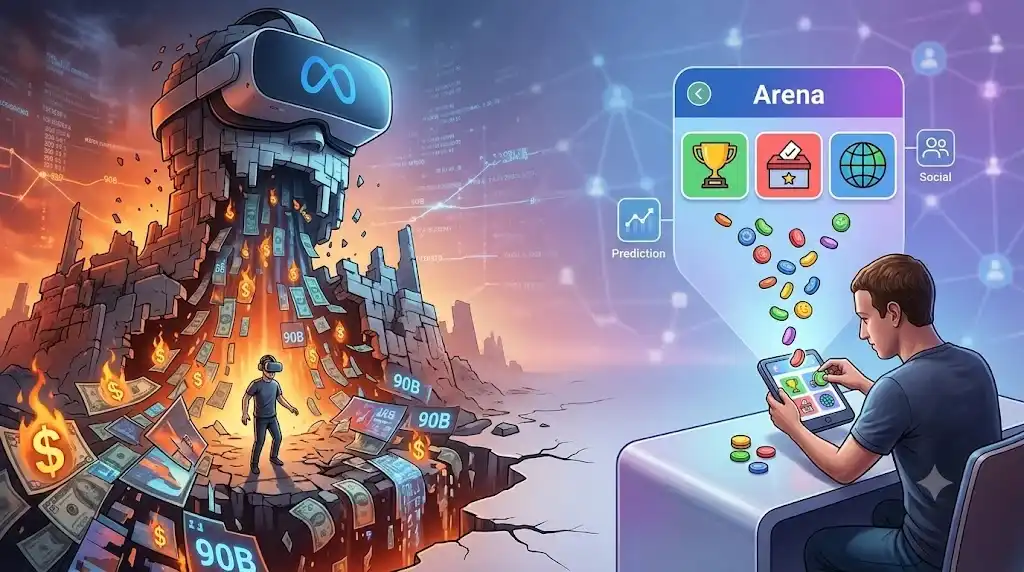
Just yesterday, The New York Times reported that Zuckerberg is personally leading the development of a prediction market app called Arena — users can bet on the outcomes of elections, sports, and major international events, but the chips are points. Not dollars, not USDC, but 'fun beans'.

That's right! The kind you don't feel bad about losing all night in mahjong.

What Lessons Can 90 Billion Dollars Buy?

First, let's review Meta's "Chronology of Burning Money."

In 2021, Zuckerberg renamed Facebook to Meta, announcing plans to build the metaverse. His Reality Labs division began spending lavishly — VR headsets, the virtual social platform Horizon Worlds, immersive office spaces...

And the result?

Horizon Worlds' monthly active users once fell below 200,000, failing to even reach its initial goal of 500,000. It lost 17.7 billion dollars in 2024 and 19.2 billion dollars in 2025, with cumulative losses approaching 90 billion dollars. 90 billion. That's enough money to buy several Polymarkets.

And Meta itself admitted that its loss scale for 2026 would be "in line with 2025."

In other words, before even filling this bottomless pit of the metaverse, Zuckerberg is already eagerly digging a new hole next to it.

From "Changing the World" to "Copying Others' Homework"

Interestingly, this isn't Meta's first attempt at prediction markets.

During the early days of the pandemic in 2020, Meta launched a crowdsourced prediction app called Forecast, allowing users to guess the course of current events. The result? It was quietly taken down in 2022.

Back then, Polymarket wasn't hot yet, Kalshi hadn't won its lawsuit against the CFTC, and the entire prediction market's annual trading volume was less than 50 billion dollars.

Now? In 2026, the industry's trading volume has surpassed 130 billion dollars, Kalshi's valuation is hitting 40 billion dollars, and Polymarket's valuation is 9-15 billion dollars.

Others made the cake bigger, and Zuckerberg smells it and comes running.

Does this playbook sound familiar? Snapchat launches Stories → Instagram launches Stories. TikTok popularizes short videos → Meta launches Reels. Twitter is still breathing → Meta launches Threads.

Every time it's: You get hot, I copy it, I crush you with 3.5 billion users worth of traffic.

Most of the time, this tactic works. But prediction markets are not short videos, nor are they ephemeral stories.
The Soul of a Prediction Market is "Real Money"

Let me explain why this is so absurd.

Prediction markets can forecast accurately because participants are betting their own money. You think seriously only when it hurts, you tell the truth only when you lose. Prices reflect probabilities because every dollar is a vote cast with real money.

Now Meta says: We're going to make a prediction market, but we won't let users spend real money.

This is like opening a Michelin-starred restaurant where all the dishes are made of air. The decor is luxurious, the menu is exquisite, customers come in droves — but everyone is just chewing on air.

Predictions without the constraint of real money aren't predictions; they're votes.

And the internet is never short on votes. Comment sections on Weibo vote every day, WeChat Moments are full of predictions every day — have you ever seen an accurate probability calculated from "likes"?

Zuckerberg, of course, knows this. The real purpose of the points system isn't to make predictions, but to bypass regulation.

In April 2026, the CFTC initiated the first-ever insider trading lawsuit in prediction market history — a US military officer profited on Polymarket using classified intelligence. The regulatory winds are already clear.

So Arena uses points. In the eyes of the law, this is a "game." In the eyes of the product, this is "social." In the eyes of prediction markets — this is an empty shell with its soul sucked out.

The Most Expensive "Toe-Dip"

Let's put the two most glaring numbers together:

Reality Labs cumulative losses: 90 billion dollars

Arena's starting design: A points game where you can't spend real money

A company that burned through 90 billion dollars on hardware and content turns around and creates a "zero-financial-risk" social toy.

This isn't "learning a lesson"; this is a cat that got scalded by boiling water — now it's even afraid to touch lukewarm water.

The lesson from the metaverse is crystal clear: the cost of creating a new track out of thin air is extremely high. But Zuckerberg's takeaway seems to be: Then I won't create a new track, I'll just copy one that others have already proven.

The problem is, the premise of others' success is real money. Polymarket made its name in the 2024 election because every dollar was a vote with real money. Kalshi could raise money from Morgan Stanley because of its CFTC license and years of federal litigation.

These things, no matter how much traffic you have, cannot be replicated.

3.56 billion daily active users is indeed terrifying. But if those 3.56 billion people come to Arena and cast a bunch of "fun bean predictions" with points, then what?

The predicted probabilities are inaccurate → Users find it boring → Engagement drops → Zuckerberg says "it's an experimental project" → Quietly taken down.

The script is exactly the same as Forecast.

Maybe Zuck Just Doesn't Care About Accurate Predictions

Finally, let's consider a "contrarian view" — what if we've got it wrong?

Maybe Zuckerberg never intended to build a real prediction market. Maybe Arena's goal is simply to be a hot-topic social platform: users come here not to make money, but to see what others think, argue with friends, and show off their "prediction accuracy."

In essence, it's no different from arguing on Weibo, just with an added scoring system.

In this logic, points aren't a defect; they're by design. Real money would actually scare away ordinary users. What Meta wants isn't financial depth; it's user time.

If this path works, Kalshi and Polymarket might actually benefit — Meta introduces the concept of "prediction" to billions who have never touched financial derivatives. A small portion of them might think, "Points aren't exciting enough, I want to play with real money," and then flow to licensed platforms.

Meta grows the pie, and the professional platforms eat it.

This is probably the outcome everyone doesn't want to see, but the one most likely to happen.

So the question is: Do you think Zuckerberg has finally gotten smart this time, or is he just repeating past mistakes in a cheaper way?


Câu hỏi Liên quan

QWhat is the main project that Mark Zuckerberg is reportedly leading at Meta, according to the New York Times article?

AHe is reportedly leading the development of a prediction market application called Arena, where users can bet on outcomes like elections, sports, and international events using points instead of real money.

QWhat is one of the major reasons given in the article for why a prediction market without real money might fail?

AThe article argues that the accuracy of a prediction market relies on participants using their own real money, which forces serious consideration and truthful predictions. Without this financial stake, it becomes mere voting or opinion-sharing, lacking the mechanism to reflect accurate probabilities.

QHow does the article describe Meta's previous attempt at a prediction market called Forecast?

AMeta launched Forecast during the early pandemic in 2020 as a crowdsourced prediction app. However, it was quietly shut down in 2022, before the prediction market industry experienced its major growth.

QWhat potential legal and regulatory reason is suggested for Arena using points instead of real currency?

AThe article suggests that using points instead of real money is likely a strategy to circumvent strict financial regulations. By framing it as a 'game' or 'social' feature, it avoids being classified and regulated as a financial betting or trading platform.

QWhat alternative, less conventional motivation for the Arena project does the article propose at the end?

AThe article proposes that perhaps Zuckerberg's goal isn't to create an accurate financial prediction market at all. Instead, Arena might aim to be a social platform for discussing and engaging with trending events, where the point system is designed for engagement and user retention, not financial depth. This could, in turn, popularize the concept of prediction markets and drive some users to seek out real-money platforms like Polymarket.

Nội dung Liên quan

Dữ Liệu Cho Thấy Các Ứng Dụng Phi Tập Trung (dApps) Trên Solana Tạo Ra 257 Triệu USD Doanh Thu Trong Quý 2

Dữ liệu từ các bảng phân tích DeFi cho thấy các ứng dụng phi tập trung (dApps) trên Solana đã tạo ra tổng doanh thu 257 triệu USD trong quý 2 năm 2026. Con số này đánh dấu quý thứ 9 liên tiếp Solana dẫn đầu các mạng Layer 1 và Layer 2 lớn về hoạt động tạo phí. Doanh thu là một chỉ số quan trọng vì nó phản ánh hoạt động kinh tế thực tế trên chuỗi, như giao dịch trên sàn phi tập trung, phát hành token và các hành động tần suất cao, thay vì chỉ là sự chú ý trên mạng xã hội. Thành tích này củng cố lập luận rằng hệ sinh thái Solana là một trong những nền tảng năng động nhất trong crypto, mang lại lợi thế so với các đối thủ cạnh tranh với Ethereum về mặt định lượng. Tuy nhiên, điểm cần lưu ý là doanh thu của Solana có liên quan chặt chẽ đến môi trường giao dịch tốc độ cao, đặc biệt là các hoạt động liên quan đến meme coin và đầu cơ. Đây là mức sử dụng thực tế, nhưng có thể mang tính chu kỳ và giảm mạnh nếu thị trường suy giảm. Sức mạnh bền vững của mạng lưới sẽ được kiểm chứng qua khả năng duy trì cơ sở doanh thu này trong điều kiện thị trường ít biến động hơn. Hiện tại, số liệu quý 2 cho thấy nền kinh tế dApp của Solana vẫn đang tạo ra giá trị hữu hình.

bitcoinist17 phút trước

Dữ Liệu Cho Thấy Các Ứng Dụng Phi Tập Trung (dApps) Trên Solana Tạo Ra 257 Triệu USD Doanh Thu Trong Quý 2

bitcoinist17 phút trước

Người chiến thắng AI bí ẩn nhất

Bài viết thảo luận về sự trỗi dậy của các công ty sản xuất truyền thống Nhật Bản như Toto, Nittobo và Ajinomoto trong chuỗi cung ứng AI, nhờ vào các sản phẩm vật liệu chuyên biệt quan trọng cho sản xuất chất bán dẫn. Toto, nổi tiếng với thiết bị vệ sinh, đã chứng kiến cổ phiếu tăng 145% nhờ vào bộ phận gốm sứ chính xác cho bán dẫn, chiếm 9% doanh thu nhưng đóng góp 54% lợi nhuận. Sản phẩm chủ chốt là bàn hút tĩnh điện bằng gốm, một linh kiện thiết yếu trong quy trình khắc plasma cho chip NAND 3D và chip AI tiên tiến. Vị thế độc quyền, sự gắn kết lâu năm với Lam Research và rào cản gia nhập cao (thời gian phê duyệt ~5 năm) giúp Toto hưởng lợi lớn. Tương tự, Nittobo (sợi thủy tinh) thống trị thị trường vải sợi thủy tinh T-glass cho lớp nền đóng gói chip, trong khi Ajinomoto (bột ngọt) kiểm soát 80-95% thị phần màng cách điện ABF. Cả hai đều có lợi nhuận cao từ các bộ phận này, dù chúng chỉ chiếm một phần nhỏ trong tổng doanh thu. Bài viết cũng chỉ ra sự phản ánh trên thị trường A-shares (Trung Quốc) với chủ đề thay thế hàng nhập khẩu, nêu bật các công ty như China Electronics Technology (gốm kỹ thuật), Honghe Technology (vải điện tử siêu mỏng) và Feilihua (vải thạch anh). Tuy nhiên, sự thành công của họ phụ thuộc vào khả năng mở rộng quy mô sản xuất và nâng cao tỷ lệ sản phẩm đạt chất lượng. Kết luận nhấn mạnh xu hướng các công ty truyền thống với chuyên môn sâu về vật liệu đang trở thành những người chiến thắng "thầm lặng" trong cuộc đua AI, khi nhu cầu về chip tiên tiến làm sâu sắc thêm sự phụ thuộc vào các công nghệ và vật liệu cốt lõi.

marsbit18 phút trước

Người chiến thắng AI bí ẩn nhất

marsbit18 phút trước

Người chiến thắng AI bí mật nhất

**Tiêu đề: Những người chiến thắng AI bí ẩn nhất** Bài viết chỉ ra rằng trong cơn sốt AI, ngoài các gã khổng lồ công nghệ, những công ty sản xuất truyền thống với các bộ phận kinh doanh “chìm” phục vụ ngành bán dẫn đang trở thành những người chiến thắng bất ngờ. **1. Trường hợp điển hình TOTO: Từ phòng tắm đến bán dẫn** TOTO, hãng thiết bị vệ sinh Nhật Bản nổi tiếng, chứng kiến cổ phiếu tăng mạnh nhờ mảng kinh doanh gốm sứ chính xác cho bán dẫn. Bắt đầu từ năm 1984, mảng này đã hợp tác lâu dài với Lam Research. Đến năm 2020, việc cải tiến quy trình đã giúp tăng đáng kể năng suất và tỷ suất lợi nhuận. Năm 2025, dù chỉ đóng góp 9% doanh thu, gốm bán dẫn chiếm tới 54% lợi nhuận hoạt động của TOTO. Sản phẩm chủ lực là “bàn hút tĩnh điện” (electrostatic chuck) – một linh kiện quan trọng trong quy trình khắc plasma, trở nên thiết yếu với chip AI và bộ nhớ NAND tiên tiến. Sự thống trị của TOTO đến từ công nghệ thiêu kết độc đáo và rào cản gia nhập ngành cao (quy trình chứng nhận kéo dài 5 năm). **2. Hiện tượng phổ biến: Lợi nhuận từ những vị trí “nghẽn cổ chai”** TOTO không đơn độc. Nhiều công ty Nhật Bản khác cũng được định giá lại: - **Nittobo**: Công ty sợi thủy tinh 128 tuổi, sở hữu 90% thị phần vải thủy tinh T-glass, vật liệu thiết yếu cho chất nền đóng gói chip AI. Giá đã tăng nhiều lần do cung không đủ cầu. - **Ajinomoto**: Tập đoàn sản xuất bột ngọt, chiếm 80-95% thị phần màng cách điện ABF dùng trong chất nền đóng gói chip. Mảng này có tỷ suất lợi nhuận trên 50%. Điểm chung: Lợi nhuận tập trung vào các khâu vật liệu chuyên biệt, có rào cản kỹ thuật cao và khó mở rộng năng lực sản xuất nhanh trong chuỗi cung ứng AI. **3. Cơ hội cho thị trường A-shares: Thay thế nhập khẩu** Ở Trung Quốc, câu chuyện tương tự diễn ra với chủ đề “thay thế nhập khẩu”: - **Gốm sứ chính xác**: Các công ty như **Zhongci Electronic** đang dẫn đầu trong việc sản xuất bàn hút tĩnh điện nội địa. - **Vải điện tử (Electronic cloth)**: **Honghe Technology** và **Feilihua** là những nhà sản xuất chủ chốt cung cấp vải siêu mỏng và vải thạch anh chất lượng cao cho ngành đóng gói tiên tiến, được chứng nhận bởi các khách hàng lớn như NVIDIA. **Kết luận**: Sự bùng nổ AI không chỉ định hình lại các công ty công nghệ mà còn làm thay đổi giá trị của những doanh nghiệp sản xuất truyền thống sở hữu công nghệ vật liệu chuyên sâu. Sự chênh lệch giữa phân loại ngành cũ và cấu trúc lợi nhuận mới tạo ra cơ hội định giá lại. Xu hướng này sẽ tiếp diễn khi yêu cầu về độ chính xác của chip ngày càng cao, làm sâu sắc thêm sự phụ thuộc vào các quy trình vật liệu truyền thống tinh vi.

链捕手23 phút trước

Người chiến thắng AI bí mật nhất

链捕手23 phút trước

DeFi Bước Vào Thời Điểm Đánh Giá Lại Giá Trị: Nguy Cơ và Cơ Hội Đằng Sau TVL 700 Tỷ USD

Tổng giá trị bị khóa (TVL) toàn mạng lưới DeFi vừa giảm xuống dưới mốc 700 tỷ USD, đạt khoảng 693,58 tỷ USD vào ngày 1/7, mức thấp nhất kể từ tháng 2/2024. Sự sụt giảm của chỉ số TVL - thước đo sức khỏe và thanh khoản của hệ sinh thái tài chính phi tập trung - phản ánh dòng vốn rút lui và tâm lý thận trọng trên thị trường tiền mã hóa nói chung. Nguyên nhân chính bao gồm việc giảm mức độ chấp nhận rủi ro của thị trường, mô hình khuyến khích thanh khoản dựa trên token đang dần mất hiệu lực, và vốn đang dịch chuyển sang các lĩnh vực mới như AI, RWA và cơ sở hạ tầng module. Bài viết chỉ ra rằng DeFi đang đối mặt với các điểm nghẽn tăng trưởng: tốc độ đổi mới chậm lại, lợi suất giảm mạnh và không thu hút được người dùng đại chúng do trải nghiệm phức tạp. Tuy nhiên, TVL sụt giảm không có nghĩa là kết thúc. Nó đánh dấu sự chuyển đổi từ giai đoạn tăng trưởng dựa trên trợ cấp sang một giai đoạn trưởng thành hơn, nơi hiệu quả vốn, trải nghiệm người dùng và giá trị thực trở thành trọng tâm. Các xu hướng như tài sản thế giới thực được mã hóa (RWA), sự bùng nổ của stablecoin và sự phát triển của cơ sở hạ tầng lớp 2 đang mở ra chương mới cho DeFi, hướng tới các dịch vụ tài chính ổn định, an toàn và hiệu quả hơn, gần hơn với nhu cầu thực tế.

marsbit47 phút trước

DeFi Bước Vào Thời Điểm Đánh Giá Lại Giá Trị: Nguy Cơ và Cơ Hội Đằng Sau TVL 700 Tỷ USD

marsbit47 phút trước

Các công ty tiền điện tử dẫn đầu đóng góp cho bầu cử Mỹ 2026 với 189 triệu USD: 'Hối lộ hợp pháp!'

Ngành công nghiệp tiền điện tử (crypto) đã trở thành nhà vận động chính trị hàng đầu trong cuộc bầu cử giữa kỳ Mỹ 2026, với tổng số tiền đóng góp lên tới 189 triệu USD, theo dữ liệu từ Ủy ban Bầu cử Liên bang (FEC). Khoản tiền này cao hơn 20 triệu USD so với chi tiêu năm 2024 và chiếm 36,5% tổng chi tiêu vận động hành lang của các tập đoàn (517,5 triệu USD), vượt xa các lĩnh vực khác như AI/công nghệ lớn (60 triệu USD). Các nhà tài trợ lớn nhất bao gồm quỹ đầu tư mạo hiểm a16z (51,65 triệu USD), Ripple Labs (50 triệu USD), Crypto.com (38 triệu USD) và Coinbase (35 triệu USD). Phần lớn nguồn lực được hướng đến ủng hộ các ứng viên thân crypto, chủ yếu thuộc đảng Cộng hòa, thông qua các tổ chức như Fairshake PAC. Động lực chính của làn sóng vận động này là thúc đẩy việc thông qua Đạo luật CLARITY, một dự luật quan trọng về quy định cho ngành crypto hiện đang bị trì hoãn tại Thượng viện. Ngành công nghiệp muốn bảo vệ các thành tựu đã đạt được (như thay đổi lãnh đạo SEC, thông qua Đạo luật GENIUS về stablecoin) và đảm bảo dự luật then chốt này được thông qua trong Quốc hội tiếp theo. Thượng nghị sĩ Bernie Sanders đã chỉ trích mức chi tiêu khổng lồ này là "hối lộ hợp pháp".

ambcrypto53 phút trước

Các công ty tiền điện tử dẫn đầu đóng góp cho bầu cử Mỹ 2026 với 189 triệu USD: 'Hối lộ hợp pháp!'

ambcrypto53 phút trước

Giao dịch

Giao ngay
活动图片