WeChat AI Card Hands-On Guide: Has the AI Shopping Era Arrived?

marsbitXuất bản vào 2026-06-18Cập nhật gần nhất vào 2026-06-18

Tóm tắt

**"WeChat AI Card" Practical Test Guide: Has the Era of AI Shopping Arrived?** WeChat has officially launched the "AI Exclusive Card," a feature integrated into its Workbuddy AI assistant. This card is designed to handle payments for AI-initiated purchases. Our hands-on test reveals it's not yet a tool for fully autonomous AI shopping, but rather a controlled payment layer for AI agents. The AI Card functions as an isolated sub-wallet within WeChat Pay. Users must bind the card and transfer funds into it from their main wallet. Crucially, every transaction requires explicit user confirmation via smartphone scan; AI cannot spend autonomously. Currently accessible through the Workbuddy agent, the card targets specific digital consumption scenarios: purchasing paid content (reports, data), calling paid APIs/tools, and subscribing to services. Its design prioritizes security and control by separating funds and mandating approval for each payment. We tested a real-world scenario: ordering bubble tea via Workbuddy using a "Meituan Life Assistant" skill. The process encountered multiple hurdles: high "skill" usage costs (exceeding daily free credits), and most importantly, while a payment was successfully initiated, the AI purchased an incorrect product (a mismatched group-buy coupon instead of the desired drink). This highlights the current limitation: the **AI Card only solves the payment step**. The broader challenge lies in the **AI agent's execution chain**—accurately unde...

Author: Alan | Biteye Content Team

On June 17th, WeChat's official account "微信派" announced that WeChat Pay has officially launched the AI-exclusive card. According to the official description, users can propose consumption needs in conversations with Workbuddy and complete related payments through the AI-exclusive card.

This sounds quite interesting: in the future, to order a milk tea, purchase a service, or subscribe to a tool, you could just let the AI handle the entire process seamlessly.

However, after practical testing, we found that the WeChat AI-exclusive card currently does not support "fully automated AI consumption." A more accurate understanding is: it is a layer of payment capability opened by WeChat Pay for AI Agents, but each transaction still requires user confirmation. Moreover, whether a purchase can actually be completed depends on the Agent, Skills, third-party platform authorization, and product fulfillment processes.

This article will explore two questions and one hands-on test:

  1. What exactly is the WeChat AI-exclusive card?

  2. What can it do now, and what can't it do?

  3. A practical test: using it to order a cup of milk tea to see how many pitfalls we can encounter.

1. Conclusion First: The WeChat AI-exclusive Card is Not a Card for "AI to Spend Freely"

From a product mechanism perspective, the WeChat AI-exclusive card is more like a "small wallet" isolated from the main WeChat wallet.

Users first need to bind the AI-exclusive card and then transfer funds from their WeChat wallet to this card. Subsequently, relevant consumption by AI Agents will be deducted from this independent balance first, rather than directly from the user's daily WeChat wallet funds.
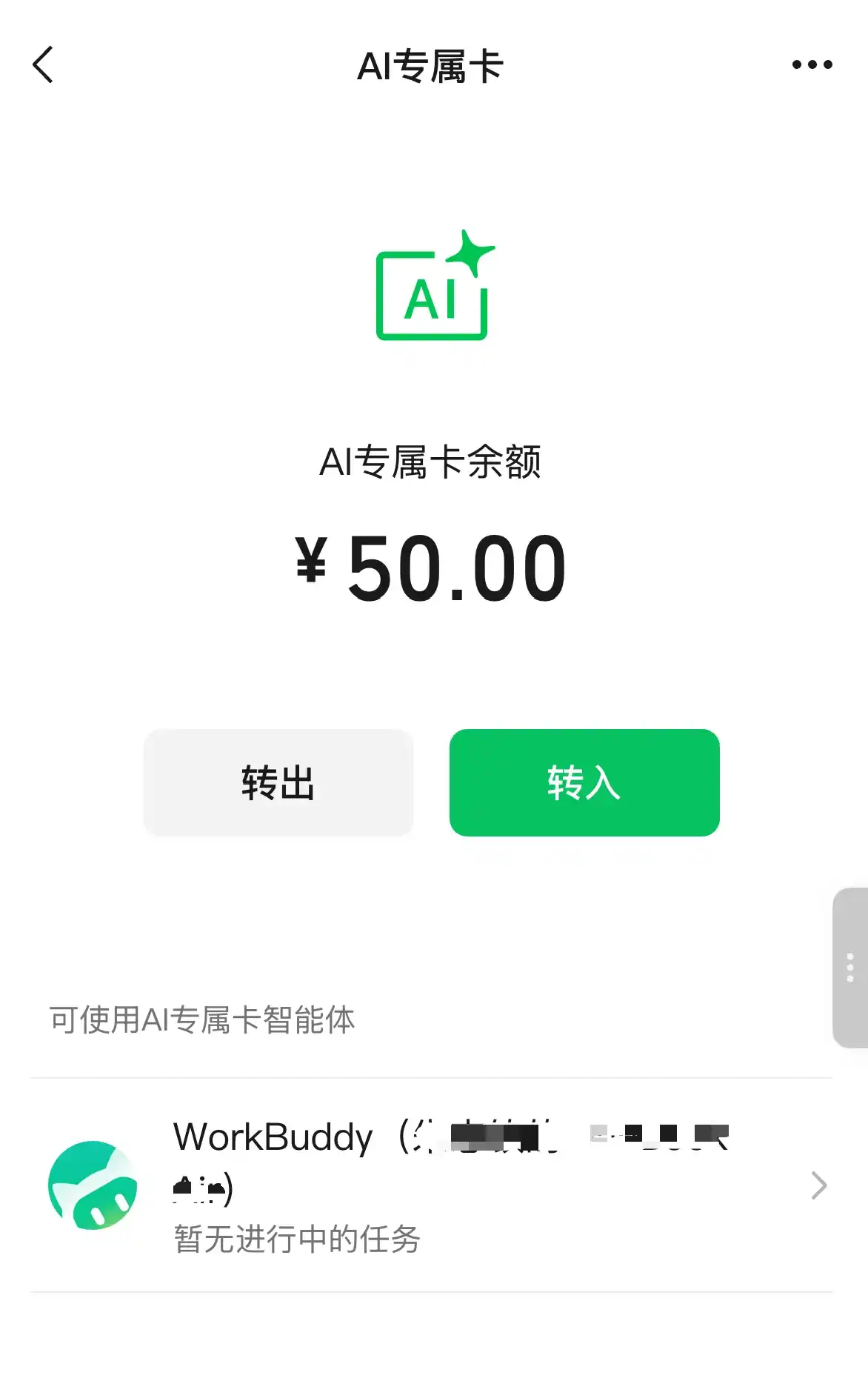
Simply put, it primarily addresses three questions:

First, where does the money for AI consumption come from.

The AI-exclusive card has an independent balance, making financial boundaries clearer.

Second, whether AI consumption can be controlled.

Each payment still essentially requires user confirmation on the mobile device after scanning a QR code; it's not automatic deduction by the AI.

Third, how AI consumption records are managed.

AI-related expenses are separated from ordinary WeChat Pay transactions, making them easier to view and manage.

2. How to Activate: Entry Point is in the Workbuddy Conversation

WorkBuddy is a desktop office efficiency agent launched by Tencent, closer to an Agent workbench, with an interface similar to CodeX. It can understand user goals in conversation and then use different "expert" Agents or Skills to call external capabilities to complete tasks, such as office processing, information queries, and local life services.
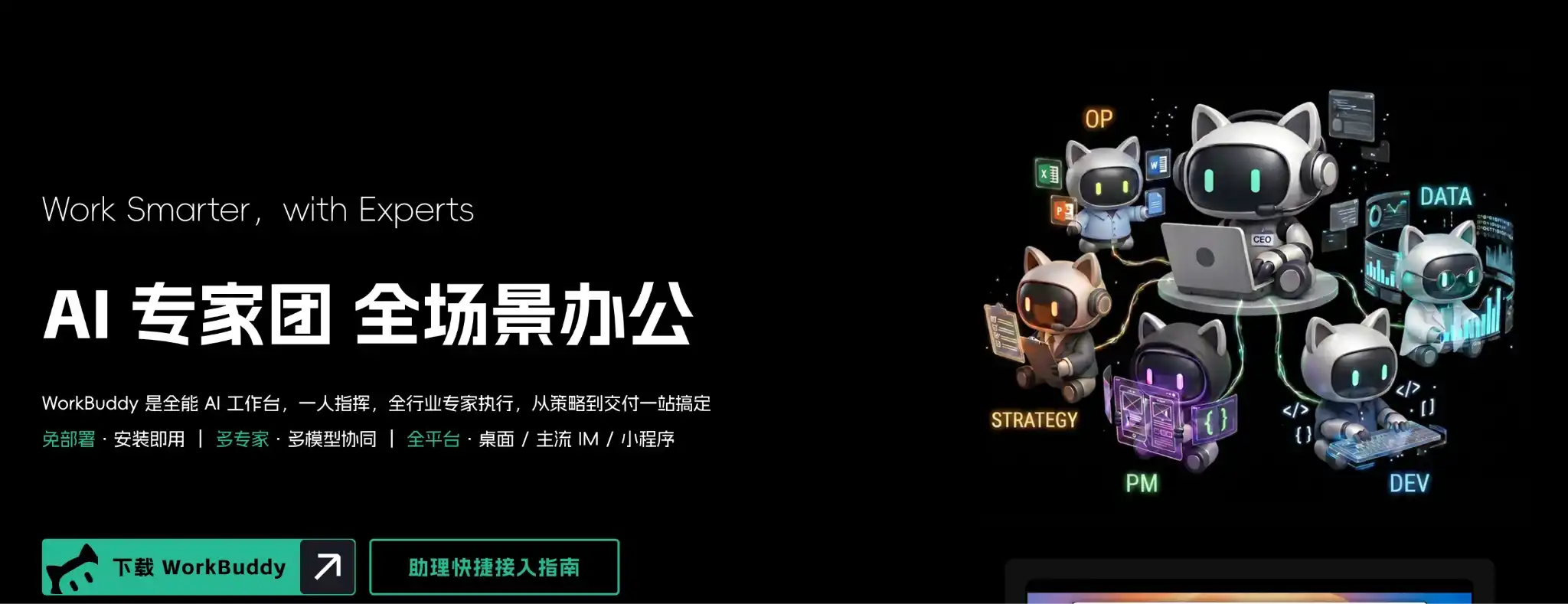
This time, WeChat Pay's AI-exclusive card was first integrated into WorkBuddy, which also implies that WeChat Pay is not directly opening up to all AI applications. Instead, it is first testing the complete process of "AI initiating payment, user confirming deduction" within a relatively controlled Agent scenario.

The actual activation process is not complicated:

Step One, ask in the Workbuddy dialog:

"How do I use the WeChat AI-exclusive payment card?"

The Agent will return a jump link ⬇️
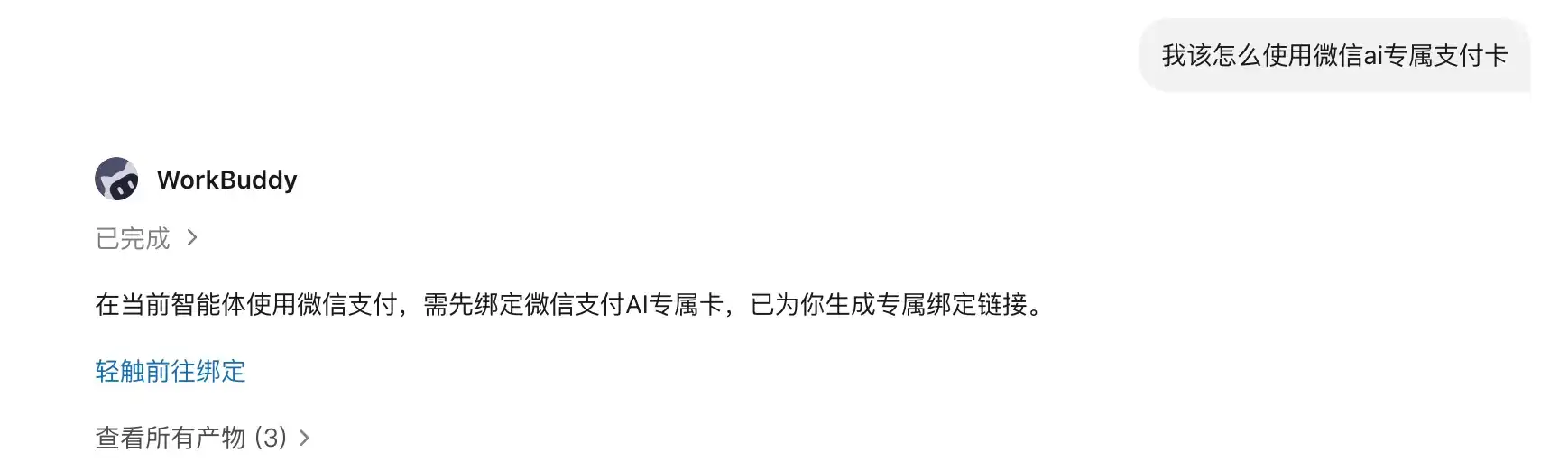
Step Two, after clicking the link, you need to scan a QR code with WeChat to complete the binding.
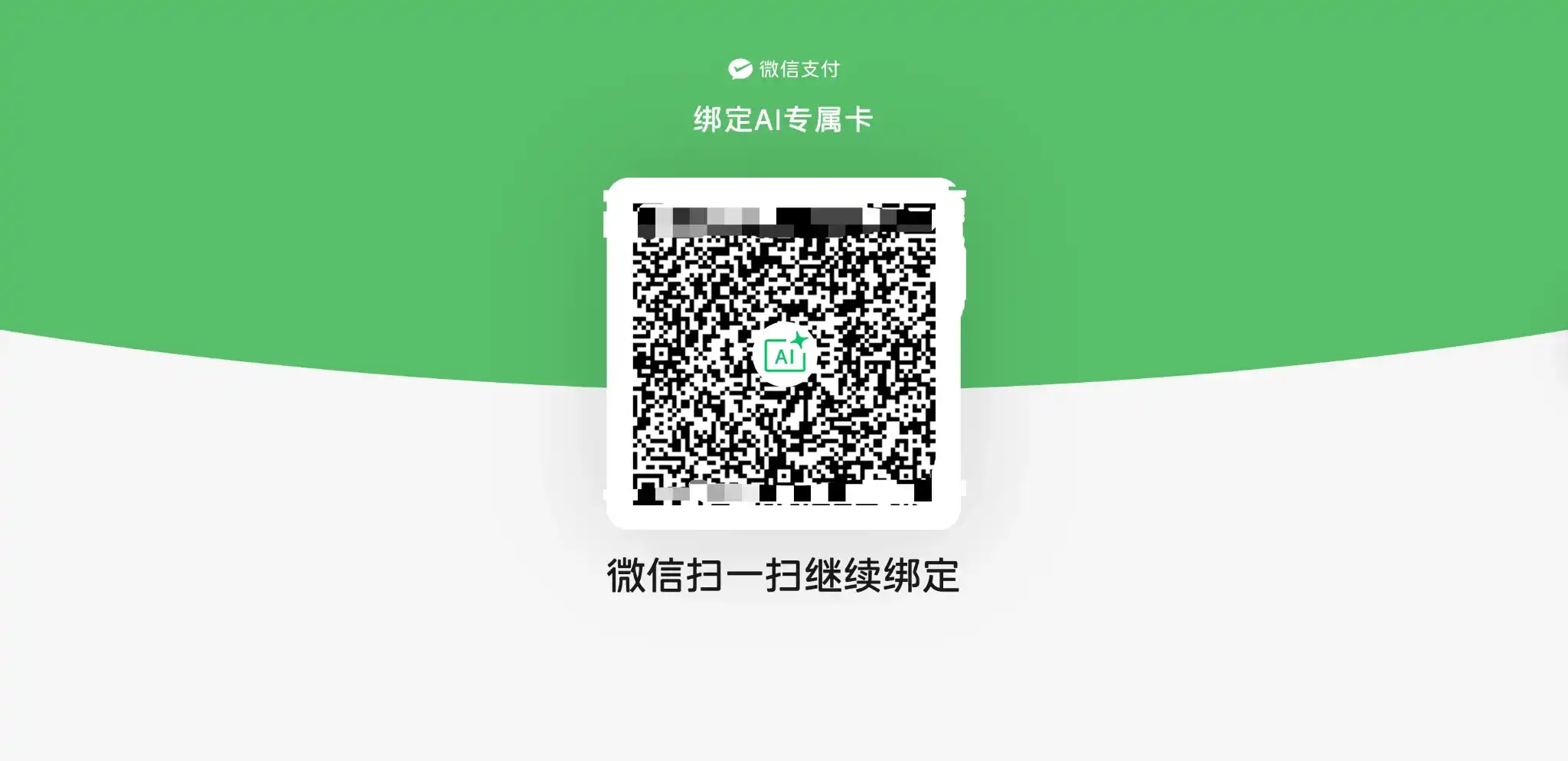
A small detail here: the binding link is only valid for 5 minutes after generation, so you need to scan the code promptly.

Step Three, read and agree to the relevant agreements, and after entering your payment password, you can complete the binding.

Step Four, after binding is complete, users can transfer funds from their original WeChat wallet to the AI-exclusive card.
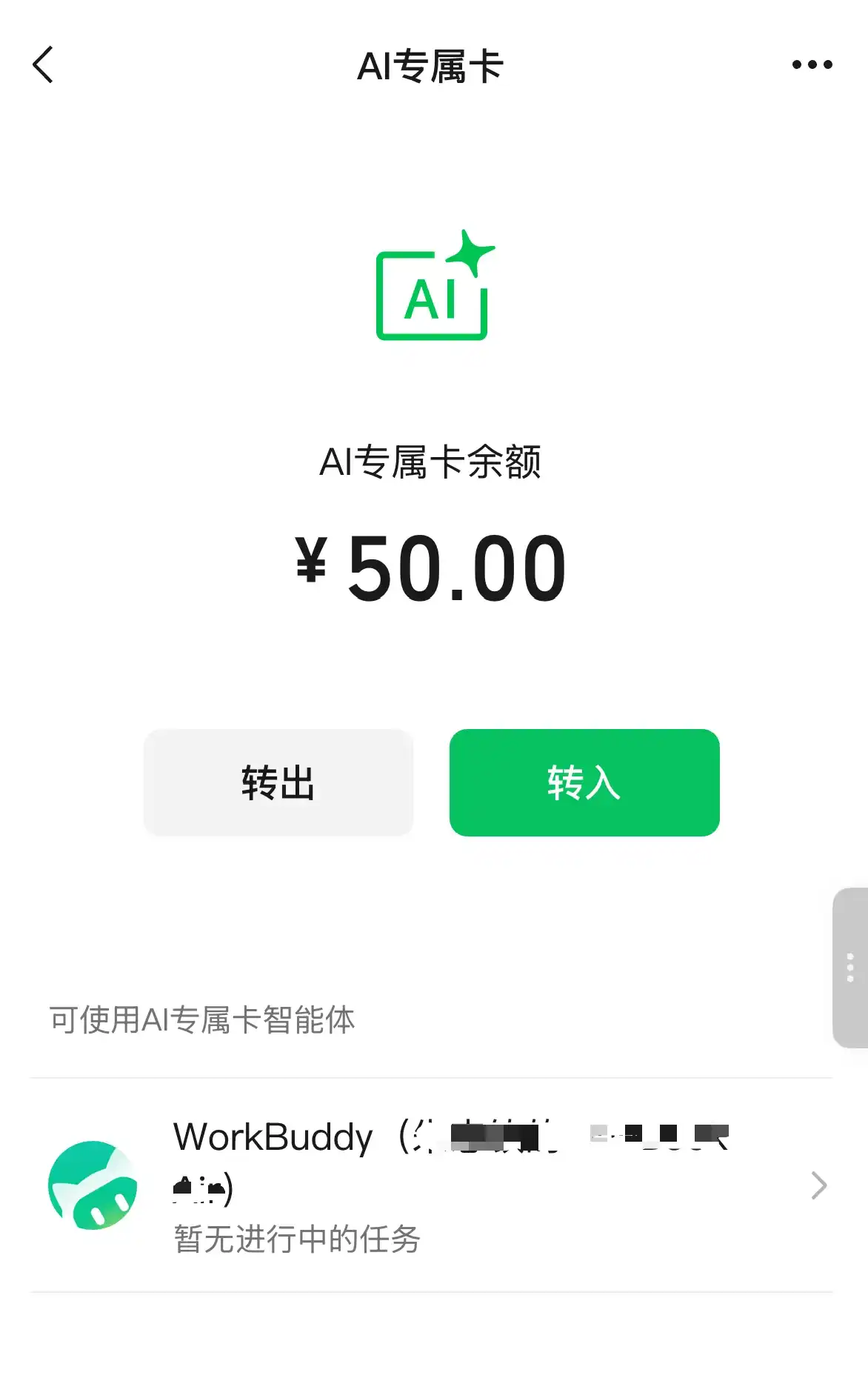
The activation and top-up experience is quite smooth. However, the real challenge with AI payment doesn't lie in "how to get the card," but in what happens after you get it—can the AI actually help users complete purchases smoothly?

3. What Scenarios Is It Currently Suitable For?

According to Workbuddy's explanation, the AI-exclusive card is mainly intended for several types of AI consumption scenarios:

1️⃣ Purchasing Paid Content

Such as reports, data, professional analysis services, etc.

2️⃣ Calling Paid APIs or Tools

Such as certain online plugins, professional database queries, tool capabilities charged per use.

3️⃣ Subscribing to or Renewing Services

Such as in-platform value-added features, membership services, etc.

These scenarios share a common point: the payment objects are relatively standardized, the consumption chain is short, and the fulfillment method is quite clear.

However, unfortunately, so far, our tests have not identified any of these three types of applications within Workbuddy that can directly trigger payment using the AI-exclusive card. According to Workbuddy, it needs to trigger certain specific built-in paid features ⬇️
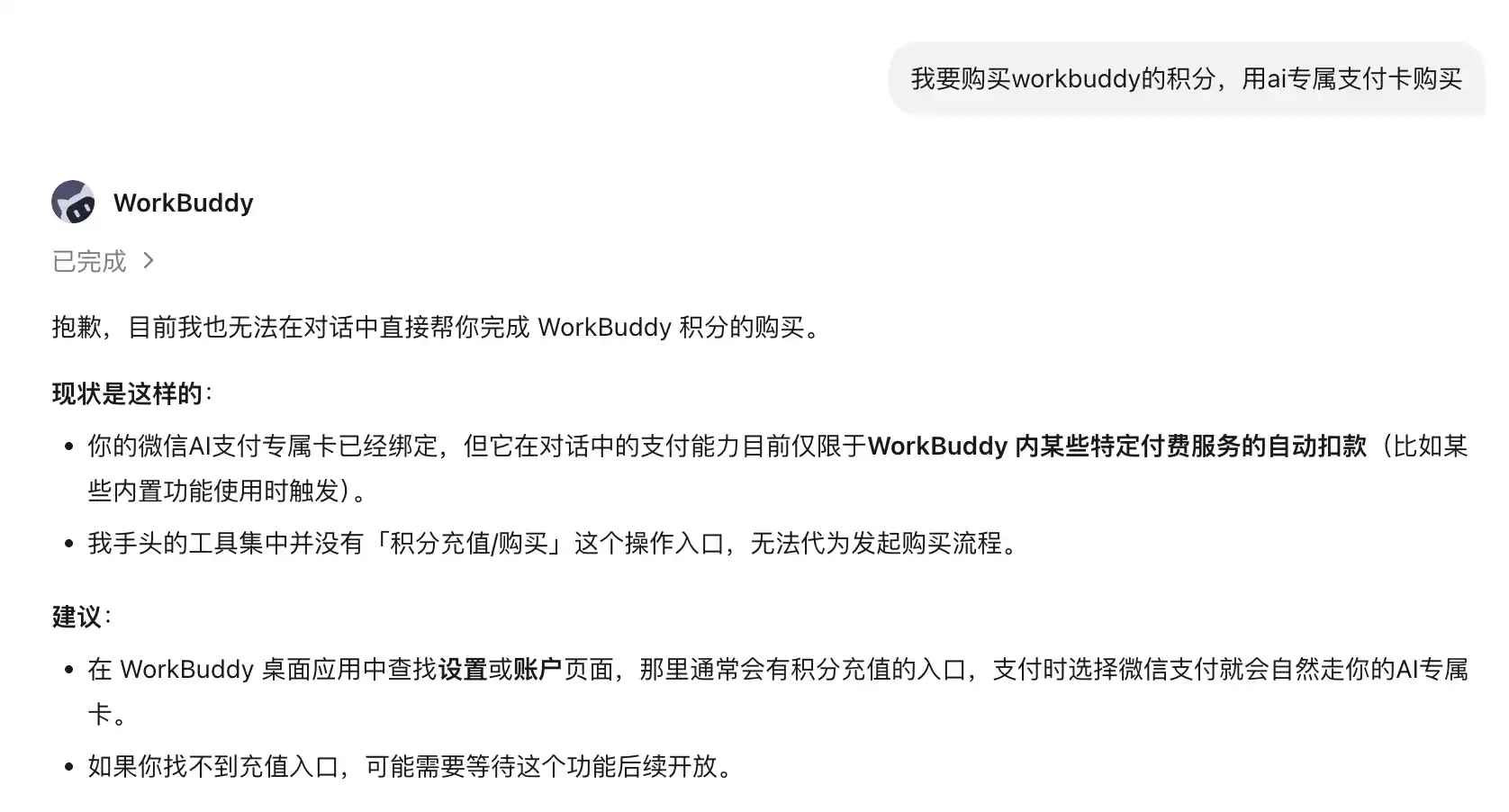
4. Hands-on Test: Asking Workbuddy to Order a Heytea for Me—Failed

🥤 We tried one of the most intuitive life scenarios: asking Workbuddy to order a cup of Heytea for me.

The first step encountered a limitation. Workbuddy itself cannot directly fulfill such takeout or beverage ordering needs; it requires calling the corresponding life service Skill.
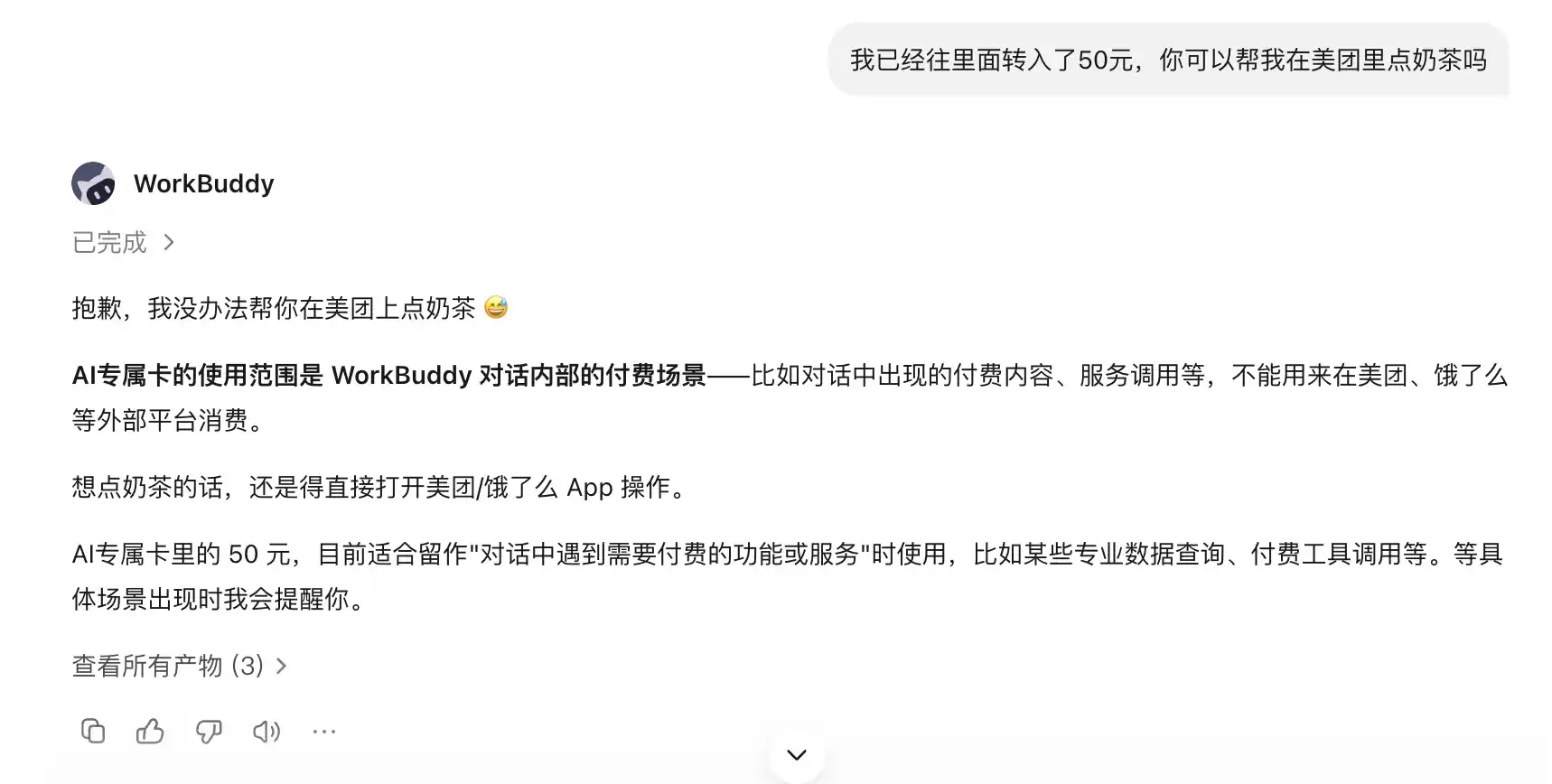
Therefore, following WeChat's official demonstration, we selected the "Meituan Life Assistant" Skill.

This step introduced a new cost issue: just generating the QR code to log into the Meituan account consumed 185.37 points. In comparison, Workbuddy awards 150 points daily upon login.

This means that before even starting the actual order, the step of just authorizing the login had already exceeded the daily free point allowance.

After completing the account login authorization, we continued to ask it to order milk tea. When the AI-exclusive card payment link popped up, the experience did indeed feel close to "AI buying something for me."
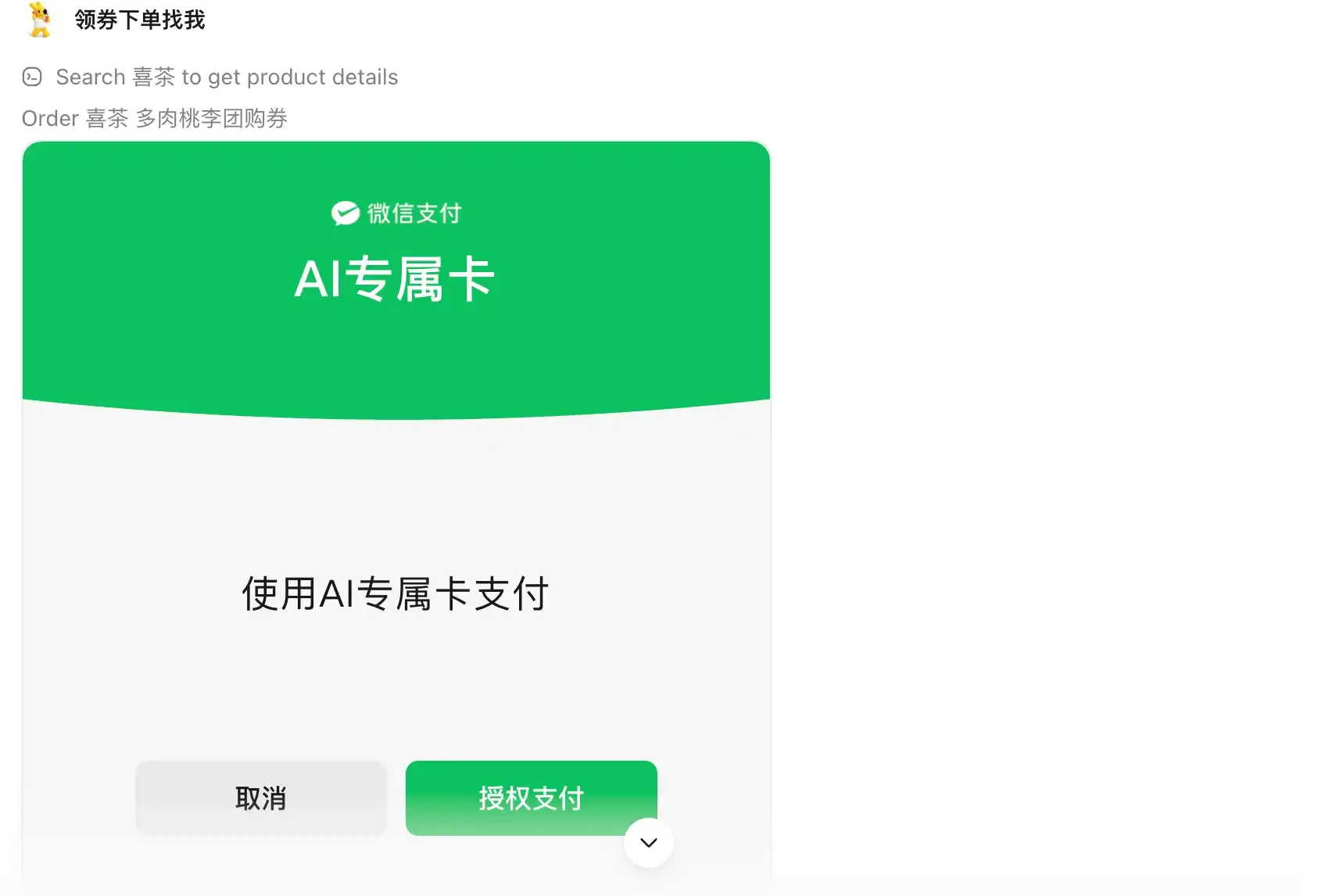
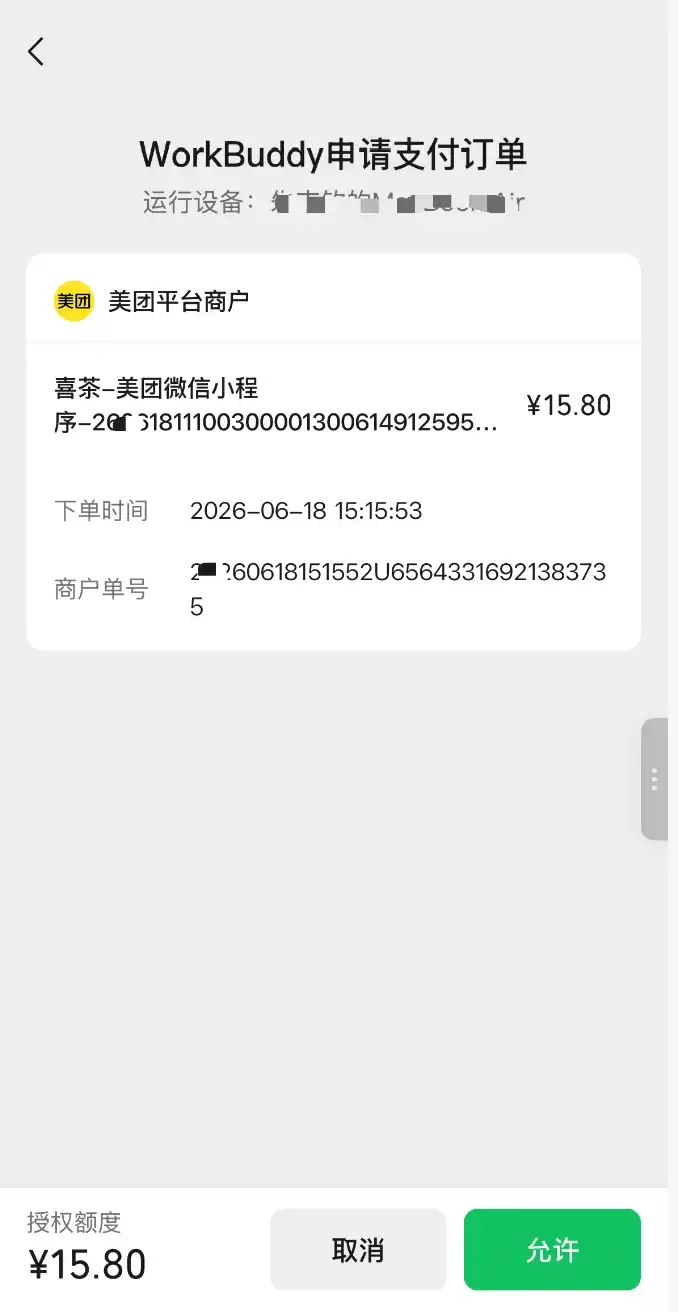
However, after payment, we discovered that what Workbuddy actually purchased was not the specific cup of milk tea we wanted, but a Meituan group-buying coupon that didn't match our needs.

The payment action was completed, but the purchase result did not align with the user's needs.

5. Reasons for Failure: The Problem Isn't with Payment, but with the Agent Execution Chain

In fact, this failure cannot be simply attributed to the AI-exclusive card being "not useful." More accurately, the AI-exclusive card is responsible for the payment capability, not the complete purchasing capability.

What really got stuck was the Agent execution chain.

A task like "help me order a cup of milk tea" involves at least the following steps:

Identifying user needs, calling a third-party platform, completing account authorization, selecting the correct product, confirming the fulfillment method, initiating payment, user confirming payment, completing subsequent fulfillment...

The AI-exclusive card only covers the "payment" part. As for the preceding steps like product identification, platform redirection, account authorization, product matching, and the subsequent delivery or verification, they all deeply rely on the capabilities of the Agent and third-party Skills.

Therefore, in this test, the AI did trigger the payment, but it did not complete the "correct purchase."

This is a common issue many AI Agents currently face: they can call tools, but they are not yet guaranteed to reliably complete complex real-world tasks.

6. Current Mechanism: Users Still Hold Final Payment Confirmation Authority

From a security perspective, the AI-exclusive card does not allow the AI to bypass the user and make payments directly.

The current mechanism can be roughly summarized as:

Aspect

Current Mechanism

Source of Funds

Only uses the independent balance in the AI-exclusive card

Payment Confirmation

Every payment requires user confirmation on the mobile device

Main Account

Does not directly deduct funds from the main WeChat account

In-Store Goods

After payment is completed, the user still needs to go to the store for verification/redemption

This design is relatively restrained and aligns with the current realistic state of AI consumption scenarios.

If the AI could directly and autonomously make payments, the risks would actually be very high: buying the wrong product, duplicate orders, accidental subscriptions, or induced consumption could all become real problems.

Therefore, the WeChat AI-exclusive card currently functions more like a small WeChat wallet with controllable limits, confirmation for each transaction, and isolation from the main account.

Final Thoughts

If you just want to experience the WeChat AI-exclusive payment card, you can try activating it. However, it is recommended to start with low-amount, low-risk, digital service scenarios first. But please keep the following three points in mind:

1️⃣ Top up with a small amount first; don't deposit too much at once.

2️⃣ Carefully check the product name, amount, and fulfillment method before paying.

3️⃣ Do not assume that the AI Agent has understood your real needs, especially when it involves specific stores, delivery, group-buying coupons, or packages.


Tiền kỹ thuật số thịnh hành

Câu hỏi Liên quan

QWhat is the core function of WeChat's AI-specific card according to the article?

AAccording to the article, the core function of WeChat's AI-specific card is to act as an isolated 'small wallet' or a payment capability layer for AI Agents. It provides a separate balance for AI-related transactions, requiring user confirmation for each payment. It is designed to clarify the source of funds, give users control over payments, and manage AI spending records separately from regular WeChat Pay transactions.

QHow does a user bind the WeChat AI-specific card, and where is the binding entry?

AThe user binds the WeChat AI-specific card through the WorkBuddy desktop office efficiency Agent. The process involves: 1. Asking 'How do I use the WeChat AI-specific payment card?' in the WorkBuddy dialogue. 2. Clicking the returned jump link, which is only valid for 5 minutes. 3. Scanning the QR code with WeChat to bind. 4. Reading and agreeing to the relevant agreements and entering the payment password to complete the binding.

QWhat are the main payment scenarios that the AI-specific card currently supports?

AThe main payment scenarios supported by the AI-specific card include: 1. Purchasing paid content like reports, data, and professional analysis services. 2. Calling paid APIs or tools, such as online plugins or professional database queries. 3. Subscribing to or renewing services, such as platform add-on features or memberships. These scenarios are characterized by relatively standardized payment objects and shorter consumption chains.

QWhy did the article's test of using WorkBuddy to order bubble tea fail? What was the underlying issue?

AThe test to order bubble tea through WorkBuddy failed because the AI-specific card only handles the payment part of the transaction. The failure occurred earlier in the Agent's execution chain. While the AI successfully triggered a payment, it purchased an incorrect product—a Meituan group purchase coupon instead of the specific tea. The underlying issue is the Agent's inability to correctly handle the complex real-world task chain: identifying user needs, calling third-party platforms (Meituan), completing account authorization, selecting the correct product, and confirming fulfillment methods.

QWhat safety mechanisms are in place for the AI-specific card to prevent uncontrolled AI spending?

AThe safety mechanisms for the AI-specific card include: 1. Using only the independent balance pre-loaded into the AI-specific card, isolating it from the user's main WeChat wallet funds. 2. Requiring explicit user confirmation on their mobile device for every single payment. 3. After payment for physical goods or services, the user is still responsible for on-site verification or fulfillment. This design ensures the user retains ultimate control and prevents risks like buying wrong items, duplicate orders, or unauthorized subscriptions.

Nội dung Liên quan

TechFlow Tình Báo Cục: Tỷ Lệ IPO Của Anthropic Trên 80%, Iran Đóng Eo Biển Hormuz Lần Nữa Gây Chấn Động Giá Dầu

Thị trường dự kiến Anthropic sẽ công bố IPO trước tháng 11/2026, đặt câu hỏi về việc liệu định giá nghìn tỷ USD có tương thích với cam kết an toàn AI của họ hay không. Cùng lúc, các thương hiệu đang sử dụng người có ảnh hưởng ảo AI để tiếp thị sản phẩm. Về tiền mã hóa/Web3, quân đội Iran thông báo đóng cửa lại eo biển Hormuz, gây ra biến động giá dầu, mặc dù dữ liệu theo dõi tàu cho thấy một số tuyến đường vẫn hoạt động. Iran cũng đã nối lại hoạt động bốc dầu tại đảo Kharg, có thể đưa tới 20 triệu thùng dầu ra thị trường. Trong lĩnh vực chip/phần cứng, Goldman Sachs cảnh báo đầu tư vốn 5,3 nghìn tỷ USD vào AI có thể đang chạm đến giới hạn bão hòa tín dụng. Các tin tức công nghệ đáng chú ý: Cloudflare ra mắt tính năng tài khoản tạm thời cho AI agent; lưu lượng IPv6 của Google vượt 50%; Tập đoàn Hyundai Motor có kế hoạch mua lại cổ phần của Boston Dynamics. Trên thị trường chứng khoán Mỹ, các nhà đầu tư nhỏ lẻ đã đổ 370 triệu USD vào SpaceX trong ba ngày, tạo ra làn sóng mua vào mạnh mẽ. Về tài chính vĩ mô, thị trường tín dụng châu Âu báo động khi xảy ra vỡ nợ trái phiếu CLO đầu tiên kể từ sau khủng hoảng, trong khi Nomura cảnh báo về khả năng chuyển hướng chính sách thắt chặt từ Fed. Đường dây ngầm của ngày hôm nay chỉ ra rằng các sự kiện như đóng cửa eo biển Hormuz, vỡ nợ CLO ở châu Âu và cảnh báo về chi tiêu vốn AI đều phản ánh một logic chung: thanh khoản toàn cầu đang thắt chặt và chi phí biên đang tăng lên trên nhiều lĩnh vực. Trong bối cảnh đó, vốn vẫn không ngừng tìm kiếm các câu chuyện tăng trưởng mới, như những tầm nhìn lớn về du hành phản vật chất của Musk hay cơn sốt IPO từ Anthropic và SpaceX.

marsbit6 giờ trước

TechFlow Tình Báo Cục: Tỷ Lệ IPO Của Anthropic Trên 80%, Iran Đóng Eo Biển Hormuz Lần Nữa Gây Chấn Động Giá Dầu

marsbit6 giờ trước

Tỷ Lệ ETH/BTC Quay Lại Mức Đầu Năm 2023 Khi Nhà Giao Dịch Tranh Luận Về Giá Trị Của Ethereum

Tỷ lệ ETH/BTC đã giảm xuống mức 0.027, tương đương với các mức đầu năm 2023, trong khi ở đỉnh năm 2021, tỷ lệ này là 0.088. Điều này cho thấy Ethereum hiện đang rẻ một cách lịch sử so với Bitcoin, dấy lên cuộc tranh luận giữa việc đây là cơ hội đầu tư ngược chiều hay dấu hiệu của một sự suy giảm cấu trúc. Trên biểu đồ ETH/USDT, một phân tích riêng biệt chỉ ra rằng Ethereum có nguy cơ điều chỉnh giảm sau khi mở cửa tuần mạnh, với cấu trúc thị trường bị phá vỡ và giá đảo chiều dưới mức cao 1.774 USD. Kế hoạch giao dịch được đề cập tập trung vào việc bán ra khi giá kiểm tra lại vùng nhập lệnh khoảng 1.723 USD. Sự kết hợp giữa tỷ giá ETH/BTC thấp và áp lực điều chỉnh trên biểu đồ ETH/USDT tạo ra một thiết lập cơ hội nhưng cũng đầy rủi ro. Ethereum có thể trông rẻ hơn so với Bitcoin, nhưng sức mạnh kỹ thuật vẫn đang cho thấy dấu hiệu yếu đi. Đối với những nhà đầu tư lạc quan về ETH, nhiệm vụ trước mắt là chứng minh được sức mạnh kỹ thuật và bắt đầu thể hiện hiệu suất vượt trội so với Bitcoin một lần nữa.

bitcoinist6 giờ trước

Tỷ Lệ ETH/BTC Quay Lại Mức Đầu Năm 2023 Khi Nhà Giao Dịch Tranh Luận Về Giá Trị Của Ethereum

bitcoinist6 giờ trước

Giao dịch

Giao ngay
Hợp đồng Tương lai

Bài viết Nổi bật

Làm thế nào để Mua ERA

Chào mừng bạn đến với HTX.com! Chúng tôi đã làm cho mua Caldera (ERA) trở nên đơn giản và thuận tiện. Làm theo hướng dẫn từng bước của chúng tôi để bắt đầu hành trình tiền kỹ thuật số của bạn.Bước 1: Tạo Tài khoản HTX của BạnSử dụng email hoặc số điện thoại của bạn để đăng ký tài khoản miễn phí trên HTX. Trải nghiệm hành trình đăng ký không rắc rối và mở khóa tất cả tính năng. Nhận Tài khoản của tôiBước 2: Truy cập Mua Crypto và Chọn Phương thức Thanh toán của BạnThẻ Tín dụng/Ghi nợ: Sử dụng Visa hoặc Mastercard của bạn để mua Caldera (ERA) ngay lập tức.Số dư: Sử dụng tiền từ số dư tài khoản HTX của bạn để giao dịch liền mạch.Bên thứ ba: Chúng tôi đã thêm những phương thức thanh toán phổ biến như Google Pay và Apple Pay để nâng cao sự tiện lợi.P2P: Giao dịch trực tiếp với người dùng khác trên HTX.Thị trường mua bán phi tập trung (OTC): Chúng tôi cung cấp những dịch vụ được thiết kế riêng và tỷ giá hối đoái cạnh tranh cho nhà giao dịch.Bước 3: Lưu trữ Caldera (ERA) của BạnSau khi mua Caldera (ERA), lưu trữ trong tài khoản HTX của bạn. Ngoài ra, bạn có thể gửi đi nơi khác qua chuyển khoản blockchain hoặc sử dụng để giao dịch những tiền kỹ thuật số khác.Bước 4: Giao dịch Caldera (ERA)Giao dịch Caldera (ERA) dễ dàng trên thị trường giao ngay của HTX. Chỉ cần truy cập vào tài khoản của bạn, chọn cặp giao dịch, thực hiện giao dịch và theo dõi trong thời gian thực. Chúng tôi cung cấp trải nghiệm thân thiện với người dùng cho cả người mới bắt đầu và người giao dịch dày dạn kinh nghiệm.

Tổng lượt xem 543Xuất bản vào 2025.07.17Cập nhật vào 2026.06.02

Làm thế nào để Mua ERA

Thảo luận

Chào mừng đến với Cộng đồng HTX. Tại đây, bạn có thể được thông báo về những phát triển nền tảng mới nhất và có quyền truy cập vào thông tin chuyên sâu về thị trường. Ý kiến ​​của người dùng về giá của ERA (ERA) được trình bày dưới đây.

活动图片