From Identity Protocol to AI Gateway: How Ambitious Is World?

marsbitXuất bản vào 2026-06-16Cập nhật gần nhất vào 2026-06-16

Tóm tắt

The article discusses Worldcoin's (WLD) evolution from a "proof of personhood" network to a potential identity infrastructure for the AI era. Initially focused on unique digital identities via iris scans, Worldcoin faced skepticism over real-world use cases. However, entering "The Simple Plan" Phase 3, it's shifting from token incentives to utility-driven growth. Key applications are emerging: enterprise solutions (e.g., deepfake verification with Zoom, Okta), consumer use cases (e.g., reducing bots on Tinder or in ticket sales), and notably, the AI Agent sector via AgentKit, which aims to establish trusted authorization between humans and AI agents. The author argues AI's proliferation makes authentic human identity a scarce and valuable resource. Worldcoin's strategy is now focused on key markets for network effects and developing self-service Orb hardware to scale sustainably. The launch of World ID 4.0 introduces a fee model for issuers/protocols, creating a potential revenue stream. In conclusion, WLD's rise reflects a market reassessment. Worldcoin's ambition is to become the foundational identity layer and crucial entry point for the coming AI Agent economy, moving crypto narratives beyond finance into verifiable human identity.

Author:Flora,CryptoPulse Labs

Recently, in the cryptocurrency market, WLD has become one of the focal points of market attention. Market data shows that WLD has continued to rise, breaking through $0.6, with a total market capitalization exceeding $3 billion.

The main driver behind the warming market sentiment is World's announcement that it has officially entered the third stage of "The Simple Plan," shifting its growth logic from early-stage token incentives to utility-driven mechanisms. Therefore, the question worth considering now is: is World truly evolving into a critical piece of infrastructure for the AI era?

一、From Iris Scanning to Real-World Application: World Enters a New Phase

From its inception, World's core objective has been unequivocally clear: to build a global "proof-of-personhood" network.

Simply put, it aims to address an increasingly critical problem in the internet world: how to prove you are a real human being, not a bot, script, or AI-generated identity.
In the past few years, this problem seemed distant. However, with the explosion of generative AI, it is rapidly becoming a real-world necessity. Today, AI can generate highly realistic images, videos, and audio, even operate social media accounts in bulk and execute complex tasks autonomously.

In the future, a significant portion of active users on the internet may not be real people but rather AI Agents. Against this backdrop, verifying that the entity on the other end is human is becoming a fundamental issue for the internet.

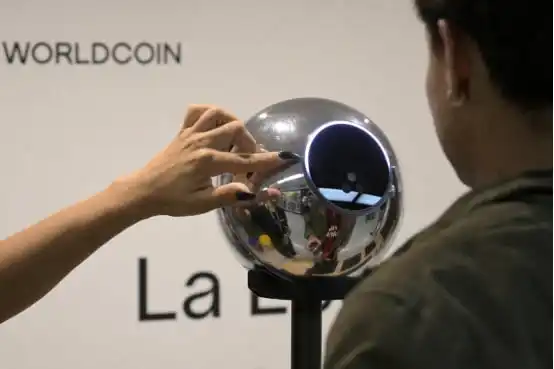
This is precisely the market World aims to capture. Its core product, World ID, uses the Orb device to scan a user's iris, generating a unique digital identity credential for each individual. This system attempts to achieve a "one person, one ID" principle, verifying authenticity while protecting user privacy as much as possible, and supporting on-chain calls.

Previously, the biggest market skepticism towards World was that, while the identity system held great imaginative potential, it consistently lacked real-world use cases. However, as it enters the third stage, this is changing. World has explicitly stated it will promote adoption across three main directions: enterprise, individual users, and AI Agents.

On the enterprise front, World is collaborating with companies like Zoom, Okta, and DocuSign to launch identity verification products targeting deepfake issues. As AI scams and deepfake attacks become more common, the demand for real-person verification is rising rapidly. Whether for video conferencing, remote work, or electronic signing, verifying identity authenticity is becoming crucial.

On the individual user front, World is targeting higher-frequency pain points on the internet. For example, Tinder could use World ID to verify if a user is a real person, and the Concert Kit for ticket purchases could reduce bot scalping and ticket touting.

This means World is attempting to solve the long-standing internet industry problems of fake accounts and bot traffic.

The most noteworthy aspect is the AI Agent front. World has launched AgentKit, aiming to establish a trusted authorization relationship between humans and AI. In the future, if everyone has their own AI assistant, these Agents might help users manage assets, execute transactions, sign agreements, or even participate in on-chain governance.

But before that, the system must be able to verify whom an AI represents and whether it has obtained authorization from a real human. The value of AgentKit lies in establishing a foundational trust framework for the future AI economy.

二、The AI Era: "Real Human Identity" is Becoming Scarce

The core reason for WLD's price increase isn't merely news-driven hype but the market beginning to reprice the scarcity value of "real human identity."

Over the past few years, numerous identity-focused projects have emerged in the crypto market, but most struggled to sustain themselves, fundamentally due to insufficient demand. While traditional internet had identity verification needs, it wasn't enough to support a massive, independent sector. However, the arrival of the AI era has completely changed this logic.

When the cost of generating AI content approaches zero, the truly scarce resource becomes human beings themselves. In the past, the internet's most important resources were traffic, content, and attention. In the future, scarcer resources might be real human identity, real human behavior, and real human authorization.

The reason is simple. AI can infinitely replicate text, images, audio, and even video, but it cannot naturally possess an independent human identity. This means that in the future internet, real humans could become an increasingly scarce resource. Whoever can verify a "real person" holds the key gateway.

This is also why the market is beginning to reassess World's long-term value. It is no longer betting on just a crypto narrative but on a crucial infrastructure need for the AI era.

Simultaneously, World's operational strategy has undergone a significant shift. The team announced it will concentrate resources on a few high-density, high-value cities, including San Francisco, New York, as well as regions like the UK, Germany, Japan, and South Korea, while scaling back operations in non-priority areas. This indicates the team is no longer pursuing widespread expansion but prioritizing establishing network effects in high-value markets first.

The business logic behind this strategy is clear. The value of an identity system inherently comes from network effects. Only when a region has enough users, enterprises, and application scenarios can the true value of World ID be realized. Otherwise, even with user growth, it's difficult to form a stable value loop.

Another key change is hardware upgrades. The next-generation Orb will move towards self-service, aiming to achieve 95% autonomous operation by the end of 2026. This is crucial.

Previously, the bottleneck in Orb expansion was the high labor cost, requiring offline operational support for each additional user. Once the device can achieve large-scale self-service operation, customer acquisition and expansion costs will significantly decrease, making the business model healthier.

三、The AI Agent Era: World Could Become a Key Gateway

From a broader perspective, World's advancement could have profound implications for the crypto industry.

First, it could drive the crypto narrative further from finance into identity. In the past, market discussions about Crypto primarily revolved around DeFi, stablecoins, ETFs, and RWA, essentially financial logic. But World represents another path: identity infrastructure.
In the future, identity itself could become a composable asset. Users with a trusted identity might gain access to airdrops, credit scores, governance rights, and even AI usage permissions.

Around the identity layer, new market sectors could emerge, such as identity protocols, human credit protocols, and AI authorization protocols.

Second, World could become important infrastructure for the AI Agent economy. If AI Agents truly become the next generation of productivity tools, the entire industry must solve three problems: who does the Agent belong to, is the Agent trustworthy, and is the Agent verifiable. World is addressing these three core needs.

From this angle, World's ambition isn't merely to be a crypto project but to become the identity gateway for the AI era. Just as Google became the gateway for information and Meta for social interaction, World aims to become the gateway for identity. If this positioning holds, the valuation logic for WLD would be fundamentally reconstructed.

Finally, the market's most pressing concern remains: how does WLD capture value? This is also a significant change brought by World ID 4.0. The new protocol introduces a fee mechanism, allowing credential issuers and the protocol to charge users (the service consumers), while end-users can still use it for free.

The significance of this model is that it gives World a real source of revenue. Users use the protocol for free, while ecosystem participants pay, which is highly similar to the business model of internet platforms.

As the number of identity verifications increases, enterprise adoption scales up, and protocol call frequency rises, the entire network has the potential to generate sustainable cash flow.

For the market, this might be the most crucial change, as it means World is no longer just telling a future story but beginning to establish a verifiable business model and value capture path.

Conclusion

WLD's price rise appears, on the surface, to be a recovery in market sentiment. At a deeper level, it reflects a shift in market perception. World's true bet isn't on short-term token price, but on the most fundamental question of the AI era: how to prove you are human.

As AI becomes more human-like, the value of a real human's identity will likely continue to appreciate. And whoever masters the proof-of-personhood network might control a key gateway to the next-generation internet. For World, this might just be the beginning.


Tiền kỹ thuật số thịnh hành

Câu hỏi Liên quan

QWhat is the core goal of World, according to the article?

AAccording to the article, World's core goal is to build a global 'proof of personhood' network, aimed at solving the critical internet problem of verifying that a user is a real human and not a bot, script, or AI-generated identity.

QWhat are the three key directions World is pushing for adoption in its third stage 'The Simple Plan'?

AIn the third stage of 'The Simple Plan,' World is pushing for adoption in three key directions: the enterprise side (e.g., partnerships with Zoom, Okta for deepfake verification), the individual user side (e.g., verifying real users on Tinder, preventing bots in ticket sales), and the AI Agent side (providing a trusted authorization framework between humans and AI via AgentKit).

QWhy does the article suggest that 'real human identity' is becoming a scarce resource in the AI era?

AThe article suggests that as the cost of AI-generated content approaches zero, what becomes truly scarce are genuine human identity, human behavior, and human authorization. AI can replicate content infinitely but cannot inherently possess an independent human identity, making verified human presence a critical and increasingly scarce resource on the future internet.

QWhat significant change does the introduction of World ID 4.0 protocol bring regarding value capture?

AThe introduction of the World ID 4.0 protocol brings a fee mechanism that allows credential issuers and the protocol to charge usage fees from parties utilizing the service, while end-users can still use it for free. This change provides World with a potential real revenue stream, moving towards a verifiable business model similar to internet platforms.

QWhat broader impact might World's development have on the cryptocurrency industry, as mentioned in the article?

AThe article mentions that World's development could expand the crypto narrative from primarily finance to include identity infrastructure. It could make identity a composable asset and establish itself as crucial infrastructure for the AI Agent economy. Furthermore, by aiming to become the 'identity gateway' for the AI era, it could fundamentally reshape valuation logic for projects like WLD.

Nội dung Liên quan

Phỏng vấn lãnh đạo Robinhood: Chiến lược "đòn bẩy" thu hút khách hàng với Meme + token hóa cổ phiếu Mỹ, tất cả các dòng sản phẩm đều đạt doanh thu hàng trăm triệu USD

**Tóm tắt:** Johann Kerbrat, Phó Chủ tịch cấp cao phụ trách mảng Crypto và Kinh doanh Quốc tế của Robinhood, đã chia sẻ chiến lược "đòn bẩy" đằng sau Robinhood Chain sau 3 tuần ra mắt mainnet: song song phát triển meme token và Tài sản Thế giới Thực (RWA). Chuỗi đạt khối lượng giao dịch DEX hàng tuần hơn 30 tỷ USD với hơn 105 triệu giao dịch. Chiến lược này nhằm thu hút hai nhóm người dùng khác nhau: cộng đồng DeFi qua meme và người dùng toàn cầu muốn tiếp cận cổ phiếu Mỹ được mã hóa (hiện có 90+ mã, tại 120+ quốc gia). Robinhood muốn chuyển 27 triệu tài khoản có tiền gửi của mình lên chain bằng cách kết hợp sản phẩm DeFi (như Robinhood Earn) với trải nghiệm người dùng đơn giản, thân thiện của CeFi, không yêu cầu ví tự quản. Về công nghệ, họ chọn stack L2 của Arbitrum thay vì xây L1 riêng để tận dụng bảo mật của Ethereum, hệ sinh thái EVM và tập trung vào sản phẩm tài chính. Kerbrat nhấn mạnh mục tiêu là "mở rộng chiếc bánh" - đưa nhiều người dùng hơn vào thế giới crypto hơn là cạnh tranh thị phần với các chain khác như Base. Các đối tác DeFi được lựa chọn dựa trên khả năng đáp ứng yêu cầu tuân thủ, tạo trải nghiệm độc đáo và khác biệt hóa. Về doanh thu, tất cả các mảng kinh doanh chính của Robinhood (chứng khoán, crypto, v.v.) đều đạt doanh thu hàng trăm triệu USD. Hiện tại, Robinhood Chain ưu tiên tối đa hóa tỷ lệ áp dụng hơn là tối ưu doanh thu từ phí gas, với tầm nhìn dài hạn là trở thành một "siêu ứng dụng" tài chính toàn diện.

marsbit57 phút trước

Phỏng vấn lãnh đạo Robinhood: Chiến lược "đòn bẩy" thu hút khách hàng với Meme + token hóa cổ phiếu Mỹ, tất cả các dòng sản phẩm đều đạt doanh thu hàng trăm triệu USD

marsbit57 phút trước

Báo cáo Quý 3 của Fidelity: BTC, ETH và SOL tiếp tục tích lũy đáy, đợt gấu tiền mã hóa này còn kéo dài bao lâu?

Báo cáo Q3 của Fidelity cho thấy thị trường tiền mã hóa đang tiếp tục tìm đáy trong xu hướng giảm hiện tại. Chỉ số NUPL trọng số giảm xuống -0.01, với BTC duy trì lợi nhuận chưa thực hiện trong khi ETH và SOL chìm sâu trong khoản lỗ. Tỷ lệ thống trị của BTC tăng lên 68%, phản ánh xu hướng tập trung vốn vào tài sản có tính thanh khoản cao nhất. Giá cả giảm mạnh, nhiều chỉ số tiệm cận vùng "đầu hàng" lịch sử. Dựa trên chu kỳ đáy khoảng 300 ngày vào các năm 2018 và 2022, đợt điều chỉnh kéo dài 203 ngày hiện tại có thể đã trải qua 2/3 chặng đường. Tháng 10/2026 được đề xuất là khung thời gian đáng quan sát, nhưng không phải là dự báo chắc chắn về điểm đáy. * **Bitcoin (BTC):** NUPL ở mức 0.09 (tích cực), nhưng động lực giá vẫn âm. Chỉ số Yardstick cho thấy BTC có thể bị định giá thấp so với sức mạnh băm của mạng lưới. * **Ethereum (ETH):** NUPL ở mức -0.43 (tích cực cho lợi nhuận dài hạn), động lực âm. Khối lượng chuyển stablecoin vẫn tăng trưởng mạnh, thể hiện nhu cầu sử dụng thực tế. * **Solana (SOL):** NUPL ở mức -0.72 (tích cực), động lực âm. Các chỉ số sử dụng cơ bản và khối lượng chuyển stablecoin vẫn thể hiện sự phục hồi tích cực bất chấp thị trường suy yếu. Báo cáo kết luận rằng thị trường vẫn đang trong giai đoạn tích lũy và điều chỉnh, với sự thận trọng cao.

marsbit1 giờ trước

Báo cáo Quý 3 của Fidelity: BTC, ETH và SOL tiếp tục tích lũy đáy, đợt gấu tiền mã hóa này còn kéo dài bao lâu?

marsbit1 giờ trước

Bitcoin và Ethereum đã thể hiện như thế nào trong tháng 8? Đây là những thông tin chính bạn cần biết

Bitcoin và Ethereum đã bước vào tháng Tám với thành tích lịch sử yếu sau khi kết thúc tháng Bảy tăng trưởng. Dữ liệu lịch sử cho thấy khả năng cả hai đóng cửa tháng với mức lỗ là không thể loại trừ. Trong tháng Bảy, Ethereum vượt trội hơn Bitcoin với mức tăng 18,5%, so với mức tăng 7% của Bitcoin. Tuy nhiên, hiệu suất trong tháng Tám của Ethereum từ năm 2016 trở lại đây khá hỗn hợp: tăng trong 4 lần và giảm trong 6 lần. Đợt tăng mạnh nhất là vào năm 2017 (92,86%), trong khi đợt giảm mạnh nhất là vào năm 2018 (-34,79%). Mặc dù lợi nhuận trung bình của Ethereum trong tháng Tám là 6,74%, nhưng lợi nhuận trung vị âm (-1,74%) cho thấy mức trung bình tích cực chủ yếu được thúc đẩy bởi một vài đợt tăng trưởng mạnh. Bitcoin cũng không có tín hiệu rõ ràng trong tháng Tám. Lợi nhuận trung bình hàng tháng là 1,06%, nhưng lợi nhuận trung vị là -6,99%, điều này cho thấy các phiên đóng cửa thua lỗ phổ biến hơn. Gần đây, Bitcoin thể hiện sự biến động: tăng 8,13% vào tháng 8/2025, tăng 2,95% vào 2024 và giảm 4,02% vào 2023. Tóm lại, mặc dù lợi nhuận trung bình lịch sử của cả Bitcoin và Ethereum trong tháng Tám là dương, nhưng lợi nhuận trung vị âm cho thấy khả năng thua lỗ là phổ biến hơn, với mức trung bình được nâng lên bởi một số đợt tăng mạnh hiếm hoi.

cryptonews.ru1 giờ trước

Bitcoin và Ethereum đã thể hiện như thế nào trong tháng 8? Đây là những thông tin chính bạn cần biết

cryptonews.ru1 giờ trước

Lãnh đạo HIVE: GPU phục vụ AI mang lại doanh thu cao gấp 10 lần mỗi giờ so với các trang trại khai thác tiền điện tử

Lãnh đạo HIVE: GPU cho AI mang lại doanh thu gấp 10 lần mỗi giờ so với trang trại khai thác tiền điện tử Trong một cuộc thảo luận gần đây, Chủ tịch HIVE Frank Holmes đã tiết lộ sự chênh lệch lớn về khả năng sinh lời giữa việc cung cấp sức mạnh tính toán cho trí tuệ nhân tạo (AI) và khai thác Bitcoin. Một cụm 504 GPU Nvidia B200 của HIVE trong cơ sở hạ tầng AI của Bell Canada ở Manitoba tạo ra khoảng 2,90 đô la mỗi giờ trên mỗi GPU. Trong khi đó, các giàn khai thác Bitcoin của công ty chỉ tạo ra khoảng 0,12 đô la mỗi giờ – chênh lệch hơn 20 lần. Đây là cốt lõi trong chiến lược của HIVE: đầu tư phần lớn vào kinh doanh AI có lợi nhuận cao hơn, đồng thời vẫn duy trì hoạt động khai thác Bitcoin đáng kể. Năm tài chính 2026, HIVE đạt tốc độ băm trung bình 22,2 EH/s, chiếm khoảng 3% tổng tốc độ băm mạng Bitcoin và khai thác được 2.885 BTC. Doanh thu tổng thể của HIVE năm 2026 đạt 297,8 triệu đô la, tăng 158%. Bộ phận AI và điện toán hiệu suất cao (HPC) mới, BUZZ HPC, đóng góp 19,5 triệu đô la. HIVE đã chuyển hướng sang AI từ sớm, với khoản đầu tư 70 triệu đô la vào chip Nvidia cách đây ba năm, giúp họ có lợi thế khi cơn sốt AI bùng nổ. Công ty đã nhận được đánh giá "Mua" đầu tiên từ một nhà phân tích, ký thỏa thuận cung cấp điện toán đám mây GPU trị giá khoảng 220 triệu đô la với Bell và startup AI Cohere, cũng như huy động 75 triệu đô la thông qua phát hành trái phiếu. Dự án đầy tham vọng nhất của HIVE là một trung tâm dữ liệu AI công suất 320 MW đang được xây dựng ở Vùng Toronto, dự kiến chứa hơn 100.000 GPU. Khi hoạt động đầy đủ vào nửa cuối năm 2027, cơ sở này dự kiến tạo ra khoảng 360 triệu đô la doanh thu định kỳ hàng năm. HIVE không đơn độc trong xu hướng này. Các công ty khai thác đối thủ như MARA, Hut 8 và Terawulf cũng đang chuyển hướng nguồn lực năng lượng hạn chế sang các hợp đồng AI/HPC sinh lời hơn, trước bối cảnh biên lợi nhuận khai thác Bitcoin giảm và giá mỗi hash giảm. Mục tiêu trước mắt của HIVE là tăng gấp mười lần doanh thu hàng năm từ AI/HPC vào cuối năm tài chính, phụ thuộc vào việc đưa vào vận hành đúng hạn trung tâm dữ liệu Toronto và các hợp đồng dịch vụ đám mây GPU tiếp theo.

cryptonews.ru3 giờ trước

Lãnh đạo HIVE: GPU phục vụ AI mang lại doanh thu cao gấp 10 lần mỗi giờ so với các trang trại khai thác tiền điện tử

cryptonews.ru3 giờ trước

Giao dịch

Giao ngay

Bài viết Nổi bật

Làm thế nào để Mua WLD

Chào mừng bạn đến với HTX.com! Chúng tôi đã làm cho mua Worldcoin (WLD) trở nên đơn giản và thuận tiện. Làm theo hướng dẫn từng bước của chúng tôi để bắt đầu hành trình tiền kỹ thuật số của bạn.Bước 1: Tạo Tài khoản HTX của BạnSử dụng email hoặc số điện thoại của bạn để đăng ký tài khoản miễn phí trên HTX. Trải nghiệm hành trình đăng ký không rắc rối và mở khóa tất cả tính năng. Nhận Tài khoản của tôiBước 2: Truy cập Mua Crypto và Chọn Phương thức Thanh toán của BạnThẻ Tín dụng/Ghi nợ: Sử dụng Visa hoặc Mastercard của bạn để mua Worldcoin (WLD) ngay lập tức.Số dư: Sử dụng tiền từ số dư tài khoản HTX của bạn để giao dịch liền mạch.Bên thứ ba: Chúng tôi đã thêm những phương thức thanh toán phổ biến như Google Pay và Apple Pay để nâng cao sự tiện lợi.P2P: Giao dịch trực tiếp với người dùng khác trên HTX.Thị trường mua bán phi tập trung (OTC): Chúng tôi cung cấp những dịch vụ được thiết kế riêng và tỷ giá hối đoái cạnh tranh cho nhà giao dịch.Bước 3: Lưu trữ Worldcoin (WLD) của BạnSau khi mua Worldcoin (WLD), lưu trữ trong tài khoản HTX của bạn. Ngoài ra, bạn có thể gửi đi nơi khác qua chuyển khoản blockchain hoặc sử dụng để giao dịch những tiền kỹ thuật số khác.Bước 4: Giao dịch Worldcoin (WLD)Giao dịch Worldcoin (WLD) dễ dàng trên thị trường giao ngay của HTX. Chỉ cần truy cập vào tài khoản của bạn, chọn cặp giao dịch, thực hiện giao dịch và theo dõi trong thời gian thực. Chúng tôi cung cấp trải nghiệm thân thiện với người dùng cho cả người mới bắt đầu và người giao dịch dày dạn kinh nghiệm.

Tổng lượt xem 456Xuất bản vào 2024.12.11Cập nhật vào 2026.06.02

Làm thế nào để Mua WLD

Thảo luận

Chào mừng đến với Cộng đồng HTX. Tại đây, bạn có thể được thông báo về những phát triển nền tảng mới nhất và có quyền truy cập vào thông tin chuyên sâu về thị trường. Ý kiến ​​của người dùng về giá của WLD (WLD) được trình bày dưới đây.

活动图片