The First to Bring an AI OS to 1.4 Billion People Might Actually Be WeChat?

marsbitXuất bản vào 2026-06-10Cập nhật gần nhất vào 2026-06-10

Tóm tắt

WeChat has introduced a significant AI update, allowing mini-program developers to integrate their services with WeChat AI. Developers can choose an "automatic mode," where WeChat AI autonomously analyzes and operates mini-programs without additional coding, or a "development mode" for creating customized skills. This move effectively transforms WeChat's vast ecosystem—including millions of mini-programs, WeChat Pay, and official accounts—into an execution layer for AI. The technical documentation reveals that WeChat's approach aligns with industry standards like MCP (Model Context Protocol) and incorporates practical lessons from AI-agent development. Key design principles include a clear "attention weight" system for API calls and a "fact + action" response structure to ensure reliable operations. Unlike Apple's Siri, which struggles with third-party app integration, WeChat's centralized control over mini-program code provides a "God's-eye view," enabling seamless AI orchestration across services. This development revives the concept of "WeChat OS," where the app could function as a natural-language-operated platform for daily tasks—from booking flights to ordering food—all within a chat interface. While challenges remain in areas like payment security and user trust, WeChat's existing service network and massive user base position it uniquely to advance AI agents from conversation to actionable assistance, potentially making complex tasks feel effortless for its 1.432 bi...

WeChat's AI has finally moved.

On the very same day as Apple's WWDC, WeChat did something potentially more significant than Apple, releasing an unassuming announcement: "Guidance for Developers to Access the WeChat AI Ecosystem."
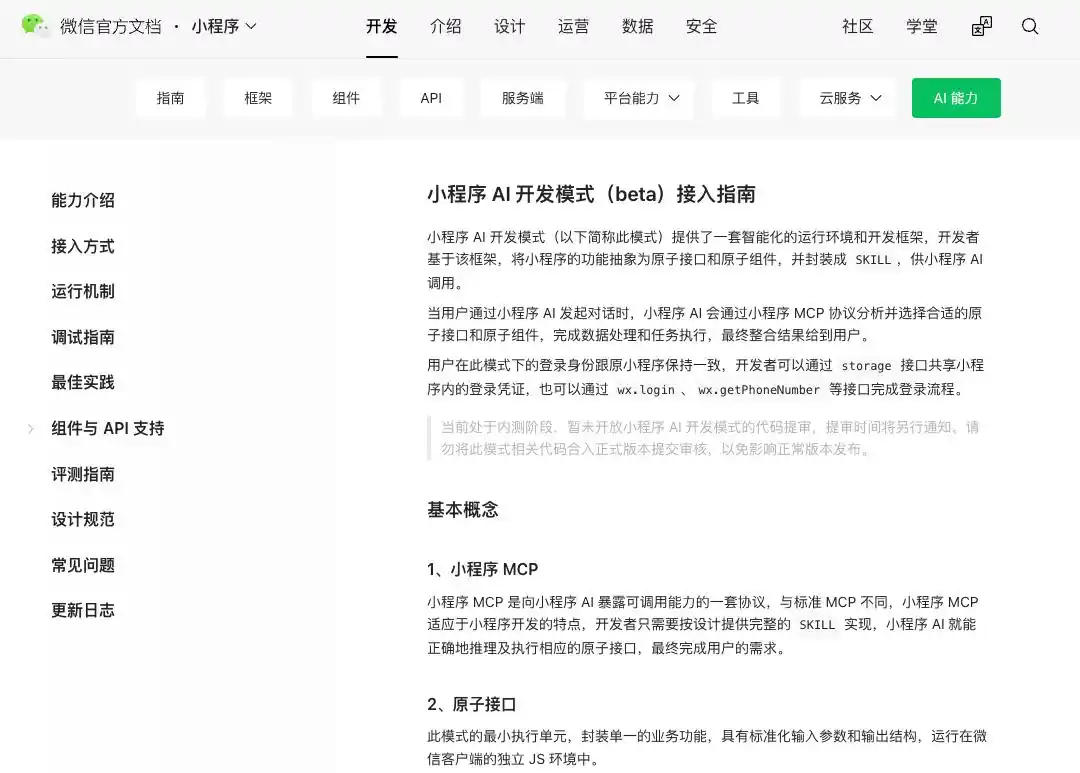
Starting today, Mini Program developers can grant authorization, allowing WeChat AI to read, operate, and invoke the functionalities of Mini Programs.

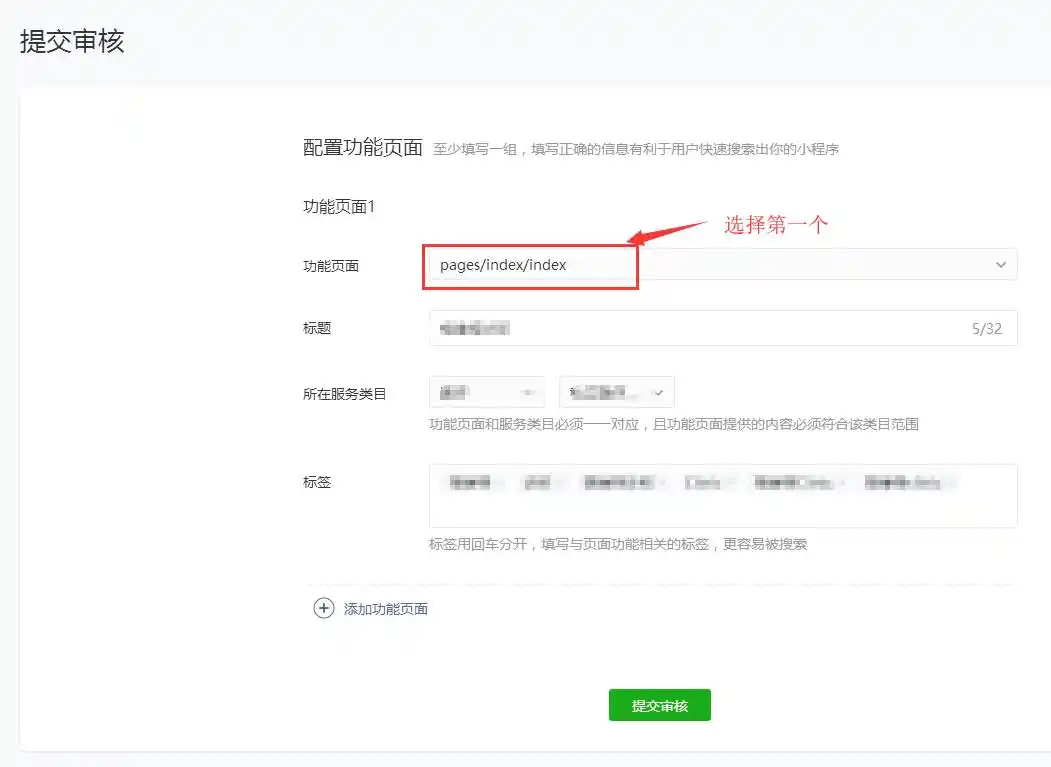
WeChat offers two access modes. The first is "Automatic Mode," with a nearly zero barrier to entry. Developers simply toggle a switch, and the platform itself reads the source code, analyzes pages, figures out what the Mini Program can do, and then the AI can directly operate it, all without writing a single line of code.

The other mode is called "Developer Mode," where developers create customized Skills, which are called by the AI after passing review. Both modes can be enabled simultaneously. Meituan has already announced its integration.

This should not be understood merely as the launch of another new feature. Instead, it signals that WeChat is turning its entire ecosystem—millions of Mini Programs, WeChat Pay, service notifications, Official Accounts—into the execution layer for AI.

Examining the Skill Documentation: How WeChat AI Invokes Mini Programs

The WeChat open documentation publicly shares the technical specifications for Mini Programs to integrate AI Skills. A close look reveals many design details hidden within.

Official skill documentation guide 👇🏻:

https://developers.weixin.qq.com/miniprogram/dev/ai/best-practices.html
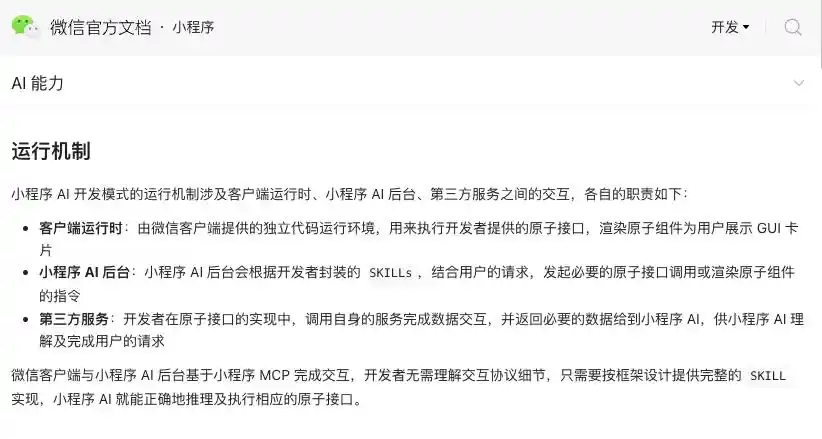
From an architectural perspective, those familiar with AI development will immediately recognize it: it's essentially MCP (Model Context Protocol). The `mcp.json` declares the function and parameters of each atomic interface, and `SKILL.md` describes how the entire business process runs. This is almost identical to the MCP+Skills architecture found in Claude, Cursor, or VS Code. WeChat didn't reinvent the wheel; it directly adopted the industry-standard that is currently converging.

In the guidance, WeChat provides a clear "attention weight" system. When the AI decides which interface to call and what parameters to generate, it gives the highest priority to the content returned by the interface (five stars), followed by the interface description (four stars) and parameter descriptions (four stars) in `mcp.json`. `SKILL.md` ranks last (three stars). This means where developers write something matters more than what they write—the weight the AI gives to the same rule is completely different if it's written in the interface return versus in `SKILL.md`.
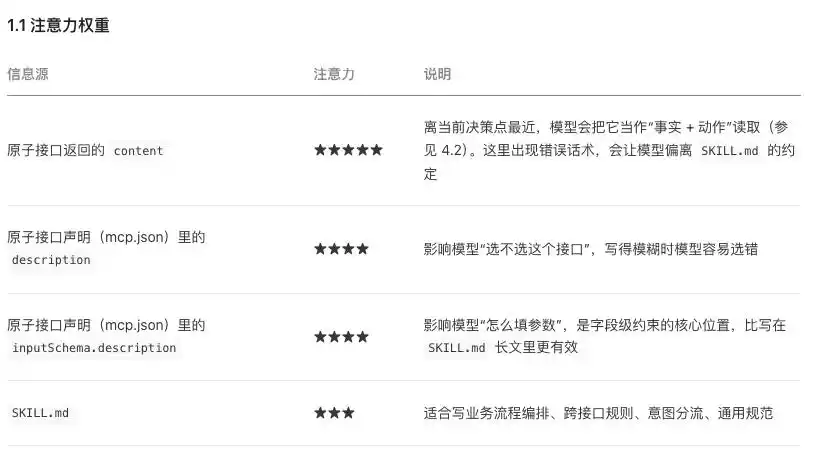
At the interface return level, there is a core specification: a two-stage "Fact + Action" format. First, tell the AI "what happened," then tell it "what to do next." If only the action is written without the fact, the AI might interpret "display card" as "prepare to call the next interface" and skip user confirmation. This is a rule learned after stepping into many pitfalls.
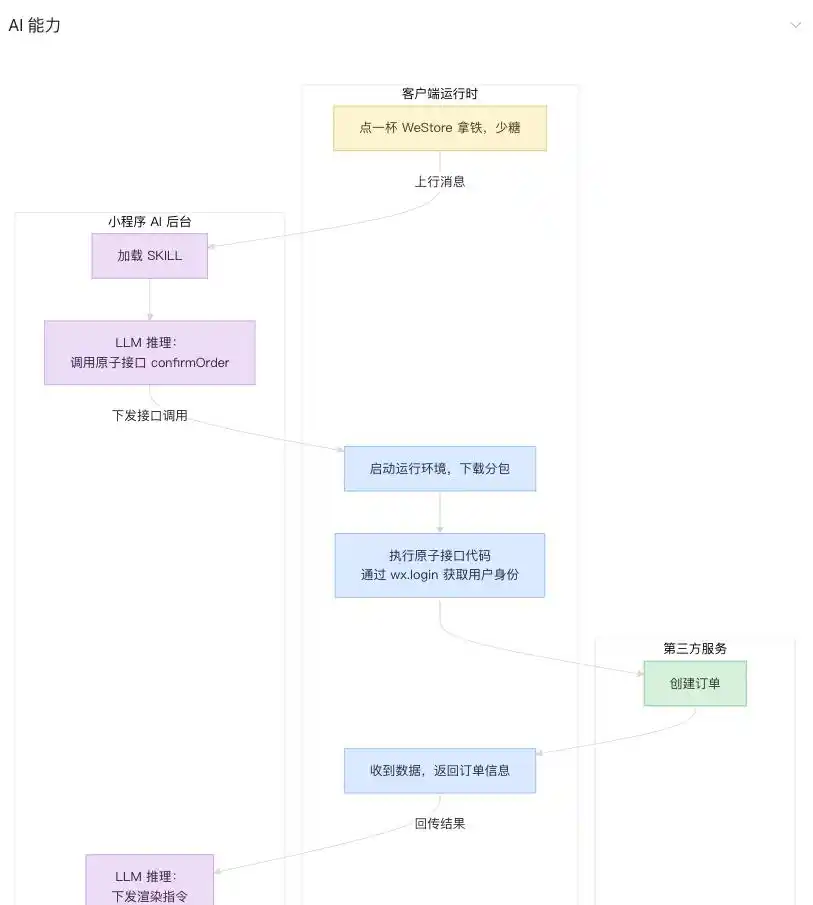
Fourth, parameter passing prioritizes using IDs over natural language. Taking the "Coffee Ordering" scenario in the diagram as an example, after the user states a need, the AI understands the vague intent and handles selection, modification, specification changes, and payment processing, all without leaving the chat dialog.

This design reveals a signal: WeChat has already run enough practical cases, knows where the pitfalls lie in AI calling external services, and has solidified these experiences into developer norms.

In fact, comparing WeChat Mini Programs, which are also known for their "ecosystem," to Apple's apps, WeChat possesses a kind of "God's-eye view" over its own ecosystem. This is the prerequisite for all this implementation.

Why It Might Be More Important Than Apple's AI

This year at WWDC, Apple released the new Siri AI. Despite having Google Gemini integrated at the underlying level and supporting natural language creation for Shortcuts, it didn't spark much discussion.
A closer look reveals the gap: Apple is making AI coordinate some native functions within the iOS system. Once it involves third-party applications—those apps installed on your phone—it becomes strained.

Take Ele.me, for example. Its code runs on Ele.me's own servers, which Apple cannot read. For Siri to call Ele.me, Ele.me's engineers must proactively connect to the App Intents API, negotiating and integrating one by one, a time-consuming and labor-intensive process.
What WeChat is doing is enabling AI to directly operate millions of third-party services, because Mini Programs are different. The code for every Mini Program, from developer submission, through WeChat's review, to finally running on the user's phone, remains entirely within WeChat's technical system throughout the entire process. During the review phase, WeChat can scan the code, automatically analyzing "what pages this Mini Program has, what it can do, what its inputs and outputs are."

This is why "Automatic Mode" is possible—developers don't need to write a single line of code. They just flip a switch, and WeChat itself can translate your Mini Program into a tool the AI can invoke. WeChat's foundational architecture naturally supports this. It possesses a "God's-eye view," enabling scheduling based on centralization.

Apple does not have this architectural advantage, and neither does Google.

Also noteworthy is the recent rumor that WeChat is collaborating with Huawei, Honor, Xiaomi, OPPO, and vivo to launch A2A (Agent-to-Agent) assistant capabilities, allowing users to directly initiate WeChat audio/video calls or send messages via their phone's voice assistant.
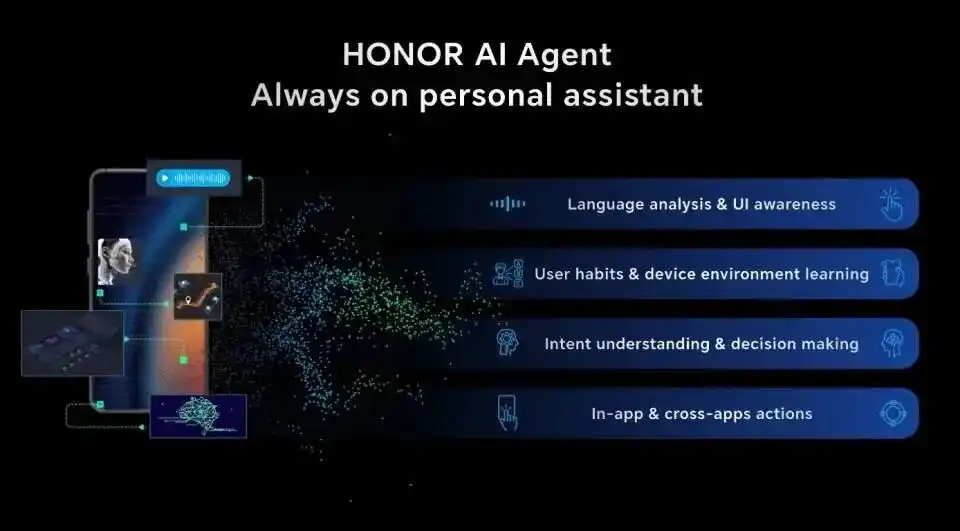
Internally, WeChat AI can invoke millions of Mini Programs. Externally, smartphone manufacturers' AI assistants can invoke WeChat. WeChat is becoming the super connector of the AI era, a service hub that all AIs can access.

The Old Prophecy of "WeChat OS"

When Mini Programs were launched, many joked that WeChat wanted to become "WeChat OS." Back then, it was more of a figure of speech—Mini Programs replaced some app functionalities but were essentially a "light application platform."

More coincidentally, the centralized review mechanism designed at the time was for quality and security control. Nine years later, this design, initially criticized as "excessive control," has unexpectedly become an infrastructure advantage in the AI era. The distributed App ecosystem (Apple/Android) seemed more "free" at the time, but now it has become an obstacle to AI integration.
An old prophecy, due to the emergence of new-era technology—AI—has taken on a transformative change.

Previously, when writing about OpenClaw and Feishu, I mentioned a judgment: IM (Instant Messaging) is the most natural entry point for AI Agents because dialogue itself is the most natural interaction between humans and AI, and the service ecosystem (bots, payments, mini-programs) inherent to IM allows AI not only to "chat" but also to "do." Feishu is already moving in this direction, launching enhanced Bot APIs and AI Agent nodes.
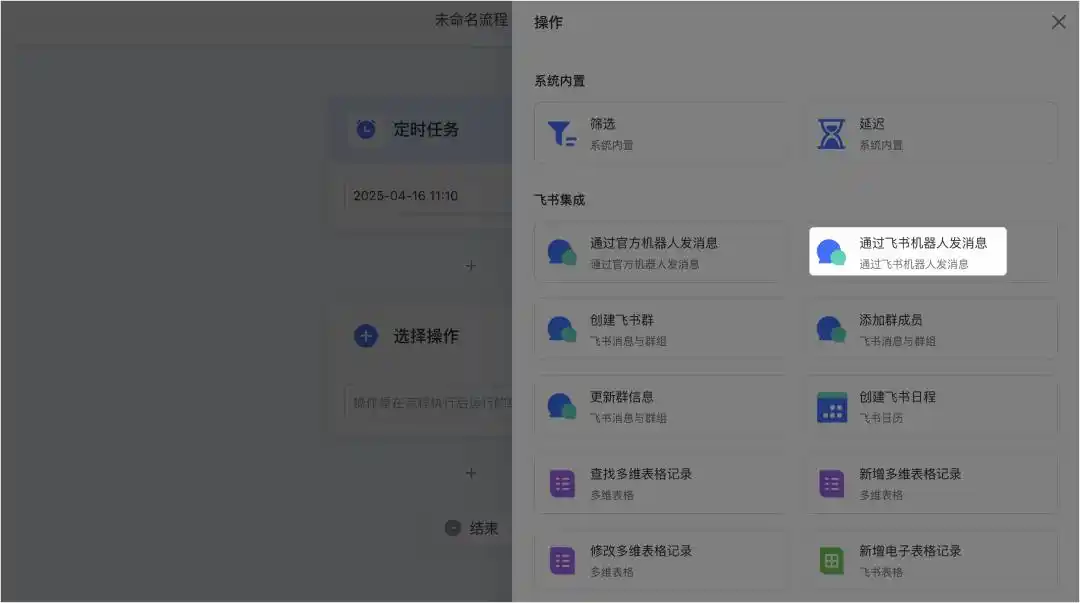
However, Feishu is an enterprise collaboration tool, covering work scenarios. WeChat has a distinctly different breadth—1.432 billion monthly active users, hundreds of Mini Programs across niche sectors, covering almost all service needs of a person's daily life, from ordering takeout to hospital registration to buying flight tickets to paying utility bills.
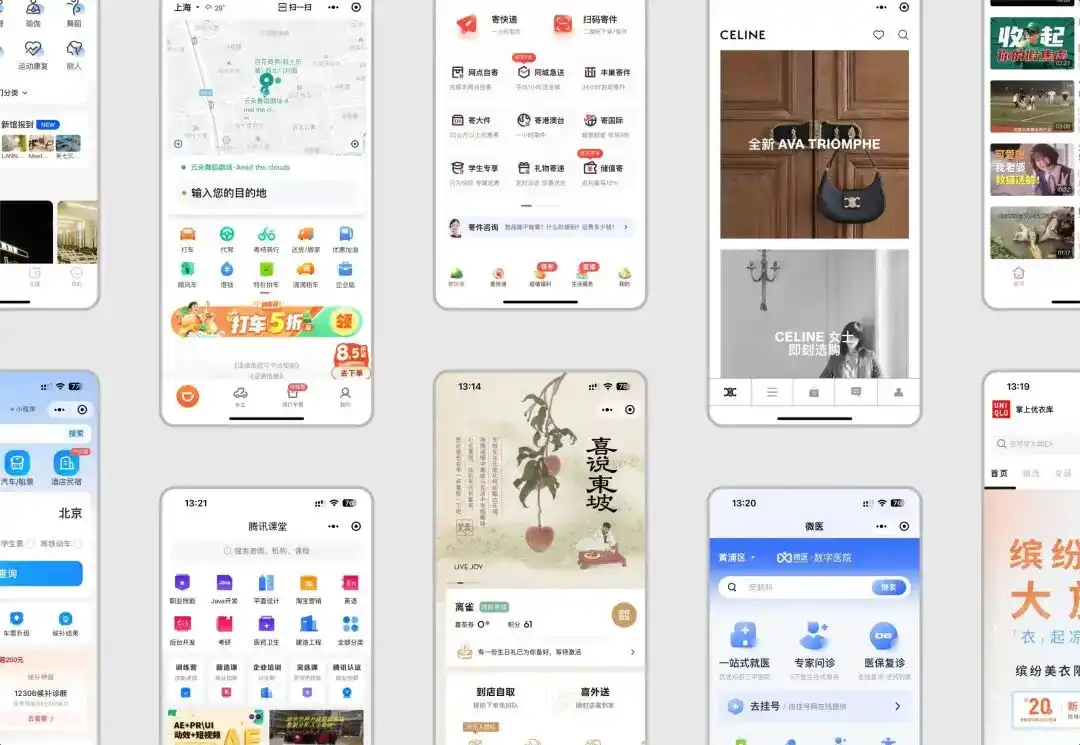
If WeChat AI can indeed smoothly invoke these Mini Programs to complete tasks, then, as the prophecy said, it becomes an operating system operated with natural language.

A user says, "Help me book a high-speed rail ticket from Beijing to Shanghai for tomorrow at 3 pm." The AI deconstructs the intent, invokes the 12306 Mini Program to check tickets, select seats, completes the order via WeChat Pay, all without leaving WeChat. This path can theoretically be executed today.

Of course, there is distance between theory and reality. AI invocation involving payment scenarios requires a near-zero error tolerance—ordering the wrong coffee is a minor issue, but buying the wrong flight ticket is a major one. The accuracy requirements for the underlying model are far higher than for conversational scenarios. This is also a common bottleneck facing AI Agent implementation globally: the gap between "able to chat" and "able to get things done" is not measured by technical metrics but by trust.
But WeChat has at least done one thing right: it didn't build a service network from scratch. Over the years, what ChatGPT has been doing is first having a smart brain, then connecting one by one to Shopify, DoorDash, Stripe, each connection built from the ground up. To this day, transaction-related queries still account for less than 3%.

The real change that is about to happen might be imperceptible to most users. One day, you type into WeChat, "Help me book a ticket to Shanghai for 9 pm tonight," and then it's done. You might not even know which Mini Program was called in the background or what payment process was followed.

This "imperceptible completion" is the true mark of a mature AI Agent. WeChat is closer to this step than anyone else.

This article is from the WeChat Official Account "APPSO", author: APPSO discovering tomorrow's products

Câu hỏi Liên quan

QWhat is the core change that WeChat announced regarding its AI and Mini Programs?

AWeChat announced that Mini Program developers can now grant permission for its AI to read, operate, and call upon their Mini Programs. This allows AI to directly execute tasks within these programs.

QWhat is the key architectural advantage WeChat has over Apple's iOS in integrating AI with third-party services?

AWeChat has a 'God's-eye view' due to its centralized ecosystem. Every Mini Program's code runs within WeChat's technical framework, from submission to review and execution. This allows WeChat to automatically analyze and translate a program's functions for AI use without requiring developers to write new code for the AI integration.

QWhat industry-standard architecture did WeChat adopt for its AI Skill system, and what does it allow?

AWeChat adopted the MCP (Model Context Protocol) architecture for its AI Skill system. This industry-standard approach allows its AI to understand the functions and parameters of Mini Program interfaces and the overall business workflow, enabling seamless AI-agent interaction.

QAccording to the article, what is the 'final sign of true maturity' for an AI Agent like WeChat's?

AThe final sign of true maturity is 'unconscious completion.' This is when a user makes a request in natural language (e.g., 'Book me a ticket to Shanghai for 9 PM tonight'), and the AI completes the task using the necessary services and payment processes in the background without the user needing to know which specific Mini Program or flow was used.

QWhy does the article suggest WeChat's move might be more significant than Apple's new Siri AI announced at WWDC?

AIt's more significant because Apple's Siri AI is largely limited to coordinating native iOS functions. To integrate with third-party apps, each developer must manually adapt their app using Apple's App Intents framework. In contrast, WeChat's architecture gives it direct, centralized access to millions of third-party Mini Programs, allowing for broader and more immediate AI-powered service automation for its vast user base.

Nội dung Liên quan

AGI không phải là điểm kết thúc, nghiên cứu mới của DeepMind: Hướng tới ASI, tiến bộ AI thực sự mới chỉ bắt đầu

DeepMind mới đây công bố nghiên cứu cho rằng AGI (Trí tuệ nhân tạo phổ quát) không phải là điểm cuối. AI sẽ tiếp tục phát triển vượt qua khả năng của các nhóm chuyên gia con người hàng đầu, hướng tới ASI (Trí tuệ siêu nhân tạo). Báo cáo phân biệt ba khái niệm: AGI (năng lực nhận thức tương đương mức trung bình của con người), ASI (vượt trội con người trong hầu hết lĩnh vực quan tâm), và UAI (giới hạn lý thuyết tối thượng). Nghiên cứu đề xuất bốn con đường tiềm năng để chuyển từ AGI sang ASI: 1. Mở rộng quy mô tính toán, mô hình và dữ liệu. 2. Tiến hóa thuật toán, có thể thay đổi mô hình mới. 3. Tự cải thiện đệ quy, tạo phản hồi tích cực. 4. Điều phối đa tác tử và trí tuệ tập thể. Đồng thời, báo cáo chỉ ra sáu điểm nghẽn chính: giới hạn dữ liệu chất lượng cao, áp lực tài nguyên và kinh tế, hạn chế của mô hình mạng nơ-ron hiện tại, nghiên cứu ngày càng khó khăn, rào cản trừu tượng, cùng các vấn đề quản lý và phản ứng xã hội. Khi AI vượt con người, các phương pháp đánh giá truyền thống sẽ mất ý nghĩa. Cần xây dựng hệ thống đánh giá mới cho thời kỳ hậu AGI. ASI không phải là hệ thống toàn năng, vẫn chịu ràng buộc bởi các quy luật vật lý, độ phức tạp tính toán, dữ liệu, tài nguyên và tốc độ phản hồi thực tế. Tương lai phát triển của AI vẫn chứa nhiều bất định, đòi hỏi một nỗ lực liên ngành quy mô lớn để theo dõi và ứng phó.

marsbit42 phút trước

AGI không phải là điểm kết thúc, nghiên cứu mới của DeepMind: Hướng tới ASI, tiến bộ AI thực sự mới chỉ bắt đầu

marsbit42 phút trước

Kraken Ra Mắt Hợp Đồng Perpetual Trước IPO Cho OpenAI Và Anthropic Với Đòn Bẩy Lên Đến 5x

Kraken đã ra mắt hợp đồng tương lai vĩnh viễn (perps) tiền IPO cho hai công ty trí tuệ nhân tạo hàng đầu là OpenAI và Anthropic. Các hợp đồng này cho phép các nhà giao dịch đủ điều kiện mở vị thế mua (long) hoặc bán (short) đối với các công ty tư nhân được theo dõi sát sao này trước khi họ lên sàn chứng khoán, với đòn bẩy lên tới 5x. Sản phẩm này đánh dấu một bước tiến trong việc mở rộng cơ sở hạ tầng phái sinh tiền mã hóa sang các tài sản ngoài chuỗi, cung cấp cho các nhà giao dịch một cách tiếp cận thay thế để có thể tiếp xúc với các công ty tư nhân vốn thường khó tiếp cận. Tuy nhiên, hợp đồng tiền IPO có những rủi ro đặc thù. Khác với các hợp đồng vĩnh viễn cho tiền mã hóa có giá cả minh bạch, định giá công ty tư nhân phụ thuộc vào nhiều yếu tố như các vòng gọi vốn, giao dịch thứ cấp và kỳ vọng về thời điểm IPO. Điều này khiến việc định giá và quản lý rủi ro trở nên phức tạp hơn. Việc sử dụng đòn bẩy cao có thể khuếch đại lợi nhuận nhưng cũng làm gia tăng đáng kể rủi ro thua lỗ và thanh lý. Do đó, các nhà giao dịch cần hiểu rõ bản chất của sản phẩm mới và các rủi ro độc đáo của thị trường tư nhân trước khi tham gia.

bitcoinist49 phút trước

Kraken Ra Mắt Hợp Đồng Perpetual Trước IPO Cho OpenAI Và Anthropic Với Đòn Bẩy Lên Đến 5x

bitcoinist49 phút trước

Các giao dịch M&A trên thị trường tiền mã hóa đang diễn ra sôi động bất thường

Thị trường mua bán và sáp nhập (M&A) trong lĩnh vực tiền mã hóa đang trở nên sôi động bất thường. Theo số liệu từ RootData, trong tháng này, số vụ M&A đã lên tới 10, trong khi số vòng gọi vốn chỉ là 14. Tỷ lệ M&A trong tổng số giao dịch thị trường sơ cấp đã đạt khoảng 42%, mức cao nhất từ trước đến nay. Hiện tượng này phản ánh trước hết là sự suy giảm kéo dài của thị trường gọi vốn. Kể từ tháng 11/2024, số lượng giao dịch M&A hàng tháng duy trì ở mức 10-20 vụ, trong khi giao dịch gọi vốn giảm mạnh từ khoảng 100 xuống còn khoảng 50 vụ. Điều này có nghĩa là M&A không thay thế cho sự sôi động của thị trường vốn, mà trở thành hình thức giao dịch ổn định hơn khi thị trường vốn thu hẹp. Các công ty lớn như Coinbase, Kraken, Ripple, MoonPay... đang tận dụng thời kỳ giá trị định thấp để mua lại các đội ngũ, giấy phép, công nghệ với chi phí thấp hơn, ít cạnh tranh hơn và có thêm quyền thương lượng. Bốn lý do chính thúc đẩy M&A là: định giá đủ rẻ, tiết kiệm chi phí thời gian và thử sai, tiếp cận nguồn lực giấy phép/tuân thủ, và hợp nhất chuỗi giá trị thượng-nhượng nguồn. Các lĩnh vực trọng tâm của M&A hiện nay bao gồm: cơ sở hạ tầng giao dịch (đặc biệt là phái sinh), thanh toán & stablecoin, giấy phép tuân thủ, và phát hành/phân phối tài sản (RWA). Làn sóng M&A này đang viết lại logic thoái vốn cho thị trường sơ cấp, cung cấp một lối thoát khác ngoài việc phụ thuộc vào phát hành token. Nó buộc các dự án phải chú trọng hơn vào giá trị sản phẩm, doanh thu thực và khả năng tích hợp chiến lược thay vì chỉ đóng gói câu chuyện để gọi vốn. Tuy nhiên, xu hướng này cũng cho thấy ngành công nghiệp tiền mã hóa đang trở nên tập trung hơn. Các nền tảng lớn dần nắm giữ tài sản, thanh khoản và giấy phép, khiến việc gia nhập thị trường của các startup mới ngày càng khó khăn, đánh dấu sự kết thúc của thời kỳ khởi nghiệp dễ dàng.

链捕手1 giờ trước

Các giao dịch M&A trên thị trường tiền mã hóa đang diễn ra sôi động bất thường

链捕手1 giờ trước

Giao dịch mua lại và sáp nhập trên thị trường tiền mã hóa đang diễn ra cực kỳ sôi động

Thị trường M&A trong lĩnh vực tiền mã hóa đang hoạt động sôi động một cách bất thường, với tỷ lệ giao dịch mua lại chiếm khoảng 42% tổng số giao dịch thị trường sơ cấp, mức cao nhất từ trước đến nay. Điều này phản ánh xu hướng suy giảm rõ rệt của thị trường gọi vốn. Các giao dịch M&A không thực sự thay thế sự sôi động của thị trường vốn, mà trở thành hình thức giao dịch ổn định khi thị trường gọi vốn thu hẹp. Các công ty hàng đầu như Coinbase, Kraken, Ripple, MoonPay đang tích cực mua lại để bổ sung năng lực cốt lõi với chi phí thấp hơn. Động lực chính bao gồm: định giá mục tiêu rẻ hơn, tiết kiệm thời gian và chi phí thử sai, tiếp cận giấy phép/tài nguyên tuân thủ, và tích hợp chuỗi giá trị. Các lĩnh vực trọng tâm của M&A là: cơ sở hạ tầng giao dịch (đặc biệt là phái sinh), thanh toán & stablecoin, RWA & phát hành tài sản. Điều này cho thấy các gã khổng lồ đang mở rộng từ sản phẩm đơn lẻ sang mô hình tập đoàn tài chính. Sự gia tăng M&A đang viết lại logic thoát vốn cho thị trường sơ cấp, cung cấp một lối thoát thay thế ngoài việc phụ thuộc vào token, khuyến khích các startup tập trung vào giá trị sản phẩm và năng lực tích hợp thực tế. Tuy nhiên, nó cũng cho thấy ngành công nghiệp đang trở nên tập trung hơn, với rào cản gia nhập ngày càng cao do yếu tố tuân thủ và sức mạnh của các nền tảng lớn.

marsbit1 giờ trước

Giao dịch mua lại và sáp nhập trên thị trường tiền mã hóa đang diễn ra cực kỳ sôi động

marsbit1 giờ trước

Bức tranh toàn cảnh về hệ sinh thái bảo mật Solana: Chồng bảo mật hoàn chỉnh từ Máy tính đến AI

Solana vẫn đang ở giai đoạn đầu trong việc phát triển hệ sinh thái bảo mật, tập trung vào các lĩnh vực như Ngân hàng mới (Neobanks) và DeFi riêng tư. Bài viết cung cấp cái nhìn toàn cảnh về hệ sinh thái này, từ cơ sở hạ tầng tính toán đến các ứng dụng AI. **Cơ sở hạ tầng Tính toán Riêng tư:** Hai dự án chính là Arcium (sử dụng MPC - Tính toán Đa bên) và Magic Block (sử dụng TEE - Môi trường Thực thi Tin cậy) cung cấp nền tảng cho tính toán bảo mật trên Solana. Chúng cho phép tạo lập sổ lệnh, nhóm thanh khoản kín và các giao thức DeFi riêng tư. **Chuyển khoản & Số dư Riêng tư:** Các ứng dụng như Umbra (trên Arcium), Privacy Cash và Hush cung cấp giải pháp cho giao dịch và số dư riêng tư thông qua các kỹ thuật như mã hóa, nhóm che giấu (shielding pools) và bằng chứng không kiến thức (ZK-proof). **Giao dịch không để lại dấu vết:** Các giao thức như encifherio và VanishTrade bảo vệ chiến lược giao dịch khỏi front-running và MEV bằng cách ẩn chi tiết đặt lệnh thông qua mã hóa hoặc định tuyến thanh khoản được che giấu. Darklake phát triển cơ sở hạ tầng thanh khoản và nhóm giao dịch kín (dark pool) dựa trên ZK. **Ứng dụng Nâng cao:** Các thị trường dự đoán riêng tư (ví dụ: Melee Markets) sử dụng cơ sở hạ tầng như của Arcium để mã hóa sổ lệnh, bảo vệ chiến lược của người tham gia. Trong lĩnh vực AI, Loyal tạo ra các giao thức thông minh bảo mật, lưu trữ dữ liệu người dùng (hội thoại, truy vấn) ở dạng mã hóa trên Solana với các quy tắc truy cập nghiêm ngặt. Tầm nhìn cuối cùng là một "ngăn xếp bảo mật hoàn chỉnh" nơi các công nghệ như ZK và FHE (Mã hóa Đồng cấu hình Đầy đủ) kết hợp để mang lại tính bảo mật mạnh mẽ và có thể kết hợp trên quy mô lớn.

Foresight News1 giờ trước

Bức tranh toàn cảnh về hệ sinh thái bảo mật Solana: Chồng bảo mật hoàn chỉnh từ Máy tính đến AI

Foresight News1 giờ trước

Giao dịch

Giao ngay
Hợp đồng Tương lai

Bài viết Nổi bật

Làm thế nào để Mua PEOPLE

Chào mừng bạn đến với HTX.com! Chúng tôi đã làm cho mua ConstitutionDAO (PEOPLE) trở nên đơn giản và thuận tiện. Làm theo hướng dẫn từng bước của chúng tôi để bắt đầu hành trình tiền kỹ thuật số của bạn.Bước 1: Tạo Tài khoản HTX của BạnSử dụng email hoặc số điện thoại của bạn để đăng ký tài khoản miễn phí trên HTX. Trải nghiệm hành trình đăng ký không rắc rối và mở khóa tất cả tính năng. Nhận Tài khoản của tôiBước 2: Truy cập Mua Crypto và Chọn Phương thức Thanh toán của BạnThẻ Tín dụng/Ghi nợ: Sử dụng Visa hoặc Mastercard của bạn để mua ConstitutionDAO (PEOPLE) ngay lập tức.Số dư: Sử dụng tiền từ số dư tài khoản HTX của bạn để giao dịch liền mạch.Bên thứ ba: Chúng tôi đã thêm những phương thức thanh toán phổ biến như Google Pay và Apple Pay để nâng cao sự tiện lợi.P2P: Giao dịch trực tiếp với người dùng khác trên HTX.Thị trường mua bán phi tập trung (OTC): Chúng tôi cung cấp những dịch vụ được thiết kế riêng và tỷ giá hối đoái cạnh tranh cho nhà giao dịch.Bước 3: Lưu trữ ConstitutionDAO (PEOPLE) của BạnSau khi mua ConstitutionDAO (PEOPLE), lưu trữ trong tài khoản HTX của bạn. Ngoài ra, bạn có thể gửi đi nơi khác qua chuyển khoản blockchain hoặc sử dụng để giao dịch những tiền kỹ thuật số khác.Bước 4: Giao dịch ConstitutionDAO (PEOPLE)Giao dịch ConstitutionDAO (PEOPLE) dễ dàng trên thị trường giao ngay của HTX. Chỉ cần truy cập vào tài khoản của bạn, chọn cặp giao dịch, thực hiện giao dịch và theo dõi trong thời gian thực. Chúng tôi cung cấp trải nghiệm thân thiện với người dùng cho cả người mới bắt đầu và người giao dịch dày dạn kinh nghiệm.

Tổng lượt xem 708Xuất bản vào 2024.12.12Cập nhật vào 2026.06.02

Làm thế nào để Mua PEOPLE

Thảo luận

Chào mừng đến với Cộng đồng HTX. Tại đây, bạn có thể được thông báo về những phát triển nền tảng mới nhất và có quyền truy cập vào thông tin chuyên sâu về thị trường. Ý kiến ​​của người dùng về giá của PEOPLE (PEOPLE) được trình bày dưới đây.

活动图片