When Hyperliquid Steals Solana's 'Internet Capital Markets' Playbook

链捕手Xuất bản vào 2026-05-19Cập nhật gần nhất vào 2026-05-19

Tóm tắt

The article discusses how Solana's grand vision of becoming an "Internet Capital Markets" platform is facing significant challenges in 2026, primarily from the unexpected rise of Hyperliquid. Solana's performance has weakened, with its token SOL experiencing the largest price decline among major cryptocurrencies. Its core narrative of building a global, chain-based marketplace for all assets is under pressure both internally and externally. Hyperliquid, originally a perpetual futures exchange, has evolved into a dedicated Layer 1 financial infrastructure network. Its focused, trading-centric approach is attracting capital and challenging the assumption that a "general-purpose" ecosystem like Solana is necessary for a capital market. Hyperliquid's success suggests that for high-frequency trading, superior performance, liquidity, and user experience may be more critical than a broad application ecosystem. Internally, Solana's strategy suffered a blow from a major hack on the Drift Protocol in April, resulting in over $200 million in losses. In response, Solana founder Anatoly Yakovenko has heavily promoted Phoenix as a new decentralized perpetual futures platform on Solana. While this boosted Phoenix's visibility, its trading volume remains far behind leading platforms. Solana's community has launched a rhetorical attack against Hyperliquid, questioning its decentralization due to its limited validator set and closed-source code. Critics, however, point out Solana's own dec...

Author: Hu Tao

In the cyclical waves of the cryptocurrency market, Solana once returned to its peak with the "Ethereum killer" narrative and extreme performance. However, as we enter 2026, this once high-performance machine is facing unprecedented deceleration pressure, first evident in its price.

In the past year, SOL's price has fallen by up to 73.5% from its high, the largest decline among all mainstream cryptocurrencies. In the recent month's market pullback, SOL's gains have also been very weak, significantly lagging behind other major cryptocurrencies like BTC and ETH.

Furthermore, Solana's core vision of "Internet Capital Markets" has suffered a major blow amidst internal and external challenges, forcing the Solana Foundation's senior team to speak out frequently recently, promoting their ecosystem on the public opinion front.

Solana's Core Narrative Hits a Wall

Over the past few years, Solana has been trying to tell a story far grander than just a "high-performance public chain."

In the definition of the Solana Foundation, Solana's endgame has transformed into "Internet Capital Markets"—a global trading network that brings stocks, commodities, futures, perpetual contracts, and all real-world assets on-chain.

Now, upon opening the official Solana website homepage, the most prominent slogan immediately greeting you is still: "Capital markets for every asset on Earth."
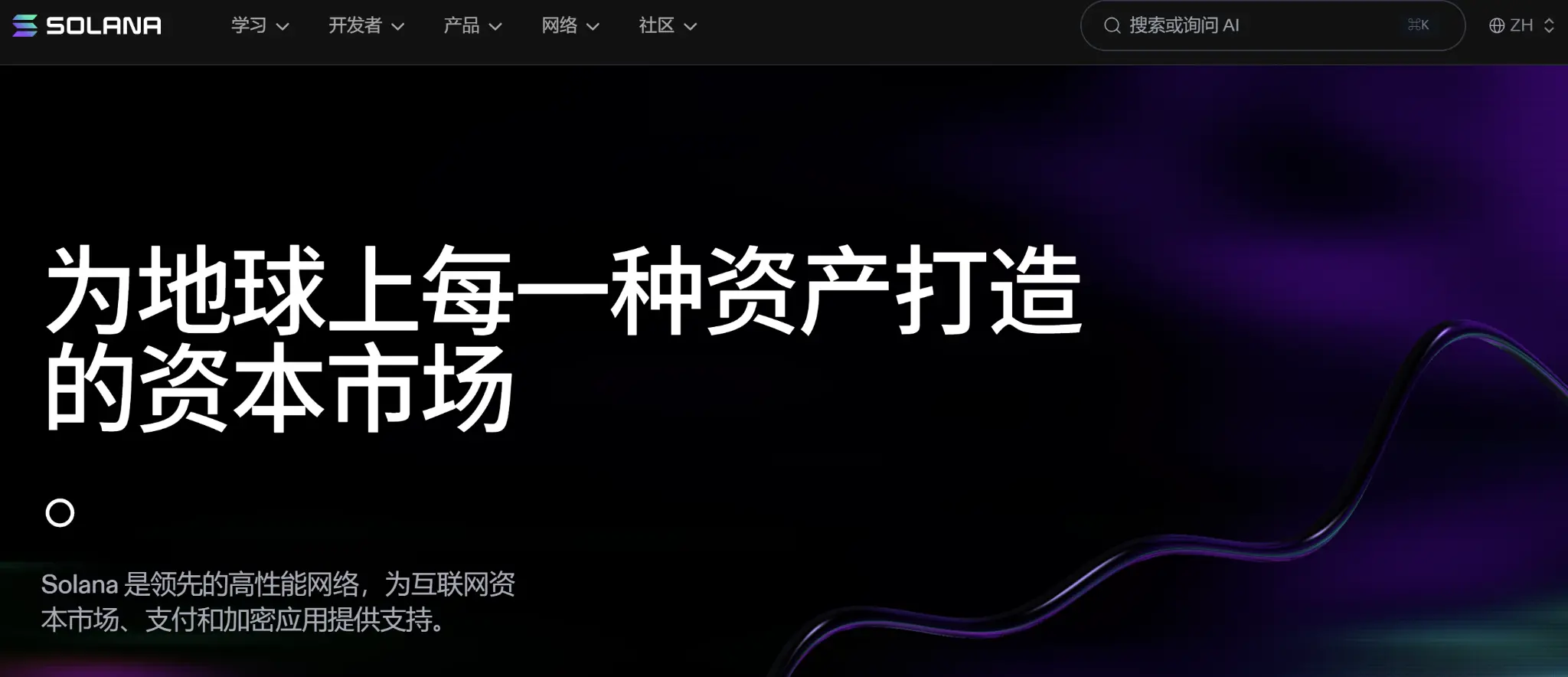
This means Solana aims not only to challenge Ethereum but also to replace traditional exchanges, brokers, and clearing systems, becoming the on-chain version of Nasdaq. High speed, low fees, high throughput, relatively mature user experience, and the strong backing of Wall Street capital once positioned Solana as the public chain closest to achieving this goal.

However, the problem is that as the "Internet Capital Markets" truly begin to take shape, the market is finding that Solana may not necessarily be at its core.

The Unexpected Impact of Hyperliquid

One of the biggest structural changes in the crypto industry over the past year has been the migration of the perpetual futures market away from traditional CEXs to on-chain platforms.

The biggest beneficiary of this trend is not Solana, nor Ethereum, Sui, or other networks, but Hyperliquid.

Initially, Hyperliquid was just an on-chain perpetual futures trading platform, but with the advancement of its Layer1 strategy, it has gradually evolved into a complete financial infrastructure network. Compared to Solana's broad and abstract "capital markets" vision, Hyperliquid has chosen a more focused, transaction-driven path.

For a long time, although the Solana ecosystem has hosted numerous DeFi projects, its core liquidity has always leaned more towards spot trading, Meme Coins, and on-chain speculation. The infrastructure truly capable of supporting institutional-grade trading depth, risk management, and high-frequency trading needs has never matured.

More critically, Hyperliquid has gradually proven something many previously overlooked: an "Internet Capital Markets" may not necessarily require a general-purpose ecosystem.

For high-frequency financial transactions, performance, matching, liquidity, and trading experience are far more important than "richness of on-chain applications." This means a vertical Layer1 specifically designed for financial transactions might be more suitable as the core of on-chain capital markets than a general-purpose public chain like Solana.

This is also why an increasing amount of capital, traders, and attention is converging on Hyperliquid.

After the Drift Incident, Solana Forced to Adjust Perpetual Futures Market Strategy

If Hyperliquid's rise externally squeezes the strategic space for Solana's "capital markets," then the Drift Protocol exploit incident tore open a massive gap from within.

In early April of this year, the Solana DeFi protocol Drift suffered a governance and oracle attack, resulting in over $200 million in losses.

As one of the most important perpetual futures protocols on Solana, Drift had been playing a central liquidity role in Solana DeFi. After the hack, the protocol's functions were directly paralyzed, a large number of assets, vaults, and associated protocols within the Solana ecosystem were affected, and market confidence rapidly deteriorated.

Perpetual futures are a fiercely contested territory in the DeFi space. Faced with the market vacuum left by Drift and the strategic gap in Solana's on-chain derivatives field, the Solana official team must vigorously promote a new alternative product to capture users and market share in this frontline battle for the "Internet Capital Markets" strategy.

At this point, the choices before Solana officials included a series of products like Pacifica, Phoenix, Jupiter, GMTrade, Bullet, and Blink. However, Solana founder Anatoly Yakovenko firmly chose Phoenix.

Over the past five days, Toly has posted at least twenty tweets or retweets related to Phoenix, either forwarding other industry figures' test experiences with Phoenix, directly recommending its use, or discussing his views on Phoenix.

Regarding such "favoritism," Toly has also explained multiple times that Pacifica does not execute trades on the Solana chain; its compatibility with Solana is as good as Hyperliquid's, while Jup is already mature, and he is more focused on early-stage teams building from 0 to 1. Meanwhile, Phoenix is decentralized and can be atomically composable with all other applications on Solana.

Driven by Toly's promotion, Phoenix's popularity has ranked among the top three on RootData's trending projects list for consecutive days, reaching its historical peak in the heat index.

However, in terms of trading volume, Phoenix still lags far behind other established perpetual futures platforms. According to DeFillama data, Phoenix's daily trading volume had long been less than $4 million, and recently, riding the market hype, it surpassed $80 million for the first time. Yet, it still ranks outside the top 20 among all perpetual platforms, with at least a 20-fold gap from the top 5 platforms (minimum $1.6 billion).

Solana's Public Relations Offensive and Internal Rifts

Faced with Hyperliquid's strong rise and the wounds within its own ecosystem, Solana supporters have chosen a seemingly "using the opponent's own spear as a shield" path—wielding decentralization as a weapon to launch a public opinion attack against Hyperliquid.

Solana Foundation member @harkl_ tweeted that Hyperliquid markets itself as a decentralized exchange, but the reality is 24 validator nodes, closed-source node code, a single bridge handling tens of billions of dollars, and a record of forced settlements during market volatility.

"Can you participate in any part of the protocol stack with your own resources without approval from a trusted third party? If not, then it's not permissionless. No matter what you do, you cannot run a Hyperliquid sequencer," Toly further stated.

This argument sparked heated debate in the crypto community. Supporters believe Toly hit Hyperliquid's core weakness—if there are fewer than 30 validator nodes, node code is not open-source, and the bridge is highly centralized, what is the fundamental difference between this so-called "on-chain capital market" and the custodial model of CEXs?

Opponents point out that Solana's own validator count has sharply dropped from 2560 to about 756, its Nakamoto Coefficient has fallen from 31 to 20, and the top twenty validators control over one-third of the staked share—in this context, discussing "decentralization" seems somewhat like "the pot calling the kettle black."

An even thornier issue comes from within the Solana ecosystem. The consistent "favoritism" shown by many Solana Foundation executives has caused discontent among developers of other protocols.

"They will promote what they think is best for themselves. Pushing others away just because a team meets a certain criterion is turning friends into enemies," said kdotcrypto, co-founder of Bulk.

The comment from Pacifica founder Constance was more restrained yet equally damaging: "We chose Solana in 2025, didn't take any funding from the Foundation, didn't raise from investors, just wanted to build the product first and let the market decide." This phrase "let the market decide" carries a veiled protest against the Solana Foundation's role as both "referee and player."

The most brutal truth of the crypto market is this: users don't care about grand narratives; they only care about depth, liquidity, and safety. Hyperliquid's rise is not just a technical victory but a dimensional strike against the "general-purpose public chain" narrative—it proves that the core of building capital markets may not be a sprawling ecosystem, but an ultimate matching engine.

Now, Solana is mired in a quagmire of competing with rivals over "decentralization metrics," and its championed Phoenix still faces a 20-fold trading volume chasm compared to mainstream derivatives platforms.

In this battle for the endgame of "Internet Capital Markets," if Solana cannot regain its dominance in the derivatives field in the second half of 2026, it may remain an excellent Meme playground, but its dream of "hosting global assets" will only drift further away.


Câu hỏi Liên quan

QWhat is the core narrative that Solana has been trying to build, and how is it currently being challenged according to the article?

ASolana's core narrative has evolved from being a 'high-performance blockchain' to becoming an 'Internet Capital Markets'—a global trading network for all assets. However, this vision is being challenged externally by Hyperliquid's rise as a vertical Layer1 for financial trading, and internally by the fallout from the Drift Protocol hack and strategic friction within its ecosystem.

QHow does Hyperliquid's approach to becoming a 'capital market' differ from Solana's, and why is it considered a threat?

AHyperliquid takes a more focused, transaction-driven path as a vertical Layer1 specifically designed for high-frequency financial trading, prioritizing performance, matching, liquidity, and trading experience. It is considered a threat because it proves that a specialized financial infrastructure may be more suitable for a capital market core than a general-purpose ecosystem like Solana, drawing away funds, traders, and attention.

QWhat internal event significantly damaged Solana's position in the perpetual futures market, and what was Solana's strategic response?

AThe significant internal event was the governance and oracle attack on the Drift Protocol in April, causing over $200 million in losses and paralyzing a core Solana DeFi protocol. In response, Solana founder Anatoly Yakovenko strongly endorsed and promoted Phoenix as a new decentralized perpetual futures platform to fill the strategic gap and regain market share.

QWhat criticism did Solana's leadership level against Hyperliquid, and what was the counter-argument from critics?

ASolana's leadership criticized Hyperliquid's decentralization, pointing to its limited number of validators (24), closed-source node code, and a single centralized bridge. Critics countered that Solana itself has seen a sharp decline in validators and an increase in stake concentration among top validators, making its focus on Hyperliquid's decentralization seem hypocritical, like 'the pot calling the kettle black.'

QWhat key challenge does the article suggest Solana must overcome to achieve its 'Internet Capital Markets' vision?

AThe article suggests that to achieve its 'Internet Capital Markets' vision, Solana must overcome its significant gap in the derivatives market. It needs to regain dominance in perpetual futures, as its promoted platform, Phoenix, still lags far behind leading platforms in trading volume. Without this, Solana risks remaining just a 'Meme paradise' rather than the global asset network it aims to be.

Nội dung Liên quan

a16z chuyển hướng toàn cầu hóa: VC đang trở thành "động lực thúc đẩy" của liên minh công nghệ Mỹ

Biên tập: Thông báo của Ben Horowitz cho thấy một bước chuyển quan trọng trong chiến lược toàn cầu hóa của a16z: họ không chỉ tìm kiếm dự án ở nước ngoài hay mở rộng đầu tư quốc tế, mà còn đặt mình vào khuôn khổ cạnh tranh công nghệ và hợp tác đồng minh rộng lớn hơn. Trong bối cảnh AI, robot, công nghệ quốc phòng, an ninh mạng và tái cấu trúc chuỗi cung ứng trở thành trọng tâm cạnh tranh quốc gia, con đường quốc tế hóa của startup trở nên phức tạp hơn. A16z đang phản ứng với sự thay đổi này thông qua việc thành lập văn phòng Tokyo, bổ nhiệm Anne Neuberger phụ trách các vấn đề toàn cầu, và nâng cấp nhóm quan hệ nhà đầu tư thành nhóm đối tác toàn cầu. Tín hiệu quan trọng nhất là a16z gắn kết mạng lưới toàn cầu của mình với năng lực lãnh đạo công nghệ của "Mỹ và các đồng minh". Đối với a16z, mạng lưới đầu tư mạo hiểm trong tương lai không chỉ giúp nhà sáng lập gọi vốn, tuyển dụng, bán hàng mà còn hỗ trợ họ tiếp cận thị trường trọng điểm, kết nối với chính phủ và các tổ chức chiến lược, cũng như hiểu rõ môi trường chính sách và quy định của các quốc gia khác nhau. Điều này có nghĩa vai trò của các tổ chức đầu tư mạo hiểm hàng đầu đang được định nghĩa lại. Họ không còn chỉ là trung gian vốn, mà là người tổ chức kết nối công ty khởi nghiệp, năng lực quốc gia, nguồn lực ngành, hệ thống đồng minh và vốn toàn cầu. Chiến lược toàn cầu hóa lần này của a16z có thể được xem như một sự chủ động định vị của vốn Silicon Valley trong cuộc cạnh tranh công nghệ toàn cầu mới.

marsbit1 phút trước

a16z chuyển hướng toàn cầu hóa: VC đang trở thành "động lực thúc đẩy" của liên minh công nghệ Mỹ

marsbit1 phút trước

Kalshi, MTS và Tham vọng của a16z

Bài viết phân tích tầm quan trọng của thị trường dự đoán (prediction markets), tập trung vào Kalshi, và tầm nhìn của quỹ đầu tư mạo hiểm a16z trong việc xây dựng một đế chế truyền thông mới. Tác giả điểm qua lịch sử tư tưởng đằng sau thị trường dự đoán, từ lý thuyết của Hayek về việc thị trường tổng hợp tri thức phân tán, đến cơ chế khuyến khích của Robin Hanson (LMSR) và ý tưởng "Futarchy". Trọng tâm bài viết là việc a16z đầu tư mạnh vào Kalshi (định giá 220 tỷ USD) và cách họ diễn giải giá trị cốt lõi của nó: mang lại "cảm giác hiện diện" (presence). Trong một thế giới mà con người ngày càng thụ động và xa cách với thực tại, thị trường dự đoán cho phép họ tham gia tích cực bằng cách dùng tiền thật để đặt cược vào các sự kiện, từ đó cảm thấy mình là người quan sát và dự báo lịch sử. a16z coi đây là mảnh ghép quan trọng cho tham vọng "truyền thông mới" của họ - một hệ thống toàn diện từ định hình narrative, tài trợ sản phẩm, đến tiếp cận khách hàng với tốc độ cực cao, nhằm "tiếp quản dòng thời gian". Công ty truyền thông MTS (Monitoring The Situation) là một ví dụ điển hình cho triết lý này. Bài viết kết luận rằng sức mạnh thực sự của Kalshi và thị trường dự đoán nằm ở "trường lực bẻ cong hiện thực" - khả năng định nghĩa tính xác thực và tầm quan trọng của sự kiện thông qua khối lượng giao dịch bằng tiền thật, từ đó giành được quyền giải thích tối cao về tương lai, một thứ quyền lực hiếm khi nằm trong tay một công ty tư nhân.

链捕手5 phút trước

Kalshi, MTS và Tham vọng của a16z

链捕手5 phút trước

Giải mã sự thật về thương mại, thanh toán và cơ sở hạ tầng cho Agent

Tác giả, có kinh nghiệm xây dựng cơ sở hạ tầng cho nền kinh tế Agent trong một năm, chia sẻ những hiểu biết thực tế về thương mại, thanh toán và cơ sở hạ tầng Agent. **Thực trạng nhu cầu:** Nhu cầu thực sự từ người dùng cuối hiện còn rất hạn chế. Các số liệu từ Stripe, Visa, Coinbase cho thấy khối lượng giao dịch thực tế qua Agent còn rất nhỏ, chủ yếu là giao dịch thử nghiệm. Các doanh nghiệp tham gia chủ yếu vì lo ngại bị bỏ lại phía sau (tối ưu hóa cho Agent - AEO), chứ không phải do nhu cầu cấp thiết hiện tại. **Phân tích bốn lĩnh vực:** 1. **Agent với Người mua (B2C):** Trải nghiệm mua sắm qua chat kém hơn giao diện thị giác truyền thống cho hầu hết mặt hàng. Cơ hội tồn tại trong các giao dịch tần suất cao, ít cần quyết định (như đặt đồ ăn) hoặc ở những website có UI phức tạp, nhưng bị cản trở bởi chi phí, thiếu API mở và thách thức trong phân phối đến người dùng phổ thông. 2. **Agent với API (Thanh toán vi mô):** Nhu cầu thanh toán tức thời cho API là có thật, nhưng thị trường chủ yếu là dài hạn và các nhà cung cấp SaaS lớn thích mô hình hợp đồng doanh nghiệp. Các giải pháp tiền mã hóa phù hợp với thị trường ngách này, nhưng quy mô nhỏ và đối tượng nhà phát triển thường ít sẵn sàng chi trả. 3. **Agent với Agent (M2M):** Đây là tầm nhìn dài hạn hứa hẹn khối lượng giao dịch khổng lồ với tốc độ cao, nhưng hiện chưa có khối lượng thực tế đáng kể. Đây là một cuộc đặt cược dài hạn về cơ sở hạ tầng thanh toán chuyên dụng. 4. **Agent với Tài chính:** Đây là lĩnh vực có nhu cầu thực sự và sẵn sàng chi trả ngay hiện tại, từ quản lý quỹ đến DeFi. Tuy nhiên, thách thức nằm ở môi trường cạnh tranh khốc liệt với các định chế tài chính lớn đã có sẵn quan hệ khách hàng và nền tảng tuân thủ. **Điểm mấu chốt thực sự:** Vấn đề cốt lõi không chỉ là thanh toán. Thanh toán chỉ là một phần của quá trình "thanh toán bù trừ", bản thân nó lại chỉ là một phần của bài toán lớn hơn: **sự phối hợp** giữa Agent và con người, xác minh công việc và tính toán kết quả. Các công ty giải quyết được vấn đề phối hợp quy mô lớn sẽ chiếm lĩnh thị trường, chứ không phải ngược lại. Các công ty khởi nghiệp cần tìm thị trường thực sự hiện tại, thay vì chờ đợi tương lai.

marsbit5 phút trước

Giải mã sự thật về thương mại, thanh toán và cơ sở hạ tầng cho Agent

marsbit5 phút trước

Thị trường chứng khoán Mỹ hứng chịu đợt lao dốc tồi tệ nhất từ năm 2025, ba ngòi nổ kích hoạt đánh giá lại định giá cổ phiếu công nghệ

Ngày 5/6, thị trường chứng khoán Mỹ trải qua một ngày sụt giảm mạnh nhất kể từ sau cuộc khủng hoảng thuế quan tháng 4/2025. Chỉ số Nasdaq Composite lao dốc 4,18%, S&P 500 giảm 2,64% và Dow Jones mất 695 điểm. Sự đảo chiều đột ngột này chỉ sau 48 giờ được thúc đẩy bởi ba yếu tố chính. **Thứ nhất: Báo cáo tài chính của Broadcom làm rạn nứt câu chuyện AI.** Dù doanh thu chip AI của Broadcom tăng 143%, nhưng dự báo cho quý tới thấp hơn kỳ vọng, làm dấy lên lo ngại tốc độ tăng trưởng AI có thể đang chậm lại. Điều này kích hoạt đợt bán tháo trên toàn ngành bán dẫn. **Thứ hai: Dữ liệu việc làm Mỹ quá mạnh.** Báo cáo phi nông nghiệp tháng 5 cho thấy 172.000 việc làm mới, gấp đôi dự báo, củng cố kỳ vọng Cục Dự trữ Liên bang (Fed) có thể không giảm lãi suất mà thậm chí còn tăng. Kỳ vọng lãi suất cao hơn gây áp lực lên định giá cổ phiếu công nghệ. **Thứ ba: Bóng ma lạm phát từ cuộc chiến Iran.** Giá dầu duy trì trên 90 USD/thùng do tình hình căng thẳng leo thang từ tháng 2 tiếp tục đè nặng lên áp lực lạm phát, khiến công cụ chính sách của Fed trở nên phức tạp hơn. Ba yếu tố trên cùng lúc làm suy yếu niềm tin vào các câu chuyện thị trường then chốt: tăng trưởng AI vô hạn, Fed sắp cắt giảm lãi suất và lạm phát đã được kiểm soát. Sự sụt giảm nhanh chóng lan rộng sang thị trường toàn cầu. Đây có thể là một đợt điều chỉnh định giá lại đối với các cổ phiược được định giá quá cao, chứ chưa hẳn là sự kết thúc của câu chuyện AI. Hướng đi tiếp theo của thị trường sẽ phụ thuộc vào cuộc họp sắp tới của Fed, các báo cáo tài chính từ các công ty AI khác và diễn biến tình hình địa chính trị.

marsbit4 giờ trước

Thị trường chứng khoán Mỹ hứng chịu đợt lao dốc tồi tệ nhất từ năm 2025, ba ngòi nổ kích hoạt đánh giá lại định giá cổ phiếu công nghệ

marsbit4 giờ trước

Giao dịch

Giao ngay
Hợp đồng Tương lai

Bài viết Nổi bật

Làm thế nào để Mua WAVES

Chào mừng bạn đến với HTX.com! Chúng tôi đã làm cho mua Waves (WAVES) trở nên đơn giản và thuận tiện. Làm theo hướng dẫn từng bước của chúng tôi để bắt đầu hành trình tiền kỹ thuật số của bạn.Bước 1: Tạo Tài khoản HTX của BạnSử dụng email hoặc số điện thoại của bạn để đăng ký tài khoản miễn phí trên HTX. Trải nghiệm hành trình đăng ký không rắc rối và mở khóa tất cả tính năng. Nhận Tài khoản của tôiBước 2: Truy cập Mua Crypto và Chọn Phương thức Thanh toán của BạnThẻ Tín dụng/Ghi nợ: Sử dụng Visa hoặc Mastercard của bạn để mua Waves (WAVES) ngay lập tức.Số dư: Sử dụng tiền từ số dư tài khoản HTX của bạn để giao dịch liền mạch.Bên thứ ba: Chúng tôi đã thêm những phương thức thanh toán phổ biến như Google Pay và Apple Pay để nâng cao sự tiện lợi.P2P: Giao dịch trực tiếp với người dùng khác trên HTX.Thị trường mua bán phi tập trung (OTC): Chúng tôi cung cấp những dịch vụ được thiết kế riêng và tỷ giá hối đoái cạnh tranh cho nhà giao dịch.Bước 3: Lưu trữ Waves (WAVES) của BạnSau khi mua Waves (WAVES), lưu trữ trong tài khoản HTX của bạn. Ngoài ra, bạn có thể gửi đi nơi khác qua chuyển khoản blockchain hoặc sử dụng để giao dịch những tiền kỹ thuật số khác.Bước 4: Giao dịch Waves (WAVES)Giao dịch Waves (WAVES) dễ dàng trên thị trường giao ngay của HTX. Chỉ cần truy cập vào tài khoản của bạn, chọn cặp giao dịch, thực hiện giao dịch và theo dõi trong thời gian thực. Chúng tôi cung cấp trải nghiệm thân thiện với người dùng cho cả người mới bắt đầu và người giao dịch dày dạn kinh nghiệm.

Tổng lượt xem 339Xuất bản vào 2024.12.11Cập nhật vào 2026.06.02

Làm thế nào để Mua WAVES

Thảo luận

Chào mừng đến với Cộng đồng HTX. Tại đây, bạn có thể được thông báo về những phát triển nền tảng mới nhất và có quyền truy cập vào thông tin chuyên sâu về thị trường. Ý kiến ​​của người dùng về giá của WAVES (WAVES) được trình bày dưới đây.

活动图片












