Investing $5 Billion: Cerebras Uses a 'Redemption Bond' to Enter Sam Altman's Hall of Gods

marsbitXuất bản vào 2026-05-14Cập nhật gần nhất vào 2026-05-14

Tóm tắt

Cerebras Systems, the chipmaker known for its massive wafer-scale WSE-3 processor, is making a dramatic IPO push with a $48 billion valuation. This move follows a crucial deal with OpenAI, where Cerebras will provide 750 megawatts of computing power over three years. In exchange, OpenAI receives warrants for a 10% stake in Cerebras, valued at around $5 billion. This agreement, termed a "computing ransom note," secures Cerebras a place within Sam Altman's influential network while sacrificing a significant portion of its potential profits from the deal. The partnership has supercharged Cerebras's market prospects, granting it a premium valuation and positioning it as a core OpenAI partner. The article frames this as part of "Altman Economics," where OpenAI leverages its model sovereignty to extract concessions from hardware suppliers, reshaping the AI hardware landscape into a hierarchy of sovereigns and vassals.

On Wall Street's monitors, the flames of the digital oracle burn ever brighter.

This week, the chip industry's 'maverick', Cerebras Systems, charged towards an IPO with a valuation of $48 billion

This is the largest listing of 2026, a commercial ritual imbued with both sanctity and brutality.
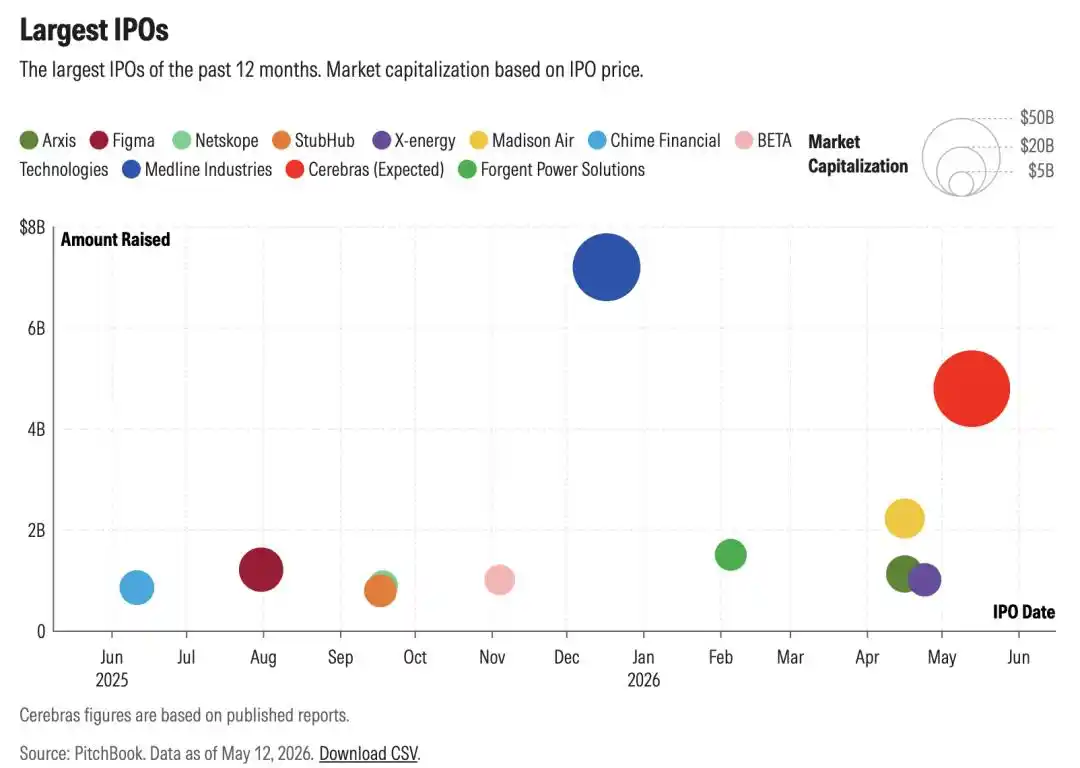
To squeeze into Sam Altman's 'Hall of Gods', Cerebras personally cut away 10% of its own 'flesh and blood'—stock warrants worth approximately $5 billion.

This is no longer a simple IPO. It is a tribute from underlying hardware to model sovereignty, paid in the twilight of an era.

And standing behind all this prosperity is the man known as the 'new lord of Silicon Valley'.

The Return of Brutalist Aesthetics

It Forged a 'Silicon-based Leviathan'

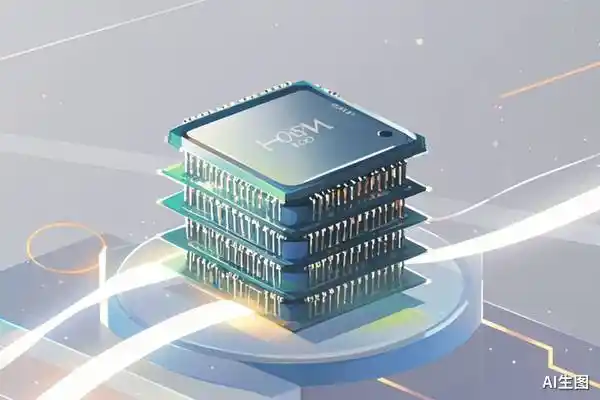
If Nvidia proudly calls its B200 chip an exquisite postage stamp, then Cerebras's flagship product, WSE-3, is a massive dinner plate.
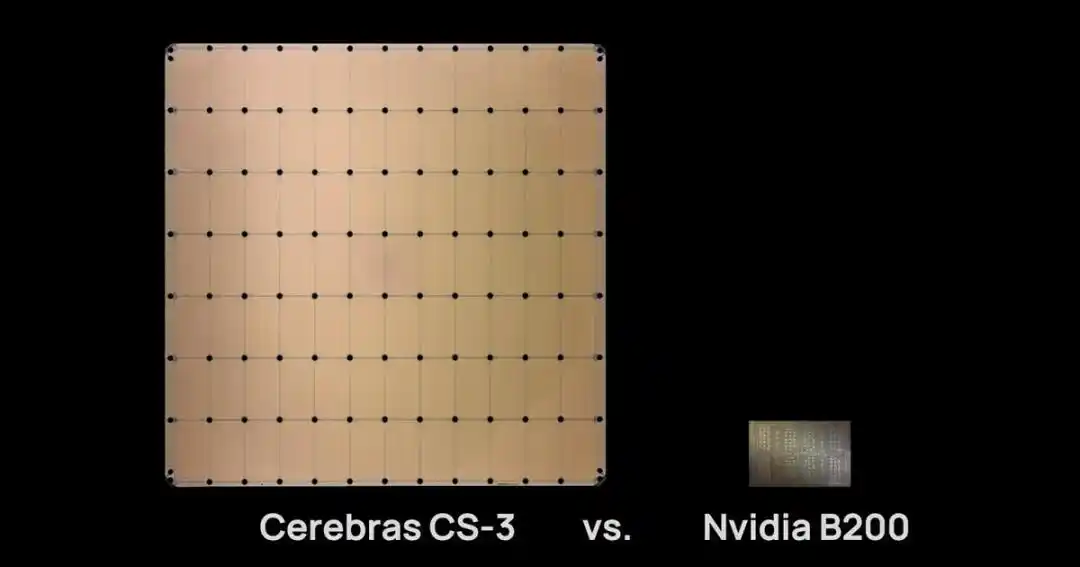
For the past three decades, the semiconductor industry's creed has been 'miniaturization'—dancing on a pinhead, stacking transistors at the nanoscale.

But Cerebras took a counterintuitive path: Since memory bandwidth is the Achilles' heel of AI inference, why not just make the entire wafer into a single chip.

This 'silicon-based leviathan' is nearly half a square foot in size, featuring over 4 trillion transistors (19 times that of Nvidia's B200), 900,000 AI-optimized cores, and 125 petaflops of AI compute—making its total computing power 28 times that of the B200.

Its design is fundamentally about 'trading space for time': etching cores directly onto a single 12-inch wafer, flattening the 'memory wall' where data shuttles between the chip and external storage.

This brutalist aesthetic shows terrifying dominance in the 'Age of Inference':

When running top-tier models from OpenAI, Cognition, Meta, etc., it can achieve a throughput speed of up to 3000 tokens per second, outpacing traditional GPUs by 70 times.
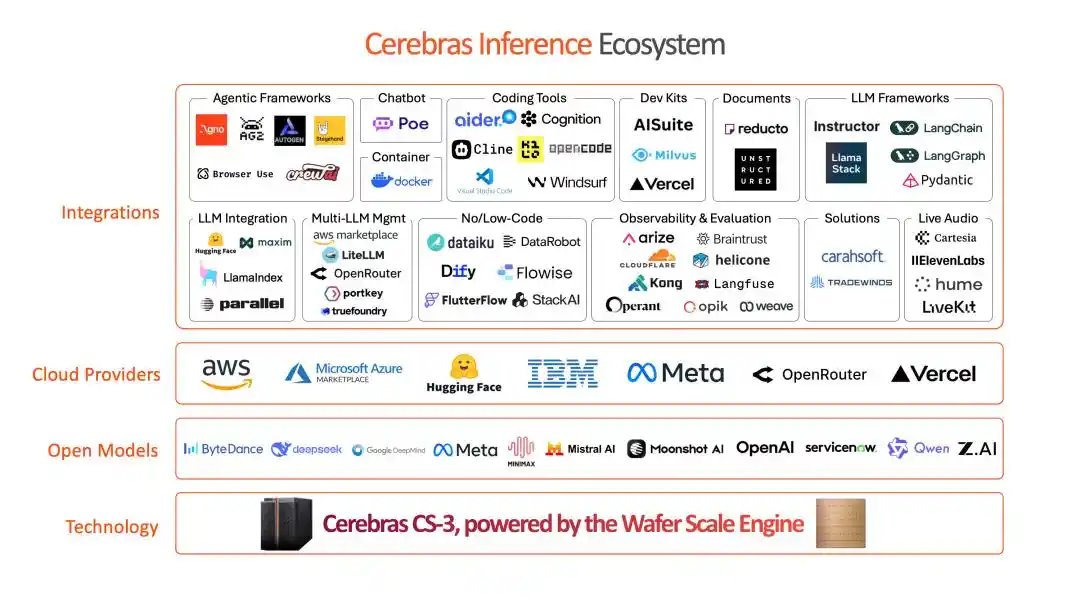
However, in 2026, the hardest technology, if it can't be converted into the fastest Tokens, is just expensive sand.

Eighteen months ago, Cerebras was a forlorn geek.

In 2025, its revenue was only $510 million, almost entirely from a single customer, the UAE's G42. It operated at a loss of $145.9 million, forcing the postponement of its IPO plans.
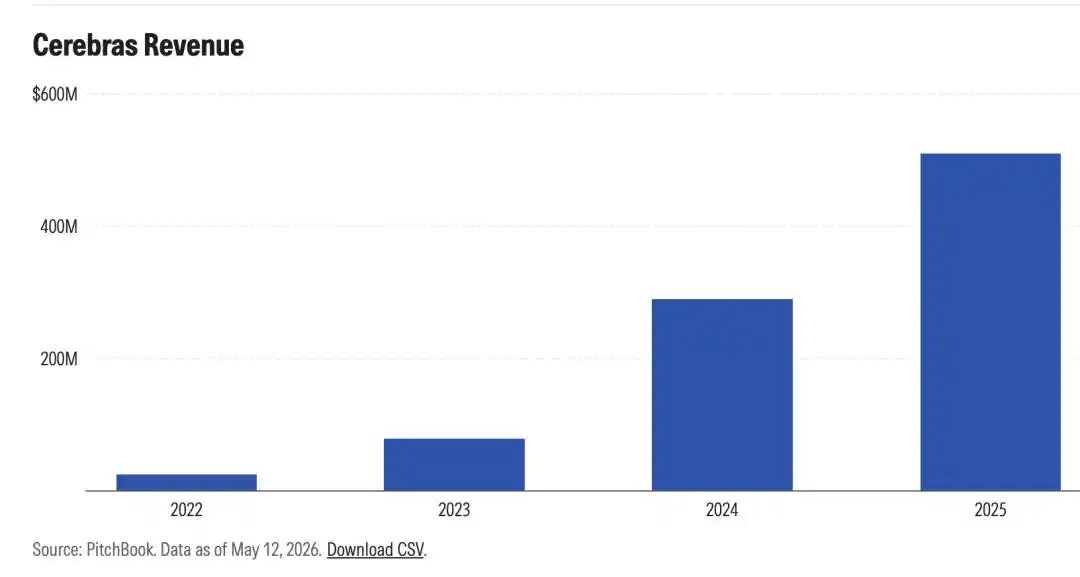
Despite possessing performance surpassing Nvidia's, its fate hung on the checkbook of a single client, like an orphan at constant risk of drowning.

Until it knocked on the door leading to Sam Altman's inner circle.

The $5 Billion 'Redemption Bond'

The Golden Ticket to the Future

In the world of AI, Moore's Law is giving way to the 'Law of the Circle'.

In exchange for survival and explosive growth, Cerebras signed an agreement that left outsiders dumbfounded: providing OpenAI with 750 megawatts of computing capacity over the next three years.

Calculated at current market prices (750 MW is roughly worth $9 billion annually), this deal could bring about $27 billion in revenue and $10 billion in gross profit.

For a company still in the red last year, this was a lifeline.

More tellingly, these 750 megawatts constitute just one-fortieth of the total computing power OpenAI believes it will need by 2030. This leftover order is enough to catapult Cerebras from a 'marginal player' to a market focal point.

But there is no free lunch, only expensive endorsements.

In exchange, Cerebras must gradually grant stock warrants to OpenAI. Upon exercise, OpenAI would hold 10% of Cerebras's shares—worth about $5 billion at the offering price midpoint of $155.

This means Cerebras generously offered up half the potential future profits from this mega-deal as a 'tribute' directly to OpenAI.

This is not an equal exchange. This is the AI era's 'computing power redemption bond'.

OpenAI is the 'lord' holding the power to allocate traffic and demand, while Cerebras is a heavily armored knight providing advanced tools of production—to enter the lord's domain, the knight must pay homage and share half his spoils.
Once branded as OpenAI's core blood ally, Cerebras's price-to-sales (P/S) ratio instantly skyrocketed to 15 times, a level even Nvidia must respectfully acknowledge.

'Altmanomics'

He Is Cashing Out the Hardware Giants

Cerebras is not the only computing power enterprise bowing to Sam Altman.

Last October, AMD's stock doubled after reaching a similar agreement with OpenAI; earlier, Nvidia was rumored to have deepened its ties with OpenAI through a $30 billion financing round.

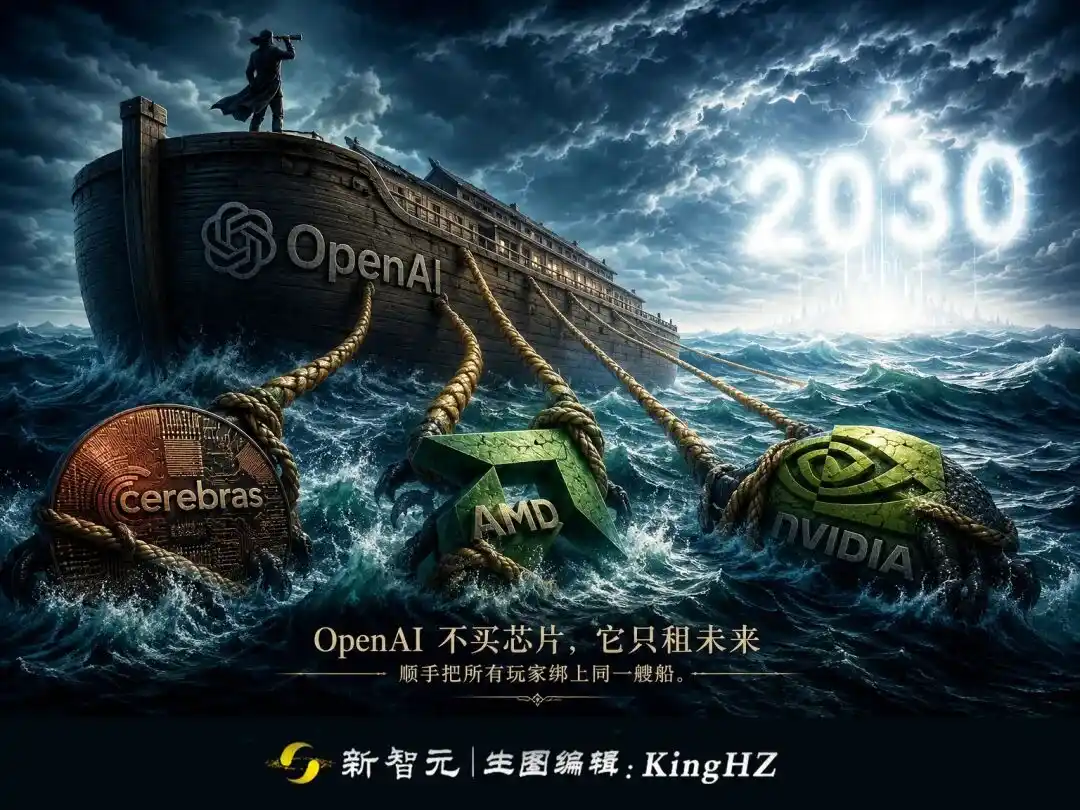
A clear map of power is emerging: OpenAI is evolving from a software company into a global 'tax authority' over the AI hardware landscape.

Sam Altman's true ambition is not merely to acquire data centers for training and running its models, but to quietly expand the group of companies and investors who have a 'vested interest in OpenAI's success.'

He is weaving a vast web of an 'interest community'.
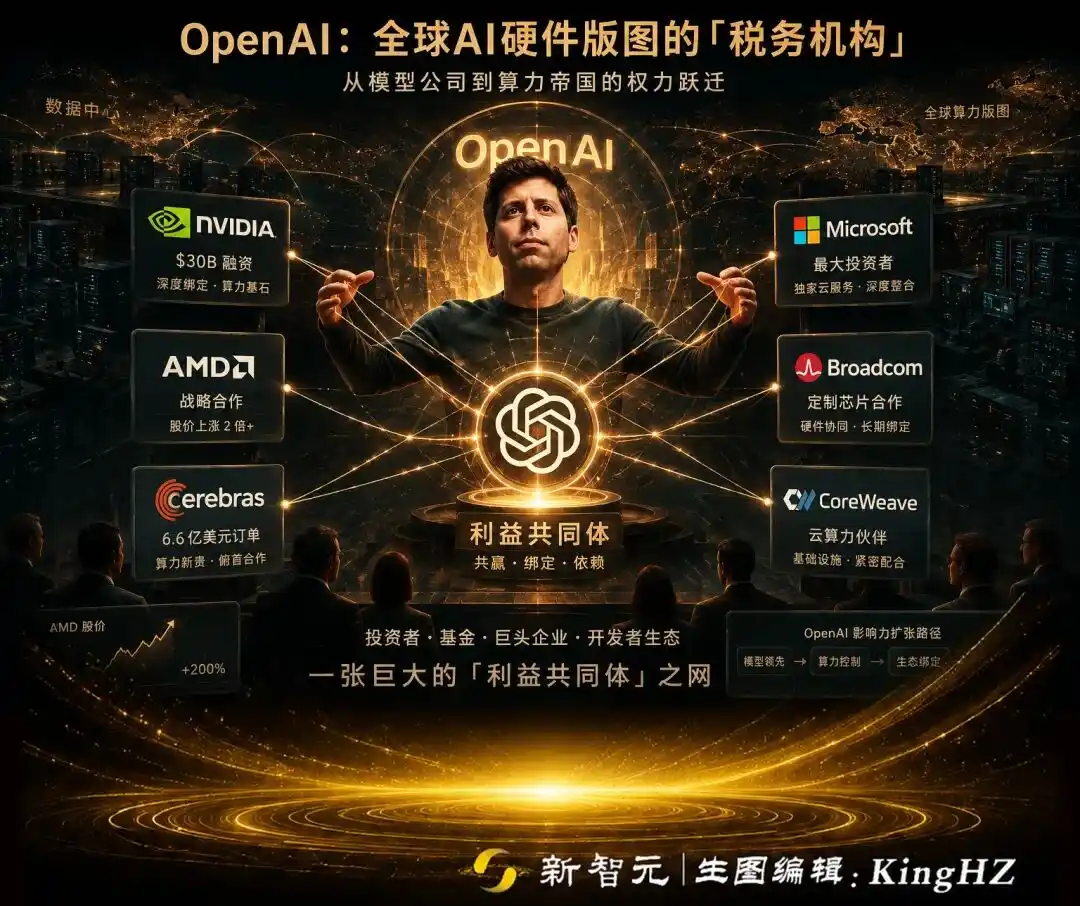
OpenAI doesn't buy chips; it only rents the future—and in the process, binds all players to the same ship.

For hardware vendors: Even with profits halved, obtaining the 'OpenAI certification' and a 15x P/S valuation is a worthwhile deal.

For Sam Altman: He not only secures the computational foundation for the next decade but also becomes a shareholder in all potential competitors.
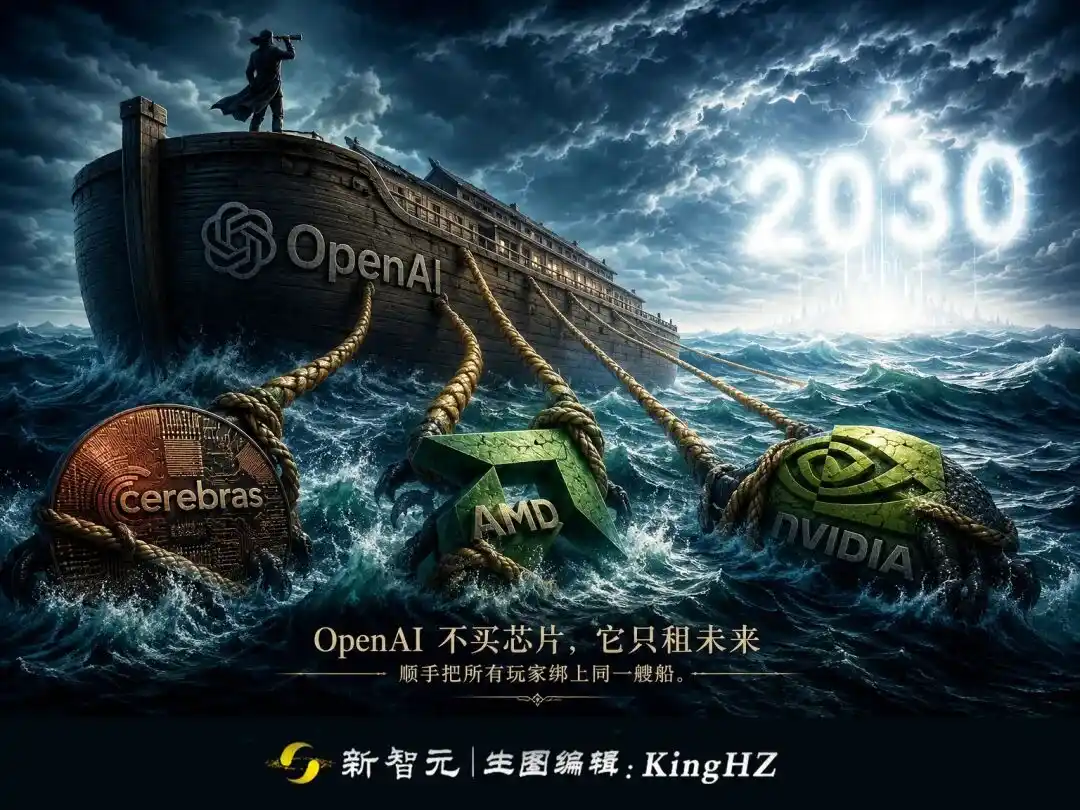
This is the essence of 'Altmanomics': In the second half of the AI race, whoever defines the demand for models holds the 'power to tax' the underlying supply chain.

Can $48 Billion Buy a Seat at the Power Table?

This Thursday, Cerebras's IPO received 20 times oversubscription. The pricing range was raised to $150-$160 per share, implying a valuation of $48 billion, coinciding with semiconductor stocks rising 53% cumulatively from their March lows.
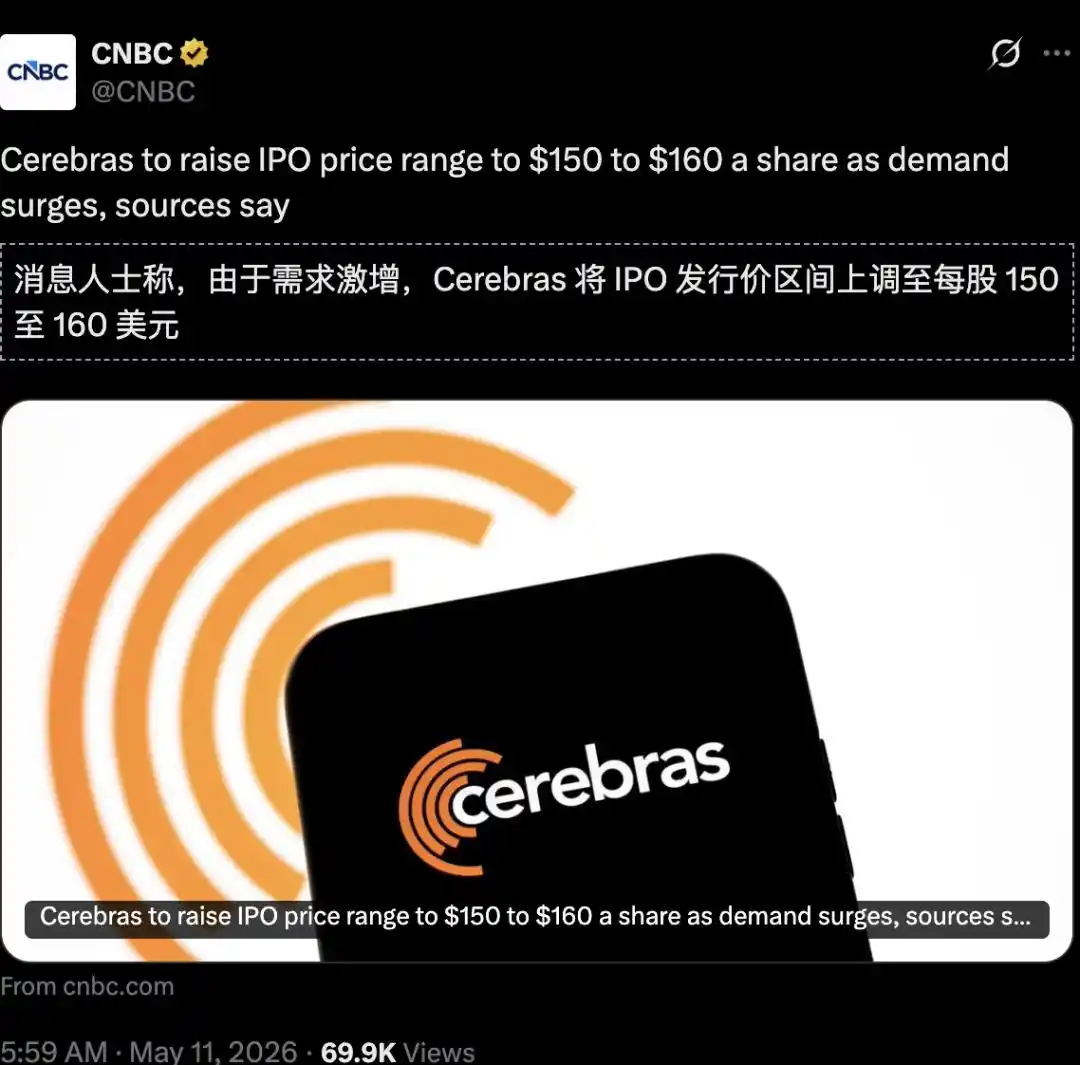
The capital market's frenzy is almost blind. They no longer care whether Cerebras lost $140 million last year or if its P/S ratio has already surpassed Nvidia's.

They are buying a kind of 'certainty'.

In the uncertain landscape of 2026, what identity tag is more certain than being a 'Core Partner of OpenAI'?

This is precisely the most intriguing aspect of this IPO. Cerebras's high valuation is essentially a market premium for the 'Altman endorsement'.

Conclusion: Sovereignty or Vassalage?

This 2026 listing marks the semiconductor industry's entry into a brutal era of stratification.

Future chip companies have only two paths:

Either, like Nvidia, rely on first-mover advantage to build their own ecological empire and become the rule-maker; or, like Cerebras, offer up half their soul in a high-stakes gamble for a ticket into the core circle.

If you cannot become a god, then become the most expensive offering.

This is not just a technological battle; it's a battle for sovereignty.

In every megawatt of electricity flows the 'tribute' from chipmakers to Silicon Valley's new overlord.

References:

https://x.com/FT/status/2054141078710768006

https://www.ft.com/content/3f77f8ad-16b8-4f97-ae55-0bd2e31122fa?syn-25a6b1a6=1

https://www.theinformation.com/newsletters/ai-agenda/startup-helping-openai-optimize-ai-cerebras-chips

https://www.morningstar.com/stocks/why-ai-chip-designer-cerebras-is-2026s-hottest-ipo-yet

This article is from the WeChat public account "Xin Zhi Yuan," author: Xin Zhi Yuan, editor: KingHZ

Tiền kỹ thuật số thịnh hành

Câu hỏi Liên quan

QWhat is the core technology and design philosophy behind Cerebras Systems' WSE-3 chip, and how does it differ from traditional chip designs?

ACerebras Systems' WSE-3 chip employs a radical design philosophy that contrasts with the traditional industry focus on miniaturization. Instead of shrinking components, it uses an entire 12-inch silicon wafer to create a single, massive chip. This 'brute-force' approach, described as 'trading space for time,' is aimed at eliminating the 'memory wall' bottleneck by providing immense on-chip memory bandwidth. It contains over 4 trillion transistors (19x more than NVIDIA's B200), 900,000 AI-optimized cores, and delivers 125 petaflops of AI computing power. Its key difference is its monolithic wafer-scale design versus the traditional multi-chiplet or discrete GPU designs, prioritizing high-speed data access for AI inference.

QWhat was the crucial strategic deal Cerebras made with OpenAI to enable its 2026 IPO, and what were the key terms?

AThe crucial deal was a multi-year agreement where Cerebras committed to supply 750 megawatts of computing capacity to OpenAI. In exchange for this massive, revenue-guaranteeing contract—valued at approximately $27 billion in revenue and $10 billion in gross profit over three years—Cerebras granted OpenAI warrants. Upon exercise, these warrants would give OpenAI a 10% equity stake in Cerebras, valued at around $5 billion based on the IPO's mid-range share price. This deal, framed as a 'ransom note' or 'tribute,' provided Cerebras with the financial credibility and market validation needed for a successful high-valuation IPO.

QHow does the article characterize the evolving power dynamic in the AI industry, particularly regarding OpenAI's role?

AThe article characterizes the power dynamic as a shift where OpenAI is evolving from a software company into a dominant 'tax authority' or 'feudal lord' over the global AI hardware landscape. By securing large, long-term compute capacity deals from hardware makers like Cerebras, AMD, and NVIDIA—often in exchange for equity or favorable terms—OpenAI is locking in its future compute foundation. More importantly, it is weaving a vast 'community of interest,' binding these suppliers to its success. This grants OpenAI 'taxation rights' over the hardware supply chain, as it defines model demand and controls access to the most lucrative market segments.

QWhat does the term 'Altmanomics' (Altman Economics) refer to in the context of this article?

AIn this article, 'Altmanomics' refers to the strategic and economic model pioneered by OpenAI's Sam Altman. Its essence is that in the later stages of the AI race, the entity that defines the demand for AI models gains the power to 'tax' the underlying hardware supply chain. Instead of merely purchasing chips, OpenAI 'rents the future' by making long-term capacity deals that often include equity stakes. This strategy allows OpenAI to secure its computational base at favorable rates while simultaneously making shareholders and partners out of potential hardware competitors, thereby consolidating its ecosystem power and ensuring alignment of interests.

QAccording to the article's conclusion, what two paths are available for semiconductor companies in the new AI era, as exemplified by NVIDIA and Cerebras?

AThe article concludes that semiconductor companies now face two distinct paths: 1) Become a rule-maker like NVIDIA, which uses first-mover advantage and ecosystem strength to establish its own empire and dictate distribution rules. 2) Become a vassal or 'high-value offering' like Cerebras, which trades a significant portion of its potential sovereignty and profits (through equity and deals) to a dominant AI platform (OpenAI) in exchange for a guaranteed, high-value ticket into the core industry circle. The choice is between maintaining sovereign control or becoming a strategically important, yet subordinate, partner to the new 'lords' of silicon.

Nội dung Liên quan

Bitcoin Phải Giữ Vững Mức $60,000 Nếu Không Sẽ Đối Mặt Nguy Cơ Sụp Đổ Lớn, Nhà Phân Tích TradingView Cảnh Báo

Bitcoin đang ở mức giá được nhiều nhà giao dịch coi là quan trọng cả về tâm lý lẫn kỹ thuật. Theo phân tích của chuyên gia weslad trên TradingView vào ngày 20/6, BTCUSDT đã chạm vào một vùng cầu mới có thể quyết định đợt biến động lớn sắp tới. Miễn là Bitcoin giữ được vùng hỗ trợ hiện tại, khả năng phục hồi lên vùng cung quanh 81.000 USD vẫn cao. Tuy nhiên, cảnh báo cũng rất rõ ràng. Mức 60.000 USD được xem là "ranh giới" cho phe mua. Nếu Bitcoin đóng cửa quyết định dưới ngưỡng này, triển vọng tăng giá sẽ bị vô hiệu hóa và mở đường cho một đợt sụt giảm sâu hơn. Sự thất bại ở một mức hỗ trợ được nhiều người theo dõi có thể kích hoạt dừng lỗ và thay đổi tâm lý thị trường. Trường hợp phục hồi lên 81.000 USD vẫn cần sự xác nhận. Phe mua cần bảo vệ thành công 60.000 USD, vượt qua các mức kháng cự lân cận và chứng minh nhu cầu đủ mạnh để đảo ngược xu hướng. Hiện tại, tình hình được xem như một bài kiểm tra hỗ trợ nhị phân: giữ vững thì kịch bản phục hồi còn, mất quyết định thì thị trường sẽ hướng tới một đợt điều chỉnh sâu hơn.

bitcoinist1 giờ trước

Bitcoin Phải Giữ Vững Mức $60,000 Nếu Không Sẽ Đối Mặt Nguy Cơ Sụp Đổ Lớn, Nhà Phân Tích TradingView Cảnh Báo

bitcoinist1 giờ trước

Giao thức Venus Tích Hợp Cổ Phiếu Được Token Hóa Làm Tài Sản Thế Chấp Trên BNB Chain

Giao thức Venus hiện đã tích hợp cổ phiếu token hóa làm tài sản thế chấp để vay trên BNB Chain, đưa một trường hợp sử dụng tài sản thế giới thực (RWA) khác vào thị trường cho vay DeFi. Cụ thể, Venus đã thêm hỗ trợ cho các mã chứng khoán token hóa như Apple, Tesla và Microsoft. Các tài sản này được mô tả là có hỗ trợ 1:1 bởi cổ phiếu thực tế do các đơn vị giám hộ được quản lý nắm giữ. Người dùng có thể gửi các cổ phiếu token hóa đủ điều kiện vào các nhóm cho vay biệt lập (isolated lending pools) và vay stablecoin hoặc BNB dựa trên tài sản thế chấp này. Điều này cho phép họ tiếp cận thanh khoản trên chuỗi mà không cần bán vị thế cổ phiếu cơ bản, tương tự như hình thức tài chính ký quỹ truyền thống. Tích hợp này cho thấy nỗ lực của BNB Chain trong việc cạnh tranh thu hút hoạt động RWA. Tuy nhiên, cổ phiếu token hóa mang đến một cấu trúc rủi ro khác so với tài sản thế chấp gốc crypto như ETH hay BNB, vì chúng phụ thuộc vào người giám hộ, cấu trúc pháp lý và quy trình mua lại bên ngoài chuỗi. Định giá tài sản thế chấp cũng là thách thức do giờ giao dịch chứng khoán truyền thống và thị trường DeFi hoạt động khác nhau. Việc tích hợp này phù hợp với bối cảnh thị trường rộng lớn hơn, bao gồm áp lực tuân thủ, tài sản thế giới thực được token hóa và sự phụ thuộc của altcoin vào hướng đi của Bitcoin. Điều cần theo dõi tiếp theo là liệu thanh khoản có thực sự tăng trưởng vượt ra ngoài các tích hợp ban đầu hay không, điều này phụ thuộc vào tính an toàn của dịch vụ giám hộ, độ tin cậy của oracle giá và các quy tắc rõ ràng xung quanh các sự kiện thanh lý.

bitcoinist2 giờ trước

Giao thức Venus Tích Hợp Cổ Phiếu Được Token Hóa Làm Tài Sản Thế Chấp Trên BNB Chain

bitcoinist2 giờ trước

Góc Bất Khả Thi Thực Ra Là Một Vấn Đề Giả

Tác giả Billy Gao cho rằng khái niệm "tam giác bất khả thi" (decentralization - scalability - security) trong blockchain thực chất là một vấn đề giả. Bài viết chỉ ra rằng, mặc dù ngành công nghiệp tiền mã hóa đã xây dựng được hệ thống mật mã hùng mạnh nhất lịch sử, nhưng nó lại thất bại trong việc bảo vệ quyền riêng tư tài chính cơ bản của người dùng. Mọi giao dịch và số dư đều bị công khai theo mặc định. Bản chất thực sự của blockchain là một máy tính chia sẻ, chậm và đắt đỏ, nhưng không ai sở hữu. Ưu điểm duy nhất của nó là tính không cần cấp phép và khả năng chống kiểm duyệt. Tuy nhiên, đây cũng là nguồn gốc của hai khiếm khuyết chính ngăn cản dòng vốn lớn: (1) Vấn đề pháp lý từ tính mở và (2) Sự thiếu hụt quyền riêng tư. Tính minh bạch trên chuỗi không phải là lợi ích mà là một loại "thuế". Nó cho phép các hành vi như MEV và front-running, khiến người dùng thông thường bị mất giá trị. Các tổ chức tài chính lớn sẽ không bao giờ để toàn bộ sổ sách của họ bị công khai như vậy. Tác giả lập luận rằng quyền riêng tư và tuân thủ không đối lập nhau. Bằng các kỹ thuật mật mã tiên tiến như zero-knowledge proof, người dùng có thể chứng minh tính hợp lệ của một giao dịch (như đã qua KYC, trong giới hạn rủi ro) mà không cần tiết lộ mọi chi tiết nhạy cảm. Điều này cho phép kiểm toán và giám sát trong khi vẫn bảo vệ dữ liệu cá nhân. Giải pháp "quyền riêng tư mặc định + có thể chứng minh sự tuân thủ" được xem như một bản nâng cấp thuần túy cho blockchain hiện tại. Nó khắc phục hai khiếm khuyết cốt lõi, mở ra cánh cửa cho hàng nghìn tỷ USD từ các tổ chức tài chính chính thống và người dùng phổ thông – những người đòi hỏi cả tính bảo mật lẫn quyền riêng tư. Chỉ khi blockchain học được cách "giữ bí mật", tiềm năng thực sự của nó mới được giải phóng.

链捕手13 giờ trước

Góc Bất Khả Thi Thực Ra Là Một Vấn Đề Giả

链捕手13 giờ trước

Tam Giác Bất Khả Thi Về Cơ Bản Là Một Vấn Đề Giả

Tác giả chỉ ra rằng ngành công nghiệp blockchain đã dành một thập kỷ tập trung giải quyết "tam nan" (khả năng mở rộng, phi tập trung, bảo mật), nhưng lại bỏ qua hai trở ngại thực sự ngăn dòng vốn lớn: tính hợp pháp và sự riêng tư. Blockchain, bản chất là một máy tính chung chậm và đắt đỏ, phù hợp nhất cho tài sản kỹ thuật số thuần túy như tiền. Tuy nhiên, tính minh bạch mặc định của nó khiến mọi giao dịch và vị thế bị công khai, tạo ra một "thuế" dưới dạng MEV và front-running, xói mòn lợi nhuận của người dùng. Điều này là rào cản không thể chấp nhận đối với các tổ chức tài chính lớn. Trong khi vấn đề hợp pháp đang dần được giải quyết thông qua khung pháp lý, thì thiếu sót về quyền riêng tư vẫn tồn tại. Tác giả lập luận rằng quyền riêng tư (ẩn danh giao dịch) và tuân thủ (chứng minh dự trữ, KYC) không mâu thuẫn nhờ vào mật mã học hiện đại như bằng chứng không tiết lộ thông tin. Công nghệ này cho phép xác minh một tuyên bố (ví dụ: tài sản > nợ, đã qua KYC) mà không tiết lộ dữ liệu cơ bản. Việc tích hợp quyền riêng tư có thể chứng minh được với khả năng tuân thủ là một bản nâng cấp thuần túy cho blockchain hiện tại. Nó giữ nguyên các đảm bảo về sự đồng thuận phi tập trung trong khi loại bỏ "lỗ rò" thông tin, từ đó mở ra cánh cửa cho dòng vốn tỷ đô từ các tổ chức và cá nhân mong muốn bảo vệ hoạt động tài chính của mình. Hệ thống mật mã mạnh mẽ nhất từ trước đến nay cuối cùng cũng học được cách giữ bí mật.

marsbit13 giờ trước

Tam Giác Bất Khả Thi Về Cơ Bản Là Một Vấn Đề Giả

marsbit13 giờ trước

Giao dịch

Giao ngay
Hợp đồng Tương lai

Bài viết Nổi bật

Làm thế nào để Mua GODS

Chào mừng bạn đến với HTX.com! Chúng tôi đã làm cho mua Gods Unchained (GODS) trở nên đơn giản và thuận tiện. Làm theo hướng dẫn từng bước của chúng tôi để bắt đầu hành trình tiền kỹ thuật số của bạn.Bước 1: Tạo Tài khoản HTX của BạnSử dụng email hoặc số điện thoại của bạn để đăng ký tài khoản miễn phí trên HTX. Trải nghiệm hành trình đăng ký không rắc rối và mở khóa tất cả tính năng. Nhận Tài khoản của tôiBước 2: Truy cập Mua Crypto và Chọn Phương thức Thanh toán của BạnThẻ Tín dụng/Ghi nợ: Sử dụng Visa hoặc Mastercard của bạn để mua Gods Unchained (GODS) ngay lập tức.Số dư: Sử dụng tiền từ số dư tài khoản HTX của bạn để giao dịch liền mạch.Bên thứ ba: Chúng tôi đã thêm những phương thức thanh toán phổ biến như Google Pay và Apple Pay để nâng cao sự tiện lợi.P2P: Giao dịch trực tiếp với người dùng khác trên HTX.Thị trường mua bán phi tập trung (OTC): Chúng tôi cung cấp những dịch vụ được thiết kế riêng và tỷ giá hối đoái cạnh tranh cho nhà giao dịch.Bước 3: Lưu trữ Gods Unchained (GODS) của BạnSau khi mua Gods Unchained (GODS), lưu trữ trong tài khoản HTX của bạn. Ngoài ra, bạn có thể gửi đi nơi khác qua chuyển khoản blockchain hoặc sử dụng để giao dịch những tiền kỹ thuật số khác.Bước 4: Giao dịch Gods Unchained (GODS)Giao dịch Gods Unchained (GODS) dễ dàng trên thị trường giao ngay của HTX. Chỉ cần truy cập vào tài khoản của bạn, chọn cặp giao dịch, thực hiện giao dịch và theo dõi trong thời gian thực. Chúng tôi cung cấp trải nghiệm thân thiện với người dùng cho cả người mới bắt đầu và người giao dịch dày dạn kinh nghiệm.

Tổng lượt xem 224Xuất bản vào 2024.12.13Cập nhật vào 2026.06.02

Làm thế nào để Mua GODS

Thảo luận

Chào mừng đến với Cộng đồng HTX. Tại đây, bạn có thể được thông báo về những phát triển nền tảng mới nhất và có quyền truy cập vào thông tin chuyên sâu về thị trường. Ý kiến ​​của người dùng về giá của GODS (GODS) được trình bày dưới đây.

活动图片