Aave Is Surrendering the Throne of DeFi Lending Due to Its Own Stupidity

marsbitXuất bản vào 2026-04-24Cập nhật gần nhất vào 2026-04-24

Tóm tắt

An article titled "Aave Is Giving Up Its Throne in DeFi Lending Due to Its Own Foolishness" discusses how Aave mishandled a crisis following a $292 million hack of rsETH from Kelp DAO, leading to significant outflows and reputational damage. After the hack, Aave failed to promptly reassure users or commit to covering potential bad debt—estimated between $123.7 million and $230.1 million—despite having sufficient reserves. This hesitation triggered panic, resulting in $17.2 billion in outflows and liquidity crises across multiple pools. The author argues that Aave’s poor crisis management and reluctance to act quickly exacerbated the situation, damaging its reputation as the "safest DeFi" platform. Meanwhile, competitor Spark, a fork of Aave V3, capitalized on the situation by attracting fleeing funds, growing its TVL by nearly $2 billion. Spark had previously delisted rsETH, avoiding any exposure to the hack. Its proactive communication and strategic positioning contrast sharply with Aave’s delayed response. Although Aave’s founder later announced a relief plan (DeFi United) with multiple partners and a personal donation, the damage to user trust and liquidity may be lasting. The article concludes that Aave’s missteps have allowed competitors like Spark, Morpho, and Jupiter Lend to challenge its dominant position in DeFi lending.

Original | Odaily Planet Daily (@OdailyChina)

Author | Azuma (@azuma_eth)

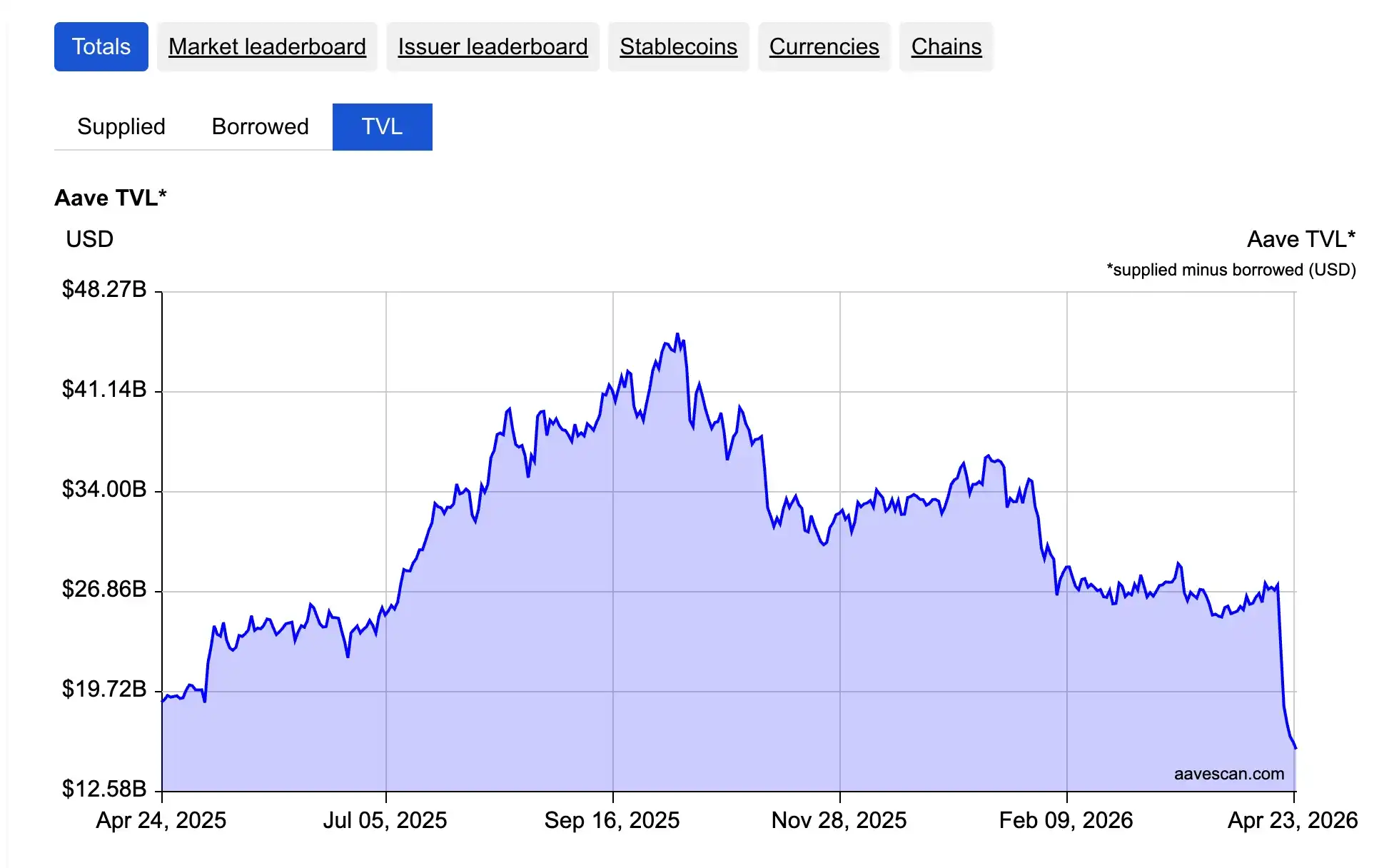
$292 million, this is the total amount of rsETH funds stolen from Kelp DAO; $17.2 billion, this is the scale of funds that have flowed out of Aave since the incident.

Aave is watching the community's panic sentiment ferment for several consecutive days due to its extremely foolish crisis PR strategy, thereby losing its once greatest advantage in the lending track—hundreds of billions of dollars in deposited funds and the user mindset label of "the safest DeFi".
  • Odaily Note: For background, please refer to "DeFi Hacked Again for $292 Million, Is Aave No Longer Safe?" and "The Tripartite Game Under the $290 Million Hole: Who Will Pay the Bill—Aave, L0, or Kelp?".

What Did Aave Do Wrong?

The details of the Kelp DAO hack need not be repeated; blaming Aave for why it granted rsETH such a high LTV is meaningless now. Here, I mainly want to discuss Aave's response strategy after the incident from the perspective of a long-term AAVE user.

First is the bad debt scale issue; Aave itself has done the math. Depending on the different handling of rsETH, there might be two possible bad debt scenarios—if the stolen loss is written off from all rsETH in circulation, it is expected to generate $123.7 million in bad debt; if the value of mainnet rsETH is protected and the loss is fully recorded in the mapped version of rsETH on Layer2, it is expected to generate $230.1 million in bad debt.

In either case, Aave has the capability to cover it with its reserves from Umbrella, the DAO treasury, and the team. I understand that Aave is unwilling to pay this money itself and wants the main responsible party, Kelp DAO, and the secondary responsible party, LayerZero, to contribute as much as possible. But the problem is that the other parties will think the same way—"Aave is so rich, the situation is so awkward, it should bear more." Therefore, in the short term, it is difficult for these three parties to reach a consensus, which implies that a solution that satisfies everyone is temporarily impossible.

But users cannot wait that long—Aave's yield levels have never been very competitive in the industry. Users who choose to deposit with Aave are all attracted by its reputation, security, and liquidity. However, the situation now is that in the most critical days after the incident, Aave consistently failed to give users some kind of bottom-line guarantee promise, but instead kept emphasizing "our code has no problems" and "how rsETH is accounted for is beyond Aave's control" to shift blame.

This is why panic sentiment kept fermenting within the community. Users tried every means to escape and avoid risk: those who could withdraw directly did so, and those who couldn't went to borrow from other pools first, causing the impact to gradually expand. So Aave's current situation is: on one hand, it faces continuous fund outflows; on the other hand, multiple pools are experiencing liquidity drying up due to utilization rates being maxed out.

This awkward situation could have been avoided (or at least not been this bad)... Since Aave can afford the money, why didn't it inject a dose of reassurance into the community from the beginning to prevent a bank run? At most, it's $230 million in bad debt (possibly less), and this money wouldn't necessarily be paid by Aave alone;后续 could continue to dispute with LayerZero and Kelp DAO.

Now, it's done. For the sake of a promised relief of at most $230 million, Aave watched $17.2 billion in deposited funds flow out (the number may continue to grow), and this doesn't even include the decline in AAVE's price these days... No matter how you calculate it, it's a huge loss.

What makes Aave even more uncomfortable is that the worse its situation becomes, the more relaxed opponents like LayerZero and Kelp DAO will be, because they will judge that Aave will be more motivated to solve the problem as soon as possible, which only puts Aave at a disadvantage in the game.

Having reached this point, Aave has brought this upon itself.

Behind Aave, Spark Is Watching Covetously

While Aave is suffering from headaches, the situation of its competitor Spark is booming and extremely positive. What is even more lamentable is that Spark is actually a competitor "personally incubated" by Aave.

Spark was originally a lending protocol forked and developed by Sky (formerly MakerDAO) based on the open-source code of Aave V3; both sides actually use the same underlying code logic. In return, there was once a profit-sharing agreement between Spark and Aave, but later Aave accused Spark of涉嫌 breaching the contract, and coupled with route differences, the two are now purely competitive.

Three months before the Kelp DAO theft, Spark had just removed support for rsETH (for details, please refer to "Same Day, Different Fate: Aave Embraces rsETH and Loses Nearly $200 Million, Spark Exits Unscathed"). You call it strategic conservatism or rigorous risk control, or even attribute it entirely to luck, but the result is that Spark was not affected at all in this incident—on this point alone, Spark can wantonly attack Aave's former "safest DeFi" label.

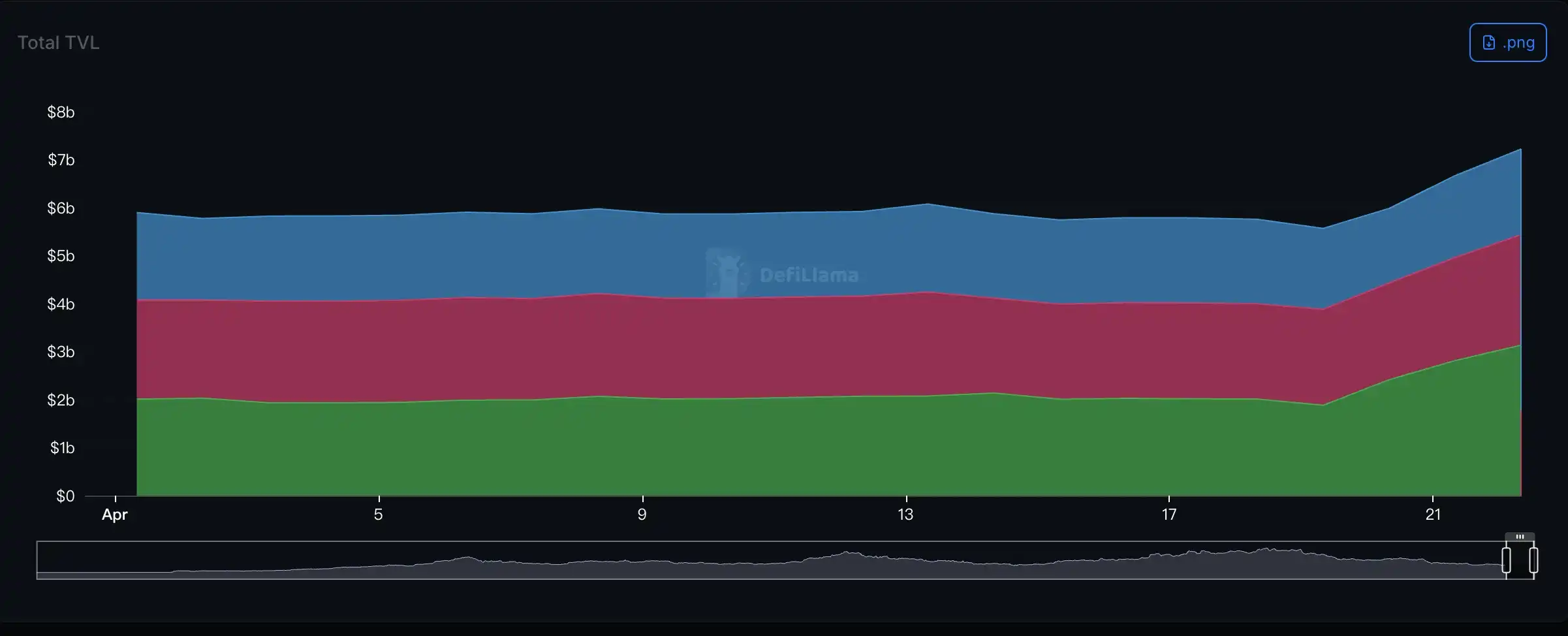
Thus, Spark became one of the safe havens for funds fleeing Aave. Since the incident, Spark's TVL has grown by nearly $2 billion (green part in the chart below). On the day of the incident, Justin Sun withdrew 53,665 ETH (worth $124 million) from Aave and subsequently deposited it into Spark. After continued accumulation in recent days, the total deposit has reached $1.3 billion—in the DeFi world, Brother Sun's operations are really something to learn.
On April 23, Upbit officially announced the launch of the Spark (SPK) Korean Won trading market. SPK, stimulated by this positive news, rose over 80% in a single day, significantly narrowing the market value gap between itself and AAVE.

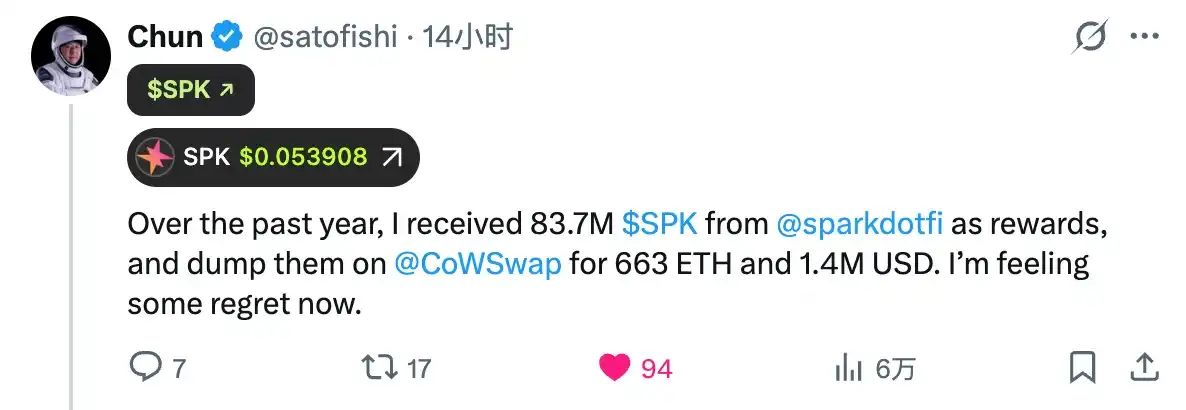
Even Wang Chun, founder of F2Pool, lamented on X: "In the past year, I received 83.7 million SPK rewards from Spark and sold them on CoWSwap for 663 ETH and $1.4 million. Now I kind of regret it."
Spark clearly realizes that this is a perfect opportunity to seize market share from Aave's mouth. Since the incident, Spark's Strategy Lead, MonetSupply, has almost become the most frequent KOL speaking out on this matter, posting dozens of times a day. Although his发言 can indeed help the public understand what happened, it objectively also加剧 the panic sentiment surrounding Aave.

But this is the purest商业 competition; MonetSupply just made the most correct choice.

Aave Is Losing the Throne of DeFi Lending

In the early morning of April 24, perhaps realizing the严峻 situation, Aave founder Stani announced on X the launch of a relief plan called DeFi United. Cooperative participants include LayerZero, Ethena, ether.fi, Ink Foundation, Golem Foundation, Trydo, etc. Stani personally will also donate 5,000 ETH to solve the current problem.

But the funds have already flowed out, and user trust has been severely damaged. Relying solely on this belated statement, Aave will find it difficult to regain deposited funds and user trust in the short term.

The DeFi lending track has long presented a pattern of "one superpower, multiple great powers," with Aave一直以来 having seemingly extremely solid leading advantages. But now, Aave is拱手 surrendering the throne. Behind it, challengers are coming aggressively; besides the booming Spark, other opponents like Morpho and Jupiter Lend also hope to take a bite out of Aave's share.

Last year, Stani bought a five-story luxury house in London for approximately $30 million, one of the most expensive transactions in the UK's sluggish luxury real estate market in the past year. I don't know if there is something like a "jinx," but with precedents like Su Zhu and others, it seems that big shots who consume conspicuously within the circle always run into some倒霉事.

I can't guess what Stani is thinking right now in his five-story luxury house.

Câu hỏi Liên quan

QWhat was the main reason for the massive outflow of funds from Aave following the Kelp DAO hack?

AAave's extremely poor crisis management strategy, which failed to provide a timely and reassuring commitment to cover the potential bad debt, led to widespread community panic and a user rush to withdraw funds.

QWhat are the two potential bad debt scenarios calculated by Aave after the rsETH exploit?

AIf the stolen loss is written off from all rsETH in circulation, it would result in approximately $123.7 million in bad debt. If the value of mainnet rsETH is protected and the loss is fully attributed to the mapped version of rsETH on Layer 2, it would result in approximately $230.1 million in bad debt.

QWhich competitor protocol directly benefited from the funds flowing out of Aave, and what was a significant factor in its immunity to the hack?

ASpark Protocol directly benefited, with its TVL growing by nearly $2 billion. A significant factor was that Spark had removed support for rsETH three months prior to the hack, avoiding any exposure to the incident.

QWhat was the name of the key initiative announced by Aave founder Stani Kulechov in a belated attempt to address the crisis?

AStani Kulechov announced an initiative called 'DeFi United,' a relief plan involving partners like LayerZero and Ethena, to which he also personally pledged a donation of 5,000 ETH.

QAccording to the author, what is the fundamental reason users traditionally deposited funds into Aave, given its uncompetitive yield rates?

AUsers traditionally deposited into Aave due to its reputation for safety, security, and deep liquidity, not for competitive yield rates.

Nội dung Liên quan

Tín hiệu đáy lịch sử tái xuất? Messari từng định giá 3 tỷ USD bị bán tháo với 10 triệu USD

Tín hiệu đáy lịch sử tái xuất hiện? Messari từng định giá 300 triệu USD giờ chỉ bán được hơn 10 triệu. Nền tảng dữ liệu hàng đầu ngành crypto này, cùng nhiều công ty khác như DappRadar, Parsec, CoinDesk đang đóng cửa, bán rẻ hoặc cắt giảm nhân sự. Nguyên nhân đến từ sự xói mòn mô hình kinh doanh do AI và sự rút lui của vốn đầu tư mạo hiểm (VC). VC đang dồn tiền vào AI, khiến đầu tư vào crypto lao dốc hơn 80% trong 6 tháng. Các quỹ crypto cũ hoạt động khó khăn, quỹ mới khó gọi vốn. Nhiều nhân vật chủ chốt như Kyle Samani (Multicoin) cũng rời bỏ lĩnh vực này. Tuy nhiên, đây có thể là tín hiệu tích cực. Bitcoin đã giảm gần 50% từ đỉnh, chỉ số Sợ hãi & Tham lam xuống mức cực thấp, nhà đầu tư dài hạn nắm giữ gần 80% nguồn cung. Lịch sử cho thấy, khi những tín hiệu bi quan này đồng thời xuất hiện (như năm 2018, 2020), thường đánh dấu đáy của chu kỳ và mở ra đợt tăng trưởng mới. Một số quỹ như Dragonfly vẫn lạc quan, tiếp tục gọi vốn và đầu tư, trong khi Blockworks mua lại Messari để củng cố ngành. Sự sụp đổ của những gã khổng lồ một thời có thể là dấu hiệu cho một khởi đầu mới.

marsbit3 phút trước

Tín hiệu đáy lịch sử tái xuất? Messari từng định giá 3 tỷ USD bị bán tháo với 10 triệu USD

marsbit3 phút trước

Khối lượng xuất xưởng TPU của Google được điều chỉnh tăng 50%

Gần đây, giới AI tính toán đã chứng kiến một sự điều chỉnh kỳ vọng quan trọng. Nhiều tổ chức nước ngoài âm thầm nâng dự báo sản lượng xuất xưởng cho TPU của Google, trực tiếp thay đổi quan điểm bảo thủ trước đó của thị trường về nhu cầu phần cứng tính toán năm 2027. Dự báo ngành từ mức dưới 10 triệu chip TPU đã được điều chỉnh lên khoảng 15 triệu chip, tương ứng mức tăng mới 50%. Việc sản lượng TPU tăng mạnh sẽ lan tỏa đến toàn bộ chuỗi cung ứng, mang lại lợi ích đồng thời cho các lĩnh vực then chốt như động cơ quang NPO, mô-đun quang 1.6T, chuyển mạch quang OCS, nguồn server, cáp quang & MPO, và đặc biệt là làm mát bằng chất lỏng (liquid cooling). Trong đó, làm mát bằng chất lỏng là hướng thay đổi lớn nhất và được kỳ vọng mang lại lợi nhuận vượt trội. Công suất chip TPU thế hệ mới tăng cao khiến giải pháp tản nhiệt truyền thống không đáp ứng được, thúc đẩy việc áp dụng rộng rãi giải pháp làm mát bằng chất lỏng. Dự kiến năm 2026 sẽ là năm bùng nổ thực sự cho lĩnh vực này tại Google. Cửa sổ cạnh tranh cũng được định hình lại khi các nhà sản xuất nước ngoài gặp khó khăn về công nghệ và năng lực giao hàng, tạo cơ hội lớn cho các nhà sản xuất trong nước với ưu thế về tốc độ lặp, ổn định giao hàng và đủ công suất. Lĩnh vực cáp quang cũng có logic mới, chuyển từ sản phẩm chu kỳ sang nguồn tài nguyên chiến lược quan trọng cho các cụm tính toán AIDC. Nhu cầu bùng nổ từ việc xây dựng trung tâm dữ liệu AI vượt xa năng lực sản xuất trong ngắn hạn, dẫn đến tình trạng thiếu hụt. Các nhà sản xuất trong nước đang tận dụng lợi thế về năng lực và chi phí để chiếm thị phần lớn. Các mảng phụ trợ khác như động cơ quang NPO (tỷ lệ 1:1 với TPU), mô-đun quang 1.6T, chuyển mạch quang OCS và nguồn server cũng đều được hưởng lợi từ làn sóng này. Trọng tâm đầu tư trong chuỗi cung ứng AI đang dần chuyển từ "cạnh tranh sức mạnh chip" sang "sự tăng trưởng ổn định của cơ sở hạ tầng hỗ trợ tính toán". Việc điều chỉnh tăng mạnh dự báo cung ứng TPU của Google giúp củng cố tính chắc chắn về hiệu suất cho toàn bộ ngành trong 2-3 năm tới.

marsbit46 phút trước

Khối lượng xuất xưởng TPU của Google được điều chỉnh tăng 50%

marsbit46 phút trước

Cơn sốt tiền điện tử qua đi, Phố Wall thực sự muốn gì?

Tác giả: Bạch Thoại Khu Công Nghệ Sau cơn sốt tiền điện tử, Phố Wall không còn theo đuổi các câu chuyện đầu cơ hay tư tưởng "phi tập trung". Thay vào đó, họ đang kiên trì xây dựng một hệ thống tài chính tuân thủ, có thể kiểm soát và tạo ra thu nhập trên nền tảng sổ cái phân tán. Các ví dụ điển hình bao gồm: 1. **Chứng khoán hóa tài sản truyền thống:** Quỹ BUIDL của BlackRock (quản lý 25-28 tỷ USD) đầu tư vào trái phiếu kho bạc ngắn hạn và hoạt động trên blockchain, cung cấp tài sản thế chấp an toàn. Securitize, với định giá 12,5 tỷ USD, chuẩn bị niêm yết trên NYSE và hợp tác xây dựng hệ thống thanh toán chứng khoán hoạt động 24/7 trên chuỗi. 2. **Tạo thu nhập từ Bitcoin:** BlackRock sắp ra mắt ETF BITA, sử dụng chiến lược bán quyền chọn mua có bảo hiểm trên danh mục nắm giữ Bitcoin để tạo ra dòng thu nhập (cổ tức) ổn định cho nhà đầu tư, biến Bitcoin thành tài sản sinh lời. 3. **Ổn định tiền tệ như công cụ thanh toán:** Các stablecoin tuân thủ (như USDC) đang được Stripe và Mastercard tích hợp để xử lý thanh toán xuyên biên giới tức thì với chi phí thấp. SWIFT cũng công bố kế hoạch phát triển sổ cái phân tán để giải quyết tình trạng kẹt vốn trong thanh toán toàn cầu. Đạo luật GENIUS 2025 định hình stablecoin là công cụ thanh toán thuần túy (không trả cổ tức) và tăng cường kiểm soát tuân thủ. Tóm lại, Phố Wall đang sử dụng công nghệ blockchain để tái tạo và nâng cấp các sản phẩm tài chính truyền thống (quỹ trái phiếu, quyền chọn, mạng lưới thanh toán), gắn chúng với uy tín của đồng USD và hệ thống quy định hiện có, nhằm xây dựng các kênh dẫn vốn hiệu quả và có lợi nhuận.

marsbit1 giờ trước

Cơn sốt tiền điện tử qua đi, Phố Wall thực sự muốn gì?

marsbit1 giờ trước

Đặt Cược Tương Lai Trên Chiến Xa SpaceX: Con Đường Tăng Trưởng 600 Tỷ Đô Của Cursor

Tóm tắt: Câu chuyện về sự trỗi dậy nhanh chóng của Cursor, công ty khởi nghiệp AI lập trình do Michael Truell (CEO) đồng sáng lập. Từ một công cụ chỉnh sửa mã dựa trên mô hình AI của Anthropic, Cursor đã phát triển với tốc độ chóng mặt, đạt doanh thu hàng tỷ USD. Tuy nhiên, họ sớm đối mặt với thách thức cấu trúc khi Anthropic - nhà cung cấp mô hình then chốt - tự ra mắt công cụ cạnh tranh Claude Code. Để giảm sự phụ thuộc và đảm bảo tương lai, Cursor bắt đầu phát triển mô hình tự lập Composer. Nhu cầu về sức mạnh tính toán khổng lồ đã dẫn họ đến với thỏa thuận hợp tác chiến lược, đồng thời là thương vụ mua lại tiềm năng trị giá 600 tỷ USD với SpaceX của Elon Musk. Thỏa thuận này mang lại cho Cursor nguồn lực chip AI, đổi lại hỗ trợ khả năng lập trình cho Grok (AI của Musk). Hành trình của Cursor đặt ra câu hỏi lớn: Liệu họ sẽ trở thành một công ty phần mềm thế hệ mới độc lập, hay cuối cùng sẽ trở thành một mảnh ghép trong cuộc chiến AI giữa các gã khổng lồ? Dù kết quả thế nào, Cursor đã định hình lại cách các nhà phát triển viết mã và trở thành một hiện tượng đáng chú ý trong làn sóng AI.

marsbit1 giờ trước

Đặt Cược Tương Lai Trên Chiến Xa SpaceX: Con Đường Tăng Trưởng 600 Tỷ Đô Của Cursor

marsbit1 giờ trước

Kraken Lên Kế Hoạch Cung Cấp Hợp Đồng Tương Lai Vĩnh Viễn Được CFTC Quy Định Cho Nhà Giao Dịch Chuyên Nghiệp Hoa Kỳ

Kraken đang chuẩn bị ra mắt hợp đồng tương lai vĩnh viễn được CFTC quản lý cho các nhà giao dịch chuyên nghiệp đủ điều kiện tại Hoa Kỳ. Sản phẩm sẽ được cung cấp thông qua sàn phái sinh Bitnomial mà Kraken đã mua lại và dự kiến tích hợp vào nền tảng Kraken Pro. Hợp đồng tương lai vĩnh viễn là sản phẩm phái sinh crypto lớn toàn cầu, cho phép giao dịch không ngày đáo hạn. Tại Mỹ, các hạn chế quy định trước đây khiến nhà giao dịch có ít lựa chọn trong nước. Động thái của Kraken nhằm thu hẹp khoảng cách này, cung cấp một con đường được quản lý để tiếp cận sản phẩm chi phối khối lượng giao dịch crypto ở nước ngoài. Việc ra mắt sẽ tập trung vào các nhà giao dịch chuyên nghiệp đủ điều kiện. Các yếu tố cần theo dõi bao gồm điều khoản về tính đủ điều kiện, thiết kế hợp đồng, tài sản được hỗ trợ và quan trọng nhất là thanh khoản khi ra mắt. Thành công của sản phẩm có thể mở đường cho nhiều sản phẩm tương lai vĩnh viễn được quản lý khác tại thị trường Mỹ, đưa sản phẩm phái sinh chủ chốt này tiến gần hơn đến cơ sở hạ tầng thị trường nội địa được quản lý.

bitcoinist11 giờ trước

Kraken Lên Kế Hoạch Cung Cấp Hợp Đồng Tương Lai Vĩnh Viễn Được CFTC Quy Định Cho Nhà Giao Dịch Chuyên Nghiệp Hoa Kỳ

bitcoinist11 giờ trước

Giao dịch

Giao ngay
Hợp đồng Tương lai

Bài viết Nổi bật

Làm thế nào để Mua AAVE

Chào mừng bạn đến với HTX.com! Chúng tôi đã làm cho mua Aave Protocol (AAVE) trở nên đơn giản và thuận tiện. Làm theo hướng dẫn từng bước của chúng tôi để bắt đầu hành trình tiền kỹ thuật số của bạn.Bước 1: Tạo Tài khoản HTX của BạnSử dụng email hoặc số điện thoại của bạn để đăng ký tài khoản miễn phí trên HTX. Trải nghiệm hành trình đăng ký không rắc rối và mở khóa tất cả tính năng. Nhận Tài khoản của tôiBước 2: Truy cập Mua Crypto và Chọn Phương thức Thanh toán của BạnThẻ Tín dụng/Ghi nợ: Sử dụng Visa hoặc Mastercard của bạn để mua Aave Protocol (AAVE) ngay lập tức.Số dư: Sử dụng tiền từ số dư tài khoản HTX của bạn để giao dịch liền mạch.Bên thứ ba: Chúng tôi đã thêm những phương thức thanh toán phổ biến như Google Pay và Apple Pay để nâng cao sự tiện lợi.P2P: Giao dịch trực tiếp với người dùng khác trên HTX.Thị trường mua bán phi tập trung (OTC): Chúng tôi cung cấp những dịch vụ được thiết kế riêng và tỷ giá hối đoái cạnh tranh cho nhà giao dịch.Bước 3: Lưu trữ Aave Protocol (AAVE) của BạnSau khi mua Aave Protocol (AAVE), lưu trữ trong tài khoản HTX của bạn. Ngoài ra, bạn có thể gửi đi nơi khác qua chuyển khoản blockchain hoặc sử dụng để giao dịch những tiền kỹ thuật số khác.Bước 4: Giao dịch Aave Protocol (AAVE)Giao dịch Aave Protocol (AAVE) dễ dàng trên thị trường giao ngay của HTX. Chỉ cần truy cập vào tài khoản của bạn, chọn cặp giao dịch, thực hiện giao dịch và theo dõi trong thời gian thực. Chúng tôi cung cấp trải nghiệm thân thiện với người dùng cho cả người mới bắt đầu và người giao dịch dày dạn kinh nghiệm.

Tổng lượt xem 495Xuất bản vào 2024.12.11Cập nhật vào 2026.06.02

Làm thế nào để Mua AAVE

Thảo luận

Chào mừng đến với Cộng đồng HTX. Tại đây, bạn có thể được thông báo về những phát triển nền tảng mới nhất và có quyền truy cập vào thông tin chuyên sâu về thị trường. Ý kiến ​​của người dùng về giá của AAVE (AAVE) được trình bày dưới đây.

活动图片