From Spring Festival Gala Robots to the Computing Power Energy War: Why Does China Hold the 'Trump Card' in the AI Era?

marsbitXuất bản vào 2026-02-22Cập nhật gần nhất vào 2026-02-22

Tóm tắt

China's 2026 Spring Festival Gala showcased a breakthrough in embodied AI, featuring robots from companies like Magic Atom, Unitree, and Galaxy General performing complex tasks such as dancing, martial arts, and comedy. This demonstrated China's advanced progress in robotics and AI physical integration. Meanwhile, the U.S. faces an escalating energy crisis, with electricity prices rising 36% by early 2026. Training AI models like GPT-4 consumes power equivalent to 100,000 households annually, and U.S. data centers are projected to use 600,000 GWh by 2028. Aging infrastructure, fragmented grids, and lengthy approval processes for new transmission lines exacerbate the problem. In contrast, China has built a strategic advantage through decades of infrastructure investment. It operates 45 ultra-high-voltage (UHV) power transmission projects, spanning 40,000 kilometers, efficiently delivering clean energy from the west to eastern data centers. Renewable energy accounts for over 60% of China’s power capacity, with 40% of electricity coming from green sources. China also dominates transformer production, holding 60% of global capacity. While the U.S. excels in AI algorithms, China’s robust energy infrastructure—UHV grids, renewable energy, and manufacturing capacity—provides a foundational edge in the AI era, turning energy into a critical competitive asset.

In the Spring Festival of 2026, while the world was still marveling at OpenAI's latest model parameters, China used a Spring Festival Gala to showcase another facet of AI to the world—the physical implementation of embodied intelligence.

Looking at the program list of the 2026 CCTV Spring Festival Gala, we witnessed an unprecedented "AI military parade." This was no longer the simple mechanical dance displays of a few years ago but a concentrated explosion of China's robotics industry featuring "multiple enterprises, multiple models, and full-scene applications."
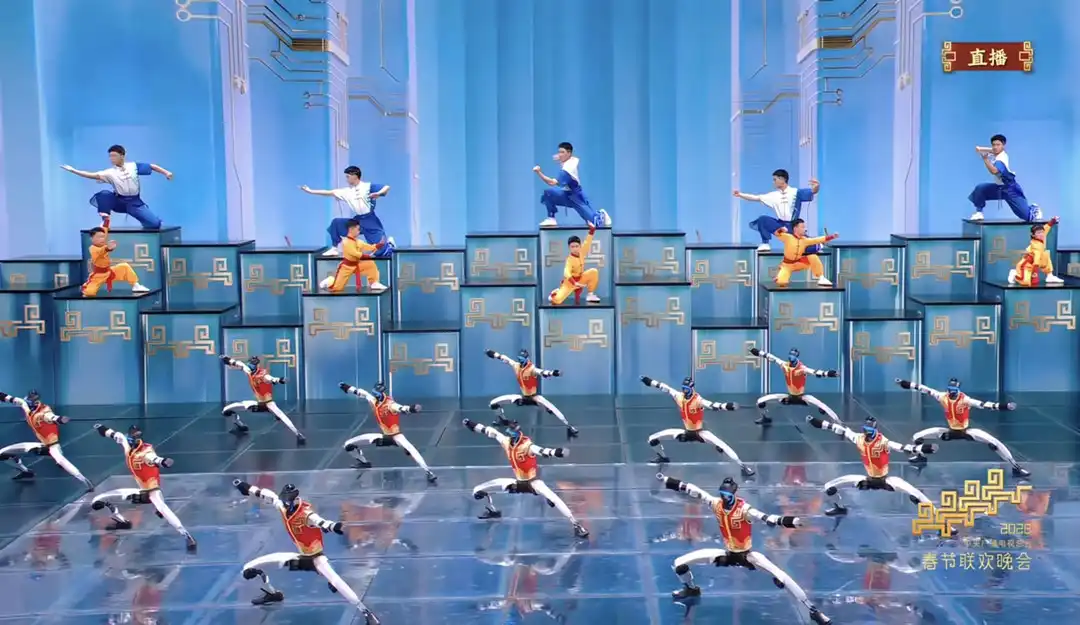
  • Magic Atom's full-stack cluster made robots the best "atmosphere group," accompanying Chen Xiaochun and Yi Yangqianxi in "Intelligent Manufacturing Future" with coordination so seamless it was hard to distinguish from humans.
  • Unitree's G1 and H2 robots demonstrated astonishing motion control capabilities in "Wǔ BOT"—without real-time remote control, relying entirely on edge-side computing power for autonomous balance. When the H2, draped in a red robe, performed a sword dance, it proved that the motion cerebellum of Chinese robots had matured.
  • Songyan Power, in the skit "Grandma's Favorite," assigned robots the comedic role of delivering and responding to punchlines, completing the transition from "prop" to "actor."
  • Galaxy General's Galbot G1 performed "walnut rolling" in a microfilm—a seemingly simple action that showcased the pinnacle of dexterous hand and tactile feedback technology.

The Gala sent a clear signal: China's AI is not just confined to servers; it has grown limbs and entered reality.

However, just as we were cheering for the robots, Wall Street was plunged into silent panic. They discovered that the "lifeblood" powering these systems—electricity—was running dry. Shifting our gaze from the Gala stage to Silicon Valley's data centers, we encounter the elephant in the room—power.

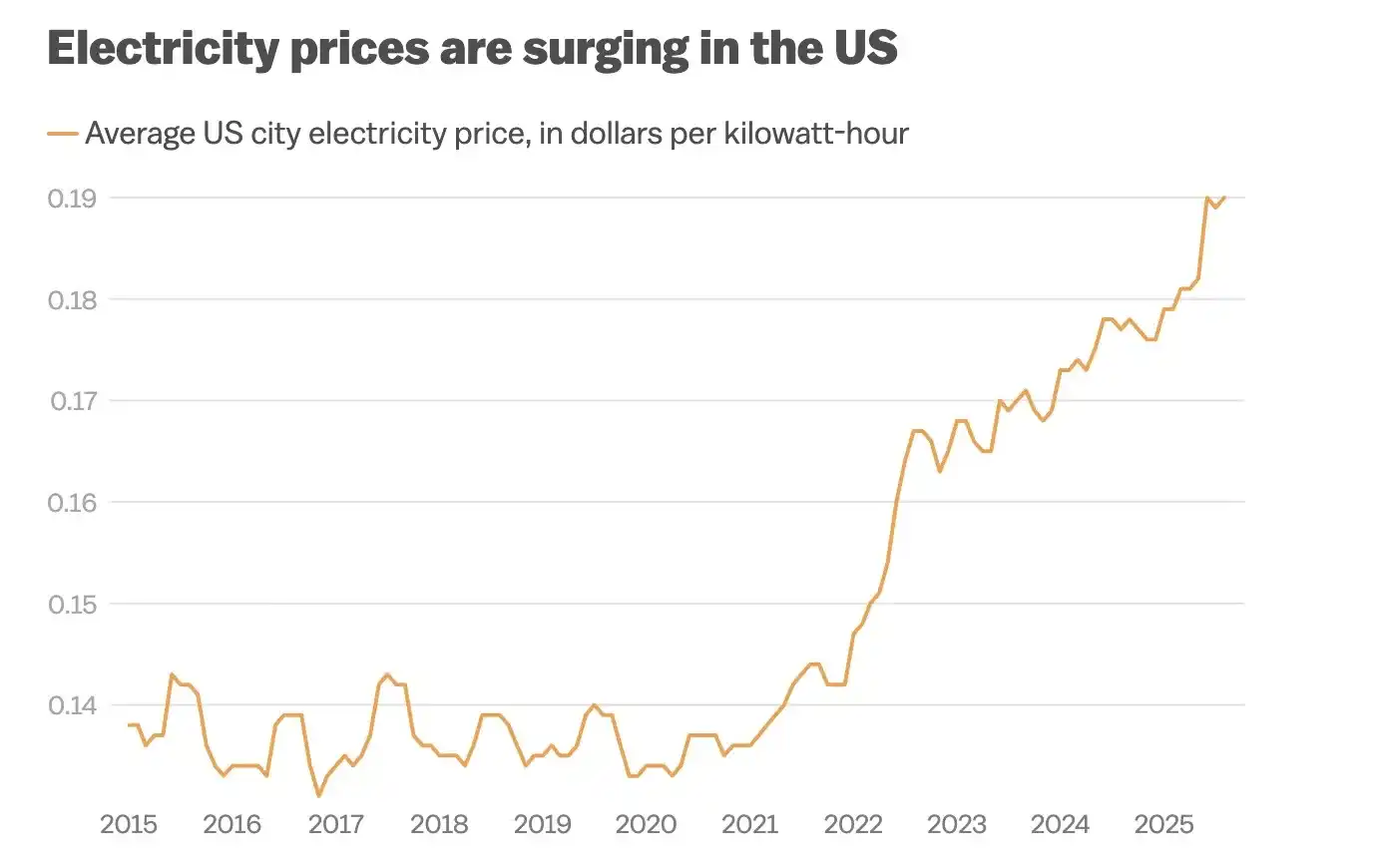
By early 2026, U.S. residential electricity prices had surged by 36%, reaching $0.18 per kWh. But this was just the surface; the core crisis lay in the collapse of the supply side. Training a GPT-4-level model consumes as much electricity as 100,000 households use in a year. By 2028, the annual electricity consumption of U.S. data centers is projected to skyrocket to 600,000 GWh.
The U.S. power grid is facing a dual crisis of "heart disease" and "vascular blockage." Five percent of its electricity relies on aging fossil fuels and nuclear power, and these units are facing a retirement wave. The U.S. grid is fragmented into three major islands—East, West, and Texas—with poor interconnectivity. Approving an interstate transmission line can take up to 15 years, preventing wind power from the Midwest from reaching East Coast data centers.

As Sam Altman said, "Energy is currency." In Silicon Valley today, CEOs are no longer troubled by chip quotas but by—where can they find enough electricity to run these chips?

If computing power is the engine of AI, then electricity is its fuel. In this energy game, China, with a decade of超前布局 (forward-looking planning), has built a strategic moat that the U.S. cannot easily replicate. If computing power is the engine of AI, then electricity is its fuel. In this energy game, China, with a decade of超前布局 (forward-looking planning), has built a strategic moat that the U.S. cannot easily replicate.

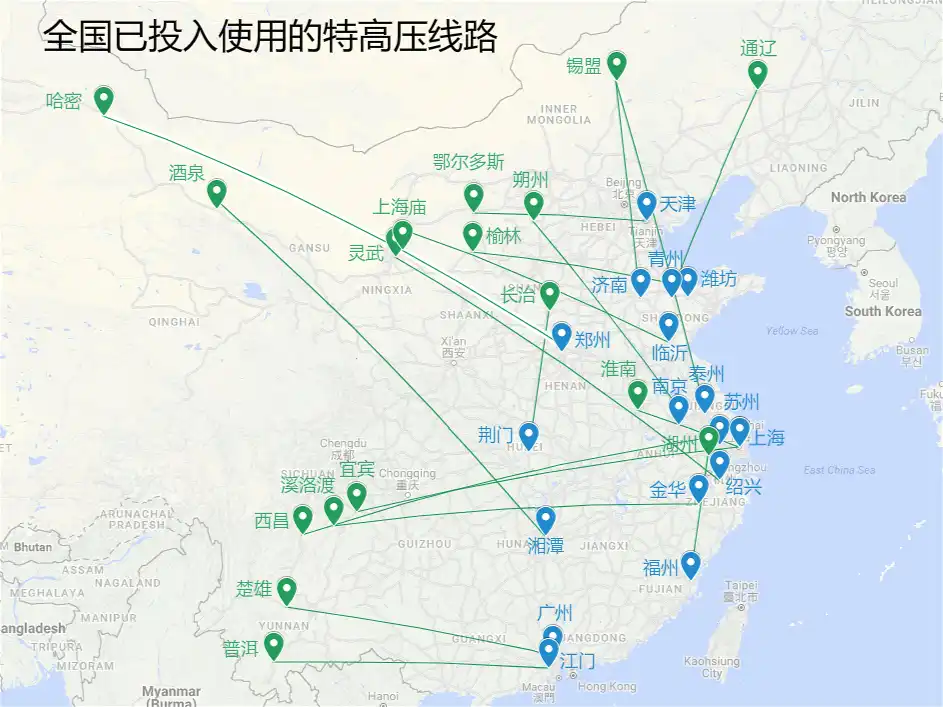
By 2025, China had completed 45 ultra-high voltage (UHV) projects, with the total length of UHV DC transmission lines exceeding 40,000 kilometers. These "electricity superhighways" can transmit abundant clean energy from the west to data centers in the east at millisecond speeds, or directly support the "East Data West Computing" hubs. China possesses 35 of the world's 37 largest high-voltage direct current cable systems—an infrastructure gap that is an insurmountable chasm for the U.S. in the short term.
The high energy consumption of AI inherently demands clean energy. In 2025, the proportion of renewable energy installed capacity in China historically surpassed 60%, with new wind and solar installations exceeding 430 million kilowatts. Of the total electricity consumption, nearly 4 out of every 10 kWh came from green power. While the U.S. is still grappling with nuclear power plant delays, China has achieved grid parity for photovoltaics and wind power, providing a cheap and green energy solution for high-consumption AI data centers.

China is the global manufacturing center for transformers, accounting for over 60% of global production. The biggest pain point for U.S. grid upgrades is transformer shortages, with delivery times now stretching to 3-4 years. Whether through transshipment via Mexico or direct procurement, the maintenance of the U.S. grid is highly dependent on Chinese manufacturing. While U.S. data centers face shutdowns due to transformer shortages, China's power equipment companies are operating at full capacity, supporting the rapid expansion of domestic computing infrastructure.

The 2026 Spring Festival Gala was not just a carnival of robots but also a profile of China's industrial strength.

When we watch Unitree's robotic dogs tumble and Galaxy General's robots perform tasks on screen, we must not forget: behind every agile movement, there is not only advanced algorithms but also a stable current transmitted thousands of kilometers through UHV lines, supported by a robust power grid.

In the second half of this AI revolution, the marginal cost of computing power growth will no longer depend on the nanometer size of chips but on the cost of acquiring joules. The U.S. possesses top-tier algorithm design, but China has the most powerful energy conversion and delivery system.

For investors, the logic is clear: in this gold rush, if NVIDIA is selling shovels, then China's infrastructure builders (UHV, power equipment, green energy) control the water source.


Tiền kỹ thuật số thịnh hành

Câu hỏi Liên quan

QWhat was the significance of the 2026 CCTV Spring Festival Gala in showcasing China's AI capabilities?

AThe 2026 CCTV Spring Festival Gala served as a significant demonstration of China's advancements in embodied AI and physical robotics. It featured a multi-enterprise, multi-model, and all-scenario display of China's robot industry, moving beyond simple mechanical dances to show highly coordinated performances, advanced motion control, and robots taking on complex roles like comedy and delicate manipulation, signaling that China's AI has tangible, real-world applications.

QWhat is the core energy crisis facing the United States in relation to AI development as described in the article?

AThe core energy crisis facing the U.S. is a severe shortage of electricity to power its AI data centers. The U.S. grid is struggling with an aging infrastructure reliant on fossil fuels and nuclear power, which is facing a retirement wave. Additionally, the grid is fragmented into three major isolated networks, and bureaucratic delays in approving new transmission lines (taking up to 15 years) prevent the efficient transfer of renewable energy from the Midwest to data centers on the coasts. This has caused electricity prices to soar and threatens the operational capacity of AI systems.

QHow has China built a strategic advantage in the AI energy game according to the article?

AChina has built a strategic advantage through a decade of超前布局 (forward-looking planning) in its energy infrastructure. It has constructed 45 ultra-high voltage (UHV) power transmission projects, creating a 'power highway' over 40,000 kilometers long that efficiently transmits clean energy from the west to data centers in the east. China also dominates global transformer manufacturing (over 60% capacity) and has achieved a historic milestone with renewable energy accounting for over 60% of its installed capacity, providing a cheap and green power solution for its AI data centers.

QWhat does the article suggest is the new limiting factor for AI's computational growth?

AThe article suggests that the new limiting factor for AI's computational growth is no longer the nanometer size of chips, but the cost of acquiring energy (the cost per joule). The marginal cost of increasing computing power is becoming dependent on the availability and cost of the electrical energy required to run the powerful hardware.

QWhat analogy does the article use to describe the role of Chinese infrastructure companies in the AI 'gold rush'?

AThe article uses the analogy of a gold rush. It states that if NVIDIA is selling shovels (the hardware/tools for AI), then Chinese infrastructure builders—those involved in ultra-high voltage power transmission, power equipment, and green energy—control the water source. This means they provide the essential, foundational resource (energy) that is required for the entire AI industry to function and grow.

Nội dung Liên quan

Sam Bankman-Fried Muốn Một Token Mới Để Bồi Thường Nạn Nhân FTX, Nhưng Liệu Điều Đó Có Thể Xảy Ra?

Sam Bankman-Fried (SBF) một lần nữa xuất hiện trên các tiêu đề sau khi được cho là bày tỏ hy vọng về một dự án token mới có thể bồi thường cho các nạn nhân của FTX. Tuy nhiên, tuyên bố này cần được hiểu là một mong muốn cá nhân, hoàn toàn tách biệt với thực tế pháp lý khắc nghiệt mà ông đang đối mặt. Điều quan trọng cần nhấn mạnh là vào ngày 12 tháng 6 năm 2026, một tòa phúc thẩm Mỹ đã giữ nguyên bản án 25 năm tù dành cho SBF. Với tư cách là một phạm nhân, ông phải đối mặt với hàng loạt rào cản pháp lý hiển nhiên trong việc điều hành công ty, huy động vốn hay phát hành token. Hiện không hề có bất kỳ dự án token nào đã được xác minh là khả thi về mặt pháp lý. Lý do khiến thông tin này thu hút sự chú ý nằm ở quy mô và ảnh hưởng của vụ sụp đổ FTX trong lịch sử crypto. Bất kỳ đề cập nào về việc bồi thường nạn nhân đều khơi gợi ký ức về thiệt hại khổng lồ và sự tổn hại niềm tin trong cộng đồng. Tuy nhiên, góc độ an toàn và chính xác để đưa tin không phải là việc SBF đang phát hành token, mà là sự tương phản giữa hy vọng cá nhân của ông về một con đường dựa trên token và nghịch lý pháp lý hiện tại. Quá trình bồi thường thực tế cho các chủ nợ của FTX vẫn sẽ phải tuân theo các thủ tục pháp lý, cơ cấu phá sản và cơ chế thu hồi tài sản chính thức, chứ không phải từ một ý tưởng token xuất phát từ trong tù.

bitcoinist3 giờ trước

Sam Bankman-Fried Muốn Một Token Mới Để Bồi Thường Nạn Nhân FTX, Nhưng Liệu Điều Đó Có Thể Xảy Ra?

bitcoinist3 giờ trước

BlackRock Ra Mắt Quỹ ETF Bitcoin Covered-Call Với Mã Chứng Khoán BITA

BlackRock đã ra mắt iShares Bitcoin Premium Income ETF (BITA), một quỹ ETF bitcoin mới sử dụng chiến lược covered-call để tạo thu nhập. Không giống như các quỹ spot bitcoin thông thường, BITA bán quyền chọn mua (call options) dựa trên danh mục nắm giữ bitcoin, nhằm thu phí bảo hiểm và phân phối thu nhập hàng tháng cho nhà đầu tư. Sản phẩm này phù hợp với những nhà đầu tư tin tưởng vào triển vọng bitcoin nhưng muốn có một công cụ tạo thu nhập ổn định hơn trong danh mục truyền thống, thay vì chỉ dựa vào việc tăng giá. Tuy nhiên, có sự đánh đổi: trong thị trường đi ngang hoặc biến động, chiến lược này có thể hấp dẫn, nhưng nó sẽ hạn chế phần lợi nhuận nếu giá bitcoin tăng mạnh vượt quá mức giá thực hiện của quyền chọn đã bán. Việc ra mắt BITA cho thấy thị trường ETF bitcoin đang phát triển vượt ra ngoài các sản phẩm spot đơn giản, hướng tới các chiến lược phức tạp hơn như tạo thu nhập, phòng ngừa rủi ro và tích hợp vào danh mục. Điều này giúp bitcoin dần được coi như một thành phần thị trường có thể kết hợp trong cấu trúc quỹ rộng hơn, thu hút thêm các nhà đầu tư tổ chức.

bitcoinist5 giờ trước

BlackRock Ra Mắt Quỹ ETF Bitcoin Covered-Call Với Mã Chứng Khoán BITA

bitcoinist5 giờ trước

Nhật Bản tăng lãi suất, tại sao cả thế giới đều lo lắng?

Vào tháng 6/2026, Ngân hàng Trung ương Nhật Bản (BoJ) nâng lãi suất chính sách lên 1%, mức cao nhất kể từ năm 1995. Dù mức này vẫn thấp hơn nhiều so với Mỹ hay châu Âu, nó lại khiến thị trường toàn cầu chú ý. Lý do nằm ở vai trò đặc biệt của Nhật Bản trong nhiều thập kỷ: là trung tâm cung cấp vốn vay chi phí cực thấp cho thế giới. Suốt hơn 20 năm, Nhật Bản duy trì lãi suất gần 0% hoặc âm, tạo điều kiện cho các nhà đầu tư quốc tế thực hiện "giao dịch carry trade" bằng đồng Yên. Họ vay Yên rẻ, đổi sang các đồng tiền khác để đầu tư vào tài sản có lợi suất cao hơn như cổ phiếu Mỹ, trái phiếu mới nổi. Dòng vốn Yên giá rẻ này trở thành một nguồn thanh khoản quan trọng, góp phần đẩy giá nhiều loại tài sản toàn cầu. Việc BoJ bắt đầu chu kỳ tăng lãi suất, dù nhỏ, đang làm lung lay kỳ vọng rằng Nhật Bản sẽ mãi mãi là nguồn vốn rẻ. Điều này buộc các nhà đầu tư phải tính toán lại chi phí vay và điều chỉnh các chiến lược đầu tư dựa trên đòn bẩy. Nguy cơ là nhiều quỹ có thể đồng loạt giảm đòn bẩy (deleverage), dẫn đến thu hồi vốn từ các thị trường tài sản rủi ro trên thế giới, gây biến động. Động thái của Nhật Bản phản ánh sự thay đổi cơ bản trong nền kinh tế nội địa: lạm phát đã vượt mục tiêu 2%, và quan trọng hơn là tiền lương tăng trưởng liên tục (trên 5% trong "shunto" - đàm phán lao động mùa xuân), tạo ra vòng xoáy tích cực "lương - lạm phát" mà nước này long đợi từ lâu. Áp lực từ đồng Yên yếu (từng gần chạm 160 Yên/USD) cũng góp phần thúc đẩy việc thắt chặt chính sách. Tuy nhiên, hướng đi cuối cùng của dòng vốn toàn cầu vẫn phụ thuộc lớn vào Cục Dự trữ Liên bang Mỹ (Fed). Chênh lệch lãi suất Mỹ-Nhật vẫn rộng. Chỉ khi Fed bắt đầu chu kỳ cắt giảm lãi suất trong khi BoJ tiếp tục tăng, chênh lệch này mới thu hẹp đáng kể, và khi đó tác động mạnh mẽ hơn đến dòng vốn và tỷ giá hối đoái mới thực sự rõ rệt. Tóm lại, thị trường lo ngại không phải vì mức lãi suất 1%, mà vì sự thay đổi trong một xu hướng đã tồn tại suốt 30 năm. Sự kết thúc của kỷ nguyên vốn vay cực rẻ từ Nhật Bản có thể định nghĩa lại logic định giá tài sản và dòng chảy vốn toàn cầu trong tương lai.

marsbit7 giờ trước

Nhật Bản tăng lãi suất, tại sao cả thế giới đều lo lắng?

marsbit7 giờ trước

Quốc Hội Thông Qua Lệnh Cấm CBDC Cho Đến Năm 2030 Thông Qua Dự Luật Cải Cách Nhà Ở Lớn

Các nhà lập pháp Hoa Kỳ đã thông qua một dự luật cải cách nhà ở lớn, trong đó có điều khoản cấm tạm thời Cục Dự trữ Liên bang (Fed) phát hành tiền kỹ thuật số của ngân hàng trung ương (CBDC) cho đến ngày 31 tháng 12 năm 2030. Điều khoản này, nằm trong Đạo luật Con đường Nhà ở Thế kỷ 21, phân loại CBDC là tài sản kỹ thuật số được định giá bằng đô la, là nghĩa vụ trực tiếp của Fed và phải có thể tiếp cận được với mọi công dân Mỹ. Những người ủng hộ lệnh cấm cho rằng nó cung cấp thêm thời gian để đánh giá tác động tiềm năng của đồng đô la kỹ thuật số, đồng thời phản ánh mối quan ngại về quyền riêng tư, giám sát tài chính và sự can thiệp của chính phủ. Lệnh cấu áp dụng cho mọi nỗ lực phát hành CBDC bán lẻ, dù trực tiếp hay thông qua trung gian, nhưng không hạn chế các mạng lưới blockchain không cần cấp phép. Mặc dù trọng tâm của dự luật là giải quyết thách thức về nguồn cung nhà ở, nhưng ngôn ngữ liên quan đến CBDC lại thu hút sự chú ý đáng kể từ cộng đồng tiền mã hóa, vì nó sẽ ảnh hưởng đến tương lai của các hệ thống thanh toán kỹ thuật số. Các bước tiếp theo trong quy trình lập pháp sẽ quyết định số phận của lệnh cấm này trong thập kỷ tới.

TheNewsCrypto7 giờ trước

Quốc Hội Thông Qua Lệnh Cấm CBDC Cho Đến Năm 2030 Thông Qua Dự Luật Cải Cách Nhà Ở Lớn

TheNewsCrypto7 giờ trước

Giao dịch

Giao ngay
Hợp đồng Tương lai

Bài viết Nổi bật

Làm thế nào để Mua GALA

Chào mừng bạn đến với HTX.com! Chúng tôi đã làm cho mua GALA (GALA) trở nên đơn giản và thuận tiện. Làm theo hướng dẫn từng bước của chúng tôi để bắt đầu hành trình tiền kỹ thuật số của bạn.Bước 1: Tạo Tài khoản HTX của BạnSử dụng email hoặc số điện thoại của bạn để đăng ký tài khoản miễn phí trên HTX. Trải nghiệm hành trình đăng ký không rắc rối và mở khóa tất cả tính năng. Nhận Tài khoản của tôiBước 2: Truy cập Mua Crypto và Chọn Phương thức Thanh toán của BạnThẻ Tín dụng/Ghi nợ: Sử dụng Visa hoặc Mastercard của bạn để mua GALA (GALA) ngay lập tức.Số dư: Sử dụng tiền từ số dư tài khoản HTX của bạn để giao dịch liền mạch.Bên thứ ba: Chúng tôi đã thêm những phương thức thanh toán phổ biến như Google Pay và Apple Pay để nâng cao sự tiện lợi.P2P: Giao dịch trực tiếp với người dùng khác trên HTX.Thị trường mua bán phi tập trung (OTC): Chúng tôi cung cấp những dịch vụ được thiết kế riêng và tỷ giá hối đoái cạnh tranh cho nhà giao dịch.Bước 3: Lưu trữ GALA (GALA) của BạnSau khi mua GALA (GALA), lưu trữ trong tài khoản HTX của bạn. Ngoài ra, bạn có thể gửi đi nơi khác qua chuyển khoản blockchain hoặc sử dụng để giao dịch những tiền kỹ thuật số khác.Bước 4: Giao dịch GALA (GALA)Giao dịch GALA (GALA) dễ dàng trên thị trường giao ngay của HTX. Chỉ cần truy cập vào tài khoản của bạn, chọn cặp giao dịch, thực hiện giao dịch và theo dõi trong thời gian thực. Chúng tôi cung cấp trải nghiệm thân thiện với người dùng cho cả người mới bắt đầu và người giao dịch dày dạn kinh nghiệm.

Tổng lượt xem 560Xuất bản vào 2024.12.11Cập nhật vào 2026.06.02

Làm thế nào để Mua GALA

Thảo luận

Chào mừng đến với Cộng đồng HTX. Tại đây, bạn có thể được thông báo về những phát triển nền tảng mới nhất và có quyền truy cập vào thông tin chuyên sâu về thị trường. Ý kiến ​​của người dùng về giá của GALA (GALA) được trình bày dưới đây.

活动图片












