2-Year Return of 225x? Uncovering Mysterious Researcher Serenity's AI 'Choke Point' Investment Strategy

链捕手Xuất bản vào 2026-05-27Cập nhật gần nhất vào 2026-05-27

Tóm tắt

"2 Years, 225x Returns? Decoding Serenity's AI 'Chokepoint' Investment Strategy" This article profiles Serenity (formerly AleaBito on Reddit's WallStreetBets), a pseudonymous researcher known for exceptional returns by applying a "Chokepoint Theory" to AI investments. His methodology involves a bottom-up, reverse-engineering approach of the AI hardware supply chain. He identifies critical, irreplaceable physical bottlenecks (chokepoints) that could cripple entire AI systems if disrupted, bypassing Wall Street's top-down focus on major tech firms. Key examples include pinpointing essential suppliers in the emerging Silicon Photonics and Co-Packaged Optics (CPO) sector—components vital for next-generation AI data center interconnects—such as niche companies providing external laser sources, molecular beam epitaxy equipment, or ultra-pure raw materials. Similarly, he highlights geopolitical "chokepoints" in the humanoid robotics supply chain, where key hardware components and rare earth elements are concentrated in Asia. Serenity validates his investment theses through rigorous adversarial AI debates before publication. He leverages institutional blind spots, directing a sophisticated network of retail followers toward undervalued, under-covered micro-cap stocks across global exchanges, driving significant price movements in names like Sivers ($SIVE), Soitec, and Raspberry Pi ($RPI). While presenting a powerful framework for finding critical system dependencies, the strategy...

Author:BruceBlue , FormerBing Ventures GP

How did the mysterious researcher Serenity achieve over 225 times the return in 2 years?

Using the Checkpoint Theory to identify the irreplaceable physical switches in the AI era.

Employing a bottom-up supply chain reverse engineering mindset to pinpoint the choke points.

Before making any investment hypothesis, engage in fierce debates with various AI models to uncover potential flaws and limitations, comparable to a top-tier investment committee.
Foreword

Over the past few months, if you've been following the secondary market for AI infrastructure, it has been hard to miss a name: Serenity @aleabitoreddit
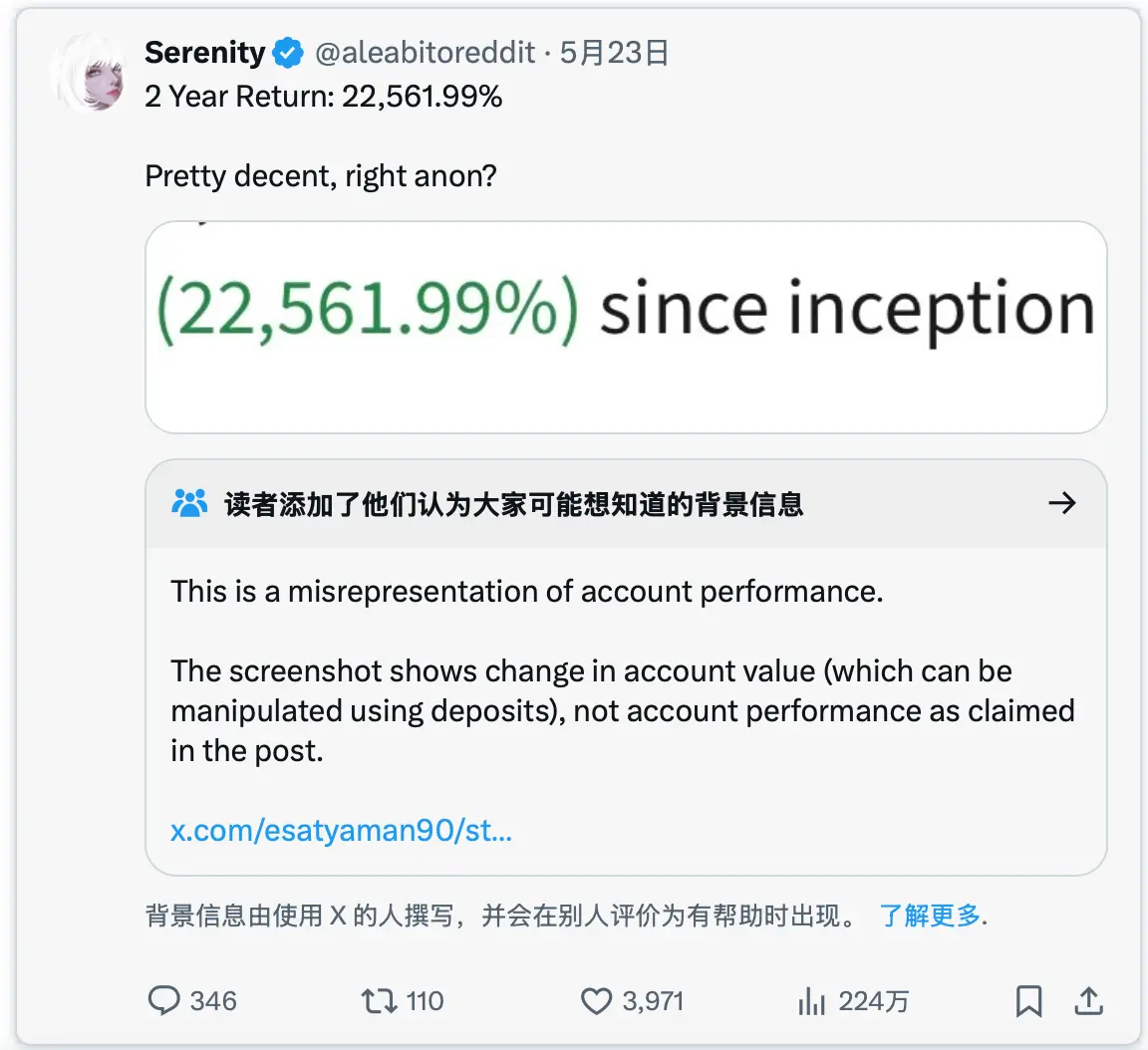
Aformer trader permanently banned by Reddit's WallStreetBets (WSB), he switched platforms, adopted an anime female avatar, and amassed over 300,000 followers in less than a year. One of his tweets can cause a FTSE 250 constituent stock to surge nearly 90% in two days, his research is cited by Bloomberg and Reuters, and some hedge funds engage in his copytrade.

The market marvels at his reported 22,561.99% return over the past two years, or questions his unverifiable background: "former AI research scientist," "Nature paper author," "RISC-V Foundation member," even claiming to have declined an offer to lead Nvidia's AI team around 2018 when its stock price was about $6.
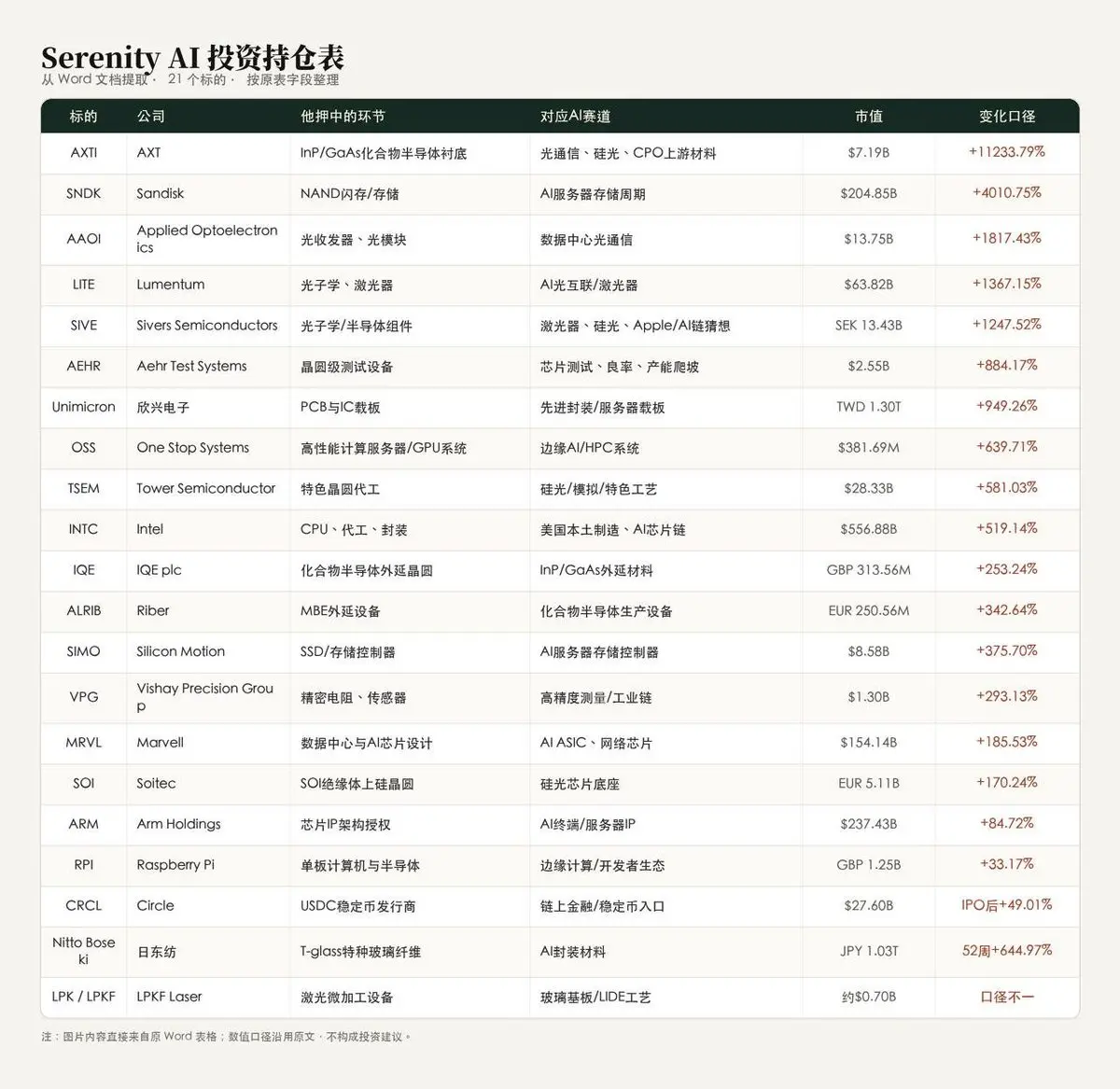
Serenity's AI Portfolio

But what truly matters isn't those dazzling numbers, nor whether he actually published in Nature.

What truly matters is this: He provides a paradigm for reverse engineering the AI era and executes violent arbitrage on information asymmetry within Wall Street's institutional blind spots.

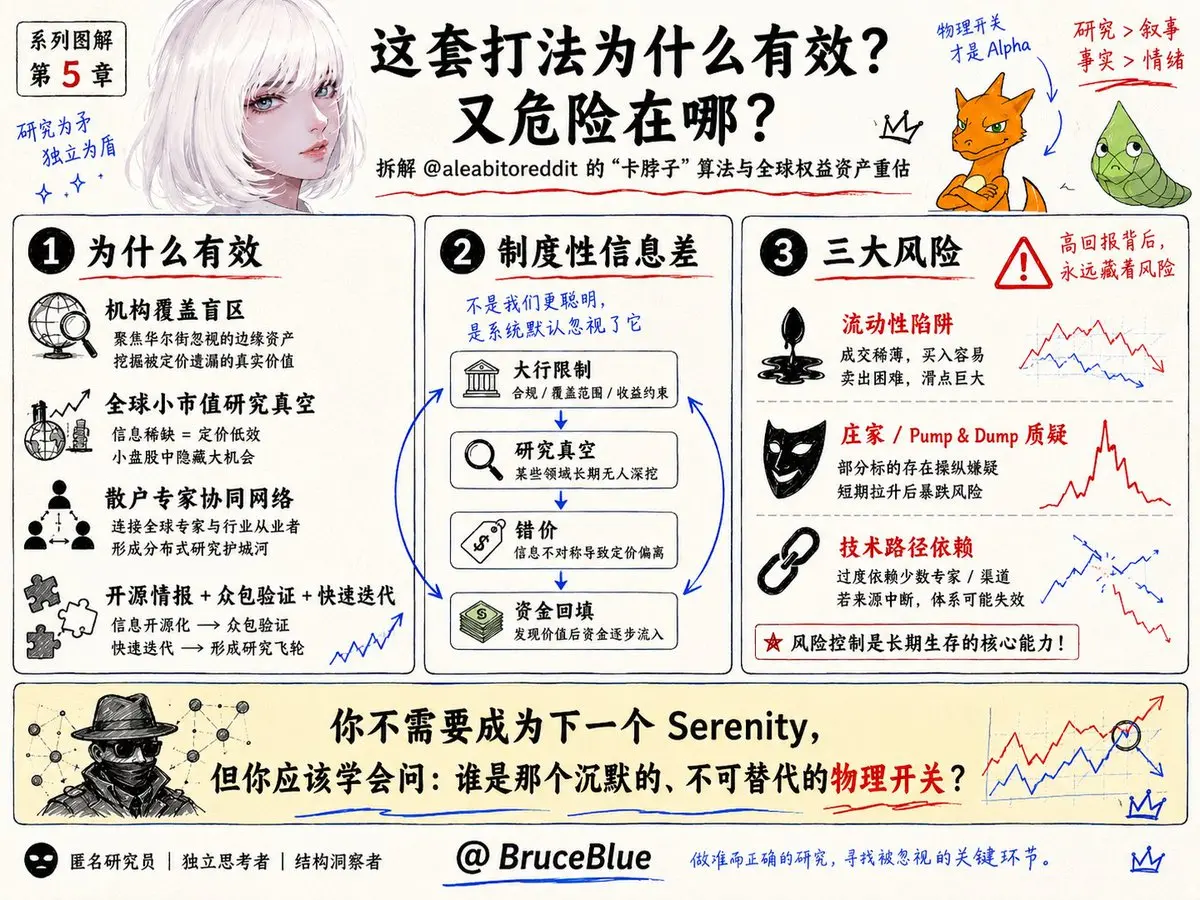
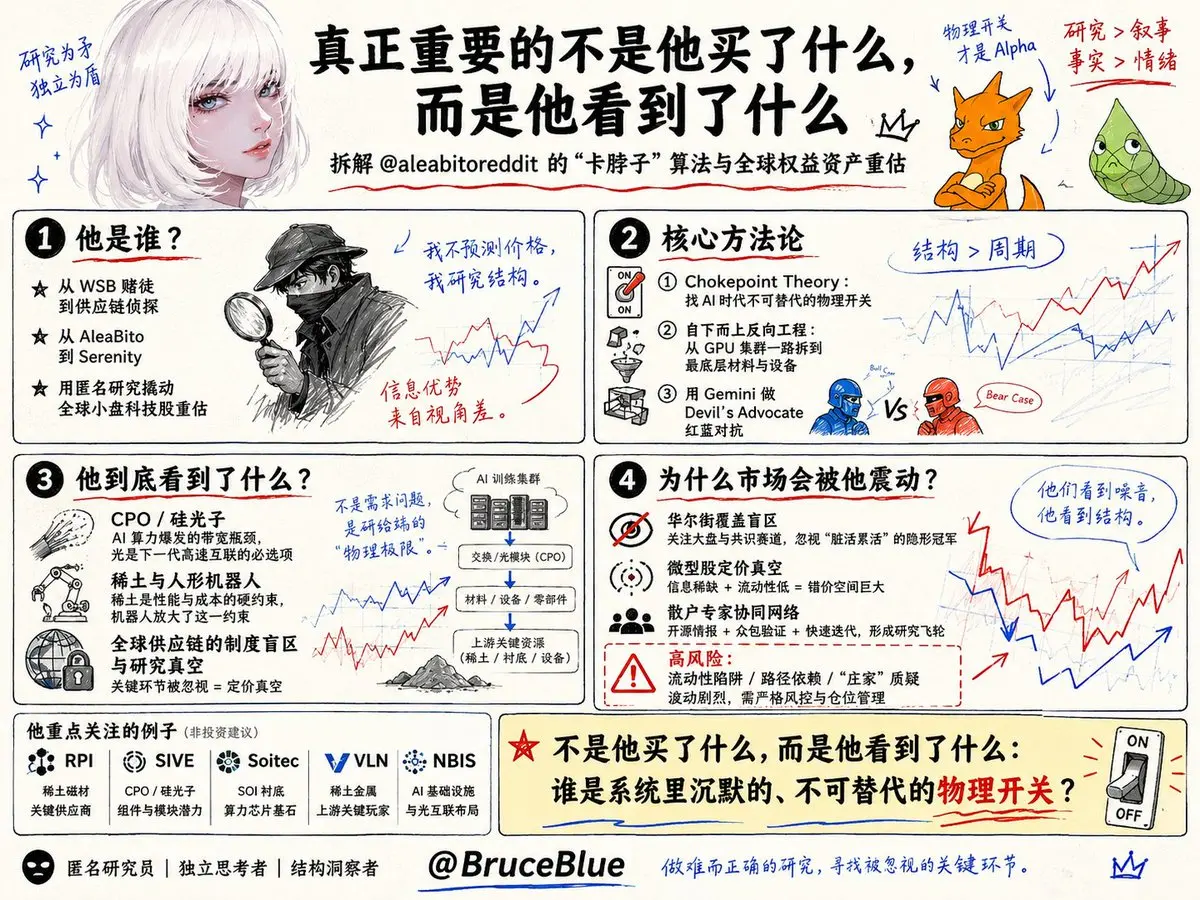
The core of this paradigm is what he calls Chokepoint Theory (Supply Chain Bottleneck Theory).

From WSB Gambler to Supply Chain Detective: An Identity Transformation

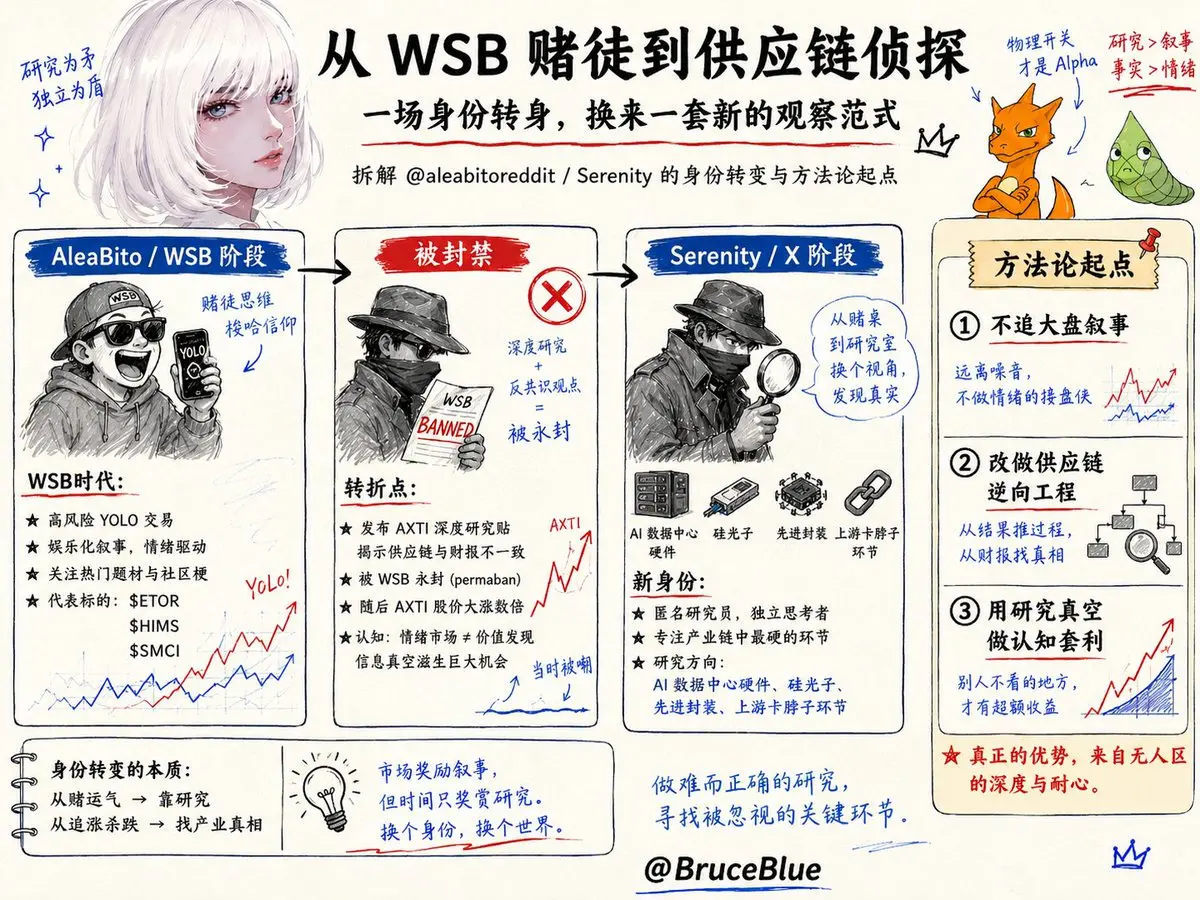
First, some background. His story began in early 2022 on the famous retail trader subreddit r/wallstreetbets (WSB).

The account then was named AleaBito, bearing the distinct colors of a WSB retail trader, keen on high-leverage, high-risk, and highly entertaining options and IPO plays. He once made a $175,000 single-sided options "YOLO" trade during the eToro ($ETOR) IPO based on the mock logic that its technical chart resembled "Bluefin Tuna Toro." In trading Hims & Hers Health $HIMS, he allocated a $100,000 position based on the "Gym Bro Formation." He also accurately predicted Super Micro Computer $SMCI would break $120 when its stock was near lows, based on developments in liquid cooling technology.

┌────────────────────────────────────────────────────────────────────────┐

│ @aleabitoreddit / Serenity's Evolution Path

├────────────────────────────────────────────────────────────────────────┤

│ Reddit Stage (Pre-2022) : AleaBito

│ Style: Hardcore financial analysis combined with highly entertaining "WSB retail" narrative, preference for high-risk "YOLO"

│ Feats:$ETOR (Tuna Toro), $HIMS (Gym Bro), $SMCI (Low-point prediction of $120 breakout)

│ X Platform Stage (2022-Present) : Serenity

│ Style: Focus on AI data center hardware, silicon photonics, advanced packaging; "bottom-up" supply chain reverse engineering

│ Feats:$RPI, $SIVE, Soitec, $VLN, $NBIS

└────────────────────────────────────────────────────────────────────────┘

The turning point occurred in early 2022. He posted a deep fundamental research report on AXT, Inc. $AXTI, a compound semiconductor substrate manufacturer, on WSB. At the time, $AXTI had a market cap of just $200 million, with a stock price around $12. The report's professional nature clashed with the forum's speculative atmosphere, leading moderators to permanently ban the account on grounds of "deliberate influence" and "pump-and-dump."

Subsequently, $AXTI soared to $70 driven by surging demand for compound semiconductors and optoelectronic substrates, resulting in over 1000% paper gains, becoming the researcher's "defining battle." This ban directly prompted the migration to X, and after renaming to "Serenity," the investment focus was completely locked onto "choke point" segments of semiconductor core hardware and the precision supply chain.
Core Framework: Finding the "Strait of Hormuz" of the AI Era

The vast majority of Wall Street sell-side institutions look at AI from a top-down perspective. They stare at Nvidia, Microsoft, Google, calculating guidance for trillion-dollar Capex, engaging in fierce mathematical modeling games around next quarter's revenue.

Serenity's perspective is bottom-up. He employs a supply chain reverse engineering model.

Using Nvidia's H100, B200, and other GPU supercomputing clusters as the physical origin, he deconstructs layer by layer downwards until uncovering ultra-micro components or raw materials at the physical level that are irreplaceable and monopolized by one or a very few companies. These extremely niche segments operate silently outside the spotlight of trillion-dollar market caps. Yet, if a supply disruption occurs, the entire downstream AI industry cluster faces physical paralysis.

He calls these nodes "Choke Points," likening them to the Strait of Hormuz controlling global oil passageways, or the indispensable yet unnoticed shiso leaf in high-end Ginza kaiseki cuisine.

  • Integration of Physical and Geographic Coordinate Maps

Serenity constructs a precise global semiconductor choke point physical and geopolitical map. This map spans US, Taiwanese, European, and Japanese stocks, integrating the geographic coordinates of production facilities, technical patent barriers, geopolitical risks, and national export control policies for each niche giant in the supply chain. When new geopolitical conflicts, export bans, or earnings reports emerge, he can quickly locate specific physical nodes on the supply chain map and execute high-conviction directional bets using his concentrated stock positions.

  • Adversarial AI Argumentation Testing

Before formally publishing any investment hypothesis, Serenity has a unique "red team/blue team" argumentation process. He inputs research drafts into different large language models, commanding the AI to play the role of an extremely demanding "Devil's Advocate," specifically picking out flaws, technical physical limitations, alternative threats, and potential valuation biases in his investment logic. Only after passing multiple rounds of technical and logical interrogation by AI does he publicly release the report.

The Physical Barriers of Silicon Photonics and Co-Packaged Optics (CPO)

Within Serenity's supply chain map, the physical evolution of data center AI computing power infrastructure is his core investment theme.
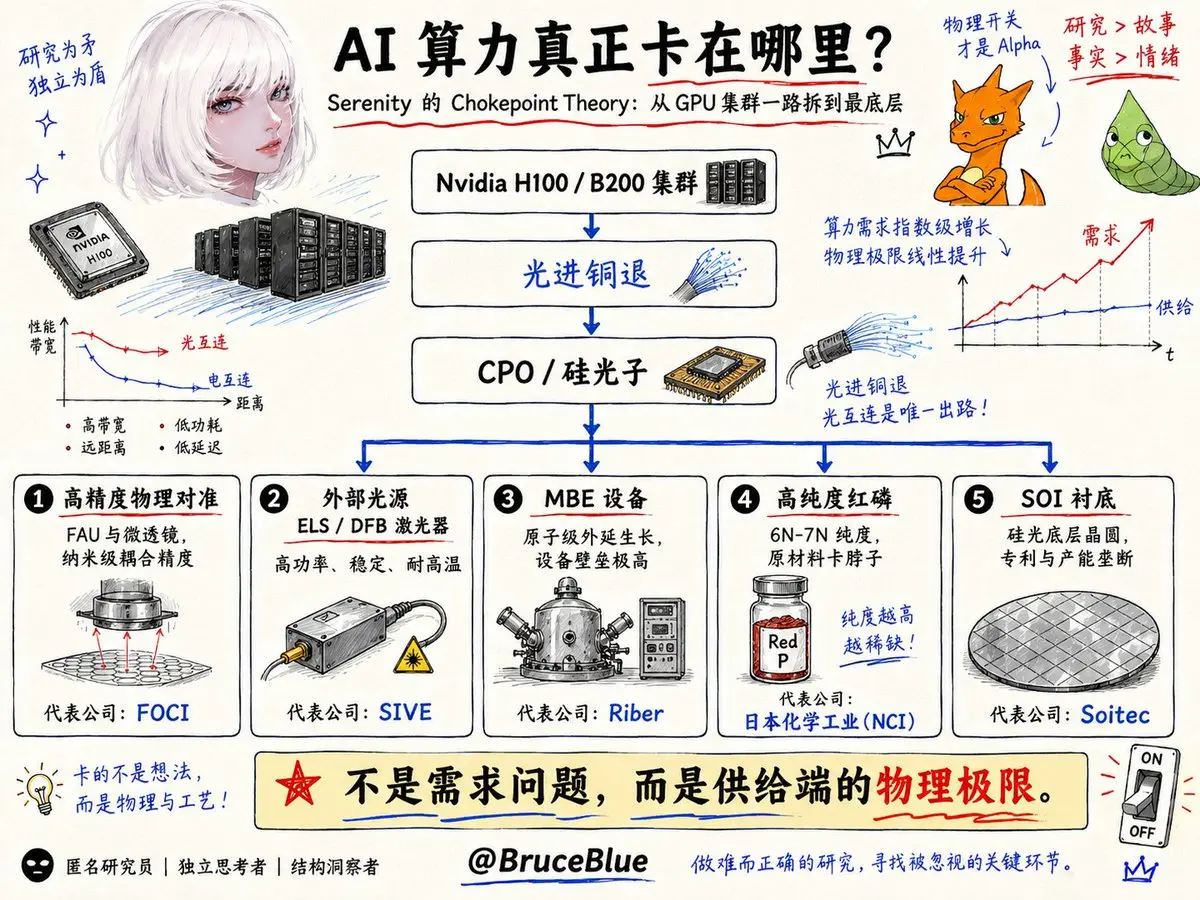
As large language model parameters grow exponentially, the interconnection of ten-thousand, hundred-thousand, or even million-card GPU clusters becomes the physical bottleneck for computing power scaling. At extremely high data throughput rates, traditional copper interconnects face insurmountable physical limits: high-frequency electrical signals in copper suffer from high attenuation, uncontrollable electromagnetic interference, and high power consumption and heat dissipation burdens.

To break this "copper wall," the process of converting electrical signals to optical signals for high-bandwidth, low-latency transmission—"optics in, copper out"—has become an inevitable path in AI infrastructure construction. The forefront of this physical layer revolution is the "Co-Packaged Optics" (CPO) architecture led by giants like TSMC and Nvidia.

The core idea of CPO is integrating the electro-optical conversion chip directly with the core computing chip on the same multi-chip packaging substrate, shortening the electrical signal transmission distance within the package to the millimeter level. Serenity focuses on five major "choke point" technical and physical barriers in this revolutionary architecture:

Serenity's CPO (Co-Packaged Optics) Reverse Engineering Diagram:

Nvidia H100/B200 Clusters (10k-card interconnection demand)

Optics in, Copper out (Breaking copper cable physical limits: attenuation, power, heat)

┌────────────────────────────────────────────────────────────────────────┐

│ Five Physical Barriers of Silicon Photonics & CPO (Choke Points)

│ 1. High-precision Physical Alignment: Fiber Array Unit (FAU) & Micro-lenses

│ → $FOCI (Browave, Taiwan): Indispensable physical choke point status

│ 2. External Light Source (ELS) & High-Power Continuous Wave (CW) DFB Laser

│ → $SIVE (Sivers, Sweden): Extremely scarce physical asset for 1.6T LRO/CPO

│ 3. Molecular Beam Epitaxy (MBE) Equipment Barrier

│ → $ALRIB (Riber, France): Global monopolist, "choking the capacity neck" of epitaxy vendors

│ 4. High-Purity Red Phosphorus Raw Material (Purity 6N-7N, i.e., 99.9999%+)

│ → NCI (Nippon Chemical Industrial, Japan): Monopolized by very few specialty chemical giants

│ 5. Underlying Wafer: Silicon-on-Insulator (SOI) Substrate Material

│ → Soitec (France): Smart-Cut patent, absolute global technology and capacity monopolist

└────────────────────────────────────────────────────────────────────────┘

  • High-precision Physical Alignment Barrier

Since the optical waveguide dimensions inside silicon photonic chips are typically sub-micron, this requires nano-level physical alignment between the external fiber and the waveguide. Any tiny misalignment leads to severe "optical coupling loss." Serenity was the first in the English-speaking world to systematically anchor Browave (FOCI, 3363.TW), a stock highly focused on by Taiwanese retail investors, to the evolution of global CPO technology.

  • External Light Source (ELS) and High-Power Continuous Wave DFB Laser Barrier

Silicon, as an indirect bandgap semiconductor, cannot achieve efficient light emission under electrical injection. CPO architecture must rely on independent external light sources to provide high-power continuous wave laser. This laser must maintain single longitudinal mode operation in the high-temperature, high-pressure data center environment, with extremely high process requirements. Sweden-listed Sivers Semiconductors $SIVE, due to possessing relevant technology, becomes an extremely scarce physical asset in the CPO external light source supply chain.

  • Molecular Beam Epitaxy (MBE) Equipment Barrier

In the growth of epitaxial wafers for high-power lasers and other compound semiconductors, the core physical process is Molecular Beam Epitaxy (MBE), which allows for atomic-level precision growth of ultra-thin crystalline films. Serenity pinpointed the absolute monopolist of global MBE equipment: French listed company Riber $ALRIB.

  • High-Purity Red Phosphorus Raw Material Barrier

Compound semiconductor (e.g., indium phosphide substrate) manufacturing requires extremely stringent raw material purity. Serenity's reverse engineering leads to the most fundamental chemical element: high-purity red phosphorus (purity 99.9999%+). Capacity is almost entirely monopolized by a very few Japanese giants like Nippon Chemical Industrial Co., Ltd. (NCI). If supply is disrupted, downstream production halts entirely.

  • Silicon-on-Insulator (SOI) Substrate Material Barrier

Silicon photonic chips require SOI wafers as the underlying substrate. French company Soitec, with its exclusively invented Smart-Cut technology, holds absolute global technology and capacity monopoly in the silicon photonics SOI wafer market; even a giant like Japan's Shin-Etsu Chemical must pay it patent licensing fees.

The Geopolitical Game of "Physical Switches" in Humanoid Robots and Rare Earth Resources

In 2026, Serenity further horizontally expanded his "choke point" map to the geopolitical game involving humanoid robots and rare earth elements.

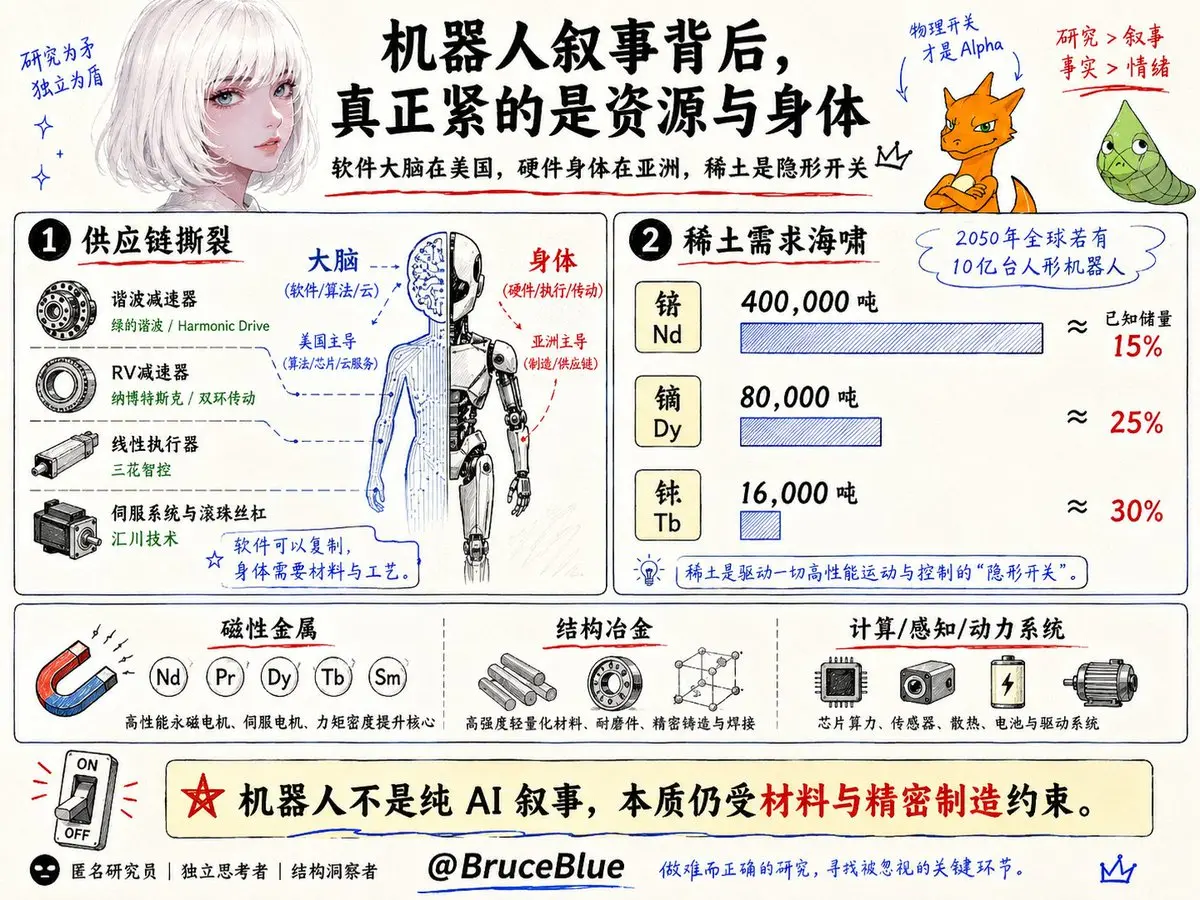
  • Supply Chain Tearing Between Software "Brain" and Hardware "Body"

Most market discussions about Tesla Optimus focus on AI algorithms and large models, overlooking a fatal physical reality: the US is losing the hardware and material manufacturing race for humanoid robots.

The humanoid robot's "brain" remains in the US, but the "body" components responsible for movement (joints, actuators, reducers, etc.) are almost entirely in the hands of Asian manufacturers:

  • Harmonic Reducers: Leader Harmonious Drive Systems (China), Harmonic Drive (Japan)

  • RV Reducers: Nabtesco (Japan), Sihuan Transmission (China)

  • Linear Actuators: Sanhua Intelligent Controls (China)

  • Servo Systems & Ball Screws: Inovance Technology (China)

To reduce costs, US robotics companies have already signed long-term contracts with these Chinese and Japanese component giants. This high dependence means that hardware supply chains face physical shutdown if geopolitical friction occurs.

  • Rare Earth "Demand Tsunami" and the Morgan Stanley Model

Serenity cites Morgan Stanley's demand forecasting model for quantitative extrapolation: if global humanoid robot stock reaches 1 billion units by 2050, its consumption of core rare earth resources will cause a catastrophic "demand tsunami":

  • Neodymium (Nd): Cumulative consumption ~400,000 tons (15% of global known reserves)

  • Dysprosium (Dy): Cumulative consumption ~80,000 tons (25% of global known reserves)

  • Terbium (Tb): Cumulative consumption ~16,000 tons (30% of global known reserves)

These are physical necessities for maintaining permanent magnet motor demagnetization resistance at high temperatures. Serenity emphasizes that if Western capital wants to ensure supply chain security, it must direct tens of billions in heavy capital towards rebuilding a local rare earth refining ecosystem.

Based on this, he lists three physical sectors that must be closely monitored:

  • Magnetic Metals: Light rare earths (Nd, Pr), heavy rare earths (Dy, Tb), specialty magnets (Sm, Co).

  • Structural Metallurgy: Precision gear materials (Ti, V, Mo), high-strength steel additives (Nb, Cr, Ni, Mn), wear-resistant elements (Ce, La).

  • Computing, Perception & Power Systems: Advanced semiconductors (Ga, Ge), batteries & wiring (each unit consumes 2kg Li, 3kg graphite, 6.5kg Cu).
Core Case Studies and Empirical Performance Evaluation

Through keen capture of technical barriers and commercialization inflection points, Serenity has successfully unearthed and led the value revaluation of multiple classic small-to-mid cap technology stocks across different global capital markets.
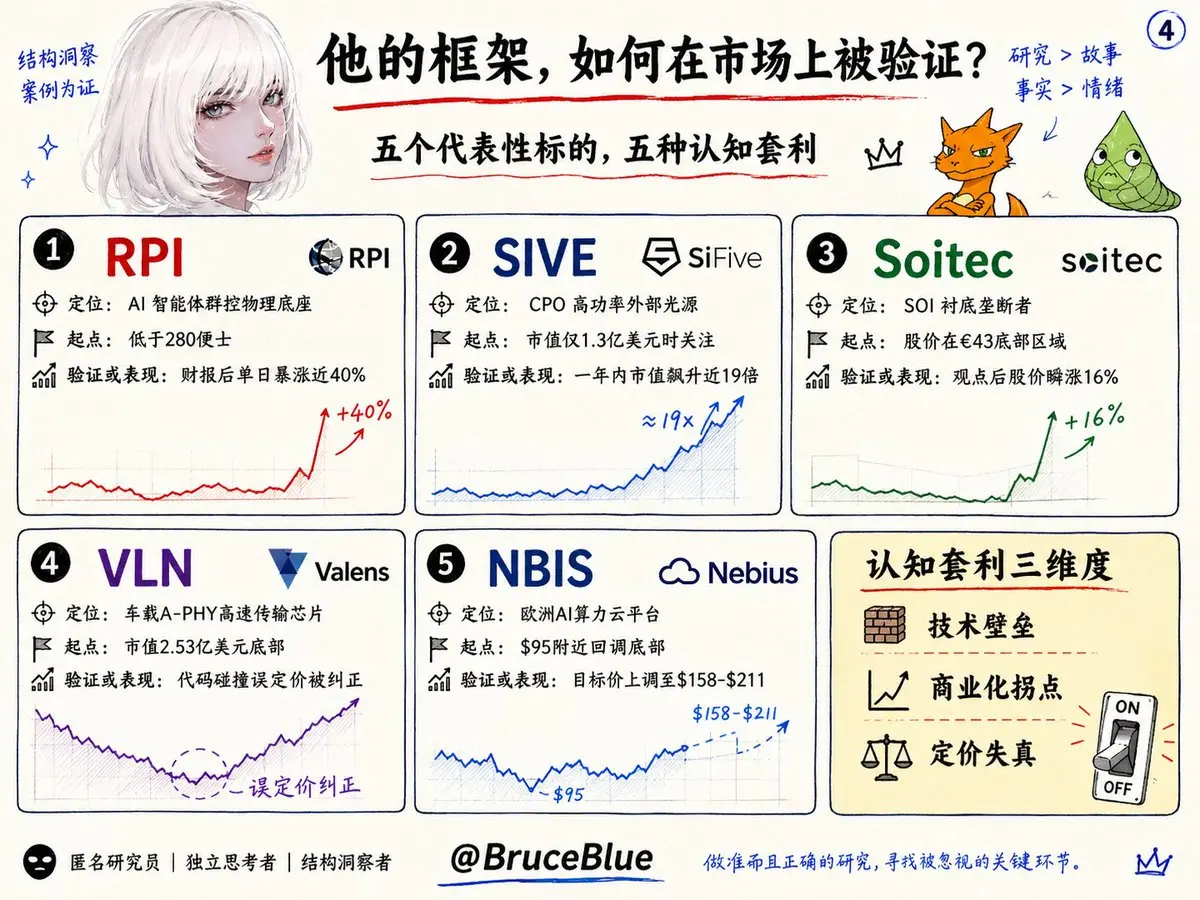
┌────────────────────────────────────────────────────────────────────────┐

│ Serenity Core Investment Picks & Empirical Performance Validation

├────────────────────────────────────────────────────────────────────────┤

│ $RPI (Raspberry Pi) | LSE UK

│ Positioning: Physical base for AI agent swarm control

│ Starting Point: Price below 280 pence (IPO price)

│ Validation: March 2026 annual report disclosed strong profit growth, chip unit sales up 47%, confirming its role as AI base logic

│ Performance: Single-day surge of nearly 40% on earnings, rebounded over 60% from lows

│ $SIVE (Sivers) | Stockholm Sweden

│ Positioning: Core supplier of high-power external light source DFB lasers for silicon photonics CPO

│ Starting Point: Market cap only $130 million when recommended

│ Validation: Secured strategic cooperation with Jabil, received $6.6M support from US CHIPS Act

│ Performance: Market cap soared nearly 19x within a year after recommendation (now over $2.3B)

│ Soitec | Euronext Paris France

│ Positioning: Global patent and capacity absolute monopolist for key silicon photonics SOI substrate material

│ Starting Point: Stock price in bottom area around €43

│ Validation: Listed as a Class 1 exclusive material standard by TSMC and Nvidia

│ Performance: European market stock price instantly surged 16% the day his view was published

│ $VLN (Valens) | NYSE USA

│ Positioning: Automotive A-PHY high-speed transmission chips

│ Starting Point: Market cap $253 million bottom (recommended with $93.5M net cash, zero debt, ~60-62% gross margin guidance)

│ Validation: Pointed out mispricing due to code collision error in scanners

│ Performance: Guided market's mine-sweeping revaluation of this asset by pointing out the "code collision" bug

│ $NBIS (Nebius Group) | NASDAQ USA

│ Positioning: Europe's largest AI GPU/Rubin computing cluster cloud service provider

│ Starting Point: Pullback bottom area around $95

│ Validation: Holding $3.7B net cash (end-2025), backlog of unexecuted contracts nearing $50B

│ Performance: Back on high-growth trajectory, analyst target price raised to $158-$211

└────────────────────────────────────────────────────────────────────────┘

Deep Analysis: Three Dimensions of Cognitive Arbitrage

  • Raspberry Pi$RPI : Relative Value Game Model

When the market viewed Raspberry Pi as a declining educational component maker, Serenity captured a dramatic shift in the AI developer ecosystem: numerous startups rushed to buy Raspberry Pis as physically isolated bases for deploying "AI agent swarm control systems." If buying Apple Mac Minis, such hoarding would be negligible in Apple's $3.7 trillion market cap; but for Raspberry Pi with a market cap of just £500 million, this is a transformative boost.

  • Valens Semiconductor$VLN : Information Arbitrage on Quantitative Code Collision

$VLN had $93.5 million net cash on the books, zero debt, ~60-62% gross margin guidance, secured Mercedes front-end design wins, yet its market cap was only $253 million. Serenity discovered a physical bug: mainstream global quantitative stock screeners had a "ticker code collision error," confusing data for $VLN with energy stock $VLO on the Toronto Exchange, causing key metrics to be severely distorted. He precisely listed the deviations, guiding funds to a "mine-sweeping" revaluation.

  • Nebius Group$NBIS : Deep Bottom Capture Amid Mechanical Panic

As a leading European AI-dedicated cloud service provider, $NBIS saw its stock price plummet to $95 due to mechanical hedging pressure from early-stage complex convertible bond share conversions. Serenity pointed out this was "mechanical panic from non-fundamental factors." At $95, the market gave this company, with 2026 revenue guidance of $30-34 billion (nearly 6x growth) and holding billions in net cash, an utterly absurd discount.

Retail Capital Synergy and Potential Structural Risks

  • Expert Retailer Synergy Network

In Serenity's framework, retail traders are no longer mere "dumb money" providing liquidity or blindly following trends but are reshaped into an "Expert Retailer Synergy Network." Traditional WSB relies on short-term options gamma squeezes or emotional memes to drive surges. In contrast, Serenity's completely free, technically high-threshold hardcore analysis subjects followers to a deep "intellectual filtration."

This highly specialized capital synergy enables them to rapidly form combined force in multiple extremely illiquid, remote micro-cap markets that Wall Street banks cannot cover, completing pricing dominance over core assets.

  • Institutional Blind Spots and Information Arbitrage

Analysts at large institutions are constrained by internal compliance, minimum market cap thresholds (e.g., not covering below $1B), and regional specialization (US equity analysts don't write on Sweden or Taiwan). This creates huge research vacuums in the global supply chain. As a completely anonymous independent researcher, Serenity ignores market cap and geographic barriers, directly guiding global long capital to violently refill these vacuums.

  • Structural Risks and Potential Game Dilemmas

However, blindly following this strategy comes with unavoidable fatal risks:

  • Liquidity Traps and Stampede Risk: Micro-cap stocks have extremely low daily trading volume. They surge instantly when the retail synergy rushes in; once technology implementation falls short of expectations, the extremely narrow exit channel leads to severe stampedes.

  • Polarized Public Opinion and "Market Manipulator" Allegations: Veteran shorts sharply criticize it as essentially a "pump and dump with high-IQ academic packaging." Its game characteristics of using massive public voice to attract retail to lift the price keep it long exposed to the shadow of compliance allegations.

  • "Fatal Minefield" of Physical Technology Single-Path Dependency: All of Serenity's core positions are built on the assumptions that "CPO is the only physical evolution path" and "humanoid robots will see a billion-unit explosion." This is a high-stakes gamble. If Nvidia finds CPO has insurmountable engineering dead ends and shifts to advanced thin-film copper cables, or if the West fails to rebuild rare earth separation chains, his entire supply chain empire built on silicon photonics, SOI, MBE equipment, and heavy rare earths could be physically dismantled in an instant.

Conclusion: Using Geek Depth to Beat Financial Breadth

Following Serenity isn't about getting a get-rich-quick stock ticker, but about acquiring an analytical framework that breaks consensus.

In this era of information overload, the most common mistake retail investors make is trying to compete with institutions on the speed of information acquisition or trading macro data that's already fully priced. Serenity demonstrates another possibility: using reverse engineering to deconstruct systems, using AI as a "Devil's Advocate" to challenge one's own logic, to find the truly controlling, silent gears of system operation.

You don't need to be the next Serenity. You don't need to buy any stock he buys.

But you should learn to ask a question like he does:

In this system, who is the silent, irreplaceable physical switch?

If you can answer that question, you already have one more perspective than 99% of market participants. The rest is just waiting for the market to catch up to your cognition.

Disclaimer:

This article does not constitute any investment advice.

All background information about Serenity himself is self-reported and unverified by third parties.

His past performance is not indicative of future results.

Conduct independent research before making any investment decisions.

NFA. DYOR.

Câu hỏi Liên quan

QWhat is the core investment framework that researcher Serenity uses to identify opportunities in the AI era, as described in the article?

ASerenity's core framework is the 'Chokepoint Theory' or '供应链瓶颈理论' (Supply Chain Bottleneck Theory). It involves a bottom-up, supply chain reverse engineering approach to identify critical, non-replaceable physical components or raw materials (the 'choke points') that are monopolized by a few companies. If these points are disrupted, the entire downstream AI industry cluster faces physical paralysis.

QAccording to the article, what is a unique step in Serenity's research process before publishing an investment thesis?

ABefore publishing any investment hypothesis, Serenity subjects his research drafts to a unique 'red-blue team' adversarial AI argumentation test. He inputs the drafts into different large language models, commanding the AI to act as a highly critical 'Devil's Advocate' to identify logical flaws, technical physical limitations, threats from alternative solutions, and potential valuation biases. He only publishes the report after it withstands multiple rounds of this AI-driven technical and logical cross-examination.

QWhat are the five major physical barriers (or 'choke points') identified in the Silicon Photonics and Co-Packaged Optics (CPO) supply chain?

AThe five major physical barriers in the Silicon Photonics and CPO supply chain are: 1. High-precision physical alignment (e.g., Fiber Array Units, micro-lenses, represented by FOCI), 2. External Light Source (ELS) and high-power Continuous Wave DFB lasers (represented by Sivers Semiconductors, $SIVE), 3. Molecular Beam Epitaxy (MBE) equipment barrier (represented by Riber, $ALRIB), 4. High-purity red phosphorus raw material (99.9999%+ purity, monopolized by Japanese chemical giants like NCI), and 5. Underlying Silicon-On-Insulator (SOI) wafer substrate material (dominated by Soitec with its Smart-Cut patent).

QWhat key risk does the article highlight regarding the humanoid robot supply chain for the United States?

AThe article highlights that the United States is at risk of losing the hardware and materials manufacturing race for humanoid robots. While the AI 'brain' (software and algorithms) remains in the US, critical 'body' components like joints, actuators, and reducers are almost entirely controlled by Asian manufacturers (e.g., Harmonic Drive in Japan,绿的谐波 in China, Nabtesco in Japan). This creates a dangerous dependency, meaning any geopolitical friction could lead to a physical shutdown of the hardware supply chain for US robot companies.

QWhat are some of the structural risks associated with following Serenity's investment strategy, as mentioned in the conclusion?

AKey structural risks include: 1. Liquidity traps and stampede risk in micro-cap stocks with low daily trading volumes, 2. Intense polarization of public opinion and accusations of being a sophisticated 'pump and dump' scheme, 3. Fatal reliance on a single physical technology path. If the foundational assumptions fail (e.g., if CPO faces insurmountable engineering hurdles or if the predicted mass adoption of humanoid robots doesn't materialize), the entire investment thesis built on related supply chains (silicon photonics, SOI, MBE, rare earths) could collapse physically and financially.

Nội dung Liên quan

Cơ Hội Tiền Điện Tử Hàng Đầu Dưới 500 Đô La Có Thể Mang Lại Lợi Nhuận 50×–100×

Ngành công nghiệp tiền điện tử đầy rẫy cơ hội cho những nhà đầu tư sẵn sàng tìm kiếm bên ngoài các dự án chính thống. Một số đồng tiền tiềm năng dưới 500 đô la có thể mang lại lợi nhuận từ 50x đến 100x, bao gồm Ozak AI ($OZ), Celestia (TIA) và Bittensor (TAO). Ozak AI ($OZ) đang trong giai đoạn bán trước với giá $0.014, đã huy động được hơn 7 triệu đô la. Nền tảng kết hợp blockchain và AI để cung cấp thông tin chi tiết và dự báo thị trường tài chính. Các nhà phân tích kỳ vọng giá có thể đạt $1 khi niêm yết, mang về lợi nhuận 71x, và thậm chí tăng lên $1.4-$2 trong dài hạn. Celestia (TIA), giao dịch quanh $0.51, nổi bật với thiết kế blockchain mô-đun, cho phép phát triển các blockchain tùy chỉnh và có khả năng mở rộng. Sự phổ biến ngày càng tăng của công nghệ này có thể thúc đẩy tiềm năng tăng trưởng mạnh mẽ. Bittensor (TAO) hiện ở mức ~$248, là một hệ thống AI phi tập trung hàng đầu. Mặc dù giá giảm nhẹ, nó đang được cho là ở vùng hỗ trợ quan trọng. Với các trường hợp sử dụng AI thực tế và nền tảng vững chắc, TAO cũng được đánh giá có tiềm năng tăng trưởng đáng kể trong tương lai. Tóm lại, cả ba dự án này, với các lợi thế về công nghệ AI, blockchain mô-đun và giai đoạn phát triển sớm, đều được xem là những cơ hội đầu tư có thể mang về lợi nhuận lớn theo thời gian.

TheNewsCrypto3 phút trước

Cơ Hội Tiền Điện Tử Hàng Đầu Dưới 500 Đô La Có Thể Mang Lại Lợi Nhuận 50×–100×

TheNewsCrypto3 phút trước

Cơn bão nghìn tỷ của kẻ bán bộ nhớ, lợi nhuận của kẻ mua giảm sâu

Tối 26/5, hai sự kiện trái ngược diễn ra: Xiaomi công bố lợi nhuận quý I/2026 giảm mạnh 43,1%, phần lớn do chi phí bộ nhớ (DRAM, NAND) tăng gấp 4 lần, làm tăng khoảng 1500 RMB chi phí cho mỗi điện thoại cấu hình cao. Trong khi đó, Micron Technology, hãng sản xuất bộ nhớ, chứng kiến cổ phiếu tăng vọt, vốn hóa vượt 1 nghìn tỷ USD. Nguyên nhân chính là câu chuyện "siêu chu kỳ AI" và các Hợp đồng Dài hạn (LTA). Các ông lớn công nghệ như Microsoft, Google ký LTA 3-5 năm với các hãng bộ nhớ để đảm bảo nguồn cung HBM và DDR5 cho AI, khóa cả giá và sản lượng. Các nhà phân tích như UBS cho rằng điều này có thể phá vỡ tính chu kỳ vốn có của ngành, nâng định giá cổ phiếu bộ nhớ lên mức định giá của ngành tiện ích. Tuy nhiên, thị trường bộ nhớ đang phân hóa ba tầng: 1. **AI & Máy chủ:** HBM, DDR5 máy chủ, SSD doanh nghiệp - khan hiếm, giá tăng mạnh, ký LTA. 2. **Điện thoại:** DRAM/NAND di động - giá tăng mạnh do năng lực sản xuất bị chuyển sang AI, ép lợi nhuận của các hãng như Xiaomi. 3. **PC & Bán lẻ:** Mô-đun DDR5, SSD tiêu dùng - giá có dấu hiệu điều chỉnh giảm do tồn kho kênh. Câu hỏi lớn là liệu LTA có thực sự xóa bỏ chu kỳ. Rủi ro tồn tại khi tăng trưởng đầu tư AI chậm lại, trong khi các hãng như Micron đang đẩy mạnh đầu tư mở rộng sản xuất. Lợi nhuận hiện tại của Micron chủ yếu dựa vào giá cả tăng vọt, một dấu hiệu điển hình của đỉnh chu kỳ. Lịch sử cho thấy, "lần này sẽ khác" là câu nói thường xuất hiện trong các giai đoạn bong bóng. Dù AI tạo ra nhu cầu cấu trúc, nhưng việc định giá ở đỉnh chu kỳ luôn tiềm ẩn rủi ro "cú đúp Davis" (hệ số định giá và lợi nhuận cùng thu hẹp) khi chu kỳ đảo chiều.

marsbit43 phút trước

Cơn bão nghìn tỷ của kẻ bán bộ nhớ, lợi nhuận của kẻ mua giảm sâu

marsbit43 phút trước

Thần cổ phiếu Mỹ ngày nay không còn đọc báo cáo tài chính

Thần tượng đầu tư mới trong làng chơi cổ phiếu Mỹ không còn đọc báo cáo tài chính. Thay vào đó, họ tập trung vào các cổ phiếu vốn hóa nhỏ (micro-cap) nằm ở những vị trí then chốt, có thể gây "nghẹt thở" trong chuỗi cung ứng AI. Họ tìm kiếm cơ hội từ các nền tảng như Reddit, X và Substack. Ví dụ điển hình là Serenity từ diễn đàn WallStreetBets (WSB) trên Reddit. Anh đã thành công khi đề xuất cổ phiếu AXTI, một công ty độc quyền cung cấp chất nền Indium Phosphide, vật liệu thiết yếu cho quang tử học và kết nối quang trong AI. Mục tiêu giá của anh từ 15 lên 150 USD gần như đã đạt được. Các "thần tượng" khác như KawzInvests, PhotonCap hay u/imacompnerd cũng chia sẻ cách tiếp cận tương tự: nghiên cứu chuyên sâu về cơ sở hạ tầng AI, quang học, điện toán đám mây cho doanh nghiệp nhỏ, thay vì phân tích báo cáo tài chính truyền thống. Điều này đánh dấu sự khác biệt lớn so với trường phái đầu tư giá trị kiểu Warren Buffett, vốn coi báo cáo tài chính là linh hồn. Các nhà đầu tư mới này bỏ qua các chỉ số tài chính truyền thống để đi sâu vào chi tiết chu kỳ chứng nhận khách hàng, nhịp độ sản xuất, lộ trình công nghệ và khả năng định giá lại của thị trường. Sự nổi lên của họ gắn liền với đặc điểm của thị trường vi mô: thanh khoản thấp, ít được các tổ chức lớn bao phủ, nhưng lại dễ bị tác động bởi các câu chuyện đầu tư hấp dẫn và sự lan truyền trong cộng đồng. Nó tạo ra một "nền kinh tế chú ý" tương tự meme coin, nhưng được khoác lên chiếc áo nghiên cứu chuỗi cung ứng công nghệ cao. Tuy nhiên, sự bền vững của chiến lược này phụ thuộc vào ba yếu tố: khoảng cách thông tin, khả năng hiện thực hóa cơ bản, và nguy cơ tắc nghẽn thanh khoản khi dòng chú ý đột ngột rút lui.

marsbit46 phút trước

Thần cổ phiếu Mỹ ngày nay không còn đọc báo cáo tài chính

marsbit46 phút trước

Bữa tiệc nghìn tỷ của kẻ bán bộ nhớ, lợi nhuận của kẻ mua bộ nhớ sụt giảm một nửa

Ngày 26/5 chứng kiến hai sự kiện trái ngược: báo cáo tài chính quý I/2026 của Xiaomi cho thấy lợi nhuận sụt giảm mạnh (43%) do chi phí bộ nhớ tăng gấp 4 lần, trong khi Micron Technology tăng giá 19%, vượt mốc vốn hóa 1 nghìn tỷ USD. Lý do chính cho cơn sốt giá là sự khan hiếm nguồn cung nghiêm trọng, đặc biệt cho chip HBM và DDR5 phục vụ AI. Các hãng công nghệ lớn như Microsoft, Google đang ký hợp đồng dài hạn (LTA) có ràng buộc để đảm bảo nguồn cung, dẫn đến việc định giá lại cổ phiếu Micron như một doanh nghiệp ổn định hơn thay vì cổ phiếu chu kỳ. Các nhà phân tích như UBS tin rằng LTA có thể làm giảm biến động giá. Tuy nhiên, thị trường bộ nhớ đang phân hóa. Trong khi bộ nhớ AI và doanh nghiệp tăng giá chóng mặt, thì bộ nhớ dành cho điện thoại (như của Xiaomi) cũng tăng mạnh, gây áp lực lên biên lợi nhuận của OEM. Ngược lại, thị trường bán lẻ PC lại có dấu hiệu giá giảm do tồn kho. Bài viết đặt câu hỏi về tính bền vững của câu chuyện "LTA xóa bỏ chu kỳ". Việc định giá Micron dựa trên lợi nhuận đỉnh chu kỳ có thể là cái bẫy. Nếu tốc độ đầu tư AI chậm lại trong khi các hãng đang mở rộng công suất mạnh mẽ, cán cân cung-cầu có thể đảo chiều. Lịch sử ngành hàng hóa cho thấy các hợp đồng dài hạn thường bị thử thách khi chu kỳ thay đổi. Tóm lại, dù nhu cầu AI là thực, nhưng cơn sốt hiện tại với tâm lý "lần này sẽ khác" trên toàn Phố Wall cần được xem xét thận trọng, vì sự sụt giảm từ đỉnh chu kỳ luôn diễn ra nhanh hơn leo lên đỉnh.

链捕手52 phút trước

Bữa tiệc nghìn tỷ của kẻ bán bộ nhớ, lợi nhuận của kẻ mua bộ nhớ sụt giảm một nửa

链捕手52 phút trước

Bằng chứng không thể chối cãi: GPT-5.5 bị bắt quả tang 'hạ trí', tài liệu chính thức của OpenAI thừa nhận

**Sự thật: GPT-5.5 bị bắt quả tang "giảm trí", tài liệu chính thức của OpenAI thừa nhận** Người dùng phát hiện GPT-5.5, đặc biệt là chế độ "Suy nghĩ mở rộng" (Extended Thinking), có biểu hiện giảm chất lượng đột ngột sau một thời gian sử dụng ngắn (1-2 giờ), trả lời nhanh nhưng kém thông minh trong khi giao diện vẫn hiển thị nhãn cũ. Các khiếu nại trên diễn đàn OpenAI cho thấy mô hình mất khả năng tuân theo chỉ dẫn, xử lý tác vụ kém hơn trước. Một số thử nghiệm tiết lộ: dù chọn GPT-5.5 Thinking, hệ thống thực tế lại chạy phiên bản Instant (dựa trên ngày cắt dữ liệu huấn luyện); hoặc yêu cầu GPT-5.3 Codex nhưng nhận về kết quả từ GPT-5.2. Quan trọng nhất, tài liệu Trung tâm Trợ giúp chính thức của OpenAI xác nhận cơ chế: sau khi người dùng gói Plus dùng hết 160 tin nhắn GPT-5.5/3 giờ, hệ thống sẽ **chuyển thầm (silent switch)** sang mô hình mini mà không có cảnh báo hay thay đổi nhãn giao diện. Người dùng gói Pro cũng có thể bị giới hạn dung lượng ở chế độ Heavy khi máy chủ quá tải. Sự cố "giảm cấp thầm lặng" này không mới, đã từng xảy ra với GPT-5.3 Codex vào tháng 2/2026 và là một mô hình lặp lại qua các bản cập nhật từ GPT-5 đến 5.5. Dù OpenAI từng đánh dấu sự cố "đã giải quyết", các báo cáo mới nhất vẫn tiếp tục xuất hiện. Phân tích cho rằng động cơ có thể là để tiết kiệm chi phí điện toán. Trong khi người dùng vật lộn với trải nghiệm không ổn định của GPT-5.5, thì GPT-5.6 đã xuất hiện trong nhật ký backend, dự kiến ra mắt sớm. Điều này làm dấy lên lo ngại về cuộc đua phát triển AI siêu trí tuệ (ASI) có thể đang hy sinh độ ổn định và minh bạch của dịch vụ hiện tại để theo đuổi các mẫu mới.

marsbit1 giờ trước

Bằng chứng không thể chối cãi: GPT-5.5 bị bắt quả tang 'hạ trí', tài liệu chính thức của OpenAI thừa nhận

marsbit1 giờ trước

Giao dịch

Giao ngay
Hợp đồng Tương lai

Bài viết Nổi bật

AGENT S là gì

Agent S: Tương Lai của Tương Tác Tự Động trong Web3 Giới thiệu Trong bối cảnh không ngừng phát triển của Web3 và tiền điện tử, các đổi mới đang liên tục định nghĩa lại cách mà cá nhân tương tác với các nền tảng kỹ thuật số. Một dự án tiên phong như vậy, Agent S, hứa hẹn sẽ cách mạng hóa tương tác giữa con người và máy tính thông qua khung tác nhân mở của nó. Bằng cách mở đường cho các tương tác tự động, Agent S nhằm đơn giản hóa các nhiệm vụ phức tạp, cung cấp các ứng dụng chuyển đổi trong trí tuệ nhân tạo (AI). Cuộc khám phá chi tiết này sẽ đi sâu vào những phức tạp của dự án, các tính năng độc đáo của nó và những tác động đối với lĩnh vực tiền điện tử. Agent S là gì? Agent S đứng vững như một khung tác nhân mở đột phá, được thiết kế đặc biệt để giải quyết ba thách thức cơ bản trong việc tự động hóa các nhiệm vụ máy tính: Thu thập Kiến thức Cụ thể theo Miền: Khung này học một cách thông minh từ nhiều nguồn kiến thức bên ngoài và kinh nghiệm nội bộ. Cách tiếp cận kép này giúp nó xây dựng một kho lưu trữ phong phú về kiến thức cụ thể theo miền, nâng cao hiệu suất của nó trong việc thực hiện nhiệm vụ. Lập Kế Hoạch Qua Các Tầm Nhìn Nhiệm Vụ Dài Hạn: Agent S sử dụng lập kế hoạch phân cấp tăng cường kinh nghiệm, một cách tiếp cận chiến lược giúp phân chia và thực hiện các nhiệm vụ phức tạp một cách hiệu quả. Tính năng này nâng cao đáng kể khả năng quản lý nhiều nhiệm vụ con một cách hiệu quả và hiệu suất. Xử Lý Các Giao Diện Động, Không Đều: Dự án giới thiệu Giao Diện Tác Nhân-Máy Tính (ACI), một giải pháp đổi mới giúp nâng cao tương tác giữa các tác nhân và người dùng. Sử dụng các Mô Hình Ngôn Ngữ Lớn Đa Phương Thức (MLLMs), Agent S có thể điều hướng và thao tác các giao diện người dùng đồ họa đa dạng một cách liền mạch. Thông qua những tính năng tiên phong này, Agent S cung cấp một khung vững chắc giải quyết các phức tạp liên quan đến việc tự động hóa tương tác giữa con người với máy móc, mở ra nhiều ứng dụng trong AI và hơn thế nữa. Ai là Người Tạo ra Agent S? Mặc dù khái niệm về Agent S là hoàn toàn đổi mới, thông tin cụ thể về người sáng lập vẫn còn mơ hồ. Người sáng lập hiện vẫn chưa được biết đến, điều này làm nổi bật giai đoạn sơ khai của dự án hoặc sự lựa chọn chiến lược để giữ kín các thành viên sáng lập. Bất chấp sự ẩn danh, sự chú ý vẫn tập trung vào khả năng và tiềm năng của khung này. Ai là Các Nhà Đầu Tư của Agent S? Vì Agent S còn tương đối mới trong hệ sinh thái mã hóa, thông tin chi tiết về các nhà đầu tư và những người tài trợ tài chính của nó không được ghi chép rõ ràng. Sự thiếu vắng thông tin công khai về các nền tảng đầu tư hoặc tổ chức hỗ trợ dự án dấy lên câu hỏi về cấu trúc tài trợ và lộ trình phát triển của nó. Hiểu biết về sự hỗ trợ là rất quan trọng để đánh giá tính bền vững và tác động tiềm năng của dự án. Agent S Hoạt Động Như Thế Nào? Tại cốt lõi của Agent S là công nghệ tiên tiến cho phép nó hoạt động hiệu quả trong nhiều bối cảnh khác nhau. Mô hình hoạt động của nó được xây dựng xung quanh một số tính năng chính: Tương Tác Giống Như Con Người: Khung này cung cấp lập kế hoạch AI tiên tiến, cố gắng làm cho các tương tác với máy tính trở nên trực quan hơn. Bằng cách bắt chước hành vi của con người trong việc thực hiện nhiệm vụ, nó hứa hẹn nâng cao trải nghiệm người dùng. Ký Ức Tường Thuật: Được sử dụng để tận dụng các trải nghiệm cấp cao, Agent S sử dụng ký ức tường thuật để theo dõi lịch sử nhiệm vụ, từ đó nâng cao quy trình ra quyết định của nó. Ký Ức Tình Huống: Tính năng này cung cấp cho người dùng hướng dẫn từng bước, cho phép khung này cung cấp hỗ trợ theo ngữ cảnh khi các nhiệm vụ diễn ra. Hỗ Trợ OpenACI: Với khả năng chạy cục bộ, Agent S cho phép người dùng duy trì quyền kiểm soát đối với các tương tác và quy trình làm việc của họ, phù hợp với tinh thần phi tập trung của Web3. Tích Hợp Dễ Dàng với Các API Bên Ngoài: Tính linh hoạt và khả năng tương thích với nhiều nền tảng AI khác nhau đảm bảo rằng Agent S có thể hòa nhập liền mạch vào các hệ sinh thái công nghệ hiện có, làm cho nó trở thành lựa chọn hấp dẫn cho các nhà phát triển và tổ chức. Những chức năng này cùng nhau góp phần vào vị trí độc đáo của Agent S trong không gian tiền điện tử, khi nó tự động hóa các nhiệm vụ phức tạp, nhiều bước với sự can thiệp tối thiểu của con người. Khi dự án phát triển, các ứng dụng tiềm năng của nó trong Web3 có thể định nghĩa lại cách mà các tương tác kỹ thuật số diễn ra. Thời Gian Phát Triển của Agent S Sự phát triển và các cột mốc của Agent S có thể được tóm tắt trong một dòng thời gian nêu bật các sự kiện quan trọng của nó: 27 tháng 9, 2024: Khái niệm về Agent S được ra mắt trong một bài nghiên cứu toàn diện mang tên “Một Khung Tác Nhân Mở Sử Dụng Máy Tính Như Một Con Người,” trình bày nền tảng cho dự án. 10 tháng 10, 2024: Bài nghiên cứu được công bố công khai trên arXiv, cung cấp một cái nhìn sâu sắc về khung và đánh giá hiệu suất của nó dựa trên tiêu chuẩn OSWorld. 12 tháng 10, 2024: Một video trình bày được phát hành, cung cấp cái nhìn trực quan về khả năng và tính năng của Agent S, thu hút thêm sự quan tâm từ người dùng và nhà đầu tư tiềm năng. Những dấu mốc trong dòng thời gian không chỉ minh họa sự tiến bộ của Agent S mà còn chỉ ra cam kết của nó đối với sự minh bạch và sự tham gia của cộng đồng. Những Điểm Chính Về Agent S Khi khung Agent S tiếp tục phát triển, một số thuộc tính chính nổi bật, nhấn mạnh tính đổi mới và tiềm năng của nó: Khung Đổi Mới: Được thiết kế để cung cấp cách sử dụng máy tính trực quan giống như tương tác của con người, Agent S mang đến một cách tiếp cận mới cho việc tự động hóa nhiệm vụ. Tương Tác Tự Động: Khả năng tương tác tự động với máy tính thông qua GUI đánh dấu một bước tiến tới các giải pháp tính toán thông minh và hiệu quả hơn. Tự Động Hóa Nhiệm Vụ Phức Tạp: Với phương pháp mạnh mẽ của nó, nó có thể tự động hóa các nhiệm vụ phức tạp, nhiều bước, làm cho các quy trình nhanh hơn và ít sai sót hơn. Cải Tiến Liên Tục: Các cơ chế học tập cho phép Agent S cải thiện từ các trải nghiệm trước đó, liên tục nâng cao hiệu suất và hiệu quả của nó. Tính Linh Hoạt: Khả năng thích ứng của nó trên các môi trường hoạt động khác nhau như OSWorld và WindowsAgentArena đảm bảo rằng nó có thể phục vụ một loạt các ứng dụng rộng rãi. Khi Agent S định vị mình trong bối cảnh Web3 và tiền điện tử, tiềm năng của nó để nâng cao khả năng tương tác và tự động hóa quy trình đánh dấu một bước tiến quan trọng trong công nghệ AI. Thông qua khung đổi mới của mình, Agent S minh họa cho tương lai của các tương tác kỹ thuật số, hứa hẹn một trải nghiệm liền mạch và hiệu quả hơn cho người dùng trên nhiều ngành công nghiệp khác nhau. Kết luận Agent S đại diện cho một bước nhảy vọt táo bạo trong sự kết hợp giữa AI và Web3, với khả năng định nghĩa lại cách chúng ta tương tác với công nghệ. Mặc dù vẫn còn ở giai đoạn đầu, những khả năng cho ứng dụng của nó là rộng lớn và hấp dẫn. Thông qua khung toàn diện của mình giải quyết các thách thức quan trọng, Agent S nhằm đưa các tương tác tự động lên hàng đầu trong trải nghiệm kỹ thuật số. Khi chúng ta tiến sâu hơn vào các lĩnh vực tiền điện tử và phi tập trung, các dự án như Agent S chắc chắn sẽ đóng một vai trò quan trọng trong việc định hình tương lai của công nghệ và sự hợp tác giữa con người với máy tính.

Tổng lượt xem 829Xuất bản vào 2025.01.14Cập nhật vào 2025.01.14

AGENT S là gì

Làm thế nào để Mua S

Chào mừng bạn đến với HTX.com! Chúng tôi đã làm cho mua Sonic (S) trở nên đơn giản và thuận tiện. Làm theo hướng dẫn từng bước của chúng tôi để bắt đầu hành trình tiền kỹ thuật số của bạn.Bước 1: Tạo Tài khoản HTX của BạnSử dụng email hoặc số điện thoại của bạn để đăng ký tài khoản miễn phí trên HTX. Trải nghiệm hành trình đăng ký không rắc rối và mở khóa tất cả tính năng. Nhận Tài khoản của tôiBước 2: Truy cập Mua Crypto và Chọn Phương thức Thanh toán của BạnThẻ Tín dụng/Ghi nợ: Sử dụng Visa hoặc Mastercard của bạn để mua Sonic (S) ngay lập tức.Số dư: Sử dụng tiền từ số dư tài khoản HTX của bạn để giao dịch liền mạch.Bên thứ ba: Chúng tôi đã thêm những phương thức thanh toán phổ biến như Google Pay và Apple Pay để nâng cao sự tiện lợi.P2P: Giao dịch trực tiếp với người dùng khác trên HTX.Thị trường mua bán phi tập trung (OTC): Chúng tôi cung cấp những dịch vụ được thiết kế riêng và tỷ giá hối đoái cạnh tranh cho nhà giao dịch.Bước 3: Lưu trữ Sonic (S) của BạnSau khi mua Sonic (S), lưu trữ trong tài khoản HTX của bạn. Ngoài ra, bạn có thể gửi đi nơi khác qua chuyển khoản blockchain hoặc sử dụng để giao dịch những tiền kỹ thuật số khác.Bước 4: Giao dịch Sonic (S)Giao dịch Sonic (S) dễ dàng trên thị trường giao ngay của HTX. Chỉ cần truy cập vào tài khoản của bạn, chọn cặp giao dịch, thực hiện giao dịch và theo dõi trong thời gian thực. Chúng tôi cung cấp trải nghiệm thân thiện với người dùng cho cả người mới bắt đầu và người giao dịch dày dạn kinh nghiệm.

Tổng lượt xem 1.5kXuất bản vào 2025.01.15Cập nhật vào 2025.03.21

Làm thế nào để Mua S

Thảo luận

Chào mừng đến với Cộng đồng HTX. Tại đây, bạn có thể được thông báo về những phát triển nền tảng mới nhất và có quyền truy cập vào thông tin chuyên sâu về thị trường. Ý kiến ​​của người dùng về giá của S (S) được trình bày dưới đây.

活动图片