One day in early 2021, my old friend George called. I always enjoyed our catch-ups. We’d usually talk about dating, movies and his screenwriting career. But this time he steered the conversation toward a new topic: Bitcoin.
George, whose surname I’m omitting to protect his privacy, seemed genuinely eager for me to learn about the cryptocurrency. He sent me podcasts featuring blockchain “experts” and chart-heavy newsletters about “on-chain analytics.” George was planning his financial future around Bitcoin, he told me, and didn’t want his friends to get left behind. For a while, I ignored his appeals—the whole thing seemed complicated and vaguely annoying. But as the price of Bitcoin rose, his messages became more insistent. I agreed to look into it, and after “doing my own research,” i.e., half-listening to a few podcasts set on 2x speed, I decided to buy some.
A series of cascading implosions caused the value of crypto to plummet last year. After that, George and I had a very different conversation. “Let me issue a blanket apology here,” George said. “It was the blind leading the blind.” Indeed, since I’d bought it, Bitcoin had lost three-quarters of its value. We were deep in what the blockchain faithful are calling crypto winter—an extended downturn that has yet to thaw.
For George, apologizing to me wasn’t the hardest part. He’d persuaded his Chinese immigrant parents to refinance their mortgage and lend him $50,000 to invest in Bitcoin. He stored the funds on Celsius, a sort of crypto bank where they could accrue interest. The company collapsed into bankruptcy, and now the money was frozen, much of it likely lost. “I said, ‘I’m really sorry, I’m deeply ashamed, and I will commit ritual seppuku if you demand it,’ ” he says. They didn’t, but he said he plans to pay them back when he can.
It seemed that George, like a lot of us who got caught up in crypto, was experiencing not just a financial loss but a kind of financial grief—a tangle of guilt, second-guessing and that awful feeling of having fallen for something. Bitcoin’s price has bounced back some since we spoke, but that’s little comfort if you’ve had your money stuck on a janky platform such as Celsius, or lost funds on Sam Bankman-Fried’s allegedly fraudulent FTX exchange, or held one of the now-worthless “altcoins” that popped up like mushrooms in a big rain during the pandemic trading boom. For many, crypto had become an identity, a way to feel smart and subversive and on the cutting edge of a new technology. What happens to that self-image when its foundation erodes? When instead of being someone’s savvy son or daughter, you are the sheepish adult child who has to explain where the family savings went? (Disclosure: I haven’t sold the tokens—mostly Bitcoin and Ether—that I bought near the top of the bull market, making me the object of delicate inquiry and gleeful mockery at family gatherings.)
It’s complicated. George, despite the frauds, the constant hacks and the market’s collapse, says he still has faith. “I still believe blockchain is a revolutionary development,” he says. “In 10, 20, 50 years, I do believe—I want to believe, badly—that we’ll look back and say Bitcoin was an invention on the scale of the printing press or the internet.”
In their seminal 1956 social psychology study, When Prophecy Fails, Leon Festinger, Henry Riecken and Stanley Schachter described how followers of a doomsday cult responded when their prophet’s precise predictions of apocalypse turned out to be false: They just pushed the date back. Some became even stronger believers and proselytized more. They’d already committed too much, perhaps quitting their jobs or giving away money, to accept that there was nothing to it. The study became a classic example of the “cognitive dissonance” that occurs when evidence contradicts one’s model of the world.
I was curious how people in crypto were handling the dissonance. In the summer of 2021, with blockchain fervor in full swing, I wrote an article about crypto communities and found it useful to divide them into factions based on their favorite investment. There were the Bitcoin maximalists, who thought the OG token was the one true way to resist the scourges of modern finance and government; Ethereum hobbyists who regarded blockchains as a nifty Lego set for building new widgets; DeFi (decentralized finance) day traders who just gambled for the buzz. Each group came with its own values and culture. Today it feels more apt to sort people by their narratives of what the hell happened to crypto and where it all goes from here.
THE DOUBLE-DOWNERS
At a dude-heavy meet-up at a Midtown bar in New York in January, a group stood in a circle debating what had gone wrong with crypto. One guy blamed the large amount of “fluff” in the market, because anyone could spin a token out of nothing. Another pointed to the lack of transparency in many crypto institutions. A trader named Boris Friedman said that while people are currently “fearful” of crypto because of FTX, he expects the market to rebound in the next three to five years. “Long term, there will be more adoption,” he said.
Nearby, Corey Wilson, wearing two necklaces—one featuring the Egyptian Eye of Ra, the other the logo for a blockchain called HEX—sipped a margarita. Wilson told me that after losing funds on the crypto scam BitConnect and then making it all back and more with HEX, he still buys tokens every day. “I see a higher upside now that we’re in the lows of the market,” he said. (HEX is down almost 90% from its peak.)
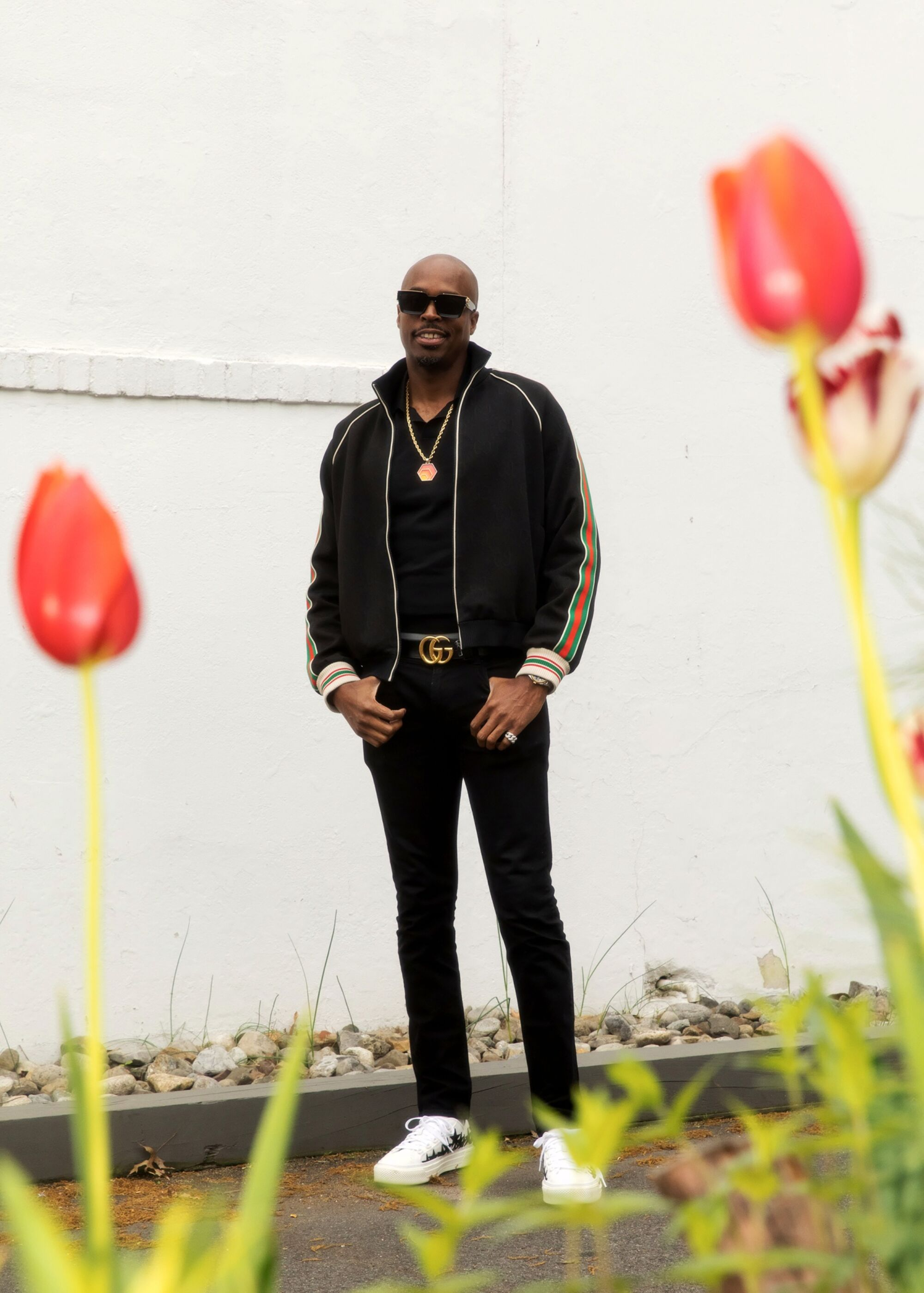
Wilson buys tokens every day. Photographer: Levi Mandel for Bloomberg Businessweek

Corey Wilson’s necklace.
He sports a necklace with the logo of a favorite token. Photographer: Levi Mandel for Bloomberg Businessweek
Rich Etienne, an engineer in Florida who lost about $100,000 in the Celsius collapse, said in a phone interview that he has a good feeling about the market now. He says it’s a matter of watching for patterns in the charts—“little movements, fake-outs, certain people shilling.” It’s less science than art, he says: “You start to get the vibe that this is it.”
A Dutch institutional investor-turned-Bitcoin analyst who goes by the handle “Plan B” is best known for his charts predicting that Bitcoin would pass $100,000 in 2021. When that didn’t happen, his reputation took a hit. “You see a lot of hate,” Plan B told me over Zoom. (Like many crypto influencers, he prefers to be identified by his handle out of concern for his safety.) He stands by his optimistic analysis, particularly his popular “stock-to-flow” model that predicts Bitcoin will continue trending upward as the issuance of new coins slows, as it was programmed to do by its pseudonymous creator, Satoshi Nakamoto. (The model assumes Bitcoin’s price is driven by scarcity, a logic familiar to gold bugs as well as Beanie Babies collectors.) Plan B now estimates that by 2028, Bitcoin will be worth $100,000 to $1 million, up from about $27,000 today. The date, in other words, moved back a few years. “For me it’s the long game,” he says. He adds that his bet on Bitcoin is all-or-nothing: “It’s either going to zero or it’s going to be the successor to the US dollar.”
Academics say this type of thinking—doubling down on one’s conviction, despite a crash—is consistent with the psychology of both trading and gambling. Investors are more apt to sell assets that have gained in value than to let go of ones that have dropped; it’s a phenomenon known as the disposition effect. There are different explanations for this, says Tobin Hanspal, assistant professor of finance at the Vienna University of Economics and Business. One is that traders with plunging assets become risk-loving because they feel they have nothing to lose. Another says they’re avoiding feelings of regret. People “do not want to admit defeat or face the realization that they made a mistake,” Hanspal says. (This is me.)

Blec blames the collapse on “too much trust.” Photographer: Tamara Reynolds for Bloomberg Businessweek
Others keeping the faith describe the crash as a purge that proves crypto must return to its roots. The whole point of Bitcoin, according to Satoshi’s white paper, was to allow people to transact money directly with “no central authority” like a government or bank, or a company such as FTX or Celsius. This idea of decentralization has a totemic power for some, with a resonance that seems as much emotional as intellectual.
Chris Blec, who writes an online newsletter called the Blec Report, has made a career out of criticizing any crypto project that deviates from the original purpose of blockchain technology. Companies such as FTX were “abusing Satoshi’s invention,” he says. “They’re using it in ways it’s not intended to be used.” Blec argues that most of the projects that collapsed over the past year suffered from the same problem: “too much trust.” Any system that requires trusting human beings is inherently unstable, he says, and can create a bubble. “Every time it bursts,” he says, “more people understand that.”
THOSE WHO KNEW
Frances Coppola wasn’t always a crypto hater. “When Bitcoin first came out, I was quite keen on it,” she says. The UK-based writer on economics and banking had long seen a need for an alternative to the bank-based payment system, and cryptocurrencies seemed like a promising development. But by 2021 she’d turned skeptic. That summer she posted a Twitter thread explaining why even decentralized crypto systems run by code could be prone to catastrophic failure. She argued that they’d suffer digital bank runs if investors started to pull their money out quickly, which their algorithms wouldn’t be able to stop. “The algos are built on the assumption that humans never panic and stampede for the exit, ignoring the overwhelming evidence that they do,” she wrote.
Her tweets caught the attention of Do Kwon, the creator of TerraUSD, a then-hot coin that used a decentralized algorithm to maintain a steady value of $1. TerraUSD was a popular substitute for US dollars among DeFi traders, and it could be reinvested to earn high yields. “I don’t debate the poor on Twitter,” Kwon tweeted in Coppola’s thread.

Coppola foresaw the crypto panic. Photographer: Jack Kenyon for Bloomberg Businessweek
“Schadenfreude is the right term”
“That came back to haunt him,” Coppola says. “I ended up being cited in the court case.” She then bursts into a merry laugh. In May 2022, TerraUSD unraveled in exactly the type of bank run Coppola had described. Kwon is now being sued by investors and has been charged with fraud by US prosecutors; he’s denied wrongdoing. For Coppola, the crash, which TerraUSD’s fall partly triggered, has been bittersweet. She doesn’t want to take pleasure in it, given how many people have gotten hurt. And yet, “I did feel a bit, ‘So there,’ ” she says. “Schadenfreude is the right term.”
Coppola belongs to a community of skeptics who have long pushed back against the narratives spread by crypto boosters. During the bull market, many of those boosters swamped the skeptics with derision. “We did take a lot of abuse from the ‘Have fun staying poor’ crowd,” she says. Since the crash, the skeptics have taken a victory lap. “I wouldn’t say people are opening bottles of Champagne,” says Amy Castor, another prominent crypto critic, who works as a freelance journalist and writes a reader-supported blog. But they’ve seen their ranks grow. “There were a handful of us before, screaming into the abyss,” she says. “Now there’s a lot more.”
THE BLAME-CASTERS
In crypto, 2022 was the year of the “bad actor.” (As in malefactor, not Steven Seagal.) Bad actors were suddenly everywhere, tainting the purity of the otherwise unassailable technology. Instead of pointing to structural problems in crypto—the lack of investor protections, say, or the fundamental question of how to prevent a fully decentralized, largely anonymous currency from being used to fund terrorism—believers blamed individuals (or groups) for … acting badly.
The baddest actor of all, of course, is the man now known across the cryptosphere as “Scam Bankrupt-Fraud.” Molly White, a vocal crypto critic who runs the site Web3 Is Going Just Great, has argued that Bankman-Fried is a useful scapegoat for crypto fans. “It’s very convenient for them to say, ‘This isn’t our problem, this is just one guy,’ ” she said in a recent podcast interview. (Bankman-Fried, who’s facing criminal fraud charges, has denied wrongdoing.)
Other scapegoats abound. On Fox News’ Tucker Carlson Tonight, guest host Tulsi Gabbard highlighted an unfounded theory that American politicians were channeling US taxpayer dollars to Ukraine, which was then investing in FTX, which was then funneling money back to Democrats. (Bankman-Fried was a major Democratic donor; his colleague Ryan Salame gave millions to Republicans.) Ukraine’s deputy minister of digital information tweeted that Ukraine “never invested any funds into FTX.”
Crypto-friendly legislators blamed regulators for failing to rein in FTX before its collapse. Representative Tom Emmer, a Minnesota Republican, accused US Securities and Exchange Commission Chair Gary Gensler of “working backroom deals … with people who are doing nefarious things.” Never mind that Emmer has long pushed a hands-off approach to crypto. There’s even been blame-casting by the blamed. Kwon recently suggested that Bankman-Fried orchestrated trades that caused the collapse of TerraUSD (federal prosecutors are investigating this possibility), and Bankman-Fried has blamed FTX’s unraveling on a tweet from Binance Holdings Ltd. Chief Executive Officer Changpeng Zhao (though it’s clear FTX’s problems ran much deeper). The industry can seem like the Spider-Man pointing meme come to life.
THE COMMUNITARIANS
Perhaps the only byword in the crypto lexicon as powerful as decentralization has been community. Across Twitter and Telegram and Discord, owners of the same asset gather to discuss the greatness of their asset, share memes about it and trash competing assets. This was particularly true of nonfungible tokens, or NFTs, those bits of digital art that in some cases traded for hundreds of thousands of dollars. Now, previously bustling Discord chatrooms lie quiet, and a few remaining fans wait for updates. “Devs, do something” is the pitiable refrain, the digital equivalent of poking a dead animal with a stick.
“It’s very funny to look back and think, ‘Were we all just drunk or something?’ ”
The dissolution of these communities has left scars—some of them literal. In February 2022, Emma Crudgington was scrolling Twitter at her office in Brisbane, Australia, when she spotted a hot new NFT. It was called Tasty Bones, and the logo featured a cartoonish skull with an ice cream cone upended on it. The art was “cute,” she thought, and, more important, the project was getting lots of hype. Demand for access to the presale exceeded supply, and she needed a way to distinguish herself. “I was like, ‘What’s the most extreme thing I can do?’ ” she says. She got the logo tattooed on her arm. She posted a photo of it on the Tasty Bones community Discord chat, and the creators put her on the list to receive two NFTs. She ended up selling them a week later, netting around $12,000.

Crudgington may lose her Tasty Bones tattoo. Photographer: Tammy Law for Bloomberg Businessweek
Now that the project has disintegrated—a Tasty Bones currently sells for about $50—Crudgington is amused by the tattoo. “It’s a great story to tell people,” she says. “It’s very funny to look back and think, ‘Were we all just drunk or something?’ ” She expects she’ll have it removed or covered up. Crudgington is still involved in an NFT project called Sappy Seals. She spends hours every week talking to a subgroup of Seals owners called Sappy Sisters. “It’s like having a personal therapist,” she says. “We talk about the most random things, from physics to lip gloss.” Crudgington says the Sisters have transcended their origins. They’ve raised money for a dog charity, rallied support for a community member with cancer and discussed sexual harassment in the NFT space. She can be vague describing the nature of their bond (“the theme of the community is community”) but says the connection is authentic.
Connection in crypto can be dicey. White has coined the term “predatory community” for the way it can foster bonds at the expense of its users, much like a multilevel marketing scheme. When emotions get tied up with money and a sense of belonging, it can be hard to see oneself and one’s peers clearly, especially in communities that tout virtuous causes. Such environments are ripe for manipulation. Countless projects have gotten “rugged,” or sold off by the creators, leaving investors with worthless tokens. Those that simply fizzle produce the same result.
Crudgington says she recognizes such communities can be exploitative, but the Sappy Sisters are different. “There’s no monetization,” she says. “There’s no ulterior motive behind it.”
THE ONES WHO STEP AWAY
In 2021, after working half a decade in traditional finance—TradFi is the dismissive crypto term—Jill took a job at a firm specializing in DeFi. (She requested I not use her full name so she can speak candidly about her work.) She was drawn to the idea of transaction without go-betweens, particularly in a world where governments can prohibit bank accounts from being used for, say, sex work or birth control. “For a while, I drank that Kool-Aid,” she says. “Then I realized no one had any idea about OFAC rules.” (The Office of Foreign Assets Control enforces sanctions against terrorist organizations.) The more she learned about the technical aspects of crypto, the less it seemed about financial freedom than “getting around capital controls.” She says she was also put off by its consumerist culture of boats and models: “I did not fit in.” She recently left that job and is looking for work in TradFi.
The idea of boats and models didn’t seem to bother another former crypto worker I spoke to, who asked not to be named at all. (People in this group are skittish about talking.) After making six figures in the 2021 bull run, he dropped out of college and took a job at a crypto venture capital firm. His thinking was simple, he says: School sucked, and he wanted to be free, make a ton of money and have a Lambo. The business model in the space was to find a project, promote it, wait for its tokens to rise and take profits. This didn’t seem sinister because everyone was making money. When he did think about the morality of his work, it wasn’t hard to justify; if anyone was getting rugged, it was rich people. In retrospect, he says it was callous not to think about what was going on under the hood.
After the market began to slip, what had felt to him like a positive-sum game suddenly seemed zero-sum. He realized that if anyone was making outsize returns, that wasn’t happening for free. A lot of projects his firm had invested in had failed, and he found it hard to get excited about the new ones. I asked if his colleagues believed the projects had real value. They do, he says, and he thinks that’s delusional. Last fall he went back to school.
In early March, I told David, my normally laconic barber, that I was writing about crypto winter. He perked up and, taking long pauses between snips of hair while gesturing with his scissors, delivered an analysis of what he assured me is the next big thing: artificial intelligence tokens.
Indeed, after the debut of ChatGPT in November, crypto tokens with some link to AI technology (the connection isn’t always clear) have rocketed in value. Multiple people I spoke with mentioned AI integration as a possible path forward for crypto. Perhaps chatbots will be able to spend cryptocurrency to accomplish their tasks. Maybe blockchain technology can help verify authenticity in a world saturated with deepfakes. The influential Twitter account @punk6529 recently posted, “AI will unveil what crypto’s true purpose is.” The tone of these conversations—hushed, commiserating, vaguely oracular, comically speculative—felt familiar. I told David I’d look into it. I have not.
Beam is a freelance journalist. He made his first crypto purchase in April 2021; he hasn’t made a trade since April 2022.