# Пов'язані статті щодо Grok

Центр новин HTX надає останні статті та поглиблений аналіз на тему "Grok", що охоплює ринкові тренди, оновлення проєктів, технологічні розробки та регуляторну політику в криптоіндустрії.

Apple Sues OpenAI Sparking Feud, Musk Slams Altman for Fraud, Altman Retorts with 'Space Data Center' Boast

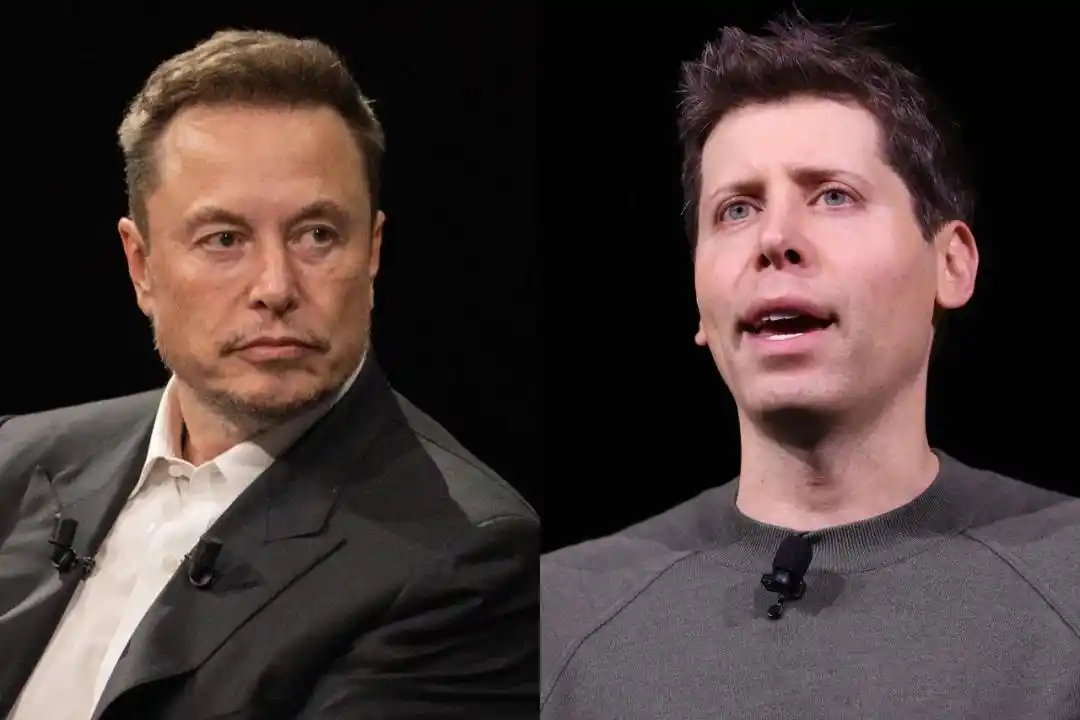
Apple Sues OpenAI as Musk-Altman Feud Escalates The public feud between Elon Musk and OpenAI CEO Sam Altman intensified, coinciding with their respective AI companies launching flagship models in the same week, highlighting fierce competition. On July 11, Musk posted on X, accusing Altman of taking "fraud to the next level" regarding OpenAI's commercial practices. Altman fired back, sarcastically suggesting Musk was the one selling "short-term space datacenter" concepts to public market investors. Musk countered with allegations that Altman "stole an open-source AI charity" and, amid Apple's recent lawsuit, "stole all of Apple's phone tech." He mockingly referenced Altman needing a "parole officer's" approval to travel. This exchange occurred against the backdrop of a significant legal development: Apple filed a lawsuit against OpenAI in a California federal court, alleging the AI company deliberately solicited Apple employees to leak confidential information on unreleased products to aid its own hardware plans. Apple demands OpenAI cease this activity, destroy proprietary materials, and redesign upcoming products. OpenAI responded, stating it has no interest in other companies' trade secrets and remains focused on innovation. This lawsuit could profoundly impact their two-year partnership where OpenAI provides key tech for Apple Intelligence and Siri. The rivalry extended to product releases. OpenAI launched GPT-5.6, while Musk's SpaceXAI unveiled Grok 4.5. Both are positioned as AI agents capable of multi-step tasks. GPT-5.6 is noted for strengths in broad reasoning, business workflows, and cybersecurity. Grok 4.5 is highlighted for higher efficiency in autonomous programming and developer workflows, with lower usage costs than GPT-5.6, though OpenAI's model reportedly still leads in areas like abstract reasoning. The differing strengths offer distinct choices for enterprises and developers based on their specific needs.

marsbit07/12 08:56

Apple Sues OpenAI Sparking Feud, Musk Slams Altman for Fraud, Altman Retorts with 'Space Data Center' Boast

marsbit07/12 08:56

Breaking News: Musk Delivers the Most Powerful Grok 4.5, Slashes Price of Top-tier Opus Intelligence Drastically

**Elon Musk Launches Grok 4.5: A Cost-Effective, High-Performance AI Rival** SpaceXAI, in collaboration with Cursor, has released Grok 4.5, its new flagship AI model designed specifically for coding and agentic tasks. Trained on tens of thousands of NVIDIA GB300 GPUs using massive, high-quality data filtered from trillions of Cursor developer interactions, the model emphasizes "per-token intelligence." In benchmark performance, Grok 4.5 is highly competitive. It scores 64.7% on SWE Bench Pro (surpassing GPT-5.5's 58.6% and Opus 4.7's 64.3%), 83.3% on Terminal Bench 2.1 (nearly matching GPT-5.5), and 62.0% on DeepSWE 1.0 (beating Opus 4.8). Overall, it ranks fourth in AAAI official tests and first in the Harvey legal agent benchmark. The model's key advantage is its combination of speed, efficiency, and low cost. It generates responses at 80 tokens per second and, crucially, uses far fewer tokens to complete tasks—4.2 times fewer than Opus 4.8 on SWE Bench Pro. It is priced at $2 per million input tokens and $6 per million output tokens, significantly undercutting competitors. Musk stated it is "roughly equivalent to Opus 4.7, but much faster." Early user tests show Grok 4.5 can generate functional code for applications like 3D solar system simulators and basic games from simple prompts, though some note it still lags behind top models in certain creative tasks. Musk has hinted at a major update next month, leveraging real-world engineering data from his companies, with an even larger 2-trillion parameter version reportedly in development. Grok 4.5 positions itself not as the absolute strongest model, but as a highly efficient and affordable alternative in the top tier.

marsbit07/09 03:11

Breaking News: Musk Delivers the Most Powerful Grok 4.5, Slashes Price of Top-tier Opus Intelligence Drastically

marsbit07/09 03:11

Musk vs. Altman: Who Will Be the 'Fisherman'?

Elon Musk and Sam Altman are locked in a fierce legal and commercial battle. Musk, a co-founder of OpenAI, has sued the company and Altman, alleging they betrayed its original non-profit, open-source mission by transforming into a for-profit entity with significant Microsoft backing, now valued at $852 billion. He demands damages, a return to a non-profit structure, and management changes. The lawsuit hinges on whether OpenAI's founding charter was a legally binding charitable trust or merely an idealistic statement. OpenAI counters that Musk himself pushed for a for-profit model in 2017 but left when he couldn't gain full control, and now acts as a commercial rival with his xAI venture. Despite the high-profile feud, the article suggests the real winners (the "fishermen") may be others in the AI race. While Musk has folded xAI into SpaceX to pursue a "space-based computing" vision, his Grok chatbot lags in market share and user growth compared to leaders. OpenAI faces its own challenges, notably from rival Anthropic, which is rapidly catching up in revenue and enterprise adoption. Musk is reportedly leasing significant computing power to Anthropic, creating an "enemy of my enemy" dynamic. Furthermore, Chinese AI models like DeepSeek are quickly closing the capability gap. Ultimately, the lawsuit is seen as setting a precedent for AI governance, but the intense competition between Musk and Altman may primarily benefit other players, infrastructure providers like Nvidia, and emerging third forces in the global AI landscape.

marsbit05/09 04:27

Musk vs. Altman: Who Will Be the 'Fisherman'?

marsbit05/09 04:27

Dissolving xAI, Musk Wants to Rebuild an AI Company Using Rocket-Building Methods

Elon Musk is making an unprecedented move by dissolving his AI startup, xAI, and folding it into his aerospace company, SpaceX, ahead of a planned public offering. This aims to package SpaceX's lucrative rocket and Starlink business with the high-cost, high-growth potential of AI. However, xAI's flagship model, Grok, has struggled to gain significant commercial or enterprise traction compared to leaders like OpenAI's ChatGPT or Anthropic's Claude. Internal turmoil led to the departure of much of xAI's founding AI talent. Musk has responded by installing SpaceX engineers as managers to transform xAI from a research lab into a high-efficiency "AI factory," focusing on infrastructure like its Colossus supercomputing cluster. Musk's vision positions the combined "SpaceXAI" as a future AI infrastructure company, addressing bottlenecks in computing power, energy, and data centers. He even proposes futuristic concepts like space-based AI data centers. To validate this story, SpaceXAI has begun sharing compute resources with former rival Anthropic. Financially, the merger appears to be a move to secure funding for xAI's massive losses by leveraging SpaceX's stable cash flow. While the combined entity targets a $1.25 trillion valuation, the market has yet to price in significant synergy. The strategic choice of SpaceX over Tesla, despite Tesla's closer ties to physical AI applications like robots and cars, is seen as Musk securing maximum control. Ultimately, Musk is betting that his proven methodology—centralized control, vertical integration, and aggressive engineering timelines—will succeed in the AI arena. But this time, he faces competitors like OpenAI and Google who are equally fast, well-funded, and determined. The merger is less about a guaranteed victory and more about ensuring Musk remains a key player at the table, regardless of the final outcome.

marsbit05/09 01:40

Dissolving xAI, Musk Wants to Rebuild an AI Company Using Rocket-Building Methods

marsbit05/09 01:40

Weekly Preview | FTX to Distribute Additional $2.2 Billion to Creditors Starting March 31; US Nonfarm Payrolls Data Stuns the Market

This week's Key Crypto & Financial Events Preview (March 30 - April 5, 2026): **March 30:** - Upbit delists Nomina (NOM); Binance removes UTK from margin trading. - Binance Alpha lists R2 Protocol (R2) and Based (BASED). - Polymarket expands its structure beyond crypto and sports. - European Central Bank begins accepting DLT-based assets as collateral. - BNP Paribas launches 6 crypto ETNs (Bitcoin, Ethereum, etc.) for French clients. - Token unlocks: Zora (ZORA), Kamino (KMNO). **March 31:** - FTX initiates fourth creditor distribution of ~$2.2B. - Bithumb holds shareholders meeting; CEO likely to be reappointed. - EdgeX (by Amber Group) launches $EDGE token. - Folks Finance ends FLOKS token claim period. - Zilliqa ends deBridge support; users must migrate USDC. - 21Shares distributes staking rewards for TETH and TSOL ETFs. - Token unlock: Optimism (OP). **April 1:** - Binance delists multiple tokens (A2Z, FORTH, HOOK, etc.) from spot and contracts. - BGD Labs stops contributing to Aave DAO after 4 years. - Token unlocks: Sui (SUI), EigenCloud (EIGEN), ZetaChain (ZETA). **April 2:** - Token unlock: Ethena (ENA). **April 3:** - Key U.S. macro data: Nonfarm Payrolls, Unemployment Rate, Wage Growth. - Senator Elizabeth Warren demands MrBeast disclose crypto plans for teens by April 3. **April 5:** - Token unlock: Opinion (OPN). **Upcoming (Date TBD):** - Draft of U.S. Clarity Act (incl. stablecoin provisions) expected next week. - xAI’s Grok Imagine to have a significant release; full Grok algorithmic features launching on X platform.

marsbit03/29 11:28

Weekly Preview | FTX to Distribute Additional $2.2 Billion to Creditors Starting March 31; US Nonfarm Payrolls Data Stuns the Market

marsbit03/29 11:28

活动图片