Exploring ChangXin Technology's Hefei Headquarters: The Rising Campus Ignites Changgang CBD, Grassroots Employees 'Witness' Wealth Creation Myth

marsbitОпубліковано о 2026-07-28Востаннє оновлено о 2026-07-28

Анотація

"On-the-Ground Visit to CXMT's Hefei Headquarters: Campus Boom Ignites Changgang 'CBD,' While Rank-and-File Employees Watch Wealth Creation Myth from the Sidelines." Following CXMT's (ChangXin Memory Technologies Inc., 688825.SH) explosive stock market debut on July 27, where its share price surged over fivefold, a site visit to its Hefei headquarters reveals a stark contrast. While the company's市值 soared, making it A-share's most valuable firm,基层员工 indicate the wealth creation has largely bypassed them. Employees reveal that股权激励 is restricted to managerial levels (Grade 9科长 and above), with most普通员工 at Grades 11 or 12. Salaries, while considered high for Hefei at around 200,000 RMB annually, fall short of the millions speculated online. Work routines remain demanding, with long hours, phone confiscation in sensitive areas, and strict保密 protocols forbidding unauthorized external communication. Simultaneously, CXMT's expansion is visibly transforming the once-rural Changgang area. Ongoing construction includes multiple new phases, with an industrial chain of supporting companies集聚 around the campus. This growth has spurred local development: housing prices initially skyrocketed, and a vibrant commercial district dubbed "Changgang CBD" now thrives, catering to the潮汐效应 of shift workers. The area has evolved from construction sites to a bustling hub, though the company's stringent安保, including high-voltage perimeter fencing, underscores its sensitive nature. The report conclude...

"How many shares does he have?"

"50,000 shares."

"That's a huge profit!"

"But they can't be sold for another 3 years..."

At 11:45 am on July 27th, a Time Weekly reporter overheard the above conversation among employees while dining near ChangXin Technology's (688825.SH) Hefei headquarters.

They all wore blue work badges, with the clear "CXMT" logo printed on the lanyards, making them easily identifiable as ChangXin Technology employees.

On July 27th, ChangXin Technology's stock price surged more than fivefold at market open. By the close, ChangXin Technology was quoted at 49 yuan per share, with a market capitalization reaching 3.28 trillion yuan, making it the highest-valued company on the A-share market.

However, the frenzy surrounding ChangXin Technology's stock price had no immediate connection to its grassroots employees. One employee revealed to Time Weekly that the company's equity incentive plan has clear job-level thresholds; only those at Level 9 (Section Chief) or above are eligible to participate, while the majority of ordinary employees are concentrated at Levels 11 and 12.

ChangXin Technology also maintains extremely strict external information control. A Time Weekly reporter attempted to contact employees for interviews through various channels, but most stated that "leadership has already instructed us not to accept any external interviews." They added that being found conducting private interviews could lead to dismissal in serious cases.

When the reporter attempted to take photos at the campus entrance, security guards from multiple areas came forward to dissuade them, explicitly stating that photography was prohibited. Even passersby smoking at the entrance were approached and asked to stop by security.

The strict campus controls have not, however, hindered the spillover effects of the industry. ChangXin Technology has tangibly driven the development of the surrounding area.

A Time Weekly investigation found that restaurants in the commercial street southeast of the campus are bustling with customers, supporting commercial districts north of the campus are under construction, and the Phase II construction site to the west has gathered a large number of migrant workers. The area has transformed from desolate construction sites into commercial zones, with property prices also climbing to over ten thousand yuan per square meter.

Hefei's Chip Giant: The Wealth Creation Myth in the Eyes of Grassroots Employees

Beyond the market fervor of its listing day, the work pace and daily operations within ChangXin Technology's campus continued along their established tracks.

Like most companies in Hefei, ChangXin Technology's workday also starts at 8:30.

By 9:00 am, the campus parking lot was already full. The bicycle sheds within the campus and the non-motorized vehicle parking spaces along the surrounding roads were also packed with electric scooters.

△Source: Time Weekly Photo

"Most of us have to hand in our phones during work hours," an employee told Time Weekly. Employees in R&D and wafer fabrication workshops are required to surrender their phones—the workshops due to cleanroom production requirements, and technical positions due to confidentiality needs. Upon entering R&D areas, phones must be stored uniformly.

"The working hours are similar. We work until 11:30 am, then have a lunch break until 1:00 pm," the employee added.

Overtime is the norm in the chip industry, and ChangXin Technology is no exception.

"For R&D, working until 9 or 10 pm is standard. Weekends also require on-duty shifts to ensure someone is always present. Some also voluntarily come to the office on weekends if their work isn't finished," an employee revealed. Overtime pay is not directly disbursed but is factored into quarterly bonuses and performance evaluations.

According to ChangXin Technology employees, the company's job level system is very detailed: Bachelor's degree graduates start at Level 12, Master's degree graduates at Level 11. Each level is further divided into A and B grades. Level 9 corresponds to Section Chief.

Regarding salary, "It doesn't reach 300,000 yuan, but 200,000 yuan is attainable, which is considered relatively high in Hefei," several employees explained.

Faced with widespread online claims about ChangXin employees "forming groups to buy houses," "wealth creation myths," and "net worth exceeding millions," interviewed ChangXin employee Wang Ming (a pseudonym) stated, "The frenzy surrounding ChangXin Technology's stock price has no immediate connection to grassroots employees."

One employee revealed to Time Weekly that the company's equity incentive plan has clear job-level thresholds; only those at Level 9 (Section Chief) or above are eligible to participate, while the majority of ordinary employees are concentrated at Levels 11 and 12.

"We haven't been with the company long. Normally, there are level restrictions; you need to reach the corresponding level to be eligible to buy shares," the employee said. When asked if purchases are made through an employee stock ownership platform, he indicated he had no relevant information and was unclear on the details.

The Still-Expanding Campus: Transforming the Area from Construction Sites to a Hub

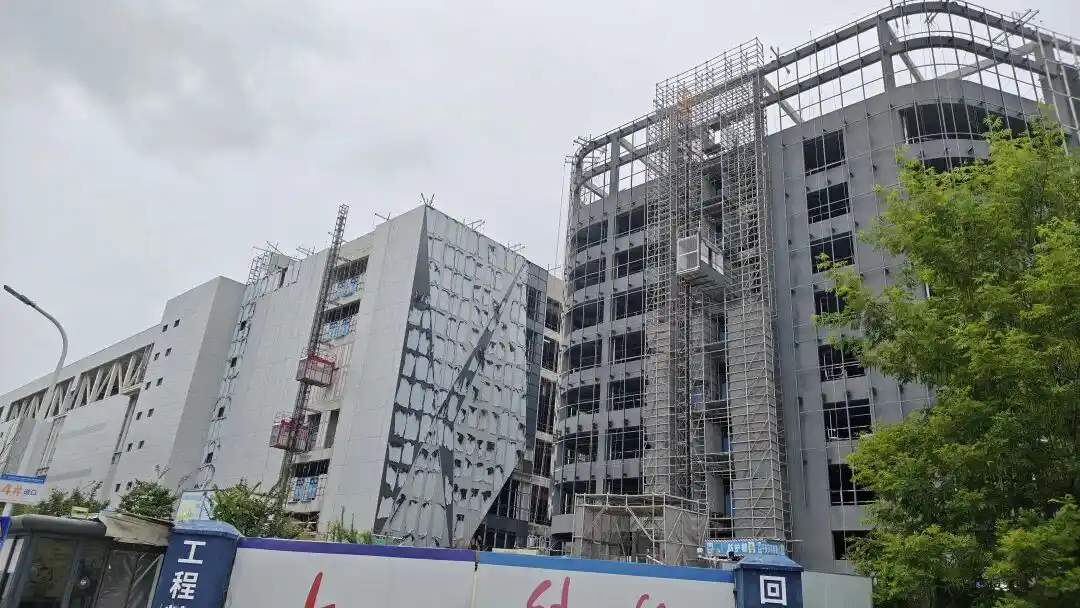
Beyond the already operational production lines and R&D buildings, ChangXin Technology's expansion continues.

The aforementioned employee mentioned that they previously worked at a different location and only moved to the current campus last year. The newly constructed factory buildings are expected to be completed by the end of this year, with the wafer fabrication area located right next to the R&D building.
△Image Source: Time Weekly Photo

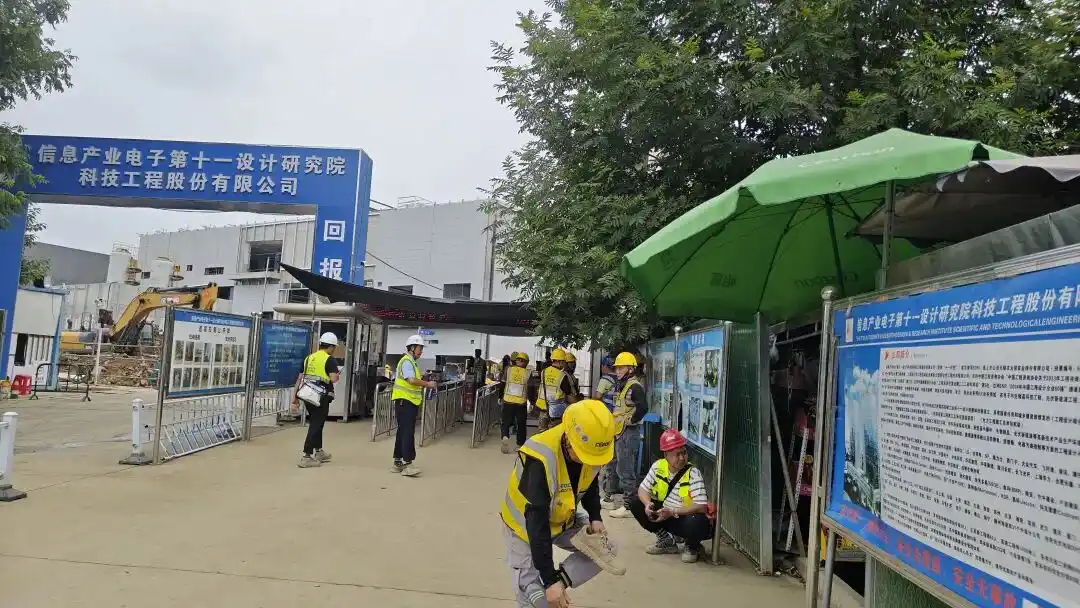
Time Weekly's visit found that the construction at the southwest gate of the campus is ChangXin Technology's Phase III project, contracted by the Information Industry Electronics Eleventh Design & Research Institute Science and Technology Engineering Co., Ltd. ("Eleventh Institute"), a wholly-owned subsidiary of the listed company TaiJi实业 (600667.SH).
△Image Source: Time Weekly Photo

The periphery of the construction site has gathered a large number of workers, attracting mobile vendors selling meals, snacks, drinks, and cigarettes, with their tents lined up in a row. Separated by a single wall, one side features a modern wafer fab construction site, while the other side presents a lively consumption scene for migrant workers.
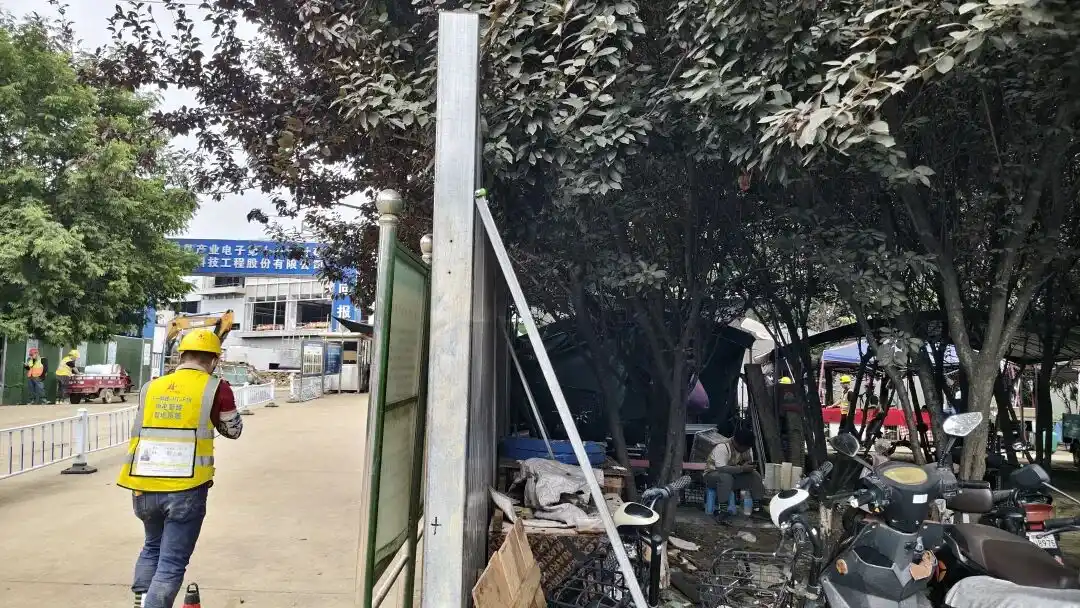
△Image Source: Time Weekly Photo

Many construction workers couldn't clearly state their specific contractor, but everyone knew this site was for the famous ChangXin Technology.

A person at the site told Time Weekly that ChangXin Technology currently has 11 ongoing construction projects, with bases also under construction in other areas of Hefei, Beijing, and Shanghai's Pudong New District.

Around the Phase III project, a cluster of supporting industrial chain enterprises has already gathered. Across the street from ChangXin Technology are the Xinqiao Integrated Circuit Industrial Park and Hefei Peidun Storage Technology Co., Ltd. Guanggang Gas (688548.SH) also has a supporting station within the campus.

The area north of the campus is surrounded by lawns and running tracks, creating a clean and open environment. Across the road is OCT (华侨城). A person working near the main gate told Time Weekly that a commercial district is being built opposite.
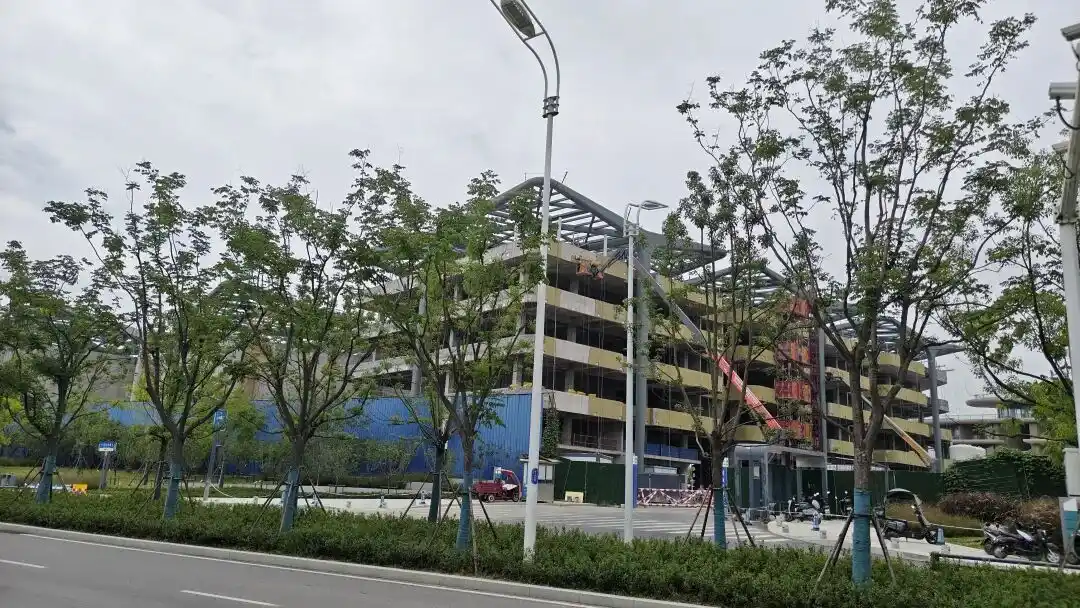
△Image Source: Time Weekly Photo

Notably, the entire ChangXin Technology industrial park is surrounded by high-voltage electric fencing, with a security level far exceeding that of ordinary industrial parks.
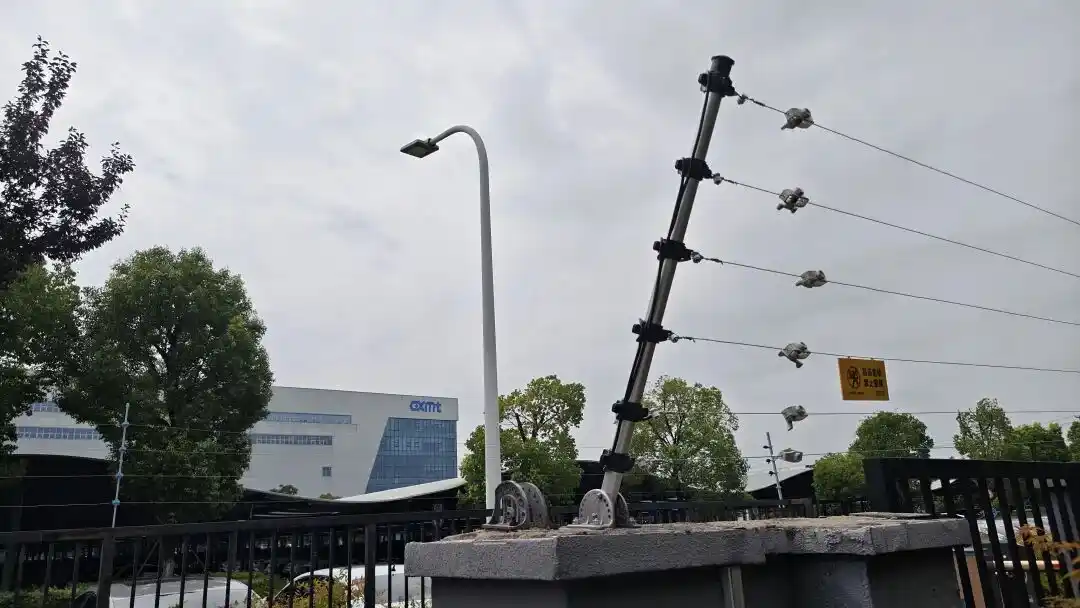
△Image Source: Time Weekly Photo

Walking and stopping to circle the entire ChangXin Technology campus took the Time Weekly reporter over two hours. Corresponding to the vast campus is the economic takeoff of the surrounding area.

"This place used to be farmland. Who would have thought there'd be such a huge factory here now," a rideshare driver living in a resettlement community near ChangXin Technology told Time Weekly. He revealed that since 2021, property prices in the Changgang area have been driven up by ChangXin Technology, peaking at over ten thousand yuan per square meter. "It's dropped quite a bit in recent years, but it's still around seven or eight thousand per square meter now."

In fact, ChangXin Technology is located over 40 kilometers from Hefei's main urban center, in what is considered the "outer ring of the outer ring" of Hefei. Taking just a few more steps beyond, the high-rises disappear, replaced entirely by villages and small roads.

Besides housing, the commercial streets here exhibit a clear tidal pattern—bustling and packed with customers during the morning, noon, and evening hours when ChangXin Technology employees get off work, but becoming almost deserted during work hours.

Particularly at the intersection of Shuofang Road and Jinlianhua Road, dubbed the core area of the "Changgang CBD" by locals, there's a strong sense of lively, everyday life. Every day around 5 pm, food carts collectively emerge, forming a long corridor around the area to provide meals for ChangXin Technology employees.

A restaurant owner told Time Weekly that from the early construction phase when the area was dominated by construction workers, to the current stage with multiple factory areas standing tall, the consumer base has shifted to ChangXin Technology employees and workers from supporting enterprises. The Changgang area has thus transformed from desolate construction sites into a bustling industrial hub.

This article is from the WeChat public account "Time Weekly" (ID: timeweekly), author: Guan Yue

Пов'язані питання

QWhat was the key difference in the response to ChangXin Technology's (CXMT) successful IPO between higher-level and entry-level employees according to the article?

AThe article states that the stock price surge following the IPO primarily benefited higher-level employees eligible for stock incentives (at Grade 9 'Section Chief' level or above), while entry-level employees (typically Grades 11-12) were excluded and were essentially 'spectators' to this wealth creation phenomenon.

QHow did the establishment and expansion of ChangXin Technology's headquarters in Hefei impact the surrounding Changgang area?

AThe development of ChangXin Technology's massive campus transformed the Changgang area from farmland and construction sites into a bustling commercial hub. It spurred the growth of commercial streets, restaurants, and new residential and business districts, significantly increasing local housing prices from a peak of over 10,000 yuan per square meter.

QWhat are some examples of the strict information and security controls implemented at ChangXin Technology's campus as described in the report?

AStrict controls included employees being instructed not to speak to media, with potential dismissal for violations; security personnel preventing photography on campus grounds; and restrictions like requiring employees in R&D and production areas to surrender their phones to maintain confidentiality and meet cleanroom standards.

QWhat was the typical work schedule and compensation structure for R&D employees at ChangXin Technology as mentioned by sources in the article?

AR&D employees reportedly worked from 8:30 AM, with overtime until 9-10 PM being common, including weekend shifts. Overtime pay was not directly issued but was factored into quarterly and performance bonuses. Annual compensation for such positions was around 200,000-300,000 RMB, which is considered high for the Hefei area.

QBesides its main facilities, what evidence does the article provide of ChangXin Technology's ongoing expansion and its effect on the local industrial chain?

AThe article notes ongoing construction of Phase III projects and mentions plans for 11 total engineering phases, with bases also in Beijing and Shanghai. Its presence has attracted supporting industries, creating an industrial cluster with neighboring companies like Hefei Peitun Storage Technology and Guangzhou Guanggang Gases setting up nearby facilities.

Пов'язані матеріали

Why P2P and Exchangers Are Becoming Obsolete, and What Will Replace Them

Titled "Why P2P and Exchanges Are Becoming Obsolete, and What Will Replace Them," this article discusses the evolution of stablecoins, particularly USDT, from a trading tool to a global payment method. However, converting crypto back to fiat for daily expenses remains a challenge. The process of using P2P platforms or crypto exchanges has become increasingly risky and complex due to stricter banking anti-fraud measures, new legislation in Russia, and rampant fraud schemes like "triangles," where sellers can inadvertently receive stolen funds. The article highlights that while P2P was convenient, banks now scrutinize frequent peer-to-peer transfers, often freezing accounts. Exchanges also pose risks like unfavorable rates and unclear compliance. The market is therefore shifting towards integrated services that eliminate the manual conversion step. It cites OneSix as an example—a crypto wallet accessible via Telegram and web that embeds currency conversion directly into payment and withdrawal scenarios. Users can pay bills or send money as if using a bank app, with the crypto-to-fiat exchange happening seamlessly in the background. It also offers invoicing for freelancers and conducts AML checks, returning suspicious transactions instantly instead of freezing them. In conclusion, as crypto integrates into everyday finance, the demand for manual, risky exchange methods is declining. The future lies in unified platforms that combine storage, compliance, conversion, and payments into a single, secure user experience.

cryptonews.ru2 хв тому

Why P2P and Exchangers Are Becoming Obsolete, and What Will Replace Them

cryptonews.ru2 хв тому

The CEO of MARA Holdings Compares AI Operations to Bitcoin Mining! Which is More Profitable?

Fred Thiel, CEO of MARA Holdings (a major Bitcoin mining company), states that the rapid growth of the artificial intelligence (AI) sector is transforming mining companies' business models. He claims that powering data centers for AI is significantly more profitable than Bitcoin mining. In a recent interview, Thiel explained why many mining firms are diversifying into AI infrastructure. According to Thiel, the energy demands of data centers are surging, especially due to the spread of generative AI applications. This creates new revenue opportunities for Bitcoin mining companies with robust power infrastructure. MARA Holdings is among those monitoring this shift and aims to develop its energy and infrastructure services for AI data centers. Thiel emphasized that this move toward AI does not mean the end of Bitcoin mining. He stated that Bitcoin mining remains a sustainable business model, especially for miners in regions with low electricity costs, and it is still a crucial field for utilizing excess or idle power capacity. In recent years, many Bitcoin mining companies have begun using their energy-intensive infrastructure not just for block production but also for high-performance computing (HPC) and AI applications. This strategy aims to diversify revenue sources and increase resilience against cryptocurrency market volatility. Analysts note that the growing energy demand in the AI sector presents significant transformation opportunities for mining companies. The need for high-power, uninterrupted electricity supply, particularly for large data centers, gives Bitcoin miners with existing energy infrastructure expertise a considerable advantage.

cryptonews.ru13 хв тому

The CEO of MARA Holdings Compares AI Operations to Bitcoin Mining! Which is More Profitable?

cryptonews.ru13 хв тому

Ratio's CEO Says Multi-Currency Stablecoins Could Eliminate Costly FX Conversions in Asia

The CEO of Ratio, John Cho, argues that multi-currency stablecoins could save Asia billions by eliminating costly foreign exchange conversions in regional trade. While USD stablecoins like USDT and USDC work for global settlements, local Asian trade is conducted in local currencies like the Korean won or Singapore dollar. Forcing these transactions through USD intermediaries creates unnecessary costs and currency risk. Cho envisions a complementary ecosystem where local-currency stablecoins work alongside USD stablecoins, enabling seamless cross-border settlements without conversion friction. A key pain point in traditional banking is the need for pre-funded Nostro and Vostro accounts, which lock up vast amounts of working capital. Blockchain-based settlement layers like Ratio offer a 24/7 alternative, using on-chain liquidity to enable instant execution even when traditional channels are closed. Modern Web3 infrastructure providers are focusing on pragmatic integration with existing corporate systems like ERPs, allowing businesses to gradually shift volumes to digital channels for better speed, cost, and reduced slippage. Clear regulation is cited as the critical catalyst for widespread institutional adoption. As jurisdictions like the U.S. advance legislation (e.g., the CLARITY Act) and Asian countries are expected to pass their own stablecoin laws within 12-24 months, regulatory uncertainty is receding. The ultimate vision is for regulated stablecoins to become an invisible settlement layer integrated into national payment systems, where payments simply happen on-chain, erasing the boundary between traditional banking and digital assets.

cryptonews.ru32 хв тому

Ratio's CEO Says Multi-Currency Stablecoins Could Eliminate Costly FX Conversions in Asia

cryptonews.ru32 хв тому

Huang Xiaoming, Li Bin, Lei Jun, Liang Wenfeng... Who Are the Biggest Winners in the CXMT IPO Feast?

Changxin Technology, a leading Chinese memory chip manufacturer, successfully listed on the Shanghai Stock Exchange's STAR Market (科创板) on July 8, 2026. Its share price surged from the IPO price of 8.66 yuan to close at 49 yuan on the first day, catapulting its market capitalization to 3.28 trillion yuan, making it the most valuable A-share company and triggering a massive wealth creation event. The biggest winners were the company's founder, Zhu Yiming, and its employees. Zhu Yiming's family wealth skyrocketed nearly 300% to approximately $13.9 billion, with his direct stake in Changxin valued at around 80 billion yuan. Additionally, over 6700 employees benefited from stock ownership plans, creating at least 237 new millionaires (in CNY). Zhu also pledged to donate 768 million shares, worth over 37.6 billion yuan, for future employee incentives over a ten-year period. Several prominent investors and corporate clients also reaped significant paper gains from the IPO. Notable figures include: * **Liang Wenfeng**, founder of DeepSeek, whose funds netted a paper profit of approximately 827 million yuan. * **Kong Jianping**, founder of Nano Labs, saw his indirect holdings valued at roughly 940 million yuan. * **Li Bin**, founder of Nio, whose company's strategic investment of 158 million yuan is now worth about 740 million yuan. * **Lei Jun**, founder of Xiaomi, whose subsidiary holds shares currently showing a paper gain of over 736 million yuan. Xiaomi clarified this is a corporate investment, not direct personal wealth. The article notes that while this IPO created immense wealth for insiders and large investors, retail investors who were lucky enough to win an allotment in the lottery typically profited by around 20,000 yuan. The listing solidifies Changxin's position as China's premier domestic memory chipmaker.

marsbit42 хв тому

Huang Xiaoming, Li Bin, Lei Jun, Liang Wenfeng... Who Are the Biggest Winners in the CXMT IPO Feast?

marsbit42 хв тому

Торгівля

Спот
活动图片