# RWA İlgili Makaleler

HTX Haber Merkezi, kripto endüstrisindeki piyasa trendleri, proje güncellemeleri, teknoloji gelişmeleri ve düzenleyici politikaları kapsayan "RWA" hakkında en son makaleleri ve derinlemesine analizleri sunmaktadır.

Sharplink CEO: Ethereum's Future Is Playing Out Now

This article presents a perspective from Joseph Chalom, CEO of Sharplink and a former BlackRock executive. He argues that current controversies surrounding the Ethereum Foundation (EF) and ETH's price miss the bigger picture for institutional adoption. Chalom asserts that Ethereum is decisively winning in the three key attributes institutions value most: trust, security, and liquidity. He cites its dominance in stablecoin settlement, tokenized real-world assets (RWA), and high-value DeFi as evidence. This success is attributed to the EF's consistent, long-term protocol development over a decade, including major upgrades like The Merge and a robust future roadmap. He defends Ethereum's decentralization as a core strength, not a weakness, stating institutions require a neutral infrastructure not controlled by any single entity. Comparing ETH to Amazon, Chalom suggests critics focusing on short-term price are missing its potential to become the foundational settlement layer for the entire global financial system. The article encourages a contrarian "be greedy when others are fearful" investment approach, drawing parallels to Warren Buffett's strategy and BlackRock's continued investment during crypto winters. Chalom concludes that while the EF correctly focuses on core protocol attributes (CROPS: Censorship Resistance, Capture Resistance, Open Source, Privacy, Security), a leadership gap exists in market-facing narrative and institutional adoption. He calls for ecosystem participants, including his own firm Sharplink, to become more vocal advocates to support Ethereum's impending "supercycle" of institutional adoption.

链捕手8 saat önce

Sharplink CEO: Ethereum's Future Is Playing Out Now

链捕手8 saat önce

Reddit Discussion: After 11 Years in Crypto, RWA Is One of the Few Things That Doesn't Feel Like 'Old Wine in a New Bottle'

Reddit Discussion: After 11 Years in Crypto, RWA Feels Unlike the Usual 'Old Wine in a New Bottle' A user with experience since 2014 shares that, having witnessed major crypto cycles from ICOs to FTX, most new narratives are just rebranded old ideas. However, Real World Assets (RWA) feel genuinely different. It's not about moving existing on-chain capital but bringing yields from real-world assets onto the blockchain. While many projects are flawed, the underlying premise is stronger than most. The user outlines key checks before engaging with any RWA project: 1) Existence of a lending business *before* the token launch (citing examples like Maple and 8lends). 2) Clear, transparent handling of defaults, using Goldfinch's 2023 issues as a critical lesson about inevitable credit risk. They note a crucial distinction for newcomers: RWA lending involves slow recovery from real assets (taking months), unlike the instant liquidations of over-collateralized DeFi protocols like Aave. Ultimately, the hard part is the traditional credit work, not the blockchain. Commenters agree, emphasizing the importance of documented default procedures and teams with pre-token real-world credit experience. They observe that a project's response to its first default is more telling than any metrics dashboard, summarizing RWA as "old credit on a new rail."

marsbitDün 06:09

Reddit Discussion: After 11 Years in Crypto, RWA Is One of the Few Things That Doesn't Feel Like 'Old Wine in a New Bottle'

marsbitDün 06:09

a16z: RWA Has Passed the Proof of Concept, but the Real Challenges Are Just Beginning

a16z highlights that the tokenized real-world asset (RWA) market, excluding stablecoins, has grown tenfold in under two years to roughly $340 billion. This surge is primarily driven by US Treasury bonds and gold, offering investors yield on idle stablecoins and providing institutions with more efficient settlement and collateral flows. However, the core insight is that most tokenized assets today are simply digital certificates for off-chain holdings—used for ownership and transfer but not deeply integrated into DeFi as composable financial building blocks. For instance, only about 5% of tokenized bonds ($8B) are actively used in DeFi protocols. Smaller categories like reinsurance tokens show much higher DeFi utilization (84%), indicating they were designed for on-chain composability from the start. The market remains concentrated, with US Treasuries and commodities comprising two-thirds of the total. Gold dominates the commodities segment. While Ethereum holds over half the market, activity is spreading across multiple chains like BNB Chain and Solana. Predictions for the market's future size vary widely (from $2 trillion to over $30 trillion by 2030/2034), reflecting different definitions of what constitutes tokenization. All agree on significant growth. The current market is minuscule compared to traditional finance (e.g., tokenized bonds are 0.01% of the global bond market). The key takeaway is that the initial "proof-of-concept" phase for moving familiar assets on-chain is proving successful. The next, harder challenge is moving more complex financial instruments onto blockchains and enabling true on-chain composability, where these assets become programmable components within a native digital financial system, rather than just digitized records.

marsbit2 gün önce 10:26

a16z: RWA Has Passed the Proof of Concept, but the Real Challenges Are Just Beginning

marsbit2 gün önce 10:26

Reframing Ethereum's Valuation: Why the Fee Model is Wrong, and the 'Treasury Logic' is the Future?

"Rethinking Ethereum's Value: The 'Vault Logic' Framework" Traditional valuation models incorrectly treat Ethereum as a company, valuing ETH based on transaction fees ("revenue"). This is flawed. Fees are network friction; a successful network aims to reduce them to zero. Ethereum's average fee has dropped from over $50 in 2021 to around $0.20 today, while transaction volume has tripled. Instead, view Ethereum as a digital vault securing ~$250 billion in on-chain assets (stablecoins, RWAs, L2 bridged funds, wBTC, etc.). Post-merge, Ethereum's security is directly purchased with its own asset: ETH. To attack the network, an attacker must acquire and control staked ETH. Therefore, the vault's security level is intrinsically tied to ETH's market value. Currently, the value of all staked ETH is only ~$72B, protecting ~$250B in assets—a dangerous imbalance. For robust security, the staked ETH securing the network should be valued significantly *higher* than the total value it protects. Applying a conservative security multiplier suggests ETH's fair value should be closer to ~$6,900 (vs. ~$2,070 currently). As on-chain asset value grows into the trillions, ETH's price must rise proportionally to maintain this security budget. Comparisons to free infrastructure like Linux or low-margin utilities like the DTCC are misguided. Their security is provided externally (community, law, banks). Ethereum's security is internal and must be purchased in the open market using ETH. ETH is not the clearinghouse; it is the collateral backing it. The model is not a short-term price predictor but a structural framework. The economic force for ETH appreciation grows monotonically with the adoption of Ethereum for settling value. The narrative that high fees are good is backwards; low fees enable more activity, which increases the value needing protection, thus demanding a more valuable ETH.

marsbit2 gün önce 08:19

Reframing Ethereum's Valuation: Why the Fee Model is Wrong, and the 'Treasury Logic' is the Future?

marsbit2 gün önce 08:19

Hash Global Founder: Why I Also Choose to Liquidate All My ETH Holdings?

Hash Global founder explains his decision to sell all ETH holdings, despite recognizing the potential regulatory clarity from the US CLARITY Act as a positive development. He argues against the narrative that such clarity would automatically grant ETH a "monetary premium" comparable to Bitcoin or gold. The core of his critique is that market valuation for ETH remains tied to fundamental network metrics—like mainnet revenue, DeFi activity, staking yield, and competition—rather than a pure store-of-value narrative. He contends that legal classification solves compliance issues for institutions but does not inherently create the deep, historical consensus required for monetary status. Furthermore, Ethereum's complexity and role as a multi-functional infrastructure asset (gas, collateral, settlement layer) work against the simple narrative needed for such a premium. Looking forward, he suggests that the rise of DeFi and tokenized real-world assets (RWA) will mean ETH is not the only yield-bearing asset; tokenized gold, treasuries, and others will also offer programmable yield. Thus, ETH's "yielding" advantage diminishes. He believes monetary premium will likely remain with Bitcoin, physical gold, and potentially tokenized gold, while ETH's value is more accurately framed as a crucial infrastructure asset. Ultimately, he views CLARITY's benefit as reducing a "regulatory discount" on ETH, not unlocking trillions in monetary re-rating. ETH's long-term value is significant but stems from its network effects, developer ecosystem, and role in on-chain finance—not from being a direct substitute for gold.

marsbit2 gün önce 07:10

Hash Global Founder: Why I Also Choose to Liquidate All My ETH Holdings?

marsbit2 gün önce 07:10

Sitting on a Trillion-Dollar Market, Why Hasn't Real Estate Tokenization Taken Off?

For years, real estate tokenization has been hailed as a breakthrough technology poised to democratize property investment. In theory, it promises fractional ownership of premium assets, rapid transactions, and enhanced liquidity. Yet, in practice, it has failed to gain traction, accounting for less than 0.1% of the global real estate market. The core issue is not a lack of tokens, but the absence of a robust legal, operational, and compliant framework that grants them credibility as financial instruments. The industry initially erred by prioritizing technology over investor needs, creating products with unclear ownership and unreliable liquidity. Key infrastructure remains missing: legally sound ownership structures, compliant transfer mechanisms, professional servicing, and interoperability with traditional finance. This regulatory ambiguity and operational complexity deter institutional investors, who already have access to established, well-governed investment channels. A mature model would feature low minimum investments in institutional-grade assets, transparent rental income distribution, and genuine liquidity through regulated secondary markets. While regulatory progress in regions like the UAE and growth in other tokenized asset sectors (like treasuries) are positive signs, the focus must shift from issuing tokens to building foundational systems. The investment proposition of tokenized real estate is not to create new returns, but to improve access, efficiency, and liquidity for existing income-generating properties. For mainstream adoption, the sector must demonstrate tangible economic advantages over traditional models, not just technical novelty. The next phase depends on proving scalable, compliant operations with auditable track records. The barrier is no longer technology, but infrastructure and regulation. The vision remains unfulfilled until this gap is bridged.

marsbit2 gün önce 01:29

Sitting on a Trillion-Dollar Market, Why Hasn't Real Estate Tokenization Taken Off?

marsbit2 gün önce 01:29

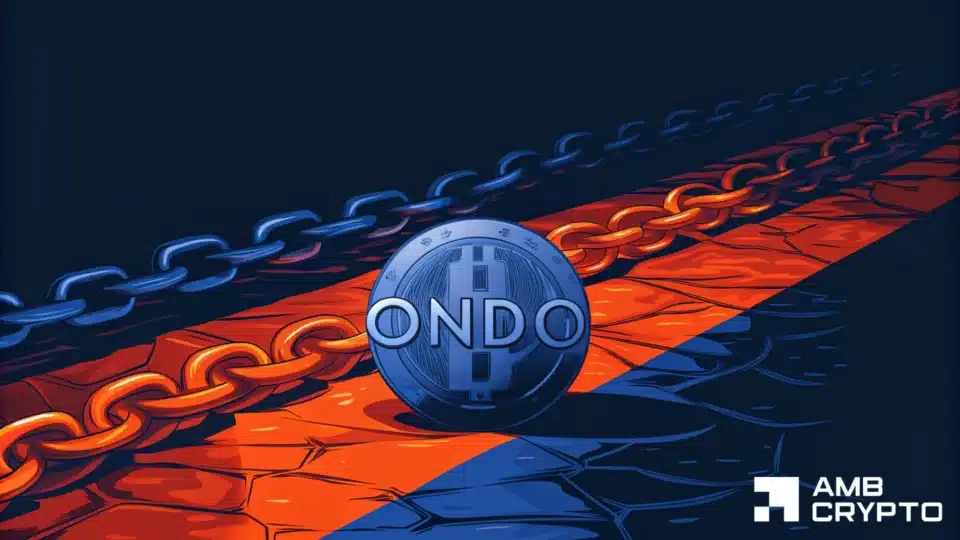
Will ONDO's 'Tokenization Narrative' Change After Its CEO's Unexpected Passing?

Ondo Finance founder and CEO Nathan Allman has passed away unexpectedly. Allman, a Brown University graduate with a background in private credit and Goldman Sachs' digital asset team, was a key architect of Ondo's pivot from DeFi structured yield products to becoming a leading Real-World Asset (RWA) protocol. He drove the strategy to tokenize traditional financial assets like US Treasuries (OUSG), yield-generating dollar assets (USDY), and US stocks/ETFs (Ondo Global Markets) for on-chain accessibility. The company announced that President Ian De Bode, a former McKinsey partner with a strong institutional strategy and operations background, will succeed Allman as CEO. While Allman's sudden departure presents a near-term challenge, testing market confidence and Ondo's continuity, the project is seen as more than a founder-driven narrative. It has an established product suite and a management team with deep traditional finance experience. The long-term impact hinges on the new leadership's ability to execute. De Bode's expertise in compliance, distribution, and institutional partnerships aligns with RWA's next phase of scaling infrastructure. The core question is whether Ondo can maintain its product momentum and institutional relationships. Ondo's native ONDO token represents governance and RWA narrative value, not direct revenue from the underlying assets. Its future as a "top tokenization play" will depend on the team's continued delivery of product growth, asset scale, and real-world demand, moving beyond the initial emotional shock.

marsbit05/27 05:33

Will ONDO's 'Tokenization Narrative' Change After Its CEO's Unexpected Passing?

marsbit05/27 05:33

CEO's Unexpected Passing: Will ONDO's 'Tokenization Narrative' Change?

Ondo Finance, a leading project in the RWA (Real World Assets) and tokenization space, faces a significant challenge following the unexpected passing of its founder and CEO, Nathan Allman. Known for his traditional finance background and pivotal role in shaping Ondo's strategy, Allman was central to its evolution from a DeFi structured yield platform to a key player tokenizing assets like US treasuries, stocks, and ETFs. The company announced that President Ian De Bode, a former McKinsey partner with deep experience in digital assets and corporate strategy, will assume the CEO role. The leadership transition presents a critical test for Ondo. While Allman's vision and execution were instrumental in establishing its "tokenization narrative," the project's medium to long-term trajectory will depend on the existing team's ability to maintain business continuity. Analysts note short-term concerns regarding vision continuity, institutional partnerships, and market sentiment for the ONDO token. However, Ondo has built a substantial product suite (OUSG, USDY, Ondo Global Markets) and a management team with strong traditional finance credentials. De Bode's background in strategy and execution may align well with the next phase of RWA growth, which focuses heavily on compliance, scaling, and institutional adoption. Ultimately, the event shifts focus to whether Ondo is a founder-driven story or a sustainable financial infrastructure. Its future as a "first tokenization asset" will be determined by the new leadership's success in delivering product growth, asset scaling, and real-world demand, rather than narrative alone.

marsbit05/26 12:35

CEO's Unexpected Passing: Will ONDO's 'Tokenization Narrative' Change?

marsbit05/26 12:35

活动图片