# Flywheel İlgili Makaleler

HTX Haber Merkezi, kripto endüstrisindeki piyasa trendleri, proje güncellemeleri, teknoloji gelişmeleri ve düzenleyici politikaları kapsayan "Flywheel" hakkında en son makaleleri ve derinlemesine analizleri sunmaktadır.

The 800x Golden Dog, "Gacha" Saves NFT Trading

Title: 800x Golden Dog: How 'Gacha' Mechanics Are Rescuing NFT Trading In the past month, the on-chain TCG (Trading Card Game) narrative, centered around "gacha" or loot box mechanics, has emerged as a major crypto-native revenue generator, second only to platforms like Hyperliquid and pump.fun. Recently, this trend hit Ethereum with Fake World Assets (FWA). Within just over a week, FWA generated approximately $1.3 million in revenue, ranking 15th in the past week's crypto app earnings. Its token, $FWA, surged from an initial market cap of ~$47,550 to a peak of ~$38.8 million—an 800x gain. Meanwhile, Collector Cards' token $CARDS declined significantly from its previous highs. FWA, developed by the team behind "PunkStrategy," operates as an NFT gacha system with a built-in token flywheel. Users deposit NFTs paired with ETH as liquidity into pools. Each deposit creates a personal pool; more ETH deposited lowers the chance of the NFT being "won" in a draw. Players spend ETH to "draw" (gacha). If they get an undesirable NFT, they can instantly sell it back to the original depositor at an 85% discount, generating income for the depositor. A 1% fee is taken on each draw and on depositor earnings when an NFT is kept. The key to FWA's momentum is its token $FWA. It cannot be bought directly externally. The primary way to acquire it is by playing the gacha and choosing to receive $FWA (instead of ETH) when selling back an unwanted NFT. This mechanism creates constant buy pressure for $FWA as players engage, especially during its price ascent. Early participants who held $FWA benefited massively from subsequent inflows. This contrasts with projects like Collector Cards, which, despite strong revenues, suffer from perceived low token utility beyond buybacks. In conclusion, while FWA's flywheel design—linking speculative token gains directly to NFT trading activity—has driven rapid growth, its sustainability is questionable. The model relies heavily on continuous $FWA price appreciation to offset the inherent negative expectancy of each draw. When price momentum stalls, activity will likely decline. The case highlights that in crypto markets, pure profitability narratives can be fleeting; understanding the relationship between attention, token buy pressure, and sustainable mechanics is crucial to avoid speculative pitfalls.

marsbit17 saat önce

The 800x Golden Dog, "Gacha" Saves NFT Trading

marsbit17 saat önce

Will the STRC Issue Price Determined by ChatGPT Lead to a Death Spiral?

A "death spiral" concerns surround the "STRC" preferred shares from MicroStrategy, a financial instrument designed by CEO Michael Saylor with significant AI consultation to trade near a $100 face value. Since its July 2025 launch alongside a ~40% Bitcoin (BTC) decline, STRC has traded at a discount, hitting a low of $82.53 and pushing its effective dividend yield above 12.9%. The debate centers on whether STRC's structure—which relies on MicroStrategy issuing more shares to fund Bitcoin purchases and dividends—is sustainable or a "centralized Ponzi scheme," as economist Peter Schiff claims. Skepticism grew after Saylor revealed the product's design involved extensive AI dialogue to create a legally viable, monthly-dividend, price-stable preferred share—a novel concept. MicroStrategy's recent sale of 32 BTC to cover dividends, coupled with a sharp slowdown in its weekly Bitcoin buys (from billions to ~$100 million in June), has intensified fears. The "at-the-market" equity issuance, a key funding mechanism, is paused while STRC trades below par. This raises the "death spiral" risk: a lower STRC price triggers automatic dividend rate hikes, increasing cash obligations and potentially forcing more share sales or Bitcoin divestments. Bullish analysts like Jesse Myers argue the sell-off stems from leveraged positions unwinding, not fundamental failure, noting the company can cover dividends for decades if BTC appreciates modestly. The shift to semi-monthly dividends and the high yield at discounted prices may attract new buyers. Major AI models (ChatGPT, Grok, Claude) suggest a return to $100 is possible but conditional on restored market confidence, sustainable dividend coverage without asset sales, and a Bitcoin price recovery. The critical test arrives as new dividend rules take effect June 30, likely raising rates again with STRC below $95. The central question remains: Can MicroStrategy fulfill its obligations without selling Bitcoin, or will the mechanism accelerate its own decline?

marsbit06/23 09:37

Will the STRC Issue Price Determined by ChatGPT Lead to a Death Spiral?

marsbit06/23 09:37

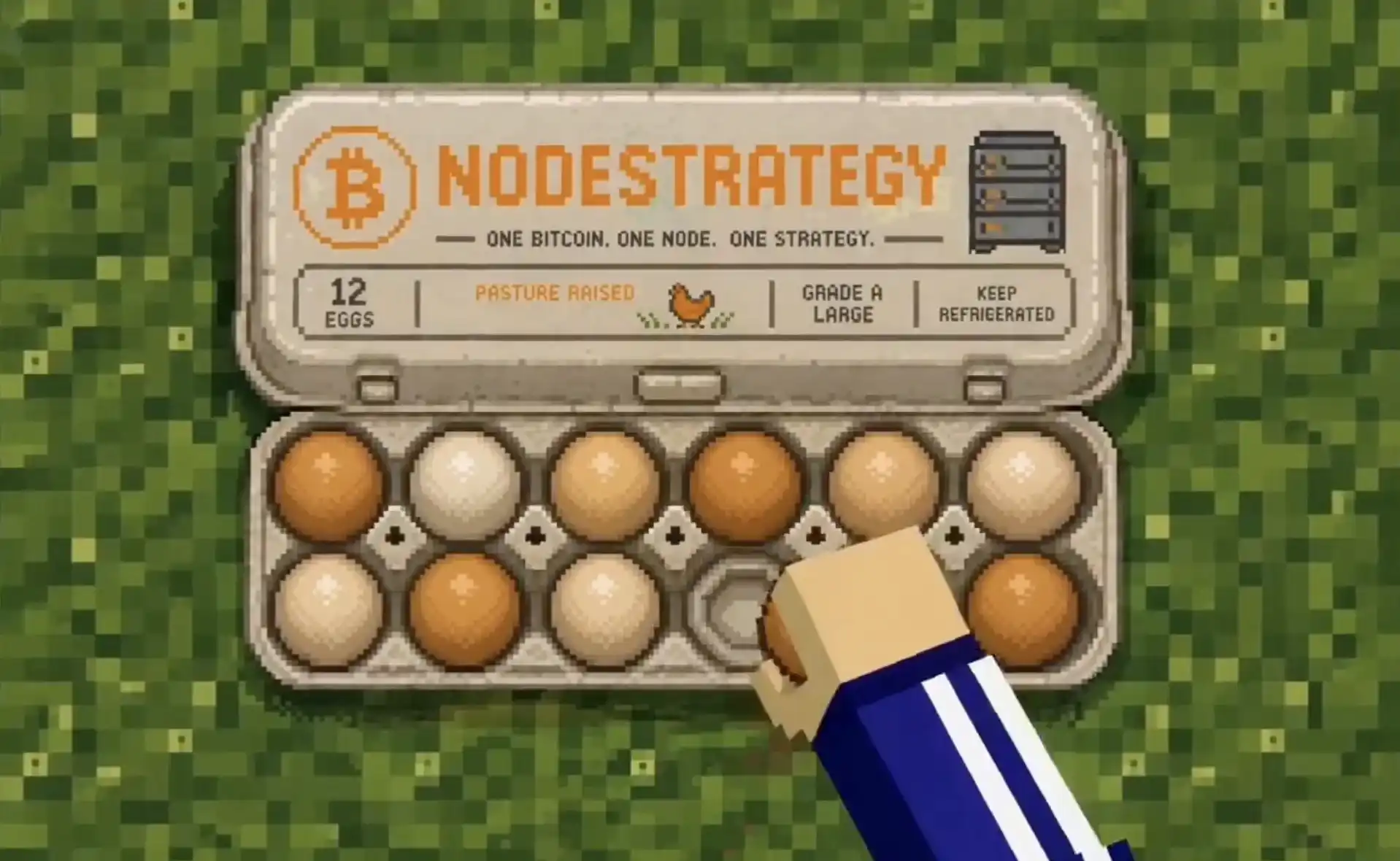
NodeStrategy: The First Ordinals DAT Project, Bringing the Strategy Treasury Narrative to NFTs

**Summary: The Fundamental Flaws of NodeStrategy, the 'First Ordinals DAT'** NodeStrategy presents itself as the first Ordinals Digital Asset Treasury (DAT) on Bitcoin. Its model mirrors MicroStrategy's treasury narrative but for NFTs, specifically targeting the NodeMonkes collection (not officially affiliated). The project's core mechanism is a four-step flywheel: a 10% fee on all trades (90% to treasury, 10% to radFi/Bound marketplace) is used to buy NodeMonkes. These NFTs are then listed for sale on Satflow, with 100% of the sale proceeds used to buy back and burn the project's token, NODESTRAT, aiming to create a perpetual value cycle. However, the design contains critical, self-defeating flaws: 1. **Platform Lock-In:** As a Bitcoin Rune, NODESTRAT lacks smart contract functionality and cannot natively enforce the 10% fee. The fee can only be collected on the radFi/Bound marketplace itself. This makes the entire flywheel dependent on a single platform. If liquidity moves elsewhere, fee revenue drops to zero, halting the mechanism. 2. **Self-Suffocating Economics:** The 10% fee acts both as the flywheel's fuel and a major drag on demand. A buy/sell roundtrip incurs a 20% cost, creating a massive hurdle for traders. This strangles the very trading volume needed to generate fees. 3. **Ineffective Value Support:** The flywheel is starved. Low daily volume (~$9K) generates minimal fees for NFT purchases. The NFT "ladder" sales are slow and unpredictable (only 39 total sold), meaning buybacks are infrequent. While 30.77% of the supply has been burned, this supply reduction cannot lift price without corresponding demand, which is suppressed by the high transaction tax. 4. **Meaningless NAV:** The Net Asset Value (NAV), currently at a 0.46x discount to market cap, is merely a marketing figure. There is no redemption mechanism for token holders to claim the underlying NodeMonkes assets. Price is set by market liquidity flows, not by this theoretical backing. In essence, NodeStrategy's design forces its revenue source (trading fees) to simultaneously cripple the demand and liquidity required for its own success, trapping the project in a stagnant state.

marsbit05/25 05:28

NodeStrategy: The First Ordinals DAT Project, Bringing the Strategy Treasury Narrative to NFTs

marsbit05/25 05:28

a16z: The Next Frontier of AI, The Triple Flywheel of Robotics, Autonomous Science, and Brain-Computer Interfaces

a16z presents a comprehensive investment thesis for the next frontier of AI: Physical AI, centered on a synergistic flywheel of robotics, autonomous science, and novel human-computer interfaces (HCIs) like brain-computers. While the current AI paradigm scales on language and code, the most disruptive future capabilities will emerge from three adjacent fields leveraging five core technical primitives: 1) learned representations of physical dynamics (via models like VLA, WAM, and native embodied models), 2) embodied action architectures (e.g., dual-system designs, diffusion-based motion generation, and RL fine-tuning like RECAP), 3) simulation and synthetic data as scaling infrastructure, 4) expanded sensory channels (touch, neural signals, silent speech, olfaction), and 5) closed-loop agent systems for long-horizon tasks. These primitives converge to power three key domains: * **Robotics:** The literal embodiment of AI, requiring all primitives for real-world physical interaction and manipulation. * **Autonomous Science:** Self-driving labs that conduct hypothesis-experiment-analysis loops, generating structured, causally-grounded data to improve physical AI models. * **Novel HCIs:** Devices (AR glasses, EMG wearables, BCIs) that expand human-AI bandwidth and act as massive data-collection networks for real-world human experience. These domains form a mutually reinforcing flywheel: Robotics enable autonomous labs, which in turn generate valuable data for robotics and materials science. New interfaces provide rich human-physical interaction data to train better robots and scientists. Together, they represent a new scaling axis for AI, moving beyond the digital realm to interact with and learn from physical reality, promising significant emergent capabilities and value.

marsbit04/18 07:05

a16z: The Next Frontier of AI, The Triple Flywheel of Robotics, Autonomous Science, and Brain-Computer Interfaces

marsbit04/18 07:05

Robinhood's Wealth Management Business Transformation Journey

Robinhood's 2025 Wealth Management Transformation: A Summary In 2025, Robinhood successfully pivoted its business model by aggressively expanding its wealth management services. This strategic shift, marked by the launch of disruptive products like a high-match-rate IRA, high-yield cash accounts, and comprehensive banking services, effectively guided its young user base from speculative trading toward long-term saving and investing. Key to this success was a highly internet-native customer acquisition strategy. Robinhood used aggressive cash match incentives (up to 3% for Gold members) to drastically lower the barrier for users to transfer retirement assets (e.g., 401(k) rollovers), effectively "buying" AUM with a high lifetime value. This was paired with a seamless, tech-driven transfer process. The company's revenue model evolved from a heavy reliance on volatile payment for order flow (PFOF) to more stable, recurring income streams. This included substantial net interest income from its massive cash sweep balances and a growing, high-margin subscription business from its Robinhood Gold program, which saw 4.2 million subscribers by Q4 2025. Robinhood built a powerful ecosystem, creating a super-app that seamlessly connects high-frequency trading (stocks, crypto) with low-frequency, sticky products (IRA, automated investing) and daily spending (credit card, banking). This allows for efficient cross-selling and user retention. To build trust for managing long-term savings, Robinhood leveraged traditional finance's safety nets, emphasizing SIPC protection for securities and partnering with banks to offer FDIC insurance on cash deposits far exceeding standard limits. This transformation was underpinned by an extremely efficient, tech-driven cost structure. With a self-clearing platform and automated services, Robinhood achieved a high revenue-per-employee ratio, allowing it to offer competitive pricing like a $250 annual cap on robo-advisory fees. The strategy is powered by a profound shift in its young user base (median age ~32-35). Data shows Gen Z users are increasingly adopting long-term, tax-optimized retirement investing. By capturing this demographic early, Robinhood is strategically positioned to benefit from the largest intergenerational wealth transfer in history, as these users inherit assets and keep them within the familiar Robinhood ecosystem.

marsbit04/14 06:47

Robinhood's Wealth Management Business Transformation Journey

marsbit04/14 06:47

Buy BTC or MSTR? Analyzing the Capital Flywheel of MicroStrategy

MicroStrategy's mNAV (market cap to Bitcoin holdings ratio) has compressed to near parity, sparking debate about whether the premium will re-expand. The core argument centers on the company's ATM equity issuance strategy. Critics view it as shareholder dilution, while supporters see it as rational Bitcoin accumulation. However, both miss the deeper strategic shift: MicroStrategy is building a layered capital structure that operates differently across mNAV regimes. At ~1x mNAV (current phase), equity issuance is used to buy Bitcoin directly, justified by long-term undervaluation. In high mNAV regimes (3-4x+), equity becomes a tool to repay debt from preferred securities, not just acquire Bitcoin. The introduction of preferred stock attracts yield-seeking investors, creating a continuous funding source for Bitcoin purchases but also dividend obligations. The ATM acts as a proactive de-leveraging tool, building equity ahead of future payment needs. mNAV expansion may return not only from Bitcoin price appreciation but also from the market valuing MicroStrategy as a scalable Bitcoin capital markets platform. The company is evolving from a Bitcoin treasury into a financial engine with distinct investor segments: yield investors in preferred securities and growth investors in equity. This could form a self-reinforcing "capital flywheel": preferred demand funds Bitcoin buys, equity demand values platform growth, and Bitcoin appreciation strengthens the balance sheet. The discussion may shift from *if* mNAV premium returns to *how large* this financial platform can become.

marsbit03/13 11:08

Buy BTC or MSTR? Analyzing the Capital Flywheel of MicroStrategy

marsbit03/13 11:08

活动图片