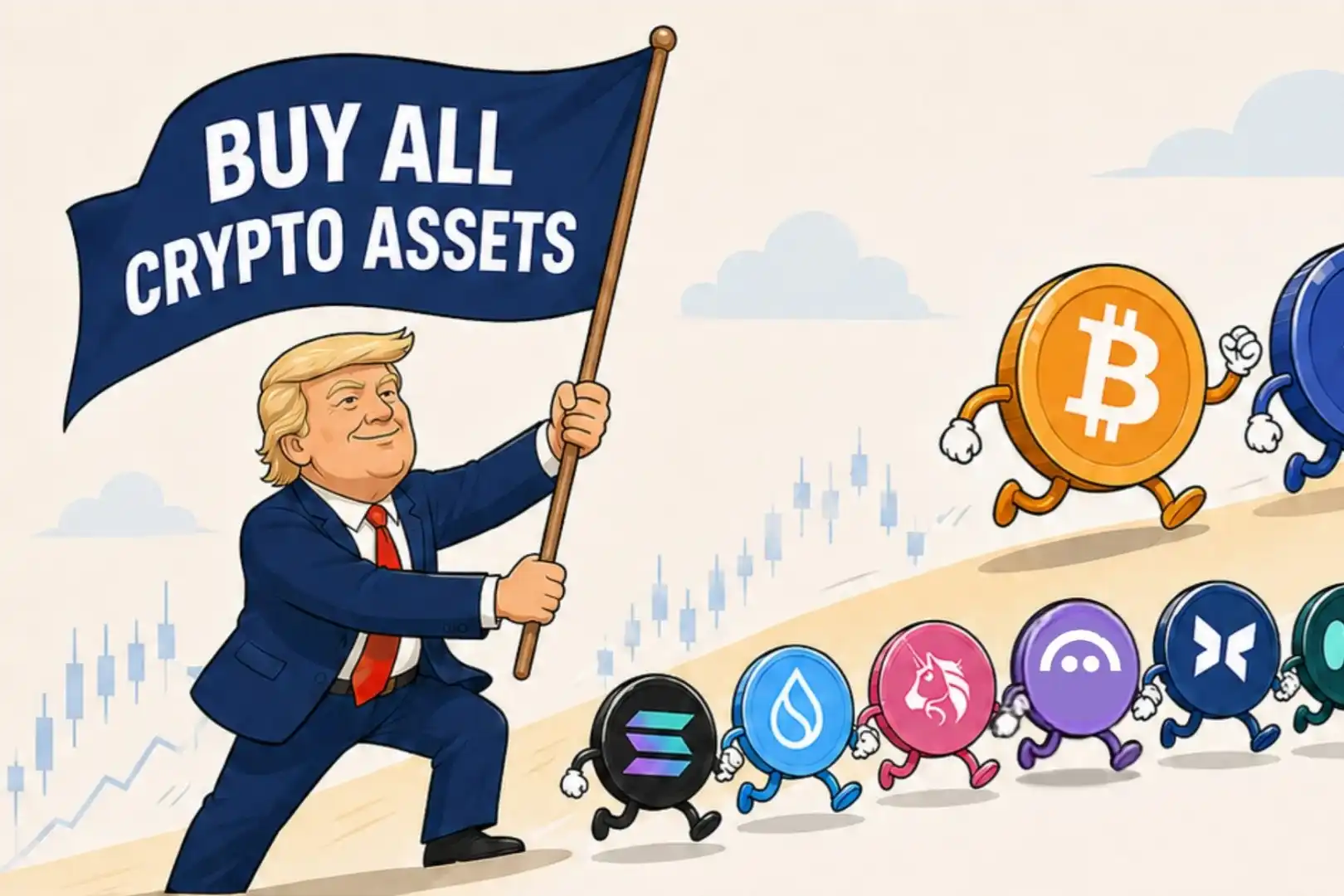
You Should Still Believe in Crypto

marsbitОпубликовано 2025-12-13Обновлено 2025-12-13

Введение

The article "You Should Still Believe in Crypto" addresses the growing sense of burnout and disillusionment within the cryptocurrency industry, sparked by a post from Aevo co-founder Ken Chan titled "I Wasted 8 Years of My Life in Crypto." It acknowledges the collective fatigue many feel due to the industry's fast-paced, often speculative nature, where narratives shift rapidly, and projects frequently fail or disappear. However, the piece argues that the core value of crypto remains vital. It references Nic Carter’s response, highlighting crypto’s potential to create a more robust monetary system, encode business logic via smart contracts, establish true digital property rights, improve capital market efficiency, and enhance global financial inclusion. The article revisits Bitcoin’s origin as a peer-to-peer electronic cash system born from the 2008 financial crisis, emphasizing its purpose as a trustless, decentralized alternative to traditional finance. It points to real-world adoption in high-inflation countries like Argentina and Turkey, where Bitcoin and stablecoins serve as essential financial tools, and notes increasing institutional embrace from firms like BlackRock and Fidelity. Finally, it draws a parallel to the early internet era, arguing that despite chaos, failed projects, and speculative excess, the crypto industry—like the internet—is laying foundational groundwork for future technological and financial evolution. The conclusion is a call to persevere,...

Author: BlockBeats

If you've been in the crypto industry for the past few years, you must have felt that growing sense of "burnout."

Last weekend, the lengthy post by Aevo co-founder Ken Chan undoubtedly struck a chord with many. He used an extreme title—"I Wasted 8 Years of My Life in the Crypto Industry."

This isn't just one person's state; it's the collective exhaustion of the industry. Ken wrote the truth many dare not admit: in the crypto industry, it's really easy to lose your sense of time.

It's Not All Unfounded

You might have stayed up late for airdrops, watched the charts for listings, chased narratives by buying high and selling low, researched a new protocol all night, or participated in countless hours of unpaid labor for community governance. From romantic libertarianism, to on-chain autonomy experiments, to today's runaway frenzy of memes, perpetuals, and gambling-themed tracks—all of this is enough to make one wonder: are we really participating in a technological revolution, or are we just working for an infinitely greedy casino?

Practitioners' doubts are not because they are not steadfast enough, but because of the crypto industry's own brutal structure: narrative life cycles are shorter than product life cycles; hype outweighs fundamentals; speculation moves far faster than building; hero worship coexists with collective suspicion; the end for many projects is not failure, but disappearance.

We must be honest: Ken's feelings are something many have experienced. And these doubts are not unfounded.

The weight of the question, "What are we really坚持ing for?" might be far heavier than "Will the price of Bitcoin go up?"

So when we say "we believe in crypto," what exactly are we believing in? Are we believing in project teams? No. Are we believing in some celebrity KOL? Of course not. Are we believing in一个个 narratives? That's even less likely.

Many suddenly realize: the one thing they have truly believed in all along likely boils down to this: what we are still坚持ing and believing in is the meaning of crypto for this world.

Therefore, shortly after Ken's article went viral, Nic Carter, co-founder of Castle Island Ventures, wrote another response article—"I Don't Regret Spending Eight Years in Crypto."

What is the meaning of crypto for this world? Nic Carter gave his five points: making the monetary system sounder, encoding business logic with smart contracts, making digital property rights real, improving capital market efficiency, and expanding global financial inclusion.

Don't Forget Why We Started

Whenever the industry falls into chaos, perhaps we can reread the Bitcoin whitepaper.

A Peer-to-Peer Electronic Cash System—that's the first sentence of the whitepaper.

2008, financial crisis, banks failing, Lehman Brothers collapsing. Financiers and politicians made the whole world pay for their risks and mistakes.

Bitcoin was born not to create wealth, but to answer a question: "Can we build a monetary system that does not rely on any centralized institution?"

For the first time in history, humanity possessed a currency that required trust in no one. It is the world's only truly不属于 any country, company, or individual's financial system. You can criticize ETH, criticize Solana, criticize all L2s, criticize all DEXs, but few criticize Bitcoin, because its original intention has never changed.

Any Web2 company can close your account tomorrow; but no one can stop you from sending a Bitcoin tomorrow. There will always be people who dislike it, distrust it, even attack it, but no one can change it.

Water does not contend, yet it benefits all things.

Global inflation normalization, soaring sovereign debt, asset scarcity after long-term declining risk-free rates, financial repression, lack of privacy... The existence of these problems means the vision of the crypto industry is not outdated but more urgent. As Nic Carter said: "I have never seen a technology that can push capital market infrastructure upgrades more than crypto."

Why This Is Not a Failed Industry

Ken said he wasted eight years. But did we really waste our青春?

In countries with hyperinflation like Argentina, Turkey, and Venezuela, BTC and stablecoins have become the de facto "shadow financial system"; hundreds of millions of people unable to access the banking system have owned global digital assets for the first time; humanity possesses a globally accessible asset it can truly control for the first time; international payments no longer need banks for the first time; billions of people can access the same financial system for the first time; financial infrastructure begins to脱离 national borders; an asset not reliant on violence and power begins to be recognized globally...

For a country with high inflation, a stable, non-depreciating currency is like a Noah's Ark, which is why stablecoins account for 61.8% of crypto trading volume in Argentina. For freelancers with overseas business, digital nomads, and the wealthy class, USDT is their digital dollar.

Compared to hiding dollars under the mattress or risking black market currency exchange, clicking a mouse to convert pesos into USDT seems more elegant and safe.

Whether it's cash transaction by a street vendor or a USDT transfer by the elite, it is essentially a distrust of national credit and a protection of private property. In a country with high taxes, low welfare, and constantly depreciating currency, every "grey transaction" is a反抗 against institutional plunder.

For a hundred years, the Rose Palace in Buenos Aires has changed hands batch after batch, and the peso has been废弃了一张又一张. But the common people, relying on underground transactions and grey wisdom, have硬是 found a way out in a dead end.

Almost all of the world's top 20 funds have established Web3 departments; TradFi institutions continue to pour in (BlackRock, Fidelity, CME); national digital currency systems use Bitcoin as a reference; digital asset ETFs across the US are刷新 new records for capital inflows; in just 15 years, Bitcoin has jumped into the top ten global assets...

Even with bubbles, speculation, chaos, and scams, some facts have already occurred. These changes have somewhat tangibly changed the world. And we are standing in an industry that will continue to change the global financial structure.

Have We Really Left Nothing Behind?

Many will still ask: "If 15 years from now, all these chains are gone, projects are gone, protocols are replaced by more advanced infrastructure. Then what we are doing now, isn't it still wasting our青春?"

Look at another industry: the 2000 internet bubble burst, NASDAQ plummeted 78%; in 1995 Amazon was called "a website selling books"; in 1998 Google was considered "not as good as Yahoo"; in 2006 social networks were seen as "teenage rebellion."

The early internet was full of: thousands of dead startups; completely vanished innovations;大量 investments lost; tens of thousands of people thought they had wasted their青春.

Early BBS, portals, dial-up internet, paid email—almost none exist today, 90% of the first-generation mobile internet products did not survive. But they were by no means a "waste"; they constituted the soil for the mobile era.

The infrastructure they created: browsers, TCP/IP, early servers, compilers,它们成就了: Facebook, Google, Apple, the entire foundation of mobile internet, cloud computing, and AI. The history of social networks is a constantly破碎 cycle, just as TikTok today is built upon countless dead social networks.

Each generation replaces the previous one, but no generation is in vain.

No industry's journey is clean, linear, clear, correct, or has clear answers. All foundational tech industries experience chaos, bubbles, trial and error, misunderstanding, until they change the world.

The crypto industry is the same.

The technological revolution of the crypto industry has never been accomplished by a single generation. Everything we do, even if ETH is replaced by other chains in the future, L2s are rewritten by new architectures, the DEXs we use today all disappear, will absolutely not be in vain.

Because we provide the foundational soil, the trial and error, the parameters, the social experiments, the path dependence, the experience and samples absorbed by the future. Not the final outcome itself.

Moreover, you are not alone in坚持ing.

Around the world, there are still millions of developers, researchers, fund managers, node operators, builders, and traders pushing this era slowly forward. We are with you.

——Written for those who remain on this path.

Связанные с этим вопросы

QWhat is the core reason for the author's belief in the crypto industry despite widespread fatigue and skepticism?

AThe author believes in the fundamental value and transformative potential of crypto for the world, such as creating a more robust monetary system, enabling smart contracts for business logic, making digital property rights real, improving capital market efficiency, and expanding global financial inclusion, rather than in specific projects, influencers, or narratives.

QAccording to the article, what was the original purpose of Bitcoin's creation as stated in its whitepaper?

ABitcoin was created to establish a peer-to-peer electronic cash system that does not rely on any centralized institutions, in response to the 2008 financial crisis, aiming to answer the question: 'Can we build a monetary system that does not depend on any centralized institution?'

QHow does the article argue that the crypto industry has already made a tangible impact on the global financial system?

AThe article points out that crypto has become a 'shadow financial system' in high-inflation countries like Argentina and Turkey, provided billions of unbanked people with access to global digital assets, enabled international payments without banks, and attracted major traditional financial institutions like BlackRock and Fidelity, with Bitcoin now ranking among the top ten global financial assets.

QWhat comparison does the article draw between the crypto industry and the early internet era?

AThe article compares the crypto industry to the early internet era, noting that both experienced chaos, bubbles, failed projects, and skepticism, but early internet's 'waste'—like BBS, portals, and dial-up—formed the foundational soil for future advancements like Facebook, Google, and AI, suggesting that crypto's current experiments and failures are similarly paving the way for future financial infrastructure.

QWhy does the author assert that efforts in the crypto industry are not in vain, even if current technologies and projects become obsolete?

AThe author argues that the crypto industry's contributions provide foundational soil, experimentation, parameters, social experiments, and path dependencies that will be absorbed as experience and samples for future advancements, meaning that even if current chains, protocols, or DEXs disappear, they are not wasted but part of a necessary iterative process in technological revolution.

Похожее

‘Поощрять демократию’ ценой безопасности? Внутри эксплойта Bonk на $20 млн

Мемкоин-проект BonkDAO стал жертвой взлома, в результате которого было похищено 20 миллионов долларов. Инцидент произошел из-за вредоносного предложения по управлению (governance proposal). Злоумышленник, приобретя достаточно токенов BONK, создал предложение, которое с минимальным порогом одобрения в 1% позволило вывести средства из казны проекта. Аналитики безопасности раскритиковали слабые настройки управления BonkDAO, указав на отсутствие необходимых мер защиты, таких как период блокировки или требование множественных подтверждений для транзакций казны. Исследователь Тейлор Монахан отметила, что данный случай демонстрирует проблему приоритета «демократизации» через DAO в ущерб безопасности. После новости о взломе цена токена BONK упала на 10%. Несмотря на это, данные on-chain-аналитики показывают, что крупные держатели (киты) продолжают накопление токена с середины июня, что может поддержать цену. Однако если рыночные условия ухудшатся, мемкоин может обновить годовой минимум. Проект сотрудничает с правоохранительными органами и биржами для расследования инцидента.

ambcrypto39 мин. назад

‘Поощрять демократию’ ценой безопасности? Внутри эксплойта Bonk на $20 млн

ambcrypto39 мин. назад

Zoomex X Space: Итоги встречи с Дэвидом Джеймсом и Панелью трейдеров Чемпионата мира

Zoomex провел третий эпизод X Space в рамках своей благотворительной инициативы «World Cup Impact Pledge», собрав на одной виртуальной сцене голкипера сборной Англии Дэвида Джеймса и панель трейдеров. Обсуждались плей-офф, психология пенальти, философия вратарского искусства и шансы Англии на победу, в которую Джеймс верит безоговорочно. Ключевой темой стала параллель между подготовкой вратаря и трейдера. Джеймс объяснил, что давление возникает не от частых ударов, а от необходимости сделать ключевой сейв после долгого бездействия, когда концентрация должна быть на пике. Подобно трейдеру, который не боится следующего движения рынка благодаря своей стратегии, подготовленный вратарь не боится удара — он к нему готов. Особое внимание уделили пенальти. Джеймс описал два режима: чистую подготовку (анализ данных, привычек бьющего) и чистый инстинкт, который может подвести. Он подчеркнул, что ритуалы и мысленные репетиции — это всегда результат практики, а не спонтанность. Эта идея напрямую соотносится с трейдингом, где глубокий анализ данных оттачивает интуицию для прогнозирования рынков. Джеймс также затронул эволюцию вратарской позиции, отметив, что изменения в правилах (например, ввод мяча в игру от ворот) превратили качественный первый пас из опции в обязательное требование, в то время как физические аспекты игры остались прежними. В завершение Джеймс подтвердил свой прогноз на победу Англии, выбранную им благотворительной организацией стала UEFA Foundation, в пользу которой Zoomex выделит 1000 USDT, а в случае верного прогноза — дополнительно 5000 USDT.

TheNewsCrypto50 мин. назад

Zoomex X Space: Итоги встречи с Дэвидом Джеймсом и Панелью трейдеров Чемпионата мира

TheNewsCrypto50 мин. назад

Глубокое изучение списка партнеров Open USD: посмотрите, кто вошел, и вы поймете, куда направляются деньги

**Open USD: Анализ альянса партнеров и направления финансовых потоков** Стабильная монета Open USD дебютировала с беспрецедентной коалицией из более чем 150 партнеров, включая BlackRock, Visa, Mastercard, Stripe, Coinbase, крупные банки (BNY Mellon, Bank of America), технологических гигантов (Google, IBM), торговые платформы (Shopify) и криптокомпании (Ripple, Aave, MetaMask). Этот список раскрывает, кто видит в стейблкоинах будущее критической финансовой инфраструктуры и стремится не остаться в стороне. **Мотивы ключевых игроков:** * **Управляющие активами (BlackRock):** Стремятся управлять огромными резервами стейблкоина, получая комиссию. * **Торговцы и банки (Shopify, банки):** Для торговцев — снижение комиссий за прием платежей и доход с остатков. Для банков — защитная стратегия: вместо того чтобы терять депозиты, они присоединяются к альянсу, чтобы сохранить роль в расчетах и получить долю дохода от резервов. * **Технологические компании (Google, IBM):** Видят в открыто управляемом стейблкоине идеальный инструмент для программируемых платежей между машинами в будущем. * **Криптосектор:** Получает доступ к мейнстрим-партнерам и ликвидности, обеспечивая новой монете реальную полезность с первого дня. **Парадокс и проблема:** В альянс вступили прямые конкуренты (Visa/Mastercard, Coinbase/Ripple). Их объединяет страх остаться вне новой инфраструктуры, даже если она угрожает их текущему бизнесу (как в случае с карточными сетями). Однако общее управление может замедлить принятие решений. **Вывод:** Список партнеров Open USD показывает сдвиг парадигмы: стейблкоин больше не продукт одной компании (как у Circle или Tether), а общая инфраструктура, которой индустрия предпочитает коллективно владеть. Главная угроза для существующих игроков — не технология, а то, что их потенциальные клиенты объединились, чтобы создать альтернативу.

Foresight News1 ч. назад

Глубокое изучение списка партнеров Open USD: посмотрите, кто вошел, и вы поймете, куда направляются деньги

Foresight News1 ч. назад

IOSG: Обратный отсчет до Q‑Day — Положит ли квантовый вычисления конец криптовалюте?

Квантовые вычисления представляют долгосрочную системную угрозу для криптографии, лежащей в основе блокчейнов и активов Web3, а не мгновенный "конец". Ключевой риск заключается в том, что будущие устойчивые к ошибкам квантовые компьютеры (CRQC) смогут взломать текущие алгоритмы с открытым ключом (например, ECDSA, BLS) с помощью алгоритма Шора, позволяя восстановить закрытые ключи из публичных, обнародованных в блокчейне (например, в старых биткойн-транзакциях). В ответ разрабатывается постквантовая криптография (PQC). NIST уже стандартизировал алгоритмы на основе решёток (ML-KEM, ML-DSA) и хэшей (SLH-DSA). Однако переход для блокчейнов — это сложнейшая задача скоординированного обновления всей экосистемы (протоколы, кошельки, биржи), осложнённая такими проблемами, как увеличение размера подписей PQC. Основные испытания для ведущих сетей: * **Биткойн**: Главный вызов — социальный консенсус и управление. Необходимо решить, как безопасно перенести активы, особенно "спящие" монеты с обнародованными ключами, не нарушая принцип "код — закон". * **Эфириум**: Основная сложность — техническая: необходимо согласованно обновить криптографию на нескольких уровнях (учётные записи, консенсус, данные) с помощью стратегий вроде абстракции счетов и повышения "криптографической гибкости". Отрасль имеет "окно комфорта" в 5-8 лет для подготовки. Хотя квантовый апокалипсис маловероятен, рынок может переоценить активы раньше срока, если прогнозы появления CRQC сдвинутся или крупные игроки начнут активный переход на PQC.

marsbit1 ч. назад

IOSG: Обратный отсчет до Q‑Day — Положит ли квантовый вычисления конец криптовалюте?

marsbit1 ч. назад

Торговля

Спот
活动图片