x402 Wish List

marsbitОпубликовано 2026-03-17Обновлено 2026-03-17

Введение

"x402 Wish List" explores the potential of x402 as a micro-payment and data aggregation protocol, based on a Galaxy Research report. It highlights a use case where an AI agent uses x402 to query weather data, book trips, and manage payments to various data sources. The author envisions x402 enabling new business models, such as pay-per-use "Skills Endpoints" for AI agents, replacing fixed fees with usage-based pricing. Other proposed applications include curated data streams for niche crypto news, aggregated ecosystem metrics, a tracker for media prediction performance, and a security/audit incident aggregator. The summary concludes by questioning the economic viability of micro-payments at scale and the legal challenges of data sourcing, noting that x402 V2's revenue-sharing features could help align incentives between data aggregators and original providers.

Written by: David Christopher

Compiled by: Block unicorn

While reading the recent report from Galaxy Research, I gained one of the clearest perspectives on the future value of x402.

One example caught my attention: a smart agent helping a user book a trip, querying high-quality weather data via x402 to find the best dates and destination, providing flight and hotel options, and then passing all the information to the booking process. Each query is equivalent to a micro-payment. Each data source gets paid. The smart agent integrates all the information and finally makes a booking decision.

What impressed me was the perfect combination of x402 with data aggregation and management. Someone integrates decentralized data sources into proprietary data, making it more useful than any single supplier, and sells access via x402. Data managers only bear the integration cost once. Callers pay per query. Everyone benefits (provided the data volume is large enough, which we will discuss later).
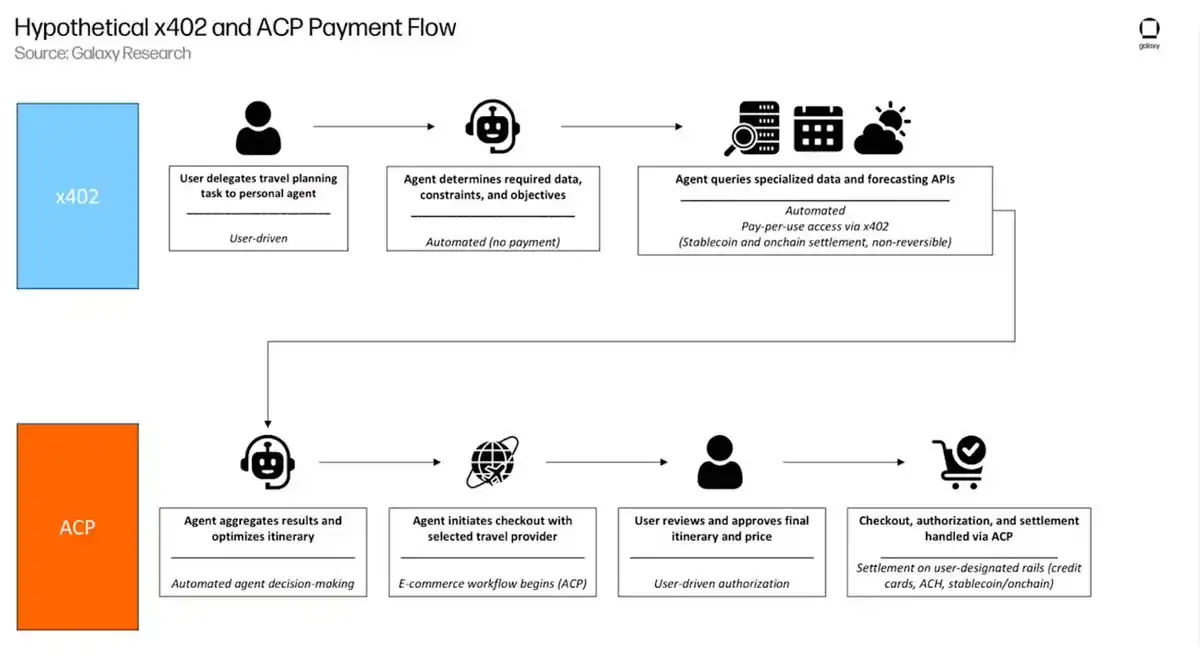
From Galaxy Research

Before such services become widespread, I still believe x402 is in its infancy. If you are a developer hoping to use x402 for development but struggling for inspiration, here are some theoretical products I would rush to try if I could use them immediately!

Skills Endpoint

Skills are carefully crafted sets of instructions written by humans for AI agents to perform specific tasks.

Currently, most skills markets adopt a fixed fee model: permanent access is priced at $5, $15, and $20 respectively. This model creates a misalignment of incentives. Occasional users overpay, while power users underpay, and skill creators cannot capture value proportional to usage. A truly useful skill, like a truly useful advisor (if such a thing exists), should be worth far more than a one-time $15.

x402 offers an alternative. Skill creators can publish their work through an x402 interface and price it based on reality: pay-per-use (one-time use), monthly subscription (a new feature in x402 V2), or both. The payment system supports both models. A skill called thousands of times a month can generate ongoing revenue for the creator. Less frequently used skills do not require users to pay upfront.

Niche Crypto News Aggregation Package

Crypto news is scattered across platforms like Twitter, Telegram groups, podcasts, RSS feeds, and Substacks. The problem is even more challenging if you want to track a specific ecosystem. Tracking all the dynamics of Sui or Starknet means monitoring a dozen sources and checking daily.

An ecosystem-specific x402 data stream can solve this. Someone aggregates Twitter user feeds, articles from website RSS feeds, and Telegram messages into a curated information stream for a specific ecosystem via an API. The agent queries: "What happened on Starknet in the last 24 hours?" and receives a structured reply. No more switching between tabs and apps.

Aggregated Ecosystem Data

Developer activity has always been difficult to measure accurately.

Electric Capital's annual report and its continuously updated dashboard are excellent open-source resources, but they also have limitations. For example, I just looked at the ecosystems with the top developer growth over the past year, and the results showed PancakeSwap, Monad, and Aleo. Of course, this is because I only filtered on one metric—but it also reflects a broader problem: developer activity data in the crypto space is very fragmented, and no single data source provides the complete picture.

If there were an x402 data source that aggregated Electric Capital data, GitHub activity, Artemis metrics, and protocol-specific data sources into a quality-weighted developer activity stream, it would fill a real gap. Agent query: "What has Solana's developer momentum been like over the past quarter?" and gets more useful information than raw commit counts.

Newsletter and Podcast Performance Tracker

An idea I would personally use: a service that clearly tracks the viewpoints proposed in podcasts or newsletters and measures their development over time.

Citron does something similar for the stock market, releasing scorecards for its annual predictions and their performance at the end of the year. But for most newsletters and podcasts, if you want to know if a media outlet's predictions have yielded returns over time, you have to research manually.

An x402 service could fill this gap by benchmarking a media outlet's predictions. Just provide the newsletter or podcast, and it tracks every prediction, adds timestamps, follows subsequent price movements, and scores the media outlet's past performance. Agent query: "How has X's asset predictions performed over the past year?" and gets a verified answer.

Security and Audit Tracker

Protocols often don't proactively announce when they are attacked. And the news cycle moves fast; if you weren't online the day the exploit happened, you might have completely missed it. By the time you need to take action, an event that should have been highly concerning is already buried under weeks of news coverage.

The situation with security reviews isn't much better. Audit reports are scattered across auditors' websites, protocol documentation, and GitHub repositories. Checking a protocol's audit history is more difficult than it should be.

It would be great to have an x402 information stream that aggregates this information into a queryable endpoint, where users could pay a few extra cents to access it before deciding on yield allocation, especially when operating through an agent interface.

Is This Really Feasible?

Everything I mentioned above faces two questions: Can the economics support the building of these streams? Can they be developed legally?

From an economic perspective, history is not optimistic. Pay-per-item models have struggled since the early days of the internet. The cognitive cost of deciding whether something is worth paying for often exceeds the cost of the payment itself. This is why the internet shifted to subscription models: predictable billing, avoiding decision fatigue, and reducing churn.

But agents change this. You top up your wallet, the agent spends on your behalf, and you top up again when the balance is low. API credits work similarly. The question shifts from "Is this few cents worth it?" to "Can the endpoint provider recoup costs at scale?" This depends on traffic volume.

In terms of legality, x402 handles payment and metering. It doesn't change the copyright issues of upstream data. If you're using licensed APIs, public data, or first-party X402 endpoints, then it's straightforward product development. But if you rely on web scraping or operate in the gray areas of terms of service, persistence and scale may be limited. Once upstream providers notice and object, you're in dangerous territory.

x402 V2 introduces dynamic payment routing, enabling revenue sharing. Data managers can return a portion of the revenue to the original data providers, aligning incentives and turning potential terms-of-service conflicts into partnerships, though this does reduce profit margins.

Whether both the economics and legality can hold up at scale remains to be seen. But if they do, these are the data streams I would pay to use.

Whether this economic and legal mechanism can work simultaneously at scale remains to be seen. But if it does, these are the data streams I would pay to use.


Связанные с этим вопросы

QWhat is the core value proposition of x402 as described in the article?

AThe article presents x402's core value proposition as a perfect fit for data aggregation and management. It enables the monetization of data through micro-payments per query, allowing data sources to be compensated, data to be bundled into more useful proprietary sets, and accessed on-demand without large upfront costs.

QHow does x402 change the economic model for 'Skills' compared to traditional marketplaces?

ATraditional skills marketplaces use a fixed-fee model (e.g., $5, $15 for permanent access), which misaligns incentives. x402 offers an alternative with pay-per-use fees and/or monthly subscriptions (a V2 feature), allowing creators to earn ongoing revenue proportional to usage instead of a one-time fee.

QWhat problem does a niche crypto news aggregation package via x402 solve?

AIt solves the problem of crypto news being scattered across platforms like Twitter, Telegram, podcasts, and RSS feeds. An x402 data stream can aggregate these disparate sources into a single, structured feed for a specific ecosystem, allowing a user or agent to query for events without switching between apps.

QWhat are the two major challenges for the feasibility of the x402 data streams mentioned in the article?

AThe two major challenges are economic viability (whether the economics can support the teams building these streams) and legality (whether they can be built legally, especially concerning data sourcing issues like web scraping and terms of service conflicts).

QHow does x402 V2's dynamic payment routing attempt to address legal concerns?

Ax402 V2's dynamic payment routing enables revenue sharing. Data managers can send a portion of the proceeds back to the original data providers, which helps align incentives and can turn potential terms-of-service conflicts into cooperative partnerships, though it may reduce profit margins.

Похожее

Уязвимость Coldcard привела к краже $89 млн и вызвала самую масштабную миграцию средств в блокчейне после краха FTX

Уязвимость в аппаратном кошельке Coldcard привела к краже 1367,05 BTC (около 89 млн долларов) с 4585 адресов. Инцидент, связанный с ошибкой в генерации сид-фраз в определенной прошивке, вызвал массовую миграцию средств пользователей на новые безопасные адреса. Это привело к аномальному всплеску активности в сети Биткоин, исказив ключевые ончейн-индикаторы, такие как активность долгосрочных держателей и объем мелких транзакций. Активность и рыночные настроения достигли уровня, сравнимого с периодом после краха FTX. Расследование столкнулось с трудностями из-за ограничений коммерческих ИИ-моделей (например, в США), которые блокируют анализ вредоносных данных даже для целей защиты. Следователи были вынуждены использовать открытые модели, такие как китайский GLM 5.2, для отслеживания украденных средств. Этот случай высветил проблему асимметрии: злоумышленники используют неограниченные ИИ-инструменты, в то время как защитники сталкиваются с барьерами коммерческих систем безопасности, что критично в сфере криптовалют, где скорость отслеживания средств крайне важна.

marsbit15 мин. назад

Уязвимость Coldcard привела к краже $89 млн и вызвала самую масштабную миграцию средств в блокчейне после краха FTX

marsbit15 мин. назад

Заработок в миллион на электриках: Meta спешно открывает собственное ПТУ

Новый этап конкуренции в сфере искусственного интеллекта столкнулся с неожиданным препятствием — острой нехваткой квалифицированных технических специалистов, особенно электриков и строителей, для возведения сверхмощных центров обработки данных. В США, согласно прогнозам, к 2030 году для инфраструктуры ИИ потребуется дополнительно 130 000 электриков и 240 000 строителей, однако ежегодно остается незаполненными около 80 000 вакансий электриков. Компании, такие как OpenAI (проект "Stargate" стоимостью $160 млрд), Meta и Microsoft, сталкиваются с огромными убытками из-за задержек строительства. Например, задержка ввода центра мощностью 60 МВт может обернуться потерей $14,2 млн в месяц. Причина спроса — беспрецедентная сложность строительства ИИ-центров. Они потребляют колоссальную энергию (сотни мегаватт), требуют уникальных систем электроснабжения и охлаждения (жидкостное или иммерсионное), что делает работу высококвалифицированных монтажников, сантехников и инженеров незаменимой. Для решения проблемы кадрового голода ИИ-гиганты начали масштабные программы обучения. Meta инвестировала $115 млн в создание собственной школы строителей с бесплатным обучением и стипендией, а OpenAI сотрудничает с профсоюзами. Активная вербовка ведется даже среди старшеклассников. Потребление энергии ИИ-центрами растет экспоненциально, опережая общий рост энергопотребления в 16 раз и увеличивая счета за электричество для потребителей. Однако строительство таких объектов носит проектный характер: для возведения центра "Stargate" требуется 6400 рабочих, а для его обслуживания — всего 100-1000. Это создает риск перенасыщения рынка труда после завершения строительного бума, что может привести к падению зарплат в отрасли.

marsbit1 ч. назад

Заработок в миллион на электриках: Meta спешно открывает собственное ПТУ

marsbit1 ч. назад

OpenAI больше не зарабатывает на самых дорогих моделях

В статье говорится о том, что OpenAI скорректировала цены на свои модели ИИ. Флагманская модель GPT-5.6Luna подешевела на 80%, а Terra — на 20%. Но главное не в этом, а в смене стратегии. OpenAI впервые рекомендует клиентам использовать не самую мощную и дорогую модель для всех задач, а подбирать модель под конкретную задачу. Например, для сложного планирования можно использовать Sol, а для рутинного выполнения — более дешевую Luna. Аналогичные шаги предприняла и Anthropic, выпустив более доступную модель Claude Opus 5. Это говорит о том, что индустрия переходит от гонки за "самым умным" ИИ к созданию "массовых" решений. Флагманские модели остаются для демонстрации технологического лидерства, а основную прибыль приносят более дешевые и эффективные модели для повседневного использования. OpenAI также отмечает, что снижение цен стало возможным благодаря тому, что сами модели ИИ теперь участвуют в оптимизации своего собственного кода и процессов, создавая цикл ускоренного снижения затрат. Ключевая мысль: бизнес-модель смещается от продажи "интеллекта" к продаже "потребления" (API-вызовов). Цель — стать неотъемлемой частью бизнес-процессов, как электричество, делая миграцию на другую платформу слишком дорогой. Будущее ИИ — не в громких флагманских релизах, а в повсеместной и невидимой интеграции.

marsbit1 ч. назад

OpenAI больше не зарабатывает на самых дорогих моделях

marsbit1 ч. назад

Предполагаемая 4-я волна атак на Coldcard уносит 389 биткоинов: Галактики Торн

Пользователям аппаратных кошельков Coldcard угрожает новая волна скоординированных краж биткойнов, произошедшая всего через несколько дней после первой атаки в четверг. Алекс Торн, глава исследований Galaxy, сообщил в понедельник о 218 транзакциях, затронувших 462 потенциальных адреса жертв, в результате чего было перемещено около 388,9 BTC. Торн отметил, что активность составляла в среднем 13,8 переводов на блок, что примерно в 45 раз выше обычного уровня. Большинство средств переводились на новые уникальные адреса, а не в один центральный кошелек. Часть средств уже была перемещена на адреса второго уровня. Исследователь заявил, что эти транзакции, вероятно, направлены против пользователей Coldcard, так как соответствуют характеру уязвимых неделимых выходов транзакций (UTXO) кошелька. В мемпуле также находятся ожидающие подтверждения похожие транзакции. Пострадавшие пользователи, контролирующие ключи, могут попытаться опередить злоумышленников, отправив конфликтующую транзакцию с более высокой комиссией для перевода средств на безопасный кошелек. Данные инциденты связаны с ранее необнаруженным недостатком в прошивке Coldcard, из-за которого некоторые устройства генерировали сиды кошельков с меньшей энтропией. По последним оценкам, затронуто более 1100 кошельков, а сумма украденных средств достигла 90 миллионов долларов.

cointelegraph1 ч. назад

Предполагаемая 4-я волна атак на Coldcard уносит 389 биткоинов: Галактики Торн

cointelegraph1 ч. назад

Обязательно ли ФРС повысит ставки в сентябре? Как это повлияет на криптовалюты и фондовый рынок?

За последнюю неделю рыночные ожидания повышения ставки ФРС в сентябре резко выросли с менее чем 50% до более чем 80%, что оказало давление на криптовалюты и связанные с ними акции. Ключевой причиной стал рост цен на нефть из-за эскалации геополитической напряженности вокруг Ормузского пролива, что усилило опасения по поводу инфляции. На июльском заседании ФРС сохранила ставку, но расклад голосов 9-3 в пользу сохранения показал усиление позиций сторонников ужесточения политики. Следующим важным ориентиром станут данные по инфляции (CPI) за июль, публикация которых 12 августа может существенно скорректировать ожидания. Для крипторынка, в частности для Bitcoin, усиление ожиданий повышения ставок создает краткосрочное давление, поскольку активы, не приносящие доход, становятся менее привлекательными. Однако исторически Bitcoin демонстрировал устойчивость, когда траектория повышения ставок уже была учтена рынком. Решающим фактором часто является не сам факт повышения, а изменение ожиданий относительно будущего цикла монетарной политики. Акции компаний, связанных с криптоиндустрией, такие как Coinbase и MicroStrategy, обычно демонстрируют более высокую волатильность в ответ на изменение ожиданий по ставкам. Для рынка акций в целом, особенно для технологического сектора с высокими оценками, рост стоимости заимствований может увеличить давление на мультипликаторы. Это совпадает с сезоном отчетности, когда инвесторы начали более пристально оценивать, приводят ли высокие капитальные затраты компаний на ИИ к реальному росту выручки и денежных потоков. Если ФРС повысит ставки в сентябре, толерантность рынка к "историям роста" за счет "сжигания денег" может снизиться, что усилит волатильность.

marsbit1 ч. назад

Обязательно ли ФРС повысит ставки в сентябре? Как это повлияет на криптовалюты и фондовый рынок?

marsbit1 ч. назад

Торговля

Спот
活动图片




