x402 V2 Released: What Are the Core Highlights?

marsbitОпубликовано 2025-12-12Обновлено 2025-12-12

Введение

The x402 protocol, initially developed by Coinbase, has now released its V2 upgrade. The core idea remains leveraging the HTTP 402 status code to embed payment logic directly into web requests. Since its launch, x402 has processed over 100 million payments across various use cases, such as API calls and AI agents purchasing compute resources. V2 introduces several major improvements. It supports wallet-based identity (e.g., Sign-In-With-X via CAIP-122) and reusable sessions, allowing users and autonomous agents to avoid repeated on-chain payments after initial authentication, significantly reducing latency and cost for high-frequency interactions. A unified payment interface now supports multiple chains (including Base and Solana) by default and integrates traditional payment rails like ACH and credit cards through Facilitators. Dynamic payTo routing enables complex pricing models and multi-tenant setups. The architecture is now modular and plugin-based, making it easier for developers to extend support for new chains or payment methods without altering core SDK code. Configuration is simplified, with automatic optimization based on developer preferences. A new discovery mechanism allows services to publish structured metadata, which Facilitators can automatically index, ensuring pricing and endpoint information stays current without manual updates. For end-users, V2 enables seamless, near-invisible payments with a "micro-subscription" feel. Developers benefit from reduc...

When the x402 protocol, led by Coinbase, was launched in May of this year, its core concept was surprisingly simple: reactivate the long-dormant HTTP 402 status code, embedding payment logic directly within network requests.

Although the performance of x402-related tokens was short-lived, over the past 6 months, x402 has already processed over 100 million payments, covering diverse scenarios such as API paid calls and AI agents purchasing computing resources on demand.

While the V1 architecture was simple, it revealed some limitations in practical use. Particularly in areas like cross-chain support, scalability, identity authentication, and duplicate payments, the original design could not meet the increasingly complex payment demands.

Today, x402 has ushered in the V2 version upgrade. This update not only optimizes the protocol itself but also involves a deep-level restructuring around issues identified during actual use.

What Are the Core Highlights of x402?

Wallet Identity Integration and "Reusable Sessions": Say Goodbye to Duplicate Payments

This is the most significant change in V2 for enhancing user and agent experience. In V1, each API call might require a complete payment process, which resulted in high latency and costs in high-frequency scenarios (such as large language model LLM inference and multi-step agent tasks).

x402 V2 introduces support for wallet identities (such as Sign-In-With-X based on CAIP-122). Once the client verifies their identity via a wallet and completes the initial payment, the protocol allows the creation of reusable sessions. This means subsequent repeated access to the same resource can skip the full on-chain payment process.

This significantly reduces transaction latency, minimizes round-trips, and lowers on-chain costs, making x402 truly suitable for high-frequency workloads. It provides a subscription-like or session-based access model for human users and autonomous agents.

Unified Payment Interface: Integration of Cross-Chain and Traditional Finance

x402 V2 creates a one-stop payment format, regardless of which chain the asset is on, or even if it is on-chain.

· Default Multi-Chain Support: The protocol natively supports stablecoins and tokens on Base, Solana, and other L2s, eliminating the need for developers to customize logic.

· Compatible with Traditional Payments: Through Facilitators, V2 can be compatible with traditional payment rails like ACH, SEPA, or credit card networks.

· Dynamic payTo Routing: Allows request-level payment routing, such as directing payments to specific addresses, roles, or callback logic, adapting to complex marketplaces and multi-tenant APIs, and enabling dynamic pricing based on input content.

Plugin Architecture and Developer-Friendly Extensibility

x402 V2 modularizes the protocol, creating a clear separation between the protocol specification, SDK implementation, and Facilitators.

· Stable and Extensible: Adding a new chain or payment method does not require modifying the core specification or reference SDK.

· Plugin-Driven SDK: Developers can register new chains, assets, and payment schemes like installing plugins, rather than modifying the SDK's internal code.

· Simplified Configuration: V2 significantly simplifies the developer configuration process while natively supporting Multi-Facilitator. The SDK will automatically select the best matching option based on business preferences (e.g., "Prefer Solana," "Avoid Mainnet," use only "USDC").

Automatic Discovery Mechanism: Keeping Service Information Synchronized

x402 V2 introduces a "Discovery" extension, allowing x402-enabled services to expose structured metadata for Facilitators to crawl.

· Zero-Intervention Synchronization: Service pricing, routing, and metadata can be updated automatically. Facilitators can index available endpoints automatically, eliminating the need for manual updates or hardcoded directories.

· Enhanced Autonomy: Sellers only need to publish their API once, and the entire ecosystem remains synchronized, laying the foundation for a more autonomous internet economy.

Perspectives of Different Participants

The upgrade of x402 V2 transforms payment from a technical friction point into an economic layer, essentially making the flow of value on the internet smoother and smarter. For different participants, this means solving their respective most pressing problems.

For end-users, the core value of x402 V2 lies in seamless payment and efficiency improvement, making paid access to services more like logging in and using, significantly reducing the cost and latency of repeated access. The first access requires completing the payment, but subsequent repeated use of the service within the same session or time period (such as multiple AI calls or accessing paid content) does not require additional on-chain payments if resources have already been purchased, resulting in faster speed and lower cost. It feels like a "micro-subscription." Simultaneously, payment methods become more diverse and convenient.

Furthermore, since Facilitators can automatically obtain the latest pricing and service information, it ensures users see accurate and available prices and services, avoiding information lag issues. For users, it also becomes easier to find and use services.

For developers and service providers, V2 addresses the architectural and scalability pain points of V1, bringing higher flexibility and lower code maintenance burden. For example, payment logic changes from "hardcoded" to "configuration and plugins"; dynamic pricing can be implemented based on the input content of API requests (such as the amount of data processed, model size), easily enabling complex business models; since the payment wall logic is extracted into an independent, customizable modular package, developers can more easily integrate different payment backends and quickly build and iterate their paid services. Additionally, simply declaring business preferences allows the SDK to automatically select the optimal payment path and coordinator. This reduces a significant amount of "glue code," allowing developers to focus on business logic.

For AI agents, the improvements in V2 are revolutionary, transforming AI from a pure "executor" into an autonomous "economic agent." An AI agent can be assigned a wallet with a budget. When it needs to call an API to complete a task or rent more powerful computing resources to run a model, it can "decide for itself" and complete the payment, and can dynamically search the network for the most cost-effective resources.

Summary

The release of x402 V2 marks the evolution of x402 from a "pay-per-use" tool to a flexible, universal economic layer. For users, payments become almost invisible, enhancing the experience. For developers, the architecture is more flexible, enabling rapid building and iteration of complex business models. And AI agents can achieve low-latency, high-frequency autonomous consumption, unlocking more advanced autonomous systems.

By expanding compatibility, simplifying development processes, and enabling innovative identity and payment models, x402 is building the infrastructure for the future of internet payments. However, any technology that brings innovation will inevitably face challenges and inherent shortcomings. Although x402 V2 paints a promising blueprint, to realize it, many practical obstacles must be overcome, such as ecosystem adoption and maturity, risks of "modules," challenges of refunds and dispute resolution, regulatory uncertainty, and more.

Связанные с этим вопросы

QWhat is the core innovation of the x402 V2 protocol?

AThe core innovation of x402 V2 is its evolution into a flexible, universal economic layer for the internet. It reactivates the HTTP 402 status code to embed payment logic directly into web requests, and V2 specifically enhances this with features like identity-based reusable sessions, a unified multi-chain payment interface, and a plugin-based architecture.

QHow does the 'Reusable Sessions' feature in x402 V2 improve the user experience?

AThe 'Reusable Sessions' feature allows a client to verify their identity (e.g., via Sign-In-With-X) and complete an initial payment. Subsequent requests within the same session can then skip the full on-chain payment process, significantly reducing transaction latency, costs, and the number of round trips. This creates a subscription-like or session-based access model ideal for high-frequency workloads.

QWhat does the 'Unified Payment Interface' in V2 enable for developers?

AThe 'Unified Payment Interface' provides a one-stop payment format that supports multiple blockchains (like Base and Solana) by default and is compatible with traditional payment rails (like ACH, SEPA, or credit cards) through Facilitators. It also allows for dynamic 'payTo' routing, enabling complex pricing models and payments to specific addresses or roles based on the request.

QWhat is the 'Plugin-driven SDK' and how does it benefit developers?

AThe 'Plugin-driven SDK' is a module where developers can register new chains, assets, and payment methods as plugins without modifying the core SDK code. This plugin-based approach simplifies configuration, reduces maintenance burden, and allows the SDK to automatically select the best payment path based on developer-defined business preferences.

QHow does the 'Discovery' extension in V2 improve the ecosystem?

AThe 'Discovery' extension allows x402-enabled services to expose structured metadata for Facilitators to automatically scrape. This enables zero-intervention synchronization of service pricing, routing, and metadata. Facilitators can automatically index available endpoints without manual updates, making it easier for users to find services and for the entire ecosystem to stay current.

Похожее

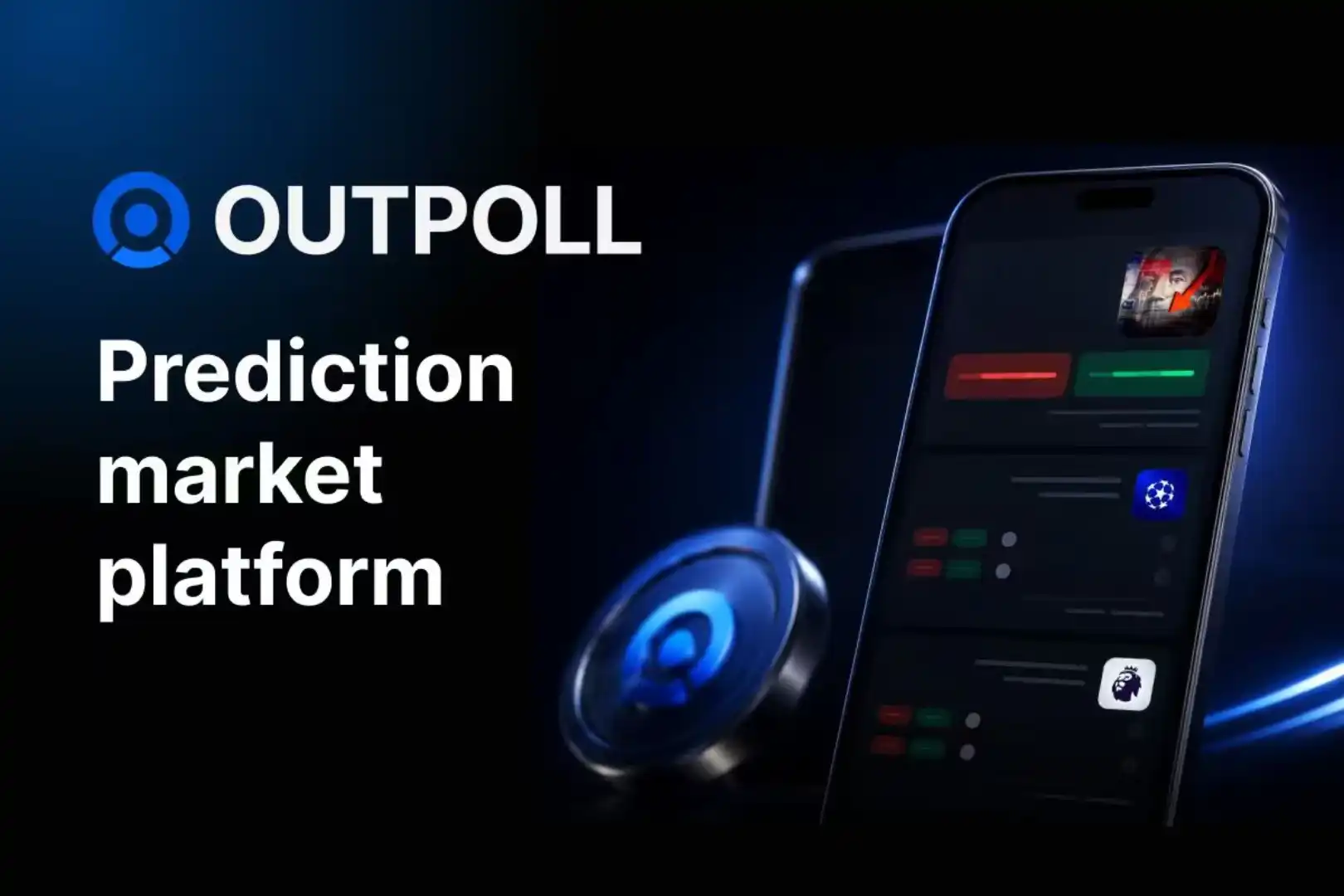
Outpoll Review: A Prediction Market Platform Built for Active Traders

Outpoll Review: A Prediction Market Platform Built for Active Traders In recent years, prediction markets have grown from a niche sector to a mainstream arena, attracting billions in trading volume and institutional capital. However, the user experience and tools for traders have not kept pace. Outpoll, a new global prediction market platform, aims to fill this gap by providing enhanced trading infrastructure for active and professional traders. Built on standard prediction market principles, Outpoll allows users to trade on the outcome of specific events. It uses fully collateralized contracts with USDC settlement, charges a competitive 0.1% fee per trade, and provides clear settlement rules upfront to minimize disputes. A key focus for Outpoll is its professional-grade trading tools. The platform supports limit and market orders, as well as take-profit and stop-loss orders for open positions—features uncommon in prediction markets. For automated trading, Outpoll offers comprehensive REST and WebSocket APIs, enabling portfolio management, price arbitrage, and integration with existing tools. The platform also features a creator-led market model, where approved experts and community leaders can create and manage markets for niche topics under platform supervision. Its integrated interface combines news feeds directly with trading functions, allowing users to monitor events and manage positions seamlessly. Outpoll launched with a native Android app (available on Google Play) and plans an iOS version later this year. In summary, Outpoll distinguishes itself with trader-focused tools, practical APIs, transparent and collateralized markets, integrated news, and an expanding creator program. For active traders, its advanced order types and API access alone make it a platform worth watching. Outpoll is now globally accessible via outpoll.com and Google Play.

marsbit5 мин. назад

Outpoll Review: A Prediction Market Platform Built for Active Traders

marsbit5 мин. назад

Bitwise: Crypto Becomes a Contrarian Investment, Three Logics to Understand the Current Market

**Summary** Matt Hougan, Bitwise's CIO, analyzes the current crypto market through three key lenses, arguing it has shifted from a momentum-driven to a contrarian investment. **1) Crypto Becomes a Contrarian Play:** The market is weak, with major assets like Bitcoin and Ethereum down significantly. Capital has moved to hot sectors like AI, leaving crypto as an "unloved" asset class. This transforms crypto investing from trend-following to a test of patience and fundamental analysis. Investors now favor projects with solid fundamentals (e.g., Hyperliquid) over speculative ones. **2) Regulatory Overhang:** The uncertain fate of the U.S. CLARITY Act, a major crypto regulatory framework, is a key headwind. With its passage in 2024 seen as far from guaranteed (estimates range from 30-55%), institutional capital remains on the sidelines, choosing less risky alternatives like AI stocks. The market needs clarity—whether the bill passes or fails—more than any specific outcome to move decisively. **3) Capital Rotates to New Fundamentals:** This cycle differs from past bear markets where money fled to Bitcoin. Now, capital seeks smaller assets with strong use cases. While major cryptos fell in May 2024, tokens like Hyperliquid (+72%), Zcash (+50%), and XLM (+44%) rallied on their specific fundamentals. This rotation confirms the new contrarian, fundamentals-driven logic and signals the bear market may be in its later stages. **Conclusion:** Short-term pressure persists due to regulatory uncertainty and competition from AI narratives. Investing in crypto now requires a contrarian mindset—acting against the crowd and focusing on fundamental value. Patience and targeting high-quality projects based on their merits are essential for capturing long-term gains.

marsbit48 мин. назад

Bitwise: Crypto Becomes a Contrarian Investment, Three Logics to Understand the Current Market

marsbit48 мин. назад

ChatGPT Might Be Disappearing Soon

OpenAI announced at its "Intelligence at Work" event that its coding assistant, Codex, will be fully integrated into the ChatGPT app within weeks. This move marks a strategic shift from a conversational AI (Chat) towards a unified "agentic" platform capable of execution. Codex, originally launched to compete with Anthropic's Claude Code, has grown rapidly to 5 million weekly active users, with 20% being non-developers like analysts and designers. Its enterprise revenue now constitutes 40% of OpenAI's total. The integration is the first step in creating a super-app combining ChatGPT (interface), Codex (execution engine), and the Atlas browser (web access). OpenAI also unveiled new Codex features: specialized Agent plugins for six professional roles, an "Annotations" tool for direct document editing, and a "Sites" function to turn work into shareable web apps. Internally, this reflects a power shift; the Codex team now leads core product strategy. While the ChatGPT brand remains for its vast user base, the platform's future is focused on autonomous agents that perform tasks, not just chat. The article notes that competition with Claude Code pushed OpenAI's development, with Codex competing on cost-effectiveness and accessibility rather than raw coding quality. It concludes that the essence of "ChatGPT" is evolving from a chatbot into an AI agent platform, with the name potentially becoming a legacy symbol of its original function.

marsbit59 мин. назад

ChatGPT Might Be Disappearing Soon

marsbit59 мин. назад

WWDC26 Ultimate Preview: The All-New Siri is the Main Course, iOS 27 is Another Year of Refinements

Apple has confirmed WWDC26 will begin on June 8, with the keynote at 10 AM PT (1 AM Beijing Time, June 9). This year's focus is expected to shift significantly from routine OS updates to Apple's progress in AI, particularly a major overhaul of Siri. Reports indicate the highlight will be a new Siri, reportedly powered by Google's Gemini technology. This upgraded assistant is expected to appear as a lightweight bubble from the Dynamic Island and be accessible via a unified "Search or Ask" system-wide entry point. It aims to deeply integrate with iOS 27, iPadOS 27, and macOS 27, accessing personal data like messages, photos, and documents, with a potential standalone Siri app also in development. For iOS 27, leaks suggest incremental improvements rather than major redesigns. Key updates may include a redesigned, more customizable Camera app, enhanced photo editing tools within the Photos app, and potential early system optimizations for a future foldable iPhone. The update is also rumored to prioritize bug fixes, stability, and performance optimization. iPadOS 27 is anticipated to focus on improving productivity features like window management, file systems, and external display support to better utilize the iPad's hardware. macOS 27 is seen as a core platform for Apple Intelligence, likely receiving an optimized Siri, new AI features, and continued refinement of the "Liquid Glass" design language. Notably, macOS 27 may finally drop support for Intel-based Macs. The overarching theme for WWDC26 is whether Apple can effectively integrate AI across its ecosystem. The success of the new Siri and Apple Intelligence will be judged on their ability to move beyond standalone features and become a cohesive, context-aware system layer that understands user workflows across iPhone, iPad, Mac, and other devices, while maintaining Apple's emphasis on privacy and stability. The conference represents Apple's critical attempt to catch up and redefine the AI assistant experience after a perceived slow start in the generative AI era.

marsbit1 ч. назад

WWDC26 Ultimate Preview: The All-New Siri is the Main Course, iOS 27 is Another Year of Refinements

marsbit1 ч. назад

Торговля

Спот
Фьючерсы

Популярные статьи

Как купить CORE

Добро пожаловать на HTX.com! Мы сделали приобретение CORE (CORE) простым и удобным. Следуйте нашему пошаговому руководству и отправляйтесь в свое крипто-путешествие.Шаг 1: Создайте аккаунт на HTXИспользуйте свой адрес электронной почты или номер телефона, чтобы зарегистрироваться и бесплатно создать аккаунт на HTX. Пройдите удобную регистрацию и откройте для себя весь функционал.Создать аккаунтШаг 2: Перейдите в Купить криптовалюту и выберите свой способ оплатыКредитная/Дебетовая Карта: Используйте свою карту Visa или Mastercard для мгновенной покупки CORE (CORE).Баланс: Используйте средства с баланса вашего аккаунта HTX для простой торговли.Третьи Лица: Мы добавили популярные способы оплаты, такие как Google Pay и Apple Pay, для повышения удобства.P2P: Торгуйте напрямую с другими пользователями на HTX.Внебиржевая Торговля (OTC): Мы предлагаем индивидуальные услуги и конкурентоспособные обменные курсы для трейдеров.Шаг 3: Хранение CORE (CORE)После приобретения вами CORE (CORE) храните их в своем аккаунте на HTX. В качестве альтернативы вы можете отправить их куда-либо с помощью перевода в блокчейне или использовать для торговли с другими криптовалютами.Шаг 4: Торговля CORE (CORE)С легкостью торгуйте CORE (CORE) на спотовом рынке HTX. Просто зайдите в свой аккаунт, выберите торговую пару, совершайте сделки и следите за ними в режиме реального времени. Мы предлагаем удобный интерфейс как для начинающих, так и для опытных трейдеров.

583 просмотров всегоОпубликовано 2024.03.29Обновлено 2026.06.02

Как купить CORE

Обсуждения

Добро пожаловать в Сообщество HTX. Здесь вы сможете быть в курсе последних новостей о развитии платформы и получить доступ к профессиональной аналитической информации о рынке. Мнения пользователей о цене на CORE (CORE) представлены ниже.

活动图片