Автор| Хуа Линь У Ван
Редактор| Цзин Юй
Если бы несколько лет назад кто-то сказал мне, что один из сооснователей OpenAI перейдет в Anthropic, чтобы помогать конкуренту в исследованиях по предобучению (pre-training), я бы, вероятно, подумал, что этот человек описывает сюжет научно-фантастического романа.
Но сегодня это действительно произошло.
Андрей Карпати (Andrej Karpathy) — это имя, которое почти не нуждается в представлении в мире ИИ. Лектор курса CS231n в Стэнфорде, один из самых популярных популяризаторов глубокого обучения, сооснователь OpenAI, бывший руководитель команды автопилота Tesla. Его твит может вызвать всплеск интереса к какому-либо техническому направлению, а его видео на YouTube, где он объясняет Transformer, легко набирает миллионы просмотров.
И именно этот человек сегодня объявил о присоединении к Anthropic.
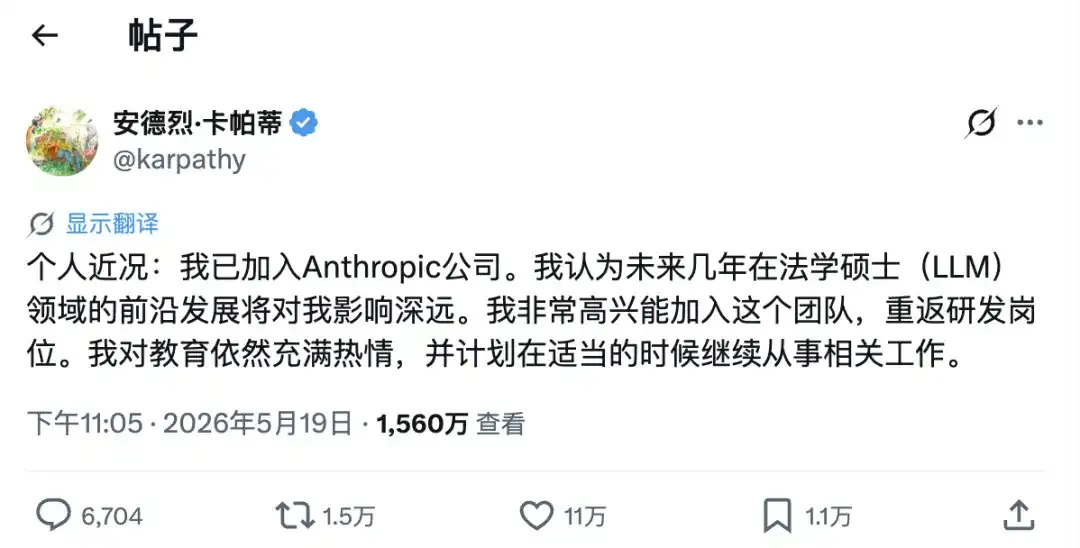
Официальное объявление Карпати в X | Источник изображения: X
Присоединяясь к Anthropic, Карпати сосредоточится на исследованиях в области предобучения и возглавит новую команду. Основная задача — использование Claude для ускорения исследований в области предобучения.
Предобучение — это фундамент способностей больших моделей. Тот, кто совершит прорыв на этом уровне, получит преимущество в конкуренции на ближайшие годы. Помещая Карпати именно здесь, Anthropic демонстрирует свои намерения предельно ясно.
Но если рассматривать это событие просто как «талантливый специалист сменил работу», это значит сильно его недооценивать.
Карпати обладает чем-то чрезвычайно редким в мире ИИ — сочетанием технической репутации и широкого влияния. Он не просто исследователь, который умеет писать хороший код и публиковать статьи, он тот, за кем другие ведущие исследователи готовы следовать.
В индустрии бытует мнение, что присоединение влиятельного исследователя часто побуждает ряд других специалистов пересмотреть свои карьерные решения. Приход Карпати может быть сигнальной ракетой, предвещающей волну притока талантов в Anthropic.
Еще более интересны его мотивы. В 2015 году он был одним из сооснователей OpenAI, прошел через всю трансформацию компании, начавшей с идеалов некоммерческой организации. Позже он перешел в Tesla, затем ненадолго вернулся в OpenAI, после чего ушел, чтобы основать свой стартап.
Нынешний выбор в пользу Anthropic в какой-то мере несет в себе элемент «заявления».
01 Anthropic, которая только побеждает
Если рассматривать присоединение Карпати изолированно, можно упустить важный контекст: в последнее время Anthropic находится в состоянии необычайного подъема.
Две недели назад данные от Ramp AI Index незаметно заполонили ленты технологических медиа.
Согласно данным, уровень внедрения Anthropic среди предприятий в апреле вырос на 3,8 процентных пункта, достигнув 34,4%, в то время как у OpenAI за тот же период он упал на 2,9 пункта, опустившись до 32,3%. Это первый раз в истории, когда Anthropic обогнала OpenAI по уровню внедрения среди предприятий. Хотя разрыв пока невелик, направление тренда имеет сильное символическое значение.
В ту же неделю Anthropic представила версию Claude для малого бизнеса, интегрировав такие инструменты, как QuickBooks, PayPal, HubSpot, Canva, DocuSign, от которых зависят малые предприятия в своей повседневной работе, напрямую встраивая возможности ИИ в рабочие процессы пользователей. Это явный сигнал движения вниз по рынку: Anthropic больше не ориентируется только на крупных корпоративных клиентов, она выходит на более широкий рынок.
Днем ранее Anthropic объявила о партнерстве с Фондом Гейтса, взяв на себя обязательство в течение четырех лет инвестировать 200 миллионов долларов, предоставить квоты на использование Claude и техническую поддержку в таких областях, как глобальное здравоохранение, образование и экономическое развитие. Сумма сотрудничества не самая впечатляющая, но его нарративная ценность высока: компания, изначально продвигавшая «безопасность ИИ», все прочнее закрепляет за собой репутацию создателя «ответственного ИИ».
На фоне оценки финансирования, приближающейся к триллиону долларов, и только что свершившегося обгона по уровню внедрения среди предприятий, присоединение Карпати стало ярким финальным аккордом всего этого.
Заголовок Fortune звучал прямо: «Anthropic, кажется, не может перестать побеждать».
02 Почему не вернулся в OpenAI?
У победителя всегда найдется тот, кто испытывает давление.
Карпати — не первый, кто покинул систему OpenAI и направился в Anthropic.
Основатели Anthropic — Дарио Амодеи (Dario Amodei), Даниэла Амодеи (Daniela Amodei) и группа ключевых исследователей — сами ушли из OpenAI в 2021 году, чтобы основать эту компанию. В некотором смысле, с первого дня своего существования Anthropic была порождением внутренних разногласий в OpenAI.
В последующие годы, по мере того как OpenAI все быстрее двигалась по пути коммерциализации и продуктового развития, ускоряя релизы, гоняясь за выручкой и постепенно сближаясь с Microsoft, часть исследователей, которые больше ценили «чистые исследования» или «безопасность в приоритете», начали голосовать ногами.
Выбор Карпати в пользу Anthropic приходится на чувствительный момент. В последнее время OpenAI весьма активно ведет внешний нарратив, одновременно продвигая линейки GPT, o, Sora, Operator. Внутренний темп настолько высок, что некоторые в индустрии в частных разговорах характеризуют его как «одновременный бег на трех марафонах». В условиях стремительной экспансии удержать тех, кто действительно заботится о глубине исследований, а не только о капитализации, — чрезвычайно сложная задача.
Конечно, OpenAI по-прежнему обладает высокой концентрацией талантов и масштабом ресурсов, один уход не поколеблет ее основ. Но если такие переходы станут трендом, то реальным поводом для беспокойства станет изменение ожиданий в индустрии, которое они передают.
Один технологический аналитик высказался прямо: «Разработка ИИ больше не просто технологическая гонка, а война за интеллектуальное лидерство. Переход влиятельного исследователя может переориентировать приоритеты исследований во всей отрасли».
Личное влияние Карпати в сообществе глубокого обучения как раз соответствует этому суждению. Его лекции в Стэнфорде и видео на YouTube были вводным материалом для многих нынешних исследователей, работающих в ведущих лабораториях ИИ. Его выбор места работы в какой-то степени служит знаком того, что «это направление стоит инвестиций».
03 Предобучение — битва за будущее
Возвращаясь к конкретному направлению, на которое указывает присоединение Карпати к Anthropic, — предобучение.
За последние два года внимание отрасли было в значительной степени сосредоточено на таких относительно «близких к прикладному уровню» направлениях, как логический вывод (inference), мультимодальность, агенты, RAG. Прорывы в возможностях базовых моделей некоторые стали считать уже этапом «тонкой настройки и оптимизации», а не фундаментального скачка.
Очевидно, Anthropic так не считает. Поручить Карпати специально сформировать команду для исследования «использования Claude для ускорения исследований по предобучению» — значит сделать ставку на более фундаментальное, более долгосрочное, но потенциально более доходное направление.
Здесь скрыта интересная логика: использование существующих больших моделей для помощи в предобучении следующего поколения больших моделей — это подход «ИИ помогает ИИ эволюционировать». Этот путь пока еще очень новый, у него нет готовой дорожной карты, но если он окажется проходимым, это может означать нелинейное повышение как эффективности обучения, так и границ возможностей.
Поручение этой задачи Карпати — это смелая ставка Anthropic на технологическое направление.
Война за таланты в индустрии ИИ сегодня достигла такой интенсивности, что ее уже нельзя описать просто как «переманивание нескольких инженеров». Это больше похоже на борьбу за «право на нарратив». Тот, кто привлекает людей, способных определять направления исследований, посылает всему рынку сигнал: мы — главные действующие лица в будущем этой игры.
Выбор Карпати, возможно, и есть такой сигнал.