U.S. proposal to ease 401(k) rules could open door to crypto-linked investments

ambcryptoОпубликовано 2026-03-31Обновлено 2026-03-31

Введение

A new U.S. Department of Labor proposal aims to ease rules for 401(k) plans, potentially allowing greater inclusion of alternative assets like cryptocurrencies. The guidance clarifies fiduciary responsibilities under ERISA, emphasizing that investment decisions should be judged based on process rather than performance outcomes. This creates a "safe harbor" to reduce legal risks for plan managers who conduct thorough and objective analyses. While crypto is not explicitly mentioned, the framework could apply to digital asset investments as institutional products expand. The shift may encourage gradual diversification into non-traditional assets, reducing long-standing legal barriers and enabling broader access to alternative investments in retirement portfolios.

A new proposal from the U.S. Department of Labor could make it easier for retirement plans to include alternative assets. This shift may eventually extend to crypto-linked exposure.

The rule, published by the Employee Benefits Security Administration, clarifies how fiduciaries should approach investment decisions under the Employee Retirement Income Security Act [ERISA]. It introduces a “safe harbor” framework designed to reduce legal risk.

At its core, the proposal signals a broader policy shift: retirement plan managers may have greater flexibility to include non-traditional assets, provided they follow a documented, prudent decision-making process.

Legal clarity aims to unlock broader asset access

Under current rules, fiduciaries overseeing 401(k) plans must meet strict standards when selecting investment options. This often discourages exposure to complex or volatile assets, like crypto, due to litigation risk.

The new proposal emphasizes that fiduciary responsibility should be judged based on process rather than performance. If plan managers conduct a thorough and objective analysis of an investment, they may be shielded from liability even if outcomes fall short.

The Department of Labor said the goal is to reduce barriers that limit diversification and prevent workers from accessing higher risk-adjusted returns through their retirement accounts.

Alternative assets move closer to retirement portfolios

The proposal explicitly covers asset allocation funds that include alternative investments such as private equity and other non-traditional assets.

While crypto is not explicitly referenced, the framework could apply to funds with digital asset exposure, particularly as institutional products tied to cryptocurrencies continue to expand.

The document reinforces that ERISA does not impose categorical restrictions on specific asset classes. Instead, fiduciaries are expected to weigh risks, returns, liquidity, and diversification when constructing investment menus.

A shift toward flexibility over restriction

The proposal builds on decades of guidance emphasizing that fiduciary prudence is a process-based standard, not a judgment based on hindsight performance.

It also affirms that plan managers retain broad discretion to select investments, including those that may be more complex, as long as decisions are supported by appropriate analysis and expertise.

This approach marks a departure from more conservative interpretations that have historically limited the inclusion of alternative assets in retirement plans.

Institutional implications could unfold gradually

If finalized, the rule could reshape how retirement capital is allocated over time.

Rather than triggering immediate changes, the proposal is more likely to encourage a gradual shift, as plan providers reassess their investment offerings and risk frameworks.

The inclusion of alternative assets in 401(k) plans has long been constrained by legal uncertainty. By addressing that uncertainty, the Department of Labor may be laying the groundwork for broader institutional participation across a wider range of asset classes.


Final Summary

  • The proposal introduces legal clarity and a safe harbor that could make it easier for 401(k) plans to include alternative assets.
  • While crypto is not explicitly mentioned, the shift could open the door to digital asset exposure within retirement portfolios over time.

Связанные с этим вопросы

QWhat is the main purpose of the new proposal from the U.S. Department of Labor regarding 401(k) plans?

AThe main purpose is to make it easier for retirement plans to include alternative assets by providing legal clarity and a 'safe harbor' framework that reduces litigation risk for fiduciaries who follow a prudent decision-making process.

QHow does the proposal change the way fiduciary responsibility is judged under ERISA?

AThe proposal emphasizes that fiduciary responsibility should be judged based on the process of investment decision-making rather than on the performance outcomes. If plan managers conduct a thorough and objective analysis, they may be shielded from liability even if the investment results are poor.

QDoes the proposal explicitly mention cryptocurrencies as an allowable investment?

ANo, the proposal does not explicitly mention cryptocurrencies. However, the framework could apply to funds with digital asset exposure as it does not impose categorical restrictions on specific asset classes.

QWhat potential long-term effect could this rule have on retirement portfolios if finalized?

AIf finalized, the rule could gradually reshape retirement capital allocation by encouraging plan providers to include a broader range of alternative assets, such as private equity and potentially crypto-linked investments, leading to greater diversification and access to higher risk-adjusted returns.

QWhat key factor has historically limited the inclusion of alternative assets in 401(k) plans according to the article?

ALegal uncertainty and the strict fiduciary standards that created high litigation risk have historically discouraged and limited the inclusion of complex or volatile alternative assets in 401(k) plans.

Похожее

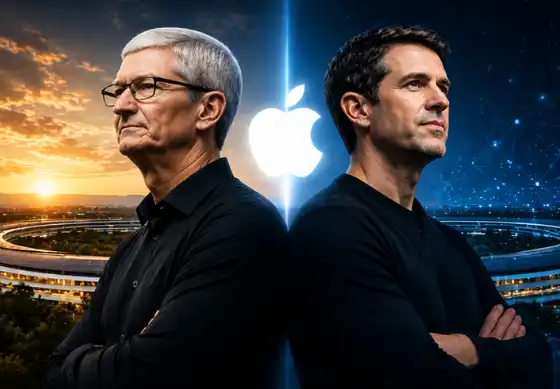
Cook's Curtain Call and Ternus Takes the Helm: The Disruption and Reboot of Apple's 4 Trillion Dollar Empire

Tim Cook has officially announced he will step down as CEO of Apple in September, transitioning to executive chairman after a 15-year tenure during which he grew the company’s market value from around $350 billion to nearly $4 trillion. He will be succeeded by John Ternus, a 50-year-old hardware engineering veteran who has been groomed for the role through increasing public visibility and internal responsibility. Ternus’s appointment signals a strategic shift toward hardware and engineering leadership, with Johny Srouji—head of Apple Silicon—taking on an expanded role as Chief Hardware Officer. This consolidation aims to strengthen Apple’s core technological capabilities. However, Cook’s departure highlights a significant unresolved issue: Apple’s delayed and fragmented approach to artificial intelligence. Despite early efforts, such as hiring John Giannandrea from Google in 2018, Apple’s AI initiatives—particularly around Siri—have struggled with internal restructuring and reliance on external partnerships, including with Google. The transition comes at a critical moment as Apple faces paradigm shifts with the rise of artificial general intelligence (ASI). The company’s closed ecosystem of hardware, software, and services—once a major advantage—now presents challenges in adapting to an AI-centric world where intelligence may matter more than the device itself. Ternus must quickly articulate a clear AI strategy, possibly starting at WWDC, to reassure markets and redefine Apple’s role in a new technological era. His task is not only to maintain Apple’s operational excellence but also to reinvigorate its capacity to innovate and lead in the age of AI.

marsbit34 мин. назад

Cook's Curtain Call and Ternus Takes the Helm: The Disruption and Reboot of Apple's 4 Trillion Dollar Empire

marsbit34 мин. назад

Торговля

Спот
Фьючерсы
活动图片