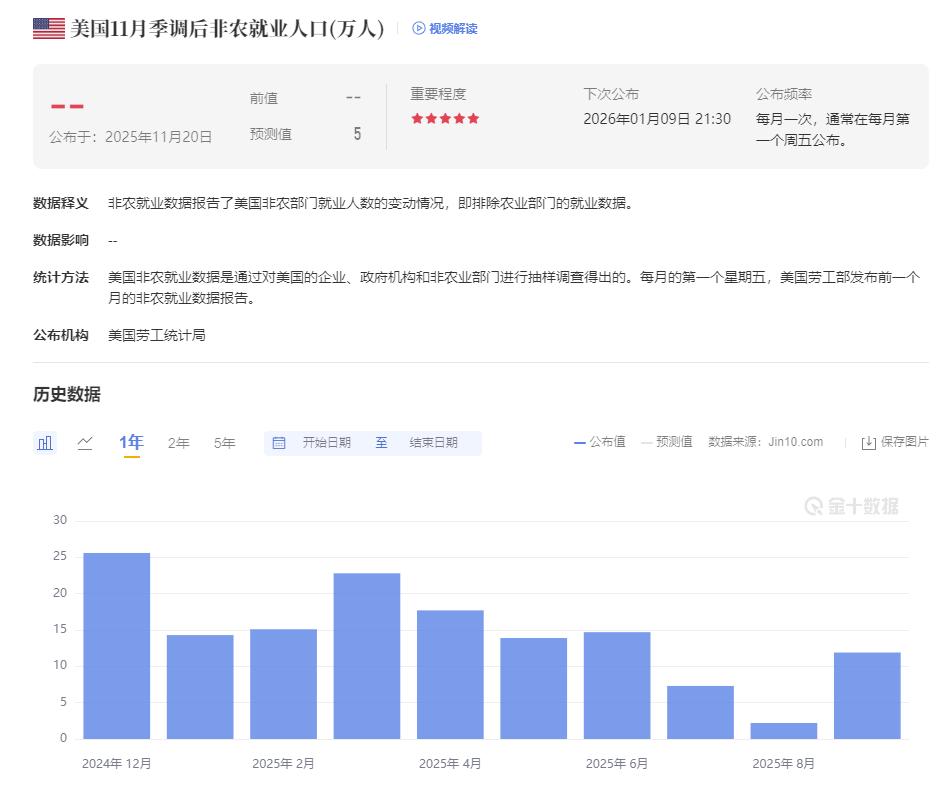
На этой неделе экономический календарь США насыщен событиями, и отчет по занятости Nonfarm Payrolls за ноябрь, который должен был выйти во вторник в 21:30 по пекинскому времени, несомненно, стал центром внимания рынка.
Публикация этих данных была редко отложена до вторника середины декабря из-за влияния остановки работы правительства, нарушив обычную практику публикации в первую пятницу каждого месяца.
В течение последнего месяца накопленные из-за остановки работы правительства экономические данные постепенно выпускаются, и на этой неделе сложится ситуация, при которой несколько важных наборов данных будут представлены друг за другом: в ближайшие три дня будут последовательно опубликованы несколько весомых отчетов, включая розничные продажи, инфляцию и данные по рынку труда, предоставляя рынку важную основу для оценки состояния экономики США.
Технический фон нетрадиционного выпуска данных
Особенность этого отчета Nonfarm заключается в том, что он фактически будет содержать «два» набора данных — помимо числа новых рабочих мест и уровня безработицы за ноябрь, Бюро трудовой статистики (BLS) также опубликует данные по новым рабочим местам вне сельского хозяйства за октябрь.
Поскольку статистическое агентство не может ретроспективно собрать информацию об уровне безработицы за октябрь, данные по безработице за октябрь точно будут отсутствовать в этом отчете. Эта форма выпуска «купи один — получи половинку бесплатно» возникла из-за недавней остановки работы федерального правительства, которая длилась 43 дня. Эта самая продолжительная остановка в истории привела к тому, что BLS не смогло проводить сбор и обработку данных за октябрь в обычном режиме.
Ожидается, что число новых рабочих мест вне сельского хозяйства в ноябре увеличится на 50 тысяч, а уровень безработицы, по прогнозам, останется на уровне 4,4%.
Однако важность этого отчета заключается не только в раскрытии реального состояния рынка труда США, но и в предоставлении ключевых ориентиров для будущего пути процентной политики ФРС.
Ожидания данных и потенциальная волатильность
В последние месяры данные по занятости в США демонстрировали значительную волатильность, колеблясь между спадом и устойчивым ростом.
Экономисты ожидают, что отчет во вторник может продолжить эту тенденцию и будет выглядеть особенно хаотичным из-за последствий остановки работы правительства.
После того, как рост занятости в сентябре превысил ожидания, некоторые аналитики прогнозировали, что число рабочих мест в октябре может стать отрицательным. Эти ожидания в основном связаны с тем, что около 144 тысяч федеральных служащих приняли «план отсроченного увольнения» и покинули государственные должности после 30 сентября. Экономисты Goldman Sachs ожидают, что этот фактор приведет к сокращению числа рабочих мест на 70 тысяч в октябре и еще на 10 тысяч в ноябре. Несмотря на неопределенность, большинство экономистов по-прежнему ожидают, что число рабочих мест в ноябре покажет положительный рост, но диапазон прогнозов необычно широк — от сокращения на 20 тысяч до роста на 127 тысяч.
Главный экономист по США в Oxford Economics Нэнси Ванден Хаутен отметила, что сектора здравоохранения и частных образовательных услуг, вероятно, станут основными драйверами роста занятости в этом месяце.
Главный экономист Glassdoor Дэниел Чжао заявил: «Остановки работы правительства случаются нечасто, поэтому, когда сталкиваешься с такими крупномасштабными операциями по сбору данных, как в BLS, всегда существует некоторая неопределенность. Следует проявлять осторожность при интерпретации этого отчета и быть готовым к различным возможным результатам». Он считает, что темпы роста занятости, скорее всего, останутся стабильными, но одновременно подчеркивает, что «здесь есть большая переменная».
Влияние статистико-технических факторов на данные
BLS славится своей прозрачностью и обычно добавляет в отчеты пояснительные примечания, чтобы объяснить важный контекст или технические проблемы. Экономист Bank of America Шрути Мишра в недавнем отчете отметила, что, хотя во время остановки более 700 тысяч федеральных служащих были вынуждены уйти в неоплачиваемый отпуск, не ожидается, что данные за октябрь покажут значительное отрицательное число рабочих мест, а за ноябрь — резкий рост.
Мишра объясняет: «Обследование учреждений учитывает в качестве занятых всех работников, которые получали или ожидали получить оплату в любую часть недели.
Исторический опыт показывает, что остановки работы правительства в 2013 и 2019 годах оказали минимальное влияние на число занятых». Дэниел Чжао дополнительно указал, что из-за продления временных рамок подачи и сбора данных, данные по занятости за октябрь и ноябрь могут, наоборот, быть более полными, а пространство для последующих пересмотров — меньше. Хотя данные по уровню безработицы за октябрь точно отсутствуют, экономисты ожидают, что уровень безработицы в ноябре останется на уровне 4,4% или столкнется с повышательным давлением. За три месяца, закончившихся в сентябре, уровень безработицы ежемесячно повышался из-за вялой среды найма и роста уровня участия в рабочей силе. В то же время, недавние уведомления об увольнениях значительно увеличились, и в октябре показатель увольнений достиг самого высокого уровня с начала 2023 года. Некоторые прогнозисты считают, что сокращение числа занятых в федеральном правительстве может поднять уровень безработицы в ноябре, возможно, до 4,5% или даже 4,6%.
Исследование Bloomberg Economics также отмечает, что отсутствие данных по безработице за октябрь и более поздний, чем обычно, цикл сбора данных за ноябрь могут вызвать «технические проблемы», о которых упоминал председатель ФРС Джером Пауэлл, такие как искажения сезонной корректировки.
Детали отчета и связанные показатели данных
Помимо двух ключевых показателей — общего числа занятых и уровня безработицы, экономисты считают, что внутренние детали обследования учреждений и обследования домашних хозяйств предоставляют более важную перспективу для понимания表现 ключевых секторов экономики США. Старший экономист Центра экономических и политических исследований Дин Бейкер подчеркивает, что на данные о росте занятости по отраслям стоит обратить особое внимание. Он ожидает, что занятость в сфере производства товаров может снова снизиться, а здравоохранение и ресторанный бизнес, по прогнозам, продолжат лидировать в росте занятости. В то же время ожидаемое замедление роста заработной платы создаст дополнительное давление на потребительские расходы. Экономист Indeed Hiring Lab Кори Штале указал, что уровень участия в рабочей силе, коэффициент занятости населения и траектория данных по безработице являются важными показателями для оценки того, как американцы чувствуют себя на рынке труда. «В конечном счете, если каждый месяц создается 100 тысяч рабочих мест, но уровень безработицы растет, или люди говорят, что «не могут найти никакой работы и не打算再求职» (не打算再求职 - опечатка? Вероятно, «не打算再求职» - искаж. кит. «не планируют больше искать работу»), в конечном итоге это может ударить по рынку труда». В это же время во вторник Министерство торговли США также опубликует данные по розничным продажам за октябрь. Исключая продажи автомобилей и бензина, экономисты ожидают, что ускорение расходов покажет устойчивый потребительский спрос в начале четвертого квартала. Ожидается, что общие розничные продажи без поправки на инфляцию вырастут всего на 0,1%. Позже на этой неделе BLS также выпустит отчет по индексу потребительских цен (ИПЦ) за ноябрь. Отчет по ИПЦ за октябрь был отменен из-за недостаточного сбора данных о ценах во время остановки правительства. Из-за отсутствия сопоставимых базовых данных за октябрь статистическое агентство не может публиковать помесячные данные по ИПЦ и базовым показателям, и инвесторам придется обращаться к годовым показателям для получения сигналов о направлении инфляции.
Прогноз движения Биткойна
Как актив, высокочувствительный к макроэкономическим данным, цена Биткойна может явно отреагировать на данные Nonfarm. Если данные по занятости Nonfarm окажутся значительно лучше ожиданий, особенно если уровень безработицы останется стабильным, а рост заработной платы будет强劲 (сильным), это может укрепить позицию ФРС по сохранению жесткой денежно-кредитной политики, тем самым поддержав индекс доллара и оказав краткосрочное давление на такие активы, не приносящие дохода, как Биткойн.
И наоборот, если данные по занятости окажутся слабыми, показывая явное охлаждение рынка труда, это может усилить ожидания рынка в отношении досрочного снижения ставок ФРС, что потенциально позитивно скажется на цене Биткойна.
Учитывая, что рынок уже учел значительные ожидания снижения ставок, любые данные, значительно отклоняющиеся от ожиданий, могут вызвать резкие колебания цены Биткойна. С технической точки зрения, Биткойну необходимо удержать ключевой уровень поддержки в 85 000 долларов; если он будет пробит, возможен дальнейший спад в область 83 000–84 000 долларов.
Однако с среднесрочной и долгосрочной перспективы фундаментальные факторы Биткойна, включая предстоящее событие халвинга и продолжающийся рост уровня институционального принятия, по-прежнему предоставляют прочную основу, и каждая коррекция, вызванная макроэкономическими данными, может предоставить долгосрочным инвесторам возможность для стратегического размещения.