This Finance CEO Picks Solana Instead Of Bitcoin — Here’s Why

bitcoinistОпубликовано 2026-05-10Обновлено 2026-05-10

Введение

Finance CEO Raoul Pal prefers Solana over Bitcoin, citing its high throughput and low transaction costs as better suited for the future crypto-AI era. He believes Solana is ideal for machine-to-machine microtransactions and AI-driven DeFi activity, predicting AI agents will soon dominate DeFi users. While Bitcoin serves as a store of value, Pal sees higher growth in networks built for mass, automated transactions. This view was highlighted at Consensus 2026, where AI integration and crypto infrastructure were key themes.

Finance CEO Raoul Pal has expressed a clear preference for Solana over Bitcoin for reasons deeper than a simple asset comparison. The reasons for his latest crypto call go back to one of the crypto market’s biggest talking points: whether the next phase of the crypto industry will be led by Bitcoin’s store-of-value role or by high-speed networks built for mass activity.

Raoul Pal Picks Solana Over Bitcoin

Raoul Pal has never been short on comments relating to cryptocurrencies. However, his most recent Solana over Bitcoin preference came during one of the most closely watched moments from the recently concluded Consensus 2026 event in Miami. The choice was notable because Pal has always been associated with broad macro crypto commentary, and his market views often focus on liquidity cycles, network adoption, and price peaks.

While at the event, Pal said he would choose Solana if he had to pick between Solana and Bitcoin. This choice is mostly due to his belief of where the higher-growth opportunity sits as the crypto industry moves deeper into the AI era.

Particularly, Pal linked the future of crypto to artificial intelligence and described crypto as the ‘Universal Basic Equity’ of the AI age.

Pal’s preference was attributed to Solana’s high throughput and low transaction costs, which could make it better suited for machine-to-machine microtransactions, AI-based activity, and fast DeFi interactions. Bitcoin, by comparison, functions mostly as a monetary asset, but it was not designed as a high-frequency execution layer for millions of small automated transactions.

SOLUSD currently trading at $93.6. Chart: TradingView

AI Agents Important To Pal’s Solana Preference

Pal also predicted that within five years, AI agents will constitute 60% of DeFi users, surpassing human users. This means that the DeFi niche could have three AI agents for every two human users.

This idea gives more context to why Solana would appeal to Pal in a direct comparison with Bitcoin. AI agents would likely need networks that can process frequent, low-cost transactions, and this is a niche where Solana has been outperforming Ethereum in recent years.

The idea that Solana might one day outpace Bitcoin in terms of growth is highly unlikely at this point, but it fits a wider theme that dominated Consensus 2026. The conference was heavily focused on AI agents, DeFi, tokenization, stablecoins, and institutional crypto infrastructure, with major players from firms such as JPMorgan and Citigroup in attendance.

Arthur Hayes, Chief Investment Officer at Maelstrom, also offered an interesting take from the Consensus main stage. Hayes noted that crypto doesn’t need regulation and that it exists outside of the system, which is in contrast with the regulatory accommodation on display at the event.

Still on the AI front, Kevin O’Leary also noted at the event the importance of AI with the US’s competition with other countries, while Ripple CEO Brad Garlinghouse also said the company is not thinking about AI as a tool to reduce headcount.

Featured image from Bunq, chart from TradingView

Связанные с этим вопросы

QWhy does Raoul Pal prefer Solana over Bitcoin?

ARaoul Pal prefers Solana over Bitcoin because he believes Solana's high throughput and low transaction costs make it better suited for machine-to-machine microtransactions, AI-based activity, and fast DeFi interactions, which he sees as a higher-growth opportunity as the crypto industry moves into the AI era.

QAccording to Pal, what role does crypto play in the AI age?

AAccording to Pal, crypto is the 'Universal Basic Equity' of the AI age.

QWhat key reason does the article give for AI agents making Solana appealing over Bitcoin?

AAI agents are expected to need networks that can process frequent, low-cost transactions, which is a niche where Solana has been outperforming other networks and where Bitcoin was not designed to excel.

QWhat was Arthur Hayes's contrasting view on crypto regulation, as mentioned in the article?

AArthur Hayes, Chief Investment Officer at Maelstrom, noted that crypto doesn't need regulation and that it exists outside of the system, which contrasts with the theme of regulatory accommodation present at the Consensus 2026 event.

QWhat broader themes dominated the Consensus 2026 conference, as described in the article?

AThe conference was heavily focused on AI agents, DeFi, tokenization, stablecoins, and institutional crypto infrastructure.

Похожее

Missed Out on SpaceX's IPO? Take a Look at SpaceX's Complete Supply Chain

SpaceX is now public, but its high valuation and losses may deter some investors. However, the real opportunity, as seen with Apple, Tesla, and Nvidia, may lie in its extensive supply chain. SpaceX, funded primarily by its profitable Starlink service, spends hundreds of billions annually on components for its rockets, satellites, and planned orbital AI data centers, creating significant revenue streams for suppliers. Key suppliers are categorized by their indispensability. The first group includes irreplaceable players like **NVIDIA** (GPUs for AI supercomputers), **Eutelsat (SATS)** (spectrum rights), **Filtronic** (millimeter-wave amplifiers), **Materion (MTRN)** (beryllium alloys), and **STMicroelectronics (STM)** (phased array chips). The second category comprises suppliers costly to replace due to long certification cycles or deep integration, such as **Honeywell (HON)** (flight controls), **Carpenter Technology (CRS)** (specialty steel), **Hexcel (HXL)** (carbon fiber), **Broadcom (AVGO)** (data switching), and **Linde** (industrial gases). The third group involves high-volume, cost-critical manufacturers for mass-produced items like Starlink terminals. Major players here include Taiwanese contract manufacturer **Wistron NeWeb (6285)** and several Chinese-listed firms: **Sunway Communication (300136)**, **Parker Advanced Materials (605123)**, **Western Superconducting (002149)**, and **Yingliu Co., Ltd. (603308)**. Other niche providers include **Tianyin Electromechanical**, **Tongyu Communication**, **Trimble (TRMB)**, **Astronics (ATRO)**, and **CTSH**. The timing is now relevant because: 1) SpaceX's procurement is accelerating with plans for 100 launches in 2026, 30 million Starlink terminals, and orbital data centers. 2) Its IPO has brought unprecedented transparency to its supply chain. 3) This phase mirrors early days of the Tesla supply chain boom. The investment thesis shifts from betting on SpaceX's stock to betting on the steady, order-book-driven revenues of its essential suppliers. Risks remain, such as commodity cycles, geopolitical factors, and technological shifts, but the supply chain offers a potentially less speculative path to participate in SpaceX's growth.

marsbit7 мин. назад

Missed Out on SpaceX's IPO? Take a Look at SpaceX's Complete Supply Chain

marsbit7 мин. назад

Jane Street: The Most Powerful Behind-the-Scenes Operator in the Crypto Industry

Jane Street: Crypto's Most Powerful Behind-the-Scenes Operator A recent 13F filing revealed Jane Street, the secretive Wall Street quant giant, drastically reduced its Bitcoin ETF holdings while increasing stakes in Ethereum ETFs. This move highlights its role not as a directional investor, but as a critical infrastructure player extracting "tolls" from crypto's institutionalization. The firm, founded in 2000 and famously lacking a CEO, has systematically embedded itself across crypto markets. It acts as a key Authorized Participant (AP) and market maker for major Bitcoin and Ethereum ETFs, profiting from arbitrage between ETF shares and underlying assets. Its approach combines quantitative prowess with a willingness to hold positions for structural arbitrage, differing from pure high-frequency traders. Jane Street faces allegations related to the 2022 Terra (LUNA) collapse. A lawsuit claims it used non-public information to withdraw $85 million in UST minutes before a critical withdrawal by Terraform Labs, allegedly exacerbating the crash and avoiding over $200 million in losses. The company denies the claims. Further indicating its reach, a wallet suspected to be operated by Jane Street ("JaneStreetIndia") was identified on the prediction market Polymarket. This bot executed over 11,000 high-frequency trades on short-term crypto price movements with a near-perfect win rate, showcasing a套利 strategy divorced from traditional prediction. Beyond trading, Jane Street holds equity in crypto infrastructure like Kraken, 1inch, and Arbitrum, and mining stocks. Its strategy is clear: avoid betting on winners, but secure a position in the market's essential plumbing. By becoming a ubiquitous part of the liquidity infrastructure—from ETFs to OTC trading and potentially链上 markets—Jane Street operates as a market force itself, raising questions about whether crypto's decentralized,散户-friendly alpha is being permanently eroded by traditional finance's most sophisticated players.

Foresight News10 мин. назад

Jane Street: The Most Powerful Behind-the-Scenes Operator in the Crypto Industry

Foresight News10 мин. назад

U.S.-Iran Ceasefire: How Much of a Bitcoin Rally Can a Truce Agreement Support?

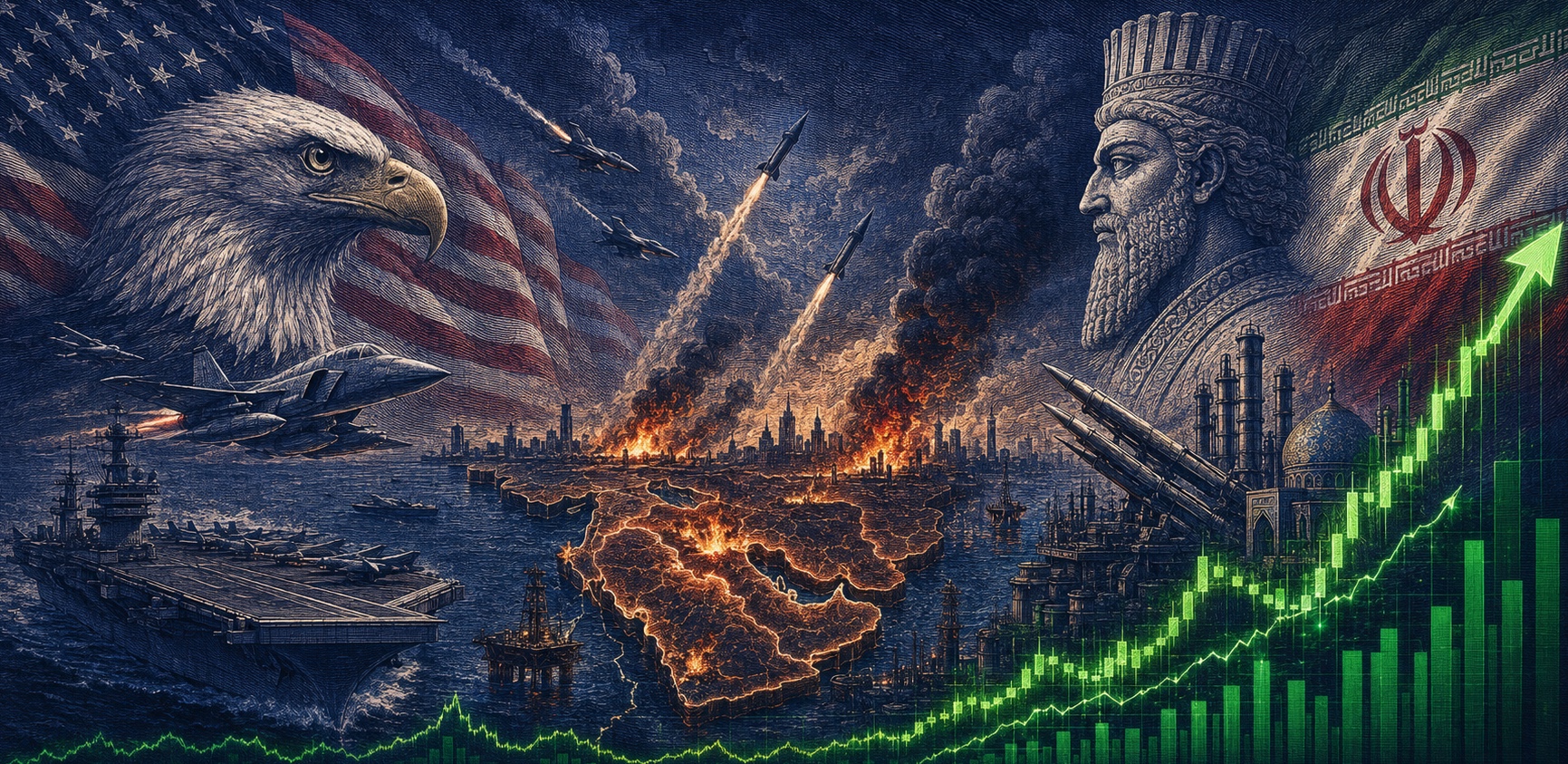
Headline: "U.S.-Iran Truce: How Much Can a Ceasefire Agreement Propel Bitcoin's Rebound?" On June 15th, Bitcoin rebounded to around $67,255, marking its first return to the $67,000 level since falling below $60,000 earlier in June. Ethereum and Solana also saw significant gains. The immediate driver for this market-wide recovery in crypto and global risk assets was the signing of a U.S.-Iran ceasefire memorandum, with a formal ceremony scheduled for June 19th. The agreement, which includes reopening the Strait of Hormuz, caused oil prices to plunge roughly 5%, easing inflation expectations and boosting prospects for Federal Reserve rate cuts. This macroeconomic shift fueled a rally in U.S. equities, with the Dow Jones hitting a record high. SpaceX's spectacular post-IPO performance further energized market sentiment. However, on-chain and derivatives data from Glassnode suggest this move is more indicative of a technical rebound from deeply oversold conditions rather than a confirmed trend reversal. The crypto market is undergoing noticeable capital rotation. While Bitcoin ETFs recently saw their worst outflows on record, the bleeding has slowed significantly. Meanwhile, new altcoin ETFs for assets like XRP and Solana are attracting substantial inflows, causing Bitcoin's market dominance to drop to 58%. Despite the rebound, the Crypto Fear & Greed Index remains in "Extreme Fear" territory at 22. The price quickly retreated after touching the $67,000 resistance level, indicating selling pressure persists. Analysis shows short-term speculative supply has been heavily washed out, with holder structure shifting toward a more long-term profile. While panic is subsiding and some on-chain metrics point to accumulation at lower prices, the market currently lacks the strong, sustained institutional buying needed to establish a new bullish trend.

Foresight News27 мин. назад

U.S.-Iran Ceasefire: How Much of a Bitcoin Rally Can a Truce Agreement Support?

Foresight News27 мин. назад

Copper, the Gold of 2026

Copper: The New Gold for 2026? Market focus has shifted from AI chips to underlying infrastructure, with copper emerging as a key narrative. Its role is evolving beyond "Dr. Copper"—a traditional indicator of economic cycles—due to structural demand growth from AI data centers (requiring massive electrical infrastructure), grid expansion, EVs, and re-industrialization. Estimates suggest data centers alone could require 300,000 tons of copper by 2050. The core bullish thesis is not just demand but a severe supply constraint. New copper mines take ~17 years to develop, while ore grades are declining and new discoveries are scarce, potentially leading to a 30% supply deficit by 2035. This supply rigidity, coupled with strategic importance, is giving copper a "gold-like" scarcity narrative. Major macro investors, including Stanley Druckenmiller, are allocating to copper as a hedge against dollar weakness and for its exposure to energy transition and geopolitics. Traders like Pierre Andurand have projected prices could reach $40,000/ton. Capital inflows are visible in surging futures trading volumes. Copper mining stocks act as leveraged plays on copper prices. Companies like Freeport-McMoRan (FCX) and Southern Copper (SCCO), as well as Chinese miners like CMOC, have seen significant volatility, offering high upside but also steep drawdowns, reflecting operational and geopolitical risks. While copper remains cyclical and won't fully replicate gold's monetary role, its long-term fundamentals have shifted. Its new scarcity premium, driven by a tightening supply structure and expanding electrical demand, suggests its "goldification" is just beginning.

marsbit33 мин. назад

Copper, the Gold of 2026

marsbit33 мин. назад

Торговля

Спот
Фьючерсы

Популярные статьи

Как купить S

Добро пожаловать на HTX.com! Мы сделали приобретение Sonic (S) простым и удобным. Следуйте нашему пошаговому руководству и отправляйтесь в свое крипто-путешествие.Шаг 1: Создайте аккаунт на HTXИспользуйте свой адрес электронной почты или номер телефона, чтобы зарегистрироваться и бесплатно создать аккаунт на HTX. Пройдите удобную регистрацию и откройте для себя весь функционал.Создать аккаунтШаг 2: Перейдите в Купить криптовалюту и выберите свой способ оплатыКредитная/Дебетовая Карта: Используйте свою карту Visa или Mastercard для мгновенной покупки Sonic (S).Баланс: Используйте средства с баланса вашего аккаунта HTX для простой торговли.Третьи Лица: Мы добавили популярные способы оплаты, такие как Google Pay и Apple Pay, для повышения удобства.P2P: Торгуйте напрямую с другими пользователями на HTX.Внебиржевая Торговля (OTC): Мы предлагаем индивидуальные услуги и конкурентоспособные обменные курсы для трейдеров.Шаг 3: Хранение Sonic (S)После приобретения вами Sonic (S) храните их в своем аккаунте на HTX. В качестве альтернативы вы можете отправить их куда-либо с помощью перевода в блокчейне или использовать для торговли с другими криптовалютами.Шаг 4: Торговля Sonic (S)С легкостью торгуйте Sonic (S) на спотовом рынке HTX. Просто зайдите в свой аккаунт, выберите торговую пару, совершайте сделки и следите за ними в режиме реального времени. Мы предлагаем удобный интерфейс как для начинающих, так и для опытных трейдеров.

1.5k просмотров всегоОпубликовано 2025.01.15Обновлено 2026.06.02

Как купить S

Sonic: Обновления под руководством Андре Кронье – новая звезда Layer-1 на фоне спада рынка

Он решает проблемы масштабируемости, совместимости между блокчейнами и стимулов для разработчиков с помощью технологических инноваций.

2.3k просмотров всегоОпубликовано 2025.04.09Обновлено 2025.04.09

Sonic: Обновления под руководством Андре Кронье – новая звезда Layer-1 на фоне спада рынка

HTX Learn: Пройдите обучение по "Sonic" и разделите 1000 USDT

HTX Learn — ваш проводник в мир перспективных проектов, и мы запускаем специальное мероприятие "Учитесь и Зарабатывайте", посвящённое этим проектам. Наше новое направление .

1.8k просмотров всегоОпубликовано 2025.04.10Обновлено 2025.04.10

HTX Learn: Пройдите обучение по "Sonic" и разделите 1000 USDT

Обсуждения

Добро пожаловать в Сообщество HTX. Здесь вы сможете быть в курсе последних новостей о развитии платформы и получить доступ к профессиональной аналитической информации о рынке. Мнения пользователей о цене на S (S) представлены ниже.

活动图片