The True Replay of the Internet Bubble Is Web3, Not AI

marsbitОпубликовано 2026-03-13Обновлено 2026-03-13

Введение

Author TVBee argues that Web3, not AI, is the true reenactment of the 2000 dot-com bubble. The article compares the three sectors: the historical internet bubble, the current AI boom, and Web3. During the 2000 bubble, capital was focused on the supply side with many unprofitable companies, while demand-side applications were scarce due to limited internet access and primitive technology. In contrast, the current AI boom is primarily driven by infrastructure leaders like NVIDIA and AMD, which have substantial profits. Demand-side applications, such as various AI models and tools, are growing and integrating into more use cases, though the ecosystem is still developing. Web3, however, is criticized for its significant supply-side speculation with high valuations based on minimal revenue (e.g., ZKsync's $1.76B市值 vs. $458 daily income). Demand-side applications are limited mostly to DeFi, memecoins, and prediction markets, with much activity driven by airdrop farming rather than genuine utility. The author concludes that Web3, with its hype-driven capital and lack of practical products, mirrors the 2000 bubble most closely. Predictions include a likely U.S. stock market correction (but not a crash), a moderate impact on Bitcoin, and a prolonged, painful consolidation for altcoins to separate valuable projects from speculative ones. The author warns that the altcoin market decline since late 2024 is not yet over.

Author: TVBee

Both stock market and crypto players are worried that AI might repeat the 2000 internet bubble, but in reality, Web3 is the true replay of the internet bubble.

Bubble: Supply-Side Self-Indulgence, Lackluster Demand

During the 2000 internet bubble phase, capital was self-indulgent on the supply side. Many internet-listed companies had no profits or cash flow, yet their stock prices soared wildly.

On the other end, internet applications on the demand side were pitifully few... Before 2000, there was no Douyin or Kuaishou, no Alibaba or JD.com, no WeChat.

The mainstream internet applications at the time were only the雏形 of QQ like OICQ, MSN and other chat software, download tools like FlashGet and NetAnts, information platforms like Yahoo,网易, and搜狐, basic applications like Google Search and email, and the early stages of e-commerce like Amazon and eBay, which had very few users.

At that time, there was no mobile internet. Personal computers were considered luxury items, and most households in China did not have one. Monitors were those big, bulky CRT monitors. Laptops were as thick as bricks, and internet access relied on dial-up connections through telephone lines. Even older were the storage media; the primary storage was floppy disks—yes, the A drive. Their capacity was only 1.44MB, not even enough to hold a single moderately sized image today.
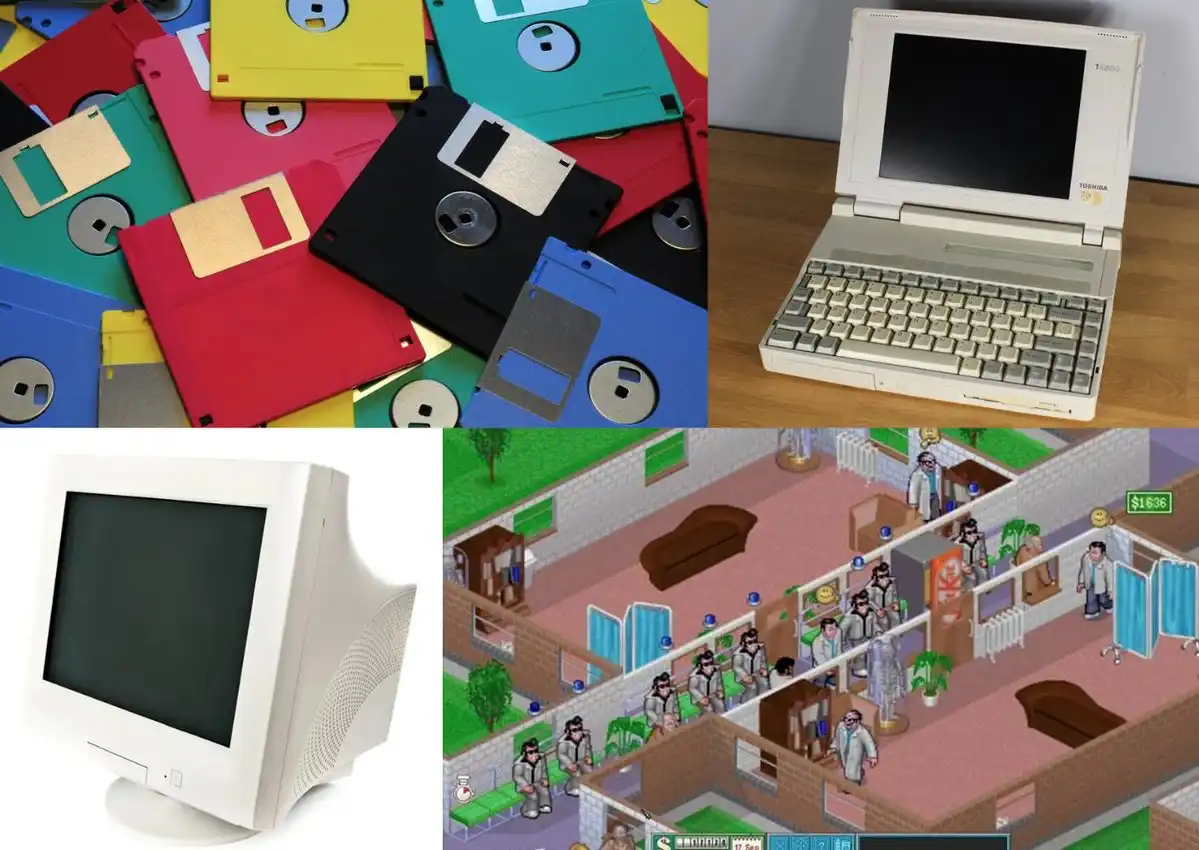
It's worth mentioning that there were single-player games back then, but they were pixelated games.

AI: Infrastructure Leaders Soar, Products Growing

Looking at the AI industry, stock prices have surged, but the main gainers are AI leaders, primarily in infrastructure—NVIDIA, AMD, SK Hynix, Samsung, Micron... This is because AI requires extensive training before deployment. On the supply side, AI does not have the exaggerated bubble seen in 2000. At least these leading AI companies do have considerable profits.

On the demand side, we can at least see Gemini, Claude, GPT, Doubao... various UGC applications. And the recently popular Lobster, the newly launched Perplexity Personal Computer... the highly eye-catching AI robots at the Spring Festival Gala... Although the breadth of AI products still can't be compared to that of the internet in 2000, this is because AI development has high infrastructure requirements. AI needs to develop its infrastructure first before it can integrate into more types of applications.

Web3: Technology as a Gimmick, Applications Few and Far Between

Circulating Market Cap and Profit

Now look at the Web3 industry. Various technological narratives emerge one after another, but how many applications actually have users? Aside from a handful of DeFi leaders, there might only be MEME platforms, prediction markets, and Perp DEXs, with much of the activity in the latter two coming from interaction behaviors driven by airdrop expectations.

Corresponding to the scarcity of products on the demand side is the self-indulgence on the supply side.

⏵ Example from the ZK track: ZKsync with a daily income of $458 has a circulating market cap of $176 million, equivalent to a P/E ratio of 1052.

⏵ Example from the L2 track: Optimism with a daily income of $2,427 has a circulating market cap of $253 million, equivalent to a P/E ratio of 285.

⏵ Example from the L1 track: Sei with a daily income of $3,564 has a circulating market cap of $424 million, equivalent to a P/E ratio of 327.

And there's Blast with a daily income of -$6...
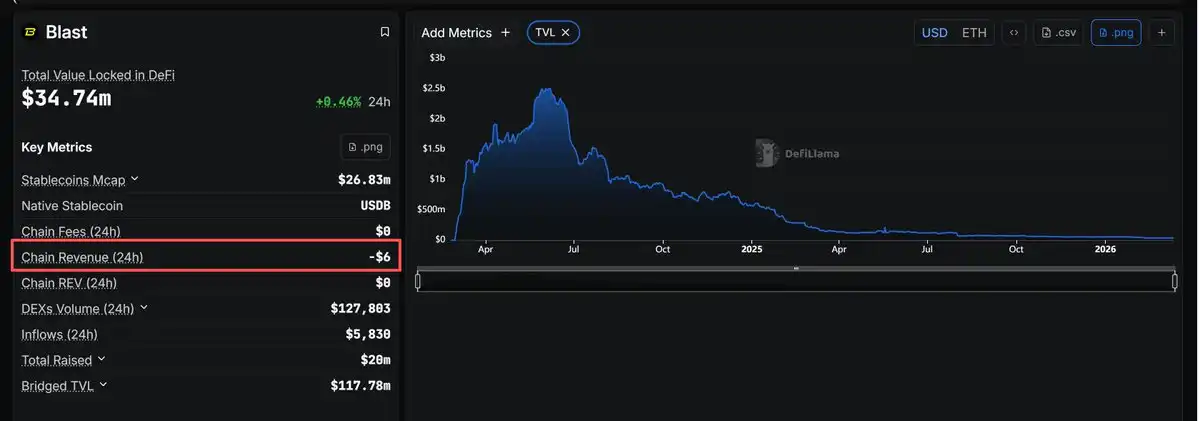
If we follow stock market logic, shareholders of the first three projects would have to wait 1052 years, 285 years, and 327 years respectively to break even, and this doesn't even include the infrastructure and operational costs required to keep these chains running.

Although these ecosystems are not meant to break even and profit from on-chain revenue, for shareholders, i.e., token holders, this is a nightmare...

What Web3 Applications Are There?

Now, what Web3 applications are there?

Former applications like the metaverse,链游, inscriptions, social... and probably some others we can't even remember are almost never mentioned now.

Currently, besides DeFi and RWA, the only ones with users are almost just meme coins, prediction markets, and perp DEXs. Among these, meme coins are PvP among existing capital, and part of the activity in prediction markets and Perp DEXs is still driven by interaction behaviors due to airdrop expectations.

Compared to the internet applications mentioned from 2000, Web3 applications are truly few and far between...

Final Thoughts

Therefore, the sector that is truly indulging on the supply side while lacking achievement on the demand side is not AI, but Web3.

US stock market players overlap with those from 26 years ago. Investors and Wall Street are deliberately avoiding a repeat of history. AI has a bubble, but it differs from the 2000 internet bubble.

Instead, it's the younger Web3 field where capital is speculating on technology on the supply side, while the demand side has few truly practical products. This is the true reappearance of the 2000 internet bubble.

Based on the reasoning of a moderate AI泡沫 and a high Web3泡沫:

  • First, the US stock market will correct, but a crash like in 2000 is unlikely.
  • Second, BTC, which is correlated with US stocks, will be moderately affected.
  • Third, just like the 2000 internet bubble,山寨币 will continue to be washed out, forming a painful process of separating the wheat from the chaff. This process might be even longer than I imagine.

So far,山寨币 have generally been falling for about 15 months since the end of 2024, but this is not the end.

Don't believe the talk that山寨币 have bottomed out. Some have, others have no bottom.

Связанные с этим вопросы

QAccording to the article, which sector is more likely to repeat the 2000 internet bubble: AI or Web3?

AThe article argues that Web3 is more likely to repeat the 2000 internet bubble, not AI.

QWhat was a key characteristic of the supply side during the 2000 internet bubble?

AA key characteristic was that capital was indulging in self-amusement on the supply side, with many internet companies having no profits or cash flow but their stock prices soared wildly.

QHow does the article describe the current state of Web3 applications?

AThe article describes Web3 applications as scarce and lacking truly practical products, with only a handful like some DeFi leaders, meme platforms, prediction markets, and perpetual DEXs having users, some of which are driven by airdrop expectations.

QWhat is the article's view on the profitability and valuation of major Web3 infrastructure projects like ZKsync, Optimism, and Sei?

AThe article highlights their extremely high Price-to-Earnings (PE) ratios (e.g., 1052 for ZKsync) based on meager daily revenues, suggesting it would take centuries for token holders to recoup their investment, representing a nightmare for them.

QWhat are the article's three main predictions based on its analysis of AI and Web3 bubbles?

A1. The U.S. stock market will correct but is unlikely to crash like in 2000. 2. Bitcoin, being associated with U.S. stocks, will be moderately affected. 3. Altcoins will continue to be washed out in a painful process of eliminating the false and preserving the true, which may be a prolonged cycle.

Похожее

From Robinhood to Polymarket: Is the Era of Integrating All Assets on a Single Platform Coming?

From Robinhood to Polymarket: The Era of All-in-One Asset Platforms Is Coming Asset classes are rapidly converging. Platforms that once specialized in single categories—such as stocks, cryptocurrencies, or prediction markets—are now moving toward offering all three. Robinhood pioneered this model, starting with equities, adding crypto in 2018, and prediction markets in 2025. This strategy has proven resilient: when crypto revenues fell, other segments like options and stocks filled the gap. Now, prediction market leaders Polymarket and Kalshi are moving in the same direction, both announcing perpetual futures trading on April 21, 2026, pending regulatory approval. These futures will cover assets like Bitcoin, gold, and stocks such as Nvidia. This trend mirrors the consolidation seen in consumer tech, like smartphones replacing dedicated cameras and MP3 players. Younger users, accustomed to interacting with multiple asset types from an early age, will increasingly demand unified platforms. A key competitive advantage in prediction markets is collateral utilization—idle assets locked during betting periods. Polymarket’s move into perpetuals may be a strategy to generate yield from that capital, similar to earlier DeFi integrations like PolyAave. As the regulatory landscape evolves, traditional finance is also likely to incorporate crypto and prediction markets, further accelerating this convergence.

marsbit13 мин. назад

From Robinhood to Polymarket: Is the Era of Integrating All Assets on a Single Platform Coming?

marsbit13 мин. назад

OpenAI Goes Left, DeepSeek Goes Right

On April 24, 2026, DeepSeek released V4, a Chinese large language model offering a free "million-token context window," enabling it to process vast amounts of data like entire books or years of corporate documents in one go. In contrast, OpenAI’s GPT-5.5, released around the same time, is more powerful but significantly more expensive, charging up to $180 per million output tokens. DeepSeek’s strategy represents a shift from a pure AI research firm to a heavy-infrastructure player, building data centers in Inner Mongolia’s Ulanqab to bypass U.S. chip export restrictions. This move, supported by Huawei’s Ascend chips and China’s cheap green electricity, highlights a fundamental divergence in AI development models: U.S. firms focus on high-cost, high-margin services, while Chinese players like DeepSeek prioritize accessibility and affordability. Facing intense talent poaching from tech giants, DeepSeek is seeking a $44 billion valuation funding round to retain researchers and scale infrastructure. Meanwhile, Chinese manufacturers are compressing AI models to run on smartphones, making AI accessible offline and across the Global South. Through open-source models and localized solutions, Chinese AI is empowering non-English speakers and low-income users, driving a form of "digital equality." While Silicon Valley builds walled gardens, DeepSeek and others are turning AI into a public utility—like tap water—flowing freely to those previously left behind.

marsbit39 мин. назад

OpenAI Goes Left, DeepSeek Goes Right

marsbit39 мин. назад

$292 Million KelpDAO Cross-Chain Bridge Hack: Who Should Foot the Bill?

On April 18, 2026, an attacker stole 116,500 rsETH (worth ~$292M) from KelpDAO’s cross-chain bridge in 46 minutes—the largest DeFi exploit of 2026. The stolen assets were deposited into Aave V3 as collateral, causing $177–200M in bad debt and triggering a cascade of losses across nine DeFi protocols. Aave’s TVL dropped by ~$6B overnight. This legal analysis argues that KelpDAO and LayerZero Labs share concurrent liability, with fault apportioned 60%/40%. KelpDAO negligently configured its bridge with a 1-of-1 decentralized verifier network (DVN)—a single point of failure—despite LayerZero’s explicit recommendation of a 2-of-3 setup. LayerZero, which operated the compromised DVN, failed to secure its RPC infrastructure against a known poisoning attack vector. Both protocols’ terms of service cap liability at $200 (KelpDAO) or $50 (LayerZero), but these limits are likely unenforceable due to unconscionability, gross negligence exceptions, and potential securities law invalidation (if rsETH is deemed a security under the Howey test). Aave’s governance also faces fiduciary duty claims for raising rsETH’s loan-to-value ratio to 93%—far above competitors’ 72–75%—without adequately assessing bridge risks, amplifying the systemic fallout. Practical recovery targets include LayerZero Labs (a registered Canadian entity), KelpDAO’s founders, auditors, and identifiable Aave governance delegates. The incident underscores escalating legal risks for DeFi protocols, infrastructure providers, and governance participants.

marsbit1 ч. назад

$292 Million KelpDAO Cross-Chain Bridge Hack: Who Should Foot the Bill?

marsbit1 ч. назад

Торговля

Спот
Фьючерсы

Популярные статьи

Неделя обучения по популярным токенам (2): 2026 может стать годом приложений реального времени, сектор AI продолжает оставаться в тренде

2025 год — год институциональных инвесторов, в будущем он будет доминировать в приложениях реального времени.

1.8k просмотров всегоОпубликовано 2025.12.16Обновлено 2025.12.16

Неделя обучения по популярным токенам (2): 2026 может стать годом приложений реального времени, сектор AI продолжает оставаться в тренде

Обсуждения

Добро пожаловать в Сообщество HTX. Здесь вы сможете быть в курсе последних новостей о развитии платформы и получить доступ к профессиональной аналитической информации о рынке. Мнения пользователей о цене на AI (AI) представлены ниже.

活动图片