Автор: Сяо Бин | Deep Chao TechFlow
В декабре на рынке драгоценных металлов главным героем стал не золото, а серебро — самый ослепительный свет.
С 40 долларов оно подскочило до 50, 55, 60 долларов, почти безостановочно пробивая один исторический уровень за другим, почти не давая рынку передышки.
12 декабря спотовая цена на серебро достигла исторического максимума в 64,28 доллара за унцию, после чего резко упала. С начала года серебро подорожало почти на 110%, что значительно превышает 60%-ный рост золота.
Этот рост кажется «чрезвычайно логичным», но именно поэтому он особенно опасен.
Кризис за ростом
Почему растет серебро?
Потому что оно, кажется, заслуживает роста.
С точки зрения объяснений主流ных институтов, все это логично.
Ожидания снижения ставок ФРС вновь разожгли интерес к драгоценным металлам; недавние данные по занятости и инфляции оказались слабыми, и рынок делает ставку на дальнейшее снижение ставок к началу 2026 года. Серебро, как актив с высокой волатильностью, реагирует более резко, чем золото.
Промышленный спрос также подливает масла в огонь. Взрывной рост солнечной энергетики, электромобилей, центров обработки данных и инфраструктуры ИИ в полной мере проявил двойные свойства серебра (драгоценный металл + промышленный металл).
Снижение глобальных запасов усугубляет ситуацию. Производство на рудниках в Мексике и Перу в четвертом квартале не оправдало ожиданий, запасы серебряных слитков на основных биржевых складах с каждым годом сокращаются.
......
Если смотреть только на эти причины, рост цен на серебро — это «консенсус», даже запоздалая переоценка стоимости.
Но опасность истории заключается в следующем:
Рост серебра кажется логичным, но не надежным.
Причина проста: серебро — не золото, у него нет такого консенсуса, как у золота, ему не хватает поддержки «национальных команд».
Золото остается устойчивым, потому что его покупают центробанки по всему миру. За последние три года мировые центробанки купили более 2300 тонн золота, которое числится в их балансах как продолжение суверенного кредита.
С серебром все иначе. Глобальные золотые резервы центробанков превышают 36 000 тонн, а официальные резервы серебра практически равны нулю. Без поддержки центробанков, когда рынок испытывает экстремальные колебания, у серебра отсутствует какой-либо системный стабилизатор, это типичный «актив-одиночка».
Разница в глубине рынка еще более разительна. Дневной объем торгов золотом составляет около 150 миллиардов долларов, серебром — лишь 50 миллиардов. Если сравнить золото с Тихим океаном, то серебро — это всего лишь озеро Поянху.
Оно имеет небольшой объем, малое количество маркет-мейкеров, недостаточную ликвидность, ограниченные физические запасы.最关键的是, основная форма торговли серебром — не физический металл, а «бумажное серебро» — фьючерсы, деривативы, ETF主导市场。
Это опасная структура.
На мелководье легко перевернуть лодку, крупные средства могут мгновенно взболтать всю воду.
И именно это произошло в этом году: внезапный приток средств, неглубокий рынок быстро взлетел, цены оторвались от земли.
Сжатие на фьючерсном рынке
Не вышеупомянутые, казалось бы, логичные фундаментальные причины вывели цену серебра из колеи, настоящая ценовая война развернулась нафьючерсномрынке.
В нормальных условиях спотовая цена серебра должна быть немного выше фьючерсной, это легко понять: хранение физического серебра требует затрат на складирование и страхование, тогда как фьючерс — это всего лишь контракт, естественно, он дешевле. Такую разницу обычно называют «бэквордацией» (backwardation) или «премией наличного товара».
Но с третьего квартала этого года эта логика перевернулась с ног на голову.
Фьючерсные цены стали систематически превышать спотовые, и разрыв越来越大, что это означает?
Кто-то бешено взвинчивает цены на фьючерсном рынке. Явление «контанго» (когда фьючерсы дороже спота) обычно возникает только в двух случаях: либо рынок крайне оптимистично настроен в отношении будущего, либо кто-то осуществляетсжатие(short squeeze).
Учитывая, что улучшение фундаментальных показателей серебра носит постепенный характер (спрос со стороны солнечной энергетики и новых источников энергии не может экспоненциально вырасти за несколько месяцев, добычи на рудниках также не может внезапно иссякнуть), агрессивное поведение на фьючерсном рынке больше похоже на последнее: некие средства толкают вверх фьючерсные цены.
Более опасный сигнал исходит от аномалий на рынке физических поставок.
Исторические данные о работе крупнейшего в мире рынка торговли драгоценными металлами COMEX (Нью-Йоркская товарная биржа) показывают, что доля физических поставок по фьючерсным контрактам на драгоценные металлы составляет менее 2%, остальные 98%结算ляются путем денежных расчетов в долларах или пролонгации контрактов.
Однако за последние несколько месяцев объем физических поставок серебра на COMEX резко вырос, значительно превысив исторические средние показатели. Все больше инвесторов перестают доверять «бумажному серебру», они требуют поставки реальных слитков.
С ETF на серебро также наблюдалась类似现象。Пока大量资金涌入, часть инвесторов начала погашать паи, требуя получения физического серебра вместо долей фонда. Такое «набеговое» погашение создает давление на резервы слитков в ETF.
В этом году на трех основных рынках серебра — нью-йоркском COMEX, лондонском LBMA и Шанхайской бирже металлов —先后出现了挤兑风潮。
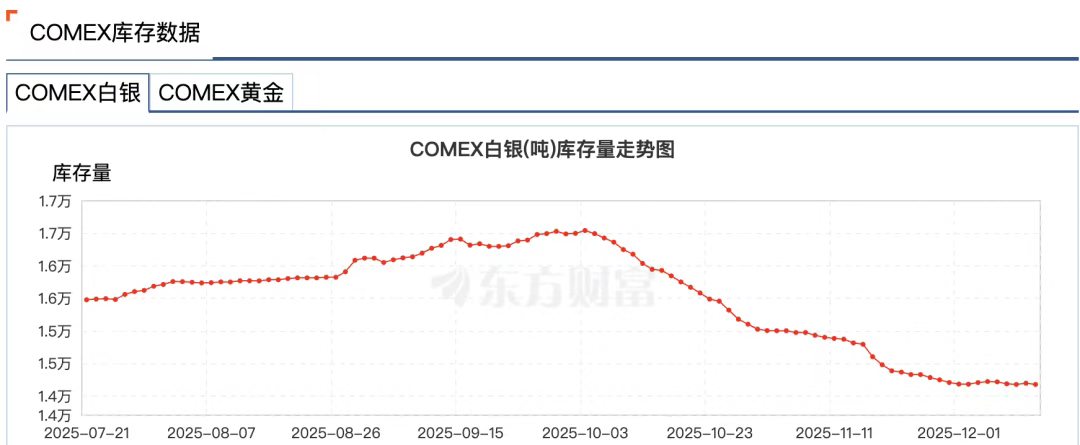
Данные Wind показывают, что на неделе 24 ноября запасы серебра на Шанхайской золотой бирже снизились на 58,83 тонны до 715,875 тонн, что стало最低值 с 3 июля 2016 года. Запасы серебра на CMOEX (вероятно, опечатка, имеется в виду COMEX) сократились с 16,5 тыс. тонн в начале октября до 14,1 тыс. тонн, снижение на 14%.
Причина также不难理解,在美元降息周期下,大家不愿意以美元交割,另一个隐形的担忧是,交易所可能拿不出那么多白银用于交割。
Современный рынок драгоценных металлов представляет собой高度金融化的体系,大部分「白银」只是账面数字,真正的银锭在全球范围内反复抵押、租借、衍生。一盎司实物白银,可能同时对应着十几张不同的权利凭证。
Как отмечает资深交易员 Энди Шектман на примере Лондона, в LBMA仅有 1.4 亿盎司浮动供应,但日交易量高达 6 亿盎司,在这 1.4 亿盎司上却存在超过 20 亿盎司的纸面债权。
Такая «система частичного резервирования» хорошо работает в обычное время, но как только все захотят получить физический металл, во всей системе возникает кризис ликвидности.
Когда возникает тень кризиса, на финансовых рынках, кажется, всегда появляется странное явление, в просторечии называемое «обрывом сетевого кабеля».
28 ноября CME из-за «проблем с охлаждением центра обработки данных» простаивала почти 11 часов, что стало рекордным по продолжительности простоем в истории, в результате чего обновление фьючерсов на золото и серебро на COMEX было невозможно.
Примечательно, что сбой произошел в关键时刻 пробития исторического максимума по серебру: в тот день спотовое серебро пробило отметку в 56 долларов, а фьючерсы на серебро превысили 57 долларов.
Появились рыночные слухи, предполагающие, что простой был предназначен для защиты товарных маркет-мейкеров, подвергшихся экстремальному риску и потенциально несущих крупные убытки.
Позже оператор центра обработки данных CyrusOne заявил, что этот серьезный сбой был вызван ошибкой оператора, что лишь подогрело различные «теории заговора».
Короче говоря, такая конъюнктура, движимая сжатием на фьючерсном рынке,注定 обусловливает высокую волатильность рынка серебра, серебро фактически превратилось из традиционного защитного актива в высокорискованный инструмент.
Кто за этим стоит?
В этой драме сжатия нельзя обойти стороной одно имя: JPMorgan Chase.
Причина проста: он признанный маркет-мейкер на рынке серебра на международной арене.
По крайней мере, в течение восьми лет с 2008 по 2016 год JPMorgan через своих трейдеров манипулировал ценами на золото и серебро.
Метод был простым и грубым: размещение на фьючерсном рынке крупных заявок на покупку или продажу контрактов на серебро для создания ложной картины спроса и предложения, побуждения других трейдеров следовать тренду, а затем отмена заявок в последнюю секунду для получения прибыли от колебаний цен.
Эта практика, известная как спуфинг (spoofing), в конечном итоге привела JPMorgan к штрафу в размере 920 миллионов долларов в 2020 году, который в свое время стал рекордным штрафом CFTC.
Но настоящая манипуляция рынком уровня учебника» на этом не заканчивается.
С одной стороны, JPMorgan путем крупных коротких продаж на фьючерсном рынке и спуфинга занижал цену серебра, с другой стороны, на созданных им самим низких ценах массово скупал физический металл.
Начиная с пика цен на серебро near 50 долларов в 2011 году, JPMorgan начал накапливать серебро на своих складах COMEX, в то время как другие крупные институты сокращали позиции по серебру, он一路加持, в какой-то момент достигнув 50% от общих запасов серебра на COMEX.
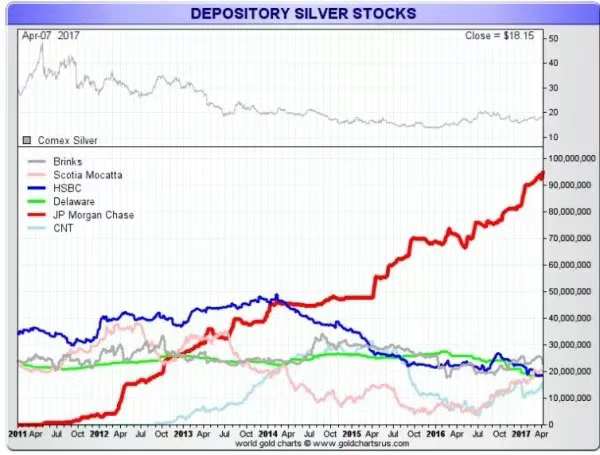
Эта стратегия использовала структурные недостатки рынка серебра: цена «бумажного серебра» определяет цену физического серебра, а JPMorgan мог влиять на цену бумажного серебра и одновременно был одним из крупнейших держателей физического серебра.
Какую же роль играет JPMorgan в этом раунде сжатия по серебру?
На поверхности, кажется, JPMorgan «исправился». После соглашения 2020 года он провел системные реформы соответствия, включая найм сотен новых сотрудников по compliance.
В настоящее время нет никаких доказательств того, что JPMorgan участвовал в сжатии, но на рынке серебра JPMorgan по-прежнему обладает значительным влиянием.
Согласно последним данным CME от 11 декабря, JPMorgan в системе COMEX владеет около 196 миллионов унций серебра (собственные + брокерские), что составляет почти 43% от всех биржевых запасов.
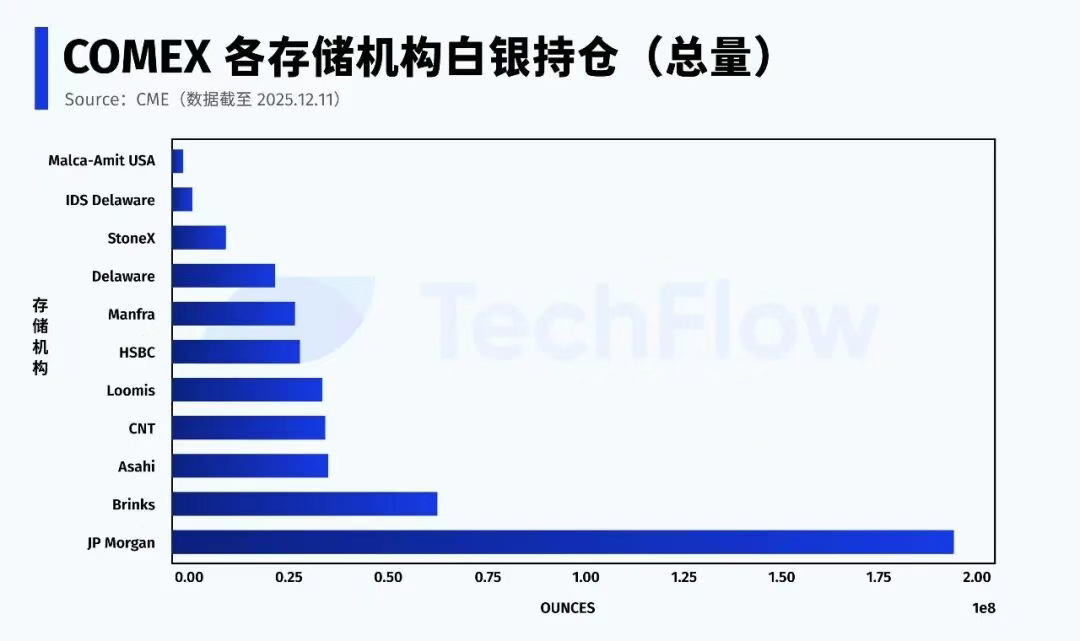
Кроме того, JPMorgan имеет особый статус — хранителя серебряного ETF (SLV). По состоянию на ноябрь 2025 года он хранит 517 миллионов унций серебра стоимостью 32,1 миллиарда долларов.
Что еще более важно, в части Eligible silver (т.е. серебра, соответствующего требованиям для поставки, но еще не зарегистрированного как поставляемое) JPMorgan контролирует более половины объема.
В любом раунде сжатия на рынке серебра рынок по сути делает ставку на два момента: во-первых, кто может предоставить физическое серебро; во-вторых, будет ли это серебро и когда будет разрешено к поставке.
В отличие от прошлого, когда он был крупным медведем по серебру, теперь JPMorgan занимает позицию «шлюза серебра».
В настоящее время зарегистрированное (Registered) серебро, доступное для поставки, составляет лишь около 30% от общих запасов, и когда основная часть Eligible серебра高度 сконцентрирована у少数 институтов, стабильность фьючерсного рынка серебра фактически зависит от поведения крайне ограниченного числа узлов.
Бумажная система постепенно дает сбои
Если охарактеризовать нынешний рынок серебра одной фразой, то это:
Конъюнктура продолжается, но правила изменились.
Рынок претерпел необратимые изменения, доверие к «бумажной системе» серебра рушится.
Серебро не является исключением, на рынке золота происходят аналогичные изменения.
Запасы золота на Нью-Йоркской товарной бирже продолжают снижаться, зарегистрированное золото (Registered) неоднократно достигало низких уровней, и бирже пришлось переводить слитки из изначально не предназначенного для поставок «合格金 (Eligible)» для завершения расчетов.
В глобальном масштабе капитал悄然进行一次 миграции。
В течение последних десяти с лишним лет основным направлением размещения активов была高度金融化: ETF, деривативы, структурированные продукты,杠杆工具 — все могло быть «секьюритизировано».
Теперь все больше средств начинает уходить из финансовых активов в поисках физических активов, не зависящих от финансовых посредников и кредитного обеспечения, типичными примерами являются золото и серебро.
Центробанки持续、大规模增持黄金, почти无一例外选择实物形式, Россия禁止黄金出口, даже такие западные страны, как Германия и Нидерланды, потребовали возврата золотых резервов, хранящихся за рубежом.
Ликвидность уступает место определенности.
Когда предложение золота не может удовлетворить огромный спрос на физический металл, капитал начинает искать заменители, и серебро естественным образом становится首选.
Суть этого движения в сторону физических активов — это перераспределение права定价 валют в условиях ослабления доллара и деглобализации.
Согласно отчету Bloomberg за октябрь,全球黄金正在从西方向东方转移。
Данные американской CME и Лондонской ассоциации рынка драгоценных металлов (LBMA) показывают, что с конца апреля более 527 тонн золота вытекло из хранилищ двух крупнейших западных рынков — Нью-Йорка (США) и Лондона (Великобритания). В то же время импорт золота в такие азиатские страны — крупные потребители золота, как Китай, увеличился: импорт золота в Китае в августе достиг четырехлетнего максимума.
Чтобы应对市场变化, в конце ноября 2025 года JPMorgan переместил свою команду по торговле драгоценными металлами из США в Сингапур.
За резким ростом золота и серебра стоит возвращение концепции «золотого стандарта». В краткосрочной перспективе это, возможно, нереально, но可以确定的是:谁掌握更多实物,谁就拥有更大定价权。
Когда музыка прекратится, спокойно сесть смогут только те, у кого в руках настоящее золото и серебро.