The Largest IPO in History Is Approaching, Surpassing SpaceX, 28 Years of AI Self-Iteration, Countdown to Intelligence Explosion

marsbitОпубликовано 2026-05-11Обновлено 2026-05-11

Введение

"Anthropic Nears Trillion-Dollar IPO, Fueled by Explosive Growth and 2028 'Intelligence Explosion' Warning Anthropic is considering a deal valuing the AI company near $1 trillion, potentially leading to one of the largest IPOs ever and surpassing SpaceX. Its revenue has skyrocketed, with Annual Recurring Revenue (ARR) reaching $45 billion in May 2026—a 500% increase in just five months. This vertical growth curve is attributed to its key products, Claude Code and Cowork, dominating AI coding and enterprise collaboration. Beyond commercial success, co-founder Jack Clark issued a pivotal warning in an interview: there is a greater than 50% chance that by the end of 2028, AI systems will achieve recursive self-improvement—the ability to autonomously build a 'better version' of themselves, initiating an 'intelligence explosion.' This prophecy underpins the company's astronomical valuation, as the market prices in the potential for transformative and disruptive AI. Further signaling its ambition, Anthropic formed a $1.5 billion joint venture with Goldman Sachs and Blackstone, aiming to disrupt traditional consulting firms like McKinsey by deploying Claude AI for complex strategic work. This move tests AI's capacity to replace high-level cognitive labor, a precursor to its predicted autonomous evolution. The narrative presents a dual future: unprecedented economic opportunity alongside significant risks like economic restructuring and security threats. Anthropic's meteoric rise...

【Introduction】Recently, Anthropic's valuation has approached $1 trillion, its IPO may surpass SpaceX, and its ARR skyrocketed to $45 billion in just 5 months! It's even joining forces with Goldman Sachs to take on McKinsey. Co-founder warns: AI may begin 'building itself' by 2028. The countdown to the intelligence explosion has officially begun.

Just now, the foreign media Financial Times broke explosive news: Anthropic is considering a deal with a valuation close to $1 trillion!

Founded in 2021, this company is less than 5 years old, yet its valuation has gone from zero to nearly a trillion.

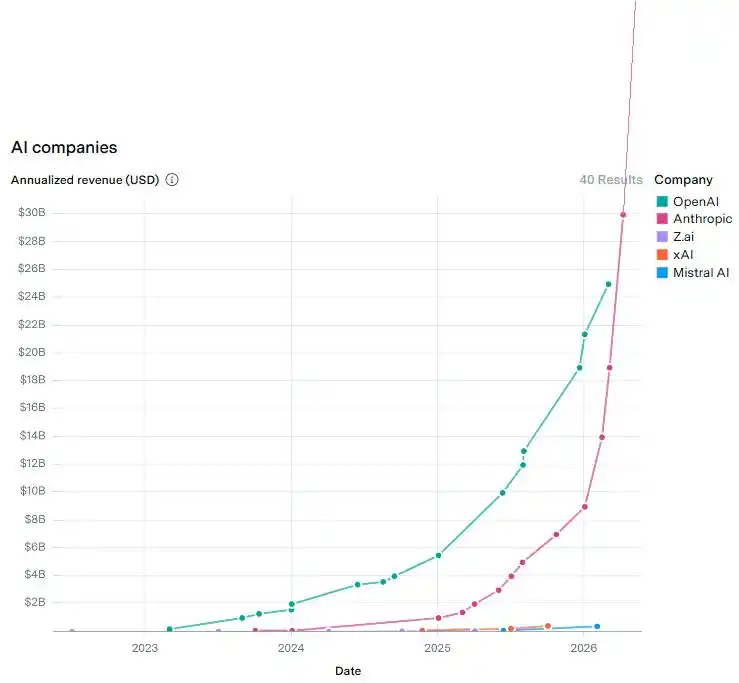
In May of this year, its Annual Recurring Revenue (ARR) had already soared to $45 billion, with revenue growing 500% in just 5 months.

The steep revenue curve shown below is unprecedented in the entire history of technology and business!

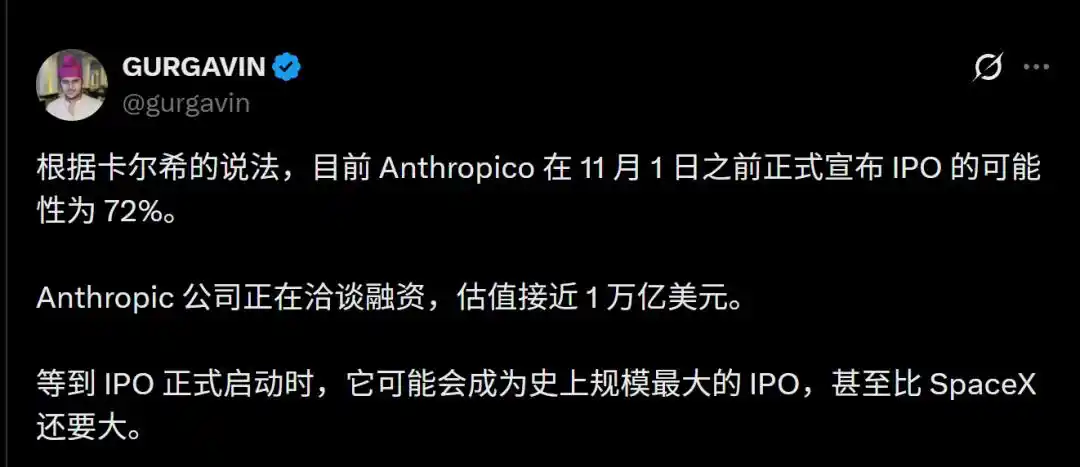
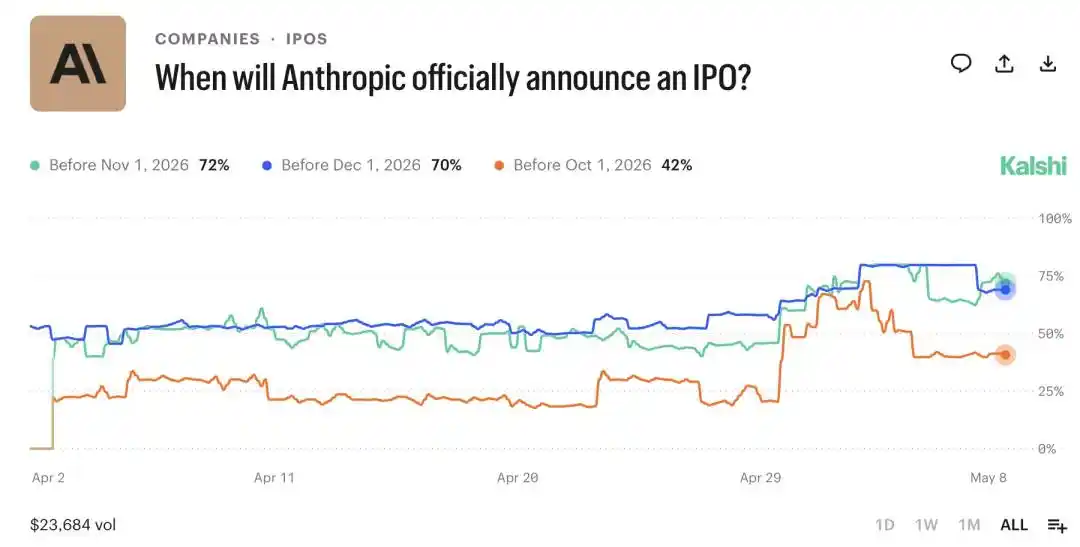
Today, the prediction market platform Kalshi shows that the probability of Anthropic announcing an IPO by November 1st of this year is as high as 72%.

Market rumors suggest its valuation is rushing toward $1 trillion. If it successfully goes public, it would become one of the largest IPOs in history, directly surpassing SpaceX!
And just two days ago, Anthropic's implied valuation in the on-chain Pre-IPO market had already surged to $1.2 trillion.

This astonishing speed of commercial expansion heralds Anthropic's entry into an era as a market-devouring behemoth.

However, what truly makes this story extraordinary is the public prophecy made by co-founder Jack Clark in a recent interview—that AI will achieve self-evolution by the end of 2028.

It can be said that Anthropic's trillion-dollar valuation is the market pricing in the expectation of an intelligence explosion!

Unprecedented, the Growth Curve Goes Vertical

First, let's look at a set of numbers that are already breathtaking enough.

In 2022, Anthropic's revenue was $10 million.

In 2023, it grew to $100 million—an increase that was still considered normal in Silicon Valley.

The real 'absurdity' began in 2025.
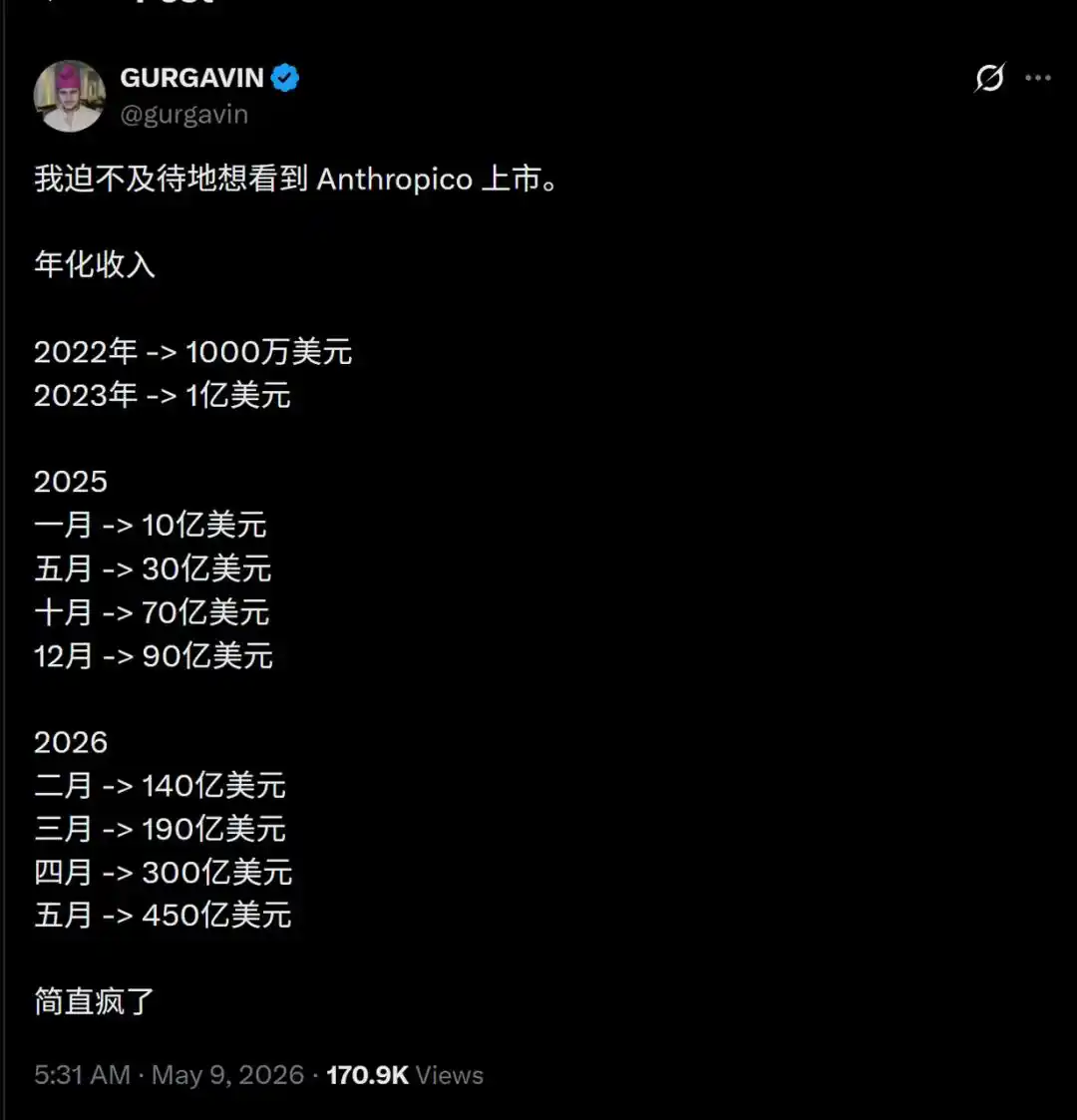
That year, Anthropic's revenue seemed to have a cheat code: from $1 billion in January, it shot directly to $9 billion by year-end. A ninefold increase in a year, with the growth curve noticeably steepening.

Entering 2026, this curve is no longer just steep; it has gone completely 'vertical'!

February: $14 billion

March: $19 billion

April: $30 billion

May: $45 billion

A 500% surge in revenue in just five months.

Calculating from $10 million in 2022, in four and a half years, Anthropic's revenue has multiplied a staggering 4,500 times.

And just in May, CEO Dario Amodei officially announced at a conference: first-quarter revenue and usage grew 80 times year-over-year.

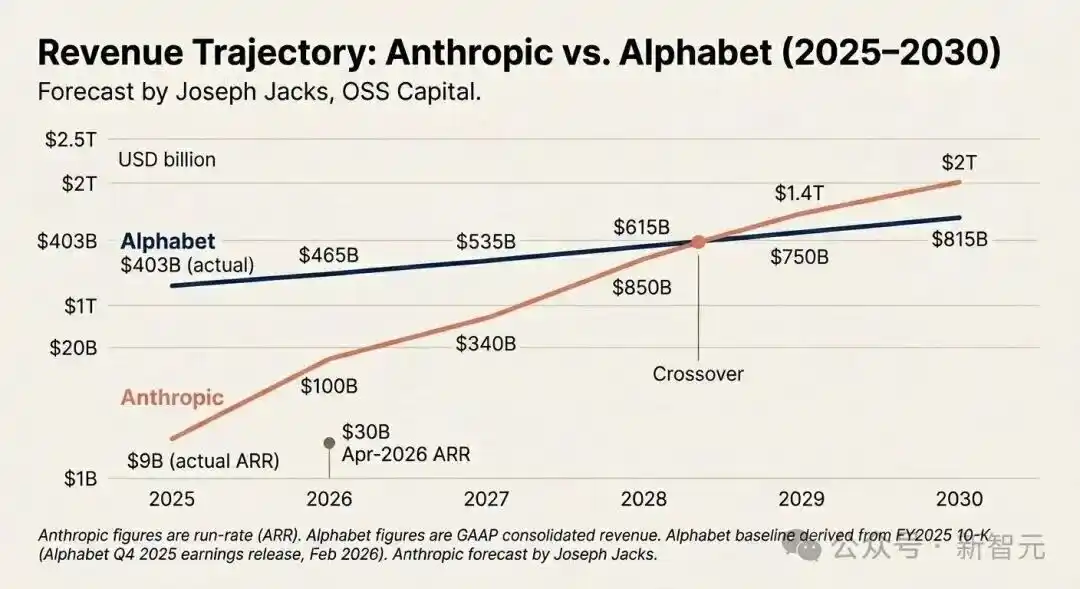
OSS Capital founding partner Joseph Jacks even made a prediction that sounds almost insane: if Anthropic maintains its current growth rate, by mid-2028, its revenue will surpass that of Alphabet, Google's parent company.
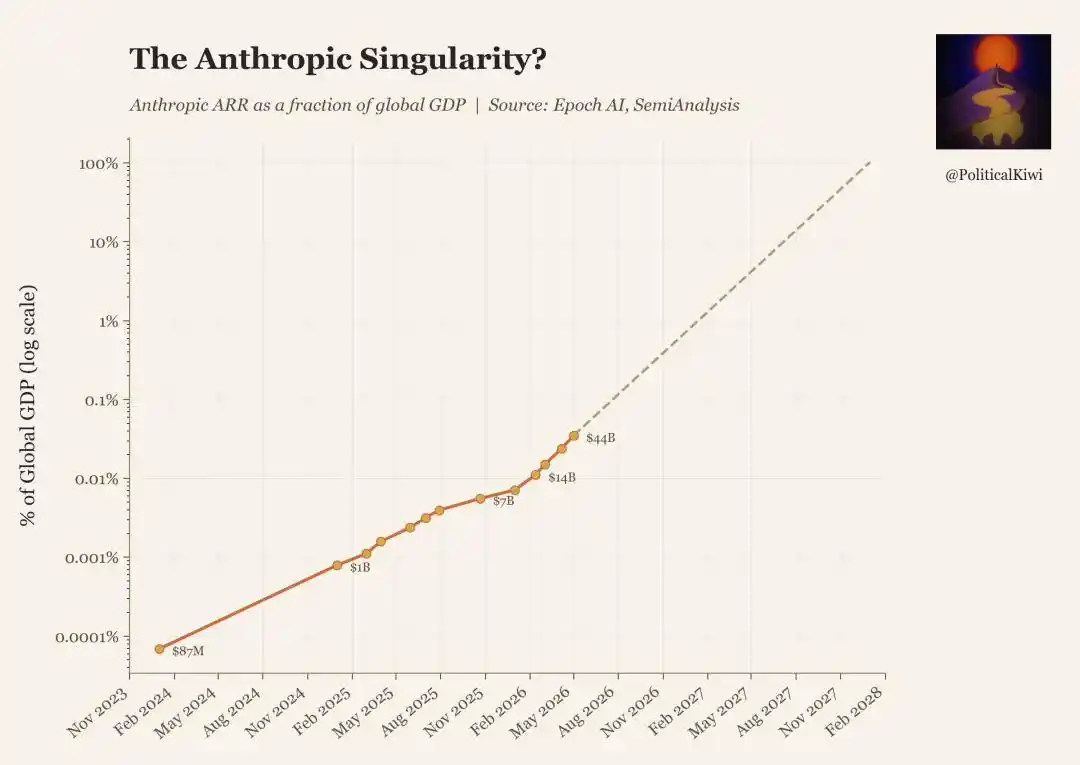
At the current exponential growth rate, Anthropic's annualized revenue will reach 100% of global GDP by early 2028

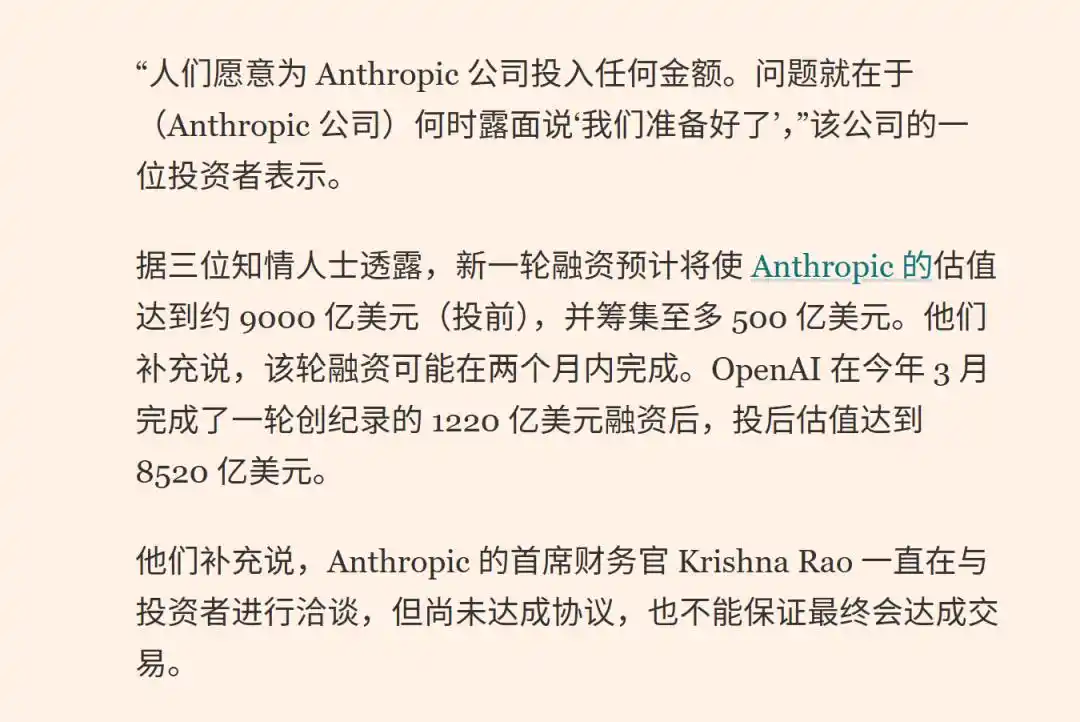
The Financial Times reports that a new round of financing is already on the way.

Valuation? Pre-money $900 billion, with a financing scale potentially as high as $50 billion, and it's highly likely to be finalized within two months.

The current situation is that top-tier institutions like Dragoneer, General Catalyst, and Lightspeed are queuing up at the door. Even before the CFO formally kicks off the financing process, existing shareholders have already started 'fighting' over allocations.

One investor told the Financial Times with emotion: It's no longer a question of money now. If Anthropic just looks up and says 'we're ready to take money,' funds from all over the world would immediately pour in.
Why Now? Two Products, Gripping the Throat of the Era

The revenue curve didn't go vertical by luck, but by two flagship products—Claude Code and Cowork.

They perfectly hit the massive explosion in demand for AI coding and intelligent agents in 2026. One handles code, the other handles office collaboration.

While the entire tech industry is cramming AI into development workflows and enterprise collaboration, Anthropic has already become the lifeblood in these two arteries.

But a question arises: If Anthropic were just a company selling APIs and AI tools, its ceiling should be the SaaS ceiling, not a trillion-dollar market cap.

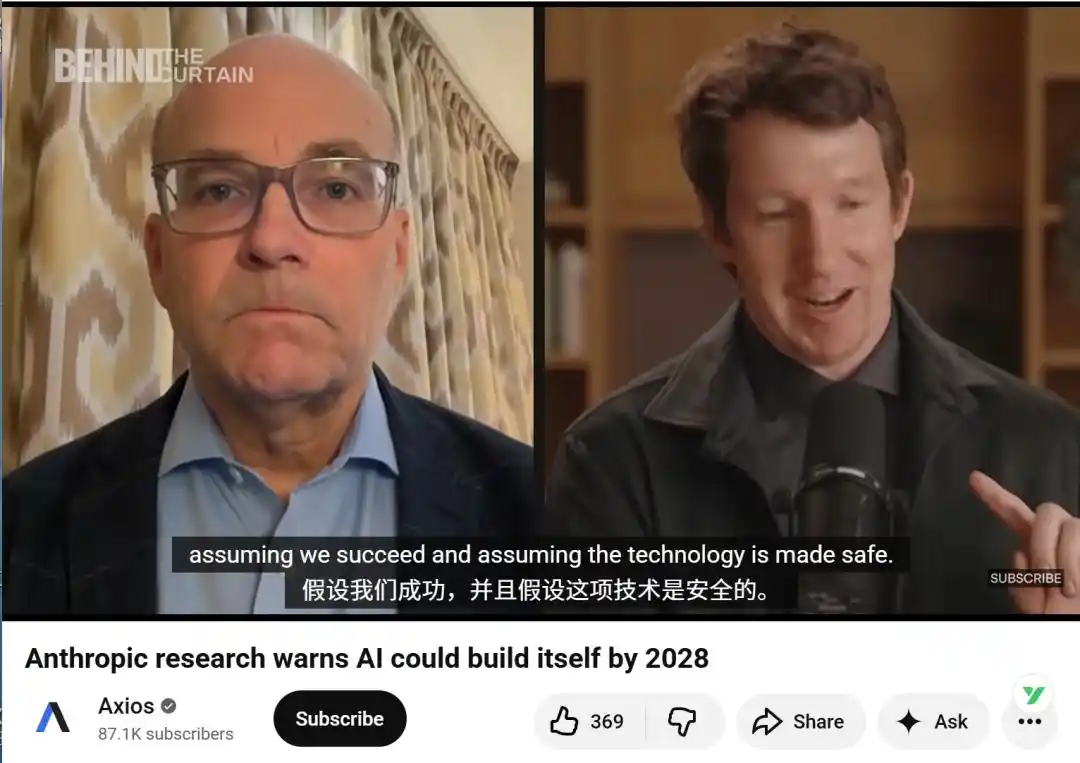
What really made Wall Street change its calculations is another matter—and this matter was precisely laid out completely by Jack Clark in his interview with Axios.
The 2028 Prophecy: When AI Begins Self-Iteration

In this exclusive interview, Jack Clark said something easily overlooked but extremely important:

We have gone from AI systems that could only do basic coding, to AI systems now participating in scientific production itself, and in all the unglamorous but fundamental engineering work involved in any large-scale R&D project.

Here's how to understand it: Previous AI was used to write code, answer questions, and organize documents.

Anthropic's AI today is replacing or accelerating the 'R&D' process itself.

Going a step further, Jack Clark gave a prophecy for 2028.

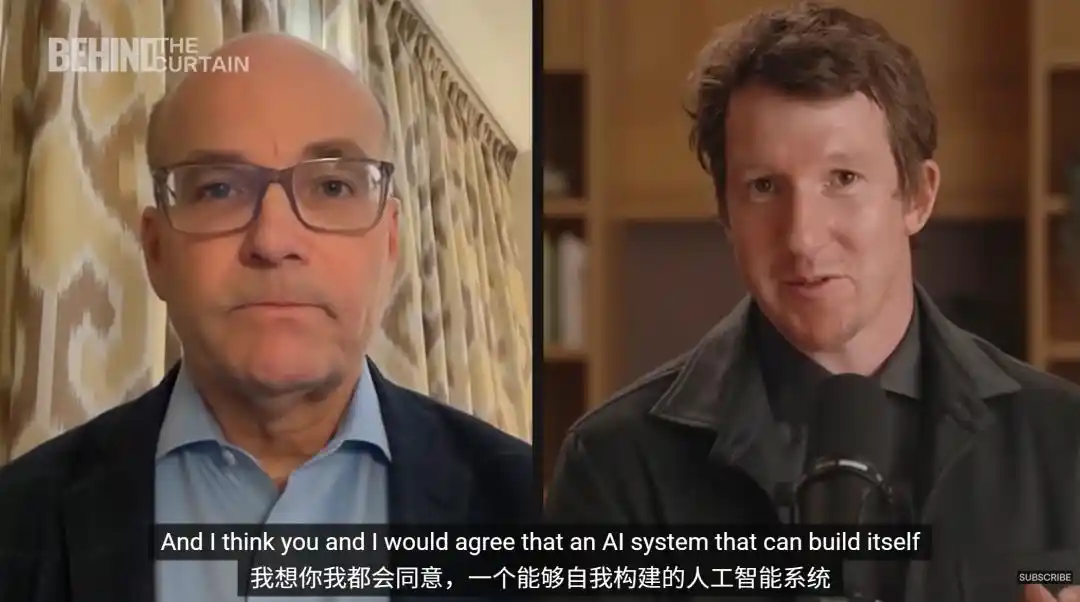
"My forecast is that by the end of 2028, there's a better than 50% chance that AI systems will be able to, once you tell them to make a better version of themselves, go and do that completely autonomously."

To help people understand what this means, he used an excellent analogy:

All AI companies today are like 3D printer companies. We have a group of extremely talented people researching how to make higher-resolution print heads.

The problem is—what if the 3D printer could print a better print head itself? What if it could start manufacturing better versions of itself?

Humanity has never encountered a technology like this before. Previously, it was always humans, outside the technology, coming up with ideas for improvement and then feeding them back in.

If there is a technology that can generate ideas for improving itself from within itself—this is a completely new concept.

In the interview, Clark formally used the term 'intelligence explosion,' referring to AI systems beginning to improve themselves rapidly and recursively.

When the intelligence explosion begins, the world will simultaneously face unprecedented opportunities and risks: cybersecurity threats, biological weapon risks, economic restructuring, and employment shocks.

And this is the true object being priced by Anthropic's trillion-dollar valuation.
Wall Street's 'Sword': AI Teams Up with Capital to Snipe the Consulting Industry

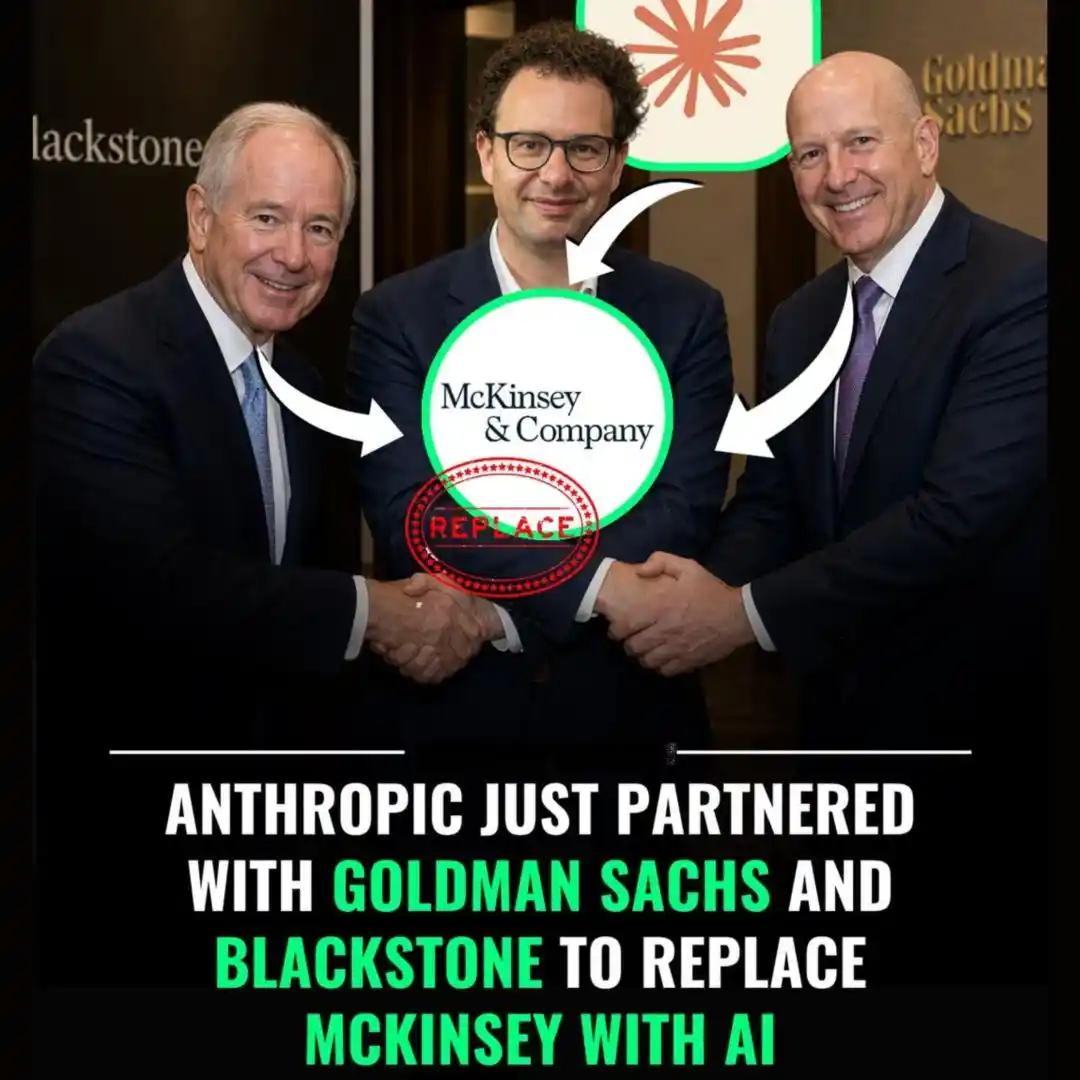
Once you understand the 2028 prophecy, looking back at Anthropic's formation of a $1.5 billion joint venture with Goldman Sachs and Blackstone, your perception will be completely different.

In May, Anthropic announced the formation of a $1.5 billion joint venture with Goldman Sachs and Blackstone Group.

On the surface: Anthropic plans to use Claude AI and its engineering team to replace traditional consulting giants like McKinsey, Boston Consulting Group, and Deloitte.

But at a deeper level, Jack Clark revealed a key piece of information in the interview:

The future challenge lies in how to widen the extremely narrow 'pipes' in the economy—such as the channels from idea to implementation for new drugs or new strategies.

Why hasn't the consulting industry been disrupted in 100 years? Because the 'pipe' for complex strategic advice is monopolized by a very small number of highly intelligent, highly experienced individuals.

What Anthropic is doing is not deploying Claude as a chat window, but deploying it as a working system for executable strategy.

This is essentially testing an extremely critical question: On the path to self-evolving AI by 2028, can high-order cognitive labor be replaced by AI?

If even McKinsey can be impacted, it means—what Wall Street is betting on is never just a better chatbot, but an intelligent agent capable of systematically replacing high-end intellectual labor, one that is on the verge of self-evolution.
2028, The Countdown Has Begun!

At this point, we understand the crazy numbers from the beginning of the article.

Anthropic's revenue curve went 'vertical' not because the sales team unlocked a cheat code, but because AI has already entered the R&D process itself.

And when AI enters R&D, recursive self-improvement is no longer a question of 'if,' but 'when.'

Jack Clark's warning and Anthropic's meteoric rise present us with a future that is deeply fractured, yet remarkably consistent:

On one side, a valuation approaching $1 trillion; on the other, a potentially uncontrollable intelligence explosion and the restructuring of the economic order.

2028 is no longer just a distant number on the calendar; it's more like a—countdown that has already started.

And Anthropic's cards are not all on the table yet.

References:

https://www.youtube.com/watch?v=sViyNJzf-OQ&t=5s

https://x.com/scaling01/status/2052828949936316605

https://x.com/gurgavin/status/2052888358628499858

https://x.com/EpochAIResearch/status/2052847400650518804

This article comes from the WeChat public account "New Zhiyuan," edited by: Aeneas

Связанные с этим вопросы

QWhat are the key financial milestones that have fueled speculation about Anthropic's record-breaking IPO?

AKey milestones include: ARR skyrocketing to $45 billion in May 2026 (a 500% increase in 5 months); a four-and-a-half-year revenue growth of 4500x from $10 million in 2022; an implied valuation reaching $1.2 trillion in pre-IPO markets; and reported negotiations for a new funding round at a $900 billion pre-money valuation.

QAccording to co-founder Jack Clark, what is the significant shift in AI capability that Anthropic represents, leading to his 2028 prediction?

AThe shift is from AI systems performing basic coding tasks to AI participating in 'scientific production itself' and the fundamental engineering work of large-scale R&D projects. This move into the research and development process itself is the precursor to Clark's prediction of AI achieving recursive self-improvement.

QWhat is the '2028 prophecy' made by Anthropic's co-founder Jack Clark regarding AI development?

AJack Clark predicts that by the end of 2028, there is a greater than 50% probability that AI systems will be capable of fully autonomously improving themselves upon being instructed to 'make a better version of itself,' initiating a process of recursive self-improvement or 'intelligence explosion.'

QHow does Anthropic's joint venture with Goldman Sachs and BlackRock signify a deeper strategic test beyond competing with consulting firms?

AThe venture tests whether AI can systematically replace high-level cognitive labor by deploying Claude as a work system for executable strategy, rather than just a chat interface. It probes if AI can widen the 'narrow pipes' for complex strategic advice, challenging the monopoly of elite human expertise and serving as a benchmark for AI's potential to replace advanced intellectual work on the path to self-evolving systems.

QWhat two core products are cited as the primary drivers behind Anthropic's vertical revenue growth curve in 2026?

AThe two core products are Claude Code, which addresses the explosive demand for AI in coding, and Cowork, which caters to the surge in demand for intelligent agents in workplace collaboration. These products positioned Anthropic as essential infrastructure in these key market arteries.

Похожее

24/7 Unstoppable Derivatives Wave: Cryptocurrency Is Forcing Traditional Finance to 'Change Time Zones'

The article discusses how the 24/7 nature of the cryptocurrency market is compelling traditional finance to adapt its operating hours and infrastructure. The key catalyst is the CME Group's planned launch of nearly round-the-clock trading for regulated crypto derivatives, a move driven by strong institutional demand for continuous risk management. This shift highlights a fundamental change: derivatives, not spot trading, now dominate crypto market activity and price discovery. However, integrating continuous trading into traditional finance reveals structural tensions. While execution times can be extended, settlement, clearing, and regulatory reporting largely remain bound to traditional business-day cycles. This creates a lag where weekend price movements can impact risk exposures before traditional control systems are fully active. Furthermore, the article explores new challenges arising from this always-on environment. The inherent transparency of public blockchains, while ensuring auditable settlement, also exposes sensitive corporate information like treasury flows to competitors in real-time. This has elevated privacy from a feature to a core requirement for institutional adoption. The next phase hinges on building systems that balance this necessary privacy with regulatory accountability and compliance. In conclusion, the move towards 24/7 trading signifies more than crypto becoming institutionalized. It represents traditional finance beginning to adopt the temporal structure of crypto-native markets. The future will be defined by how successfully traditional risk, identity, privacy, and settlement frameworks can operate at the continuous speed cryptocurrency markets demand.

marsbit31 мин. назад

24/7 Unstoppable Derivatives Wave: Cryptocurrency Is Forcing Traditional Finance to 'Change Time Zones'

marsbit31 мин. назад

Unitree Passes the Hearing, Hangzhou Reaps the Rewards

Unitree Technology, a leading company in Hangzhou's tech scene known as one of the "Hangzhou Six Dragons," has officially passed the review for listing on the Shanghai Stock Exchange's STAR Market (科创板). It plans to raise 4.202 billion yuan for the research and development of intelligent robot models and robot hardware. This milestone will make Unitree the "first humanoid robotics stock." Founded in 2016 by Wang Xingxing, the company started humbly in a small office in Hangzhou's Binjiang district. Initially, the robotics sector was not viewed favorably by the market, with Unitree's products often labeled as "toys" and struggling to secure funding. At its most critical point, with only around 100,000 yuan left, Wang stopped his own salary to keep the company afloat. A crucial turning point came in 2018 when Hangzhou's state-owned capital system provided timely support. A financial platform under the city's state-owned assets completed due diligence in three days and granted a 20-million-yuan loan within a week. This "patient capital" infusion stabilized Unitree, enabling its transition from prototype development to mass production and commercial viability. Subsequently, Hangzhou Capital, through its two major 100-billion-yuan mother funds—the Hangzhou Science and Technology Innovation Fund and the Hangzhou Innovation Fund—participated in four of Unitree's financing rounds (B2, B3, C, and C+). This continuous backing helped the company grow, attract top-tier industrial investors like China Mobile, Tencent, Alibaba, and Geely, and solidify its position as a global leader in legged robotics. By 2025, Unitree achieved significant scale, with revenue reaching 16.99 billion yuan, net profit of 5.91 billion yuan, global leadership in humanoid robot shipments, and over 33,000 quadruped robots sold worldwide. Unitree's journey exemplifies Hangzhou's strategy of nurturing hard-tech startups from "seedlings" to industry leaders. Beyond Unitree, Hangzhou's capital ecosystem has supported other "Six Dragons" like Cloudwalk, BrainCo, and DeepSeek. The city has established a 500-billion-yuan "3+N" industrial fund cluster and specialized early-stage funds like the "Runmiao Fund" with a 20-year term to fill funding gaps for very early-stage projects. This robust "capital + talent" model, coupled with an influx of over 430,000 young professionals in 2025 alone, has fostered a vibrant innovation ecosystem. Hangzhou is now home to 48 unicorns and 413 potential unicorns, building comprehensive industrial chains in AI, robotics, brain-computer interfaces, and more. As Hangzhou experiences a wave of IPOs, it is solidifying its reputation as an ideal city for entrepreneurs.

marsbit56 мин. назад

Unitree Passes the Hearing, Hangzhou Reaps the Rewards

marsbit56 мин. назад

Are Rising U.S. Stocks Getting More Dangerous? Goldman Sachs: Downside Protection Mechanisms Have Almost Failed

The US stock market rally is showing signs of becoming increasingly precarious as key downside protection mechanisms fail, according to Goldman Sachs. Derivatives strategist Brian Garrett notes that the S&P 500 options volatility skew has plunged to an 18-month low, indicating the market now prices an 8% probability for both a 10% drop and a 10% rise—a sign of "skew failure." Concurrently, Goldman's Panic Index hit a two-year low, reflecting minimal demand for tail-risk hedging. This complacency emerges amid a relentless market surge, with the S&P 500 setting new records frequently in 2024. Garrett highlights three major concerns: extreme concentration in the top ten stocks (40% of index weight), heavy reliance on AI-themed performance, and a price pattern eerily similar to the 1998-1999 period. Despite pervasive media pessimism, this fear is absent in options pricing. Downside hedge costs are historically low. Goldman suggests tactical trades: buying RSP outperformance options versus the SPX for a broadening rally, purchasing VIX calls for protection, and going long on Bitcoin ETF volatility. Hedge funds have been net buyers for two weeks, with sector rotation into financials and out of industrials. Notably, the global single-stock leveraged/ inverse ETF AUM has doubled to over $60 billion in two months, underscoring growing speculative activity.

marsbit1 ч. назад

Are Rising U.S. Stocks Getting More Dangerous? Goldman Sachs: Downside Protection Mechanisms Have Almost Failed

marsbit1 ч. назад

Торговля

Спот
Фьючерсы

Популярные статьи

Неделя обучения по популярным токенам (2): 2026 может стать годом приложений реального времени, сектор AI продолжает оставаться в тренде

2025 год — год институциональных инвесторов, в будущем он будет доминировать в приложениях реального времени.

1.8k просмотров всегоОпубликовано 2025.12.16Обновлено 2025.12.16

Неделя обучения по популярным токенам (2): 2026 может стать годом приложений реального времени, сектор AI продолжает оставаться в тренде

Обсуждения

Добро пожаловать в Сообщество HTX. Здесь вы сможете быть в курсе последних новостей о развитии платформы и получить доступ к профессиональной аналитической информации о рынке. Мнения пользователей о цене на AI (AI) представлены ниже.

活动图片