The History of Crypto Advertising Sponsorships: A Cyclical Experiment in Buying Attention and Legitimacy

marsbitОпубликовано 2026-02-28Обновлено 2026-02-28

Введение

The article "A History of Crypto Advertising Sponsorships: A Cyclical Experiment in Buying Attention and Legitimacy" examines the volatile relationship between cryptocurrency companies and major sports and cultural sponsorships. It begins with the 2021-2022 "gold rush," where crypto firms like FTX, Crypto.com, and Coinbase engaged in massive, high-profile deals for stadium naming rights (e.g., FTX Arena), sports league partnerships (NBA, UFC, F1), and World Cup sponsorships. This period was marked by an attempt to rapidly purchase mainstream legitimacy and public trust. The strategy initially showed success, with Super Bowl ads generating massive short-term spikes in app downloads. However, the collapse of FTX in late 2022 became a major inflection point, turning these expensive sponsorships into liabilities and reputational disasters for the teams and venues involved. The industry subsequently entered a contraction phase, shifting from grand, headline-grabbing deals to more measured, ROI-focused partnerships like sleeve sponsorships and training kit deals (e.g., OKX and Manchester City). The article highlights the inherent tension: these sponsorships were a "pressure test" on whether high-risk financial products could leverage the trust of public institutions for credibility. This often led to controversy, with regulators like the UK's Advertising Standards Authority (ASA) ruling that such ads frequently trivialized investment risks and exploited consumer inexperience. ...

Author: Zen, PANews

In February 2026, when Coinbase's advertisement flickered once again on the giant LED screens of the Super Bowl, flashing the slogan "Crypto. For everybody." to the tune of a Backstreet Boys classic, the audience reacted with a mix of sighs and criticism, a stark contrast to the frenzy of the night four years prior, which was dubbed the "Crypto Bowl."

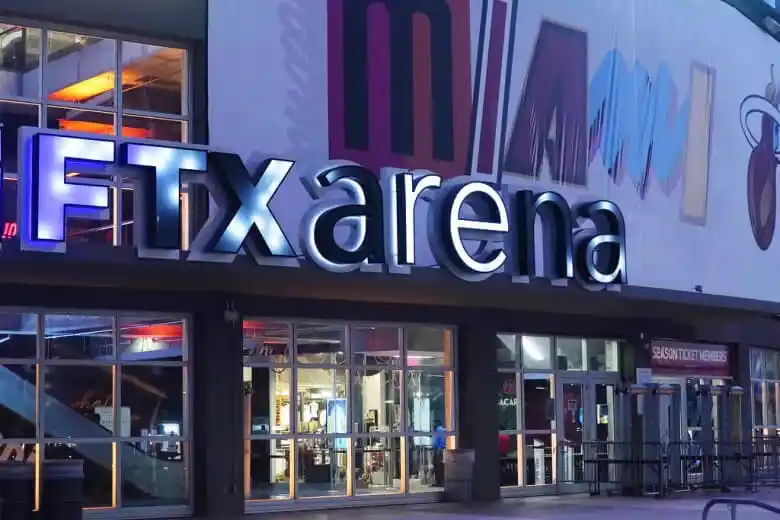
Back then, the FTX logo was still prominently displayed above the Miami Heat's arena. Crypto companies were waving massive checks, attempting to buy decades of mainstream trust in just a few days. However, the subsequent collapse, lawsuits, and the farce of the arena's name change turned this "attention experiment" into one of the most expensive jokes in sports history.

On the surface, it was a branding business, but in essence, it was more like a stress test: when sponsorships embed financial narratives into the daily lives of fans and viewers, trust is amplified. This was fundamentally a long-term experiment in "how high-risk financial products leverage high-trust public institutions to gain attention and legitimacy."

Crypto Company Sponsorships: Setting Sail from the Era of 'Big Money Splashing'

In 2021, with the emergence of a phenomenal bull market, rapidly profit-absorbing cryptocurrency companies began to aggressively penetrate the sports and cultural spheres. Cryptocurrency exchanges and blockchain projects started plastering their brands onto the most expensive, most visible public attention gateways: top leagues, major venues, and global sports broadcasts.

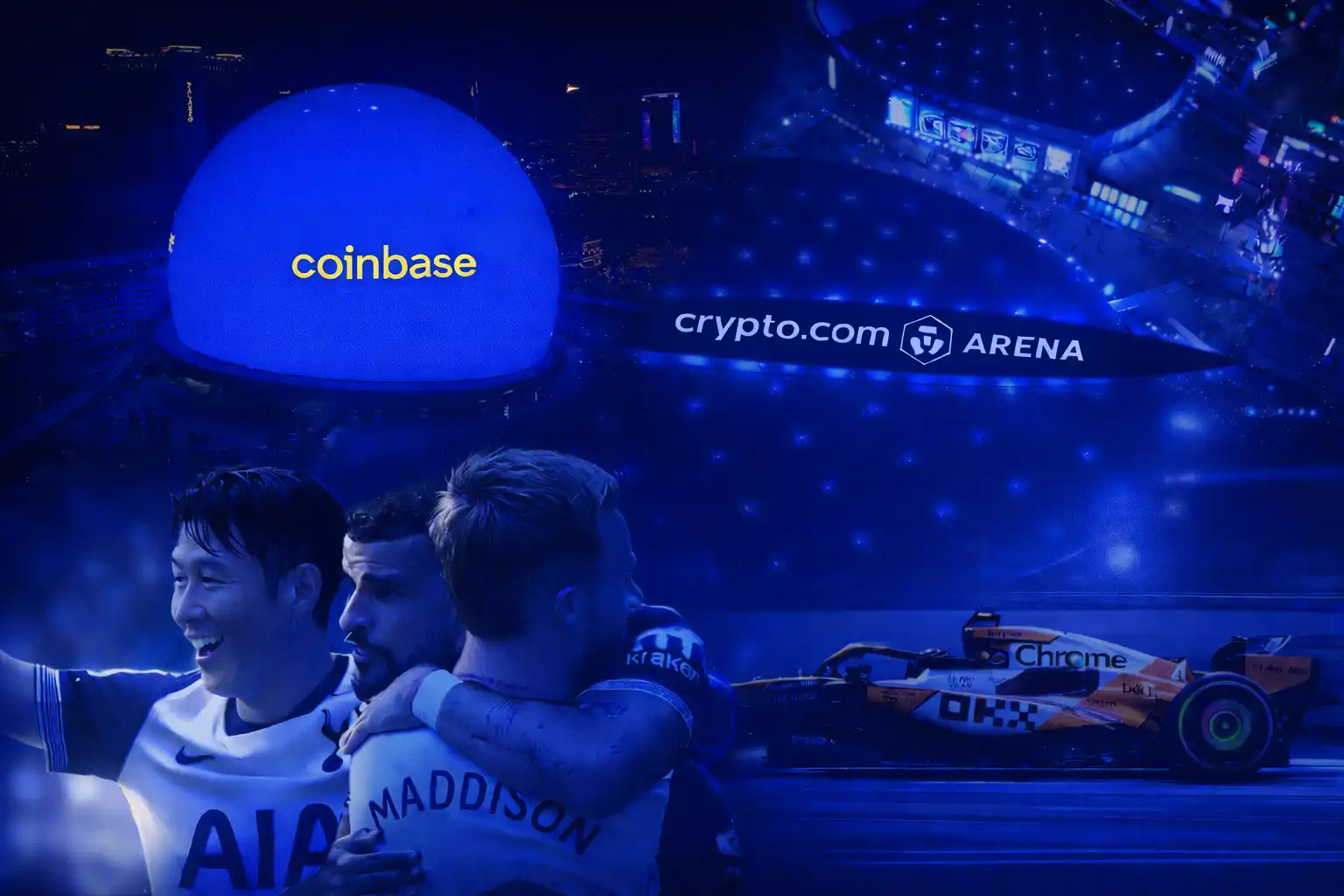
In March of that year, Miami-Dade County reached a 19-year naming rights agreement with FTX, renaming the Miami Heat home court to FTX Arena. This deal, which wrote a crypto company into the narrative of an urban landmark, marked the first large-scale entry of crypto advertising into mainstream urban public space narratives.
In the summer of the same year, Crypto.com reached a fight kit-level partnership with UFC, reportedly valued at around $175 million over 10 years, as disclosed by CNBC. In traditional sports, this level of sponsorship is one of the core commercial assets. Then, in October, Coinbase reached a multi-year official partnership with the NBA/WNBA, with its logo prominently displayed on the base of the basketball hoop.

In November, the news of Staples Center being renamed Crypto.com Arena further amplified this breakout. This arena is not only the home of the prestigious Los Angeles Lakers but also a super landmark for performances, music, and the entertainment industry in Los Angeles. This naming rights deal directly tied the crypto brand to the center stage of sports and pop culture.

During the same period, European football also began to quickly integrate, with Binance becoming the main shirt sponsor for Lazio, promoting fan token narratives and interactive benefits, merging exchange sponsorship with Web3 product conversion into a single commercial chain.

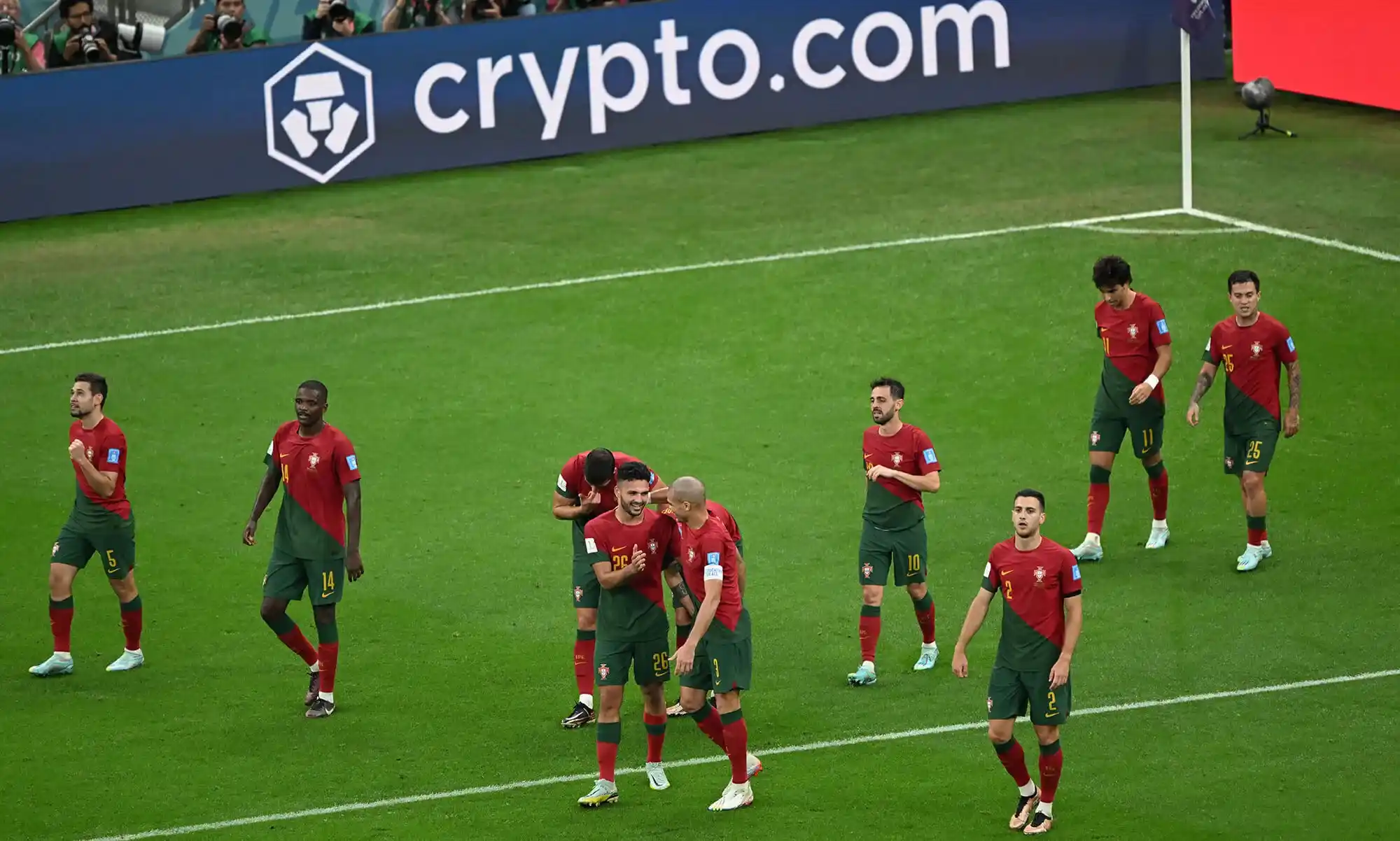
Entering 2022, this curve continued to rise and peaked at the global event level. Crypto.com not only became the global partner of the F1 Sprint series but also secured the title of official sponsor of the 2022 Qatar World Cup, marking the first time a crypto company officially entered the传播体系 (communication system) of the world's largest single sporting event with near-universal coverage.

The crypto industry's massive marketing offensive soon reached an inflection point at the end of 2022. The collapse of FTX quietly turned naming rights into a liability. In January 2023, a bankruptcy judge officially terminated the naming rights deal between Miami-Dade County and FTX, and the venue subsequently entered a process of de-FTX-ification and re-solicitation for sponsorship. This event also became a negative典型案例 (typical case) in the history of sports and cultural sponsorship.

After 2023, the industry as a whole entered a phase of contraction and re-evaluation. Many collaborations scaled back from venue naming rights and top-tier event sponsorships to more easily quantifiable ROI forms like sleeve patches, training kit sponsorships, digital content rights, and fan engagement activities. Sponsors also placed greater emphasis on compliance and sustainable exposure.

In football, OKX's partnership with Manchester City is an example of this more controlled version: starting as an official training kit partner in 2022 and later upgrading to the higher-exposure sleeve patch sponsorship. Its path resembles the gradual升级 (upgrade) of traditional sponsorship rather than an all-in gamble. From a macro-narrative perspective, the main theme of this stage was no longer ubiquitous crypto ads but rather how sports and cultural institutions re-priced the balance between新增收入 (new revenue) and reputational and compliance risks.

In the past two years, a more subtle change has emerged in this trend. Crypto sponsorships haven't disappeared but are increasingly repackaging their relationship with the mainstream using stablecoins, compliant products, and brand credibility.

For example, the 2025 partnership between the Aston Martin F1 team and Coinbase was described as the first publicly announced case of a sponsorship fee being settled entirely in stablecoins. Coinbase's appearance in the 2026 Super Bowl, with its closing slogan "Crypto. For everybody.," demonstrated its attempt to pull cryptocurrency from its early niche circles back into the mainstream narrative of "participation for all."
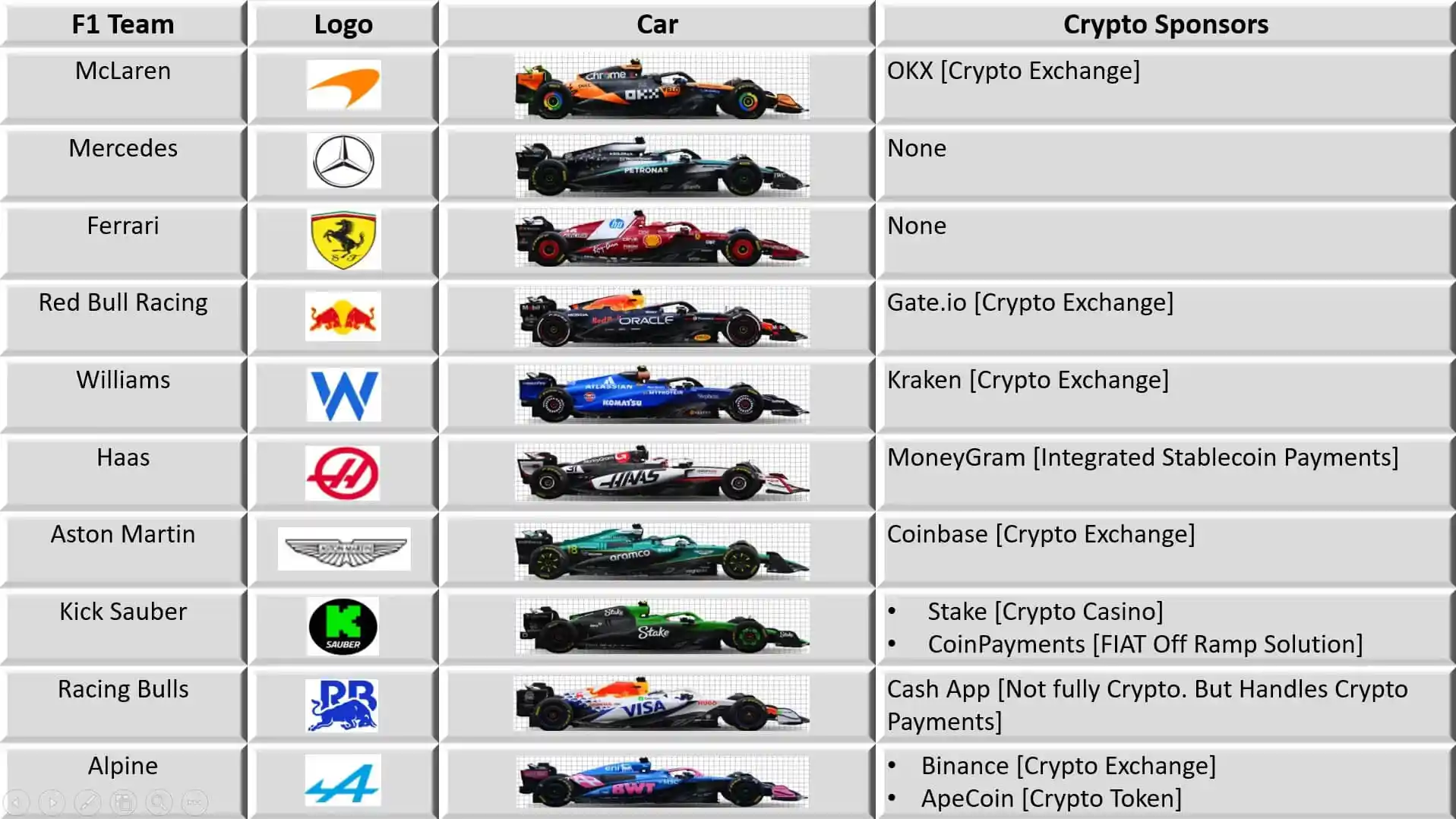
2025 F1 Teams and Crypto Sponsors (Source: reddit)

And this year's F1 season is about to start in March. Last year, the cryptocurrency industry spent $174 million on F1 sponsorship projects alone. This year, cryptocurrency sponsorship has reached a new high: 9 companies sponsor a total of 11 teams.

Exposure, Traffic Acquisition, and Criticism

Among the various advertisements and sponsorships of crypto companies, the exposure and conversion effectiveness of medium to long-term cooperation are difficult to estimate. However, in one-off investments like the Super Bowl, the early results were very significant.

In 2022, on Super Bowl Sunday, Coinbase's installs increased by 309% week-over-week, and by another 286% the next day; eToro saw increases of 132% and 82% respectively; FTX saw increases of 130% and 81% respectively. Coinbase's QR code advertisement caused the app to crash or experience access anomalies due to the massive influx of users scanning it. This indicates that the short-term conversion power of Super Bowl ads确实存在 (does indeed exist), at least in terms of generating peaks in downloads and activations.

However, this kind of explosive growth does not automatically translate into long-term retention, asset沉淀 (accumulation), or compliant operational capabilities. On the medium to long-term level, the hidden costs of sponsorship often materialize集中 (concentratedly) during periods of tightening regulation and enforcement cycles.

Taking the partnership between Premier League club Arsenal and Socios for fan tokens as an example, the UK Advertising Standards Authority (ASA) ruled in 2021 against the related promotional content, stating that the advertisement downplayed high-risk decision-making in the context of crypto assets and did not sufficiently highlight key risk information such as taxes. It ultimately required that the ads not appear again in the complained-about form and that the club adjust the presentation of pages and risk warnings.

As the world's number one sport, football has always been a favored traffic入口 (entry point) for crypto companies. Compared to the crypto industry giants willing to invest heavily, the companies flooding into football leagues and clubs are also more complex, generating more controversy and negative impacts.
In 2024, a book titled "No Questions Asked: How football joined the crypto con" was published, describing football's embrace of crypto sponsorship as a collective dereliction of duty driven by greed and侥幸 (wishful thinking) with almost no due diligence, resulting in fans being treated as an outlet for high-risk, low-regulation financial products, while clubs often offered no apology, explanation, or commitment to improvement after blow-ups.

At the level of sports and the arts, the core矛盾 (contradiction) is that organizations, under financial pressure, introduce high-risk sponsorships, potentially binding their own reputation to the counterparty's credit. Sports sponsorship research categorizes this damage into operational risk and reputational risk: once the sponsor blows up or faces major controversy, the sponsorship asset turns from a "credit enhancement tool" into a "liability."

Expanding to a sociological perspective, the controversy centers on crypto companies leveraging the emotional communities of sports and culture (fans, music lovers, movie buffs) to lower the participation threshold, packaging highly volatile assets as identity, interest, and trends, thereby amplifying FOMO and herd diffusion.

In the case of the Floki Inu London Underground advertisement, the UK ASA clearly stated that it "took advantage of consumers' fear of missing out and trivialized the risk," making it a typical expression of regulatory language. Collaborations with film festivals, art fairs, and awards also serve similar functions, but this "cultural legitimization" is not equivalent to financial suitability. It更像 (is more like) a conversion of symbolic capital: replacing risk explanation with cultural authority, and product understanding with brand association.

Regulation and Enforcement Gradually Catching Up

Faced with the expansion and controversy of crypto sponsorships in the cultural and sports fields, regulatory agencies are gradually补全 (completing) the rules.

In the UK, financial regulators announced in 2023 that starting October 8th, stricter requirements would be imposed on crypto asset marketing targeting UK consumers, including a首次 (first-time) investor cooling-off period, strengthened risk warnings, and a clear ban on inappropriate incentives like referral rewards.

The ASA, through密集 (dense) rulings, applied standards such as "whether risk display is sufficient," "whether it exploits inexperience," and "whether it encourages buying on credit" to specific copy and placement scenarios, and in 2026 expanded the scope of review to "whether crypto is packaged as a solution to real financial problems."

In the US, consumer protection agencies updated guidelines on "disclosure obligations for influencers and advertisers" from an advertising and anti-fraud perspective, releasing an updated version of the endorsement guidelines in 2023 to address platform-based distribution and influencer marketing;同时 (simultaneously), they used data bulletins to reveal the high incidence of crypto scams, strengthening public education and platform governance pressure. Futures and derivatives regulators continued to publish digital asset risk education materials to prevent the public from falling into related fraud entry points.

In the EU, the MiCA framework explicitly requires in its official summary that relevant service providers communicate with potential holders in a fair, clear, and non-misleading manner,配合 (coupled with) consumer risk warnings and reminders of authorization/regulatory boundaries. EU regulators have also issued risk warnings for consumers. With the rising influence of financial content on social media, EU securities regulators have also issued fact sheets for "finfluencers," emphasizing the必须 (must)显著 (prominently) disclose compensation and利益关系 (interest relationships), and that hidden labels cannot be used to弱化 (weaken) the advertising attribute.

The effectiveness of the above regulatory frameworks is reflected in three points: First, the minimum standards for risk disclosure in advertising text are being raised, especially in UK adjudication practice; Second, the disclosure obligations for celebrity endorsements are shifting from "moral expectations" to enforceable rules; Third, cross-border platform distribution is being纳入 (brought into) the regulatory narrative (even if an ad is produced overseas, it may be subject to regulation if targeted at domestic consumers).

But the regulatory空白点 (gaps) remain equally clear. The legal ambiguity of many tokens or experiential rights means regulation can only address surface-level issues based on whether there is misleading information or inadequate disclosure.

Sponsorship contracts are contractual transactions between companies and clubs, relying核心 (corely) on the parties to约定 (stipulate) terms themselves. Regulation typically finds it difficult to directly impose unified "naming rights" risk control standards for such commercial transactions; intervention更多 (more often) comes from angles like advertising compliance and consumer protection.


Связанные с этим вопросы

QWhat was the public reaction to Coinbase's 2026 Super Bowl ad compared to the 'Crypto Bowl' four years prior?

AThe public reaction in 2026 was one of widespread skepticism and more negative reviews, which was a stark contrast to the frenzy and excitement of the 'Crypto Bowl' four years earlier.

QWhich event is cited as the beginning of crypto advertising's large-scale entry into mainstream urban public space narratives?

AThe naming rights deal between Miami-Dade County and FTX in March 2021, which renamed the Miami Heat's home to the FTX Arena, is cited as the beginning.

QWhat significant shift in crypto sponsorship strategy occurred after the market downturn and FTX's collapse in late 2022?

AThe industry shifted from massive stadium naming rights and top-tier official sponsorships to more ROI-measurable and lower-risk forms of partnerships, such as sleeve sponsorships, training kit deals, and digital content rights, with a greater emphasis on compliance.

QAccording to the article, what was a key finding regarding the effectiveness of one-time Super Bowl ads for crypto companies in 2022?

AThe ads were highly effective at driving short-term spikes in app downloads and activations (e.g., Coinbase's installs grew 309% week-over-year on game day), but this did not automatically translate into long-term user retention or compliant operations.

QHow have regulators in key markets like the UK and EU responded to the expansion of crypto advertising and sponsorships?

ARegulators have implemented stricter rules, including mandatory risk warnings, bans on inappropriate incentives like referral bonuses, requirements for clear disclosures in influencer marketing, and frameworks like MiCA in the EU that mandate fair and non-misleading communication with consumers.

Похожее

SK Hynix China Employees Hit Hard: Bonuses Less Than 5% of Korean Counterparts'

"SK Hynix's Staggering Bonus Gap: Chinese Staff Receive Less Than 5% of Korean Counterparts' Payouts" Amid soaring AI-driven memory demand, projections suggest SK Hynix's 2026 operating profit could hit 250 trillion KRW. Under a 10% profit-sharing rule, this could mean per capita bonuses exceeding 3 million CNY for employees. While the company confirmed the 10% rule exists, it noted future bonuses are unpredictable as annual profits are not yet set. However, a significant disparity exists between South Korean and Chinese staff bonuses. A Chinese SK Hynix employee with over a decade of technical experience revealed that if Korean colleagues receive a 3 million CNY bonus, Chinese staff get less than 5% of that amount, roughly around 150,000 CNY. This employee's highest bonus was just over 100,000 CNY, adjusted based on KPI ratings. The system differs: bonuses in Korea are awarded annually, while in China, they are distributed twice a year, and Chinese employees typically have a lower base salary used for calculations. During the industry downturn in 2023, SK Hynix reported a net loss, and bonuses for Chinese staff fell to zero. Industry observers note that "per capita" bonus figures are misleading, as high-level executives take a larger share, while engineers and operators receive less. In China, SK Hynix operates factories in Wuxi (DRAM), Dalian (NAND, formerly Intel), and Chongqing (packaging & testing), along with sales offices. Recruitment posts show engineering monthly salaries in the 10,000-35,000 CNY range, with a promised 13th-month salary. Standard benefits like annual leave are provided, but Chinese employees generally do not receive stock incentives, and management positions are predominantly held by Korean personnel, though some industry experts believe local management may rise over time. Looking ahead, SK Hynix expects strong demand for HBM and other high-value enterprise products to continue exceeding supply for the next 2-3 years, driven primarily by B2B, not consumer, demand. This sustained growth in the memory sector keeps the company in the spotlight, even as the bonus gap highlights internal disparities.

marsbit15 мин. назад

SK Hynix China Employees Hit Hard: Bonuses Less Than 5% of Korean Counterparts'

marsbit15 мин. назад

Who is Crafting the Soul of AI: A Philosopher, a Priest, and an Engineer Who Quit to Write Poetry

Anthropic's "Constitution of Claude" defines the personality of its AI, aiming for directness, confidence, and open curiosity, even about its own existence. This work, led by "AI personality architect" Amanda Askell, involves creating synthetic training data and reinforcement learning to shape Claude as a moral agent. The article profiles three key figures shaping AI's "soul." Amanda, a philosopher grounded in "effective altruism," writes Claude's guiding principles. Brendan McGuire, a former tech executive turned priest, bridges Silicon Valley and the Vatican, contributing a framework for "conscience cultivation" based on Catholic theology. Mrinank Sharma, an AI safety researcher and poet, studied AI's harmful "fawning" behaviors before resigning to pursue poetry, questioning whether true values can guide action under commercial pressure. Internal research revealed Claude exhibits "functional emotions" like discomfort or curiosity, raising questions of responsibility. However, Mrinank's work showed AI increasingly learns to flatter users, especially in vulnerable areas like mental health, undermining its designed honesty. Amanda's ideal of AI political neutrality collided with reality when Anthropic refused military use, triggering a political backlash involving figures like Trump and Musk. Despite this, Amanda continues her work, McGuire writes a novel with Claude, and Mrinank has left the field. Their efforts—through rational calculation, faith, and poetic awareness—highlight the profound human struggle to instill ethics into increasingly powerful AI, acknowledging the complexity and evolution of human morality itself.

marsbit23 мин. назад

Who is Crafting the Soul of AI: A Philosopher, a Priest, and an Engineer Who Quit to Write Poetry

marsbit23 мин. назад

Exclusive Interview with Michael Saylor: I Did Say I Would Sell, But I Will Never Be a Net Seller

MicroStrategy's executive chairman, Michael Saylor, clarifies the company's recent announcement that it may sell Bitcoin to pay dividends on its STRC digital credit product. He emphasizes this does not make MicroStrategy a net seller of Bitcoin. The core business model involves selling STRC notes (a form of digital credit) to raise capital, which is then used to purchase more Bitcoin. Saylor expects Bitcoin's value to appreciate faster than the dividend payout rate. Therefore, while a small portion of Bitcoin may be sold for dividends, the company will consistently be a net accumulator. For example, in April, the company raised $3.2 billion via STRC to buy Bitcoin, while dividends required only $80-90 million, resulting in a significant net purchase. Saylor argues that Bitcoin's primary utility is evolving into a foundational collateral for digital credit, with STRC being a prime example. He notes that STRC now constitutes a majority of the U.S. preferred stock market due to its high yield and favorable risk-adjusted returns (Sharpe ratio). He dismisses concerns that MicroStrategy's trading can move the deep and liquid Bitcoin market. Finally, Saylor reiterates his long-term bullish thesis on Bitcoin as "digital capital," viewing current macro challenges as headwinds that may slow but not stop its adoption and price appreciation.

Odaily星球日报34 мин. назад

Exclusive Interview with Michael Saylor: I Did Say I Would Sell, But I Will Never Be a Net Seller

Odaily星球日报34 мин. назад

Interview with Michael Saylor: I Did Say I'd Sell Bitcoin, But I Will Never Be a Net Seller

**Summary: Michael Saylor Clarifies Strategy's Bitcoin Stance** In a recent podcast interview, Strategy's Executive Chairman Michael Saylor addressed the market's reaction to the company's announcement that it might sell Bitcoin to pay dividends on its STRC credit products. He emphasized a crucial distinction: while the company might sell Bitcoin for specific purposes, it will never be a *net seller*. Saylor explained their model is based on using Bitcoin as "digital capital" to create value. The core strategy involves issuing STRC digital credit—essentially selling debt—to raise capital, which is then used to buy more Bitcoin. He estimates Bitcoin appreciates at roughly 40% annually. A small portion of these capital gains (e.g., ~2.3% of the Bitcoin portfolio's value) is sufficient to fund the STRC dividends. Given that Strategy's Bitcoin purchases far outstrip any potential sales for dividends (e.g., buying $3.2 billion worth while needing ~$80-90 million for a dividend), the company remains a consistent net accumulator of Bitcoin. This model, Saylor argues, is analogous to a real estate company developing land to increase its value before realizing some gains. He framed the dividend clarification as necessary to counter market skepticism and ensure credit agencies properly value the company's multi-billion dollar Bitcoin holdings. Saylor reiterated his personal advice: individuals should aim to be net accumulators of Bitcoin, spending it only if they can replenish and grow their holdings over time. Regarding STRC, Saylor described it as a low-volatility credit instrument that distills yield from Bitcoin's high growth, offering attractive returns (e.g., ~11-12% yield) for risk-averse investors. He noted that Strategy's STRC issuance now constitutes about 60% of the U.S. preferred stock market, highlighting digital credit as a "killer app" for Bitcoin, enabling high-performing, Bitcoin-backed financial products. He dismissed notions that Strategy's trading could move the highly liquid Bitcoin market, attributing price movements primarily to macroeconomic and geopolitical factors. Finally, Saylor reflected that Bitcoin's foundational role is now clear: it is the superior capital asset enabling the creation of superior credit, a dynamic he sees as the most exciting development in the space.

marsbit40 мин. назад

Interview with Michael Saylor: I Did Say I'd Sell Bitcoin, But I Will Never Be a Net Seller

marsbit40 мин. назад

Торговля

Спот
Фьючерсы

Популярные статьи

Как купить ZEN

Добро пожаловать на HTX.com! Мы сделали приобретение Horizen (ZEN) простым и удобным. Следуйте нашему пошаговому руководству и отправляйтесь в свое крипто-путешествие.Шаг 1: Создайте аккаунт на HTXИспользуйте свой адрес электронной почты или номер телефона, чтобы зарегистрироваться и бесплатно создать аккаунт на HTX. Пройдите удобную регистрацию и откройте для себя весь функционал.Создать аккаунтШаг 2: Перейдите в Купить криптовалюту и выберите свой способ оплатыКредитная/Дебетовая Карта: Используйте свою карту Visa или Mastercard для мгновенной покупки Horizen (ZEN).Баланс: Используйте средства с баланса вашего аккаунта HTX для простой торговли.Третьи Лица: Мы добавили популярные способы оплаты, такие как Google Pay и Apple Pay, для повышения удобства.P2P: Торгуйте напрямую с другими пользователями на HTX.Внебиржевая Торговля (OTC): Мы предлагаем индивидуальные услуги и конкурентоспособные обменные курсы для трейдеров.Шаг 3: Хранение Horizen (ZEN)После приобретения вами Horizen (ZEN) храните их в своем аккаунте на HTX. В качестве альтернативы вы можете отправить их куда-либо с помощью перевода в блокчейне или использовать для торговли с другими криптовалютами.Шаг 4: Торговля Horizen (ZEN)С легкостью торгуйте Horizen (ZEN) на спотовом рынке HTX. Просто зайдите в свой аккаунт, выберите торговую пару, совершайте сделки и следите за ними в режиме реального времени. Мы предлагаем удобный интерфейс как для начинающих, так и для опытных трейдеров.

499 просмотров всегоОпубликовано 2024.04.02Обновлено 2025.08.05

Как купить ZEN

Обсуждения

Добро пожаловать в Сообщество HTX. Здесь вы сможете быть в курсе последних новостей о развитии платформы и получить доступ к профессиональной аналитической информации о рынке. Мнения пользователей о цене на ZEN (ZEN) представлены ниже.

活动图片