11 октября крупнейший в мире офшорный криптовалютный биржевой стабильной монеты (YBS) USDe потерял привязку к доллару на крупнейшей в мире офшорной криптобирже Binance, вызвав каскадные ликвидации и установив рекорд по крупнейшему объему ликвидаций в истории рынка криптовалютных торгов (по консервативным оценкам, 190 миллиардов долларов). «Обвал криптовалют» мгновенно стало горячей темой в крупнейших мировых новостных СМИ.
Но как профессионалы, мы должны развеять шум, созданный массмедиа, которые любят сочинять истории, угодные публике, и直达 к сути депега YBS 10·11 — суперпроявлению хвостового риска сложного финансового инжиниринга, чтобы изучить, как сложные модели, высокий леверидж, ликвидность, системные риски и чрезмерная уверенность объединяются, становясь подобно яблоку из Эдемского сада, чтобы рационально уничтожить человеческое «я».
USDe: творение финансово-инженерного рационалистического эстетизма
До того, как Crypto самоунизился до статуса следующего поколения финансовой инфраструктуры США, легитимность Crypto была укоренена в создании чисто математически рациональных денег с целью защиты личной свободы.
После провала денежного эксперимента эпохи монет PoW-блокчейнов первого цикла технологических инноваций и системного краха алгоритмических стейблкоинов эпохи токенов смарт-контрактов второго цикла технологических инноваций, участники Crypto в третьем цикле технологических инноваций все еще не могут подавить желание творить, подобно богам, создавая стейблкоины нового поколения — синтетические стейблкоины с реальным доходом (YBS).
В отличие от утопического оптимизма алгоритмических стейблкоинов (которые уже запрещены всеми вышедшими глобальными законами о регулировании криптовалют), представляющих собой простую математическую абстракцию механизма денежной эмиссии ФРС и его реализацию в смарт-контрактах, YBS с самого начала, с момента выдвижения Артуром Хейсом в 2023 году в своем блоге «Dust on Crust» изначальной идеи Nakadollar, представляет собой сложную финансовую систему, построенную на основе финансово-инженерного рационализма.
Возьмем, к примеру, USDe протокола Ethena, созданного под влиянием Артура Хейса. Он построил синтетический долларовый протокол, который не зависит ни от фиатных резервов, ни от избыточного залога нативных активов Crypto, состоящий из модулей minting и redemption, модуля нативной крипто-neutral стратегии, модуля управления залоговыми активами, модуля стейкинга (sUSDe), модуля управления рисками, модуля пулов ликвидности, модуля引擎 доходности) и модуля управления.
Источник: Pharos Research
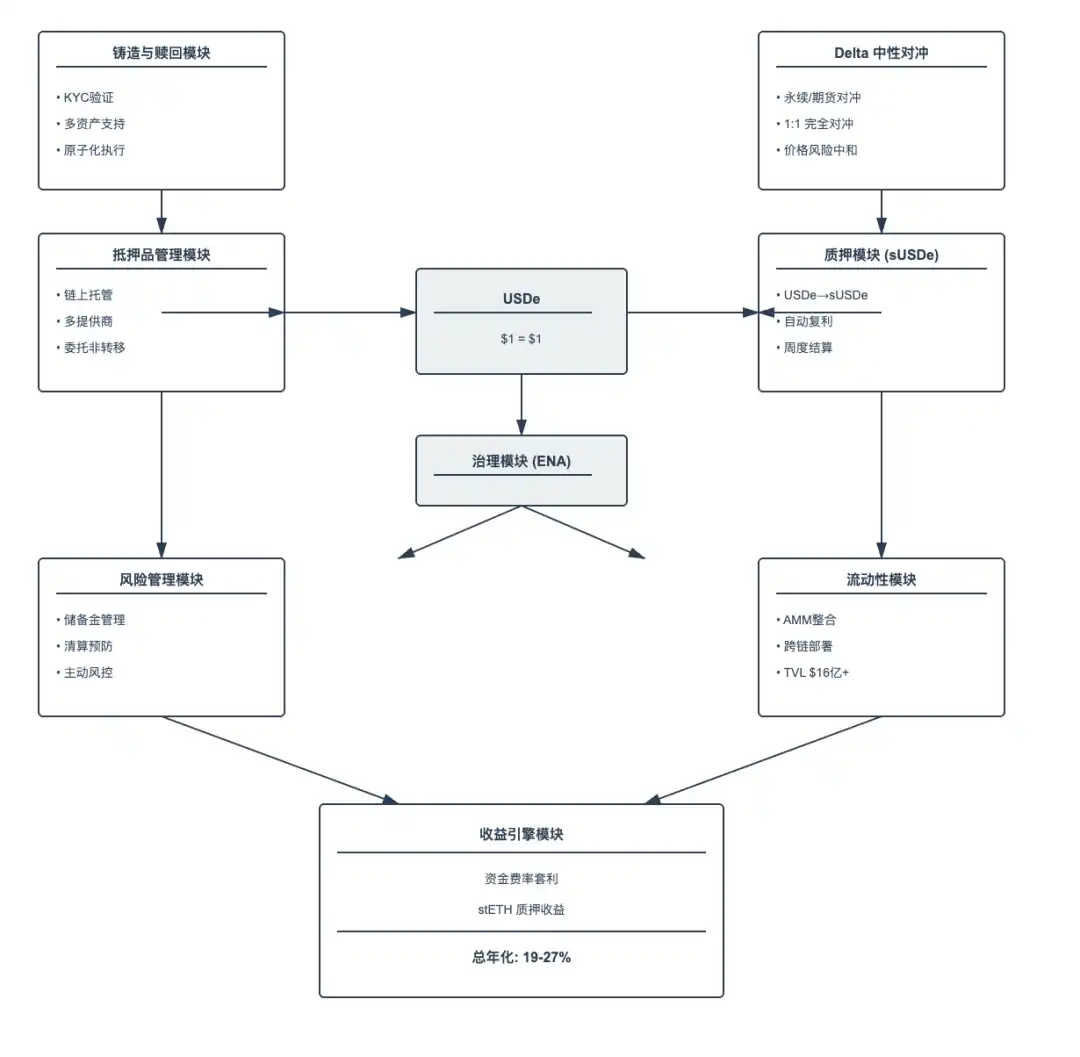
Методология продукта USDe заключается в захвате реального дохода через специализированные рынки хеджирования и деривативов, одновременном внедрении многоуровневого управления рисками (таких как отсутствие чрезмерного левериджа, диверсификация позиций, резервный фонд) для поддержания стабильности системы, а затем в Lego-подобном встраивании в протоколы DeFi, такие как AAVE, Pendle, Morpho, для повышения APY (годовая процентная доходность) и достижения роста масштаба.
Приведем простой пример: когда пользователь А вносит 1 stETH (стоимостью $3000), Ethena открывает короткую позицию по бессрочным контрактам ETH на $3000 на рынке деривативов. Если ETH вырастет до $3300, спот зарабатывает +$300, шорт теряет -$300, чистая стоимость = $3000; если ETH упадет до $2700, спот теряет -$300, шорт зарабатывает +$300, чистая стоимость = $3000, системная Delta = 0. И протокол Ethena, теоретически имея 0 exposure к риску, может захватить следующий реальный доход:
Funding Rate - В бычьем рынке, funding rate (обычно 10-30% годовых), который платят лонги по перпам шортам.
Стейкинг-доход - Встроенный доход (yield) таких активов, как stETH (~3-5%)
Базисный доход - Дополнительная альфа, приносимая контанго.
Как показано на рисунке выше, фактический APY USDe может достигать 27%, что сексуальнее любого традиционного финансового продукта. Когда финансовые рынки работают в устойчивом состоянии, для USDe придумали специальное английское название «Internet Bond» и определили его как глобальную долларовую облигацию, не требующую доверия к банковской системе.
В сентябре 2025 года рыночная капитализация USDe достигла惊人的ных 14 миллиардов долларов, что сделало его третьей по величине стейблкоином в мире после USDT и USDC. В то же время Артур Хейс публично заявлял, что USDe имеет потенциал роста в 51 раз, и казалось, что финансовый инжиниринговый рационализм одерживает крупную победу в индустрии Crypto.
Накопление внешнего левериджа USDe
Учитывая болезненный исторический опыт спирали смерти Lunar-UST, Ethena сознательно designed архитектуру протокола, чтобы разорвать механизм усиления обратной связи между стороной активов и стороной обязательств, придерживаясь底线 не включать нативный токен ENA в список активов. Высокий APY USDe в основном зависит от внешнего цикла заимствований пользователей в протоколах DeFi, таких как AAVE, Pendle, Morpho, и на партнерских CEX.
Но когда в 25 году рынок Crypto вошел в хвост четырехлетнего цикла, и стейблкоины стали единственным направлением, показавшим положительный рост в году, «привлечение депозитов под высокий процент» стейблкоинами стало самым эффективным инструментом роста для протоколов DeFi и CEX на этом красном океане рынка, они普遍 начали在产品机制和市场宣传上 поощрять и направлять пользователей использовать USDe для внешнего цикла заимствований.
Источник: Pharos Research
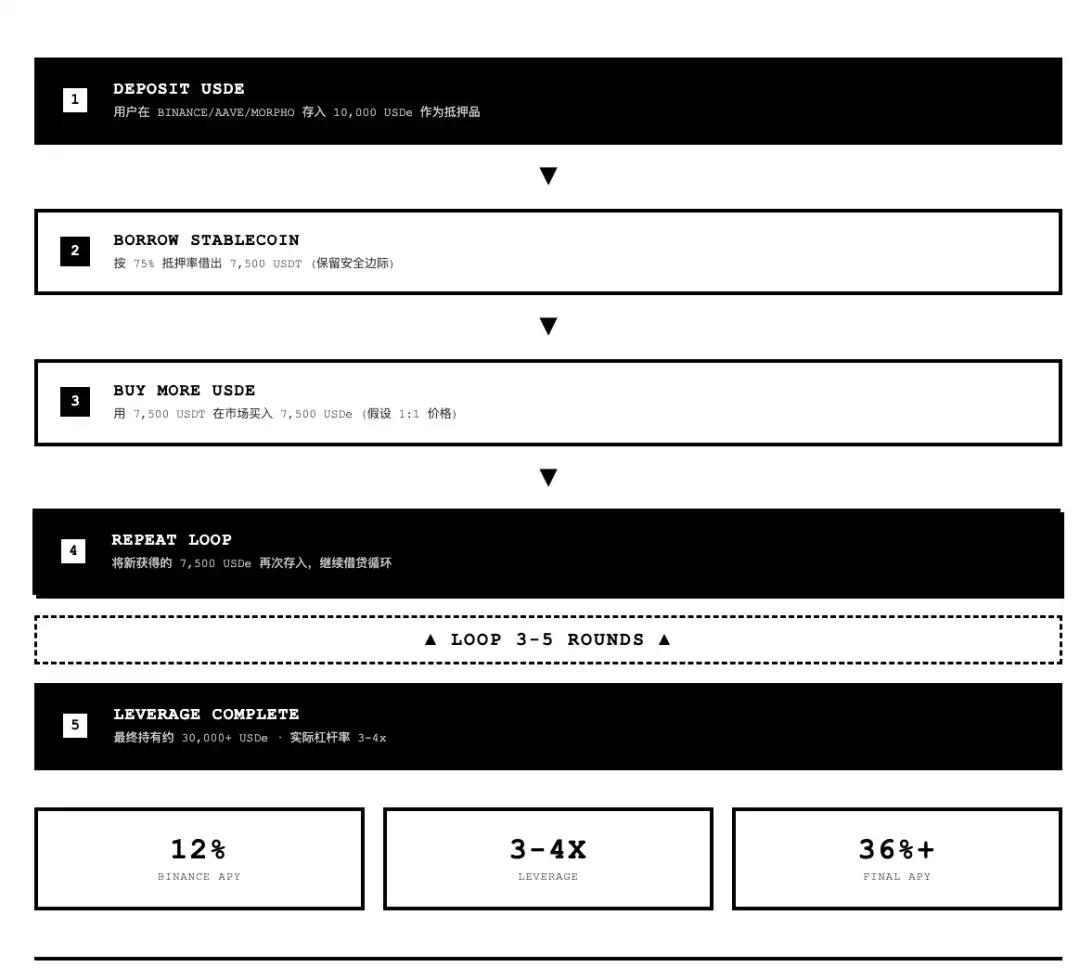
22 сентября 2025 года, «Космическая биржа номер один» Binance запустила программу поощрения USDe 12% APY, разрешив пользователям использовать встроенную функцию заимствования для циклического кредитования, и самоуверенно установив источник цены ликвидации кредитов под USDe как единую точку — цену торговой пары USDe-USDT на Binance.
В отличие от чрезмерной самоуверенности и неопытности Binance, протоколы DeFi, пережившие большие волны ликвидаций эпохи post DeFi Summer,普遍 установили источник цены ликвидации кредитов под USDe как жестко запрограммированный 1:1 или используют сервисы оракулов с несколькими источниками данных о ценах.
Увеличение доверия за счет бренда Binance, хорошая история привязки USDe, оптимистичные настроения Uptober,弥漫ющие на рынке, заставили многих пользователей产生 смертельную иллюзию, что 12% APY USDe является безрисковым доходом, и в рыночной FOMO-лихорадке они начали бешено использовать циклический леверидж. Привлеченные этой программой, остатки USDe на Binance выросли с 3 миллиардов долларов до 5 миллиардов долларов.
Из всей системы обязательств USDe с рыночной капитализацией 14 миллиардов долларов, около 40% (≈5.6 млрд) приходилось на реальную часть с хеджированием Delta, а оставшиеся около 60% (≈8.4 млрд) были наложены на циклические займы с левериджем 2-5x.
Внезапная атака «черного лебедя» и депег USDe
11 октября 2025 года, в 5 утра по пекинскому времени в субботу, Трамп опубликовал в Truth Social: «С 1 ноября ввести дополнительные 100% пошлины на товары из Китая.»
Так был запущен крупнейший в истории рынка Crypto объем ликвидаций в 19 миллиардов долларов (по консервативным оценкам).
Первая волна - Нормальная паника (05:00-05:20): Глобальные рисковые активы集体 распродаются, ключевые активы Crypto大幅 обваливаются, начинаются массовые ликвидации по перпам,杠杆ные лонги выметаются.
Вторая волна - Дисбаланс системы (05:20-05:43): Экстремальное падение превышает пороговые значения,导致 funding rate перп контрактов на ключевые активы Crypto становится отрицательным. Кит USDe начинает продавать на Binance, цена торговой пары USDe-USDT на Binance падает с $1.00 до $0.9, затем до $0.91......
Третья волна - Прорыв дамбы (05:43-06:16): Цена торговой пары USDe-USDT на Binance падает ниже $0.82, это уровень принудительного закрытия для 5x циклического кредита, что触发海啸 ликвидаций по всей системе:
Этап 1: USDe падает до $0.82
→ Срабатывает ликвидация 5x циклического кредита
Этап 2: Движок ликвидаций начинает продавать USDe для погашения долга в USDT
→ USDe падает до $0.75
Этап 3: Срабатывают更多的 ликвидаций
→ Начинают лопаться 3x и 4x циклические кредиты
Этап 4: Ликвидность полностью иссякает
→ USDe мгновенно пробивает уровень $0.6567
Этап 5: Каскадные ликвидации выходят из-под контроля
→ Механизмы ADL и унифицированного счета порождают супер-волну распродаж залогов USDe
Весь процесс занял 23 минуты.
Представьте, что вы пользователь Binance, который с помощью циклического кредитования увеличил годовую доходность 12% до 48%. Ваши друзья считают вас гением. Вы тоже так думаете. Однако, за 90 минут ранним утром 11 октября 2025 года, баланс вашего счета из шестизначного числа превратился в ноль.
В этом идеальном шторме есть завораживающая деталь: один и тот же актив, в одно и то же время, в ончейне и офчейне имел совершенно разную реальность.
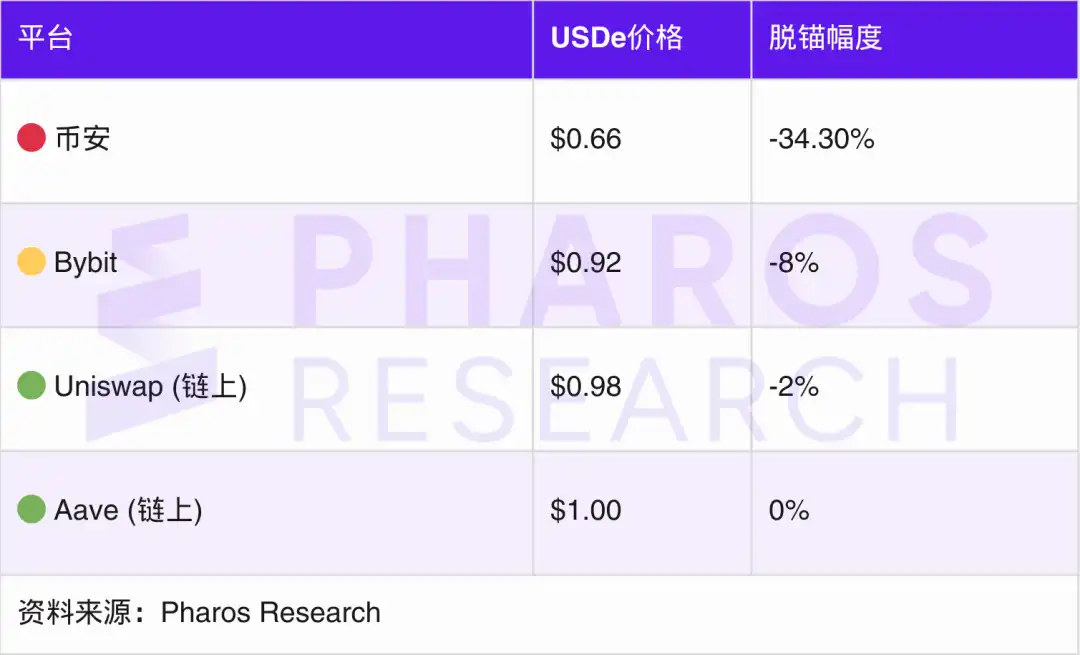
В течение всего события депега функции minting/redemption USDe никогда не прерывались, протокол поддерживал состояние избыточного залога, Delta-хеджированные позиции работали нормально. Это был не крах протокола Ethena, а крах特定ной рыночной структуры Binance.
Что мы извлекли из этого идеального шторма
Crypto обещает инновации без разрешения, децентрализованные финансы, доверие, управляемое математикой, но реальность Crypto должна принимать ограничения реальных мировых финансовых закономерностей. В этом идеальном шторме депега USDe мы стали свидетелями того, как сложные модели, высокий леверидж, ликвидность, системные риски и чрезмерная уверенность共同作用, вызывая крах системы.
Хотя протокол Ethena в этом супер-событии доказал надежность и устойчивость к рискам своей финансово-инженерной системы, его команда, движимая жадностью к прибыли и желанием роста, по умолчанию甚至 активно направляла рынок рассматривать высокорисковые продукты DeFi Yield как безрисковые сбережения, способствуя накоплению внешнего левериджа USDe, что стало семенем,孕育шим этот идеальный шторм, и в конечном итоге обратилось против TVL протокола и рыночного доверия.
Стейблкоин — это не фиат, не CBDC, не обладает强制法偿性, его сущность — это токен proof-of-stake, привязанный к 1 доллару, позволяющий держателям выкупить соответствующий залог. Стабильность стейблкоина происходит от стабильности механизма (может ли протокол поддерживать привязку при всех рыночных условиях), стабильности ликвидности (может ли рынок提供足够的 глубины в условиях стресса) и стабильности доверия (доверяют ли пользователи его表现 в кризисе).
Единственный урок, который человечество извлекает из истории, заключается в том, что человечество никогда не извлекает уроков. Человечество похоже на агента обучения с подкреплением, который с помощью密集ных положительных вознаграждений быстро выучил жадную стратегию «высокий леверидж + сложное хеджирование = высокий доход», но из-за того, что отрицательные вознаграждения过于 разрежены, экстремальны и запаздывают, не может彻底 обновить стратегию,导致在不同时代、不同市场 повторять相同的 роковые ошибки.
Основной вклад
Автор: NingNing
Редакция: Colin Su, Grace Gui, Owen Chen, FangHan
Дизайн: Alita Li