The First Batch of Big Tech Employees Laid Off by AI Have Returned to Their Posts

Odaily星球日报Опубликовано 2026-03-20Обновлено 2026-03-20

Введение

The first wave of employees laid off by major tech companies, citing AI as the reason, are already being rehired. In late February, Block, led by Jack Dorsey, laid off over 4,000 employees, reducing its workforce from 10,000 to under 6,000, with Dorsey stating that "AI tools changed everything." However, within a month, some of those laid off began receiving offers to return. Reports indicate rehires occurred in departments like engineering and HR, with reasons ranging from "clerical errors" in termination to managers advocating for their return. The article argues that replacing humans with AI is often more cost-effective. For instance, enterprise-level AI can be expensive in terms of token usage, and training a reliable AI system, such as for customer service, may exceed the cost of human employee salaries. Examples like Klarna, which rehired客服 after initially replacing them with AI, support this. Additionally, the "Jevons Paradox" suggests that AI-driven efficiency gains don’t necessarily reduce workloads but may increase demands on remaining employees, adding to their burden. The piece criticizes companies using AI as a pretext for layoffs, arguing that AI cannot replace human organizational dynamics or strategic roles. Nvidia’s Jensen Huang is quoted condemning leaders who裁员 instead of leveraging AI for expansion. Ultimately, AI serves as a convenient excuse for cost-cutting, but its limitations and the essential role of humans in organizations mean that some layoffs a...

Original | Odaily Planet Daily (@OdailyChina)

Author | Golem (@web 3_golem)

The first batch of employees laid off by AI have returned to their posts.

On February 27, Jack Dorsey (founder of Twitter)'s fintech company Block laid off over 4,000 employees in one go, reducing the total headcount from 10,000 to less than 6,000. Jack's reason for the layoffs was that "AI tools have changed everything." It has long been a societal consensus that AI will eventually eliminate some professions, but the fact that it is first replacing white-collar workers in mid-to-high-level jobs has intensified workplace anxiety. (Related reading:Jack Dorsey's Company: 4,000 White-Collar Workers Are Being Replaced by AI)

However, less than a month later, some of the laid-off employees have already received invitations to return...

According to Business Insider, these rehired employees come from various departments, including engineering and recruitment. A design engineer at Block posted on LinkedIn that leadership told him he was laid off by mistake, a "clerical error"; an HR employee (in a since-deleted post) stated that they were rehired after their manager persistently advocated upwards for them; and another person mentioned receiving a call from Block out of the blue a week after being laid off and being asked to come back.

Jack has not publicly responded to the rehirings. Proportionally, these rehired employees represent only a very small fraction of those originally laid off, but it perhaps already indicates the problem: for some positions and tasks, AI is not as effective as humans.

First, from a usage cost perspective, an enterprise-grade AI employee is certainly more expensive than a regular human resource.

Hiring people to work costs money, hiring AI to work costs tokens. The standard base price for Claude Opus 4.6 is $5 per million tokens for input and $25 per million tokens for output; domestic large models are cheaper, with Qwen3.5 plus's standard base price being 0.8 RMB per million tokens for input and 4.8 RMB per million tokens for output.

Taking the recently popular OpenClaw as an example, a senior "shrimp farmer" within Odaily Planet Daily mentioned that using OpenClaw merely as a life and research assistant burned through about $6,000 worth of tokens in just over a month (they used the Claude 4.5/4.6 model). $6,000 a month – what kind of highly educated intellectual couldn't you hire for that (outside of Europe and America)?

If personal use is like this, the cost of integrating AI into enterprise work is even higher. Taking the simple replacement of customer service as an example, in regions with degree inflation, you can hire a good-looking college graduate as a customer service representative for 3,000 RMB. But training an AI customer service agent that can truly replace a human, handle complex tickets, connect to multiple knowledge bases, engage in multi-turn conversations, and remain stably online – that cost is definitely not something 3,000 RMB per month can cover.

In 2024, the Swedish payments company Klarna proudly laid off over 1,000 people, claiming its AI customer service could already handle the workload of 700 customer service agents. But in May 2025, Bloomberg and other media reported that Klarna had started rehiring people for customer service, and its CEO admitted that the company had indeed "moved too fast" with AI.

Furthermore, AI replacing human labor also faces the "Jevons Paradox".

The Jevons Paradox is an economic concept stating that an increase in efficiency does not necessarily lead to a reduction in the use of a resource. Instead, because the cost of use decreases and demand expands, the total usage may actually rise. Applying this theory to the workplace in the AI era means that when AI technological progress improves employee efficiency, companies will not allow employees to rest; instead, they will demand that they complete more tasks within the same unit of time.

So-called efficiency improvement has become another, more hidden form of increased burden. AI liberating human labor is completely a scam.

Capitalists also believe that in the AI era, companies simply won't need as many employees, as Jack said, "smaller teams with more intelligent tools." But in reality? The current situation is that after layoffs, the original work is not entirely inherited by AI; rather, the remaining employees, aided by AI, have taken on increased workloads.

If it were just单纯的工作任务也就罢了, but one must remember that, ultimately, a company is a human organization. Where there is organization, there is a "jianghu" (complex social dynamics). AI can integrate into the formal structure of a company, but it can never understand, nor integrate into, the informal/invisible structure of a company.

Therefore, when AI-driven layoffs occur, they cut not just labor, but organizational muscle. The remaining employees not only shoulder a heavier work burden but also swallow the anxiety, risk, and responsibility that originally belonged to the eliminated positions. There are fewer people to collaborate with, fewer people to execute, and most importantly, fewer people to take the blame.

During Nvidia's GTC 2026, Jensen Huang criticized companies that use AI efficiency gains as a reason for layoffs in an interview: "Those leaders who resort to layoffs in response to AI are simply because they can't think of a better way. They have no new ideas left in their heads. Even with the strongest tools, they won't use them for expansion," were Huang's exact words.
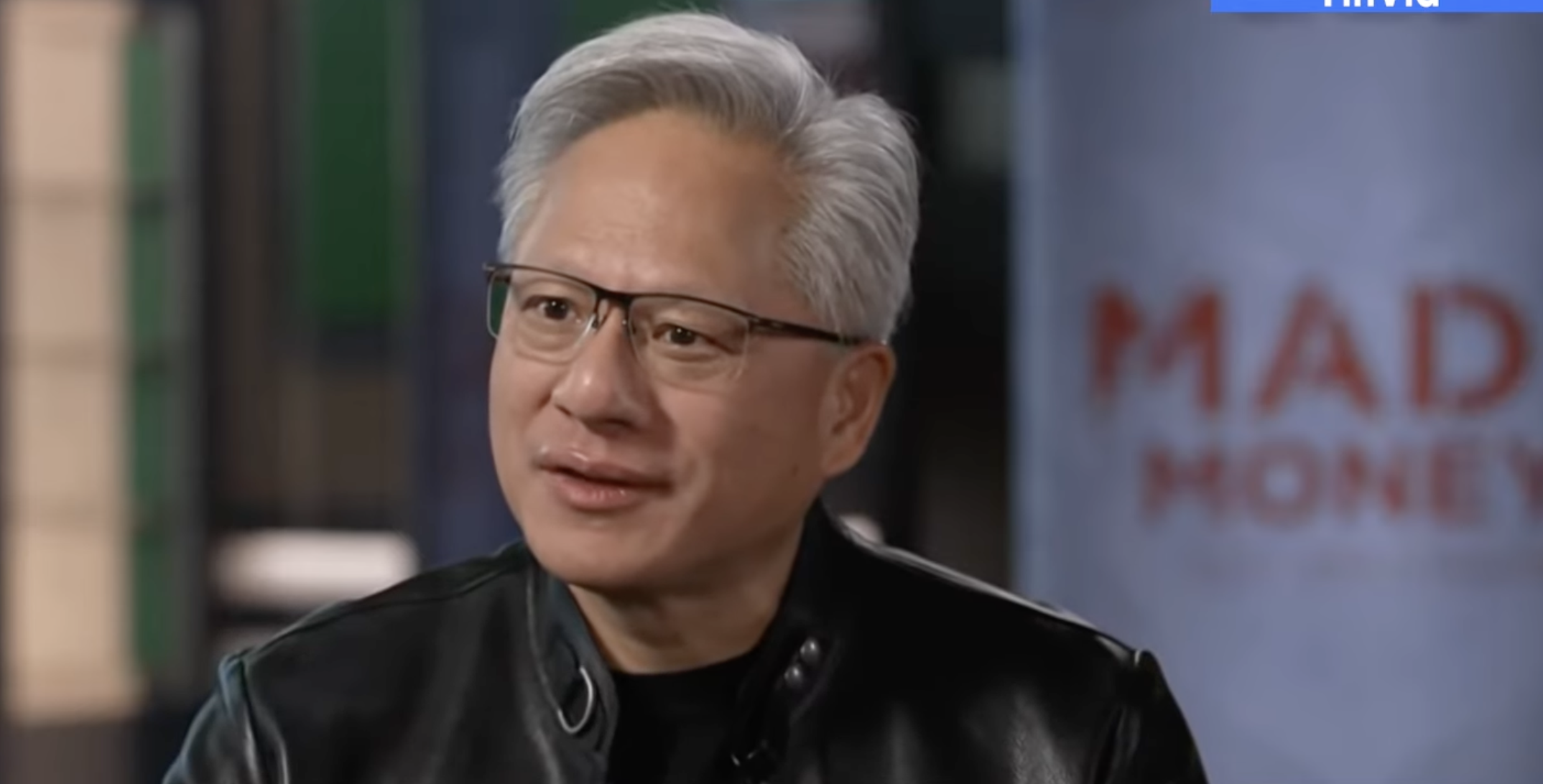
What Jensen Huang meant is that AI is not here to eliminate employees but to help companies expand and develop new businesses. Don't lay people off; instead, increase hiring. If management doesn't realize this, they are fools. But joking aside, managers in companies are often the cream of the crop of shrewd people. They certainly know the current high cost of AI and the continued necessity of human labor.

Layoffs in tech companies – perhaps AI is just a pretext, cost reduction is the real goal.

AI has become a universal excuse for layoffs in tech companies. In truth, what AI is really淘汰 isn't individuals, but those enterprises and businesses still living in the old era. When companies fail to keep up with AI advancements, leading to stagnant business growth and shrinking profits, the AI revolution instead becomes a new means for companies to PUA employees: reduce headcount, pressure costs, cram more work onto those who remain, and then let each person reflect on why they couldn't become someone more adapted to the AI era.

If they unfortunately cut a critical artery, they can just quietly ask them to come back. This method of layoffs is also common in Silicon Valley. In October 2022, after Musk completed the acquisition of Twitter, he laid off about half of the employees (over 3,000 people) in early November. He subsequently rehired dozens of laid-off employees because they were let go by mistake or key positions were found to be indispensable.

Returning to the present, ultimately, AI will change many things, but it is not yet magical enough to help companies compensate for strategic迟钝, business衰老, or managerial偷懒. The matter of being laid off by AI and then rehired, whether the underlying reason is the company realizing that some work doesn't just disappear with a statement like "AI changed everything," or whether it's just an excuse for cost reduction, is neither热血 (inspiring/heroic) nor a reversal.

It just shows us that before the future has truly arrived, some people have already been hurt by it提前.


Связанные с этим вопросы

QWhat was the reason given by Jack Dorsey for the mass layoffs at Block in February?

AJack Dorsey stated that 'AI tools changed everything' as the reason for the layoffs.

QAccording to the article, what is one of the main reasons why some employees were rehired at Block?

ASome employees were rehired because they were mistakenly laid off due to a 'clerical error', as stated by a design engineer.

QWhat economic concept does the article use to argue that AI efficiency gains may not reduce workload but increase it?

AThe article uses the 'Jevons Paradox' to argue that AI efficiency gains lead to increased workload and demand rather than reducing it.

QWhat did Nvidia's CEO Jensen Huang criticize about companies that use AI as a reason for layoffs?

AJensen Huang criticized that leaders who use layoffs to respond to AI 'have no new ideas left in their heads' and are unable to use powerful tools for expansion.

QWhat does the article suggest is the real purpose behind many tech companies' AI-related layoffs, beyond the stated reason?

AThe article suggests that the real purpose behind many tech companies' AI-related layoffs is cost reduction, using AI as a convenient excuse.

Похожее

KOL's Perspective: Why Is SOL Set to Rise from This Point?

**Summary: Why SOL is Positioned for Growth at This Level** The article argues that SOL is poised for an upward move from its current price point, citing several key factors. Primarily, SOL has just broken out of a 4-month consolidation phase. This breakout signals a return of risk appetite to the broader crypto market, as SOL is seen as a key indicator of overall crypto health. The token's ownership has reportedly shifted from short-term traders and tourists to long-term accumulators, leading to low volume. Any meaningful increase in trading activity could thus trigger significant upward momentum. Fundamental strengths include strong institutional adoption, integration with DeFi and RWAs (Real-World Assets), and the potential benefits from the Clarity Act. Despite its high volatility—having dropped 70% from its all-time high but still up 12x from its bear market low—SOL is highlighted as one of the few tokens from the last cycle to reach new highs. It boasts a robust ecosystem of applications, users, and protocols. Future catalysts include the expected influx of AI developers following the Miami Accelerate conference, which focused on AI on Solana. Furthermore, Solana is positioned as the premier chain for memecoin activity, a trend expected to continue and drive network usage and fees. The article concludes that recent price action reflects a healthy transfer to long-term holders, setting the stage for growth.

marsbit42 мин. назад

KOL's Perspective: Why Is SOL Set to Rise from This Point?

marsbit42 мин. назад

Those Pre-Bitcoin PoW Protocols Have Recently Been Reimplemented

This article details a recent surge in replicating pre-Bitcoin Proof-of-Work (PoW) protocols, specifically focusing on Hal Finney's 2004 RPOW (Reusable Proofs of Work). Within five days in May 2026, multiple independent builders in the Bitcoin/cypherpunk community launched projects inspired by this early electronic cash proposal. The initiative began with Fred Krueger's `rpow2.com`, a centralized but auditable system that replaced RPOW's original IBM 4758 hardware with Ed25519 signatures. Initially a faithful replica, it later adopted Bitcoin-like features (21M supply cap, difficulty adjustment) and a controversial 5.24% founder allocation. This sparked rapid forks, including `rpow4.com` which incorporated full Bitcoin parameters, a prediction market (`rpowmarket.com`), and a DEX (`rpow2swap.com`). Concurrently, Mike In Space created a prototype of Wei Dai's 1998 b-money proposal (`b-money.replit.app`), pushing the historical exploration even further back. The article contrasts these centralized, server-dependent experiments with Bitcoin's core innovation of decentralized, trustless consensus. It also highlights a parallel development: the `HASH` project on Ethereum, which uses smart contract hooks to enable a purely fair-launch, browser-mineable PoW token with 0% allocations to team or VCs. The collective activity is framed as a meme-driven, educational exploration of cypherpunk history rather than a serious financial movement, with all projects heavily disclaiming any investment value.

marsbit46 мин. назад

Those Pre-Bitcoin PoW Protocols Have Recently Been Reimplemented

marsbit46 мин. назад

South Korean Exchanges 'Battle' Regulators, Challenging the Boundaries of Enforcement and Legislation

South Korea's cryptocurrency industry is engaged in a rare, direct confrontation with regulators. The Financial Intelligence Unit (FIU), the primary anti-money laundering (AML) watchdog, has recently imposed heavy penalties on major exchanges like Upbit and Bithumb for alleged violations involving unregistered overseas VASPs and AML procedures. However, exchanges are now actively challenging these actions in court and through industry associations. In a significant shift, the Seoul Administrative Court ruled in favor of Upbit's operator, Dunamu, overturning part of an FIU-ordered business suspension. The court found the FIU's penalty criteria and justification insufficiently clear. Similarly, the court suspended the enforcement of a six-month business suspension against Bithumb pending a final ruling, citing potential irreversible harm to the exchange. Beyond legal battles, the industry is contesting proposed legislative amendments. The Digital Asset eXchange Alliance (DAXA) strongly opposes a draft rule that would mandate Suspicious Transaction Reports (STRs) for all crypto transfers over 10 million KRW (~$6,800). DAXA argues this "poison pill" clause violates legal principles and would overwhelm the STR system, increasing reports from 63,000 to an estimated 5.45 million annually for major exchanges, thereby crippling effective AML monitoring. This conflict highlights a structural tension in South Korea's crypto governance: comprehensive digital asset laws are still developing, while regulators rely heavily on AML enforcement. The industry's move from passive compliance to active legal and legislative challenges signifies a new phase, pressing for clearer rules and more proportionate enforcement. While short-term disputes may intensify, this clash could ultimately lead to a more mature and sustainable regulatory framework for South Korea's vibrant crypto market.

marsbit1 ч. назад

South Korean Exchanges 'Battle' Regulators, Challenging the Boundaries of Enforcement and Legislation

marsbit1 ч. назад

After 50x Storage Surge, Justin Sun Always Looks to the Next Decade

Sun Yuchen, known for his controversial stunts like a $30 million lunch with Warren Buffett (canceled due to a kidney stone) and eating a $6.2 million duct-taped banana, is often overshadowed by a significant fact: his decade-long track record of spotting major investment trends. In 2016, he famously advised young people to invest in Bitcoin, Nvidia, Tesla, and Tencent instead of buying property. A hypothetical $20,000 investment in Nvidia and Tesla from that list would now be worth over 50 million RMB. His latest major call was on November 6, 2025, predicting a "50x storage opportunity" tied to the AI boom, which materialized with Sandisk's stock surging nearly 50-fold by 2026. Looking ahead, Sun now focuses on the next frontier: Physical AI. He identifies four key areas: 1. **Embodied AI/Robotics**: He sees this reaching its "iPhone moment," with companies like UBTech and Galaxy General leading in commercialization. 2. **Drones**: Viewed as the first commercially viable form of Physical AI, revolutionizing sectors from warfare (e.g., AeroVironment's Switchblade) to logistics. 3. **Spatial Computing**: Beyond VR, it's about AI understanding physical space, a foundational technology for robotics and autonomous systems, exemplified by Apple's Vision Pro. 4. **Space Exploration**: After a 2025 suborbital flight with Blue Origin, Sun advocates for space as the ultimate frontier, discussing blockchain's potential role in space asset management and data transactions. His investment philosophy involves betting on entire, inevitable trends rather than single companies. For robotics, he sees Tesla (the body/manufacturer) and Nvidia (the brain/AI platform) as complementary plays. In defense drones, he highlights companies making tanks obsolete (AeroVironment) and those augmenting fighter jets (Kratos). For space, he participated in Blue Origin's flight and anticipates SpaceX's potential IPO to redefine the sector's valuation. Sun Yuchen's vision frames the next two decades not as a revolution in information flow (like the internet), but in the fundamental operation of the physical world through AI-powered robots, autonomous systems, and spatial intelligence, ultimately extending human and AI activity into space. While many still focus on conventional assets, he continues to look toward the next technological horizon.

marsbit2 ч. назад

After 50x Storage Surge, Justin Sun Always Looks to the Next Decade

marsbit2 ч. назад

Торговля

Спот
Фьючерсы

Популярные статьи

Неделя обучения по популярным токенам (2): 2026 может стать годом приложений реального времени, сектор AI продолжает оставаться в тренде

2025 год — год институциональных инвесторов, в будущем он будет доминировать в приложениях реального времени.

1.8k просмотров всегоОпубликовано 2025.12.16Обновлено 2025.12.16

Неделя обучения по популярным токенам (2): 2026 может стать годом приложений реального времени, сектор AI продолжает оставаться в тренде

Обсуждения

Добро пожаловать в Сообщество HTX. Здесь вы сможете быть в курсе последних новостей о развитии платформы и получить доступ к профессиональной аналитической информации о рынке. Мнения пользователей о цене на AI (AI) представлены ниже.

活动图片