The End of the 'Talk-to-Earn' Era? X Delivers Heavy Blow, Bans InfoFi, Cutting Off Funding for a Batch of Projects

比推Опубликовано 2026-01-16Обновлено 2026-01-16

Введение

On January 15, X (formerly Twitter) revoked API access for InfoFi applications, effectively ending the "post-to-earn" model. The platform cited concerns over AI-generated spam and low-quality replies as the reason for the policy change, prioritizing user experience over the significant revenue these apps generated. Major InfoFi platforms like Kaito and Cookie DAO are now pivoting to alternative models, such as content marketing tools and market intelligence services. The move triggered sharp declines in related token values and NFT floor prices, with some teams accused of insider trading prior to the announcement. The crackdown is seen as a necessary step to combat spam and improve content quality on the platform, though it also reflects broader challenges in the crypto content ecosystem.

Author: Nancy, PANews

Original Title: 'Talk-to-Earn' Players' 'World Collapses'! Twitter Bans InfoFi, Ecosystem Projects Forced to Adapt Drastically


On the night of January 15th, the crypto Twitter circle (CT) was suddenly hit by a silent 'earthquake'.

With X (formerly Twitter) issuing an announcement cutting off API access for InfoFi applications, the 'post-to-earn' mechanism was brought to a halt. Project teams are choosing to pivot, while 'talk-to-earn' players exclaim that 'the sky has fallen'.

Revoking API Access, Rejecting Millions in 'Toll Fees'

The InfoFi sector changed overnight.

X's Product Lead and Solana Ecosystem Advisor, Nikita Bier, officially announced last night that the platform is revising its developer API policy and will no longer allow applications that reward users for posting, directly naming InfoFi.

Nikita stated bluntly that such incentive mechanisms are the root cause of the platform being flooded with a large amount of AI-generated spam and low-quality replies. Currently, X has revoked the API access permissions for these applications. Once the bots realize they are no longer being paid, the user experience should begin to improve soon.

For developers whose accounts were terminated, Nikita also 'thoughtfully' suggested that teams could help them transition their business to Meta's Threads and the decentralized social media platform Bluesky, a comment full of sarcasm.

More importantly, X resolutely chose to forgo this revenue, even though high-frequency API-calling applications like InfoFi contributed significant 'toll fees'. "InfoFi applications were already paying us millions of dollars for enterprise API access. We don't want that money," Nikita said. This statement also indicates that user experience is X's current strategic priority, especially since these earnings are insignificant compared to X's overall annual revenue.

This officially宣告 (declares) the end of the InfoFi model寄生 (parasitizing) the X ecosystem. The simple and brutal 'talk-to-earn' era is gone for good.

In fact, this is not the first time Nikita has 'declared war' on low-quality content.

Not long ago, he criticized crypto tweets for heading towards suicidal demise. Nikita posted at the time that since last October, a notion has been spreading within CT that users need to reply hundreds of times a day to achieve account growth. However, each post consumes part of the day's influence. Since the average user only browses 20 to 30 posts per day, the platform cannot show all posts from one user to all their followers. Therefore, crypto Twitter users end up wasting all their influence on hundreds of 'gm' replies. When they post substantive content like project announcements, very few people see it. The decline of crypto tweets stems from their own behavior, not algorithm issues.

This post sparked strong dissatisfaction within the crypto community at the time, even leading to a large-scale 'GM' counter-attack, which eventually resulted in the tweet being deleted. But in hindsight, X's determination to clean up low-quality content had already been foreshadowed.

Ecosystem Projects Make Drastic Survival Moves, Teams Accused of Dumping Tokens Early

As X tightens its API policy, the InfoFi narrative is facing a cold spell.

CoinGecko data shows that in the past 24 hours, the market capitalization of the InfoFi sector fell to $350 million, with many tokens experiencing double-digit declines. Even the floor price of Yapybaras NFT from Kaito couldn't escape, plummeting.

Faced with a survival test, multiple InfoFi applications have announced pivots.

Yu Hu, founder of the representative project Kaito, stated that the company will gradually terminate Yaps and the incentivized leaderboard system, instead launching a new Kaito Studio. This decision stems from the platform's issues with low-quality content and spam, as well as a shift in the crypto industry from a high-frequency global distribution model towards more precise marketing. After discussions with the X platform, both parties reached a consensus: a completely permissionless distribution system is no longer viable and does not meet the needs of high-quality brands, serious content creators, or the X platform itself. Over the past few months, the platform has been developing Kaito Studio. This product will adopt a layered traditional marketing model, connecting brands with high-quality creators through top-tier analytical tools, covering multiple platforms like X, YouTube, TikTok, and expanding beyond cryptocurrency into areas like finance and AI.

Meanwhile, Cookie DAO, after consulting with the X team, decided to immediately shut down the Snaps platform and all creator activities. Cookie DAO stated it will wait for confirmation and guidance from the X platform to determine if creator activities similar to Snaps can operate in any form in the future. Simultaneously, the platform is communicating directly with all project teams running Snaps activities. Some situations are more complex, involving pre-paid activity fees and promised rewards. While full solutions are not yet available, they will adhere to principles of fairness and communicate directly with each project. The platform has taken snapshot archives of all active activities and will provide updates to creators as soon as possible. Other products under Cookie are unaffected. Additionally, over the past six months, the platform has been continuously developing Cookie Pro, a crypto real-time market intelligence tool, planned for launch in the first quarter.

Judging from the project teams' statements, this policy adjustment is not a sudden black swan event; the teams were already aware of the changing winds and had布局 (laid out plans for) a pivot in advance. This has also sparked market controversy, with the community质疑 (questioning) whether projects knew about the negative news in advance and dumped their tokens.
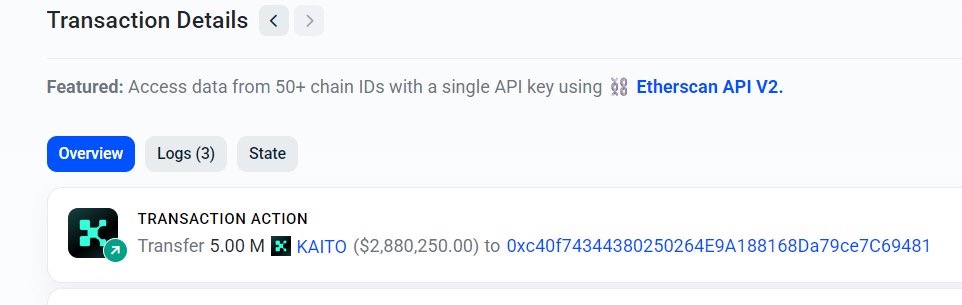
Taking Kaito as an example, its multi-signature contract address distributed and transferred a cumulative 24 million KAITO (approx. $13.31 million) to 5 addresses two weeks ago. Among them, according to monitoring by crypto KOL "vasucrypto", the 0x049A address associated with the Kaito team transferred 5 million KAITO to Binance 7 days ago, possibly for sale. More intriguingly, crypto KOL "加密无畏" (Crypto Fearless) added that Kaito's staking unlocks also peaked in the past few days. 1.1 million KAITO tokens are also scheduled to unlock tomorrow (January 17th), with the unstaking period being 7 days.

Farewell to the 'Talk-to-Earn' Era, Long-Overdue Content Justice

X's brutal industry purge is not just an adjustment of platform rules but also a reshaping of the crypto content ecosystem.

For X, which highly relies on advertising revenue and subscription services, facing external pressures like slowing user growth, inefficient traffic monetization, and the strong rise of competitors, this adjustment is an inevitable choice for survival. In fact, over the past few months, X has already begun making sweeping reforms in content and traffic distribution, including adjusting algorithm weights and increasing revenue for high-quality creators. Ultimately, X's true target is not solely the InfoFi model, but the low-quality content that severely dilutes the platform's value and drives away real users.

For the crypto Twitter circle, this is also a long-overdue form of content justice. Although the original intention of the InfoFi model was to encourage creators to produce high-quality content through token incentives, and it did shine briefly, this mechanism was also hijacked by 'airdrop farming' behavior, where a large number of profit-seekers疯狂制造 (frantically produced) low-quality and repetitive spam information. This false流量繁荣 (traffic prosperity) not only made content dull but also caused truly deep and valuable content to be drowned out by noise, accelerating the loss of real users.

This 'ban' is undoubtedly a 'noise filter' for CT users who are tired of spam; their timelines can finally catch a breath.

However, the decline in CT's热度 (heat) is not entirely attributable to InfoFi; it is also closely related to the overall downturn cycle of the crypto industry. Even the viewership of crypto content on YouTube has fallen to its lowest level since January 2021.

Regardless, the end of this InfoFi model is a necessary path to improving the readability of crypto content and returning to the essence of content. For InfoFi projects, now that the shortcut of寄生 (parasitizing) Web2 giant traffic has been cut off, how to establish a SocialFi mechanism based on the flow of real value is a难题 (challenge) that urgently needs answering.


Twitter:https://twitter.com/BitpushNewsCN

Bitpush TG Discussion Group:https://t.me/BitPushCommunity

Bitpush TG Subscription: https://t.me/bitpush

Original Link:https://www.bitpush.news/articles/7603422

Связанные с этим вопросы

QWhat major change did X (formerly Twitter) announce regarding InfoFi applications on January 15th?

AX revoked API access for InfoFi applications, effectively ending the 'post-to-earn' model that rewarded users for posting.

QAccording to X's product lead Nikita Bier, why was the API access for InfoFi apps terminated?

ABecause these incentive mechanisms were identified as the main cause of a large amount of AI-generated spam and low-quality replies on the platform, which degraded user experience.

QHow did the InfoFi ecosystem react to X's policy change, as mentioned in the article?

AProjects like Kaito and Cookie DAO announced they were pivoting or shutting down their incentivized platforms, with Kaito developing a new marketing tool and Cookie DAO focusing on a market intelligence product.

QWhat controversy emerged concerning the Kaito team's actions prior to the official announcement?

AThe community questioned if the team had prior knowledge of the policy change, as a team-associated address transferred a large amount of KAITO tokens to Binance potentially for selling, and a significant token unlock was scheduled around the same time.

QWhat does the article suggest is the broader implication of X's crackdown on InfoFi for the crypto content ecosystem?

AIt is seen as a necessary step to filter out low-quality content and spam, a 'long-overdue content justice' that could improve readability and push the ecosystem to focus on genuine value and content quality rather than artificial engagement for rewards.

Похожее

Will the Next Crypto Bull Run Start with On-Chain Trading of SpaceX?

This article presents a scenario-based forecast for the crypto industry from 2026 to 2029, arguing that the next major cycle will be driven not by technological narratives but by legal access to real-world assets. The author predicts that by mid-2026, pre-IPO perpetual contracts for top private companies like SpaceX, OpenAI, and Anthropic on platforms like Hyperliquid will become the primary gateway for accessing quality assets, as most crypto-native tokens fail to capture real value. The much-hyped AI x Crypto intersection largely fails except for prediction markets, which thrive on betting on AI model supremacy. By 2027, public blockchain foundations are forced to choose between catering to retail speculation or building compliant infrastructure for institutions, with many opting for the latter. Growth in stablecoins and tokenized private credit/equity hits a "triple ceiling" due to regulatory and political uncertainty rather than market demand. The pivotal shift is forecast for 2028. A major liquidation event in pre-IPO perpetuals exposes the structural flaw of synthetic markets lacking a real underlying asset anchor. In response, regulatory changes finally allow the public solicitation of private securities resales to verified accredited investors. This creates a legitimate secondary market for real company equity, which then becomes the core asset class of the new bull market, relegating synthetic perps to a niche role. By 2029, the industry becomes "boring" but foundational. Tokens without claims on real cash flows or assets cease trading. Stablecoin growth is steady but politically capped. Crypto infrastructure fades from view as it gets absorbed into traditional finance backends. The article's central thesis is that the key bottleneck for crypto's next phase is legal and regulatory channels for real asset ownership, not technology.

marsbit1 ч. назад

Will the Next Crypto Bull Run Start with On-Chain Trading of SpaceX?

marsbit1 ч. назад

The Value Distribution of Stablecoins

**Summary: The Value Distribution of Stablecoins** The article argues that stablecoins are evolving from mere trading tools into broader channels for dollar access. It divides the stablecoin ecosystem into four layers to analyze how value is distributed: 1. **Issuance Layer:** Mints stablecoins, holds reserve assets, and captures the spread between reserve yield and user costs (e.g., Tether, Circle). This layer currently earns the largest profit margin. 2. **Infrastructure Layer:** Connects stablecoins to the traditional financial system, handling fiat on/off-ramps, banking integration, compliance (KYC/AML), and asset management (e.g., Bridge, BVNK). This is the "unglamorous" but critical work, building the essential bridges between crypto and real-world finance. 3. **Acquiring/Distribution Layer:** Integrates stablecoins into merchant systems, manages payment flows, and provides enterprise financial software (e.g., Stripe, Coinbase). They act as the access point for businesses. 4. **Application Layer:** The end-users and businesses that ultimately use stablecoins for payments, settlements, or as a store of value. They benefit from convenience but have little pricing power. The core thesis is that while the issuance layer currently dominates profits, the often-overlooked **infrastructure layer holds significant long-term potential**. The real challenge and barrier to mass adoption is not the on-chain transfer of stablecoins (which is simple), but the complex "last mile" integration into existing business workflows, banking systems, and regulatory frameworks across different countries. Companies in this layer are currently in a "land grab" phase, investing heavily to build networks, secure bank partnerships, and establish compliance pathways. While their position is currently pressured by the profitable issuers above and distribution platforms below, the article suggests that if stablecoins become a default financial rail for businesses, the infrastructure providers who have done the hard work of integration will ultimately gain strong pricing power and become entrenched, essential players.

marsbit8 ч. назад

The Value Distribution of Stablecoins

marsbit8 ч. назад

The Value Distribution of Stablecoins

The Value Distribution of Stablecoins The article argues that stablecoins are evolving from a mere trading tool into a broad "dollar channel." It analyzes the industry's value chain through four layers: 1. **Issuance Layer (e.g., Tether, Circle):** The top layer that mints stablecoins, holds reserve assets, and captures the thickest interest rate spread. 2. **Infrastructure Layer (e.g., Bridge, BVNK):** Connects stablecoins to the traditional financial system, handling critical but complex "dirty work" like fiat on/off-ramps, banking integration, compliance (KYC/AML), and cross-border settlement. 3. **Acquiring/Distribution Layer (e.g., Stripe, Coinbase):** Embeds stablecoins into merchant systems, manages payment flows, and integrates with enterprise software. 4. **Application Layer:** End-users and businesses that ultimately use stablecoins for payments, settlement, or storing value. The author posits that while the issuance layer currently captures the most profit, the most overlooked and potentially critical layer is infrastructure. The core challenge for stablecoin adoption isn't the on-chain transfer (which is simple), but bridging the gap between blockchain and the real-world financial system. This involves solving practical problems for businesses: fiat conversion, reconciliation, tax handling, and user onboarding. Infrastructure companies are currently in a difficult "land-grab" phase—building networks, securing banking relationships, and achieving compliance country-by-country. They face pressure from both the profitable issuance layer above and distribution platforms below. However, the author suggests this layer is building a crucial moat. Once stablecoins become a default business rail, the infrastructure players who have done the hard work of integration may gain significant, durable value and pricing power.

链捕手8 ч. назад

The Value Distribution of Stablecoins

链捕手8 ч. назад

Торговля

Спот
Фьючерсы

Популярные статьи

Как купить ERA

Добро пожаловать на HTX.com! Мы сделали приобретение Caldera (ERA) простым и удобным. Следуйте нашему пошаговому руководству и отправляйтесь в свое крипто-путешествие.Шаг 1: Создайте аккаунт на HTXИспользуйте свой адрес электронной почты или номер телефона, чтобы зарегистрироваться и бесплатно создать аккаунт на HTX. Пройдите удобную регистрацию и откройте для себя весь функционал.Создать аккаунтШаг 2: Перейдите в Купить криптовалюту и выберите свой способ оплатыКредитная/Дебетовая Карта: Используйте свою карту Visa или Mastercard для мгновенной покупки Caldera (ERA).Баланс: Используйте средства с баланса вашего аккаунта HTX для простой торговли.Третьи Лица: Мы добавили популярные способы оплаты, такие как Google Pay и Apple Pay, для повышения удобства.P2P: Торгуйте напрямую с другими пользователями на HTX.Внебиржевая Торговля (OTC): Мы предлагаем индивидуальные услуги и конкурентоспособные обменные курсы для трейдеров.Шаг 3: Хранение Caldera (ERA)После приобретения вами Caldera (ERA) храните их в своем аккаунте на HTX. В качестве альтернативы вы можете отправить их куда-либо с помощью перевода в блокчейне или использовать для торговли с другими криптовалютами.Шаг 4: Торговля Caldera (ERA)С легкостью торгуйте Caldera (ERA) на спотовом рынке HTX. Просто зайдите в свой аккаунт, выберите торговую пару, совершайте сделки и следите за ними в режиме реального времени. Мы предлагаем удобный интерфейс как для начинающих, так и для опытных трейдеров.

742 просмотров всегоОпубликовано 2025.07.17Обновлено 2026.06.02

Как купить ERA

Обсуждения

Добро пожаловать в Сообщество HTX. Здесь вы сможете быть в курсе последних новостей о развитии платформы и получить доступ к профессиональной аналитической информации о рынке. Мнения пользователей о цене на ERA (ERA) представлены ниже.

活动图片













