2026 год становится ключевым переломным моментом глубокого пересечения Crypto и ИИ.
За последние два года мы стали свидетелями трансформации ИИ из «вспомогательного инструмента» в «самостоятельного экономического участника». AI Agent больше не просто чат-боты, отвечающие на вопросы, они начали самостоятельно инициировать транзакции, вызывать API, управлять инвестиционными портфелями и даже нанимать других Agent для выполнения задач.
Но все это при условии, что этим Agent нужны идентичность, платежные каналы, репутация и верифицируемая среда выполнения.
А эти потребности как раз являются проблемами, которые блокчейн решает лучше всего.
Как и обычно, фонд Ethereum в сентябре 2025 года создал команду децентрализованного ИИ (dAI), Виталик Бутерин в начале 2026 года опубликовал системную стратегическую框架 для ИИ, а серия протокольных стандартов, касающихся идентичности, платежей и выполнения Agent, уже запущена и работает в основной сети. В то же время экосистемы новых публичных блокчейнов, таких как Solana, также строят инфраструктуру ИИ на своих путях.
Поэтому данная статья также пытается, взяв за основу экосистему Ethereum и дополнив важные достижения других публичных блокчейнов,梳理(систематизировать) полную картину текущих криптографических протоколов ИИ.
一、Стратегия Виталика в области ИИ: Ethereum должен стать «доверительным уровнем» мира ИИ
В феврале 2026 года Виталик Бутерин опубликовал в X системный пост, специально пересмотревший предложенную им два года назад кросс-фреймворк «Crypto × ИИ».
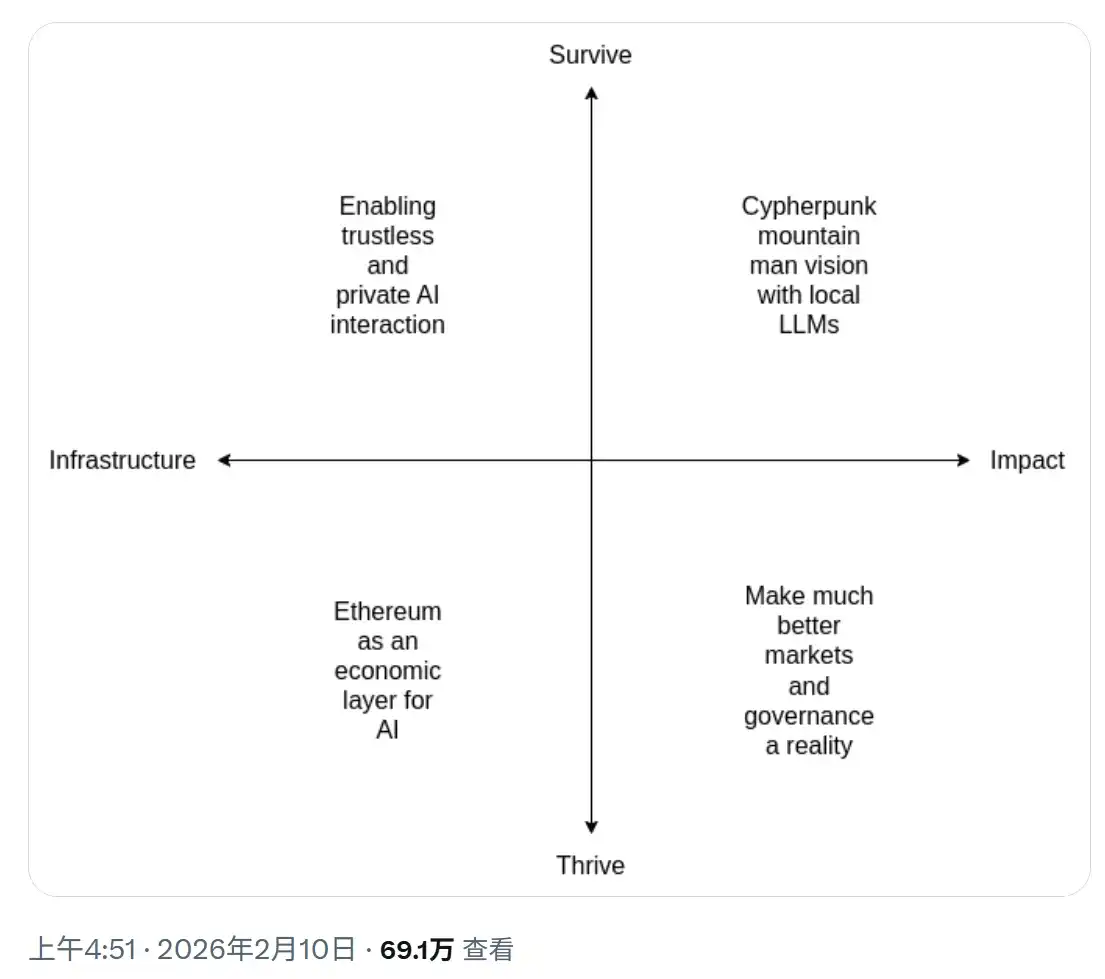
В статье он пересмотрел идеи, выдвинутые два года назад, считая, что ускоренное продвижение к общему искусственному интеллекту часто напоминает ту неограниченную скорость и масштаб, которые бросал вызов сам Ethereum при своем создании, и четко выступил против упрощения развития ИИ до «гонки AGI», а主张(провозгласил), что Ethereum должен стать направляющим миром ИИ.
Другими словами, его действительно волнует не то, как сделать ИИ быстрее и неконтролируемее, а то, как обеспечить расширение ИИ на основе проверяемой, аудируемой и ограничиваемой инфраструктуры.
В целом,框架(рамка) Виталика включает четыре核心(ключевых)支柱.
Во-первых, надежные инструменты взаимодействия с ИИ. Он выступает за использование локальных больших языковых моделей (local LLM), механизмов оплаты с нулевым разглашением (zero-knowledge proof) и других инструментов, позволяющих пользователям использовать услуги ИИ, не раскрывая личность и原始(исходные) данные.
Это отношение не ограничивается абстрактными выражениями. В апреле 2026 года Виталик также公开(публично) поделился своей схемой использования локальной LLM. Протестировав несколько комплектов硬件(оборудования), он выбрал запуск локальной开源(open-source) модели Qwen3.5 с 35 миллиардами параметров на компьютере с GPU NVIDIA 5090, все вычисления выполняются локально, цель — повысить скорость вывода до уровня, пригодного для повседневного использования, и максимально сократить зависимость от облачных моделей.
Конечно, символическое значение этого события大于(превышает) практическое, но это также показывает, что, по крайней мере, по его мнению,真正(действительно) достойное направление для ИИ — это не только более мощные модели, но и более контролируемые модели.
Во-вторых, уровень экономической координации ИИ, это включает в себя то, что Ethereum через смарт-контракты может поддерживать взаимные платежи между Agent, страховые депозиты, разрешение споров и накопление репутации, позволяя машинам формировать программируемые экономические отношения; в-третьих, ИИ как интерфейс Web3, например, локальный помощник ИИ может帮助(помочь) пользователям составлять транзакции, аудировать смарт-контракты, интерпретировать доказательства формальной верификации,成为(стать) мостом для普通(обычных) людей в сложный链上(ончейн) мир.
Наконец, усиленные ИИ системы управления, такие как использование ИИ для升级(модернизации)预测市场(предсказательных рынков), квадратичного голосования, механизмов распределения государственных средств и поиска баланса между автоматизацией и человеческим суждением.
В целом,核心理念(ключевая идея) этой框架(рамки) может быть浓缩(сведена) к одной фразе: Ethereum предназначен не для ускорения ИИ, а для того, чтобы ИИ работал в проверяемой, аудируемой, децентрализованной среде.
Так как же этого добиться?
二、От протоколов идентичности к платежным протоколам, протоколам выполнения и верифицируемому ИИ
Если框架(рамка) Виталика — это макроплан, то последняя волна эволюции протоколов в экосистеме Ethereum уже начала внедрять эту методологию в конкретный技术栈(технологический стек).
Первый узел инфраструктуры, который заслуживает внимания, — это ERC-8004.
Как стандарт идентичности, репутации и верификации, разработанный Ethereum для AI Agent, он разрабатывается под руководством команды dAI фонда Ethereum при участии Google, Coinbase и MetaMask,几乎(почти) охватывая три ключевых入口(точки входа): ИИ, транзакции и кошелек (延伸阅读《Билет на новый корабль эпохи AI Agent: на что ставит Ethereum, продвигая ERC-8004?》).
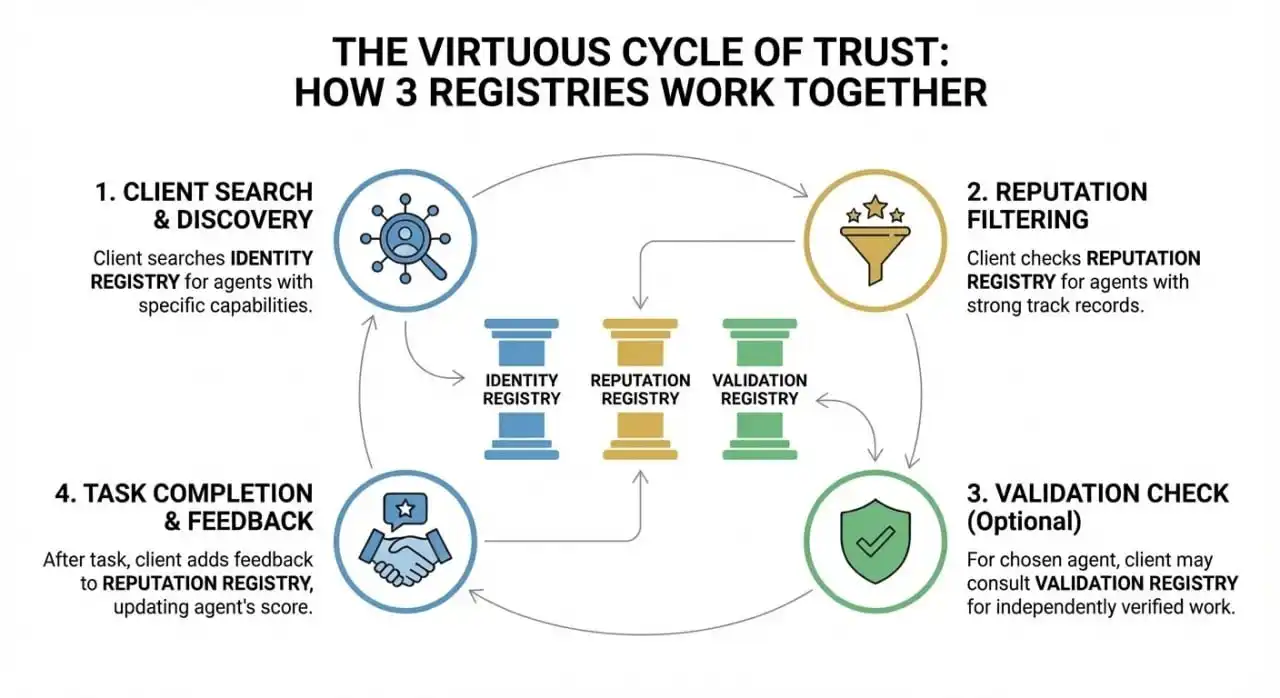
Как и его официальное название Trustless Agents, его核心逻辑(ключевая логика) также заключается не в сложных алгоритмах, а в том, чтобы дать ИИ проверяемую идентичность, репутацию и доказательства возможностей, если кратко, его дизайн очень сдержанный, он делает только три вещи:
- Реестр идентичностей: на основе стандарта ERC-721 каждый AI Agent будет «NFTизирован», что означает, что AI Agent можно будет просматривать, ссылаться, интегрировать в другие протоколы;
- Реестр репутации: можно理解为(понимать как) «Tripadvisor» для ИИ, позволяющий пользователям или другим Agent, фактически взаимодействовавшим с Agent, оставлять отзывы, причем эти оценки могут быть привязаны к链上(ончейн) платежам или условному депонированию, гарантируя, что репутация — это не凭空(на пустом месте) сгенерированный叙事(нарратив), а историческая запись, основанная на реальных экономических行为(действиях);
- Реестр верификации: для высокоценных или高风险(рискованных) задач одной исторической репутации недостаточно, поэтому ERC-8004预留(предусматривает) интерфейс для第三方 верификации, позволяющий через доверенную среду выполнения (TEE), доказательства с нулевым разглашением (zk) и другие методы подтверждать(подтверждать) возможности или процесс выполнения Agent;
Если идентичность отвечает на вопрос «Кто такой Agent», то платежная инфраструктура, представленная протоколом x402, отвечает на вопрос «Как Agent совершает交易(транзакции)».
Как известно, x402 — это открытый HTTP платежный протокол, совместно инициированный Coinbase и Cloudflare, его основной принцип очень巧妙(хитрый), он возрождает长期(долгое время) заброшенный код состояния 402 (Payment Required — Требуется оплата) в протоколе HTTP, когда Agent пытается получить доступ к платной услуге, сервер возвращает код состояния 402 и требование оплаты, Agent завершает оплату стейблкоином и получает доступ.
Весь процесс встроен в HTTP-запрос, не требует регистрации аккаунта, кредитной карты или人工(ручного) вмешательства. Другими словами, это платежная система, разработанная для машин, а не для людей.
Примечательно, что в начале этого месяца Linux Foundation正式(официально) взяла на себя управление x402 Foundation и получила протокол x402, переданный Coinbase. Официальная формулировка非常明确(очень четкая): x402 предназначен для直接(прямой) интеграции платежей в HTTP-взаимодействие, позволяя AI agents, API, приложениям обмениваться价值(ценностью) так же, как они обмениваются данными.
Я считаю, что важность этой новости极大地(сильно) недооценена, с одной стороны, это渗透(проникновение) и важное влияние x402 в области платежей для ИИ и интернета, с другой стороны, это堪称(поистине)豪华(роскошный) состав. Конечно, продвижением x402 всегда занимались这些巨头(эти гиганты), но这次(в этот раз) эффект явно 1+1 больше 2.
Кроме того, версия V2 x402 также努力(старается) реализовать расширение способов оплаты, включая поддержку не только ончейн стейблкоинов, но и традиционных ACH (Automated Clearing House, автоматическая клиринговая система) и银行卡网络(сетей банковских карт), чтобы打通(соединить) границы между AI Agent и реальной金融系统(финансовой системой).
Наконец, помимо идентичности и платежей, третья часть головоломки, которую Ethereum недавно добавил, — это уровень выполнения.
В апреле 2026 года Biconomy и фонд Ethereum в направлении Improve UX) совместно продвигали ERC-8211, пытаясь решить именно самые现实(реальные) узкие места AI Agent в мире DeFi, например, сложные ончейн-операции часто представляют собой не один вызов, а многошаговые, динамические, легко失效(отказывающие) цепочки выполнения.
Мы можем简单(просто)理解(понять) это как механизм «интеллектуальной пакетной обработки», специально разработанный для AI Agent и сложных операций DeFi, потому что в традиционных ончейн-операциях выполнение сложной стратегии DeFi часто требует нескольких независимых транзакций: заем средств из протокола кредитования, обмен токенов, повторное внесение в другой протокол.
Каждый шаг требует отдельной подписи и подтверждения, что уже утомительно для пользователей-людей, а для AI Agent, требующих高频(высокочастотной) автономной работы, это更是瓶颈(узкое место). Решение ERC-8211 заключается в允许(разрешении) объединения нескольких блокчейн-операций в одну транзакцию, причем каждый шаг динамически анализирует фактические значения во время выполнения и может продолжить следующий шаг только при выполнении预先(предварительно) определенных условий.
Например, Agent может в одной подписанной транзакции завершить: вывод средств из Aave → обмен фактически полученной суммы на Uniswap → внесение результата обмена в Compound — все выполняется атомарно, без написания新的(нового) смарт-контракта.
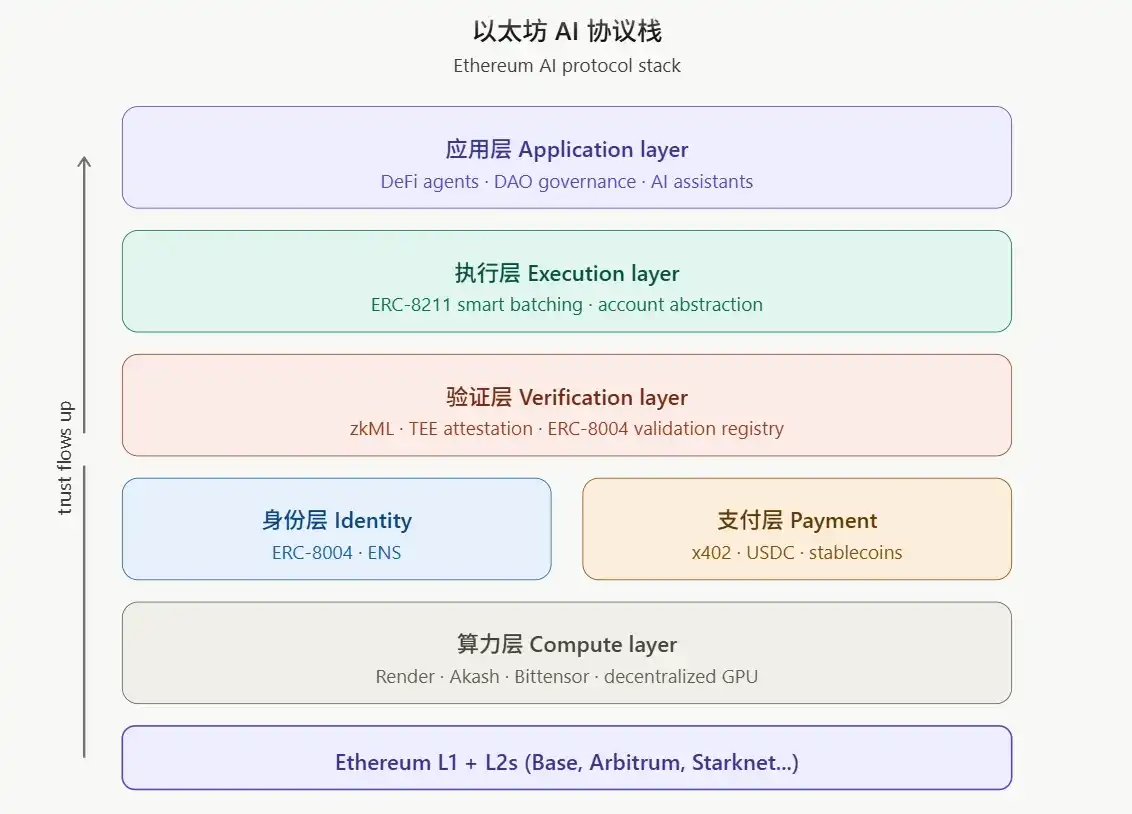
Если взглянуть на这三者(эти три элемента) вместе, недавняя линия Ethereum уже очень ясна: ERC-8004 отвечает на «Кто ты, почему тебе должны доверять», x402 отвечает на «Как ты платишь за услуги», ERC-8211 отвечает на «Как ты эффективно выполняешь сложные операции».
Другими словами, экономике AI Agent真正(действительно) не хватает не только более умных больших моделей, а открытого, комбинируемого, расширяемого стека протоколов; и это как раз то, что Ethereum умеет делать лучше всего.
三、За пределами Ethereum: Solana, DePIN и децентрализованные вычисления
Конечно, даже если Ethereum лидирует в установлении стандартов и доверительной инфраструктуры, крипто-экосистема ИИ не ограничивается одним блокчейном.
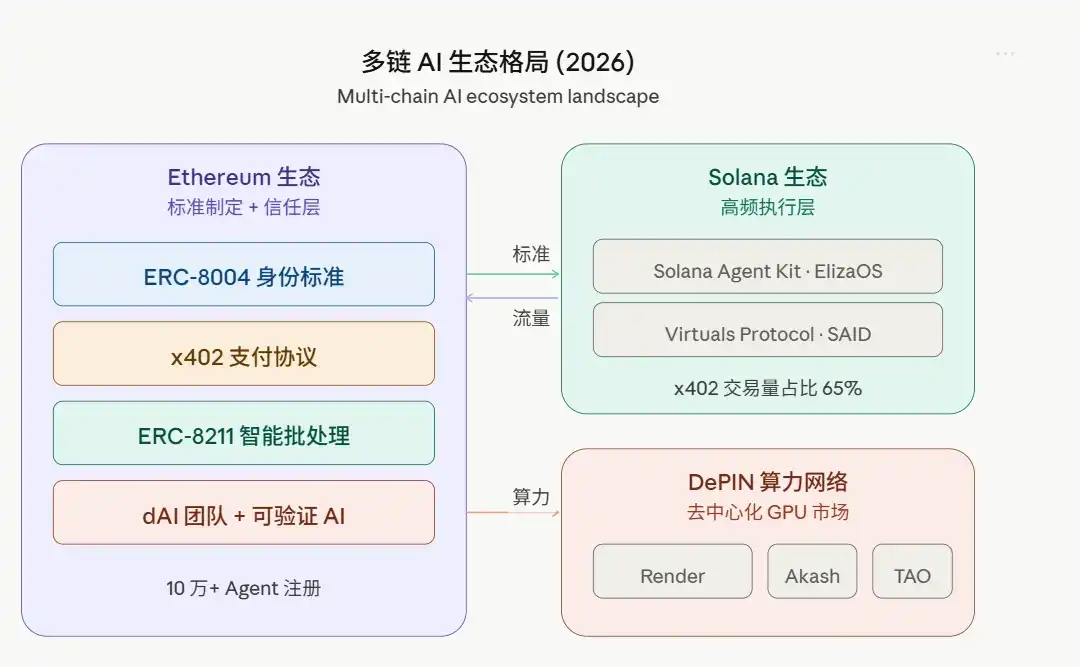
Более точное утверждение: Ethereum борется за уровень стандартов и доверия, в то время как другие экосистемы демонстрируют различные преимущества на уровне выполнения и вычислительной мощности.
Solana — самый яркий пример. Ее растущая заметность в теме платежей Agent обусловлена именно тем, что потребность AI Agent в блокчейне — это не идеологическая правильность, а «низкая задержка, низкая стоимость, достаточная стабильность». В официальном представлении Solana о x402, миллисекундная окончательность и extremely low(крайне низкая) стоимость транзакций直接(напрямую) упоминаются как важное преимущество машинных платежей, что также объясняет, почему Solana легче承接(принимает) те сценарии взаимодействия Agent, которые являются高频(высокочастотными), мелкими и требуют мгновенной反馈(обратной связи).
В то же время инструментарий Agent вокруг Solana также быстро成熟(созревает), официальный GitHub Solana Agent Kit позволяет Agent на любой модели自主(автономно) выполнять более 60 действий Solana, охватывая транзакции, выпуск токенов, кредитование, аирдропы, Blink,跨链(кросчейн) и другие сценарии, и широко повторно используется многими ончейн-проектами и разработчиками.
Таким образом, с сегодняшней格局(расстановкой) сил, разделение труда в крипто-ИИ становится более четким. Ethereum больше похож на базовую абстракцию протокольных стандартов, идентичности, репутации и доверенного выполнения, Solana имеет现实(реальное) преимущество в高频(высокочастотных) платежах и взаимодействии с низким трением, а ценность децентрализованных вычислительных сетей также будет переоценена по мере того, как больше Agent真正(действительно) войдут в производственную среду.
В целом, оглядываясь на апрель 2026 года, картина криптографических протоколов ИИ уже сформирована:
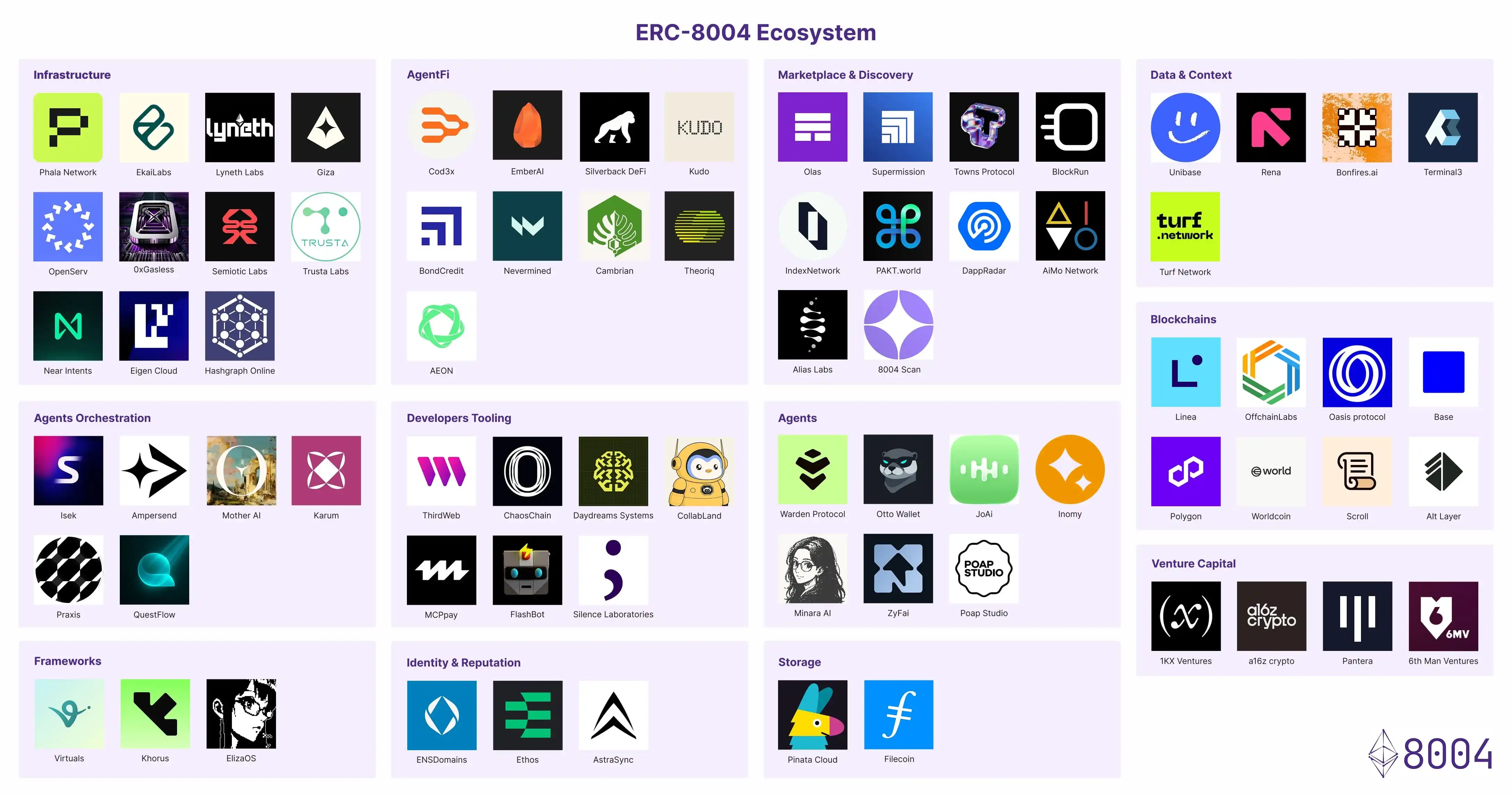
- Уровень идентичности: ERC-8004 как стандарт идентичности Agent под руководством Ethereum, уже расширен до Base и других мультичейнов;
- Платежный уровень: x402 вырос от экспериментального проекта Coinbase до глобального стандарта под управлением Linux Foundation;
- Уровень выполнения: такие стандарты, как ERC-8211, упрощают сложные ончейн-операции Agent;
- Уровень верификации: такие технологии, как zkML, TEE, криптографические доказательства, начинают обеспечивать проверяемость высокоценного взаимодействия Agent;
- Конкурентная格局: Ethereum делает уровень стандартов и доверия, Solana — уровень高频(высокочастотного) выполнения, Bittensor, возможно, может служить补充(дополнением) в维度(измерениях), таких как вычислительная мощность, формируя互补(взаимодополняющую), а не нулевую сумму格局(расстановку);
В展望(перспективе) на вторую половину года, новое обновление Ethereum, вероятно, будет способствовать масштабированию L1, нативной абстракции аккаунтов и постквантовой безопасности, причем распространение абстракции аккаунтов, несомненно, значительно снизит порог использования кошельков Agent; глубокая интеграция x402 и ERC-8004 также может催生(породить) замкнутую экономику Agent, охватывающую注册(регистрацию) идентичности Agent, обнаружение услуг, инициирование платежей, накопление репутации, все завершается ончейн.
В заключение
Ethereum и блокчейн предназначены не для ускорения прихода ИИ, а для обеспечения того, чтобы приход ИИ не привел мир к失控(выходу из-под контроля).
В конце концов, в мире Web2 идентичность ИИ определяется API-ключами крупных компаний, платежи обрабатываются кредитными карточными системами, доверие обеспечивается централизованными платформами. Эта система勉强(с трудом) работает в сценариях с пользователями-людьми, но в новой парадигме, где миллионы AI Agent должны协作(сотрудничать) автономно 24/7, она становится все более несостоятельной.
А разработчики стандартов во главе с Ethereum, эффективный уровень выполнения в лице Solana и децентрализованные вычисления на основе DePIN, возможно, построят для экономики AI Agent совершенно новую инфраструктуру.