Автор: BlockWeeks, блокчейн-еженедельник
На рынке криптовалют, если вы смотрите только на рыночную капитализацию (Market Cap), вы видите процветающий цифровой утопический мир, где всё растет и развивается. Мультимиллиардные оценки, грандиозные технические white paper, ореол лауреатов премии Тьюринга... Всё это выглядит как рассвет следующего поколения интернета.
Но если вы наденете другие очки — очки, которые видят только «реальные доходы от комиссий в сети (Fees)», — вы увидите совершенно иную, даже леденящую душу картину: в этом так называемом триллионном рынке подавляющее большинство «единорогов» на самом деле являются зомби, которые давно перестали дышать.
Недавно BlockWeeks подробно проанализировал данные о «Fees» публичных блокчейнов на DeFiLlama, и мы обнаружили неотвратимую структурную проблему: крипто-блокчейны вступили в эру «крайней концентрации прибыли и коллективной зомбификации длинного хвоста».
Ключевые данные этой статьи взяты из панели «Fees / Revenue by Chain» на DeFiLlama (время сбора: 16 декабря 2025 года). Определяемый здесь «Fees» относится к общим комиссиям, уплаченным пользователями в сети (top-line), и является приблизительным показателем масштаба экономической активности в сети, а не чистыми доходами, остающимися у протокола (Protocol Revenue). Цель данной статьи — использовать этот открытый, единый стандарт для оценки способности различных публичных блокчейнов захватывать стоимость в сети.
I. Унижение в 17 долларов: крах технологической утопии
Согласно открытым данным, которые мы собрали с DeFiLlama, самая тревожная цифра исходит не от миллионеров на вершине, а от 17 долларов внизу.
Это дневной доход протокола для всей сети Algorand — блокчейна, который когда-то носил титул «решателя проблемы блокчейн-трилеммы», основанного лауреатом премии Тьюринга Сильвио Микали и обладающего топовым техническим бэкграундом.
Вы не ослышались, не 170 тысяч долларов, а 17 долларов.
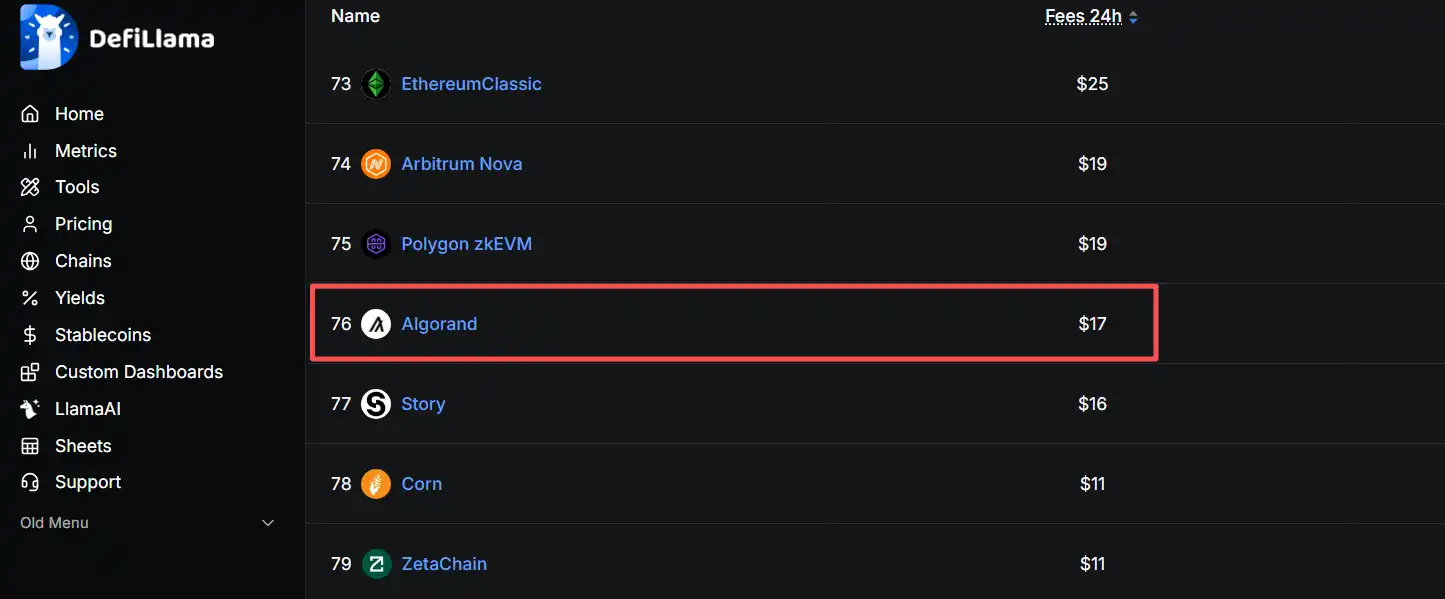
В этот самый момент рыночная капитализация Algorand все еще находится на уровне миллиардов долларов. «Цифровая нация» с капитализацией в 10 миллиардов долларов, чьи прямые налоговые поступления от цифровой экономики за день не хватает на четыре латте в Starbucks. Это показывает, что даже обладая передовой децентрализованной технологией, при отсутствии реального, постоянного спроса на приложения, ее способность захватывать экономическую стоимость стремится к нулю.
Это не просто неловкавая ситуация для Algorand, это похоронный звон для всего лагеря «классических публичных блокчейнов».
Взгляните на Cardano (ADA) — гиганта, устойчиво входящего в топ-10 по рыночной капитализации, с миллионами адресов держателей монет. Однако данные говорят нам, что ее недавние среднедневные комиссии в сети колеблются всего вокруг 6000 долларов. Это означает, что помимо передачи активов между держателями и стейкинга для обслуживания сети, в этой цепи отсутствует коммерческая активность, способная генерировать значительные комиссии — нет масштабного кредитования, нет высокочастотных сделок, нет реального, оплачиваемого обмена ценностями.
Эти публичные блокчейны похожи на роскошные города-призраки, построенные за огромные деньги в центре пустыни. Инфраструктура完备, дороги широкие, муниципалитет (фонд) хорошо финансируется, но на улицах не видно жителей (активных платящих пользователей). Способ их поддержания работы часто заключается в том, что муниципалитет постоянно распродает резервы (сбрасывает токены) для покрытия операционных расходов.
II. Безобразная победа: Кто на самом деле захватывает стоимость?
Когда взгляд перемещается к вершине рейтинга, всплывает факт, который еще более неприятен для «технологических пуристов»: больше всех зарабатывают往往 не те, у кого самая «элегантная» или самая «децентрализованная» технология.
Возглавляет рейтинг Tron (Трон) со среднедневными комиссиями в 1.24 миллиона долларов. В глазах многих элитистов Tron, возможно, трудно назвать «технологичным». Но рынок проголосовал ногами и дал окончательный ответ: платежи — это необходимость. Tron обрабатывает подавляющее большинство мировых транзакций USDT в сети. В этой отрасли, полной спекуляций и пузырей, Tron по иронии судьбы стал единственным платежным приложением, принятым в массовом масштабе (Mass Adoption) — хотя он служит лишь каналом для теневого банкинга фиатных денег.
Можно сказать: платежи, эта самая древняя, самая базовая потребность интернета, являются на данный момент единственным массовым внедрением (Mass Adoption) в мире Crypto. Успех Tron — это мощная насмешка над всеми проектными командами, которые гонятся за «идеальной технологией», игнорируя «реальный спрос».
За ним следует Solana со среднедневными комиссиями почти в 600 тысяч долларов. Ее логика успеха еще более прямолинейна: это самое активное в мире казино в сети. Мем-коины, высокочастотные сделки на DEX, front-running — эти активности вносят подавляющий вклад в комиссии. Ров Solana больше не TPS, а «внимание и трафик». А подъем Base еще более разрушителен (среднедневные ~105 тыс. долларов): он доказывает, что каналы дистрибуции (Distribution) гораздо важнее самой технологии. Опираясь на огромную пользовательскую базу Coinbase, Base наносит сокрушительный удар по другим L2.
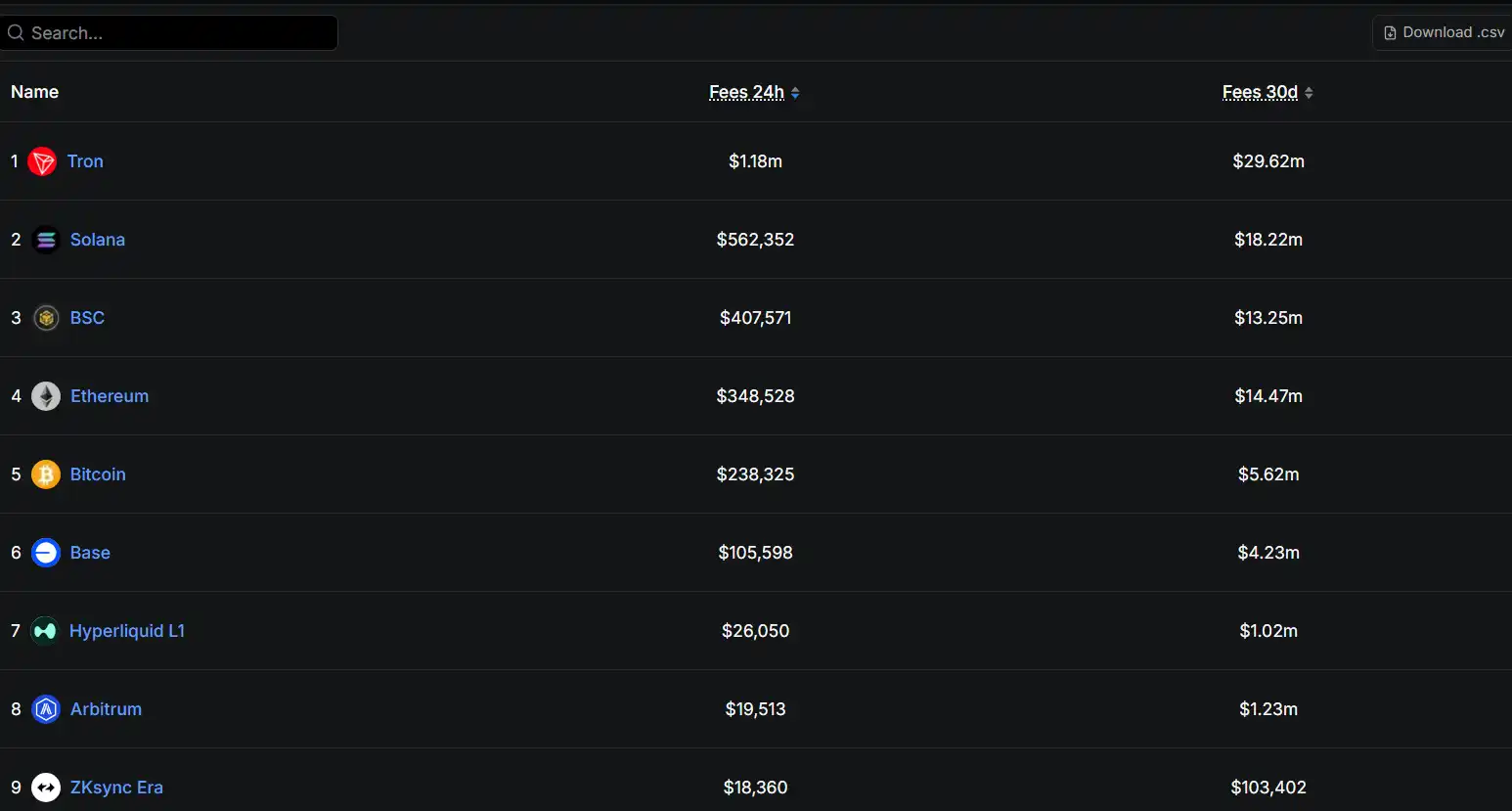
Это дает жестокое и ясное откровение: на нынешнем рынке Crypto проверенными бизнес-моделями, способными генерировать крупные комиссии в сети, являются только две с половиной — дешевые платежи (Tron), высокочастотные спекуляции (Solana/Base), а также слой расчетов по активам (Ethereum), который постоянно разъедается L2.
Помимо этого, те многообещающие «корпоративные приложения», «отслеживание цепочек поставок», «Web3-социальные сети» перед холодными данными комиссий в сети, по крайней мере на данном этапе, еще не продемонстрировали масштабируемого платного спроса.
III. Проблема схем венчурных инвесторов: Почему «пик при запуске»?
Эти данные также выявляют другой глубокий кризис: нарративная модель новых L1/L2, движимая огромным финансированием от венчурных капиталистов (VC), сталкивается с жестокой проверкой на монетизацию.
Мы видим, что такие новые блокчейны с ореолом славы, как Sui (среднедневные ~12 тыс. долларов), Sei (среднедневные ~320 долларов), Starknet (среднедневные ~10 тыс. долларов), которые привлекли финансирование на сотни миллионов долларов, демонстрируют серьезный разрыв между их доходами от комиссий в сети и их оценкой в десятки или даже сотни миллиардов долларов при полном разводнении (FDV).
Стандартный сценарий последних лет таков: инвестиции VC -> команда нагромождает технические фишки -> привлекает фармеров эирдропов (Airdrop Farmers) для накрутки данных -> листинг токенов на биржах создает богатство -> розничные инвесторы покупаются на нарратив -> фармеры эирдропов уходят -> данные активности в сети обрушиваются.
Вот почему многие новые цепи при запуске показывают впечатляющий TPS, сотни тысяч дневных активных пользователей, а через несколько месяцев быстро превращаются в «города-призраки». Потому что эти пользователи — наемники, а не жители. Когда ожидания эирдропа реализованы, когда стимулирующие субсидии прекращаются,暴露ляется реальный, органический спрос (Organic Demand) — ежедневные доходы от комиссий в размере нескольких тысяч или десятков тысяч долларов просто не могут поддержать мечту о миллиардной оценке.
Мы сталкиваемся с серьезной «инфляцией блок-пространства». Отрасль построила слишком много цепей, слишком много L2, слишком много уровней доступности данных (DA), но инновации на уровне приложений极度匮乏. Это похоже на начало распространения широкополосного интернета, когда с энтузиазмом проложили тысячи и тысячи волоконно-оптических кабелей, но еще не родились Netflix, YouTube или любое другое убийственное приложение, которое должно потреблять эту пропускную способность.
IV. Пробуждение инвесторов: От «слушания историй» к «проверке бухгалтерских книг»
Долгое время логика оценки на крипторынке строилась на «коэффициенте мечты». Чем грандиознее нарратив, чем богаче воображение, тем выше может взлететь рыночная капитализация.
Но 2024-2025 годы становятся переломным моментом. По мере ужесточения макроликвидности и требований институциональных инвесторов к более существенной отдаче, рынок вынужден возвращаться к рациональности.
Для инвесторов логика должна измениться:
-
Остерегайтесь «зомби-монет»: Если у проекта капитализация в десятки миллиардов, но среднедневные комиссии в сети составляют всего несколько сотен или тысяч долларов, такая крайняя «неадекватность» часто является отправной точкой для долгосрочного медленного падения. Его единственная опора — вера сообщества — в конечном итоге иссякнет.
-
Обращайте внимание на способность генерировать «положительный денежный поток»: Ищите экосистемы, за услуги которых пользователи готовы платить постоянно, даже без стимулирования токенами. Комиссии за переводы стейблкоинов на Tron, торговые комиссии на Base и Solana — прямое отражение реального спроса.
-
Признайте, что «каналы и экосистема правят балом»: Успех Base доказывает, что чистое технологическое преимущество уже с трудом может стать ровом. Гиганты, входящие с огромной пользовательской базой (как Coinbase), или нативные сообщества, способные породить狂热ную культуру, на нынешнем этапе являются более ценными активами. Чисто технологические публичные блокчейны, если они не могут решить проблему «кто будет использовать и зачем», в конечном итоге могут превратиться лишь в академические экспонаты типа Algorand.
- Распознавайте игру VC: Перестаньте платить за ту фальшивую процветание, которое движется субсидиями и эирдропами.
Перед лицом жестокой реальности с доходами в 17 долларов в день, вместо того чтобы платить за грандиозные нарративы и пустые «цифровые города-призраки», лучше припрятать кошелек и обратиться к тем немногим экосистемам, которые генерируют реальный денежный поток и имеют активных платящих пользователей.
Это не отрицание долгосрочной ценности всех технологических исследований, а необходимая расплата за текущую畸形ную систему оценки. Только когда рынок научится платить за «реально созданную стоимость», а не透支лять за «истории, обещанные в будущем», эта отрасль сможет встретить真正 здоровый рассвет.
Важные пояснения и оценочная структура
Ядро этой статьи — использование «комиссий в сети» как единого, открытого мерила для оценки «способности захватывать мгновенную стоимость» различных публичных блокчейнов. При чтении и引用 выводов данной статьи, пожалуйста, обязательно учитывайте следующий ключевой контекст и ограничения:
1. Общие фоновые пояснения
-
Различия в стадии развития: Некоторые блокчейны могут быть технологически продвинутыми, но находиться на ранней стадии, и их пользовательская база еще не сформировала эффект масштаба. Данные в статье отражают «текущее состояние», а не «конечный потенциал».
-
Влияние модели комиссий: Некоторые блокчейны по design стремятся к сверхнизким комиссиям (Gas Fee), и цена их нативных токенов низка. Это приводит к тому, что даже при значительном количестве транзакций в сети «общий доход от комиссий» в долларовом выражении кажется微不足дным. Это подсказывает нам, что при оценке таких цепей следует综合考虑вать такие показатели, как количество транзакций, количество активных адресов, но потолок их экономической пропускной способности в долларовом выражении остается объективным фактом.
2. Пояснения по оценке特定类型的 цепей
Для более справедливого обсуждения, в отношении нескольких особых типов проектов мы предлагаем следующие оценочные соображения:
| Тип цепи | Оценка и рекомендации в данной статье |
|---|---|
| Сеті хранения/услуг (напр., Filecoin, Arweave) |
Действительно существуют различия в подходах. Основная ценность таких сетей заключается в услугах хранения/поиска, их модель отличается от простых транзакционных комиссий. Показатель «Fees» на DeFiLlama может серьезно недооценивать их фактическую коммерческую активность. Если вы инвестор, вам следует сосредоточиться на изучении емкости их рынка хранения, активных ордеров на сделки и реальных потоков доходов от хранения. |
| Публичные блокчейны, движимые офчейн- или консорциумным бизнесом (напр., некоторые корпоративные цепи) |
Данные имеют ограничения. DeFiLlama учитывает только публичную активность в сети, и BlockWeeks полностью согласен с этой точкой зрения. Но мы также задаемся вопросом: если основная ценность публичного блокчейна не отражена в сети, то на чем держится рыночная капитализация его публично выпущенных токенов, используемых для управления сетью и безопасности? |
| Технологичные цепи с низкими комиссиями/высоким TPS | Изначальный замысел хорош. Однако чрезвычайно низкие комиссии за транзакцию означают, что сама цепь и валидаторы захватывают очень мало стоимости. Успех этой модели должен зависеть от чрезвычайно высокого объема транзакций, чтобы компенсировать низкую цену. Если низкая комиссия не привлекла огромного количества транзакций, то ее экономическая модель может столкнуться с проблемами. |
| Цепи, чья экосистемная активность сосредоточена на CEX | Сложно поддается оценке. Если экономическая активность в сети цепи слаба и не может генерировать достаточных комиссий, то ее практическая ценность и способность захватывать стоимость как «децентрализованного расчетного слоя» или «платформы для смарт-контрактов» является низкой. Ее стоимость может быть ближе к простому «цифровому коллекционному предмету». |
Мы по-прежнему считаем, что в мире с высокой концентрацией прибыли проекты в длинном хвосте, если только они не найдут уникальные сценарии применения (например, игры или определенные AppChain), их судьба几乎 предрешена. Только те платформы, которые способны генерировать денежный поток через реальный, постоянный пользовательский спрос, обладают потенциалом долгосрочного выживания и outperforming рынка.