Terraform’s $40B Collapse Back in Spotlight as Jane Street Faces Insider Trading Lawsuit

bitcoinistОпубликовано 2026-02-24Обновлено 2026-02-24

Введение

Terraform Labs' $40 billion collapse is back in the spotlight as Jane Street faces an insider trading lawsuit. The complaint, filed by Terraform's bankruptcy administrator, alleges the trading giant used confidential information to avoid losses and hasten the ecosystem's downfall in May 2022. It claims Jane Street obtained non-public details through a former Terraform intern and executed trades minutes after Terraform secretly removed 150 million UST from a liquidity pool, before the information was public. Jane Street denies the allegations, blaming Terraform's management for the collapse. The case could set a precedent for oversight of institutional trading and information asymmetry in crypto markets.

Nearly four years after one of crypto’s most destructive failures erased tens of billions of dollars in value, the collapse of Terraform Labs has returned to the courtroom.

A new lawsuit filed in a U.S. federal court accuses trading giant Jane Street of insider trading tied to the 2022 downfall of the Terra ecosystem, a case that could reshape how institutional trading activity in digital asset markets is scrutinized.

The complaint was filed by the court-appointed administrator overseeing Terraform Labs’ bankruptcy, alleging the firm used confidential information to trade ahead of key market events, avoid losses, and hasten the collapse of its algorithmic stablecoin system.
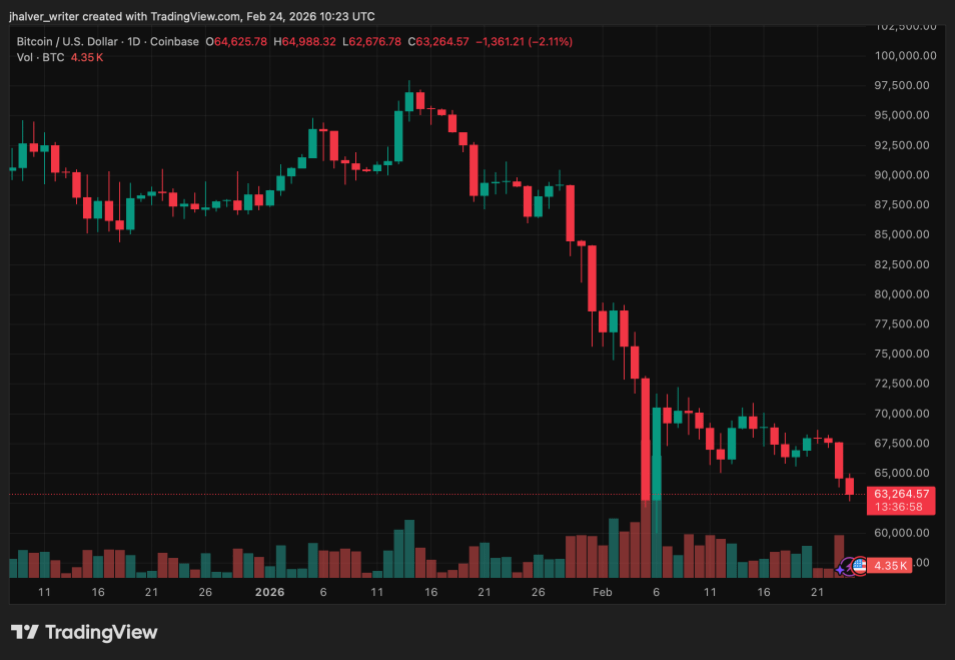
BTC's price trends to the downside on the daily chart. Source: BTCUSD on Tradingview 

Allegations of Insider Trading During Terra’s Final Days

According to the lawsuit, Jane Street obtained material non-public information through contacts within Terraform. The filing claims that a former Terraform intern working at the trading firm helped establish private communication channels that allegedly became a source of sensitive operational details.

Central to the case is a series of transactions on May 7, 2022, days before TerraUSD lost its dollar peg. Terraform quietly removed 150 million TerraUSD from Curve’s 3pool liquidity pool, a move that had not yet been disclosed publicly. Less than ten minutes later, a wallet linked to Jane Street allegedly withdrew 85 million TerraUSD from the same pool.

The administrator argues that this timing allowed the firm to unwind large exposures and position trades before panic spread across the market. The lawsuit claims these actions intensified liquidity stress and contributed to the rapid loss of confidence that followed.

Jane Street has strongly denied the accusations, describing the lawsuit as baseless and arguing that Terraform’s own management, not outside traders, was responsible for investor losses.

Revisiting the $40 Billion Crypto Meltdown

Terraform’s collapse remains one of the defining crises in cryptocurrency history. When TerraUSD lost its peg in May 2022, its sister token Luna entered a death spiral that wiped out roughly $40 billion in market value within days.

The fallout triggered widespread liquidations and contributed to broader industry instability, later exposing weaknesses across several crypto firms.

Terraform filed for bankruptcy in 2024, while Kwon later pleaded guilty to criminal charges and received a prison sentence. The current lawsuit follows earlier legal action against another trading firm, signaling an ongoing effort to recover funds for creditors.

Broader Implications for Crypto Market Oversight

The case spotlights growing concerns about information asymmetry in markets often promoted as decentralized. Regulators have increasingly focused on trading practices, market manipulation, and the role of large liquidity providers in digital assets.

If the allegations are proven, the lawsuit could set an important precedent for how proprietary trading firms interact with crypto projects and handle non-public information. Even if unsuccessful, the legal battle reopens unresolved questions about accountability during major crypto failures.

Cover image from ChatGPT, BTCUSD on Tradingview

Связанные с этим вопросы

QWhat is the new lawsuit against Jane Street about, and how is it connected to the Terraform Labs collapse?

AThe lawsuit accuses Jane Street of insider trading tied to the 2022 collapse of the Terra ecosystem. It alleges the firm used confidential, non-public information obtained through contacts within Terraform Labs to trade ahead of key market events, avoid losses, and hasten the downfall of its algorithmic stablecoin system.

QWhat specific event on May 7, 2022, is central to the insider trading allegations against Jane Street?

AThe lawsuit centers on Terraform Labs quietly removing 150 million TerraUSD from Curve’s 3pool liquidity pool, a move not yet public. Less than ten minutes later, a wallet linked to Jane Street allegedly withdrew 85 million TerraUSD from the same pool, allowing the firm to unwind exposures before panic spread.

QHow did Jane Street respond to the allegations in the lawsuit?

AJane Street has strongly denied the accusations, describing the lawsuit as baseless. The firm argues that Terraform’s own management, not outside traders, was responsible for the investor losses.

QWhat were the broader consequences of the Terraform Labs collapse in May 2022?

AThe collapse erased roughly $40 billion in market value within days as TerraUSD lost its peg and its sister token Luna entered a death spiral. The fallout triggered widespread liquidations, contributed to broader industry instability, and exposed weaknesses in several crypto firms.

QWhat potential broader implications for the crypto market does this lawsuit highlight?

AThe case spotlights concerns about information asymmetry in decentralized markets. It could set a precedent for how proprietary trading firms interact with crypto projects and handle non-public information, raising questions about accountability and market oversight during major crypto failures.

Похожее

Cook's Curtain Call and Ternus Takes the Helm: The Disruption and Reboot of Apple's 4 Trillion Dollar Empire

Tim Cook has officially announced he will step down as CEO of Apple in September, transitioning to executive chairman after a 15-year tenure during which he grew the company’s market value from around $350 billion to nearly $4 trillion. He will be succeeded by John Ternus, a 50-year-old hardware engineering veteran who has been groomed for the role through increasing public visibility and internal responsibility. Ternus’s appointment signals a strategic shift toward hardware and engineering leadership, with Johny Srouji—head of Apple Silicon—taking on an expanded role as Chief Hardware Officer. This consolidation aims to strengthen Apple’s core technological capabilities. However, Cook’s departure highlights a significant unresolved issue: Apple’s delayed and fragmented approach to artificial intelligence. Despite early efforts, such as hiring John Giannandrea from Google in 2018, Apple’s AI initiatives—particularly around Siri—have struggled with internal restructuring and reliance on external partnerships, including with Google. The transition comes at a critical moment as Apple faces paradigm shifts with the rise of artificial general intelligence (ASI). The company’s closed ecosystem of hardware, software, and services—once a major advantage—now presents challenges in adapting to an AI-centric world where intelligence may matter more than the device itself. Ternus must quickly articulate a clear AI strategy, possibly starting at WWDC, to reassure markets and redefine Apple’s role in a new technological era. His task is not only to maintain Apple’s operational excellence but also to reinvigorate its capacity to innovate and lead in the age of AI.

marsbit10 мин. назад

Cook's Curtain Call and Ternus Takes the Helm: The Disruption and Reboot of Apple's 4 Trillion Dollar Empire

marsbit10 мин. назад

Торговля

Спот
Фьючерсы

Популярные статьи

Как купить ONE

Добро пожаловать на HTX.com! Мы сделали приобретение Harmony (ONE) простым и удобным. Следуйте нашему пошаговому руководству и отправляйтесь в свое крипто-путешествие.Шаг 1: Создайте аккаунт на HTXИспользуйте свой адрес электронной почты или номер телефона, чтобы зарегистрироваться и бесплатно создать аккаунт на HTX. Пройдите удобную регистрацию и откройте для себя весь функционал.Создать аккаунтШаг 2: Перейдите в Купить криптовалюту и выберите свой способ оплатыКредитная/Дебетовая Карта: Используйте свою карту Visa или Mastercard для мгновенной покупки Harmony (ONE).Баланс: Используйте средства с баланса вашего аккаунта HTX для простой торговли.Третьи Лица: Мы добавили популярные способы оплаты, такие как Google Pay и Apple Pay, для повышения удобства.P2P: Торгуйте напрямую с другими пользователями на HTX.Внебиржевая Торговля (OTC): Мы предлагаем индивидуальные услуги и конкурентоспособные обменные курсы для трейдеров.Шаг 3: Хранение Harmony (ONE)После приобретения вами Harmony (ONE) храните их в своем аккаунте на HTX. В качестве альтернативы вы можете отправить их куда-либо с помощью перевода в блокчейне или использовать для торговли с другими криптовалютами.Шаг 4: Торговля Harmony (ONE)С легкостью торгуйте Harmony (ONE) на спотовом рынке HTX. Просто зайдите в свой аккаунт, выберите торговую пару, совершайте сделки и следите за ними в режиме реального времени. Мы предлагаем удобный интерфейс как для начинающих, так и для опытных трейдеров.

604 просмотров всегоОпубликовано 2024.04.12Обновлено 2025.06.06

Как купить ONE

Обсуждения

Добро пожаловать в Сообщество HTX. Здесь вы сможете быть в курсе последних новостей о развитии платформы и получить доступ к профессиональной аналитической информации о рынке. Мнения пользователей о цене на ONE (ONE) представлены ниже.

活动图片