Автор: Zen, PANews
Telegram недавно снова оказался в центре внимания из-за финансовой информации, направленной инвесторам: кривая доходов растет, но чистая прибыль разворачивается вниз. Ключевой переменной здесь является не замедление роста пользовательской базы, а снижение цены TON, которое привело к волатильности активов, «проникшей» в отчет о прибылях и убытках.
А продажа токенов TON на сумму более 450 миллионов долларов заставила внешний мир заново оценить ее интересы и границы взаимоотношений с экосистемой TON.
Из-за низкой цены TON, Telegram показывает рост выручки, но остается в чистом убытке
Согласно отчету FT, в первой половине 2025 года Telegram продемонстрировал значительный скачок выручки. По данным непроверенной финансовой отчетности, выручка компании за первое полугодие достигла 870 миллионов долларов США, что на 65% больше по сравнению с аналогичным периодом прошлого года, значительно превысив 525 миллионов долларов США за первое полугодие 2024 года; была достигнута операционная прибыль в размере почти 400 миллионов долларов.
С точки зрения структуры доходов, рекламные доходы Telegram выросли на 5%, достигнув 125 миллионов долларов; доходы от премиальных подписок взлетели на 88%, достигнув 223 миллионов долларов, что почти в два раза больше, чем за аналогичный период прошлого года. Однако, по сравнению с этими двумя статьями, ключевым фактором роста выручки Telegram в основном стал эксклюзивный договор с блокчейном TON — TON стал эксклюзивной блокчейн-инфраструктурой для экосистемы мини-приложений Telegram и принес компании доход, близкий к 300 миллионам долларов.

Таким образом, в целом, в первой половине прошлого года Telegram продолжил мощный рост, вызванный ажиотажем вокруг мини-игр, начавшимся в 2024 году — в 2024 году Telegram впервые получил годовую прибыль, достигшую 540 миллионов долларов, а годовая выручка составила 1,4 миллиарда долларов, что значительно выше 343 миллионов долларов в 2023 году.
Из выручки в 1,4 миллиарда долларов в 2024 году около половины пришлось на так называемое «партнерство и экосистему», примерно 250 миллионов долларов — на рекламу и 292 миллиона долларов — на услуги премиальных подписок. Очевидно, что рост Telegram частично обусловлен резким увеличением количества платящих пользователей, но еще больше — доходами, полученными от сотрудничества, связанного с криптовалютами.
Однако высокая волатильность криптовалют также создала риски для Telegram. Даже несмотря на операционную прибыль в почти 400 миллионов долларов в первом полугодии 2025 года, у Telegram все еще был чистый убыток в размере 222 миллионов долларов. По словам осведомленных источников, это связано с тем, что компании пришлось провести переоценку своих активов в виде токенов Ton. А из-за продолжающейся слабости альткойнов в 2025 году цена токена Ton持续下跌, достигнув на минимуме падения более чем на 73%.
Продажа на 450 млн долларов: обналичивание или воплощение идеи децентрализации
Привыкнув к длительной слабости цен на альткойны и плавающим убыткам множества DAT-компаний, розничные инвесторы не были особенно удивлены убытками Telegram из-за обесценивания виртуальных активов. Большее удивление и недовольство в сообществе вызвало сообщение FT о том, что Telegram осуществила крупномасштабную продажу, и объем продаж ее токенов TON превысил 450 миллионов долларов. Эта цифра превышает 10% текущей рыночной капитализации токена.
Таким образом,持续走低 цена TON в сочетании с распродажей Telegram своих огромных запасов токенов вызвала质疑 и споры среди части сообщества TON и инвесторов относительно «обналичивания монет» и «удара в спину» инвесторов Ton.
Согласно публичному заявлению председателя правления казначейской компании TON TONStrategy (NASDAQ: TONX) Мануэля Штотца, все проданные Telegram токены TON были установлены с четырехлетним поэтапным разблокированием. Это означает, что эти токены не могут быть обращены на вторичном рынке в краткосрочной перспективе и не создадут немедленного давления продаж.
Кроме того, Штотц заявил, что основными покупателями, с которыми взаимодействовал Telegram, были именно долгосрочные инвестиционные субъекты, такие как компания TONX, возглавляемая Штотцем. А покупают они эти токены для долгосрочного хранения и стейкинга. TONX под руководством Штотца, как специализированная инвестиционная компания экосистемы TON, котирующаяся на американских биржах, приобретает筹码 Telegram в основном для долгосрочных стратегических целей, а не для спекулятивных перепродаж.
Штотц также подчеркнул, что чистое количество токенов Ton, принадлежащих Telegram, после сделки не уменьшилось значительно и, возможно, даже увеличилось. Это связано с тем, что Telegram, продав часть существующих запасов, получила распределение токенов с периодом блокировки, а также может持续получать новые доходы в TON от таких видов деятельности, как разделение рекламных доходов, поэтому综合расчетпоказывает, что持仓остается на высоком уровне.
Бизнес-модель Telegram по长期получению токенов TON ранее также вызывала обеспокоенность у некоторых членов сообщества — компания持有过高比例的 токенов, что不利于 децентрализации TON. Основатель Telegram Павел Дуров非常重视 эту озабоченность и еще в 2024 году заявил, что команда будет контролировать долю TON, принадлежащую Telegram, на уровне не более 10%. Если持仓превышает этот стандарт, излишки будут проданы долгосрочным инвесторам, чтобы обеспечить более широкое распределение токенов, а также привлечь средства для развития Telegram.
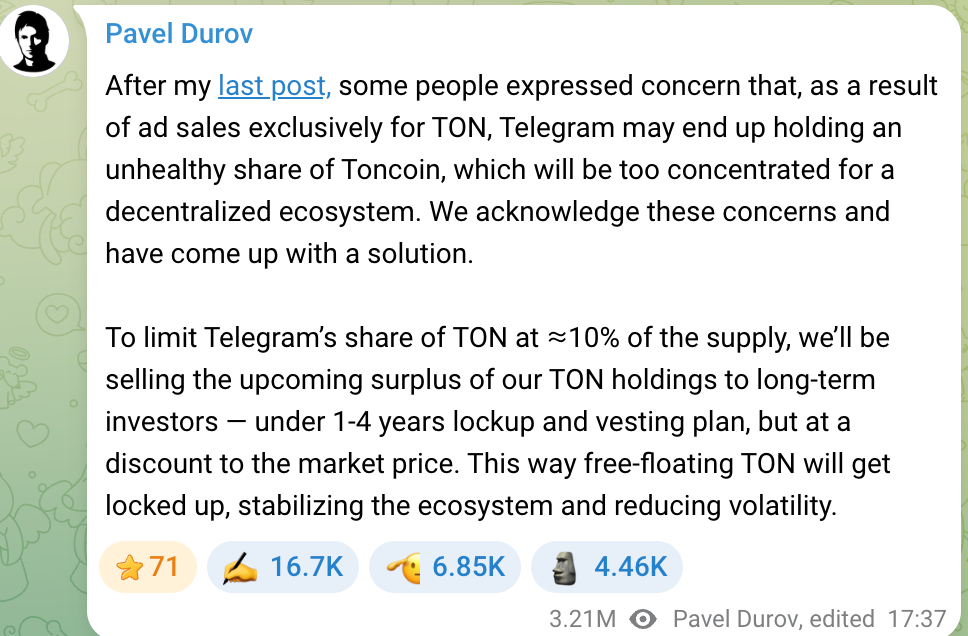
Дуров подчеркнул, что эти продажи будут осуществляться со скидкой,略低于рыночной цены, и с установлением периода блокировки и вестинга, чтобы избежать краткосрочного давления продаж и保障стабильность экосистемы TON. Эта цель旨在防止 концентрации TON в руках Telegram, что вызывает опасения манипулирования ценами, и维护децентрализованных принципов проекта. Поэтому продажа монет Telegram больше похожа на环节调整структуры активов и управления ликвидностью, а не на простое обналичивание по высоким ценам.
值得注意的是,持续走低 цена TON в 2025 году,固然, создала давление на списание стоимости в финансовой отчетности Telegram, но в долгосрочной перспективе高度绑定 Telegram с TON также создала ситуацию совместного процветания и убытков.
Telegram,深度参与в экосистему TON, получила новые источники дохода и亮点продуктов, но также должна承受финансовые последствия волатильности крипторынка. Этот эффект «双刃剑» также является фактором, который инвесторы должны учитывать при оценке ее стоимости в преддверии возможного IPO.
Перспективы IPO Telegram
С улучшением финансовых показателей и диверсификацией бизнеса перспективы выхода Telegram на биржу стали焦点ом внимания рынка. С 2021 года компания привлекла более 1 миллиарда долларов, выпустив несколько раундов облигаций; в 2025 году она снова выпустила конвертируемые облигации на 1,7 миллиарда долларов, привлекшие участие известных международных институтов, таких как BlackRock и Mubadala из Абу-Даби.
Эти меры по финансированию не только обеспечили Telegram приток средств, но и рассматриваются как подготовка к IPO. Однако путь Telegram к IPO не является гладким, на его процесс будут влиять долговые安排, регуляторная среда и фактор основателя.
В настоящее время у Telegram есть два основных выпуска облигаций: одна — облигации с купоном 7%, срок погашения в марте 2026 года, другая — конвертируемые облигации с купоном 9%, срок погашения в 2030 году. Во втором выпуске облигаций на 1,7 миллиарда долларов около 955 миллионов долларов было использовано для погашения старых облигаций, а 745 миллионов долларов стали новыми средствами для компании.
Особенность конвертируемых облигаций заключается в наличии условия конвертации при IPO: если компания проведет IPO до 2030 года, инвесторы могут выкупить/конвертировать акции по цене, составляющей около 80% от цены IPO, что эквивалентно скидке в 20%. Другими словами, эти инвесторы делают ставку на то, что Telegram сможет успешно провести IPO и получить значительную премию к оценке.
В настоящее время Telegram в результате реструктуризации долга в 2025 году досрочно выкупила или погасила подавляющее большинство облигаций с погашением в 2026 году. Дуров公开заявил, что старый долг 2021 года в основном погашен и не构成текущего риска. В ответ на информацию о заморозке российских облигаций на 500 миллионов долларов, влияющем на Telegram, он回应, что Telegram не зависит от российского капитала, и среди недавно выпущенных облигаций на 1,7 миллиарда долларов не было российских инвесторов.
Таким образом, основным долгом Telegram теперь являются конвертируемые облигации с погашением в 2030 году, что оставляет相对宽裕ное окно для выхода на биржу. Однако многие инвесторы все еще ожидают, что Telegram будет стремиться к IPO примерно в 2026-2027 годах, чтобы осуществить конвертацию долга в акции и открыть новые каналы финансирования. Если это окно будет упущено, компании в будущем придется нести压力долгосрочных процентных payments по долгу и она может упустить благоприятную возможность для перехода к финансированию за счет акционерного капитала.
При оценке стоимости IPO Telegram инвесторы также обращают внимание на ее прибыльность и модель комиссионных. Текущее количество月活跃用户составляет около 1 миллиарда,日活跃用户оценивается в 450 миллионов, такая庞大的用户基础提供了广阔空间 для коммерциализации. Хотя бизнес迅猛增长в последние два года, Telegram все еще需要证明, что ее бизнес-модель может обеспечить持续盈利.
Хорошая новость заключается в том, что в настоящее время Telegram имеет абсолютный контроль над своей экосистемой, Дуров недавно подчеркнул, что единственным акционером компании по-прежнему является он сам, а кредиторы не участвуют в корпоративном управлении.
Поэтому Telegram имеет возможность, не будучи скованной краткосрочными интересами акционеров, пожертвовать частью短期利润ради长期用户приверженности и процветания экосистемы. Эта стратегия «отсроченного удовлетворения» соответствует一贯ной продуктовой философии Дурова и также станет核心рассказа о росте на пути к IPO.
Но需要强调的是, IPO зависит не только от финансовой и долговой структуры. FT указывает, что потенциальные планы IPO Telegram в настоящее время все еще находятся под влиянием судебных разбирательств во Франции в отношении Дурова, связанная с этим неопределенность делает график выхода на биржу难以明确. И Telegram в общении с инвесторами также признала, что это расследование может构成препятствием.
Рекомендуемая литература:
RootData 2025 Web3 Отраслевой годовой отчет
Сяо Хун: от парня из маленького городка до CEO Manus, долгосрочная вера сторонника Биткойна
Изменение власти в Binance: дилемма империи с 300 миллионами пользователей
Действительно ли红利выкупа проектов подошли к концу?