# Сопутствующие статьи по теме Gold

Новостной центр HTX предлагает последние статьи и углубленный анализ по "Gold", охватывающие рыночные тренды, новости проектов, развитие технологий и политику регулирования в криптоиндустрии.

Gold Trapped in the Desert, Borderless Bitcoin: The New Paradigm of Wealth in an Era of War

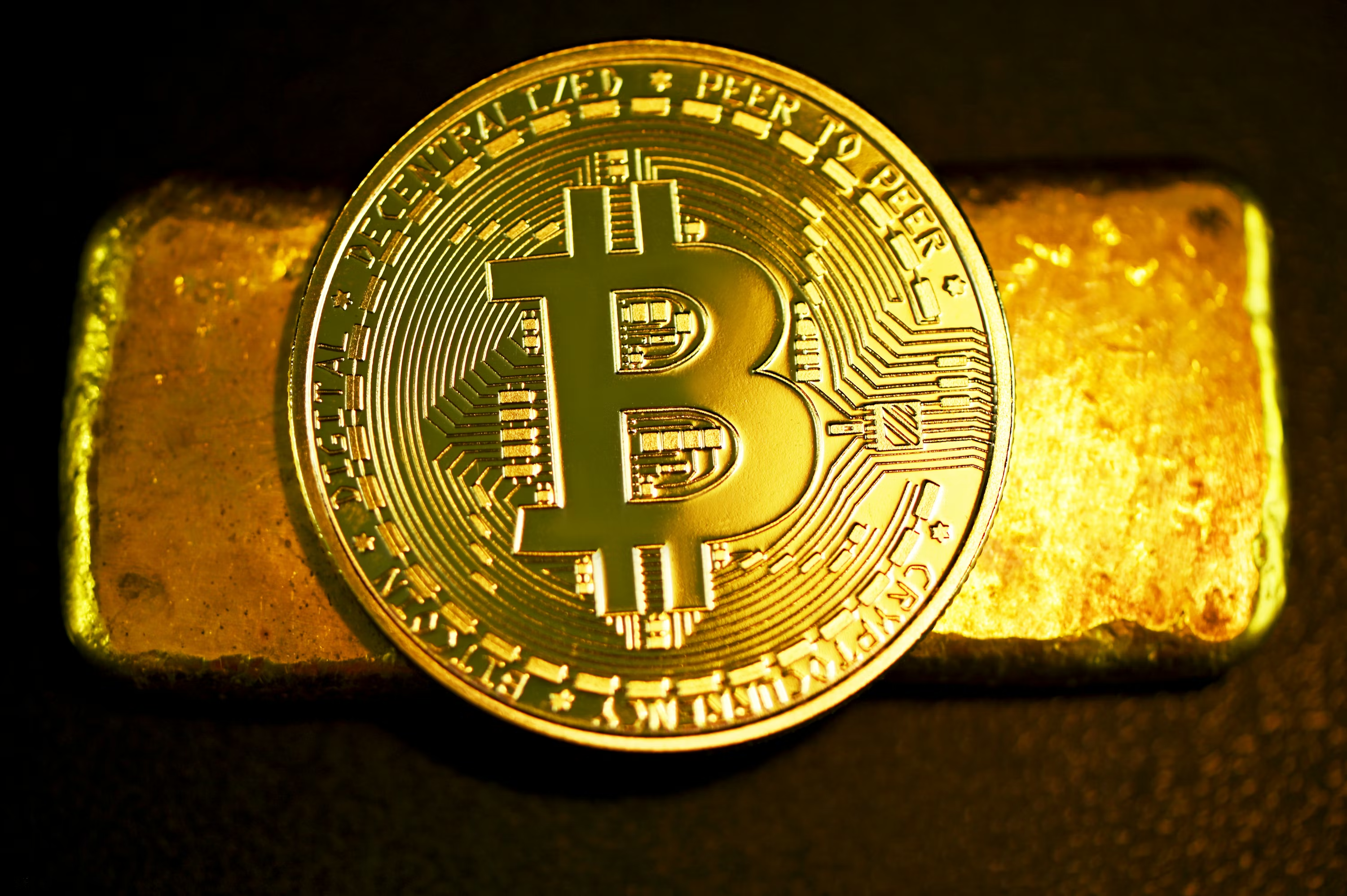
Title: Gold Trapped in the Desert, Borderless Bitcoin: A New Paradigm of Wealth in Times of War The recent escalation of geopolitical tensions in the Middle East, particularly involving the U.S., Israel, and Iran, has led to a severe disruption at Dubai International Airport—a critical global hub for trade and logistics. This crisis has exposed a significant vulnerability in the traditional financial system: the complete paralysis of physical gold transportation. Gold, often regarded as the ultimate safe-haven asset, relies on an intricate and high-security logistics network, including specialized transport, armed guards, and multi-million-dollar insurance policies. However, during times of war, this system collapses. Flights are grounded, airspace becomes unsafe, and gold suppliers are unable to move their inventories. As a result, gold traders in Dubai are forced to sell at discounts of up to $30 per ounce to avoid mounting storage costs, insurance premiums, and opportunity costs—highlighting the irony of a避险资产 becoming a financial burden. In contrast, Bitcoin demonstrates unparalleled resilience in such crises. While its price may experience volatility during geopolitical turmoil, its true value lies in its non-physical, censorship-resistant nature. Unlike gold, Bitcoin does not require physical transport, is not subject to confiscation at borders, and can be transferred across the globe instantly with just a 12- or 24-word seed phrase. This makes it an ideal store of value for individuals and businesses caught in conflict zones, where traditional financial systems and physical assets fail. The Dubai gold crisis underscores a broader shift in the paradigm of wealth preservation. Physical gold, despite its historical prestige, is constrained by its materiality and dependence on centralized infrastructure. Bitcoin, as a decentralized digital asset, offers a solution that transcends borders, governments, and physical limitations. In an era of increasing geopolitical instability, the ability to carry one’s wealth seamlessly and securely—without the constraints of weight, logistics, or censorship—positions Bitcoin as the modern embodiment of financial sovereignty.

marsbit03/13 08:11

Gold Trapped in the Desert, Borderless Bitcoin: The New Paradigm of Wealth in an Era of War

marsbit03/13 08:11

March 11 Market Summary: The War Still Isn't Over, Oil Prices Drop Another 15%

Market Summary March 11: War Continues, Oil Plunges 15% Wall Street remained indecisive as conflicting signals emerged regarding the Iran conflict. The Dow fell 34 points (-0.07%), the S&P 500 dropped 0.21%, and the Nasdaq barely moved (+0.01%). While Trump claimed the war was "largely over," the White House clarified that military operations were escalating and the Strait of Hormuz remained closed. Energy stocks led declines as oil prices continued to fall. Chip stocks, including Nvidia and Micron, rose on strong demand signals from TSMC. Oil prices crashed another 15%, with Brent at $87.80 and WTI at $83.45. Despite a two-day cumulative drop of over 30%, prices remain 25-30% above pre-war levels. Trump administration comments about war resolution triggered selling, but the Pentagon later emphasized the conflict would continue until "decisive victory." Gold surged 2.44% to $5,228/oz, and silver jumped 6.25%, erasing Monday’s losses. Lower oil prices eased inflation fears, boosting Fed rate cut expectations and safe-haven demand. Bitcoin briefly surpassed $70,000 before retreating to the $69,000–$69,500 range. It faces resistance near $71,500, but institutional buying and potential short squeeze conditions suggest upward momentum. The market’s core conflict remains: trusting Trump’s optimism about war resolution versus the Pentagon’s reality. If diplomacy succeeds, oil may fall below $70 and stocks could rally. If the war persists, oil may rebound above $100, risking another market downturn.

marsbit03/11 01:46

March 11 Market Summary: The War Still Isn't Over, Oil Prices Drop Another 15%

marsbit03/11 01:46

活动图片