# Сопутствующие статьи по теме Global

Новостной центр HTX предлагает последние статьи и углубленный анализ по "Global", охватывающие рыночные тренды, новости проектов, развитие технологий и политику регулирования в криптоиндустрии.

How Are Stablecoins Evolving from Crypto Assets to New Payment Infrastructure?

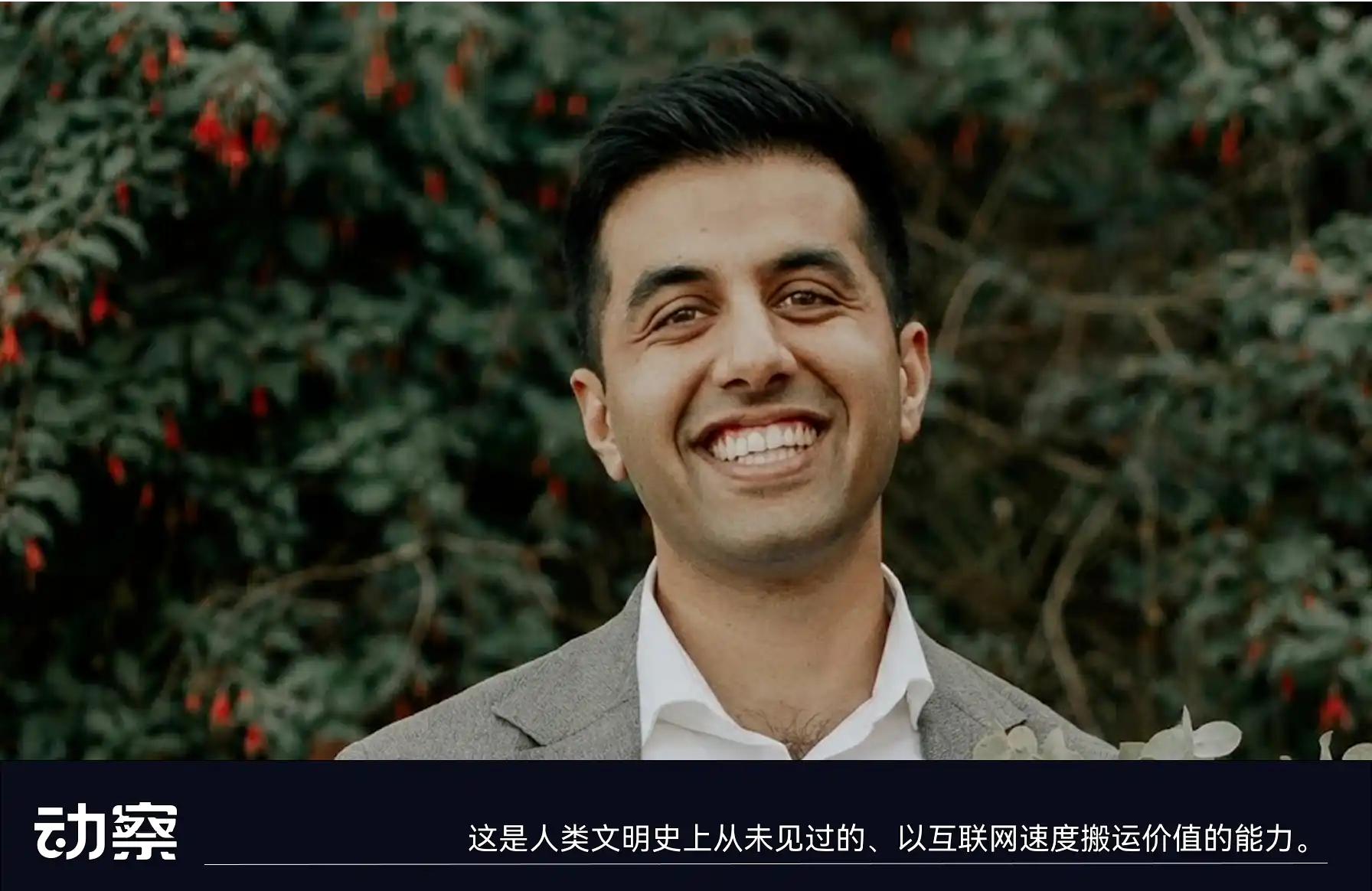
"Stablecoins: From Crypto Assets to the Infrastructure of Next-Generation Payments" The article explores the evolution of stablecoins, tracing their journey from speculative crypto assets to foundational infrastructure for global payments. The narrative is framed through the experience of Raj Parekh, former head of Visa's cryptocurrency division and now leading payments at Monad. The pivotal moment was Facebook's 2019 Libra project, which forced traditional finance to seriously consider crypto. At Visa, Parekh's team pioneered using USDC on Ethereum for settlements, solving major inefficiencies like the slow, costly T+2 settlement cycles and the need for large pre-funded accounts. A key insight was that while the technology was powerful, the underlying infrastructure was immature. Parekh left to found Portal Finance, aiming to abstract away blockchain's complexity for developers. However, he encountered a fundamental bottleneck: the need for a high-performance, EVM-compatible chain to make payments truly viable at scale. This led to Portal's acquisition by Monad Foundation. The article highlights a major shift in stablecoin business models. Early issuers like Tether and Circle profited from the interest on reserve assets. Newer models, accelerated by legislation like the GENIUS Act, are passing this yield directly to users, creating a new financial primitive: money that earns interest even while being transacted. This infrastructure enables a new era of global fintech, allowing companies to build for a worldwide audience from day one, unlike traditional banks limited by geography. The future excites Parekh most in two areas: the convergence of AI Agents with high-frequency finance for microsecond transactions, and the fusion of investment and payment accounts into a single, abstracted user experience. The ultimate goal is a future where value moves at the speed of the internet, as seamlessly as sending an email, completely invisible to the end-user.

比推12/26 15:17

How Are Stablecoins Evolving from Crypto Assets to New Payment Infrastructure?

比推12/26 15:17

Stepping into the Stablecoin Wave for Six Years, He Sees the Embryonic Form of the Future of Payments

"Six years into the stablecoin wave, Raj Parekh, former head of crypto at Visa and now leading payments at Monad, reflects on the evolution and future of digital payments. He identifies 2019 and Facebook’s Libra project as a pivotal moment that forced traditional finance to take crypto seriously. At Visa, he led efforts to integrate USDC for near-instant settlement, overcoming slow, costly legacy systems. Parekh later founded Portal Finance to build payment infrastructure, but encountered scalability limitations across blockchains. This led to Portal’s acquisition by Monad, where he now focuses on high-performance, EVM-compatible chains capable of sub-second finality—critical for global payment adoption. He sees stablecoins entering a "email moment" for money: enabling instant, low-cost global value transfer. New business models are emerging where issuers share interest earnings with users, transforming stablecoins into interest-bearing assets even during transactions. This shift, coupled with supportive regulation like the GENIUS Act, is driving broader institutional adoption. Looking ahead, Parekh is excited about AI-powered agentic payments and high-frequency finance, where autonomous agents execute microsecond-speed transactions. He envisions a future where decentralized infrastructure seamlessly integrates into everyday apps, enabling global, efficient, and programmable money movement—ushering in a new era for both finance and user experience."

marsbit12/26 05:40

Stepping into the Stablecoin Wave for Six Years, He Sees the Embryonic Form of the Future of Payments

marsbit12/26 05:40

Average Age 'Post-95s', Over a Billion USD in the Books: MiniMax Knocks on Hong Kong Stock Exchange's Door

MiniMax, a leading Chinese AI startup founded in December 2021 by former SenseTime executives, has filed for an IPO in Hong Kong, potentially becoming one of the fastest AI companies to go public. Specializing in full-spectrum AGI technologies—spanning text, voice, video, and music—MiniMax operates on a dual-strategy of "large model + AI-native applications." As of September 2025, it serves over 212 million individual users across more than 200 countries and regions, along with 100,000+ enterprise clients. Notably, over 70% of its revenue comes from overseas markets. Its AI-native products, including Haiduo AI, Xingye/Talkie, and MiniMax Voice, saw average monthly active users grow sharply to 27.6 million in the first nine months of 2025. Financially, MiniMax reported revenue of $53.4 million for the first three quarters of 2025, a 174.7% year-on-year increase. Despite an adjusted net loss of $186 million during the same period, the company demonstrated improved operational efficiency, with R&D expenses growing only 30% while sales and marketing costs fell 26%. Technologically, MiniMax has released several cutting-edge models: the voice model Speech 02, video generator Video 01 (and its upgrade Hailuo 02), and the open-source MiniMax-M2 text model—ranked among the top five globally. Its M2 model incorporates "Interleaved Thinking" for enhanced reasoning and agentic capabilities. The company is highly R&D-focused, with nearly 80% of its 385 employees in technical roles. The executive team is notably young, with an average age of 32. MiniMax plans to allocate 70% of IPO proceeds to R&D over the next five years to further advance its models and AI-native products.

深潮12/22 02:45

Average Age 'Post-95s', Over a Billion USD in the Books: MiniMax Knocks on Hong Kong Stock Exchange's Door

深潮12/22 02:45

Ethereum Is Becoming the New Global Financial Backend

Ethereum is emerging as a global financial backend, reducing the complexity and cost of building financial services while increasing speed and security. It embeds core financial operations—such as ownership recording, value transfer, and obligation enforcement—into software, executed via a distributed validator set. This shared infrastructure eliminates the need for redundant internal systems, transforming capital-intensive processes into software-driven activities. The platform addresses key economic frictions: triangulation (discovery and agreement), transfer (value movement), and trust (enforcement). By providing a transparent, programmable, and cryptographically secured environment, Ethereum enables real-time settlement, automated compliance, and global interoperability. This reduces operational risks and costs, particularly for new entrants and markets with fragile financial systems. Ethereum’s impact is most significant in emerging economies, where it offers immediate functional improvements, while in developed markets, benefits accumulate gradually as more processes become programmable. It shifts institutional focus from infrastructure maintenance to innovation and product design, promoting leaner, more efficient financial services. As a resilient, open, and verifiable system, Ethereum is positioned to serve as the foundational layer for future financial infrastructure, driven by economic incentives favoring transparency and reliability.

marsbit12/13 10:36

Ethereum Is Becoming the New Global Financial Backend

marsbit12/13 10:36

U.S. Stablecoin Regulatory Framework Finalized, Global Crypto Finance Enters New Institutionalized Phase

The United States has enacted its first federal regulatory framework for stablecoins, marking a pivotal moment for the global cryptocurrency industry. This framework transitions stablecoins from a state of fragmented oversight to a unified federal system, establishing clear legal definitions and operational standards for dollar-pegged payment stablecoins. Key provisions mandate that stablecoin issuers must hold high-quality liquid assets—such as cash and short-term U.S. Treasury securities—as reserves. They are also required to comply with strict auditing, transparency, risk management, and consumer protection rules. The regulatory structure adopts a dual approach: larger issuers will be overseen at the federal level, while smaller ones may fall under state jurisdiction. This development is expected to significantly enhance the role of stablecoins like USDC and USDT as critical infrastructure for cross-border payments, settlements, and decentralized finance (DeFi). By providing legal certainty, the framework is likely to encourage greater adoption by traditional financial institutions, payment companies, and fintech firms, integrating stablecoins more deeply into the mainstream financial system. However, the new rules also present challenges. Higher compliance costs and operational requirements may pressure smaller issuers and could lead to industry consolidation. The shift emphasizes regulatory-driven competition over innovation-driven growth. Furthermore, global regulatory disparities remain, as jurisdictions worldwide have differing definitions and standards for stablecoins, potentially creating friction in international flows. Overall, this U.S. regulatory move signals a structural shift from an enforcement-led approach to a rules-based system for digital assets. It is seen as a maturation of the industry, setting the stage for stablecoins to evolve from crypto trading tools into foundational components of the future digital financial ecosystem, including in cross-border trade, retail payments, and financial market settlements.

cointelegraph_中文12/10 11:16

U.S. Stablecoin Regulatory Framework Finalized, Global Crypto Finance Enters New Institutionalized Phase

cointelegraph_中文12/10 11:16

活动图片