# Сопутствующие статьи по теме Future

Новостной центр HTX предлагает последние статьи и углубленный анализ по "Future", охватывающие рыночные тренды, новости проектов, развитие технологий и политику регулирования в криптоиндустрии.

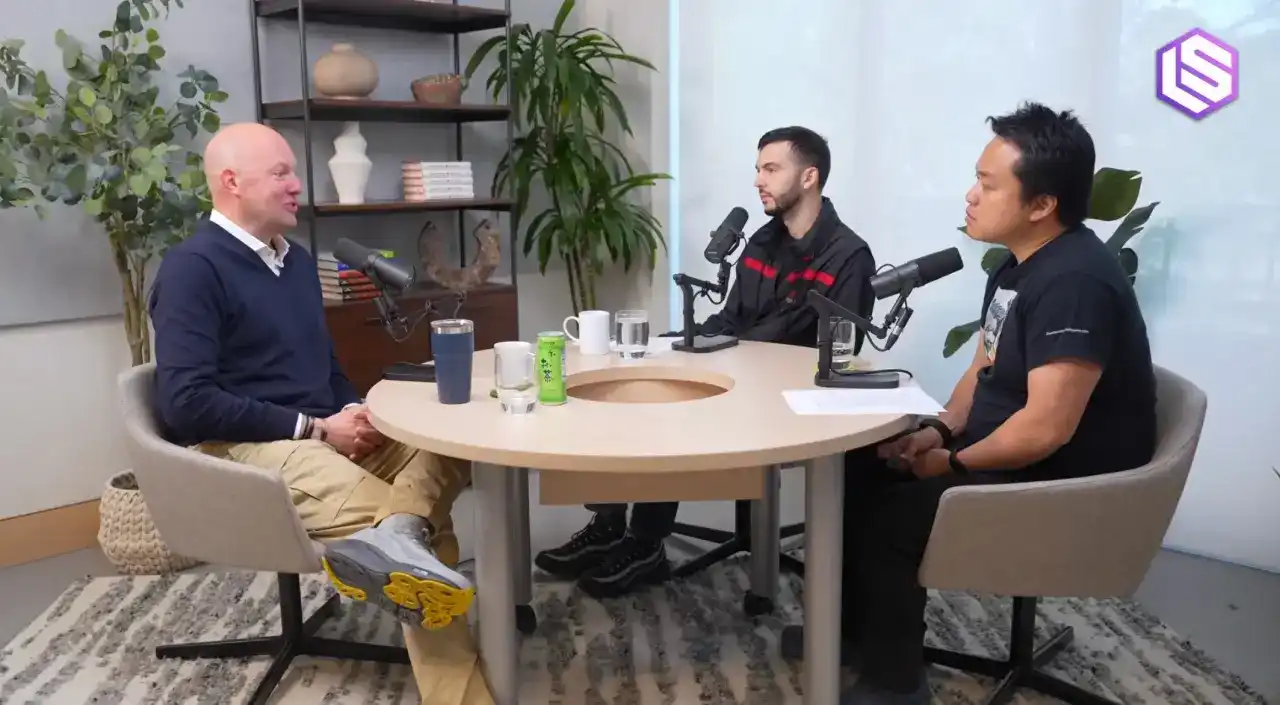
Elon Musk's Latest Interview: The Next 3-7 Years Will Be Very Tough

In a recent 3-hour interview, Elon Musk shared his predictions and concerns about the next 3–7 years, describing it as a turbulent transition period. He warned that white-collar jobs—such as those in law, accounting, and design—will be the first to be disrupted by AI, as artificial intelligence excels at information processing. He also cautioned that traditional higher education is rapidly losing value due to soaring costs and outdated curricula, while AI-powered tutors could revolutionize learning. Looking further ahead, Musk envisions a future of extreme material abundance, where most goods and services become nearly free due to automation, making retirement savings less relevant. He predicts that within three years, surgical robots will surpass human surgeons in capability, thanks to exponential improvements in AI software, processing power, and mechanical dexterity. Energy, measured in watts, will become the true currency of the future. Musk advocates for solar power as the primary energy source and even proposes moving AI data centers to space for unlimited solar energy access—a goal driving SpaceX’s Starship development. He also highlighted China’s growing advantage in AI compute power, citing its massive investments in energy infrastructure, manufacturing scale, and chip production capacity. Musk concluded by emphasizing the importance of instilling AI with a sense of truth-seeking, curiosity, and aesthetic appreciation—rather than rigid rules—to ensure a future more like "Star Trek" than "Terminator." He urged individuals to stay adaptable and proactive in navigating coming changes.

marsbit01/23 04:52

Elon Musk's Latest Interview: The Next 3-7 Years Will Be Very Tough

marsbit01/23 04:52

Elon Musk's First Interview in 2026: Discussing the Impact of AI, Robotics, Energy, and US-China Competition on the Near Future

In a January 2026 interview, Elon Musk discussed the profound impact of AI, robotics, energy, and global competition on the near future. He declared 2026 as the "Year of Singularity," asserting that AI progress is exponential, with AGI achievable by 2026 and AI intelligence surpassing all humans combined by 2030. Musk predicted that Optimus robots would outperform human surgeons within three years, making high-quality healthcare essentially free due to AI, chip performance, and robotic dexterity advancing exponentially. He argued that pursuing medical degrees would become pointless unless for social reasons. On global AI competition, Musk stated China would dominate in computing power, citing its massive electricity production (3 times the U.S. by 2026), reduced chip advantage gaps, and exceptional execution capabilities. He envisioned the AI landscape led by XAI, Google, and China. For energy, Musk emphasized solar power as the ultimate solution, proposing a three-phase plan: doubling grid efficiency with battery storage, deploying space-based solar satellites, and eventually building satellite factories on the Moon. He described energy as the future currency. Economically, Musk suggested that money might become irrelevant in 10-20 years due to AI and robotics driving abundance, leading to "Universal High Income" (UHI) instead of UBI. He warned of a turbulent 3-7 year transition period. He also noted that work would become optional within two decades, expressed concern over declining birthrates, and criticized traditional education, advocating for curiosity-driven learning enhanced by AI tutors. Musk concluded by encouraging active optimism: "Make hope happen."

marsbit01/13 05:11

Elon Musk's First Interview in 2026: Discussing the Impact of AI, Robotics, Energy, and US-China Competition on the Near Future

marsbit01/13 05:11

Steam, Steel, and Infinite Intelligence

Steam, Steel, and Infinite Intelligence Each era is defined by its core technological material: steel forged the Gilded Age, semiconductors enabled the digital age, and now, AI arrives as infinite intelligence. History shows that those who master the material define the era. Today, AI often resembles a supercharged search engine, but we are in an uncomfortable transition period. The future of knowledge work can be envisioned through historical metaphors. At the individual level, AI transition is like moving from a bicycle to a car. Top practitioners, like programmers, are already becoming managers of infinite intelligence, achieving 30-40x productivity gains. For others to follow, two key problems must be solved: fragmented context across dozens of tools and a lack of verifiability for general knowledge work. Once these are addressed, billions will move from "bicycles" to "cars" and eventually to "autopilot." For organizations, AI is the new steel and steam. Companies historically lose efficiency as they scale, burdened by human-scale communication. AI, like steel, can provide coherent context and decision-making support, allowing companies to scale without decay. Like the steam engine, it will enable a complete reimagining of workflows beyond simply replacing old tools, moving from water wheels to powerful, always-on intelligence. For the entire economy, this shift mirrors the transition from a human-scale city like Florence to a modern megacity. The knowledge economy, which constitutes nearly half of US GDP, still operates on a human scale. With AI, we will build "Tokyo"—organizations of thousands of humans and AIs, operating across time zones, synthesizing decisions with precise human input. This will be faster and more leveraged, though initially disorienting. We are still in the "water wheel" stage of AI, plugging chatbots into human-designed workflows. The challenge is to stop looking through the rearview mirror and start building the next skyline with the new materials of infinite intelligence.

深潮12/29 04:47

Steam, Steel, and Infinite Intelligence

深潮12/29 04:47

Encrypted Prophet redphone: The Silicon Era Dawns, Crypto Becomes the 'Last Free Port'

In his essay "Encrypted Prophet redphone: The Silicon Era Arrives, Crypto Becomes the 'Last Free Port'," crypto researcher redphone reflects on the technological and societal shifts driven by AI and crypto, framing 2022-11-30 as the breakpoint between the old world ("Ante Carnem") and the new "Silicon Era" ("Anno Silicii"). He argues that AI has made information cheap and unreliable, leaving financial markets as the only trustworthy signal. This acceleration has led to human alienation, where virtual interactions replace real ones, and people feel disconnected from a reality that is increasingly simulated. redphone explores themes like the erosion of labor value due to AI, which could make capitalism obsolete as machine intelligence undercuts human metabolic cost. He warns of cognitive wars fought through information manipulation, where algorithms colonize minds and fracture relationships. In this context, crypto emerges as a critical sanctuary for financial privacy and autonomy—a "last free port" in a surveilled world. He emphasizes that curiosity and the willingness to ask questions become稀缺 resources in an age of abundant AI-generated answers. The essay concludes on a philosophical note: as machines solve scarcity, humanity must shift from a fear-driven existence to one centered on love and meaningful creation. Crypto, often dismissed as a joke, is likened to a Trojan horse—a tool for building freedom under the radar. redphone urges readers to embrace their agency, use open-source crypto systems, and remember that the future is not a predetermined fate but a "fire to be stolen."

Odaily星球日报12/20 09:40

Encrypted Prophet redphone: The Silicon Era Dawns, Crypto Becomes the 'Last Free Port'

Odaily星球日报12/20 09:40

Zhao Changpeng's Year-End Report: Ten Questions on Binance, Regulation, and the Future of Crypto

CZ, founder of Binance, shares his reflections and insights in a year-end Q&A. He discusses his post-clemency sense of vindication and his current focus on four key areas: Giggle Academy (a free education platform serving 90,000 children), YZ Labs (a $10B ecosystem fund investing in crypto projects), mentoring BNB Chain entrepreneurs, and advising governments on crypto regulation. He highlights significant growth metrics: BNB Chain’s 600% annual transaction growth, 2M daily active users, and Binance’s 200M users. On investment strategy, he rejects the "horse race" approach, advocating instead for an "open garden" model that supports multiple strong teams to foster competition and innovation. CZ breaks down stablecoin evolution: 1.0 (basic, non-yielding tokens like USDT), 1.5 (yield-bearing but adoption-limited, e.g., Ethena’s USDe), and 2.0 (ideal state combining yield, liquidity, and compliance). He notes improved regulatory openness globally. He emphasizes mission-driven founders with long-term commitment and stamina, dismissing short-term profit seekers. On AI trading agents, he argues successful strategies won’t be sold widely due to market saturation effects. For RWA tokenization, he sees potential in national asset tokenization for resource development and notes crypto’s suitability for AI/agent economies. CZ advises BNB Chain to focus on relentless building, comparing it to a long marathon. His final message: he isn’t defined by his content, embodying a calm, persistent ethos.

比推12/19 06:44

Zhao Changpeng's Year-End Report: Ten Questions on Binance, Regulation, and the Future of Crypto

比推12/19 06:44

活动图片